
Reviewed · WALKING TOURS
Licensed Guide Tokyo Meguro Cherry Blossom Walking Tour
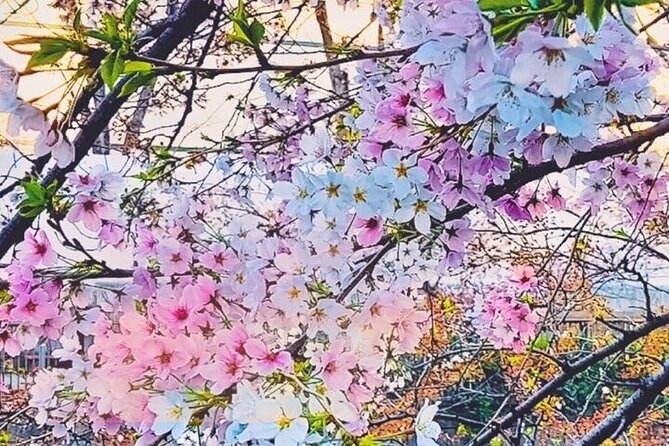
The Meguro River is the star here, especially from late March to early April when cherry trees line the water and turn one of Tokyo’s urban walks into a seasonal spectacle. The route adds Daienji Temple and Hotel Gajoen Tokyo, giving you more than a flower-viewing stroll.
I like the compact 90-minute format, and I like the modest $22 price for a private walk with a national government-licensed English guide. The guide can also adjust the plan when blossoms are late or rain gets in the way, as one March group found when its walk shifted to a traditional house.
The main concern is the meeting point. The guide is meant to wait at Starbucks opposite Nakameguro Station with a company brochure and license certificate, but finding that person may not be easy. One group missed the tour despite arriving on time and had trouble getting a refund, so arrive early and confirm the exact spot before you go.
In This Review
- Key points at a glance
- Why the Meguro River makes this walk worthwhile
- Starting at Starbucks opposite Nakameguro Station
- Following the river for 45 minutes
- Daienji Temple and the memory of an Edo fire
- Hotel Gajoen Tokyo, from restaurant to wedding hall
- What the 90-minute schedule really means
- The $22 price and the private-group value
- Extra claims that need a careful reading
- Who should book this walk?
- Should you book the Meguro walk?
- FAQ
- Where does the tour begin?
- Where does the tour finish?
- How long does the activity last?
- What language is the tour offered in?
- Is the tour private?
- What is included in the price?
- How much does the tour cost?
- When are the cherry blossoms usually visible?
- What should I bring?
- Can I cancel for a full refund?
Key points at a glance
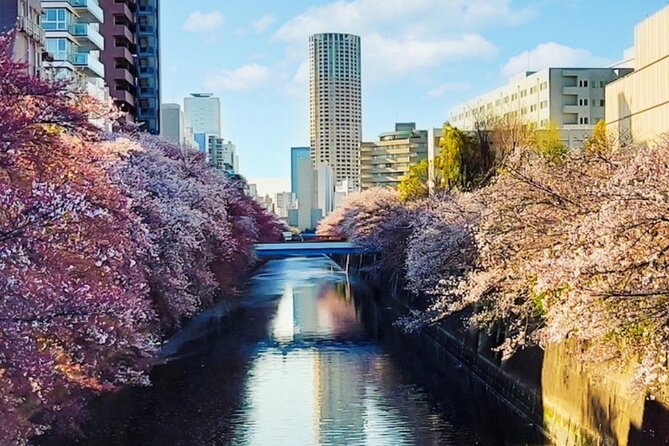
- Meguro River in blossom season: The main attraction is best timed for late March or early April, though the exact bloom changes each year.
- Daienji Temple’s fire story: This small temple is linked to a major Edo-period fire and was later rebuilt as a memorial.
- Gajoen’s unusual role: Japan’s first general wedding hall began as a restaurant open to both ordinary diners and high-ranking customers.
- A short private walk: Ninety minutes keeps the outing manageable, but it leaves little room for a slow pace or long stops.
- Meeting point matters: Look for the guide at Starbucks opposite Nakameguro Station, carrying the company brochure and license certificate.
- Good value with a small group: At $22 per person, the tour is inexpensive for a private guided introduction to this part of Tokyo.
Why the Meguro River makes this walk worthwhile
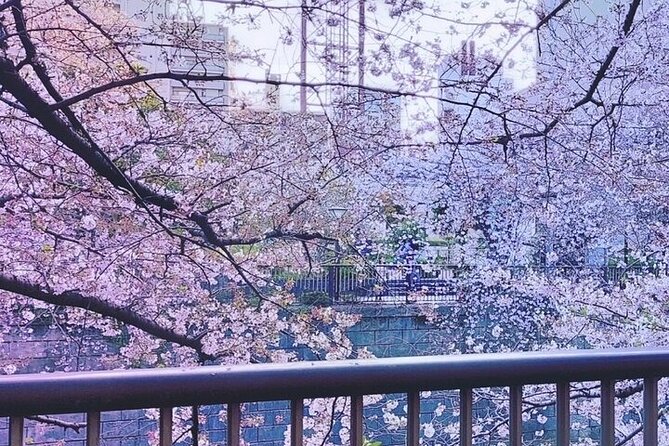
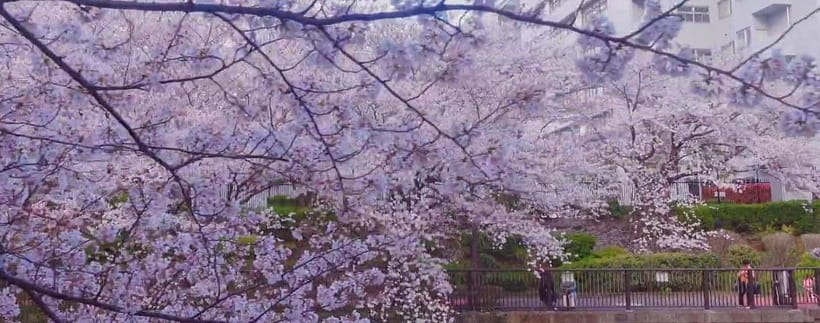
Tokyo has many famous cherry-viewing spots, but the Meguro River offers a different kind of setting. You follow a city waterway, with buildings and neighborhood streets close by, while flowering trees create a long corridor of pink and white overhead.
That urban mix is part of the appeal. You are not being taken to an isolated garden. You are seeing how seasonal beauty fits into ordinary Tokyo life, with the river route connecting Nakameguro to the historic and cultural stops farther toward Meguro Station.
The timing is crucial. The usual season is late March to early April, but the tour does not promise flowers on every departure. A March 30 outing found that the blossoms had not yet opened, and the guide changed the plan to include a traditional house. That flexibility can save the day, but you should book this walk mainly if your schedule already places you in Tokyo during the likely bloom period.
The river section is listed at about 45 minutes, making it the longest part of the tour. You will have time to enjoy the scenery, take photographs, and hear about the area, but this is not designed as a long botanical lecture or a slow photography workshop.
Other walking tours we've reviewed in Tokyo

Starting at Starbucks opposite Nakameguro Station
The tour begins at Starbucks Coffee, Naka-Meguro Tsutaya Books, opposite Nakameguro Station on the Hibiya Line. The listed coordinates are 35.644621, 139.6993005.
This is a practical meeting area because Nakameguro is easy to reach, but the station surroundings can be confusing. The guide should carry a brochure with the company logo and a licensed guide certificate. Still, one group could not find the guide at the appointed time, even after arriving on time.
I would treat the meeting as the part of the tour that needs the most care. Get there early, stand where you can clearly see the Starbucks entrance and station side, and keep your phone available. If your booking confirmation gives a contact method, save it before leaving your hotel.
The tour is private, which should make the start less hectic than joining a large coach group. Yet private does not automatically mean easy to identify. Since no guide name is provided, the brochure and certificate are the main visual clues.
Following the river for 45 minutes

Once the walk begins, the Meguro River section gives you the tour’s strongest visual material. The guide leads you along the river and points out scenic views on the way.
During cherry season, this is the part most likely to justify the booking. The trees are the reason many people come to Nakameguro, and having a guide can add local context to what might otherwise be a simple stroll. You also avoid spending your entire visit at one crowded viewing point, since the route continues toward Daienji and Gajoen.
The walk is not described as strenuous, but comfortable shoes are required. You should expect ordinary city walking rather than a seated sightseeing activity. People who want to stop at every tree for photographs may find the 45-minute schedule a little brisk.
The weather can also change the feel of the outing. One group completed the walk in driving rain, and the guide adapted the plan when the blossoms were not yet open. That is a useful sign for anyone visiting outside the best bloom window, though you should bring weather-appropriate clothing because the experience remains primarily outdoors.
The river portion is also where expectations matter most. If the trees are bare, you will not receive the classic cherry blossom scene shown in promotional images. The route still offers a neighborhood walk, but the seasonal payoff may be limited.
Daienji Temple and the memory of an Edo fire
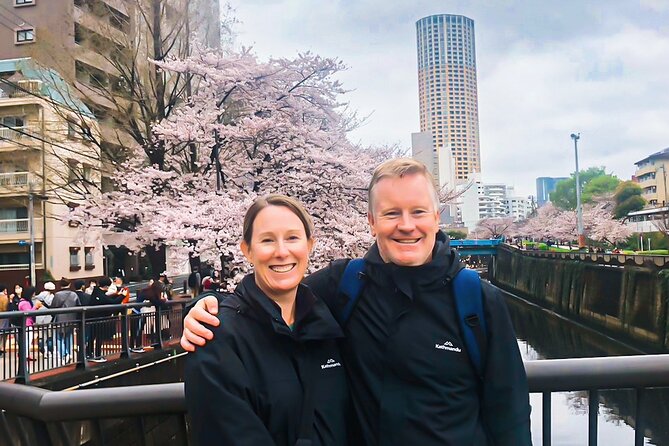
Daienji Temple adds a short but meaningful historical stop. It is described as one of the seven luckiest temples during the Edo era, giving the visit a connection to old Tokyo beliefs and religious culture.
The temple also carries a darker story. In the middle of the 18th century, a fire broke out from the temple and Edo became a sea of fire. The temple was not allowed to be rebuilt until the end of the Edo period. It was later rebuilt as a tribute to people who died in the fire.
That account gives the stop more weight than a quick temple photo. You are looking at a place connected to disaster, remembrance, and the strict controls of the old city. The guide’s explanation is especially useful here because the site may not explain the full story in English on its own.
The supplied schedule does not give a separate length for Daienji. It appears as part of the route between the river and Gajoen, so you should think of it as a focused stop rather than a long temple visit. If you want extensive time for prayer, architecture, or photography, the 90-minute total may feel short.
Hotel Gajoen Tokyo, from restaurant to wedding hall
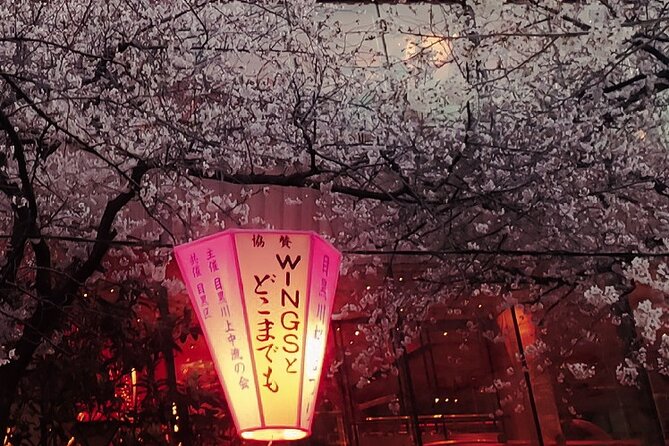
The final major stop is Hotel Gajoen Tokyo, listed for about 30 minutes. The plan includes a photo stop, guided tour, and scenic views on the way.
Gajoen has an unusual place in Japanese social history. It opened in 1931 as a restaurant named after Meguro and became Japan’s first general wedding hall. It served authentic Beijing cuisine and Japanese food, and it used practical ideas such as putting prices directly on the menu.
That pricing approach helped bring in a broad mix of customers. Ordinary people could dine there alongside politicians and wealthy patrons. The place was not only for an elite audience, which makes its story more interesting than a simple tale of grand decoration.
The interiors are described as richly decorated and nicknamed the Ryukyu Castle in Showa. Four of the seven banquet halls were designated tangible cultural properties by the Tokyo Metropolitan Government in 2009. Those details help explain why Gajoen is worth including on a cherry blossom route. You get a change of pace from trees and water to formal interiors and early 20th-century dining culture.
The available information does not promise entry into every hall or access to all interior spaces. The schedule says guided tour, photo stop, and pass by, so keep your expectations measured. You may see selected areas and exterior views rather than receive a full architectural tour.
Other guided tours in Tokyo





What the 90-minute schedule really means
Ninety minutes is a good length if you want a compact introduction before lunch, dinner, or another Tokyo activity. The route begins at Nakameguro and ends at JR Meguro Station, so you do not need to return to the starting point.
The tradeoff is pace. About 45 minutes is assigned to the river and 30 minutes to Gajoen, leaving only a small amount of time for Daienji, transitions, and questions. You will get an overview, not an unhurried day of sightseeing.
I would recommend this format to first-time visitors who want a local guide to shape a short outing. It also works well for repeat visitors who have already seen Tokyo’s larger sights and want one neighborhood with seasonal scenery and a few cultural stops.
It is less suited to anyone seeking a full-day history tour, a slow temple visit, or a dedicated cherry blossom photography session. The private group format gives you personal attention, but the short duration still sets the limits.
The $22 price and the private-group value
At $22 per person, this is a low-cost way to get a guided walk in central Tokyo. The price includes the walking tour and a licensed guide, with English as the listed language.
The value depends on what you want from the guide. If you mainly need someone to lead you beside the river, you could follow the route yourself for free. The fee makes more sense if you want the Daienji fire story, Gajoen’s restaurant and wedding-hall background, and help interpreting places that are easy to pass without context.
The private group format is another advantage. You are not being placed in a large crowd, and the guide may be able to respond to your questions or adjust the route. A March group found the guide friendly and well informed, even though poor weather and late blossoms changed the original experience.
That positive point needs to be balanced against the meeting problem. A cheap tour is not good value if you cannot find the guide, and the poor handling of one missed departure is a serious warning. The stated cancellation policy allows a full refund if you cancel at least 24 hours ahead, but a missed meeting caused by confusion may not receive the same treatment.
Extra claims that need a careful reading

The experience information also includes references to a bus tour around Shinjuku with a national government-licensed guide, a show featuring cartwheeling samurai, breakdancing ghosts, and taiko drums, and several attractions that do not match the detailed Meguro walking route.
You should not assume those activities are part of this 90-minute outing. The clear route described here runs from Starbucks opposite Nakameguro Station along the Meguro River, to Daienji and Gajoen, then ends at Meguro Station.
If the Shinjuku bus tour or theatrical show is important to you, ask the provider to clarify before paying. The confirmed walking plan is the Meguro route, and that is what you should use when deciding if the experience suits your day.
Who should book this walk?
I would choose this tour for a visitor who wants:
- A short cherry blossom outing near Nakameguro
- An English-speaking licensed guide
- A private group rather than a large shared walk
- A simple route with a clear finish at JR Meguro Station
- A mix of scenery, temple history, and unusual architecture
- A budget-friendly activity at $22 per person
I would be cautious if you need perfect blossom timing, a highly visible guide at the meeting point, or a generous refund response after a missed start. Children under three and babies under one are not suitable for the activity, and the stated restrictions also exclude people with altitude sickness and people over 95 years old.
The age restrictions seem unusual for a flat city walk, but they are part of the published conditions. Comfortable shoes are the practical requirement that matters most for the average participant.
Should you book the Meguro walk?
Book it if you are in Tokyo during the likely late March to early April blossom period and want a short, inexpensive introduction to Nakameguro, Daienji, and Gajoen. The best parts are the river scenery, the temple’s fire story, and Gajoen’s unusual mix of public dining, weddings, and ornate Showa-era interiors.
I would not book it solely for guaranteed flowers or the extra Shinjuku and show references. Blossoms may be late, weather may be poor, and those other activities are not clearly part of the route.
My practical advice is simple: confirm the meeting point, arrive early, wear good shoes, and treat the walk as a compact neighborhood introduction rather than a grand Tokyo tour. If you can accept that, the $22 price is fair. If missing the guide would ruin a tightly planned day, choose an option with clearer meeting support.
FAQ
Where does the tour begin?
It begins at Starbucks Coffee, Naka-Meguro Tsutaya Books, opposite Nakameguro Station on the Hibiya Line.
Where does the tour finish?
The tour finishes at JR Meguro Station.
How long does the activity last?
The walking tour lasts 90 minutes.
What language is the tour offered in?
The listed live tour language is English.
Is the tour private?
Yes. The group type is listed as a private group.
What is included in the price?
The price includes the walking tour and a licensed guide.
How much does the tour cost?
The stated price is $22 per person.
When are the cherry blossoms usually visible?
The usual season is between late March and early April, though the exact timing can vary.
What should I bring?
You should bring comfortable shoes.
Can I cancel for a full refund?
Yes. You can cancel up to 24 hours in advance for a full refund.
More Guided Tours in Tokyo
More Walking Tours in Tokyo

More tours in Tokyo we've reviewed







Walking Tours, compared.
 ★ 5.0Tokyo Tsukiji Fish Market Food and Culture Walking TourFrom $99
 ★ 5.0Tokyo: Imperial Palace and Shogun Historical Walking TourFrom $22
 ★ 4.9Tokyo: Shinjuku Local Bar and Izakaya Guided Walking TourFrom $343 hours
 ★ 5.0Tokyo: Tsukiji Fish Market Food and Walking tourFrom $30
 ★ 4.8Tokyo: Asakusa Walking Tour with Sensoji Temple VisitFrom $222 hours
 ★ 4.9Tokyo: Tsukiji Fish Market Guided Walking TourFrom $222 hours