
Reviewed · SUMO EXPERIENCES
Private Ryogoku Walking Tour with Sumo Wrestler and Master Guide
Japan’s national sport comes alive on this private Tokyo walking tour with a sumo wrestler at your side. You’ll explore Ryogoku, Tokyo’s sumo district, then continue to Asakusa for Senso-ji temple, Nakamise Street, local snacks, and traditional shopping.
I like the rare access to a wrestler’s perspective, and I like the small maximum of five people, which leaves room for questions. The main drawback is the price: at $402.32 per person, this is a serious splurge for a walk lasting roughly two to two and a half hours.
In This Review
- Key points to know
- Why a sumo wrestler changes the Ryogoku walk
- Starting at Ryogoku Edo Noren
- Ryogoku Kokugikan and the world of tournaments
- Nomi Sukune Shrine and the sacred side of sumo
- The Hokusai Museum and a touch of modern Ryogoku
- Senso-ji and the approach along Nakamise Street
- What the $402.32 price really buys
- Timing, walking, and practical details
- Who will enjoy this most
- Should you book this sumo and Asakusa walk?
- FAQ
- Where does the tour begin?
- What time does the tour start?
- How long does the experience last?
- Where does the tour end?
- Is the tour private?
- Will an active sumo wrestler lead the tour?
- Are food and drinks included?
- What is the cancellation policy?
Key points to know
- A sumo wrestler leads the walk: You learn about wrestling customs, training, and the sumo world from someone connected to it directly.
- Ryogoku Kokugikan is the centerpiece: The area around Tokyo’s major sumo stadium gives the tour its strongest sense of place.
- Nomi Sukune Shrine adds local meaning: The shrine honors the deity linked with the beginnings of sumo in ancient Japan.
- Asakusa brings variety: Senso-ji and Nakamise Street shift the focus from sport to temples, snacks, and traditional shopping.
- The group is capped at five: You get a more personal outing than on a large coach or standard city walk.
- A retired wrestler may lead: An active wrestler is not guaranteed, especially during tournaments or for other scheduling reasons.
Why a sumo wrestler changes the Ryogoku walk
Ryogoku is more than a stadium district. It is the part of Tokyo where sumo feels tied to daily life, and a wrestler guide gives you a human connection that a museum display cannot provide.
You can ask about the sport’s history, the role of wrestling stables, and the customs surrounding champions. The tour includes a translator, so you are not left trying to follow a technical conversation in Japanese. That matters here, since sumo has its own vocabulary, ranks, ceremonies, and rules.
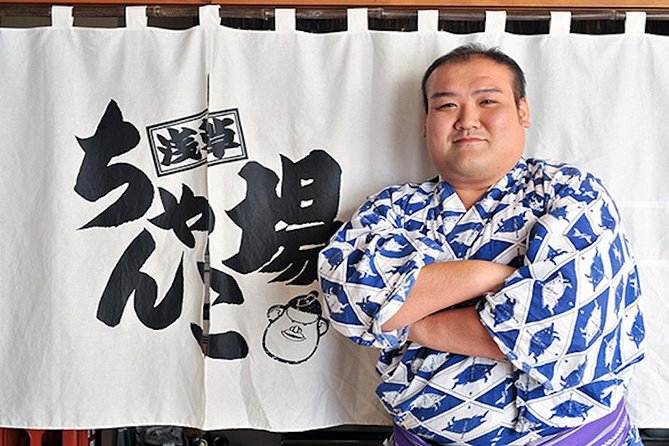
The guide may be an active wrestler or someone who has recently retired. The operator is clear that an active wrestler cannot always attend, particularly during tournaments or for other reasons. I would treat this as an important expectation to set before booking, not as a flaw. A retired wrestler can still explain the world from personal experience, and the tour’s value depends more on the quality of the conversation than on whether the guide is currently competing.
The private format is another strong point. With no more than five people in your booking, you can ask questions without fighting for attention. One couple described the sumo guide and translator as enjoyable conversation partners as well as useful guides, which gives you a good idea of the tour’s appeal. This is not just a photo opportunity. The social side is part of the experience.
A few more Tokyo tours and experiences worth a look

Starting at Ryogoku Edo Noren
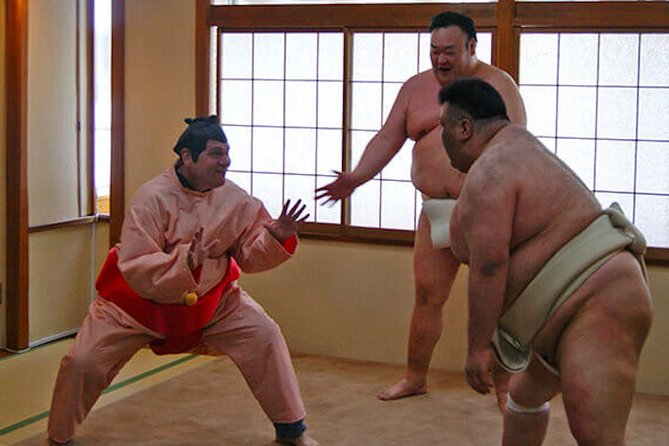
The meeting point is outside Ryogoku Station, at 1-chōme-3-20 Yokoami in Sumida City. The first stop is Ryogoku Edo Noren, a restored former station building with its 1929 façade preserved.
Today, the building contains shops and restaurants designed around an old Tokyo atmosphere. You have about 30 minutes here, and admission is included. It is a useful first stop because it gives you a gentle introduction to Ryogoku before the tour moves into the more specific world of sumo.
You should not expect a full meal to be included. Food and drinks are separate, so bring some yen or a payment card if you want to buy something. The stop is better understood as a place to look around, get oriented, and see how the neighborhood presents its traditional identity.
The station location also makes the start practical. The meeting point is near public transportation, and the activity ends back there, so you do not need to solve a complicated one-way route afterward.
Ryogoku Kokugikan and the world of tournaments
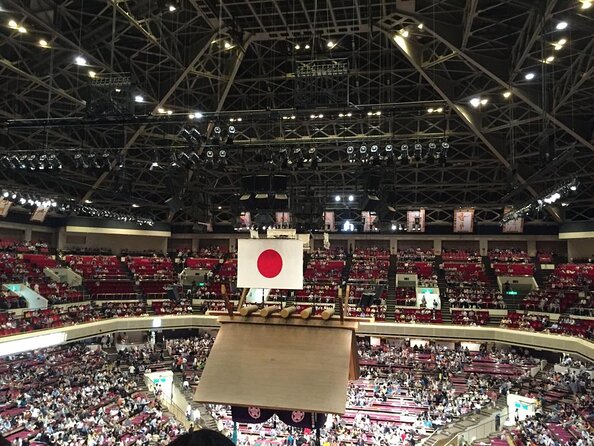
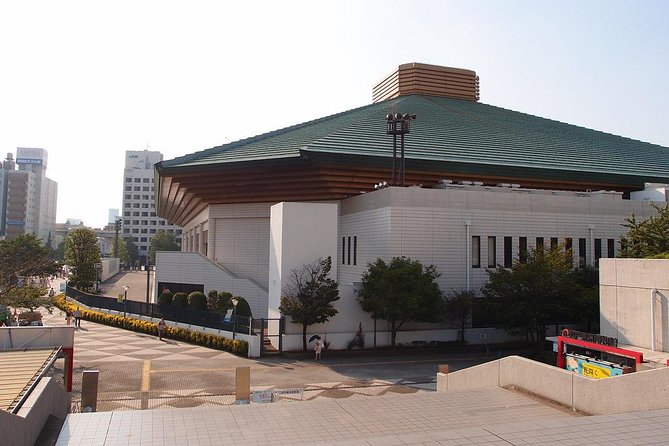
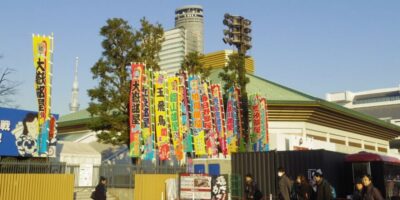
Next comes Ryogoku Kokugikan, the large sumo stadium built in 1985. It can hold more than 10,000 people, and it is the place most closely tied to Tokyo’s major sumo events.
If you are in Tokyo during a tournament, a live match is the clearest way to feel the sport’s drama. This walking tour does not include a tournament ticket, so you should not book it expecting to watch a full day of bouts inside the arena. Instead, the stadium visit gives you context and a chance to understand why Ryogoku matters.
The tour also introduces you to where wrestlers practice and includes a sumo goods shop. The precise access arrangements are not spelled out, so you should see this as an orientation to the sumo district rather than a promise of unrestricted entry into a training stable. Sumo stables are working places, and their schedules and access can change.
This is where your guide earns the fee. A stadium looks impressive, but its meaning becomes clearer when someone explains how the wrestlers’ world fits around it. You can ask questions that a regular sightseeing guide may not be able to answer, and the translator helps keep the exchange moving.
Nomi Sukune Shrine and the sacred side of sumo
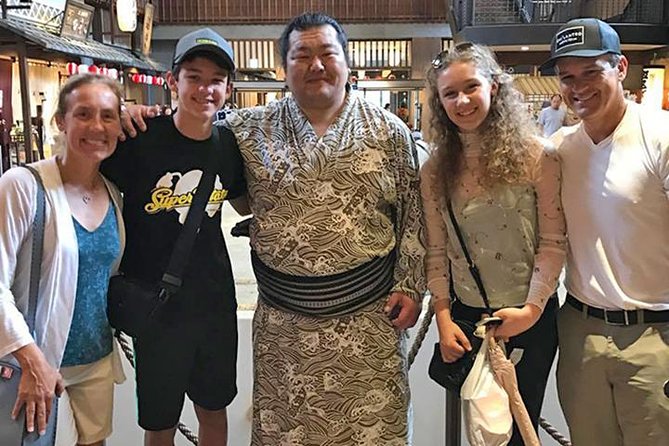
The 20-minute visit to Nomi Sukune Shrine offers a quieter counterpoint to the stadium. The shrine is dedicated to the deity associated with the beginning of sumo in ancient Japan.
A stone statue in the garden carries the names of yokozuna champions, and a newly promoted yokozuna visits the shrine to worship. That detail gives the site a direct connection to modern sumo, not just to a distant legend.
I like this stop because it explains that sumo is not only a contest of strength. It also has ritual, religious, and ceremonial layers. You may find the shrine modest compared with Tokyo’s major temples, but that is part of its value. The guide can help you see why this smaller place matters.
The schedule allows only about 20 minutes, so expect a focused visit rather than a long period for quiet reflection. If you want to study every name on the monument or take your time with photographs, you may feel rushed.
The Hokusai Museum and a touch of modern Ryogoku
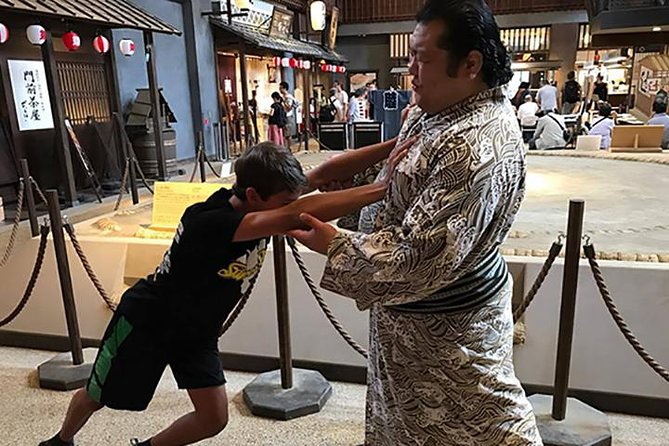
The planned route also refers to the Hokusai Museum. The information provided does not give a separate visit time or confirm exactly how long you spend inside, so you should not build your day around a lengthy museum visit.
Still, the mention is useful for anyone interested in Katsushika Hokusai. If his work is a priority, ask the guide how the museum fits into the route before you book or at the start of the walk. The tour’s main focus remains sumo and the Ryogoku to Asakusa connection, so the museum should be viewed as an additional point of interest rather than the central attraction.
This part of the outing helps show that Ryogoku is not defined by one subject. Sumo, old Tokyo, shrines, food, and Japanese art all meet within the same short area.
Other walking tours we've reviewed in Tokyo

Senso-ji and the approach along Nakamise Street
The second half of the walk takes you to Asakusa, one of Tokyo’s best-known historic districts. Here you visit Senso-ji, the famous Buddhist temple, and walk along Nakamise Street.
Nakamise is especially useful for first-time visitors because it combines sightseeing with easy browsing. You can look at traditional goods, pick up small gifts, and sample snacks as you make your way toward the temple. Food and drinks are not included, so your purchases are your own expense.
The tour description promises time for both shopping and sampling, but the exact number of tastings is not specified. I would think of this as a chance to try something that catches your eye, not as a structured food tour with a set menu.
Senso-ji gives the afternoon a strong finish. After the sumo-focused Ryogoku section, the temple shifts your attention to one of Tokyo’s major religious and cultural sights. A guide can help you connect the temple’s setting with the surrounding streets, rather than leaving you to see only the main gate and quickly move on.
The trade-off is time. The whole activity is listed as approximately two hours in one place and described as two and a half hours in the tour details. With Ryogoku, the stadium area, shrine, possible Hokusai stop, Asakusa, Senso-ji, and Nakamise Street all included, this is a compact route. You will get an introduction to each area, not a slow, in-depth visit to every site.
What the $402.32 price really buys
At $402.32 per person, this is not a budget walking tour. The price is easier to understand if you are booking for a small private group and value personal access to a sumo guide, a translator, and a flexible question-and-answer experience.
For one person or a couple, the cost is high. One participant considered the tour informative and enjoyable but felt the price kept it from earning the top rating. That is a fair concern. You are paying a premium for the guide arrangement and private format, not for a long duration or included meals.
The value improves if you are traveling with up to five people and can use the group discount. The maximum is five per booking, and only your group takes part. Split among a full group, the private format may make more sense than booking several individual places on a standard tour.
You should also remember what the price does not cover. Food, drinks, and transportation to the meeting point are extra. All taxes, fees, and handling charges are included, and a local translator is included, so there should be fewer add-on costs for the guiding itself.
I would book this for the access and conversation, not simply for the number of sights. If you only want to see Senso-ji, Nakamise Street, and the outside of the stadium, you can do those places for far less. If you want a personal introduction to sumo from someone who has lived inside that world, the calculation changes.
Timing, walking, and practical details
The scheduled start is 1:30 p.m. You meet at Ryogoku Station and finish back at the same meeting point. That return is helpful if you have evening plans and do not want to guess where a one-way tour will leave you.
The activity is near public transportation, and most people can participate. The minimum age is 10, so it can work for families with older children who are curious about Japanese sport and culture.
The tour is described as a walking experience, but no total distance or accessibility details are provided. Wear comfortable shoes and be ready to spend the afternoon on your feet. The route includes a station complex, a stadium area, a shrine, and Asakusa streets, so the pace may feel brisk if you prefer long stops.
Confirmation is sent within 48 hours of booking, subject to availability. The cancellation rule is strict: the experience is non-refundable and cannot be changed for any reason. That matters here because illness or a sudden schedule problem can mean losing the full payment. I would book only once your Tokyo plans are firm.
The tour is private, but it is not necessarily completely customized. The route and stops are set, and there is no promise that the group can replace the sumo sites with another part of Tokyo. Your advantage is the small group and direct access to the guide, not unlimited route changes.
Who will enjoy this most
I would recommend this outing to you if sumo is high on your Tokyo list but you are not attending a tournament. It gives you a way to understand the sport beyond watching short clips or seeing a stadium from the outside.
It also suits repeat visitors who have already seen Tokyo’s major sights and want a more focused neighborhood walk. The combination of Ryogoku and Asakusa works well because you get two distinct sides of the city in one afternoon.
Families with children aged 10 or older may find the wrestler guide especially engaging. The private format lets you ask basic questions without feeling out of place, and the route includes visual stops, shopping, snacks, temples, and sport.
I would hesitate if your main goal is a long temple visit, a full museum session, or a live tournament. The tour touches several subjects, but it cannot give each one unlimited time. I would also think twice if $402.32 per person is beyond your comfort zone, since the experience is short and extra purchases are not covered.
Should you book this sumo and Asakusa walk?
Book it if you want a personal connection to sumo and value a private group of no more than five. The most memorable part should be the conversation with the wrestler and translator, supported by visits to Kokugikan, Nomi Sukune Shrine, Senso-ji, and Nakamise Street.
Skip it if you only need a basic Asakusa sightseeing walk or if you expect guaranteed access to an active wrestler. A recently retired wrestler may lead, and the tour does not include tournament admission.
For the right person, this is a distinctive Tokyo afternoon. You pay a lot, but you receive something more specific than a standard city tour: a sumo-centered look at Ryogoku, followed by some of the city’s best-known traditional sights.
FAQ
Where does the tour begin?
It begins at Ryogoku Station, at 1-chōme-3-20 Yokoami, Sumida City, Tokyo 130-0015, Japan.
What time does the tour start?
The scheduled start time is 1:30 p.m.
How long does the experience last?
The tour is described as approximately two and a half hours, although the listed duration is also given as about two hours.
Where does the tour end?
The activity ends back at the meeting point.
Is the tour private?
Yes. Only your group participates, and each booking can include a maximum of five people.
Will an active sumo wrestler lead the tour?
An active wrestler is not guaranteed. If one is unavailable because of tournaments or other reasons, a just-retired sumo wrestler may lead instead.
Are food and drinks included?
No. Food and drinks are not included in the price. You pay separately for snacks and other purchases in Asakusa.
What is the cancellation policy?
The experience is non-refundable and cannot be changed for any reason. Canceling or requesting an amendment does not result in a refund.
More Guided Tours in Tokyo

More Walking Tours in Tokyo
More Sumo Experiences in Tokyo

More tours in Tokyo we've reviewed



Sumo Experiences, compared.
 ★ 4.8Tokyo: Sumo Show Experience with Chicken Hot Pot and a PhotoFrom $1032 hours
 ★ 4.8Tokyo: Sumo Show and Dining ExperienceFrom $7990 minutes - 2 hours
 ★ 5.0the SUMO showFrom $89
 ★ 5.0Tokyo Shinjuku Sumo Show & Experience with PhotoFrom $79
 ★ 4.8Tokyo: Sumo Show and Experience in ShinjukuFrom $691h 30m
 ★ 4.6Tokyo: Sumo Tournament Tour with Chair Seat TicketsFrom $141