
Reviewed · SHINJUKU TOURS
Tokyo Private Art Tour in Kagurazaka Shinjuku with Licensed Guide
Tokyo’s art story gets much more interesting when it leaves the museum. This private walk links Yayoi Kusama’s vivid work with Kengo Kuma’s architecture, a modern shrine, old Kagurazaka lanes, and the stone remains of an Edo-era castle gate. You get art, design, religion, and history in one compact outing.
I like the private format, since your group can set the pace and ask direct questions. I also like the route itself: it shows Tokyo as both a modern city and an old capital, rather than treating art as something found only behind gallery walls.
The main caution is the guide’s art background. Nao is praised for making the visit friendly and interesting, but one sharply negative account says the guide relied too heavily on the museum’s wall text. If detailed art criticism is your main goal, you should clarify expectations before booking.
In This Review
- Key points to know before booking
- Why this Tokyo walk is more than a museum visit
- Starting at Yayoi Kusama Museum
- Akomeya Tokyo and Kengo Kuma’s design
- Akagi Shrine, where old religion meets modern design
- Walking through Kagurazaka’s Edo and Parisian sides
- Ushigome-Mitsuke and the samurai-era finish
- What the private format adds
- Price, timing, and practical value
- Who should book this Tokyo experience?
- Should you book the Kagurazaka art walk?
- FAQ
- How long is the Tokyo private art tour?
- What time does the tour start?
- Where does the tour begin?
- Where does the tour end?
- Is admission to the Yayoi Kusama Museum included?
- Is this a private tour?
- What is the cancellation policy?
Key points to know before booking
- Yayoi Kusama Museum visit: About one hour is set aside for Kusama’s work, with admission included.
- Private experience: Only your group participates, so questions and pacing are more flexible than on a large group tour.
- Five contrasting stops: The route moves from contemporary art and architecture to shrines, former geisha streets, and samurai-era remains.
- Kagurazaka’s unusual character: This district combines traces of Edo-period Tokyo with a polished Parisian feel.
- Walk ends near Iidabashi: The final stop is Ushigome-Mitsuke, near Iidabashi Station on the JR line.
- Short afternoon schedule: The tour starts at 2:30 p.m. and lasts about two and a half hours.
Why this Tokyo walk is more than a museum visit
Many Tokyo art tours focus on galleries, exhibitions, or fashionable design districts. This one takes a broader view. It treats Tokyo, or Edo, as a work of art shaped by painters, architects, religious buildings, entertainers, streets, and military power.
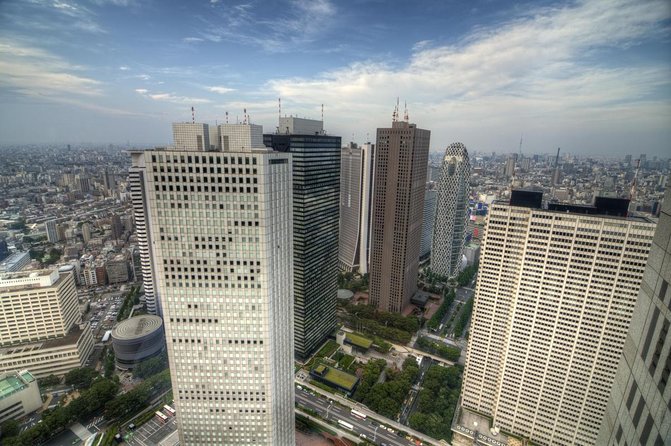
That idea gives the tour a useful structure. You begin with Kusama, one of Japan’s best-known modern artists, then move into architecture and religious design. From there, the route shifts toward Kagurazaka, where older city patterns survive among more polished streets. You finish at Ushigome-Mitsuke, a physical reminder of the samurai government that shaped the city.
I like this variety because it keeps the afternoon from becoming visually repetitive. You are not spending two and a half hours looking at similar buildings or listening to one narrow subject. The tradeoff is that each stop receives only a short explanation, so you should not expect a specialist lecture on every artist, shrine, or historical period.
The price is listed at $46.05 per person. For a private tour with museum admission included, that can be reasonable, especially if you value a guide who can connect separate parts of Tokyo. The value is less clear if your chief aim is formal art analysis, since the guide’s depth in that area may vary.
A few more Tokyo tours and experiences worth a look



Starting at Yayoi Kusama Museum
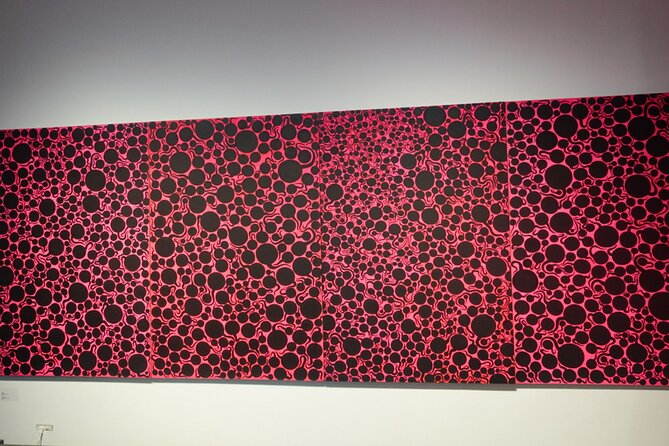
The first stop takes about an hour and includes the admission ticket. That matters because the Yayoi Kusama Museum is the central art-focused part of the experience, not just a quick photo stop along a longer city walk.
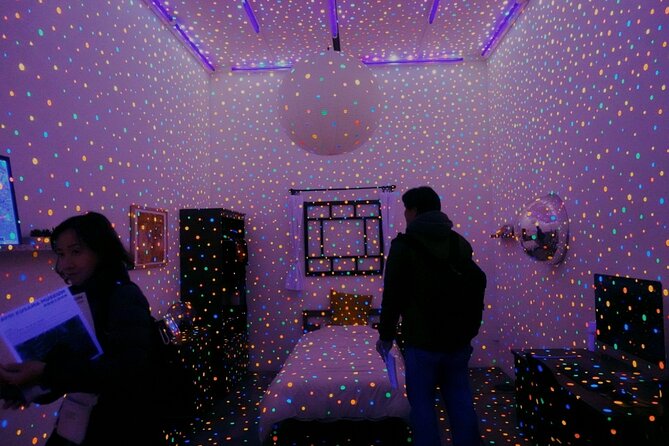
Kusama’s work is known for repeated dots, bold color, mirrored spaces, and an intense personal style. The tour description also promises background on her life, so you should expect the guide to provide biographical context as you move through the museum.
I would treat this hour as the anchor of the tour. It gives you time to look at the installations before the route turns toward buildings and streets. If you already know Kusama’s work, the guide can help connect her career to Tokyo. If you are new to her, the museum gives you a clear introduction before you encounter the more traditional parts of the afternoon.
There is one important point to keep in mind. The information provided does not promise a private museum tour, a special viewing, or a reserved entry time beyond admission being included. Your guide accompanies you, but the level of interpretation may depend on the individual guide.
One especially positive account praises Nao for explaining Kusama’s life and keeping the visit engaging. That is the kind of guide you want here: someone who helps you notice patterns, ideas, and context rather than simply directing you from room to room.
At the same time, one dissatisfied participant felt the guide mainly pointed to the gallery descriptions and did not provide enough art knowledge. That criticism is worth taking seriously. If you book, ask in advance how much time will be devoted to Kusama’s biography, artistic methods, and major themes.
Akomeya Tokyo and Kengo Kuma’s design
The second stop lasts about 20 minutes at Akomeya Tokyo. Admission is free, and the point is the building itself. Its design is associated with Kengo Kuma, a prominent Japanese architect known for using natural materials, light, texture, and carefully framed space.
Twenty minutes is enough for an introduction, not a full architecture seminar. I would expect your guide to point out the building’s design choices and explain why Kuma matters in modern Japanese architecture. You may find this stop most useful if you enjoy noticing how a shop or commercial building can reflect a larger design culture.
This is also where the tour’s title makes sense. The experience is not limited to paintings. Architecture is treated as art, and the route shows how design affects ordinary city spaces.
The stop may feel brief if you want to study the building closely. Still, its short length helps preserve time for Kagurazaka and Ushigome-Mitsuke. I see it as a visual bridge between Kusama’s contemporary art and the older religious and historical sites that follow.
Akagi Shrine, where old religion meets modern design
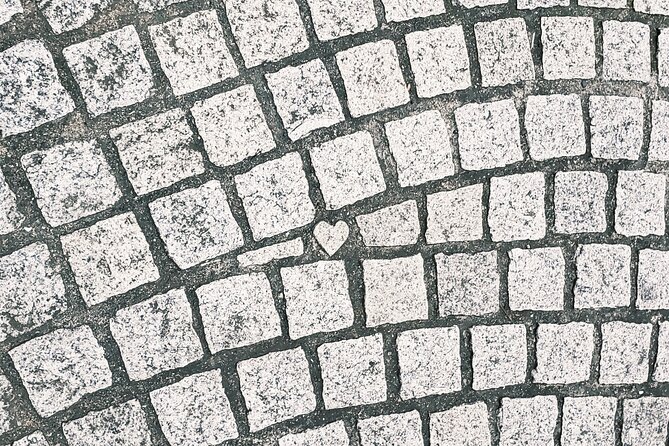
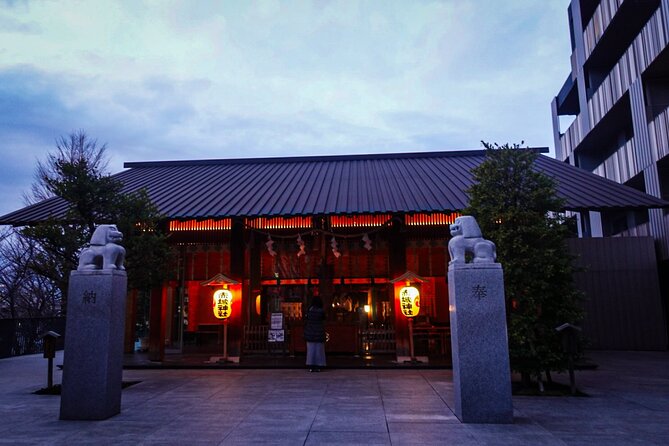
Akagi Shrine takes another 20 minutes and is described as modern and sophisticated. That combination may surprise you. A shrine is often imagined as a traditional wooden structure, but this site gives you a different picture of how Shinto spaces can fit into present-day Tokyo.
The value here lies in contrast. After looking at a contemporary artist and a famous architect, you visit a religious site that also uses modern design. Your guide can explain the shrine’s role and point out how its appearance differs from more traditional sanctuaries.
The stop is free, and there is no separate admission cost to factor in. Because you spend only 20 minutes here, do not expect a long religious-history lesson. Instead, think of Akagi Shrine as a compact example of Tokyo’s ability to place old customs inside a modern city.
The strongest praise for the guiding centers on this part of the route as well as Kusama. One account describes the guide as bright, fun, and able to explain shrines and temples in a way that made the visit enjoyable. That suggests the tour works best when you want broad cultural context delivered in a conversational style.
Walking through Kagurazaka’s Edo and Parisian sides
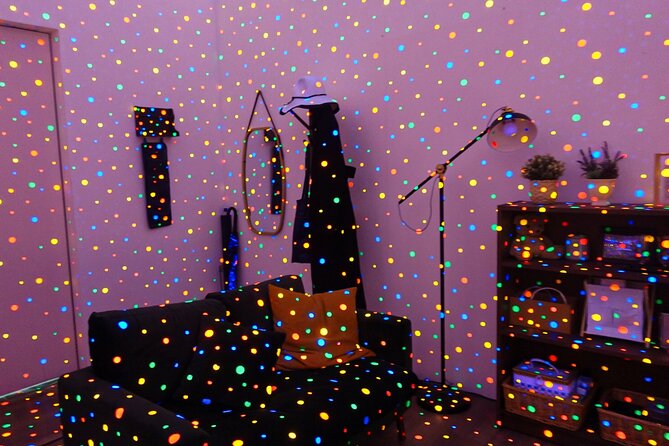
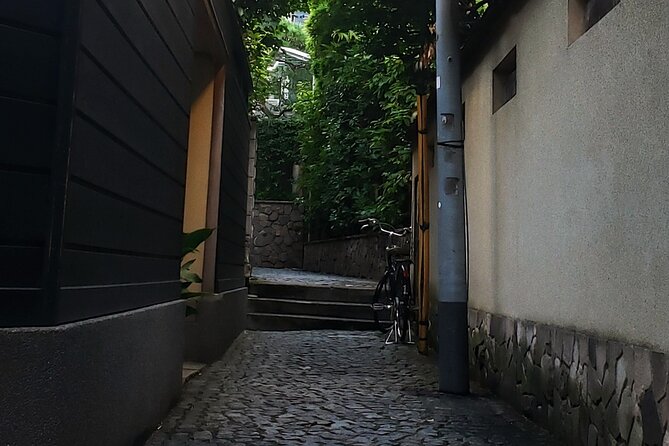
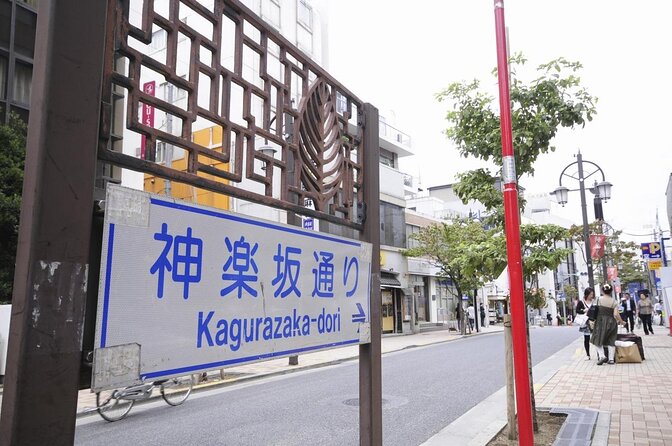
Kagurazaka is the longest outdoor section after the museum, with about 30 minutes set aside for the district. Its appeal comes from the mix of eras. The area retains traces of Edo-period Tokyo while also carrying a polished, Parisian flavor.
This is the part I find most distinctive. Modern Tokyo can feel enormous and fast, but Kagurazaka offers a more intimate sense of how streets, businesses, and social life developed over time. The district is also associated with a former geisha culture, so your guide’s explanation can help you see more than attractive lanes and storefronts.
The route description calls attention to the meeting of Edo atmosphere and Parisian style. That phrase is useful because it signals what to expect: not a preserved historical village, but a city district where older traces sit alongside sophisticated contemporary life.
Thirty minutes passes quickly. You will likely get an orientation rather than a detailed neighborhood history. If you want to linger for photographs, browse shops, or stop for food, you may need to return later on your own.
I would also keep the walking pace in mind. The full experience moves through several neighborhoods and ends at a different location from where it begins. The provided details do not specify the exact walking distance or number of stairs, so wear comfortable shoes and be ready for an urban walk.
Other guided tours in Tokyo




Ushigome-Mitsuke and the samurai-era finish
The final stop is Ushigome-Mitsuke, one of the more historical parts of the route. Here you can see remains connected with the samurai era, and the guide explains their role.
Ushigome-Mitsuke was one of the gates associated with Edo Castle. The tour ends near Iidabashi Station on the JR line, at 2 Chome-9 Fujimi in Chiyoda City. This makes the finish practical: you are not returned to the starting point, but you end near a major rail connection.
I like ending here because the stop gives the whole afternoon a historical frame. Kusama represents modern creative Tokyo. Kengo Kuma represents present-day design. Akagi Shrine shows religion adapting to the city. Kagurazaka preserves social and urban traces from earlier times. Ushigome-Mitsuke brings you to the political and military structure behind Edo.
The stop lasts about 20 minutes, so again, expect explanation and orientation rather than an extended archaeological visit. The surviving stonework may not look dramatic at first glance. A licensed guide is useful because the significance is easy to miss if you do not know what you are seeing.
What the private format adds
This is a private activity, which means only your group participates. That is a real benefit for couples, families, or friends with a shared interest in art and history.
You can ask why a building looks the way it does, request more explanation about Kusama, or spend less time at a stop that does not hold your interest. A private guide can also adjust the conversation to your level, at least in theory.
The format does not guarantee specialist expertise. The provider is the Tokyo Licensed Guide Volunteer Group, and the guide is described as licensed. A license is useful for local guidance and communication, but it is not the same as a university-level art historian or museum curator.
That distinction matters because the experience combines several subjects. You are asking one guide to discuss a major artist, a modern architect, Shinto design, geisha-era Kagurazaka, and Edo Castle defenses. I would book it for connections across Tokyo culture, not for a technical art lecture.
The start time is 2:30 p.m. and the tour lasts roughly two hours and 30 minutes. That makes it a convenient afternoon plan, especially if you want a morning for another part of Tokyo. The end point near Iidabashi also lets you continue elsewhere instead of sending you back across the city.
Price, timing, and practical value
At $46.05 per person, the tour sits in a moderate price range for a private guided activity. The included Yayoi Kusama Museum ticket improves the value because you are not paying the tour price and then adding that admission separately.
Still, price depends on group size. For one person, the private format may feel expensive compared with exploring the neighborhoods independently. For two or more people, the cost becomes easier to justify because you are sharing a guide rather than joining a large group.
I would also remember that most bookings are made about 46 days ahead. That suggests you should not leave this until the last minute if the Kusama Museum is important to your plans.
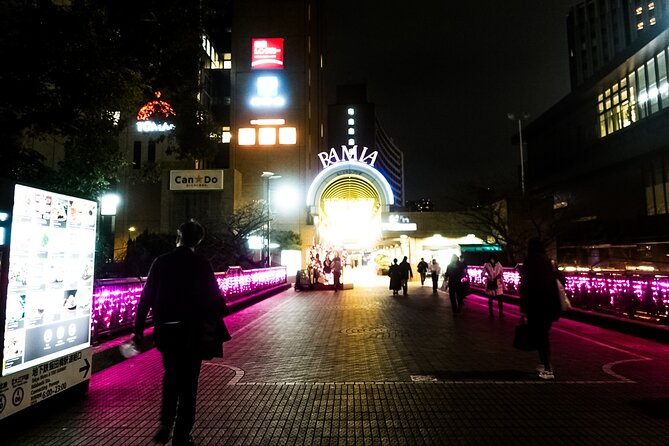
The meeting point is FamilyMart Evergrace Haramachi at 1-chome-13 Haramachi, Shinjuku City. The tour ends at 2 Chome-9 Fujimi, Chiyoda City, near Ushigome-Mitsuke and Iidabashi Station. Confirm the map pins carefully, since the start and end areas are different.
A mobile ticket is provided, and confirmation arrives when you book. The activity is near public transportation, and the information says most participants can take part. No detailed accessibility information is provided, so contact the provider if stairs, walking distance, or museum access are concerns.
Free cancellation is available until 24 hours before the 2:30 p.m. start time. Changes or cancellations inside that window are not accepted for a refund.
Who should book this Tokyo experience?
I would recommend this tour to you if you want a private introduction to several sides of Tokyo in one afternoon. It suits first-time visitors who want more context than a self-guided walk, couples who enjoy art and architecture, and repeat visitors looking for a neighborhood outside the most familiar sightseeing circuit.
It is also a good fit if Kusama is your main interest but you do not want your whole afternoon limited to a museum. The route gives you a clear shift from contemporary art to design, religion, neighborhood culture, and samurai history.
I would hesitate if you need expert-level art interpretation. The mixed feedback about the guide’s art knowledge means you should ask direct questions before booking. You can also request a Kusama-focused explanation so you know what kind of visit to expect.
Should you book the Kagurazaka art walk?
Book it if you value breadth, a private guide, and a clear Tokyo story more than specialist commentary. The combination of included Kusama admission, modern architecture, Akagi Shrine, Kagurazaka, and Ushigome-Mitsuke is unusual for a two-and-a-half-hour route.
Skip it if you want a museum professional to analyze Kusama’s work in detail or if you prefer to explore at your own slow pace. The tour is compact, and each stop receives a limited amount of time.
For the best experience, arrive ready to walk, ask the guide what art background they bring, and confirm that Kusama will receive the level of attention you want. If the answer suits you, this can be a smart way to connect Tokyo’s creative present with its Edo-era past.
FAQ
How long is the Tokyo private art tour?
The experience lasts approximately two hours and 30 minutes.
What time does the tour start?
The tour starts at 2:30 p.m.
Where does the tour begin?
The meeting point is FamilyMart Evergrace Haramachi, 1-chome-13 Haramachi, Shinjuku City, Tokyo 162-0053, Japan.
Where does the tour end?
The final stop is Ushigome-Mitsuke near Iidabashi Station on the JR line, at 2 Chome-9 Fujimi, Chiyoda City, Tokyo 102-0071, Japan.
Is admission to the Yayoi Kusama Museum included?
Yes. Admission to the Yayoi Kusama Museum is included, and the visit lasts about one hour.
Is this a private tour?
Yes. Only your group participates in the activity.
What is the cancellation policy?
You can cancel up to 24 hours before the experience starts for a full refund. Cancellations or changes made less than 24 hours before the start time are not accepted for a refund.
More Private Tours in Tokyo


More Guided Tours in Tokyo
More Shinjuku Tours in Tokyo


More tours in Tokyo we've reviewed






Shinjuku Tours, compared.
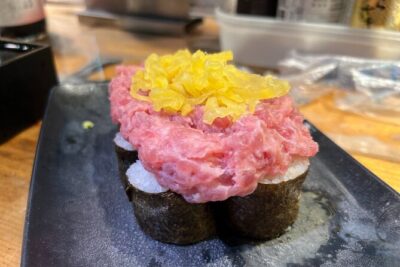 ★ 5.0Tokyo: Shinjuku Food Tour (13 Dishes at 4 Local Eateries)From $86
 ★ 5.0Tokyo Bar Hopping Tour in Shinjuku (All-You-Can-Drink + Dinner)From $106
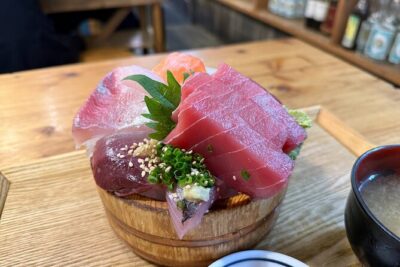 ★ 4.9Tokyo: Shinjuku Food Tour (15 Dishes and 4 Eateries)From $853 hours
 ★ 5.0Best of Shinjuku: Izakaya Food Tour (4 Stops, 14+ Tastings)From $92
 ★ 4.9Tokyo: Shinjuku Local Bar and Izakaya Guided Walking TourFrom $343 hours
 ★ 5.0Tokyo Shinjuku Chopsticks Making ClassFrom $20