
Reviewed · ASAKUSA TOURS
Tokyo History: Sensoji Temple & Asakusa District Private Tour
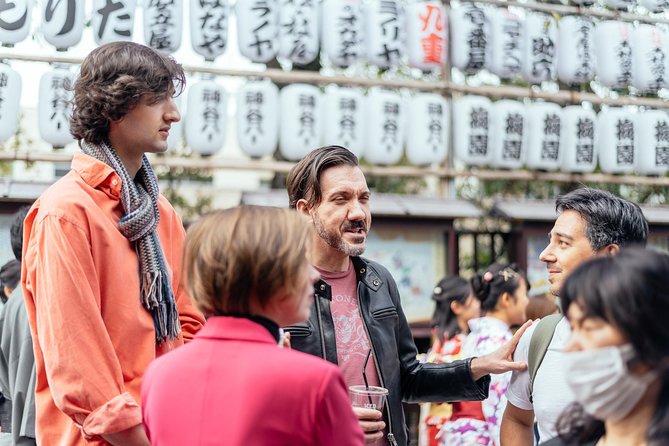
Asakusa is where old Tokyo feels easiest to read. On this private walk, you pass beneath the huge lantern at Kaminarimon, follow Nakamise toward Sensoji Temple, and hear how Tokyo’s oldest temple connects to the city’s past. I like the small temple offering, which lets you take part instead of only looking. I also like the mix of sights, from melon pan and age manju to handmade crafts and plastic food models.
The private format gives you room to ask questions and change the pace. Guides including Gulay, Carlos, RamKy, Abu, and Sheilina have been praised for making the walk personal and adding useful suggestions for the rest of Tokyo. The main drawback is that three hours can feel tight if you want to shop, snack, and linger at every stop.
In This Review
- Key points at a glance
- Why Asakusa is a smart place to begin in Tokyo
- Starting beneath Kaminarimon’s giant lantern
- Nakamise Shopping Street, 20 minutes of snacks and souvenirs
- Hozomon and the age manju stop
- Sensoji Temple and the ritual of incense
- Asakusa Hanayashiki and the backstreets
- Traditional crafts in Taito
- Kappabashi Street and Tokyo’s plastic food
- What the private guide adds
- Price, timing, and practical value
- Who will get the most from this walk
- Should you book the Asakusa private tour?
- FAQ
- How long does the Asakusa private tour last?
- Is this a private activity?
- Where does the tour start?
- Where does the tour end?
- Is hotel pickup included?
- What is included in the tour?
- Are food and drinks included?
- Can I cancel for a full refund?
Key points at a glance
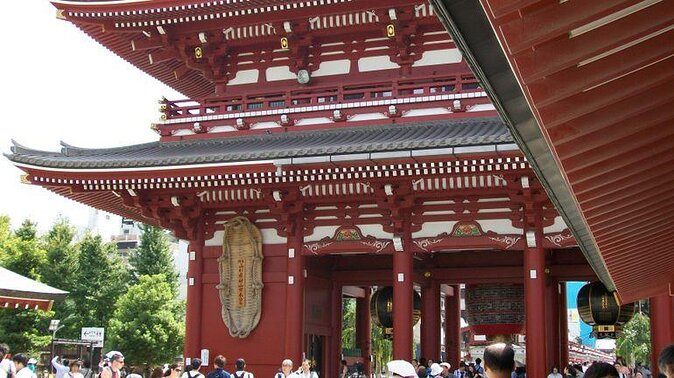
- Kaminarimon to Sensoji: Begin with Tokyo’s famous red gate, lantern, and temple approach.
- Private attention: Your group walks with one guide, rather than joining a large public tour.
- Local tastes: Try age manju and seek out freshly made melon pan along the route.
- Crafts and kitchen culture: See traditional handiwork and the restaurant-supply shops of Kappabashi.
- Flexible storytelling: Guides such as Gulay, Carlos, and RamKy have tailored walks around questions and interests.
- Easy cancellation: Cancel at least 24 hours before the start time for a full refund.
Why Asakusa is a smart place to begin in Tokyo
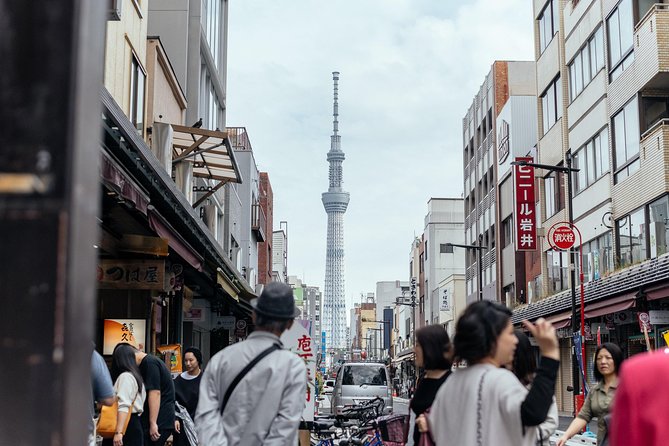
Tokyo can feel hard to decode at first. The city is huge, fast, and full of modern districts that blur together. Asakusa gives you a clear starting point. Its temple gates, old shopping street, side lanes, food stalls, craft shops, and traditional customs all sit within a compact walking area.
This tour focuses on the parts you could easily pass without understanding. Your guide can explain why people pause at the incense burner, how to approach the temple, and what the gates and lanterns mean. That context matters. Sensoji is not just a photogenic building. It is a place of worship, and a guide helps you behave respectfully while still enjoying the visit.
I also like that the route does not stop at the temple alone. You move into the surrounding neighborhood, where the experience becomes more everyday. Nakamise sells souvenirs and sweets. Kappabashi sells tools, dishes, and restaurant goods. The Edo Taito Traditional Crafts Center gives you a look at local making rather than only local sightseeing.
The tour is private, so only your group and guide participate. That makes a real difference for families, couples, and solo visitors who want to ask questions without holding up strangers. It also allows some flexibility, though the stated length is about three hours and the route has several scheduled stops.
A few more Tokyo tours and experiences worth a look

Starting beneath Kaminarimon’s giant lantern
The meeting point is at 2-chōme-16-11 Kaminarimon in Taito City. This places you by Kaminarimon, the outer gate leading toward Sensoji. Its large lantern and colorful figures create an immediate sense of arrival, and your guide uses the setting to introduce Asakusa.
This is a good place to get your bearings. You are not simply being led from one photo stop to another. The guide can connect the gate to the temple grounds and explain how the approach works. If you are new to Japanese Buddhist and Shinto customs, ask questions early. Guides have been praised for explaining culture as well as dates and buildings.
The route is on foot and uses narrow streets, shopping areas, and temple grounds. You should be comfortable walking for several hours and standing at points along the way. Public transportation is nearby, but hotel pickup and drop-off are not included, so plan your route to the meeting point before you arrive.
Nakamise Shopping Street, 20 minutes of snacks and souvenirs
From Kaminarimon, you walk along Nakamise Shopping Street. Locals have shopped here since the 18th century, and the street leads toward Sensoji through a line of traditional lanterns, statues, souvenir shops, sweets, and street food.
This is one of the tour’s most useful sections because Nakamise can be easy to treat as a shopping corridor only. Your guide can point out the difference between a keepsake designed for visitors and a food or item with a stronger connection to local custom. You might find fans, small crafts, temple-themed goods, and Japanese sweets, but the exact shopping time depends on your pace.
Twenty minutes is enough for an introduction, not a serious buying session. If you see something you want, make a note of the shop and return after the tour. The private setup may help if you have a particular interest, such as sweets or small traditional goods, since you can tell the guide what catches your eye.
Do not expect food and drinks to be included in the tour price. The experience includes a small offering for Sensoji, but other purchases and snacks are your responsibility.
Hozomon and the age manju stop
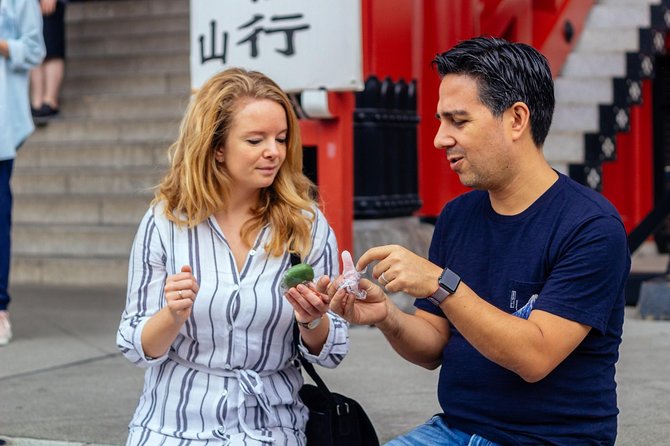
The next gate is Hozomon, the second major entrance to the temple. Before passing through, the route includes a stop at a shop where you try age manju in a flavor of your choice.
This is a small detail, but it gives the walk a welcome sense of place. You are not being handed a generic snack at a tour bus stop. You are sampling a sweet associated with the neighborhood while moving toward the temple. Ask your guide about the filling and preparation if you want more than a quick taste.
Age manju is fried, so it may feel rich after other Tokyo snacks. If you have dietary restrictions, the supplied information does not specify options or ingredients. Ask before eating, and remember that food is not generally included apart from the stated temple offering and the planned tasting experience.
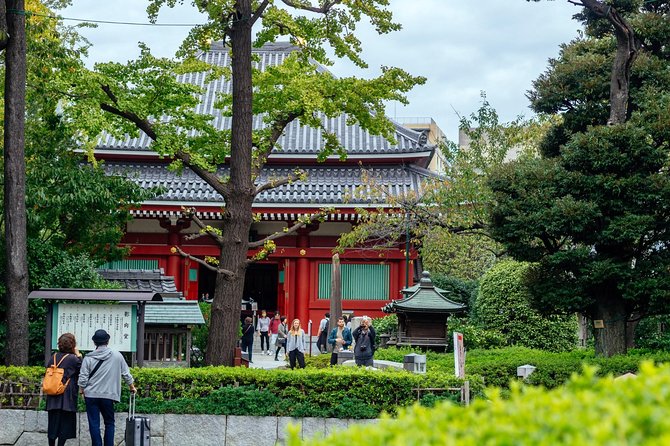
Hozomon also marks a shift from commercial Asakusa to the temple grounds. The gates make the transition obvious, and your guide can help you notice the details that get lost when the approach is crowded.
Sensoji Temple and the ritual of incense
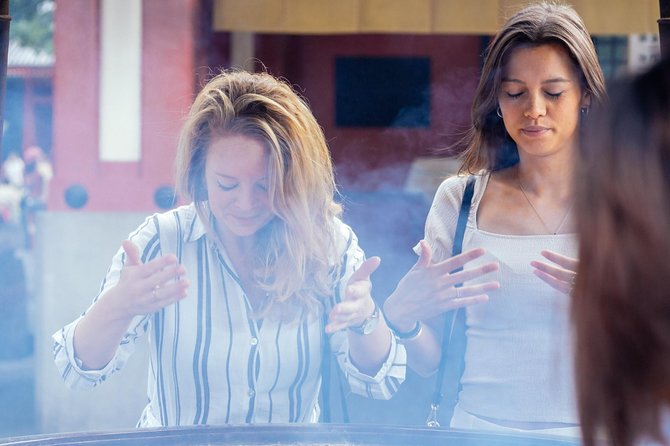
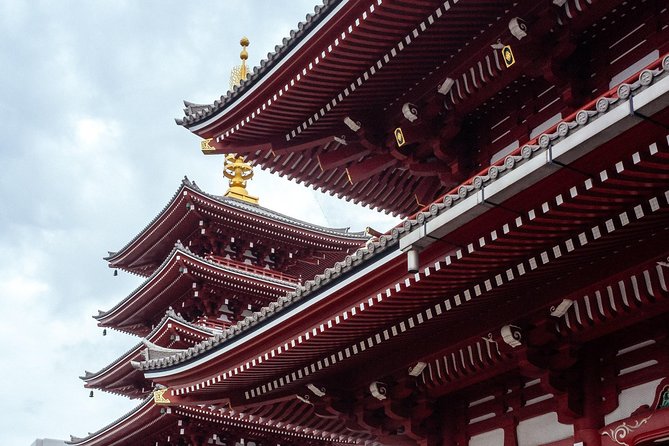
Sensoji is considered Tokyo’s oldest temple, with a history dating to 628. The temple is the central stop, and about 20 minutes is planned for it. Before entering, you can let incense smoke waft over you, a familiar Japanese Buddhist custom traditionally associated with cleansing or helping cure ailments.
This is a place to slow down. Watch how people move through the grounds, listen to your guide’s explanation, and take care around worshippers. Your included offering gives you a simple way to participate. It is not a major religious ceremony, but it makes the visit more meaningful than simply standing outside and taking photographs.
The temple can be busy, especially during holidays and special events. One guide helped a group enjoy the area during Lunar New Year and Japan’s Foundation Day, when crowds were heavy. Another group happened to see a Shinto wedding blessing, and someone else saw a samurai ceremony. These events are possible but not promised, so do not book the tour expecting a ceremony.
The 20-minute temple allocation may feel short if you want detailed time for prayer, photos, shopping, and every corner of the grounds. The benefit is that the guide keeps the walk moving and gives you a useful framework. If Sensoji is your main priority, say so at the start and ask how the available time can be used.
A few more Tokyo tours and experiences worth a look
Asakusa Hanayashiki and the backstreets
After Sensoji, the guide leads you through narrower streets toward Asakusa Hanayashiki. The stop lasts about 15 minutes and includes a place known for freshly made melon pan bread.
This section changes the mood. The grand gate and temple give way to smaller streets and neighborhood food culture. Melon pan is a sweet bread with a crisp, biscuit-like outer layer, and eating it fresh is part of the appeal. The exact food stop can depend on opening hours and the day’s conditions, so treat it as a planned taste rather than a full meal.
You pass through Hanayashiki rather than spending the day at the attraction. The supplied details do not include admission to rides or a longer visit, so this is best understood as part of the walking route. Families may enjoy the change of pace, while serious amusement-park fans should not confuse the stop with a dedicated park visit.
Traditional crafts in Taito
The Edo Taito Traditional Crafts Center, also called the Edo Shitamachi Traditional Crafts Museum, offers a look at objects made by Tokyo artisans. The scheduled visit is about 15 minutes.
I find this stop valuable because it adds a working, creative side to Asakusa. Temples and old streets show what survived. Craft displays show how local skills continue. On weekends, you may see an artisan performing the craft in front of you, though that depends on the day and schedule.
Fifteen minutes allows a quick introduction. It is not enough for a full workshop or long examination of every item. If handmade objects interest you, tell your guide. The private format gives you a better chance of focusing on the types of work you care about, though the overall walk still has a fixed time limit.
Kappabashi Street and Tokyo’s plastic food
The route continues to Kappabashi Street, also called Kappabashi Dogugai, the restaurant-supply district. This is one of the most entertaining stops for shoppers because it is known for the realistic plastic models used to show dishes outside Japanese restaurants.
You may have wondered how a restaurant gets a bowl of ramen, a plate of sushi, or a dessert to look so convincing in a display window. Kappabashi is where those models are created and sold. The street also has kitchen goods and restaurant supplies, giving you a different view of Tokyo commerce.
The listed route includes Kappabashi twice, with 15 minutes assigned to each entry. In practical terms, expect time in the Kappabashi area rather than two entirely separate attractions. The precise shops and amount of browsing can depend on your guide, the pace of your group, and what interests you.
This is a good place to buy a useful souvenir. One guide led a group to special small bowls that became a lasting reminder of the walk. Still, remember that purchases are not included, and you will need to carry anything you buy for the rest of the day.
What the private guide adds
The strongest reason to choose this experience is the guide, not admission access. The temple and shopping streets are open to the public. What you are paying for is explanation, local framing, and the ability to shape the conversation.
Guides named in the supplied feedback include Abu, Shelina or Sheilina, Gulay, William, Carlos, and RamKy. You are not guaranteed one particular person, but these names show the range of guide personalities connected with the experience. Gulay has been described as warm and effective at explaining Japanese customs. Carlos has offered suggestions for other places in Tokyo. RamKy has handled long conversations about Japanese culture and the area’s past. Abu has been flexible with requests.
The guide backgrounds may vary. One guide was from Eastern Europe, while another described Japan as an adopted home. That is not a problem in itself, but it means you should think of the guide as a well-prepared local host rather than assuming every guide grew up in Asakusa.
The private format works best when you participate. Ask why people use the incense burner, how to act at the temple, what a craft item is used for, or where to return after the tour. You can also request more time for food, shopping, architecture, or cultural questions, although the stated route and three-hour length place limits on how far the walk can change.
Price, timing, and practical value
At $139.63 per person, this is not the cheapest way to see Sensoji. The temple, gates, Nakamise, and Kappabashi are public areas that you can visit on your own. The price makes sense when you value a private guide and want help understanding what you are seeing.
For a couple, family, or small group, the cost can be easier to justify because the tour is private and group discounts may be available. You are not paying for a large vehicle, a major ticketed attraction, or a meal. You are paying for about three hours of a guide’s time, a planned route, cultural explanation, a small temple offering, and selected food tastes.
I would book it early if the timing matters. It is booked, on average, 48 days ahead, which suggests that popular dates can fill well before arrival. Confirmation is provided at booking, and the activity ends back at the meeting point. That return makes it easy to continue shopping or reach another Tokyo district afterward.
The tour is carbon neutral because the provider offsets the tour’s carbon emissions. That is a useful feature for people who prefer walking activities with an offset included, though it does not change the fact that you will still need to arrange your own transportation to and from Kaminarimon.
Free cancellation is available until 24 hours before the start time. Within 24 hours, the payment is not refunded, and changes are not accepted. Cutoff times use local Tokyo time, so check the clock carefully if your plans are changing.
Who will get the most from this walk
I would choose this tour for a first visit to Tokyo, especially if you want cultural guidance early in your trip. Several hours with a guide can help you understand temple customs and give you ideas for other places to see, as Carlos did for one group.
It also suits families and parents traveling with older children or teenagers. The route keeps changing: a massive gate, shopping street, sweet snack, temple, bread, crafts, and restaurant models. An 18-year-old and a parent found this kind of format useful as a shared introduction to Japanese culture.
Couples and solo visitors who want conversation will appreciate the private setup. It is also useful if you have a particular interest in food, crafts, Japanese customs, or local shopping. Tell the guide at the start so the walk feels less like a checklist.
I would be more cautious if you want an unhurried temple visit or a full afternoon of shopping. The tour touches many places in three hours, and each stop is short. It is an orientation walk, not a slow museum tour or a dedicated food crawl.
You should also be comfortable with moderate physical activity. The route is on foot, uses streets and temple grounds, and does not include hotel pickup or drop-off. Wear practical shoes and keep your purchases manageable.
Should you book the Asakusa private tour?
Book this experience if you want Asakusa explained by a person, not just photographed from a map. The best parts are the private questions, the temple offering, the local snacks, and the jump from Sensoji’s ritual grounds to Kappabashi’s playful food models.
Skip it if you are happy exploring independently and prefer to spend your money on shopping or meals. You can visit the main sights without a guide, and three hours leaves limited time for lingering.
For most first-time visitors, I would schedule it near the beginning of a Tokyo stay. Use the walk to learn the customs, ask for neighborhood advice, and return later to Nakamise or Kappabashi with more time. At $139.63 per person, it is best value for people who will actively use the guide’s attention.
FAQ
How long does the Asakusa private tour last?
The tour lasts approximately three hours.
Is this a private activity?
Yes. Only your group and the local guide participate.
Where does the tour start?
It starts at 2-chōme-16-11 Kaminarimon, Taito City, Tokyo 111-0034, Japan.
Where does the tour end?
The activity ends back at the meeting point.
Is hotel pickup included?
No. Hotel pickup and drop-off are not included.
What is included in the tour?
The tour includes a private guide, a small offering at Sensoji Temple, and carbon emissions offset through the provider’s carbon-neutral program.
Are food and drinks included?
Food and drinks are not included unless specifically listed. The route does include trying an age manju, and it visits a place known for freshly made melon pan, but other purchases are your responsibility.
Can I cancel for a full refund?
Yes. You can receive a full refund if you cancel at least 24 hours before the experience start time. Cancellations or changes made within 24 hours are not refunded or accepted.
More Private Tours in Tokyo



More Temples & Meditation in Tokyo
More Asakusa Tours in Tokyo
More tours in Tokyo we've reviewed



Asakusa Tours, compared.
 ★ 4.8Tokyo: Japanese Dance Cabaret Theater Asakusa-Kaguwa TicketFrom $492 hours
 ★ 4.7Tokyo: Meiji Shrine, Asakusa, Skytree Bus Tour and CruiseFrom $12210 hours
 ★ 4.9Tokyo: Roll and Authentic Sushi Making Class in AsakusaFrom $581h 40m
 ★ 4.8Tokyo: Asakusa Walking Tour with Sensoji Temple VisitFrom $222 hours
 ★ 5.0Tokyo Asakusa Rickshaw TourFrom $42
 ★ 4.5Tokyo Panoramic 1 Day: Meiji Shrine, Asakusa, Odaiba and SKYTREE®From $85