
Reviewed · SUMO EXPERIENCES
Complete Sumo Experience in Tokyo
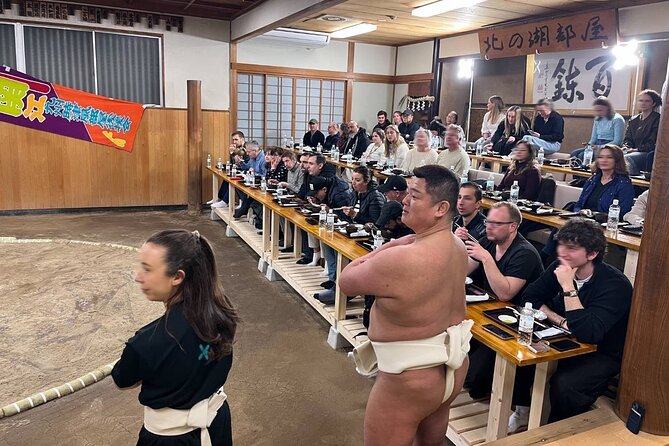
The best part of this Tokyo sumo experience is the close-up view inside a working-style sumo stable. Instead of watching tiny figures across an arena, you sit near the action, see training and matches, and meet the wrestlers afterward. I like the clear sumo lesson and the chance to ask questions directly. The wrestler challenge and photo session also turn this from a lecture into a hands-on outing.
I also like the choice of a chanko-nabe meal, the hearty food associated with sumo wrestlers. The 11 AM and 7 PM sessions include it, while the 3 PM option does not. The main drawback is that the audience participation can run a little long, especially if you prefer watching to joining in.
In This Review
- Key points to know before booking
- Why this is different from watching a sumo tournament
- Arriving at the Kiyosumi sumo stable
- A short lesson before the action
- Watching wrestlers train up close
- Live matches and a friendly wrestler challenge
- Questions, photographs, and time with the wrestlers
- Chanko-nabe at the 11 AM and 7 PM sessions
- Is $138.52 a fair price for two hours?
- Who should book this sumo experience?
- Booking, timing, and cancellation tips
- Should you book it?
- FAQ
- How long does the complete sumo experience last?
- Where does the experience meet?
- Is chanko-nabe included?
- What is included in the activity?
- Can I participate in a sumo challenge?
- How many people can join the experience?
- Can I cancel for a full refund?
Key points to know before booking
- See sumo at stable level: You watch training and matches from close range rather than from distant arena seats.
- Choose your timing carefully: The 11 AM and 7 PM sessions include chanko-nabe, while the 3 PM session is without a meal.
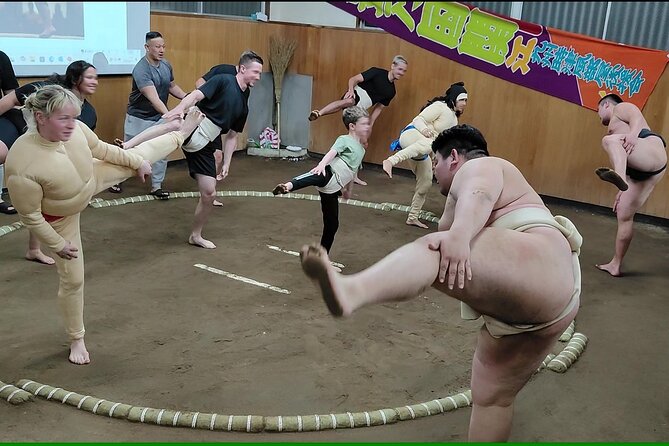
- Meet the wrestlers afterward: You can ask questions, take photos, and challenge them in a friendly bout.
- Expect a small-group setting: The maximum group size is 30 people, which helps keep the action personal.
- Arrive early for seating: The best seats matter here because the value of the experience comes from being close to the ring.
- Plan for a central meeting point: You meet at Koto City’s Kiyosumi 2-chome area and return there when the activity ends.
Why this is different from watching a sumo tournament
A grand sumo tournament gives you the full spectacle: a large arena, formal ceremonies, packed stands, and bouts involving top-ranked wrestlers. This experience offers something else. It brings you into the daily world of sumo, where the focus is on how wrestlers train, how a bout works, and how the wrestlers interact with the public.
That closeness is the main reason to consider the price. At $138.52 per person, this is not a cheap two-hour show. You are paying for a guided introduction, a small group, access to a sumo stable, live training and matches, a question session, photographs, and, at two start times, a meal.
I think the value is strongest for first-time sumo fans and visitors who cannot arrange a morning stable visit on their own. It is also a good fit if you want a social activity rather than a quiet sporting event. If your goal is to see the highest-ranking wrestlers in a formal competition, spend that money on a tournament ticket instead.
A few more Tokyo tours and experiences worth a look
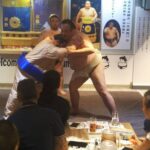
Arriving at the Kiyosumi sumo stable
The meeting point is in Kiyosumi, Koto City, at the address listed as 2-chome 10-11, postal code 135-0024. The location is near public transportation, but hotel pickup and drop-off are not included, so you need to make your own way there.
Give yourself extra time. The experience is built around a close view of the action, and arriving early can help you get a better seat. This is not a minor detail. If your chair is farther from the practice area, you may lose some of the visual benefit that makes this outing different from an arena performance.
The group can include up to 30 people. That is small enough to make the questions, photos, and participation feel more direct than at a large stage show, though it is still large enough that the exact seat and the pace of the group will matter.
The activity lasts about two hours and ends back at the meeting point. That makes it fairly easy to fit into a Tokyo day, especially if you choose the 3 PM time between sightseeing and dinner. The 7 PM option can work well as an evening plan, with chanko-nabe included.
A short lesson before the action
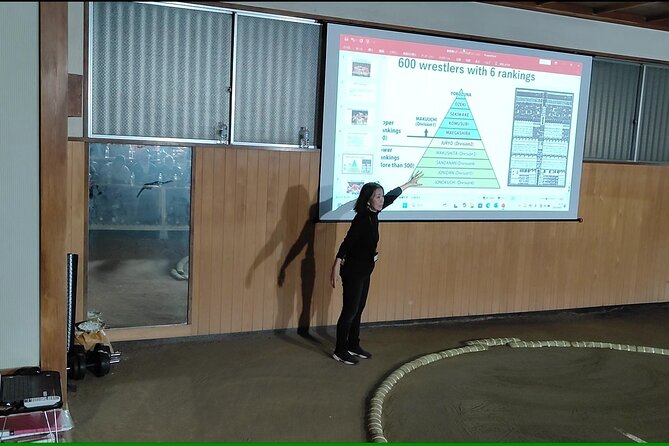
The experience begins with a crash course in sumo led by an expert. This introduction covers the origin, history, and culture of the sport, along with an explanation of its combat techniques.
That background is useful because sumo can look simple from a distance. Two large athletes push, grip, and maneuver until one steps outside the ring or touches the ground. Once you understand the basic aim and technique, the movement becomes easier to follow. A quick explanation also gives you a better sense of why training is so demanding.
The lesson is especially helpful if you have never watched sumo before. You do not need to know the rules in advance, and the format is designed for a general audience. It also gives the activity more substance than a photo opportunity. You are not simply seeing wrestlers in costume. You are learning how the sport works before watching it happen.
Still, keep your expectations in check. The available information does not promise a long historical lecture or a formal museum-style presentation. Think of the introduction as a practical primer that prepares you for the training and matches.
Watching wrestlers train up close
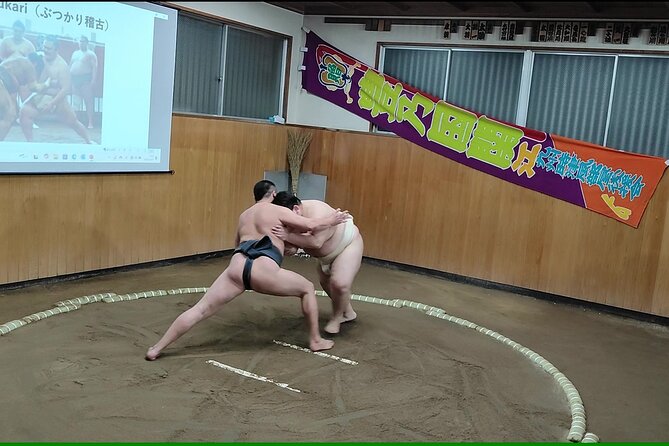
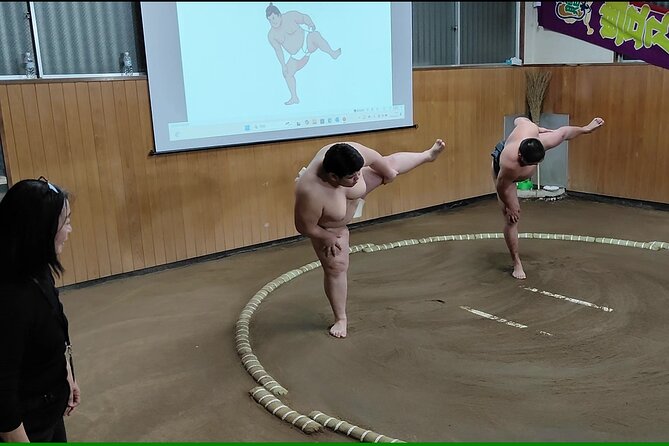
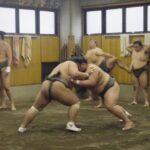
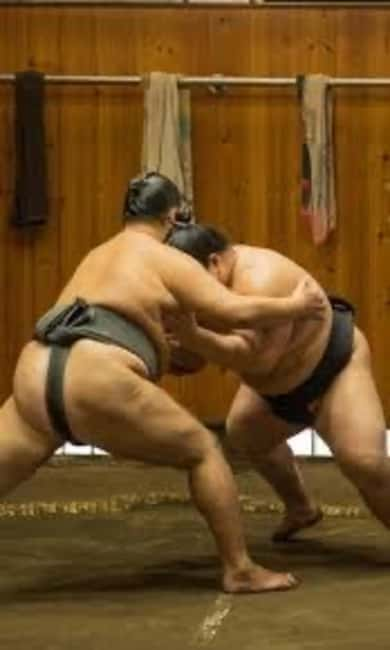
The training session is the heart of the visit. You observe sumo wrestlers practicing in the stable, close enough to notice the physical work and repeated techniques more clearly than you would from arena seating.
This is one of the most useful parts for understanding sumo as a discipline. A tournament bout may last only a few seconds, but training shows the preparation behind that brief clash. The stable setting also gives you a look at sumo away from the pageantry of a major tournament.
You should expect a real demonstration of strength and technique, not a polished theater performance. The atmosphere includes explanation and humor, but the training remains the reason to pay attention. Watch how the wrestlers establish position and use balance. Even without detailed technical knowledge, the close range helps you see that sumo depends on timing and control as much as size.
The stable is also the setting that gives the tour its sense of place. A large arena can make sumo feel like a distant sport. Here, the environment is part of the lesson. You see where this kind of training takes place and how the wrestlers work in a more intimate setting.
Live matches and a friendly wrestler challenge
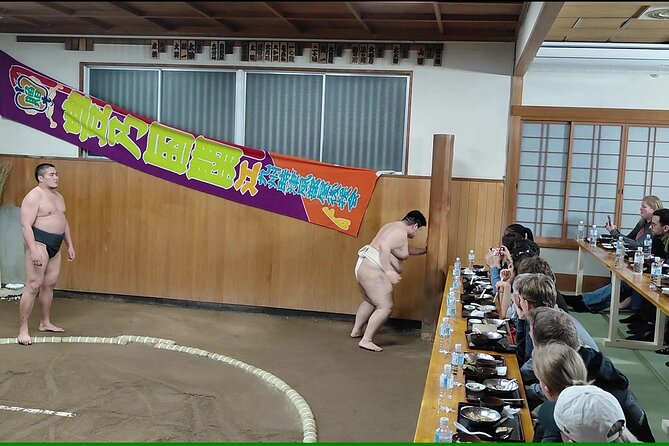
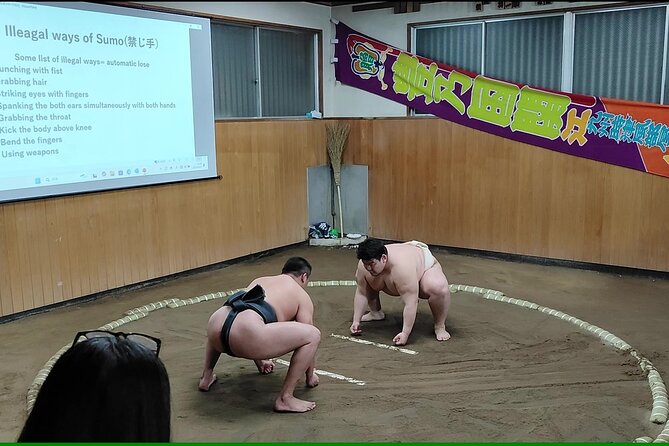
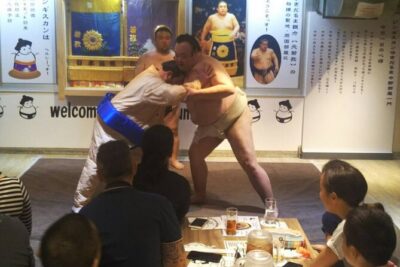
After the training, you watch actual matches. These bouts give you the chance to apply what you learned in the opening lesson. The explanation of combat technique is particularly helpful here, since you can see how a wrestler tries to gain an advantage in real time.
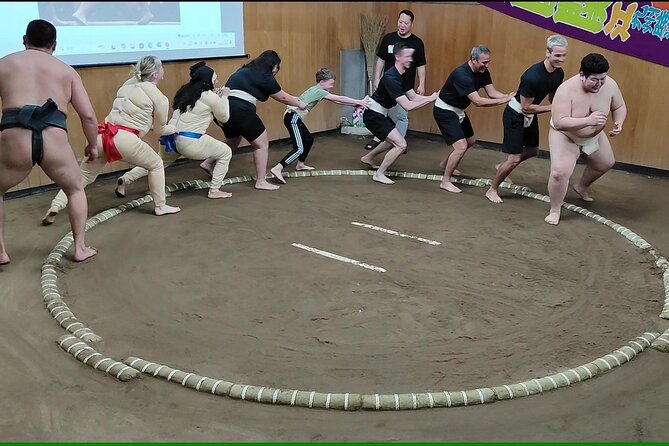
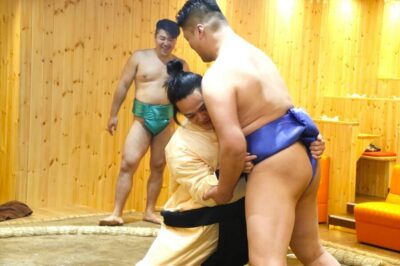
The activity then invites audience participation. You may have the chance to challenge a wrestler yourself, turning the event into a lighthearted contest rather than a strictly passive show. The two wrestlers take part in this section, and humor is an important part of the atmosphere.
This is a strong feature for families, groups of friends, and anyone who enjoys being part of the action. It can also create some of the best memories of the afternoon or evening. You should know, though, that audience participation is not equally appealing to everyone. If you would rather watch quietly, this section may feel too long. One previous assessment specifically found that the participation portion dragged a bit, even though the rest of the experience and food were well received.
That balance is worth keeping in mind when you book. The challenge is not an optional extra described in fine detail, so you should expect the event to include some encouragement for people to join in. If you are shy, you can still enjoy watching the interaction, but this is not the ideal choice for someone seeking a purely observational sports experience.


Questions, photographs, and time with the wrestlers
The question-and-answer session gives you a chance to ask wrestlers about sumo directly. This is more useful than a standard guide talk because it brings personal contact into the experience. You can ask about the sport, training, and the life of a wrestler, although the available details do not specify a set list of questions or a named presenter.
The photo session follows naturally. You can take pictures with the wrestlers, giving you a clear souvenir of the visit. Because the group can reach 30 people, be aware that photo time is shared. The experience includes the session, but it does not promise unlimited private time with each wrestler.
I like this combination because it connects the formal lesson with the human side of sumo. You first learn the rules, then see the physical work, then meet the people who perform it. The friendly tone helps make a sport that can seem intimidating more approachable.
The photographs are also one reason to arrive early and stay organized. Keep your belongings ready and listen to the staff’s instructions so the group can move through the session without unnecessary delays. No special photo equipment is required, since the ticket is mobile and the experience is designed for ordinary visitors.
Chanko-nabe at the 11 AM and 7 PM sessions
The meal option adds a cultural layer to the activity. Chanko-nabe is the hot-pot meal associated with sumo wrestlers and is traditionally linked with building the strength and bodies needed for the sport.
You can choose the 11 AM or 7 PM start time with chanko-nabe. The 3 PM start is the no-meal option. Check the exact option you select when booking, since the meal is not included at every time of day.
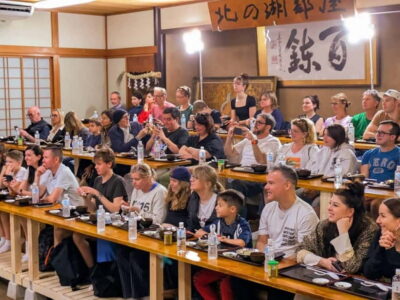
Food helps make the 7 PM session feel like a complete evening plan. You watch training and matches, join the question and photo portions, and eat the same broad style of meal connected with sumo culture. The available feedback describes the food as tasty and excellent, so I would choose a meal session if you want the most complete version of the outing.
The meal may not be the right reason to book on its own. The main value is the stable visit and access to the wrestlers. Think of chanko-nabe as an added part of the cultural experience rather than a substitute for a full Tokyo food tour.
The 11 AM meal option can work well if you want to start a sightseeing day with sumo. The 3 PM choice may be better if you already have lunch plans or want a shorter, food-free visit. The 7 PM session is likely the easiest fit for visitors who want to pair sumo with an evening meal, though you still need to arrange your own transportation to and from Kiyosumi.
Is $138.52 a fair price for two hours?
The listed price is $138.52 per person, which places this firmly in the special-experience category. For two hours, that is more than you would pay for a basic sightseeing stop or a museum visit.
The price makes more sense when you count what is included: an expert crash course, training, matches, a Q&A, photographs, and the wrestler challenge. At the 11 AM and 7 PM times, chanko-nabe is part of the package as well. You are also paying for access to a setting that most visitors cannot simply enter on their own.
I would consider it good value if you have a strong interest in Japanese culture, want close access rather than a distant arena seat, or are looking for a memorable group activity. The high average advance booking time, about 57 days, suggests that you should not leave it until the last moment if your schedule is fixed.
The value is weaker if you are mainly interested in elite tournament competition. You may prefer to use the money for a formal sumo tournament, where the setting and sporting stakes are different. This experience is about access, explanation, participation, and contact.
Who should book this sumo experience?
I recommend it most for:
- First-time sumo spectators who want the basic rules explained.
- Visitors who want to see a traditional stable rather than only a modern arena.
- Families and friends who enjoy a little audience participation.
- People who value photographs and direct questions with performers.
- Diners who want to try chanko-nabe as part of the activity.
- Visitors with a two-hour opening in a Tokyo itinerary.
It may not suit you if you dislike being asked to participate, want a quiet and serious sporting event, or have limited mobility that makes the stable setting difficult. The supplied details say most people can participate, but they do not provide specific accessibility information. If you have particular access needs, confirm them with the provider before booking.
The maximum group size of 30 is reasonable, but this is not a private tour. You will share the training, matches, questions, challenge, and photos with the rest of the group. That shared atmosphere is part of the fun, but it can also make the participation section feel longer than expected.
Booking, timing, and cancellation tips
You receive confirmation when you book, and the experience uses a mobile ticket. Hotel pickup and drop-off are not included, so plan your route to Kiyosumi in advance.
Free cancellation is available until 24 hours before the local start time for a full refund. Cancellations or changes made inside that 24-hour window are not accepted and are not refunded. Tokyo plans can change quickly, so this policy gives you useful flexibility if you make your decision before the cutoff.
Choose your start time based on the whole day, not only the activity. Pick 11 AM or 7 PM if chanko-nabe matters to you. Pick 3 PM if you want the visit without a meal. Then arrive early enough to improve your chance of getting a good seat.
Should you book it?
Book this experience if you want close contact with sumo culture, not simply a seat at a match. The training, technique lesson, wrestler questions, photos, and friendly challenge give you a fuller introduction than watching a tournament from the stands. The meal option makes the 11 AM and 7 PM versions especially appealing.
Skip it if your main goal is high-level competitive sumo or if audience participation sounds uncomfortable. For everyone else, the price is reasonable when you treat this as a cultural meeting, a live sports demonstration, and a meal rather than a two-hour performance alone. I would choose the 7 PM chanko-nabe session for a complete evening, arrive early, and expect a little good-natured group involvement.
FAQ
How long does the complete sumo experience last?
The activity lasts approximately two hours and ends back at the meeting point in Kiyosumi, Tokyo.
Where does the experience meet?
The meeting point is in Kiyosumi, Koto City, Tokyo, at 2-chome 10-11, postal code 135-0024. The location is near public transportation.
Is chanko-nabe included?
Chanko-nabe is included with the 11 AM and 7 PM start-time options. The 3 PM option is without a meal.
What is included in the activity?
The experience includes a sumo crash course with an expert, training and matches by sumo wrestlers, a question-and-answer session, and photo sessions with the wrestlers.
Can I participate in a sumo challenge?
The activity includes the chance to challenge wrestlers as part of the audience participation. Most people can participate in the tour.
How many people can join the experience?
The maximum group size is 30 people.
Can I cancel for a full refund?
Yes. You can cancel at least 24 hours before the local start time for a full refund. Cancellations and changes made less than 24 hours before the start time are not accepted or refunded.
More Sumo Experiences in Tokyo

More tours in Tokyo we've reviewed




Sumo Experiences, compared.
 ★ 4.8Tokyo: Sumo Show Experience with Chicken Hot Pot and a PhotoFrom $1032 hours
 ★ 4.8Tokyo: Sumo Show and Dining ExperienceFrom $7990 minutes - 2 hours
 ★ 5.0the SUMO showFrom $89
 ★ 5.0Tokyo Shinjuku Sumo Show & Experience with PhotoFrom $79
 ★ 4.8Tokyo: Sumo Show and Experience in ShinjukuFrom $691h 30m
 ★ 4.6Tokyo: Sumo Tournament Tour with Chair Seat TicketsFrom $141