
Reviewed · TOKYO
Discover Japanese Umami: Onigiri & Dashi Masterclass in Tokyo
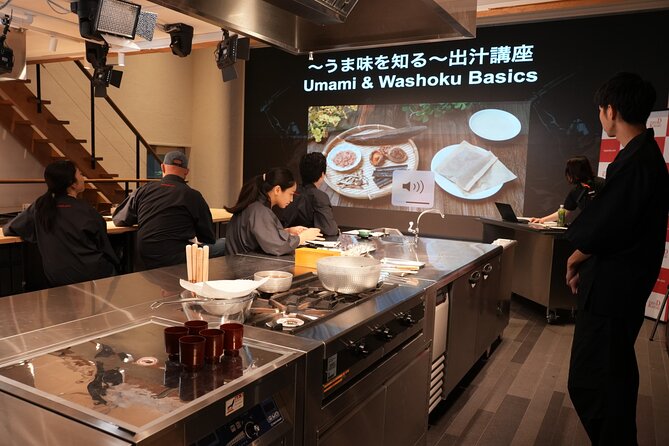
The star of this small Tokyo cooking class is the side-by-side dashi tasting. You watch kombu, katsuobushi, and awase dashi take shape, then taste them one after another. That simple comparison makes umami far easier to understand than a menu description ever could.
I like two things especially: you learn skills you can repeat at home, and the group is capped at eight people, so the cooking should feel personal rather than factory-like. The instructor also explains the ideas behind the food, not just the motions. The main consideration is the price, $129.49 per person, which is a serious spend for two hours, even though it includes lunch, sake tasting, recipes, seasonings, tools, and a certificate.
In This Review
- Key points before you book
- Why dashi is the real lesson in this Tokyo class
- A two-hour schedule built around tasting and making
- The dashi tasting makes umami easier to understand
- Miso soup and side dishes complete the meal
- Dashimaki tamago tests your timing
- Making onigiri turns lunch into an activity
- Sake tasting adds a small local touch
- What the price includes, and what it does not
- Who will enjoy this class most
- Practical details for a smooth visit
- Should you book the Kappodo umami class?
- FAQ
- Where does the cooking class take place?
- What time does the class start?
- How long does the experience last?
- Is the class taught in English?
- Do I need cooking experience?
- How many people can join the class?
- What will I make during the class?
- Is food included?
- What do I take home?
- Is transportation included?
- Can I cancel for a refund?
Key points before you book
- Three dashi styles are tasted side by side: You can compare kombu, katsuobushi, and awase dashi with your own palate.
- You cook with traditional equipment: The dashimaki tamago uses a rectangular tamagoyaki pan, an important detail for anyone keen to learn the real technique.
- Onigiri becomes a hands-on lunch: You choose from traditional fillings and shape the rice balls yourself.
- English instruction is included: No previous cooking experience is required.
- The class stays small: A maximum of eight people should allow room for questions and individual help.
- You take practical tools home: A printed recipe set and Japanese seasonings help you recreate the dishes after your visit.
Why dashi is the real lesson in this Tokyo class
Many Japanese dishes look simple on the plate. A bowl of miso soup, a rice ball, or a rolled omelet may use only a few ingredients. The trick is that those ingredients need a strong base, and this class puts that base first.
Dashi is the stock behind much of Japanese cooking. Here, you do not simply hear that it matters. You see three versions being made and taste how each changes the food around it.
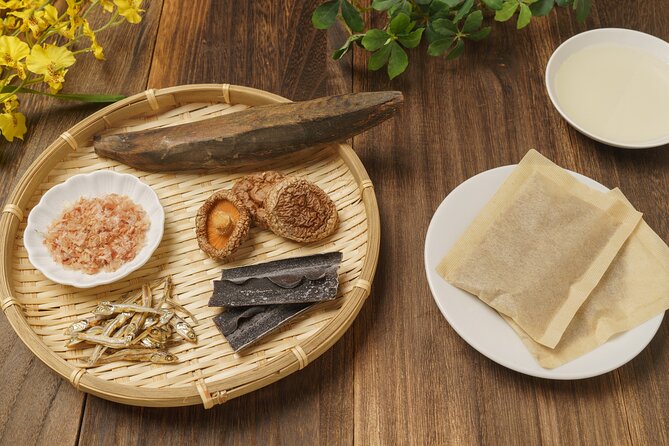
Kombu dashi brings a clean, gentle savoriness from kelp. Katsuobushi dashi uses shaved dried bonito and gives the stock a more pronounced flavor. Awase dashi combines ingredients for a fuller result. The tasting matters because umami can be hard to describe in the abstract. Put three stocks beside each other and the idea becomes practical.
I like this teaching approach. It gives you a way to think about Japanese food when you eat it later. The flavor is not just salty, sweet, sour, or bitter. It can have a rounded savory quality that supports the other ingredients without taking over.
The class is led by instructors rooted in kappo tradition. Kappo cooking is associated with careful preparation and direct interaction between the chef and the people eating. You are not being asked to memorize a long list of culinary terms. You are shown how small choices affect the final taste.
If you're still narrowing it down, here are other tours in Tokyo we've reviewed.


A two-hour schedule built around tasting and making
The experience begins at 11:00 am at Kappodo H.Q, Tokyo D Kitchen Studio, at DK Building in Nishiazabu, Minato City. The address is 2-chome 21-12, Nishiazabu, Tokyo 106-0031. It is near public transportation, but private transportation is not included, so you need to make your own way there.
The timing works well for a food-focused morning. You begin with instruction and tasting, then move into cooking and finish with a filling lunch. Since the class lasts about two hours, it will not take over your entire day in Tokyo.
I would still allow extra time before the start. The meeting point is a studio address rather than one of Tokyo’s major sightseeing gates, and finding a small cooking venue can take longer than expected in an unfamiliar neighborhood. Your booking confirmation should arrive at the time of booking, so keep the address and start time handy.
The group limit of eight is one of the better details here. Small groups make a difference when you are learning a technique such as rolling an omelet or shaping warm rice. You should have a better chance of seeing the instructor’s hands and asking a question without competing with a crowd.
The dashi tasting makes umami easier to understand
The first main lesson covers umami and dashi. This is the classroom part of the experience, but it is also the part that gives the rest of the meal a clear purpose.
You taste the three dashi types separately rather than only eating them as hidden ingredients. That matters. If you only encounter stock inside miso soup or a cooked dish, it is hard to know what the stock contributes. Here, you can notice the differences before other flavors get in the way.
The lesson also helps explain why Japanese food can taste full without being heavily seasoned. Dashi gives a dish structure and savoriness. That means you may need less salt or additional seasoning to make food satisfying.
The class has received particularly strong praise for explaining umami in a way that answers questions and can be used at home. One useful takeaway is that dashi is not limited to soup. The techniques can support appetizers, side dishes, and other cooking projects.
Do not expect a full academic lecture. This is a practical cooking session, not a food science course. You will get an introduction to the foundations of Japanese flavor, followed by cooking. That balance suits you if you want useful context but would rather spend most of the time eating and making food.
Miso soup and side dishes complete the meal
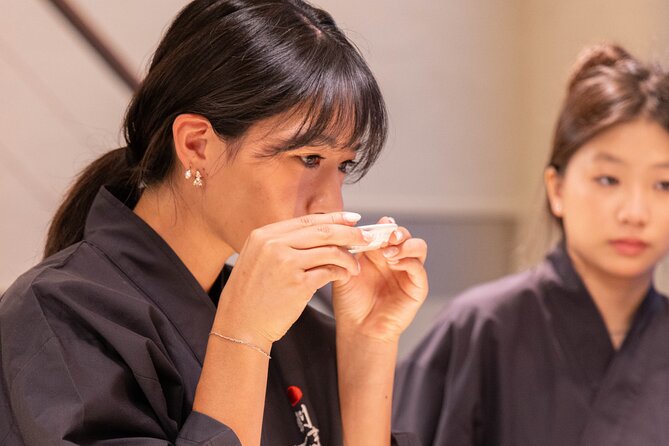
After the dashi lesson, you watch a demonstration of miso soup and traditional side dishes. You do not make every component from start to finish yourself, so it is important to understand the format. Some parts are demonstrations, while the omelet and onigiri provide the main hands-on work.
That arrangement makes sense within a two-hour class. Miso soup and side dishes often involve several small steps, and a demonstration lets you see the process without turning lunch into a long kitchen shift.
The plating is also part of the lesson. Japanese meals are not only about flavor. Arrangement, balance, and portion size affect how the food feels when it reaches the table. Seeing the dishes placed together gives you a better sense of how a washoku meal is organized.
I like that this section connects the individual dishes. The dashi is not an isolated tasting exercise. It becomes part of a larger meal that includes soup, side dishes, rice, and egg. You can see how a savory base helps separate dishes feel related without making them all taste the same.
Dashimaki tamago tests your timing
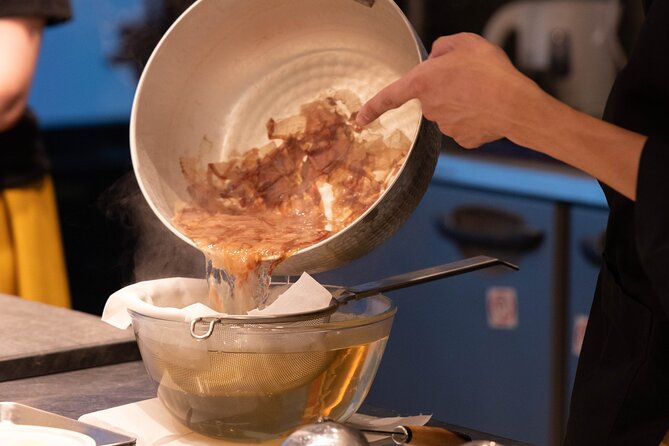
The dashimaki tamago lesson is one of the most appealing parts for cooks who want a technique they can practice later. This Japanese rolled omelet is cooked in a traditional rectangular tamagoyaki pan, then folded into layers.
The shape of the pan matters. A rectangular pan helps create the long, neat form associated with tamagoyaki, but it also requires a little control. You need to cook the egg, add another layer, and roll it before the mixture sets too firmly.
You do not need previous cooking experience. The instructor guides you through the process, and the small group should make it easier to watch closely. Still, this is not a completely effortless dish. The first attempt may not look perfect, which is part of the fun.
The value here is not only eating the finished omelet. You learn how heat, timing, and repeated layers create a soft texture. If you enjoy cooking at home, this technique gives you something more lasting than a quick demonstration.
The class description refers to the omelet as fluffy, and that texture is the target. I would approach this part with patience rather than expecting restaurant-level results immediately. The pan is traditional, the method is hands-on, and practice matters.




Making onigiri turns lunch into an activity
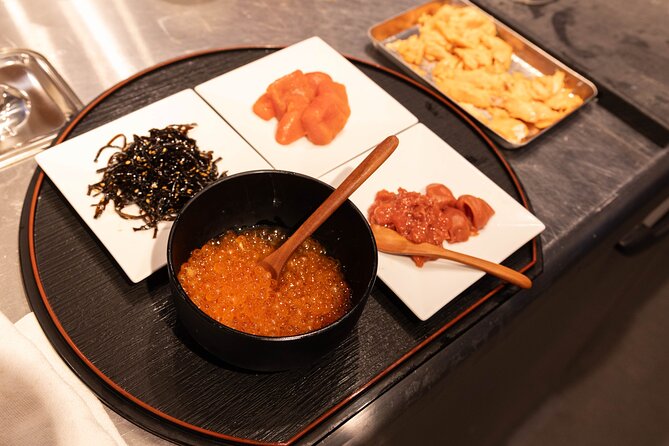
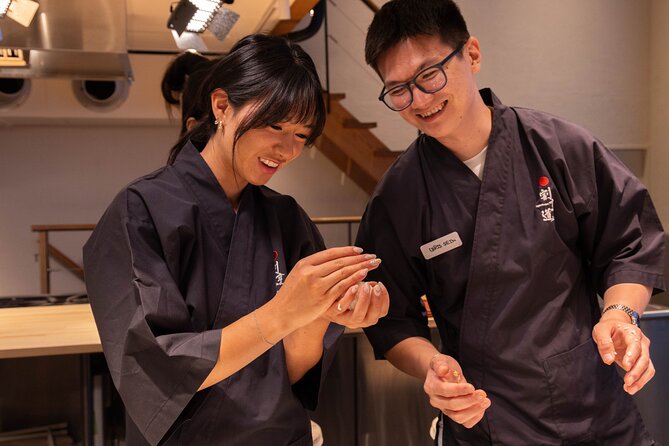
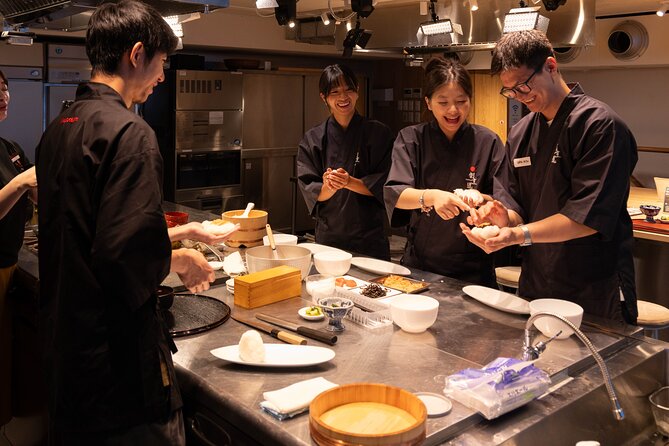
The onigiri session is likely to be the most approachable part of the class. You choose from a selection of traditional fillings, then shape the rice balls by hand.
Onigiri looks humble, but shaping it well takes a light touch. You need enough pressure to hold the rice together without crushing it. The filling also needs to sit in the center rather than breaking through the outside.
This is a good activity for pairs and small groups because everyone can make a slightly different choice. You can compare shapes, fillings, and presentation while still learning the same basic method.
The class treats onigiri as lunch, not just a small sample. That is worth noting when you plan your day. The included meal is described as filling, and the complete set of onigiri, miso soup, side dishes, omelet, and tasting makes the $129.49 fee easier to assess.
You should not book this expecting a sushi-making class. The focus is rice balls, dashi, tamagoyaki, miso soup, and side dishes. That makes it a good choice if you want an everyday view of Japanese home and restaurant cooking rather than a lesson centered on raw fish.
Sake tasting adds a small local touch
Alcoholic beverages are included in the form of a tasting of Kappodo’s original sake. It is a modest part of the program, but it adds another flavor comparison to a class already built around tasting.
If you drink alcohol, the sake gives you a chance to pair a Japanese beverage with the meal. If you do not drink, the available information does not describe a nonalcoholic replacement, so you may want to ask the provider before booking if that point matters to you.
The tasting should not be the reason you choose this experience. The dashi lesson and hands-on cooking are the main attractions. Think of the sake as an extra element within the lunch rather than a separate tasting tour.
What the price includes, and what it does not
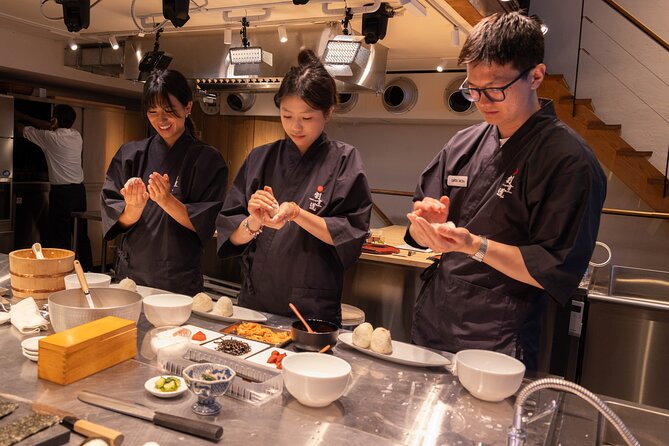
At $129.49 per person, this is not a bargain cooking class. The cost becomes more reasonable when you count what is included: the dashi and umami lecture, lunch, guided onigiri making, dashimaki tamago preparation, miso soup and side-dish demonstrations, sake tasting, all cooking tools, aprons, a participation certificate, printed recipes, and Japanese seasonings to take home.
The take-home items are important to the value. A class is easy to forget if the only souvenir is a meal. Recipes and seasonings give you a practical way to repeat at least some of the experience in your own kitchen.
The class also saves you from buying ingredients, finding a rectangular pan, and working out the method alone. That does not make the price cheap, but it helps explain it.
I would compare this with the cost of a good Tokyo meal plus a guided activity. If you mainly want lunch, there are less expensive ways to eat well in Tokyo. If you want instruction, cultural context, a small group, and skills you can take home, the price is easier to justify.
Group discounts may be available, which could help if you are booking with friends or family. The provider does not include private transportation, so add your local travel costs when working out the total.
Who will enjoy this class most
I would recommend this experience to you if you enjoy food but do not want a technically demanding professional course. The instruction is in English, no prior cooking experience is required, and the dishes are recognizable enough to make the class comfortable for beginners.
It is especially suitable for:
- Couples who want a shared activity during a Tokyo visit
- Small groups interested in Japanese food culture
- Home cooks who want to learn dashi and tamagoyaki
- People who prefer a meal with context instead of a standard restaurant visit
- Curious eaters who want to understand umami through tasting
Families or groups should check the age suitability directly before booking, since no age policy is provided. The small maximum group size also means availability may be limited on popular dates.
You may want to skip it if you are looking for a long, elaborate cooking course where every dish is prepared individually from raw ingredients. Parts of the meal are demonstrations, and the entire activity lasts only about two hours.
Practical details for a smooth visit
The class starts at 11:00 am and ends back at the same meeting point. You do not need to arrange a second pickup point or find your way to a restaurant afterward.
Wear something comfortable for a kitchen setting. Aprons and all lesson tools are supplied, but the information does not specify clothing requirements, dietary accommodations, or allergy procedures. Ask the provider before booking if you have food restrictions.
The activity is confirmed at booking. It requires a minimum number of people, so the provider may offer another date or a full refund if that minimum is not reached.
Free cancellation is available if you cancel at least 24 hours before the local start time. Cancellations or changes made inside that window are not refunded or accepted, so leave some flexibility in your Tokyo schedule.
Should you book the Kappodo umami class?
Book it if you want to understand what makes Japanese food taste Japanese, then practice the idea with your own hands. The dashi comparison is the strongest reason to go. It turns a vague food term into something you can taste, identify, and use.
The class is also a good match for you if take-home value matters. Recipes and seasonings, along with the instruction on dashi, tamagoyaki, and onigiri, give the experience a life beyond the two-hour visit.
I would hesitate only if $129.49 feels too high for a short activity, or if you want to cook every dish yourself. For everyone else, this is a focused way to spend a late morning in Tokyo, with a filling lunch and a better understanding of the quiet building blocks behind Japanese cuisine.
FAQ
Where does the cooking class take place?
It starts and ends at Kappodo H.Q, Tokyo D Kitchen Studio, DK Building, 2-chome 21-12, Nishiazabu, Minato City, Tokyo 106-0031, Japan.
What time does the class start?
The class starts at 11:00 am.
How long does the experience last?
The activity lasts approximately two hours.
Is the class taught in English?
Yes. All instruction is in English.
Do I need cooking experience?
No. The class is designed for people without prior cooking experience.
How many people can join the class?
The maximum group size is eight people.
What will I make during the class?
You will make dashimaki tamago and hand-shaped onigiri. You will also watch demonstrations of miso soup and traditional side dishes.
Is food included?
Yes. Lunch is included, along with a tasting of Kappodo’s original sake.
What do I take home?
You receive a printed recipe set, Japanese seasonings, and a certificate of participation. All tools and an apron are provided during the lesson.
Is transportation included?
No. Private transportation is not included. The meeting point is near public transportation.
Can I cancel for a refund?
Yes, if you cancel at least 24 hours before the experience start time. Cancellations made less than 24 hours before the start are not refunded.
More tours in Tokyo we've reviewed







Tokyo, compared.
 ★ 5.0Mt Fuji and Hakone 1-Day Bus Tour Return by Bullet TrainFrom $163
 ★ 5.01-Day Tokyo Bus TourFrom $129
 ★ 4.6Tokyo: teamLab Planets TOKYO Digital Art Museum Entry TicketFrom $251 day
 ★ 4.0Mt Fuji & Hakone Cruise, Drum Show Bullet Train 1 Day from TokyoFrom $149
 ★ 5.0Tokyo: Shinjuku Food Tour (13 Dishes at 4 Local Eateries)From $86
 ★ 4.4Tokyo Mt Fuji 5th St & Hakone Cruise Bus Tour w/Bullet TrainFrom $15410 hours