
Reviewed · TEMPLES & MEDITATION
Japanese Home Cooking Class & Walk in Todoroki Temple Tokyo
The best part of this Tokyo experience is the change of pace: you begin at Todoroki Station, walk past a temple and leafy ravine, then sit down in Tomoko’s home to cook lunch. This is not a restaurant demonstration where you watch from the sidelines. You chop, shape, stir, and eat what you make.
I like two things right away. The four-person limit keeps the lesson personal, and Tomoko can adjust dishes for food allergies, vegetarian or pescatarian diets when arranged ahead. I also like the recipes and the everyday setting. You leave with practical dishes to make at home, not just a few photos and a full stomach.
The main consideration is timing. The experience is advertised at about two and a half hours, with the cooking portion taking roughly two hours, so this is a compact introduction rather than a long culinary course. It is also offered Monday through Friday from 11 a.m. to 2 p.m., which may not fit every Tokyo schedule.
In This Review
- Key points to know before booking
- A cooking class with a temple walk built in
- From Todoroki Valley to Casa de Tomokita
- Choosing ramen, gyoza, okonomiyaki, or another main
- What the two-hour cooking session feels like
- A home-cooked lunch with drinks and dessert
- Dietary needs and menu planning
- Is $110.99 a fair price?
- Who will enjoy this experience most?
- Should you book Casa de Tomokita?
- FAQ
- Where does the Japanese cooking class begin?
- Where does the activity end?
- How long does the experience last?
- How many people can join?
- What dishes can I learn to make?
- Are food, drinks, and recipes included?
- Can the menu be adjusted for dietary needs?
Key points to know before booking
- A quiet Tokyo walk comes first: Visit Todoroki Fudoson and see Todoroki Valley before cooking.
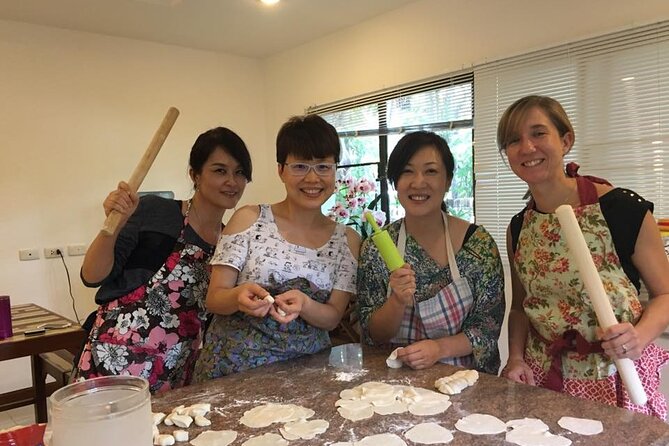
- Tomoko leads the class: Expect instruction in her home, with clear English recipes and hands-on guidance.
- You choose the main dish ahead of time: Options can include ramen, gyoza, okonomiyaki, sushi rolls, curry rice, and other Japanese favorites.
- Small really means small: The maximum group size is four people.
- Lunch is generous: Your meal can include several side dishes, salad, dessert, hot drinks, bottled water, and alcoholic drinks.
- The recipes go home with you: The class is useful for anyone who wants to repeat the meal outside Japan.
A cooking class with a temple walk built in
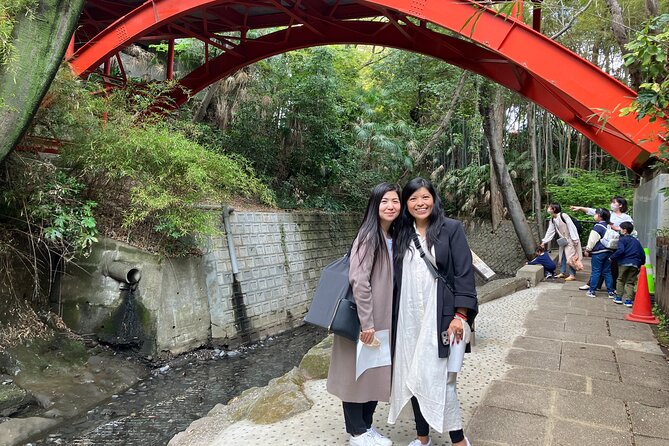
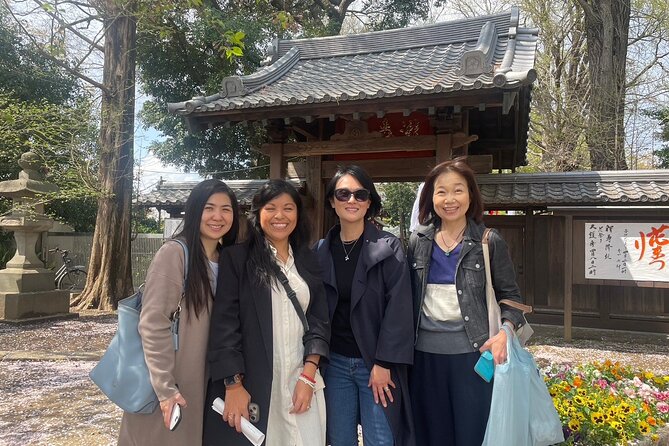
Many Japanese cooking lessons take place in a studio or commercial kitchen. This one begins outdoors, in the Setagaya neighborhood around Todoroki Station. Tomoko meets you at the station and leads you toward Todoroki Fudoson, a local temple beside the valley.
The temple visit is brief, about 10 minutes. You should not expect a full guided temple tour or a long explanation of religious customs. Its value is the setting. You get a quick look at a local place of worship before moving into a quieter pocket of Tokyo that many first-time visitors never see.
From there, you continue to Todoroki Valley. The stated viewing stop is short, about five minutes, but the walk gives the activity a pleasant rhythm. You are not rushing straight from a train platform into a kitchen. You get a small taste of suburban Tokyo, with the ravine providing a calm break from the city’s busy central districts.
Keep your expectations sensible. This is not a major sightseeing tour, and the valley portion is brief. If your main goal is temple architecture or a long nature walk, you will want a separate visit. Here, the walk works best as an introduction to the neighborhood and a gentle opening to lunch.
Other cooking classes in Tokyo
From Todoroki Valley to Casa de Tomokita
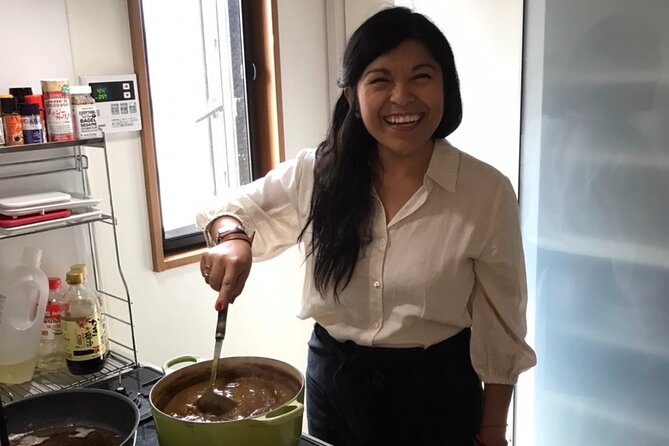
Tomoko’s home, referred to as Casa de Tomokita, is about a five-minute walk from the valley. The short transfer matters because it keeps the outing feeling local. You move from a neighborhood path into an actual home, rather than boarding another train or entering a large tourist venue.
The setting is one of the class’s strongest features. Several menus describe a peaceful living area and a traditional-feeling home, with Tomoko preparing ingredients and welcoming people at her dining table. That changes the tone of the meal. You are learning food in the place where it is part of daily life.
Tomoko is the main host and cooking teacher. Junko has also helped with some classes, particularly when meeting small groups at the station. Tomoko speaks English, and one experience also notes that she speaks Spanish. English recipes and printed instructions are provided, which is helpful when a Japanese ingredient or cooking step is new to you.
The atmosphere is friendly rather than formal. You can ask questions about Japanese food and daily life as you cook. That makes the class a good match for a solo visitor, a couple, or a family that wants conversation along with lunch.
Choosing ramen, gyoza, okonomiyaki, or another main
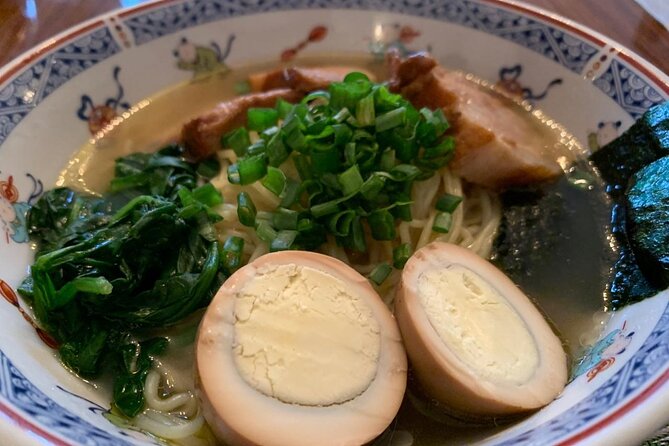
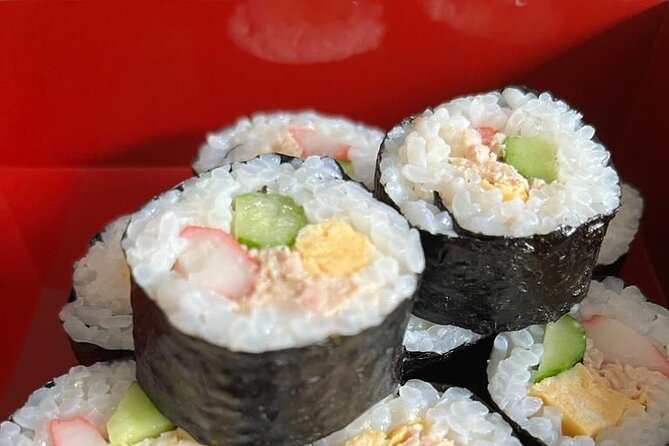
You choose your main dish in advance so the necessary ingredients can be prepared. The available choices can include okonomiyaki, ramen, sushi rolls, gyoza, curry rice, yakisoba, oyakodon, takoyaki, fried rice, and kakiage tempura. The exact menu depends on the class arrangement, so you should confirm your preference when booking.
This advance choice is more useful than it may sound. Japanese cooking covers a wide range of techniques, and a visitor interested in ramen needs different ingredients and instruction from someone who wants to fold gyoza or make okonomiyaki. Your choice gives the class a clear focus.
The lesson is designed for all skill levels. Beginners can follow Tomoko’s step-by-step direction, while experienced cooks can ask about ingredients, methods, and the reasons behind each step. One especially useful teaching point is the explanation of why something is done a certain way, not just the order of the instructions.
You should expect a mix of participation and preparation already handled by Tomoko. She may set out ingredients and take care of some steps so the class stays on schedule. That means you get hands-on practice without having to spend the entire session measuring and cleaning.
The food is the heart of the experience, but the side dishes add real value. Menus described by past participants have included salads, several small Japanese side dishes, yakisoba, soup, and matcha desserts. A meal might finish with matcha ice cream, seasonal fruit, mochi, or another sweet preparation.
Come hungry. The main dish is not the only food on the table, and the class can feel closer to a home-cooked lunch than a single-recipe workshop.
What the two-hour cooking session feels like
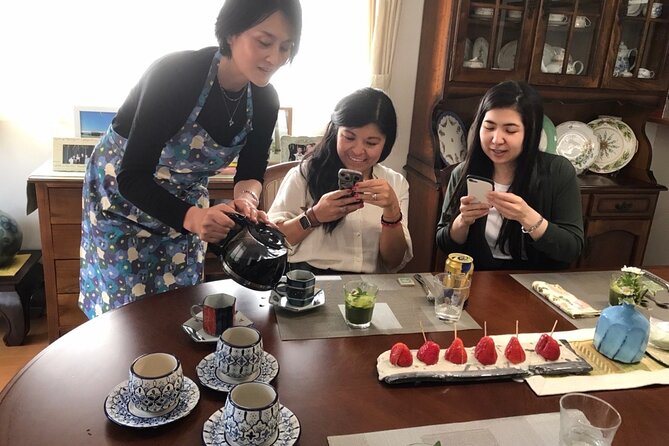
The cooking portion lasts about two hours according to the detailed schedule, although the overall experience is listed at approximately two and a half hours. The pace is practical. You learn a dish, help prepare it, and then sit down to eat together.
Tomoko’s instruction is especially helpful for visitors who do not cook Japanese food at home. She explains ingredients and techniques in clear terms, and recipes are available in English. That gives you a better chance of repeating the dishes after you return home.
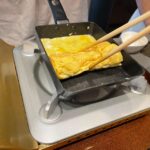
A strong example is okonomiyaki. The finished dish can look simple, but getting the texture right depends on how the ingredients are mixed and cooked. A lesson gives you a chance to ask questions at the moment they matter. The same applies to gyoza folding, ramen preparation, fried rice, and tempura.
This is not a professional chef’s certification course. You will not spend a full day studying knife skills, broth production, or regional culinary traditions. Instead, you get a useful, approachable introduction to dishes you are likely to recognize and want to make again.
I particularly like the chance to discuss substitutions and pantry items. Tomoko has helped people find Japanese ingredients at a grocery store after class and has even sent some hard-to-find pantry staples home with them. Those extras are not described as a guaranteed part of every booking, so treat them as a possible bonus rather than a promise.
A home-cooked lunch with drinks and dessert
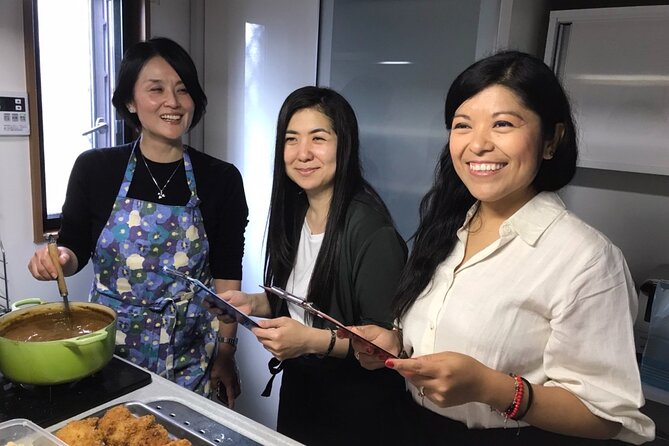
After the preparation, you eat the food together. The price includes the meal, bottled water, hot drinks, and alcoholic beverages. Several menus also included wine, homemade plum wine, cold mint tea, apple juice, or matcha-based dessert.
The drink selection gives the meal a relaxed, social feel, but alcohol is not the reason to book. The class works just as well for someone who does not drink, since the food and instruction are the main event.
The meal can be surprisingly broad for a short class. A visitor choosing okonomiyaki, for example, may also be served side dishes, salad, yakisoba, and a matcha dessert. Another menu paired gyoza and ramen with ice cream and fruit. These additions help you understand how Japanese home meals are built, with several smaller dishes supporting the main course.
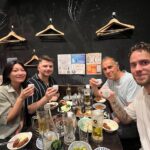
The dining table is also where the class becomes more personal. You can talk with Tomoko, compare cooking habits, and ask questions that would not come up in a standard food tour. For many people, this shared meal is more memorable than simply tasting a dish at a restaurant.
A few more Tokyo tours and experiences worth a look

Dietary needs and menu planning
Dietary flexibility is one of the most useful reasons to consider this class. Tomoko has adjusted menus for vegetarian, pescatarian, vegan, and allergy-related needs. One class prepared vegan and non-vegan ramen for the same group, while another arranged a pescatarian menu.
You should contact the host before the class and explain your restrictions clearly. The advertised experience does not promise every dietary request, and a last-minute change may not be possible. Advance planning gives Tomoko time to source the right ingredients and prevent confusion during preparation.
This is also a good option for mixed groups. One person can choose a traditional ramen or gyoza menu while another has a vegetarian adaptation. Again, the exact choices need to be arranged before booking.
If you have a severe allergy, ask specific questions about ingredients and cross-contact before you commit. The available information shows that Tomoko has made thoughtful adjustments, but it does not provide a formal allergy-free kitchen guarantee.
Is $110.99 a fair price?
At $110.99 per person, this is more expensive than simply ordering ramen or okonomiyaki in Tokyo. You are paying for more than the meal. The price covers a small-group lesson, a local walk, ingredients, drinks, dessert, personal instruction, and recipes you can use later.
The four-person limit is important here. In a large class, the teacher has little time to correct your technique or adapt the menu. With no more than four people, you get closer to a private lesson, even if another couple or solo participant joins you.
The value is strongest if you care about learning. If you only want a cheap lunch, this is not the right choice. If you want to understand how the food is made, ask questions, and recreate it at home, the price is easier to justify.
It can also be good value for a solo visitor. A cooking class in someone’s home gives you an easy social setting without requiring you to join a large group tour. Couples and families benefit from the shared activity, too, especially when different members have different cooking experience.
Who will enjoy this experience most?
I would recommend this for you if you want a personal look at everyday food in Japan rather than another major attraction. It suits beginners, confident home cooks, solo visitors, couples, families, and anyone with a strong interest in Japanese dishes.
It is also a good choice for a honeymoon or special trip. The walk is peaceful, the meal is shared at home, and the host can tailor the menu to personal interests. Families with older children may appreciate the hands-on format, though the supplied information does not set a minimum age.
You may want to skip it if your schedule only allows evening activities, since the class runs on weekday late mornings and early afternoons. It is also not ideal if you want an extensive Todoroki Valley hike or a long, technical cooking course.
Plan for a weekday visit and allow enough time to reach Todoroki Station. The meeting point is outside Todoroki Station at 3 Chome-1 Todoroki, Setagaya City. The activity ends back at the meeting point, and the mobile ticket makes entry and confirmation simple.
Free cancellation is available up to 24 hours before the start time. Changes or cancellations made less than 24 hours in advance are not accepted for a refund.
Should you book Casa de Tomokita?
Book this class if you want a meal you can recreate, a quiet neighborhood walk, and a chance to spend time with a warm local host. The combination of Todoroki Fudoson, Todoroki Valley, and a home kitchen gives you a fuller experience than a stand-alone cooking demonstration.
The strongest reasons to choose it are the tiny group size, menu flexibility, English recipes, and the generous lunch. Tell Tomoko your preferred dish and dietary needs ahead of time, and arrive ready to participate rather than simply watch.
Skip it if you need an evening booking, dislike home-based activities, or want a major Tokyo sight with a long formal tour. For the right visitor, though, this is a thoughtful way to spend a weekday afternoon, and the recipes give the experience a life beyond your time in Tokyo.
FAQ
Where does the Japanese cooking class begin?
The activity begins at Todoroki Station, at 3 Chome-1 Todoroki, Setagaya City, Tokyo 158-0082, Japan.
Where does the activity end?
The activity ends back at the meeting point near Todoroki Station.
How long does the experience last?
The experience is listed at approximately two hours and 30 minutes. The cooking portion is described as about two hours, with short visits to Todoroki Fudoson and Todoroki Valley.
How many people can join?
The maximum group size is four people.
What dishes can I learn to make?
Possible main dishes include okonomiyaki, ramen, sushi rolls, gyoza, curry rice, yakisoba, oyakodon, takoyaki, fried rice, and kakiage tempura. You choose your main dish in advance.
Are food, drinks, and recipes included?
The experience includes food, bottled water, hot drinks, and alcoholic beverages. English recipes are provided for the dishes prepared during the class.
Can the menu be adjusted for dietary needs?
Tomoko has adjusted menus for vegetarian, pescatarian, vegan, and allergy-related needs. Contact her before the class so dietary requirements can be discussed and arranged in advance.
More Walking Tours in Tokyo

More Temples & Meditation in Tokyo
More Cooking Classes in Tokyo
More tours in Tokyo we've reviewed



Temples & Meditation, compared.
 ★ 4.7Tokyo: Meiji Shrine, Asakusa, Skytree Bus Tour and CruiseFrom $12210 hours
 ★ 4.8Tokyo: Asakusa Walking Tour with Sensoji Temple VisitFrom $222 hours
 ★ 4.6Nikko: Kegon Falls, Lake Chuzenji & Toshogu TempleFrom $8911 hours
 ★ 4.5Tokyo: Kamakura & Enoshima Day Trip including Temple TicketsFrom $589 hours - 570 minutes
 ★ 4.5Tokyo: Nikko Toshogu Shrine and Kegon Waterfall TourFrom $8410h 30m
 ★ 4.5Tokyo Panoramic 1 Day: Meiji Shrine, Asakusa, Odaiba and SKYTREE®From $85