
Reviewed · SAMURAI & NINJA EXPERIENCES
Imperial Palace Tour: Discover Samurai History with a Local Guide
Tokyo’s Imperial Palace gives you a rare look at the meeting point between Japan’s imperial present and its samurai past. On this two-hour walk, you move through the East Gardens, former grounds of Edo Castle, where stone walls, gates, moats, and watchtowers tell the story better than a museum display.
I like the small maximum of eight people, which should make it easier to hear the guide and ask questions. I also like the focus on specific surviving structures, especially Tatsumi Yagura and the Tenshudai ruins, rather than a vague stroll around palace grounds.
The main drawback is the meeting point. If you do not find the guide quickly at the Starbucks near Wadakura Fountain Park, the start could feel confusing. One published account describes exactly that problem, though the rest of the walk was considered interesting. Arrive early, keep your phone ready, and confirm the meeting spot before you set out.
In This Review
- Key points to know before you go
- Why the Imperial Palace tells Tokyo’s story so well
- Meeting at Wadakura Fountain Park
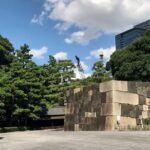
- Tatsumi Yagura, a surviving piece of Edo Castle
- Nijubashi Bridge and the classic palace view
- East Gardens and the Tenshudai ruins
- The Imperial Palace and modern imperial Japan
- What the small group changes
- Is $12.90 a fair price?
- Who will enjoy this palace walk
- A few practical ways to improve the visit
- Should you book the Imperial Palace tour?
- FAQ
- How long does the Imperial Palace tour last?
- How much does the tour cost?
- What places are included on the walking tour?
- Is admission to the stops included?
- Where does the tour begin?
- Where does the tour finish?
- How many people can join the tour?
- What level of fitness is needed?
- Can I cancel for a refund?
Key points to know before you go
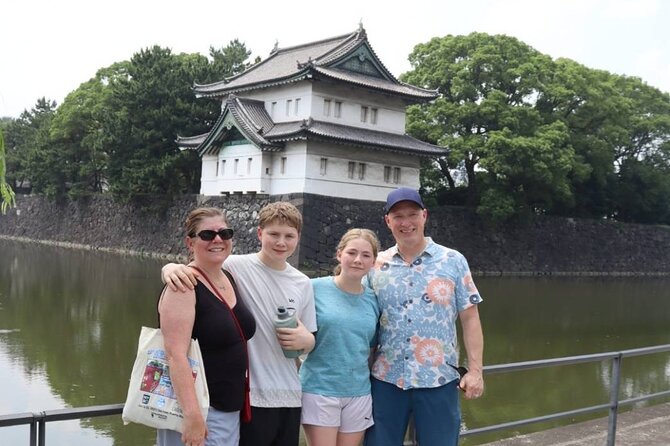
- Edo Castle ruins give the walk its strongest sense of place, with old stone defenses and the Tenshudai foundation linking modern Tokyo to the Tokugawa era.
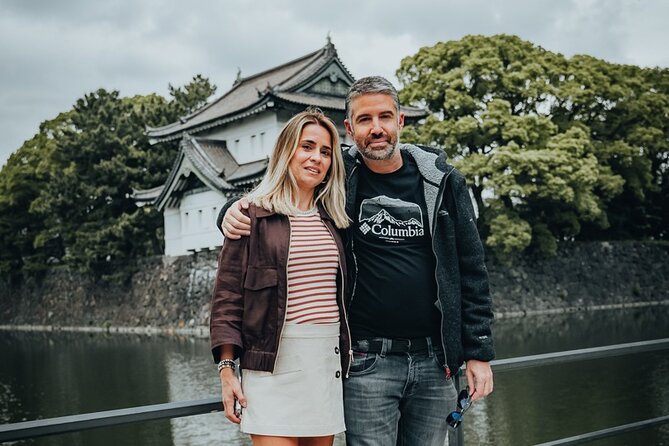
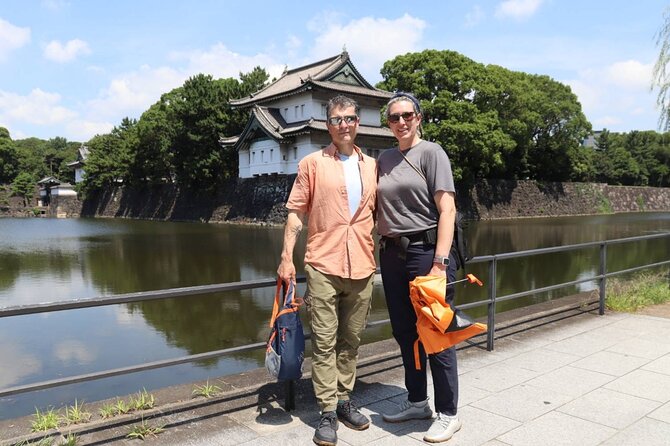
- Tatsumi Yagura is a surviving Edo-period watchtower, a compact but striking reminder of the castle that once controlled Japan.
- Nijubashi Bridge provides the classic Imperial Palace view, with a moat and elegant double-arched design.
- The group is limited to eight people, making this more personal than a large city walking tour.
- Admission to each listed stop is free, so most of the $12.90 price pays for the guide and the structure of the visit.
- The walk begins and ends at the Starbucks by Wadakura Fountain Park, and you should expect a moderate level of physical activity.
Why the Imperial Palace tells Tokyo’s story so well
The Imperial Palace can seem distant if you only view its famous gates and broad open spaces from the street. This tour helps connect the modern residence of Japan’s emperor with the older Edo Castle, the seat of the Tokugawa shogunate and one of the main centers of political power in Japan.
That connection matters. You are not simply looking at a palace garden. You are walking through a place where military government, samurai authority, and imperial rule overlap. The surviving stonework is often more useful than grand buildings would be, because it shows how the castle was protected and organized.
The East Gardens are open to the public and include paths, gates, stone walls, seasonal flowers, and traditional Japanese planting. The setting is calm, but the story is not sleepy. Your guide is expected to explain how the castle worked, how samurai culture shaped the country, and how Tokyo developed around this powerful center.
I would choose this experience if you want historical context without committing half a day to a museum. Two hours is enough to get a clear picture of the site while leaving room for other parts of Tokyo.
A few more Tokyo tours and experiences worth a look

Meeting at Wadakura Fountain Park
The walk starts at Starbucks Coffee in Kokyo Gaien Wadakura Fountain Park, at 3-1 Kōkyogaien in Chiyoda City. This is a practical central meeting place, but the opening report about difficulty finding the guide deserves attention.
I would arrive several minutes early rather than cutting it close. The supplied details do not name the guide, and there is no information about a special sign, uniform, or exact corner outside the Starbucks. Have your booking confirmation available on your phone and make sure you know the local start time.
The activity ends back at the same meeting point. That makes planning simpler, especially if you are using the tour as a short morning or afternoon history stop. You do not need to arrange a separate pickup or figure out where the walk finishes.
The experience uses a mobile ticket, and confirmation is provided at booking. It is also near public transportation, though no specific station or train line is listed. I would still check your route before leaving, since Tokyo’s palace district can feel spread out even when the map looks simple.
Tatsumi Yagura, a surviving piece of Edo Castle

The first listed stop is Sakurada Tatsumi Yagura, also called Sakurada Nijū Yagura. You spend about 30 minutes here, and admission is free.
A yagura was a watchtower used for observation and defense. This one is a two-story structure from the Edo period and one of the few surviving buildings connected to the old castle. Its value is not just visual. It gives you a concrete example of how the castle’s defensive system looked, rather than leaving samurai-era history as an abstract story.
Your guide can place the tower within the wider castle grounds and explain how the shogunate used fortifications to protect political power. That is the sort of detail that makes the walk worthwhile. Without context, a white plaster tower may look like one more attractive Japanese structure. With context, it becomes part of a working military complex.
The 30-minute timing is generous for a single landmark. You should have time to listen, look closely, and ask questions. Still, this is a walking tour, not a private architectural inspection. The guide may need to balance detail with the schedule for the remaining stops.
Nijubashi Bridge and the classic palace view
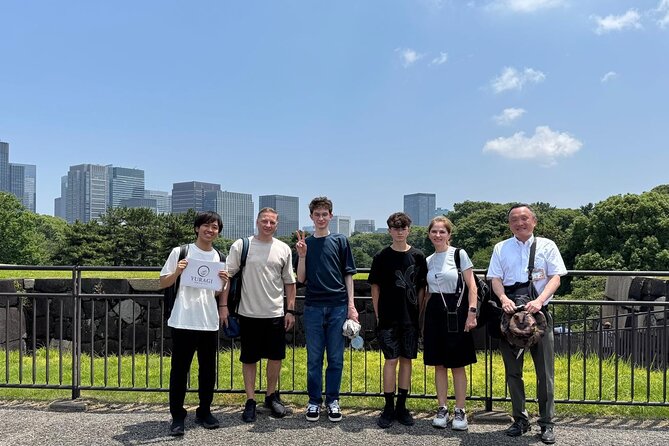
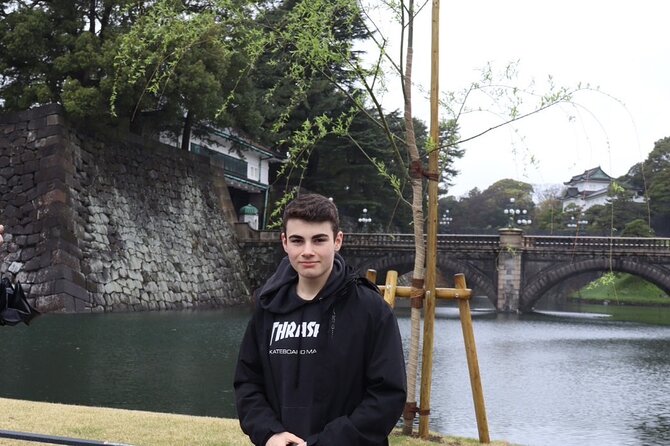
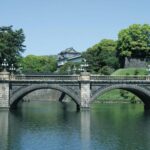
The route includes 15 minutes at Nijubashi, or the Two-tiered Bridge. This is one of the most recognizable views associated with the Imperial Palace.
The bridge crosses the moat on the approach to the inner grounds. Its double-arched form gives the scene a formal, almost theatrical quality, while the moat and palace setting remind you that this was once a defended castle rather than simply a royal residence.
Fifteen minutes is enough for orientation and photographs, but it is not a long stop. Think of it as a focused viewpoint rather than a full lesson in bridge engineering or palace architecture. The guide’s role here is to explain why the bridge matters and connect the view to the imperial compound beyond it.
You should also understand what you are not getting. The information provided describes the bridge and the Imperial Palace grounds, but it does not promise entry into the emperor’s residence or access to private palace interiors. This is an exterior and garden experience, with the East Gardens offering the main public access to the historic site.
East Gardens and the Tenshudai ruins
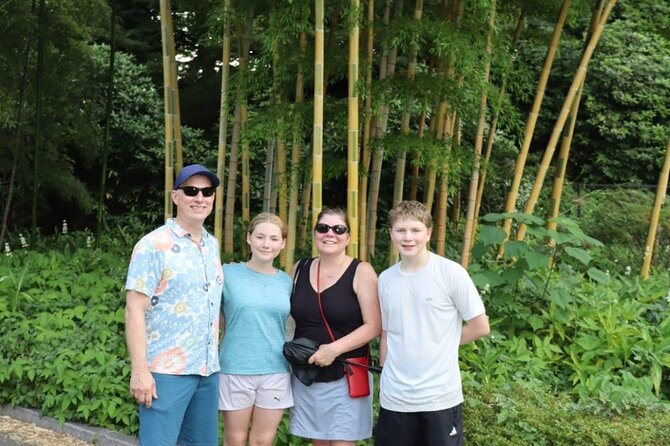
The East Gardens are the heart of the tour. You spend about 30 minutes exploring former Edo Castle grounds, including the Tenshudai area.
The Tenshudai was the base of Edo Castle’s former main tower. The tower itself no longer survives, but the foundation gives you a sense of the scale and importance of the castle. Large stone foundations and defensive walls can communicate more than a reconstructed building because you are looking at what time has actually left behind.
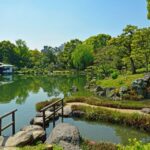
The garden setting adds another layer. Paths, seasonal flowers, gates, stone walls, and Japanese planting soften the military remains. I like that contrast. You can move from a defensive structure to carefully maintained greenery within the same public grounds, seeing how the site has changed function without losing its older identity.
This section should appeal to anyone who prefers history you can read from the ground under your feet. You are not only hearing about the Tokugawa shogunate. You are seeing the physical base from which that government operated.
The gardens are open to the public, and admission is free. That keeps the pace relaxed and helps the price make sense. The guide provides the interpretation and route planning, while the site itself does not add an entrance charge.
A few more Tokyo tours and experiences worth a look


The Imperial Palace and modern imperial Japan
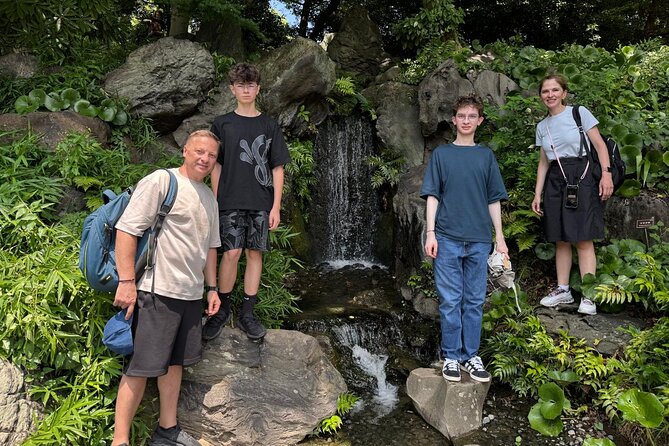
The final listed stop is the Imperial Palace, with about 30 minutes set aside. The palace is the emperor’s residence and occupies the former site of Edo Castle in Chiyoda Ward.
This is where the tour links old political power with present-day Japan. You can look at the moats, stone walls, and formal grounds while hearing how the site shifted from the stronghold of the shogunate to the imperial center of modern Tokyo.
Do not expect a palace-room visit based on the details provided. The experience centers on the public grounds, exterior views, gardens, and historic remains. That will suit you if you want a broad introduction to the site, but it may disappoint you if your main goal is to see furnished interiors or private imperial spaces.
The 30-minute stop gives the guide room to tie together the earlier landmarks. Tatsumi Yagura shows the castle’s defensive side. Nijubashi presents the public image of the palace. The East Gardens reveal the old castle foundations. The Imperial Palace stop brings the story into the present.
What the small group changes
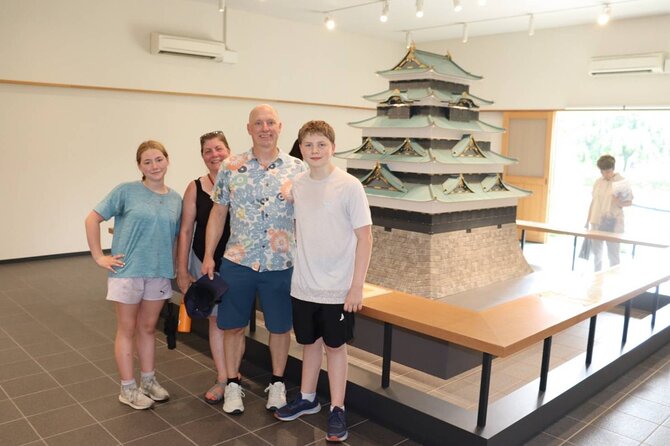
The activity has a maximum of eight people. That is one of its clearest advantages.
A group this size usually makes a walking tour easier to follow. You are less likely to lose the guide in a crowd, and questions do not have to compete with dozens of other voices. It also gives the guide a better chance to adjust the explanation to the group’s interests, though the exact style will depend on the individual professional guide.
The small format does not make this a private tour. You are still sharing the walk with other people, and the route remains structured around the two-hour schedule. But for $12.90 per person, eight or fewer participants is a favorable setup.
The activity has a 4.9 rating from 20 published assessments and a 100 percent recommendation rate. One less favorable account points to the start rather than the historical content: the guide was initially hard to locate, but the follow-up portion was considered interesting. I would take that as a useful practical warning, not a reason to dismiss the tour.
Is $12.90 a fair price?
At $12.90 per person, this is an inexpensive guided experience for central Tokyo. Since admission to the listed stops is free, the value rests on the guide’s explanations, the route, and the convenience of seeing several important parts of the palace area in one organized walk.
If you already know Edo Castle, the Tokugawa shogunate, and the difference between the East Gardens and the palace’s private areas, you may not need a guide. You could visit the public grounds on your own and spend as long as you like at each point.
For a first visit, the price is easier to justify. A guide can explain why a watchtower matters, what the Tenshudai foundation represents, and how the palace relates to Tokyo’s political past. You also avoid having to build your own route through a large historic area.
Group discounts are available, though the amount is not specified. If you are traveling with several people, check the booking price before assuming how much you will save. The free cancellation policy adds flexibility: cancel at least 24 hours before the start time for a full refund. Cancellations or changes made within 24 hours are not refunded or accepted.
Who will enjoy this palace walk
I would recommend this tour to first-time Tokyo visitors who want a short history lesson outdoors. It is especially useful if you enjoy architecture, samurai history, gardens, or seeing how old political centers fit into a modern city.
It also works well for people who do not want a full-day guided excursion. Two hours is a manageable commitment, and the return to the original meeting point makes it easy to continue sightseeing afterward.
Families with older children may find the watchtower, moats, and castle foundations more engaging than a long indoor lecture. The guide’s stories about warriors, emperors, and political power can give younger visitors something concrete to look at while they learn.
You should be comfortable with a moderate amount of walking. The supplied information calls for a moderate physical fitness level, and this is an outdoor route through gardens and historic grounds. No special accessibility details are provided, so contact the provider before booking if you have mobility concerns.
Service animals are allowed. The experience is near public transportation, and the mobile ticket keeps your paperwork simple.
A few practical ways to improve the visit
Wear comfortable shoes and prepare for an outdoor walk. The tour includes paths, garden areas, stone ruins, and several separate landmarks, so this is not a seated palace presentation.
Arrive early at the Starbucks meeting point. Since one account describes trouble finding the guide at the start, do not assume the group will be impossible to miss. Keep the confirmation open on your phone and allow time to get oriented around Wadakura Fountain Park.
Think of the tour as an introduction, not a complete study of Edo Castle. The guide can give you the story and point out the important remains, but the two-hour schedule does not allow extended time at every wall, gate, or garden feature.
If photography matters to you, Nijubashi is the obvious short stop, while the East Gardens and Tatsumi Yagura offer more time for looking closely. The exact conditions can change with the season, but the garden includes seasonal flowers and traditional planting.
Should you book the Imperial Palace tour?
Book it if you want a low-cost, small-group introduction to Tokyo’s imperial and samurai past. The best parts are the manageable two-hour length, the maximum of eight people, the free entry to the grounds, and the chance to connect Edo Castle ruins with the modern Imperial Palace.
Skip it if you want palace interiors, a long private tour, or unlimited time to explore independently. You should also take the meeting-point warning seriously and arrive early.
For most first-time visitors who want history without a major time or financial commitment, this is a sensible choice. At $12.90, you are paying mainly for context, and context is exactly what makes these quiet walls, gardens, and bridges meaningful.
FAQ
How long does the Imperial Palace tour last?
The tour lasts approximately two hours.
How much does the tour cost?
The listed price is $12.90 per person. Group discounts are available, though the discount amount is not specified.
What places are included on the walking tour?
The route includes Sakurada Tatsumi Yagura, Nijubashi Bridge, the Imperial Palace East Gardens and Edo Castle ruins, and the Imperial Palace grounds.
Is admission to the stops included?
Admission tickets for the listed stops are free.
Where does the tour begin?
The meeting point is Starbucks Coffee in Kokyo Gaien Wadakura Fountain Park, at 3-1 Kōkyogaien, Chiyoda City, Tokyo 100-0002, Japan.
Where does the tour finish?
The activity ends back at the original meeting point.
How many people can join the tour?
The group has a maximum of eight participants.
What level of fitness is needed?
A moderate level of physical fitness is recommended because this is a guided walking tour through gardens and historic grounds.
Can I cancel for a refund?
You can cancel at least 24 hours before the local start time for a full refund. Cancellations and changes made less than 24 hours before the start time are not accepted or refunded.
More Guided Tours in Tokyo




More Samurai & Ninja Experiences in Tokyo
More Imperial Palace & Shogun Tours in Tokyo

More tours in Tokyo we've reviewed








Samurai & Ninja Experiences, compared.
 ★ 4.5Tokyo: Samurai Restaurant Show Ticket with 2 DrinksFrom $551h 30m
 ★ 4.6Tokyo: Samurai Ninja Museum Guided tour and ExperienceFrom $27
 ★ 5.0Tokyo: Samurai Sword & Archery Class from Samurai DescendantFrom $1933 hours
 ★ 5.0Best Samurai Experience in TokyoFrom $65
 ★ 5.0Ninja Experience (Family Friendly) at Samurai Ninja Museum TOKYOFrom $47
 ★ 4.6Tokyo: Samurai Entertainment Night Show in Kanda ShrineFrom $412 - 3 hours