

Reviewed · IMPERIAL PALACE & SHOGUN TOURS
Tokyo: Imperial Palace East Gardens Walking Tour
The most rewarding part of this walk is the contrast: Tokyo’s office towers and traffic sit just beyond the palace grounds, while inside, you follow the walls, gates, ponds, and gardens of the old Edo Castle. The castle itself is gone, but its foundations and defenses still tell a clear story when a good guide puts the pieces together.
I like the way the tour joins shogun-era history with modern Tokyo, rather than treating the gardens as a pretty park alone. I also like the careful stop in Ninomaru Garden, where clipped trees, stone lanterns, bridges, and water create a quieter, more traditional setting.
The main thing to keep in mind is that this is not a tour inside the Imperial Palace. You walk through the East Gardens, part of the former Edo Castle grounds, and the entry ticket is not included in the $19 tour price. Still, two and a half hours with an English-speaking guide is a solid deal if you want the setting to make sense.
In This Review
- Key points to know before you go
- Why the East Gardens are worth your time
- Meeting at Wadakura Fountain Park
- Following the remains of Edo Castle
- Ninomaru Garden and the quieter side of the palace grounds
- Seasonal timing: spring flowers and fall color
- What the guides add
- What the $19 price gets you
- Who should book this walk
- Final call: a smart way to read central Tokyo
- FAQ
- How long does the Imperial Palace East Gardens walking tour last?
- Where does the tour start?
- Does the tour enter the Imperial Palace?
- Is admission included in the $19 price?
- What language is the tour offered in?
- Is the walking tour wheelchair accessible?
Key points to know before you go
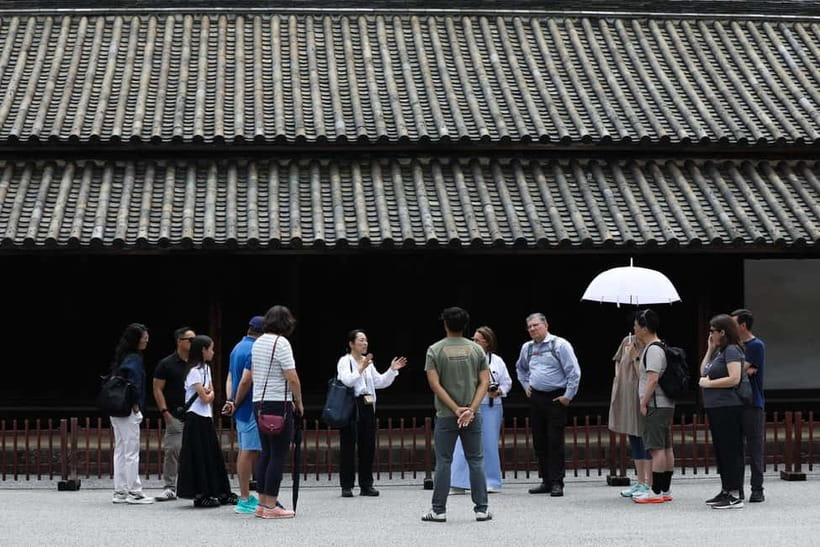
- See the old heart of Edo Castle: Walk through the former Honmaru area and view foundations, gates, and defensive remains.
- Compare two kinds of beauty: Ninomaru Garden offers calm traditional design, while stone walls and guard houses show the castle’s military purpose.
- Expect a guide-led history walk: Guides such as Mei, Kei, Wakana, Tatsie, and Loc have been praised for clear explanations, humor, and patience with questions.
- Plan for seasonal scenery: Cherry blossoms can brighten spring visits, while late November and fall bring colored foliage.
- Meet near Tokyo Station: The starting point is by Starbucks Coffee at Kokyo Gaien Wadakura Fountain Park.
- Know the limits: The route does not enter the Imperial Palace itself, and admission is separate.
Why the East Gardens are worth your time
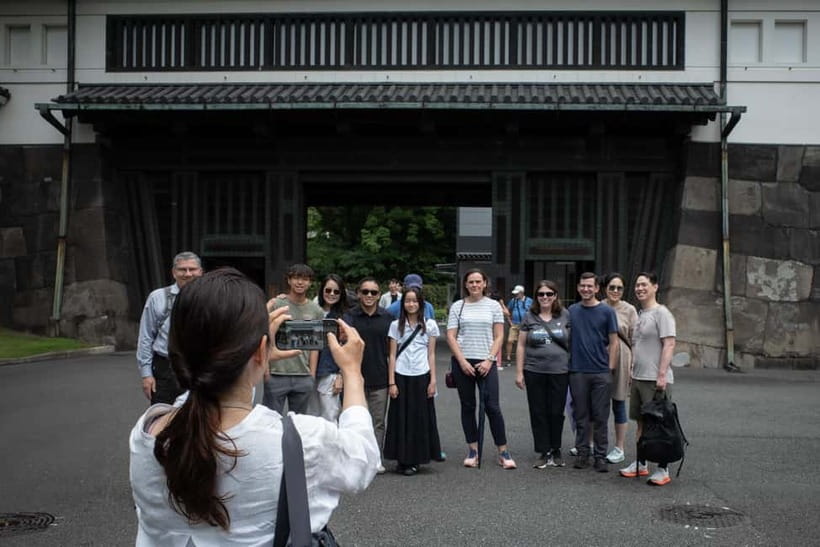
The Imperial Palace can feel hard to understand from outside. You see broad stone walls, guarded entrances, and a large green area, but the old castle’s layout is not immediately obvious. This walking tour helps you read the site.
The East Gardens occupy part of the old Edo Castle grounds. During the Edo period, the Tokugawa shoguns lived and governed here. That fact gives the walk real weight, but the setting is not a museum frozen in place. You move through lawns, trees, ponds, bridges, and carefully shaped garden beds while Tokyo carries on outside the walls.
I find that combination especially useful on a first visit. You get a calm break from the city, but you do not lose the sense that this is central Tokyo. The modern city and the old military capital are always close together.
The gardens are also a good choice if you want an introduction to Japanese design without committing to a full-day cultural program. The route brings together military architecture, court and shogun history, and garden design in one compact outing.
A few more Tokyo tours and experiences worth a look

Meeting at Wadakura Fountain Park
The tour begins near Starbucks Coffee at Kokyo Gaien Wadakura Fountain Park. The listed meeting coordinates are 35.68299330000001, 139.7611971. Your guide waits nearby, so allow enough time to locate the correct area rather than arriving at the last minute.
This is a useful starting point for a Tokyo itinerary because it is near the Imperial Palace grounds and relatively close to Tokyo Station. The route returns to the same Starbucks meeting area after the walk, which makes planning your next stop easier.
The meeting point itself is not the attraction. Think of it as a clear landmark beside the palace district. Check the exact meeting instructions after booking, since the guide waits nearby rather than inside the Starbucks.
The experience lasts 150 minutes. That is long enough for a proper circuit with explanations, but short enough to fit around lunch, a museum visit, or an afternoon in Ginza. You should still expect a steady amount of walking. Comfortable shoes will make the stone paths and garden route easier, though the activity is listed as wheelchair accessible.
Following the remains of Edo Castle
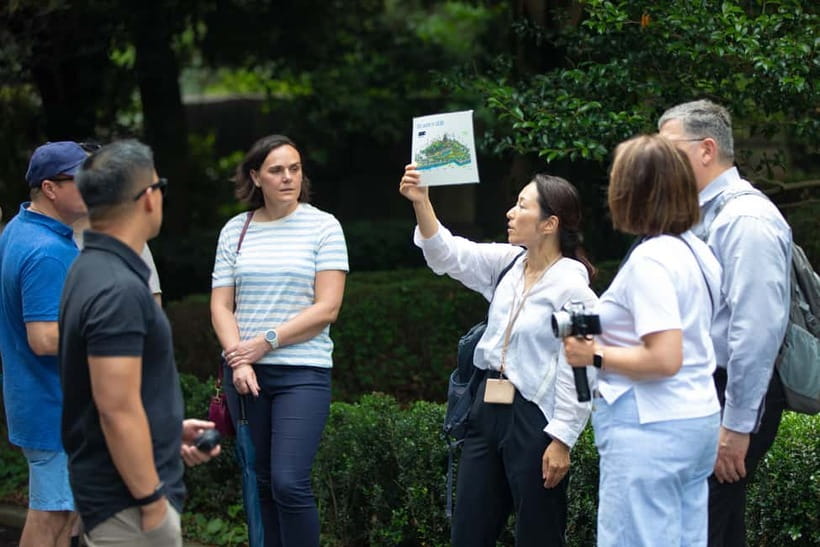
The first major theme is the former castle. Edo Castle was not simply a residence. It was a fortified center of power, and the East Gardens preserve enough of its structure to show how that power was organized.
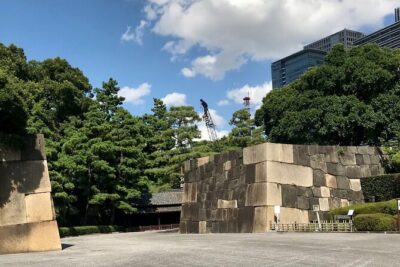
In the Honmaru area, once the main compound, you can see castle foundation ruins and other remains linked to gates and defensive planning. The foundations are not towering ruins, so the site rewards explanation more than quick sightseeing. A guide can show where important buildings once stood and help you imagine the scale of the compound.
This is where printed maps and old images can make a big difference. Mei, one of the guides praised for her use of laminated maps and pictures, has used visual aids to explain the layout when the remaining ruins alone were not enough. That is a smart approach. You do not need to guess at the castle’s shape while looking at a low stone base.
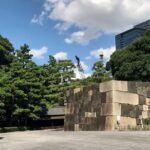
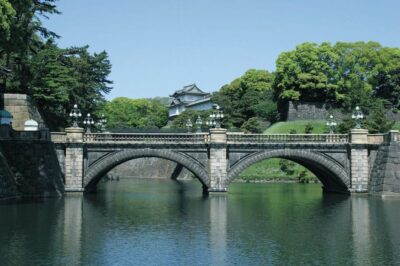
The route also brings you past stone walls, guard houses, and watch towers. These features may look plain at first, but they reveal the practical side of the site. Walls controlled movement. Gates protected access. Guard posts allowed the ruling government to watch who came in and out.
I like this part because it adds purpose to the scenery. You are not only looking at old stones. You are learning how a major castle worked and why its position mattered.
The exact balance between walking and explanation depends on your guide and the group. Comments about Mei, Kei, Tatsie, Wakana, and Loc repeatedly point to clear storytelling, friendly conversation, and willingness to answer questions. That matters here, since the castle remains need context.
Ninomaru Garden and the quieter side of the palace grounds
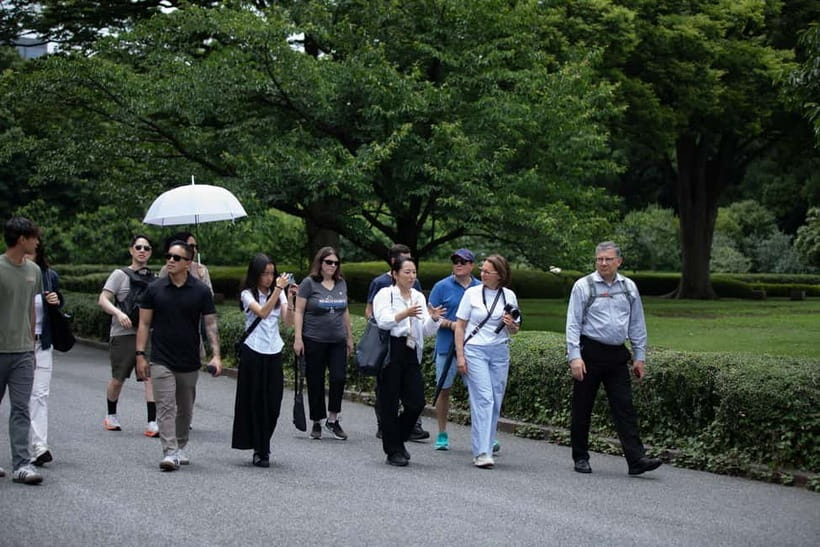
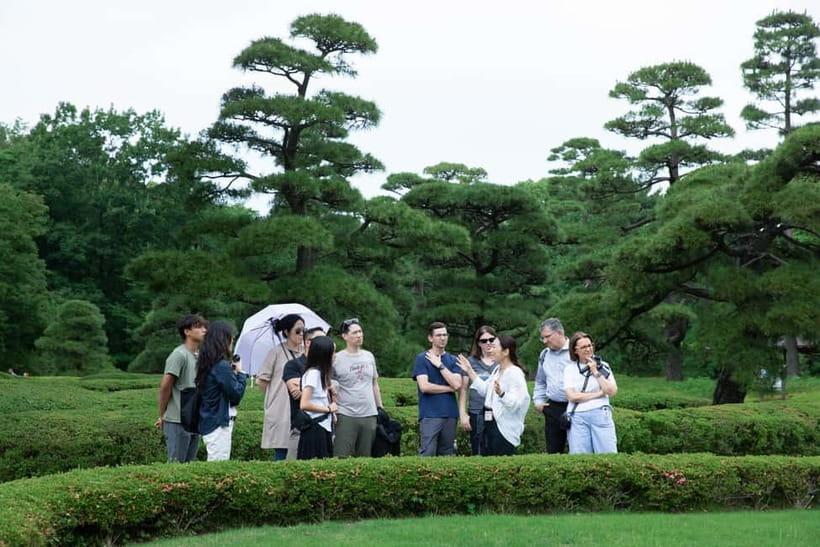
After the castle remains, the garden offers a change of pace. Ninomaru Garden is arranged in a traditional Japanese style, with shaped trees and shrubs, stone lanterns, water, bridges, and open views across carefully maintained grounds.
This section is less about power and more about control, proportion, and calm. The plants are pruned with care, the paths frame views, and the ponds provide a reflective center. You may also see bonsai trees among the garden features.
The contrast with Honmaru is one of the tour’s best qualities. In one part, you are thinking about gates, walls, and military strategy. In another, you are noticing the spacing of a tree, the curve of a bridge, or the position of a lantern.
You will have time to look around as you walk, rather than racing from one marker to the next. The tour is guided, but comments about the pace describe it as comfortable and well planned. Some guides also leave personal time near the end for photographs and a closer look at the Japanese garden.
That small amount of freedom is helpful. A completely scripted walk can make a garden feel like a checklist. Here, you can listen to the main explanation, then pause for photos or simply enjoy the quiet.
Seasonal timing: spring flowers and fall color
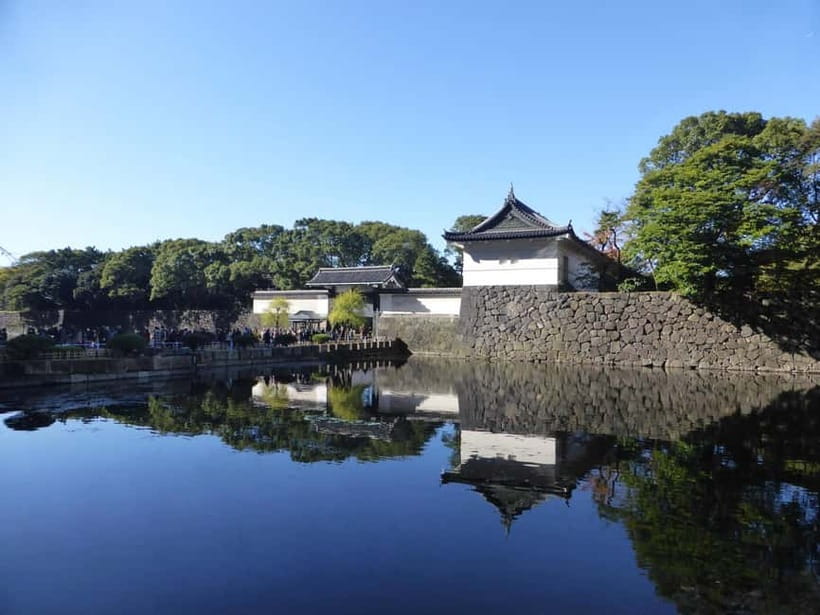
The East Gardens change with the calendar. Spring brings cherry blossoms, while fall can bring red, orange, and yellow foliage. These seasons make the garden especially attractive, but they can also make the grounds busier and the weather less predictable.
The tour works outside peak color periods too. Winter visits can still offer clear views of the garden structure, stonework, and castle remains without relying on flowers. In summer, the greenery gives the grounds a fuller appearance, though you should prepare for the conditions of a two-and-a-half-hour walk.
Fall is particularly appealing if you want both history and scenery. Late November has been described as a beautiful time for the park, with foliage adding color around the paths and garden features. Spring offers the more famous cherry blossom setting, but bloom timing varies, so do not book solely on the hope of seeing flowers.
Weather does not necessarily ruin the experience, but it changes the comfort level. A guide named Miko has been praised for keeping a group happy during rain, and Midori for adapting the experience despite poor weather. That suggests the tour can still work on a gray day, although the gardens will naturally look their best in mild weather.
Other walking tours we've reviewed in Tokyo




What the guides add
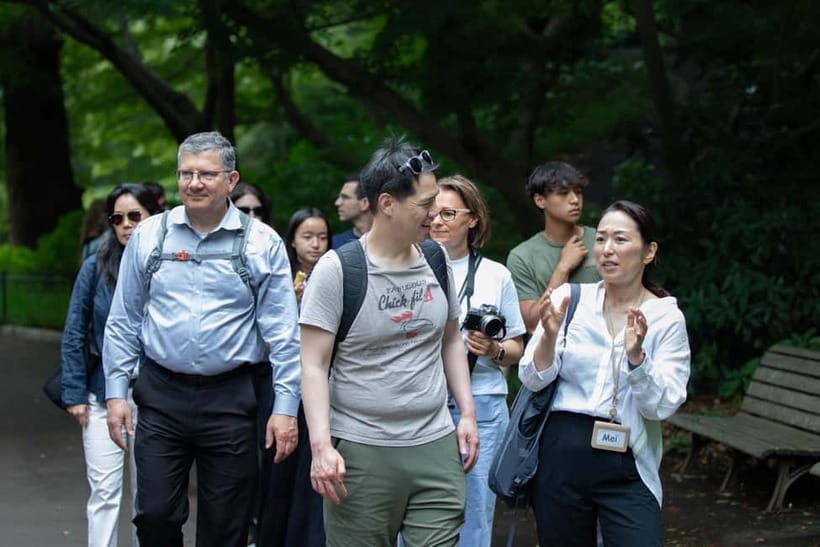
The guide is the main reason to choose this tour instead of walking through the East Gardens alone. Signs and maps can tell you what a gate or garden is called. A live guide can connect the site to the shoguns, emperors, Japanese customs, and the shift from Edo to modern Tokyo.
Mei appears often among the strongest guide experiences. She is described as warm, funny, patient, and ready with answers, as well as helpful with photographs and suggestions for other places to visit. Kei is also praised for explaining history clearly and responding to a wide range of questions.
Tatsie has been noted for a light way of presenting subjects such as the shoguns, customs, and the gardens. Wakana is described as friendly, clear in English, and well prepared. Loc brings strong enthusiasm for Japan and has been praised for making the history of samurai, emperors, and the palace easy to follow.
Other named guides include Mieko, Miyu, Fuku, Midori, Meiko, Wakan, Miko, and Meyu. The repeated pattern is useful to know: the tour depends on the individual guide, but the strongest experiences combine facts with humor and conversation.
The guides also add small practical touches. Some offer to take photos, answer questions about the rest of your Tokyo visit, or use printed images to show what no longer exists. If you have a particular interest in architecture, royal history, gardens, or the samurai era, ask about it early in the walk.
One caution: the supplied information does not promise a particular guide. You can hope for one of the well-praised names, but the booking does not guarantee Mei, Kei, Wakana, or anyone else. The quality of your experience will partly depend on who leads your departure.
What the $19 price gets you
At $19 per person, this is an inexpensive guided introduction to one of Tokyo’s most important historic sites. You pay for the walking tour and the English-speaking guide. Entry to the Imperial Palace grounds is not included, so budget for that separate cost.
The value is strongest if you want the site explained. Walking through the gardens without a guide still gives you trees, ponds, bridges, and walls, but the Honmaru foundations and defensive structures can be difficult to interpret on your own. The guide turns scattered remains into a story about how Edo Castle was arranged and used.
The price is also reasonable for the length. Two and a half hours gives the guide time to cover both the castle remains and Ninomaru Garden without reducing everything to a quick photo stop. You are not paying for transport, meals, or entry to an indoor attraction, so the tour is best viewed as a focused history walk, not a full palace excursion.
If you already know Edo Castle well and prefer to set your own pace, you may not need the tour. If you are curious but unfamiliar with Japanese feudal history, the cost buys useful context and saves you from trying to reconstruct the site alone.
Free cancellation up to 24 hours before the start and reserve-now, pay-later booking make it easier to fit into a changing Tokyo plan. Those terms are practical, especially if the weather forecast looks uncertain.
Who should book this walk
I would recommend it to first-time visitors who want a manageable introduction to Tokyo’s imperial and shogun-era past. It also suits anyone who enjoys gardens but wants more than a quiet stroll.
Families can benefit from the stories and visual aids, especially if younger visitors need more than stones and plants to stay interested. The route includes enough variety to keep the walk moving: castle foundations, guard houses, walls, watch towers, ponds, bridges, bonsai, and traditional garden details.
It is also a good fit for history fans. The tour explains the difference between the shogun’s former seat and the modern Imperial Palace, while showing how military planning shaped the grounds.
You might skip it if your priority is entering palace buildings. This route does not go inside the Imperial Palace. You might also prefer an unguided visit if you want to linger at one pond or photograph every garden corner without keeping to a group pace.
The wheelchair-accessible listing is important for visitors who need that option, though you should confirm any personal route requirements before booking. The walk remains an outdoor garden visit, so weather and path conditions still matter.
Final call: a smart way to read central Tokyo

Book this tour if you want the East Gardens to make sense, not just look attractive. The strongest part is the link between the Honmaru ruins and Ninomaru Garden: one shows the machinery of power, while the other shows the polished calm of traditional design.
At $19, the tour offers good value for a 150-minute English walk, provided you understand that palace entry costs extra and the route stays outside the Imperial Palace itself. I would choose it early in a Tokyo visit, when the stories of Edo, the shoguns, and the imperial family can give later sights more meaning.
Pick a clear spring or fall day if seasonal scenery matters most. Otherwise, book for the guide and the explanation. The walls may be centuries old, but a skilled guide such as Mei, Kei, Wakana, or Tatsie can make the missing castle feel surprisingly present.
FAQ
How long does the Imperial Palace East Gardens walking tour last?
The tour lasts 150 minutes, or two and a half hours.
Where does the tour start?
It starts near Starbucks Coffee at Kokyo Gaien Wadakura Fountain Park. The listed coordinates are 35.68299330000001, 139.7611971.
Does the tour enter the Imperial Palace?
No. The tour visits the Imperial Palace East Gardens and former Edo Castle grounds, but it does not go inside the Imperial Palace.
Is admission included in the $19 price?
No. The walking tour and guide are included, but entry to the Imperial Palace is not included.
What language is the tour offered in?
The tour is offered in English with a live English-speaking guide.
Is the walking tour wheelchair accessible?
Yes. The activity is listed as wheelchair accessible.
More Walking Tours in Tokyo
More Imperial Palace & Shogun Tours in Tokyo

More tours in Tokyo we've reviewed










Imperial Palace & Shogun Tours, compared.
 ★ 5.0Tokyo: Imperial Palace and Shogun Historical Walking TourFrom $22
 ★ 4.9Tokyo: Imperial Palace Japanese History Walking TourFrom $32
 ★ 4.9Tokyo: Imperial Palace and Shogun Walking TourFrom $162 hours
 ★ 5.0Imperial Palace East Garden and Edo Castle Walking Tour in TokyoFrom $25
 ★ 4.5Tokyo: Imperial Palace, Sensō-ji Temple, & Tokyo Tower TourFrom $404 hours
 ★ 5.0Tokyo Castle, Imperial Palace, Shogun & Garden Walking TourFrom $31