
Reviewed · E-BIKES
Tokyo: 3-hour Guided E-Bike Tour of the City’s Hidden Gems
Tokyo makes more sense from an e-bike. In three hours, you can pass grand avenues, quiet temple grounds, a Japanese garden, and local streets that a subway ride simply hides. The route depends on your booking: you might see Tokyo Station and the Imperial Palace, cruise across Tokyo Bay, or stop at Zojo-ji Temple and Tokyo Tower.
I like the easy electric assist, which takes the sting out of hills and long stretches. I also like the mix of major sights and small surprises, such as a garden visit, a tucked-away temple, or a Japanese snack chosen by the guide. The main thing to consider is traffic. Some riding takes place near cars or on busy shared footpaths, so you should already feel comfortable on a bicycle.
In This Review
- Key points at a glance
- Why an e-bike works so well in Tokyo
- Pick the right route for your Tokyo plans
- City Route: Tokyo Station, gardens, and old-town corners
- Tokyo Bay Route: bridges, Odaiba, and sunset views
- Tokyo Tower Route: temples, hills, and the city center
- What the guides add to the ride
- Riding in traffic and around pedestrians
- What is included, and what to bring
- Who should book this experience
- Weather, timing, and cancellation details
- Should you book the Tokyo e-bike tour?
- FAQ
- How long is the Tokyo e-bike tour?
- Which sights are included?
- Is the tour suitable for beginners?
- Is the tour conducted in English?
- What is included in the price?
- Are children allowed to join?
- What happens if it rains?
Key points at a glance
- Three different routes: Choose the City, Tokyo Bay, or Tokyo Tower option, each with a different set of sights.
- An easy way to cover ground: The electric assist helps with hills, heat, and the distance between neighborhoods.
- More than a sightseeing loop: Expect temples, gardens, bridges, local streets, and commentary about Japanese customs.
- A snack is included: You receive a traditional Japanese treat, with some tours also stopping at a convenience store or waterfront shop.
- English-speaking guides lead the ride: Guides including Hiro, Yota, Miki, Shinobu, and others keep the group together and explain the stops.
- Not a beginner-free ride: You need basic cycling confidence, especially around pedestrians and city traffic.
Why an e-bike works so well in Tokyo
Tokyo is enormous, and its best sights are spread across a wide area. Walking gives you close contact with the streets but limits how much you can see. The subway is fast but keeps you underground. An e-bike fills the gap.
You move far enough to connect different parts of the city, yet slowly enough to notice daily life along the way. You see shopfronts, side roads, bridges, shrines, offices, parks, and apartment streets. The guide can stop for a photograph or point out a detail that you would likely miss from a bus window.
The electric assist matters. You still pedal, but the motor gives you a useful push, especially on Tokyo’s hills and during hot or humid weather. Several riders found the bikes easy after a short adjustment period. The first few minutes can feel slightly awkward because of the bike’s size and proportions, but the assist helps make a three-hour ride manageable.
You are not signing up for a hard workout. Still, this is an active city tour. You should be able to start, stop, steer, and anticipate pedestrians. The group rides together, and the course must finish back at the designated meeting point.
Other cycling tours in Tokyo
Pick the right route for your Tokyo plans
The three options are not minor variations. They offer quite different views of Tokyo, so check the exact route before booking.
City Route: Tokyo Station, gardens, and old-town corners
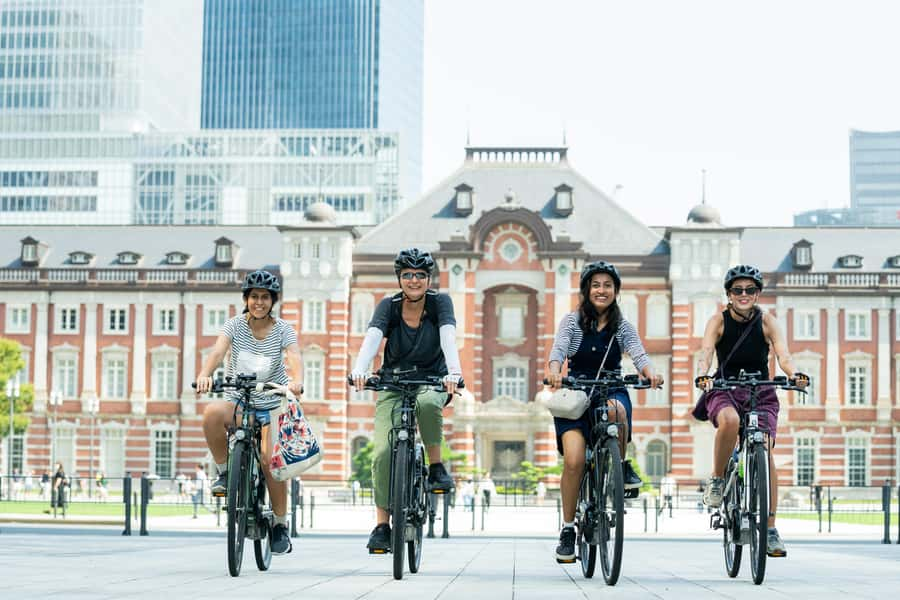
The City Route begins around the Tokyo fish market neighborhood and moves through central Tokyo. It passes the Ginza district, the Imperial Palace, Tokyo Station, and Nihonbashi before continuing to a garden and shrine.
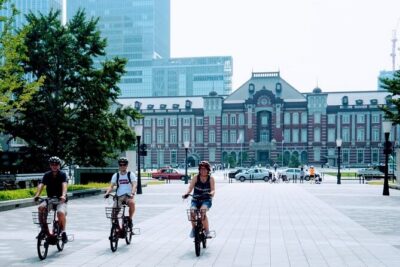
Tokyo Station is one of the city’s most recognizable buildings, with its grand red-brick exterior and busy surrounding streets. The tour passes through the area rather than offering a long indoor visit, but arriving by bike gives you a close street-level look at the station and the office district around it.
The Imperial Palace is also a pass-by stop. Do not book this route expecting a palace interior tour. The value is in seeing the palace area in context, with the modern center of Tokyo on one side and the imperial grounds on the other.
The route then adds a more local touch. You may receive a traditional Japanese snack, and the stop at Kiyosumi Japanese Garden gives you a quiet break from traffic. A garden visit is especially welcome on a warm day. It also provides the calm, carefully arranged scenery many people hope to see in Japan without leaving central Tokyo.
Tomioka Hachimangu Shrine adds another change of pace. The shrine visit brings Japanese religious customs and traditional architecture into a route otherwise focused on city streets. This option is a good match for a first visit if you want a broad introduction to central Tokyo.
One fair criticism: parts of the Tokyo Station and Nihonbashi section may feel less visually dramatic than neighborhoods such as Asakusa, Shinjuku, or Akihabara. You are choosing this route for central Tokyo, gardens, history, and street-level variety, not for the city’s loudest neon scenes.
Tokyo Bay Route: bridges, Odaiba, and sunset views
The Tokyo Bay Route is the choice for open views and a more relaxed ride. Odaiba is built on reclaimed land, so the area is relatively flat, with broad roads and roomier paths. That makes it less tense for riders who do not want the tight streets of central Tokyo.
The route includes Sumiyoshi Shrine and Tsukuda Tendai Temple, a quieter religious site described as a local find. These stops keep the tour from becoming only a waterfront photo trip. You also pass TeamLab Tokyo and Tokyo Big Sight, two modern landmarks in the bay area.
In Odaiba, the itinerary includes the large Gundam statue, the Statue of Liberty replica, and Aqua City. These are unmistakably modern Tokyo sights, and they make for easy photographs. A local snack is included along the way, with the waterfront providing a pleasant place to pause.
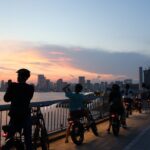
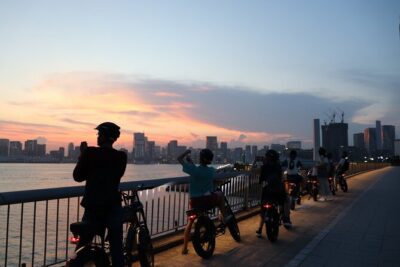
The ride also passes near Rainbow Bridge. Depending on the month and start time, you may see the bay in daylight, at sunset, or after dark. The evening version is particularly appealing if you want city lights and skyline views rather than another temple-and-shopping itinerary.
The bay route may be the easiest option for riders who are new to e-bikes, thanks to the flatter setting. It is not entirely free of shared paths or other people, so you still need to ride attentively. The route’s main tradeoff is that Odaiba can feel separate from old Tokyo. You get water, bridges, open space, and modern architecture, but less of the dense historic street life found in central districts.
Tokyo Tower Route: temples, hills, and the city center
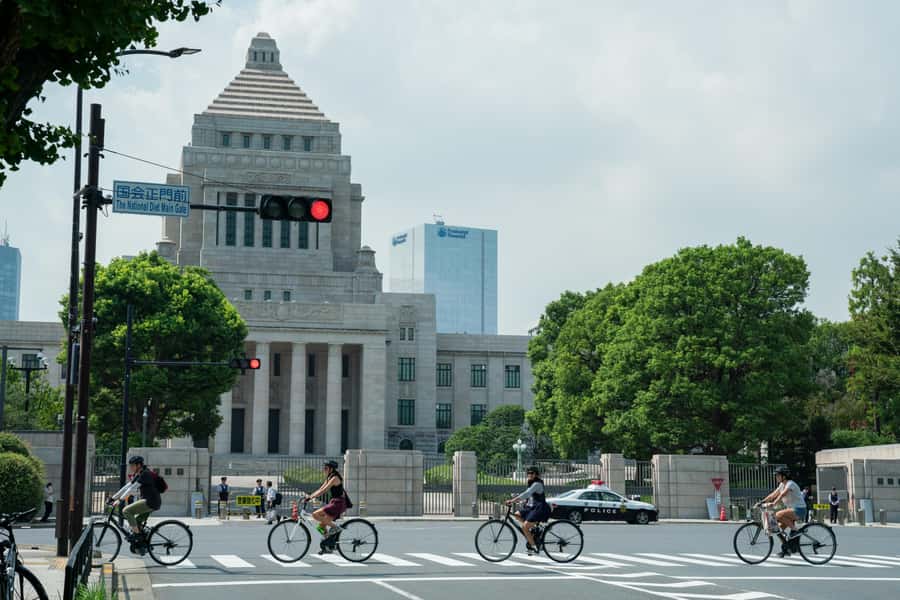
The Tokyo Tower Route focuses on the contrast between old religious sites and modern government and business districts. You visit Zojo-ji Temple, stop at a Tokyo Tower photo point, and continue to Atago Shrine, the National Diet Building, the Imperial Palace, and Hibiya Park.
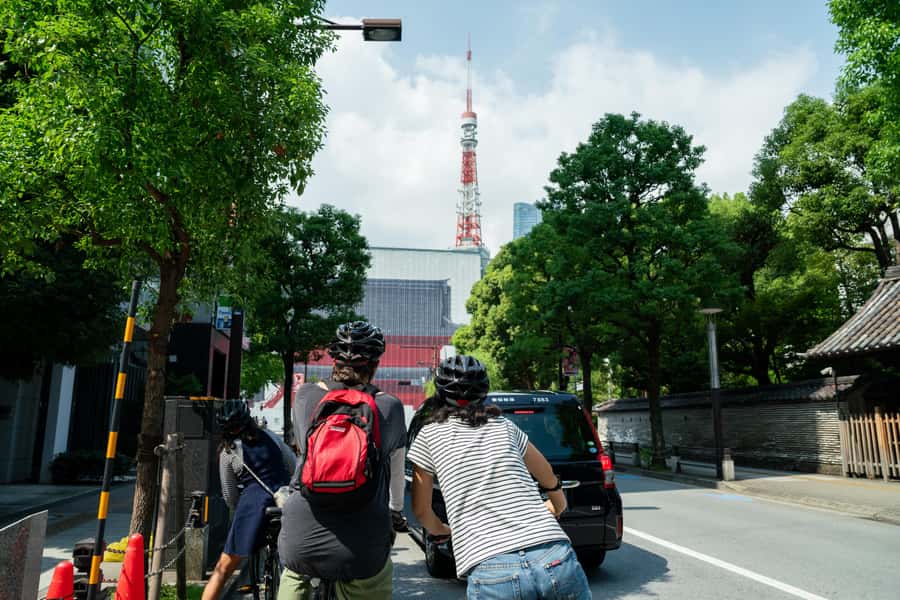
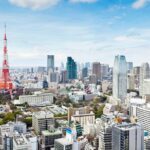
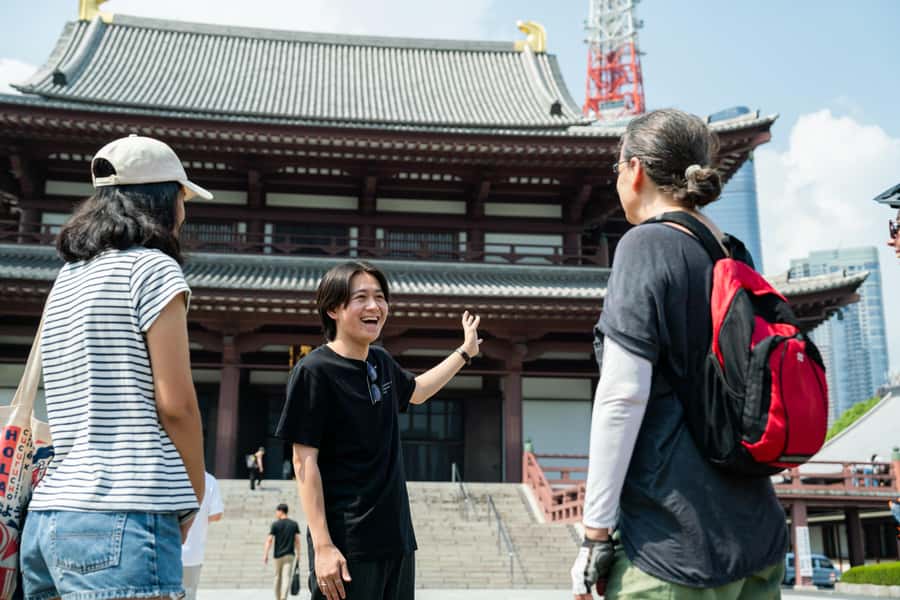
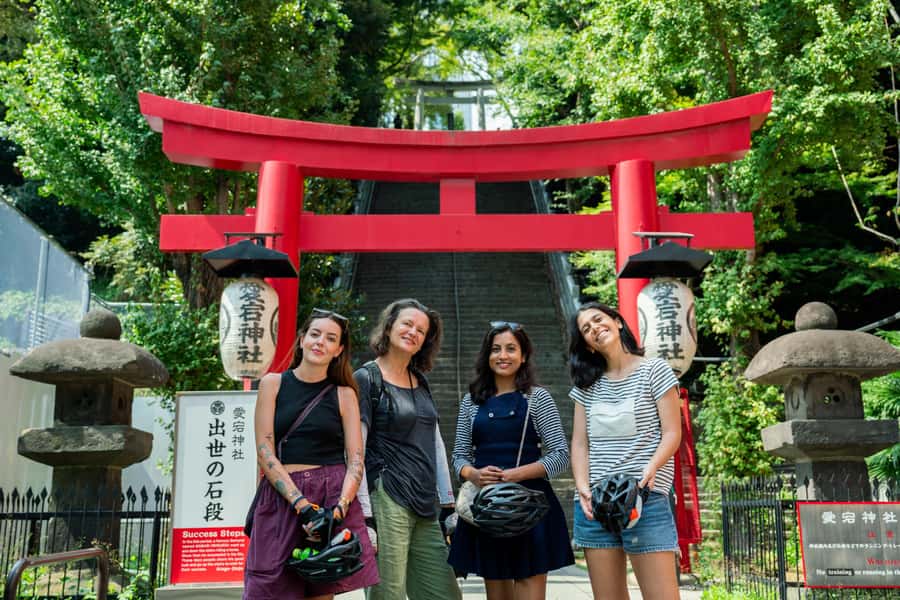
Zojo-ji is a strong opening stop because Tokyo Tower rises behind the temple area, creating one of the city’s clearest old-and-new views. The tower photo stop is brief rather than a full observatory visit, so book this route for the exterior sight and the ride, not for going up Tokyo Tower.
Atago Shrine gives the route a more traditional feel. The itinerary also includes a traditional snack, which adds a small taste of local food to the sightseeing. Hibiya Park offers greenery in the middle of the city and a chance to slow down before the ride ends.
This route includes hilly areas. The e-bike assist makes the climbs much easier, but it does not remove the need to control the bike. If you are uneasy on hills, tell yourself that the motor is helpful, not magical. You still need to brake and steer carefully.
Other guided tours in Tokyo


What the guides add to the ride
The guide is more important here than on a simple bike rental. You are riding in a group, navigating unfamiliar streets, and stopping at places where context makes a difference.
Guides such as Hiro, Yota, Miki, Shinobu, Yugo, and Daichi have been praised for clear English, patience, humor, and attention to the group’s pace. Hiro is described as especially good at sharing facts and helping riders after the tour. Yota has been noted for choosing a route with changing views and stopping so everyone could keep up. Miki was praised for waiting while people took photographs.
That care affects the experience. You are not left to guess where to turn or how long to stay at a stop. The guide can explain customs at a shrine, give background on a building, and introduce a snack in a way that makes it more than a random bite.
The style can vary by guide. Some add plenty of jokes and personal warmth, while others focus more on facts and route management. The strongest guides combine both. The supplied feedback repeatedly highlights friendly English-speaking staff, useful local explanations, and a safe pace.
Riding in traffic and around pedestrians
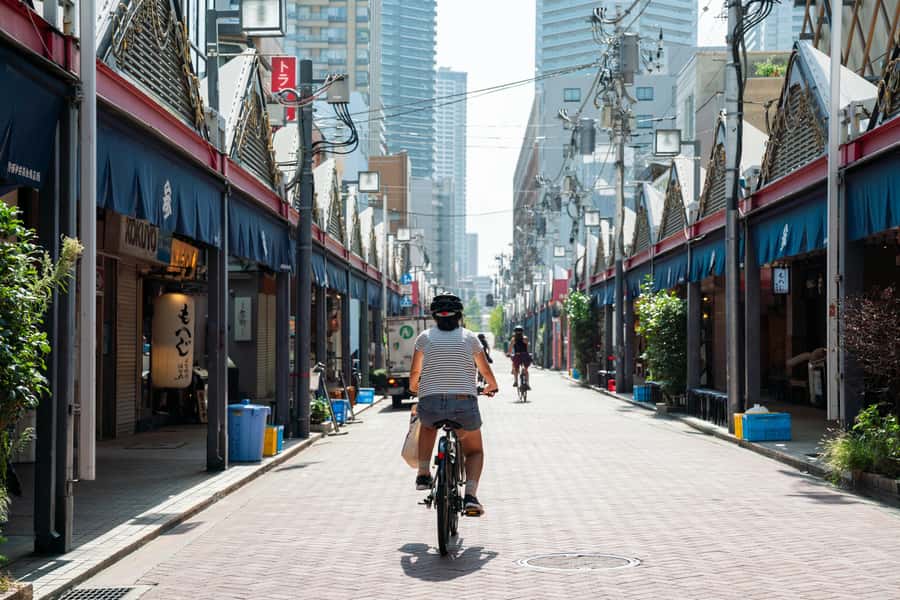
This is the point I would take most seriously before booking. Tokyo may feel orderly, but it is still a large city with cars, bicycles, crowds, crossings, and narrow sections.
Some of the ride uses footpaths shared with pedestrians. You may need to slow down, anticipate someone changing direction, and keep your line without startling people. One rider found this manageable but advised being comfortable with close movement around pedestrians and cars. That is sound advice.
The guide leads the way and keeps the group together, but the guide cannot ride your bike for you. Practice basic braking and turning before the tour if you have not cycled in years. If you are already comfortable on a bicycle, the electric assist should make the route feel much less tiring.
You meet 15 minutes before departure for a briefing. Arriving late is a real problem because you cannot join the group halfway through. The tour ends back at the meeting point, and traffic can push the finish about 30 minutes later than planned.
What is included, and what to bring
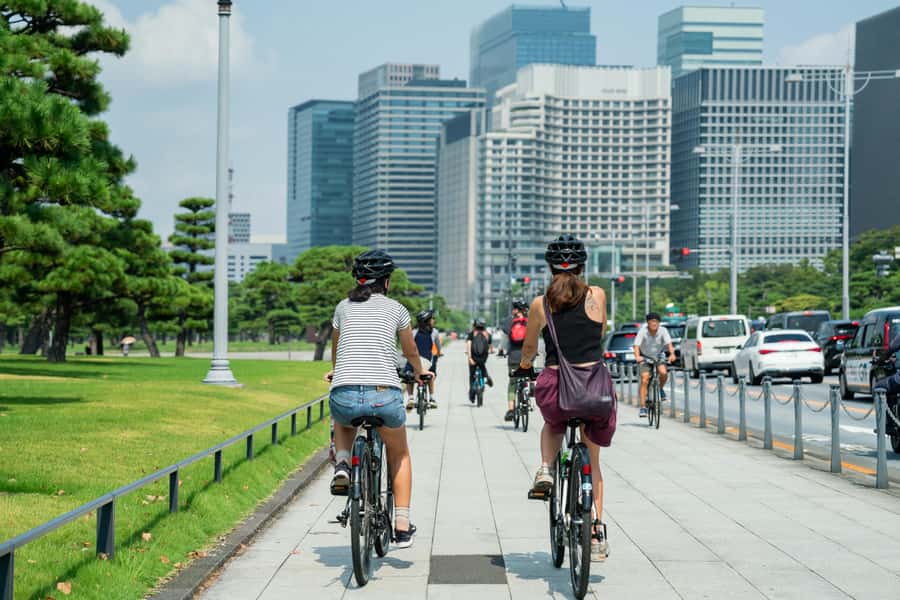
The price is $65 per person. That includes the e-bike, guide, helmet, luggage storage, a knapsack if needed, and a traditional Japanese snack. Winter riders receive gloves.
For the price, I see good value if you want a guided overview rather than simply renting a bike. A three-hour rental alone would not provide route planning, safety support, commentary, or access to a garden, shrine, snack stop, and selected viewpoints. The value is strongest for a first visit, when you want orientation across several neighborhoods.
The price is less compelling if you only want one district or prefer to stop for long visits at each sight. This is a moving tour. Major places such as Tokyo Station, the Imperial Palace, Tokyo Tower, and the Gundam statue are generally viewing and photo stops, not extended museum-style visits.
Wear comfortable clothes and shoes suitable for pedaling. For a hot day, bring water and expect the weather to affect your comfort. For a cooler evening, layers are sensible. Helmets are supplied, and winter gloves are available.
Luggage storage is included, which is useful if you have bags that would get in the way. The operator also provides a knapsack if you need one.
Who should book this experience
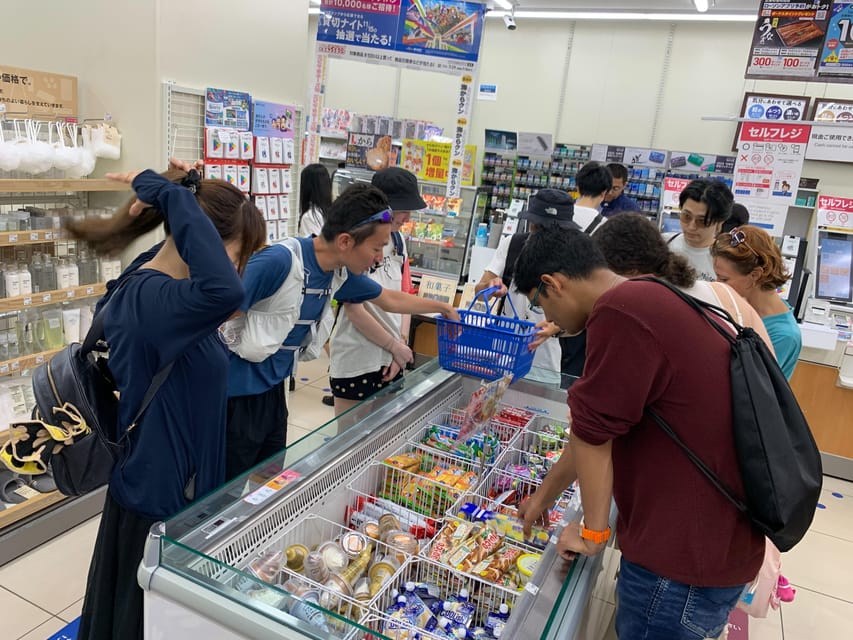
I would choose this tour for:
- First-time visitors who want a quick sense of Tokyo’s size and layout
- Repeat visitors seeking less familiar streets and local religious sites
- Couples or small groups looking for an active alternative to another train ride
- Riders who want sunset or night views around Tokyo Bay
- People who can ride a bicycle but do not want a strenuous cycling trip
- Anyone who values a guide’s stories and local explanations
I would think twice if you want a fully relaxed sightseeing vehicle, dislike sharing paths with pedestrians, or hope to spend a long time inside each major attraction. Pregnant people, wheelchair users, people with heart problems, and anyone over 120 kilograms are not suited to this activity.
The age and height information is slightly inconsistent in the supplied details. One section says children under 13 are not permitted, another says under 12, and the minimum height is listed as both 147 and 145 centimeters. Confirm the current requirement when booking, especially for a young rider.
Weather, timing, and cancellation details
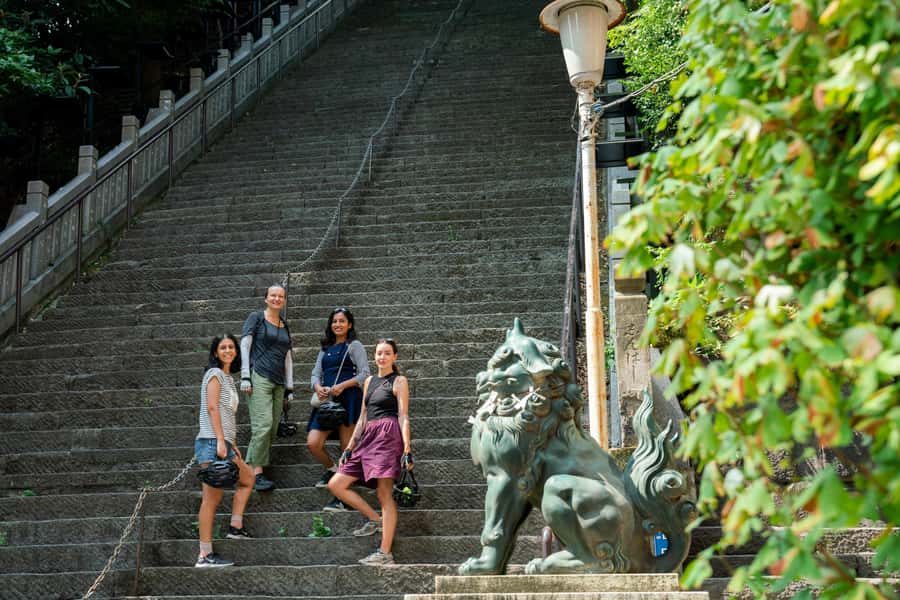
Rain can change the plan. If poor weather is expected, the operator may notify you by email the day before. Even if conditions change on the day, the tour can be cancelled for safety.
The Tokyo Bay start time changes by month. This matters if you want sunset, since the route may be scheduled around the season. Check the start time for your date rather than assuming every evening ride begins at the same hour.
You can cancel up to 24 hours in advance for a full refund. A reserve-now, pay-later option is also available, which helps if your Tokyo schedule is still shifting.
Should you book the Tokyo e-bike tour?
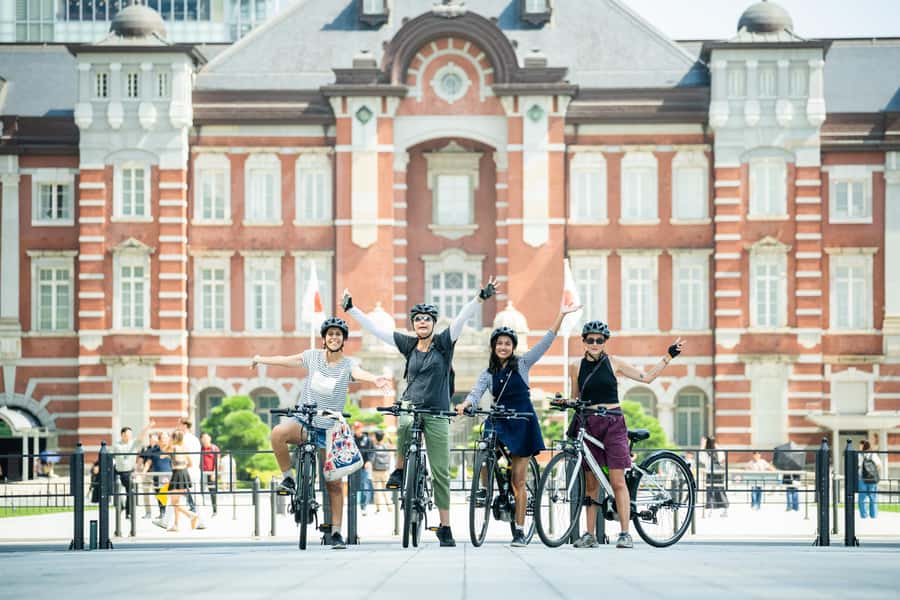
Book it if you want to see Tokyo from street level, cover more ground than walking allows, and enjoy a guide who can connect modern city life with shrines, gardens, snacks, and local streets. The strongest choice depends on your goal: City Route for central sights and gardens, Tokyo Bay for flat riding and sunset views, or Tokyo Tower Route for temples, hills, and classic city contrasts.
I would not choose it simply because you want to tick off every major Tokyo attraction. The stops are often brief, and some riding takes place in traffic or among pedestrians. But if you are comfortable on a bike, the $65 fee buys a lively three-hour introduction that is hard to reproduce on your own. For many people, the unusual viewpoint is the real prize.
FAQ
How long is the Tokyo e-bike tour?
The tour lasts three hours. The finish can be delayed by about 30 minutes because of traffic or other course conditions.
Which sights are included?
The sights depend on the route you book. The City Route includes Tokyo Station, the Imperial Palace area, Ginza, Nihonbashi, Kiyosumi Japanese Garden, and Tomioka Hachimangu Shrine. The Tokyo Bay Route includes Odaiba, the Gundam statue, the Statue of Liberty replica, Rainbow Bridge, and waterfront areas. The Tokyo Tower Route includes Zojo-ji Temple, Tokyo Tower, Atago Shrine, the National Diet Building, the Imperial Palace area, and Hibiya Park.
Is the tour suitable for beginners?
The e-bikes are designed to reduce physical effort and many people find them easy after getting used to the bike. However, you should already be comfortable riding, braking, and steering because some sections involve traffic and shared footpaths.
Is the tour conducted in English?
Yes. The tour includes an English-speaking guide.
What is included in the price?
The $65 price includes the e-bike, guide, helmet, luggage storage, a knapsack if needed, and a traditional Japanese snack. Gloves are provided during the winter season.
Are children allowed to join?
Children under the stated minimum age are not allowed. The supplied information gives both under 12 and under 13 as the restriction, so confirm the exact current rule before booking. Riders must also meet the minimum height requirement.
What happens if it rains?
The tour may be cancelled for rain or other safety concerns. The operator may notify you by email the day before, or cancel on the tour day if conditions change.
More City Tours in Tokyo



More Guided Tours in Tokyo
More Cycling Tours in Tokyo
More tours in Tokyo we've reviewed






E-Bikes, compared.
 ★ 5.0Tokyo Top Highlights 3h Guided E-bike TourFrom $63
 ★ 5.03h Tokyo E-Bike Tour: Hidden Gems, and Local Life with guideFrom $63
 ★ 4.8Tokyo: 3-Hour Bike or E-Bike City Highlights TourFrom $453 hours
 ★ 5.0Tokyo: 3-Hour Bike/E-Bike Tour of the City’s HighlightsFrom $63
 ★ 5.03-Hour Tokyo Private E-Bike Tour Starting from Your HotelFrom $145
 ★ 4.7Tokyo: 3-Hour Bike or E-Bike Tour of City’s Hidden GemsFrom $603 hours