
Reviewed · NIKKO DAY TRIPS
Nikko Private Custom Tour with Local Guide
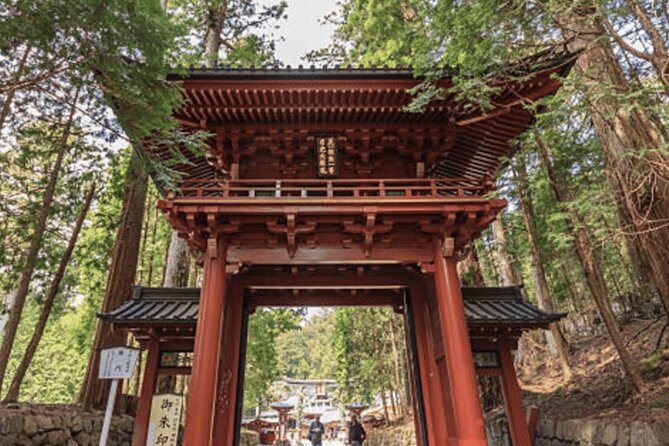
Nikko Toshogu Shrine is the star here, and it is easy to see why. Carved monkeys, a sleeping cat, the ornate Yomeimon Gate, and a red pagoda fill a cedar forest with stories from Japan’s Edo period. A private guide helps you make sense of what you are seeing instead of leaving you to admire the details without context.
I like the custom itinerary and the fact that you can combine Nikko’s major shrines with a quieter local stop. I also like the private format, which gives you room to ask questions and set the pace. The main drawback is cost clarity: the $214 price covers the guide and private tour, but entrance fees, transport, lunch, and the guide’s expenses are extra.
In This Review
- Key points
- Why Nikko Toshogu deserves the six-hour visit
- Reading the stories carved into Toshogu
- Understanding the Edo-period setting
- Adding Rinnoji and Futarasan
- Choosing between shrines and mountain scenery
- What the private format changes
- Is $214 per person a fair price?
- Who will get the most from this Nikko tour?
- Practical advice before you go
- Should you book the Nikko private custom tour?
- FAQ
- Where does this tour take place?
- How long does the tour last?
- Is the tour private?
- Is the guide English-speaking?
- Can I customize the itinerary?
- Which main attraction is included in the experience?
- Can I visit Rinnoji Temple and Futarasan Shrine?
- Are Kegon Falls and Lake Chuzenji included?
- Are entrance fees, lunch, and transportation included?
Key points
- Yomeimon Gate packs more than 500 carvings of mythical creatures, flowers, and sages into one richly detailed entrance.
- Toshogu Shrine honors Tokugawa Ieyasu, founder of the shogunate that ruled Japan for more than 250 years.
- A private English-speaking guide can adjust the six-hour plan around your interests and questions.
- Rinnoji and Futarasan shrines add Buddhist and Shinto layers to the Nikko visit.
- Kegon Falls and Lake Chuzenji offer a natural counterpoint to the ornate religious sites.
- Extra costs matter: entrance tickets, transportation, lunch, and the guide’s necessary expenses are not included.
Why Nikko Toshogu deserves the six-hour visit
Nikko is one of the best places in Japan to see how politics, religion, art, and nature were brought together. Toshogu Shrine is dedicated to Tokugawa Ieyasu, the founder of the Tokugawa shogunate. After his death, the shrine was established in 1617, and later work turned it into the lavish complex you see today.
The site does not feel like a simple place of worship. It presents power in carved wood, painted surfaces, gates, towers, and carefully arranged paths through old cedar trees. The result can be visually overwhelming, especially if you arrive without knowing which details matter.
That is where a private guide earns the fee. You can stop at the carvings that catch your eye, ask why Shinto and Buddhist elements appear together, and get a clearer picture of how the Edo period shaped the site. I find that useful in Nikko because the beauty is obvious, but the meaning is not always obvious.
The six-hour length gives you time to see the main shrine without treating it as a quick photo stop. You can also add nearby cultural sites or make room for Nikko’s mountain scenery.
A few more Nikko tours and experiences worth a look
Reading the stories carved into Toshogu
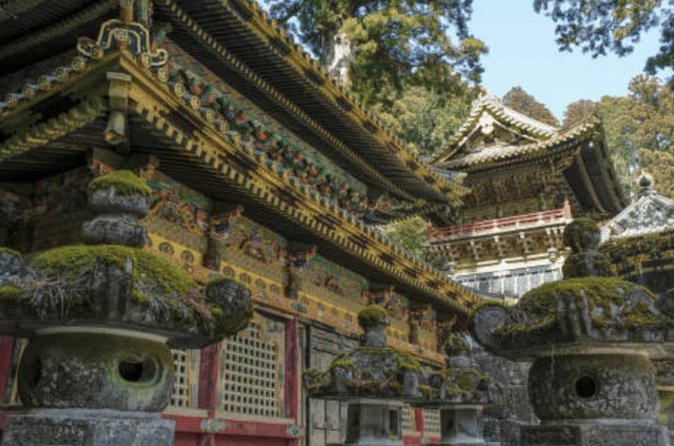
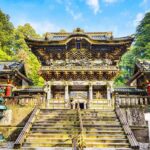
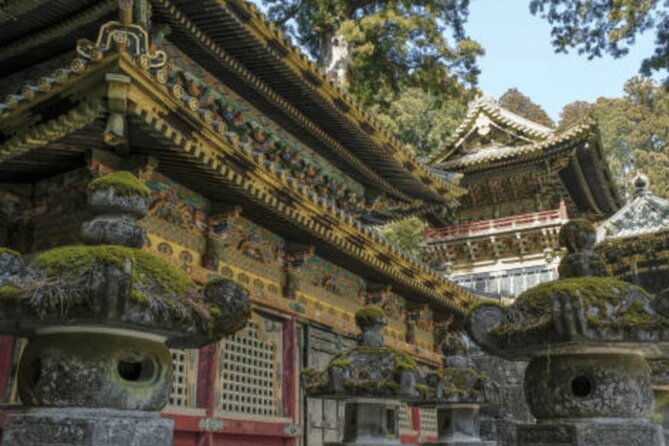
The approach to Toshogu leads you into a large shrine complex with more than a dozen buildings. The surrounding cedar forest gives the place a quiet setting, while the buildings use color and elaborate carving to announce their importance.
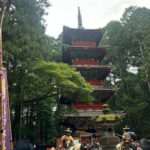
The Five-Story Pagoda is an early visual marker. Its red exterior and tall form make it easy to spot, but your guide can place it within the wider design of the shrine complex. It is a good reminder that Nikko’s sacred buildings are meant to be seen as a group, not as isolated monuments.
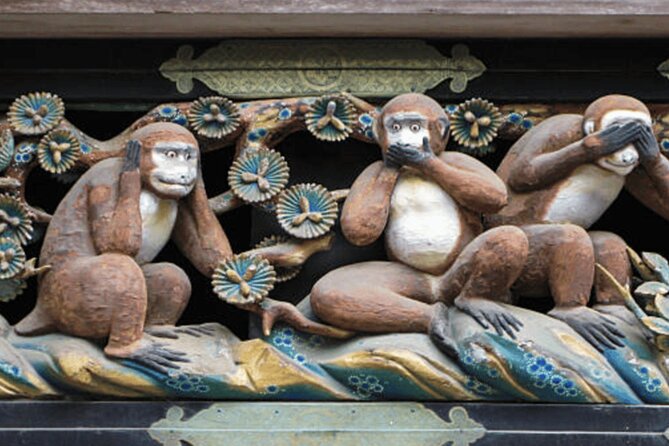
The Three Wise Monkeys are among the most familiar images at Toshogu. Their message, see no evil, hear no evil, speak no evil, is simple enough to understand at a glance. The larger value comes from learning how such images fit the ethical ideas associated with the Edo period.
The Nemuri-neko, or Sleeping Cat, is a smaller carving with an outsized reputation. Located above the Kuguri-mon Gate, it symbolizes peace and tranquility. It is the sort of detail you could easily miss in a crowded, highly decorated complex, so keep your eyes open and let the guide point out the exact location.
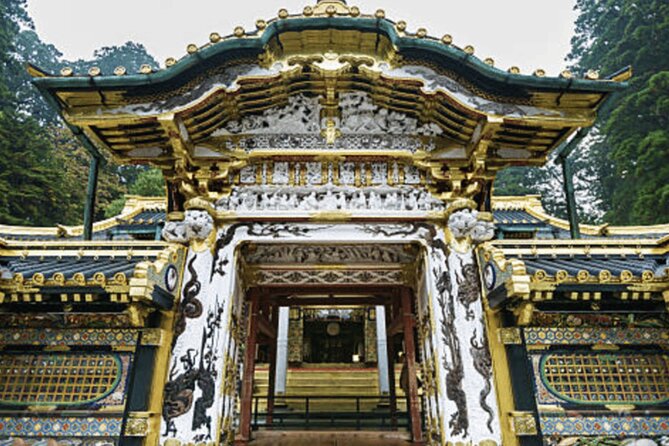
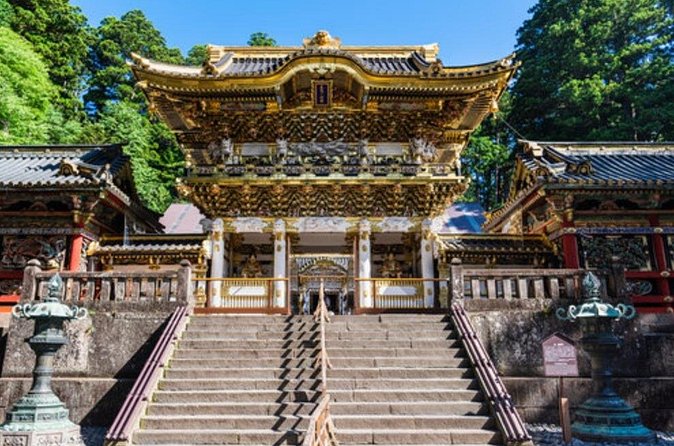
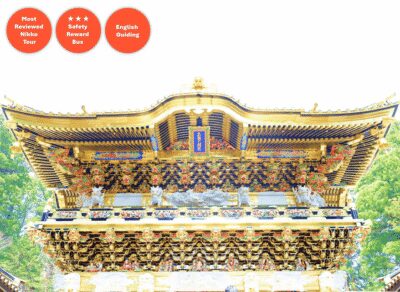
The Yomeimon Gate is the visual high point. It is often called the Gate of Sunlight, and its surface contains more than 500 carvings of mythical creatures, flowers, and sages. Give yourself time here. The gate rewards slow looking, not just a quick photograph before moving on.
The shrine’s decoration can also be tiring. There is a lot to take in, and the many colors and carvings may blur together if you rush. A private schedule helps because you can pause, listen, and then move on instead of following a fixed group timetable.
Understanding the Edo-period setting
Toshogu makes more sense when you know who Tokugawa Ieyasu was. He founded the shogunate that governed Japan for more than 250 years, and the shrine reflects the honor attached to his role.
The complex also shows how religious practice worked in Japan during the period. Shinto and Buddhist features appear together, giving you a chance to see the syncretism of the era in physical form. This is not just a matter of architectural style. It helps explain why one visit can include shrines, temples, gates, statues, and ritual spaces with different traditions behind them.
Your guide’s explanations are especially useful here. A short description of a carving may connect it to peace, moral conduct, authority, or religious belief. Without that explanation, you may leave with attractive photographs but only a thin sense of what Toshogu represents.
The private format suits people who enjoy asking direct questions. If you want to know why a particular animal appears, how the shrine relates to the shogunate, or how Buddhist and Shinto features share the same setting, you can shape the conversation around those subjects.
Adding Rinnoji and Futarasan
The custom plan can include Rinnoji Temple, which gives the day a different religious and artistic mood. The temple is known for three large gold-lacquered wooden statues of the Buddha. These offer a useful contrast with Toshogu’s dense exterior carving and strong political symbolism.
Rinnoji is a good addition if you want more than one major site but prefer to keep the day centered on culture. Its statues shift your attention from gates and decoration to interior religious art.
Futarasan Shrine adds another layer. It is dedicated to the deities of the Nikko mountains, linking sacred practice to the surrounding natural setting. The site helps explain why Nikko became important as a religious destination, not only as a memorial to Tokugawa Ieyasu.
I like the possibility of seeing all three sites with one guide because the connections are easier to follow. Toshogu explains the shogun’s memorial, Rinnoji presents Buddhist art, and Futarasan connects worship with the mountain area. You get a more complete picture of Nikko’s spiritual character without needing to arrange separate tours.
The tradeoff is time. Six hours is enough for a focused day, but adding every possible stop may make the visit feel hurried. Decide what matters most before you start. If Toshogu is your priority, allow it the time it deserves. If you have already seen major Japanese temples and shrines, adding natural sights may give you a more varied day.
Choosing between shrines and mountain scenery
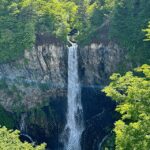
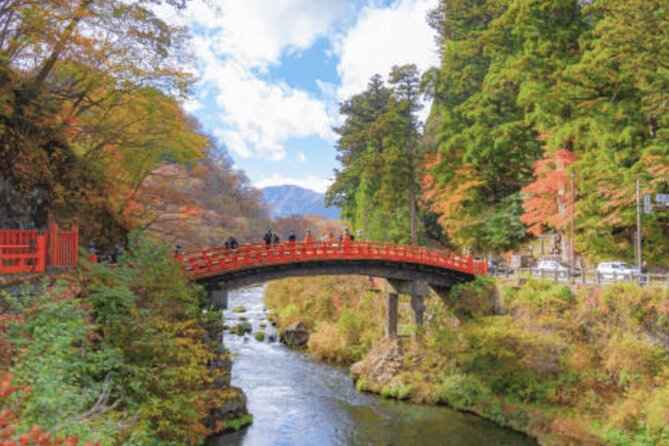
Nikko also offers Kegon Falls and Lake Chuzenji. These stops shift the experience from carved buildings and religious history to dramatic natural scenery.
Kegon Falls is one of the area’s best-known sights, while Lake Chuzenji offers a broad mountain setting. The supplied tour details do not set a fixed order or promise a particular transport arrangement, so ask how these stops fit into your six-hour plan before booking.
This is one of the strongest reasons to choose a custom tour. You can decide if your ideal Nikko day is mostly cultural, mostly scenic, or a blend of both. A first-time visitor may prefer Toshogu, Rinnoji, and Futarasan. Someone who has already seen many Japanese shrines may value time at Kegon Falls and Lake Chuzenji.
There is a practical limit, though. The cultural sites and the natural sights represent different parts of Nikko, and the day may feel compressed if you try to include everything. Your guide can help set priorities, but you should not treat six hours as unlimited sightseeing time.
Other guided tours in Nikko
What the private format changes
A private group gives you a more personal day than a standard group excursion. You are not sharing the guide’s attention with a large crowd, and you can ask for explanations when something interests you.
The walking-tour element also matters. Toshogu is best understood on foot, where you can notice the gates, carvings, forest, and changing views between buildings. Comfortable shoes are a sensible choice, although the supplied details do not specify the exact walking distance or route conditions.
The tour includes an English-speaking local guide and itinerary customization. Those are the core strengths. You are paying for interpretation and flexibility, not just a ride to a famous shrine.
There is an important catch in the transport information. The tour description refers to private vehicle service in the experience details, but private transportation is listed as not included. Transportation fees for you are also excluded. I would confirm exactly how you will reach each stop, who arranges the vehicle, and what transport costs you should expect before committing.
Lunch is also your responsibility. That gives you freedom to choose your own meal, but it means the advertised price is not the final cost of the day.
Is $214 per person a fair price?
At $214 per person, this is a premium choice, especially once you add entrance fees, transport, lunch, and the guide’s necessary expenses. The value depends heavily on group size and how much you want personal attention.
For a couple or small private group, the price can make sense if you want a flexible day and clear explanations at Toshogu. A guide who adjusts the pace can help you get more from a short visit than you might manage alone, particularly at a site filled with symbolic carvings and layered religious references.
For a solo visitor, the per-person price is harder to justify unless convenience and personal guidance matter more than keeping costs low. If you are comfortable researching Toshogu and organizing transport yourself, an independent visit may cost less.
The tour is strongest for people who want a local perspective without joining a large group. It is also a sensible option for families or friends with different interests, since the plan can include both cultural sites and scenery.
Before booking, request a clear estimate of all additional costs. The free cancellation terms allow a full refund when you cancel at least seven days in advance, but that does not remove the need to understand the transport and admission arrangements.
Who will get the most from this Nikko tour?
I would recommend this experience to you if you:
- Want a private day rather than a fixed group schedule
- Prefer explanations of art, history, and religious practice
- Are visiting Nikko for the first time
- Want to combine Toshogu with Rinnoji, Futarasan, Kegon Falls, or Lake Chuzenji
- Have limited time and want help choosing priorities
- Enjoy asking questions as you explore
I would think twice if you are mainly seeking the cheapest way to see Toshogu. The extra fees can push the final price above the headline amount, and independent planning may suit confident visitors.
It may also be less suitable if you want a slow, full-day visit to every major site. Six hours requires choices. The custom format helps, but it cannot remove the distance between stops or the time needed to appreciate Toshogu properly.
Practical advice before you go
Start by deciding what you most want from Nikko. Tell the guide if the priority is Edo-period art, shrine architecture, Buddhist statues, mountain worship, waterfalls, or a balanced mix.
Ask for a written explanation of transport costs because private transportation is not included. Also confirm which entrance fees apply to your selected stops and how the guide’s expenses will be handled.
Set aside money for lunch and personal expenses. Since the tour is private, you may have more say over the meal break, but the supplied details do not specify a restaurant or lunch arrangement.
Keep your schedule flexible enough for Toshogu. The Yomeimon Gate, the Three Wise Monkeys, and the Sleeping Cat are easy to list but deserve time on site. You will get more from the visit if you look closely and listen to the explanations instead of racing through every building.
Should you book the Nikko private custom tour?
Book it if you want a focused, personal introduction to Nikko and value a guide who can explain why the shrine matters. The combination of Toshogu, nearby religious sites, and optional natural stops gives you a useful range within six hours.
Skip it if your main goal is saving money or if you prefer to plan every detail yourself. The $214 price is only part of the cost, and transport and admission arrangements need confirmation.
For the right group, this is a strong way to see Nikko. You get the major sights, room for a less familiar stop, and a better chance of understanding the carvings, beliefs, and political history behind the beauty.
FAQ
Where does this tour take place?
The tour takes place in Nikko on Honshu, Japan.
How long does the tour last?
The tour lasts six hours.
Is the tour private?
Yes. It is offered for a private group.
Is the guide English-speaking?
Yes. The tour includes a live local guide who speaks English.
Can I customize the itinerary?
Yes. The itinerary can be customized around your interests.
Which main attraction is included in the experience?
The central attraction is Nikko Toshogu Shrine, a UNESCO World Heritage Site dedicated to Tokugawa Ieyasu.
Can I visit Rinnoji Temple and Futarasan Shrine?
These nearby attractions are listed as possible places to explore during the custom tour.
Are Kegon Falls and Lake Chuzenji included?
They are listed as nearby must-see options, but the tour details do not state that every stop is guaranteed. Confirm your chosen itinerary before booking.
Are entrance fees, lunch, and transportation included?
No. Personal entrance fees, transportation fees, lunch, the guide’s necessary expenses, and private transportation are not included.
More Private Tours in Nikko
More Guided Tours in Nikko
More Nikko Day Trips in Nikko
More tours in Nikko we've reviewed
Nikko Day Trips, compared.
 ★ 4.6Nikko: Kegon Falls, Lake Chuzenji & Toshogu TempleFrom $8911 hours
 ★ 4.5Tokyo: Nikko Toshogu Shrine and Kegon Waterfall TourFrom $8410h 30m
 ★ 5.0Nikko Full-Day Private Tour with Government-Licensed GuideFrom $155
 ★ 4.9From Tokyo: Nikko World Heritage Site Private Full-Day TripFrom $4831 day
 ★ 4.3Nikko: Edo Wonderland Edomura Cultural Theme Park TicketFrom $351 day
 ★ 4.8Tokyo: Nikko World Heritage Private Day Trip Hotel Pick-upFrom $39011 hours - 1 day