
Reviewed · SAMURAI & NINJA EXPERIENCES
Best Samurai Experience in Tokyo
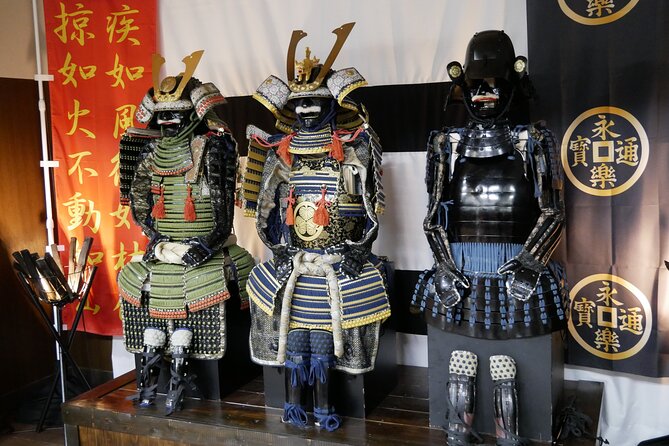
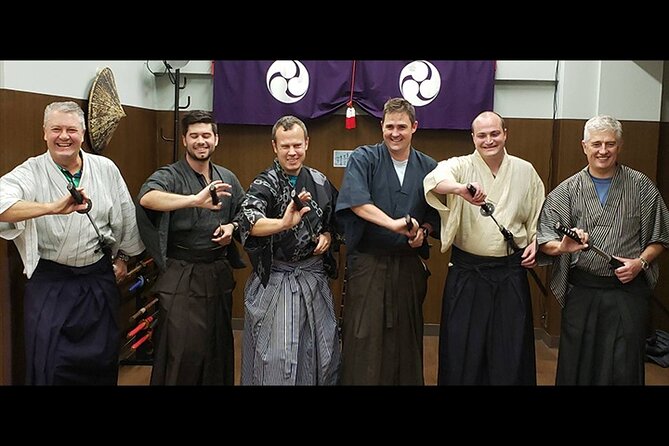
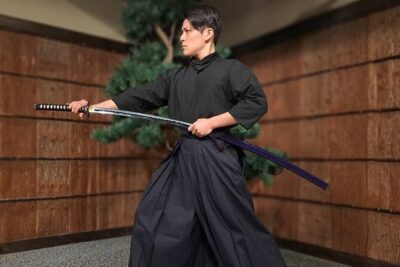
The best part of this Tokyo activity is that you do not simply look at samurai armor behind glass. You put on a kimono and hakama, learn how to draw, hold, swing, and return a sword, then perform a short choreographed battle in an Edo-period-style dojo.
I like two things especially: the instructors keep the lesson active and friendly, and you can take photos and videos throughout the session. The weapons and armor on display also give the room a convincing period feel. The main drawback is the short one-hour format, which gives you a lively introduction rather than a serious martial arts class.
In This Review
- Key points to know before booking
- Entering the Edo-style dojo in Shinjuku
- Choosing a kimono and hakama
- Learning the katana basics
- From sword practice to chambara
- How much value do you get for $65?
- Who will enjoy this most?
- Practical planning for your Tokyo day
- What makes the experience memorable
- Should you book Samurai Theater Tokyo?
- FAQ
- Where does the samurai experience take place?
- How long does the activity last?
- What is included in the price?
- Is transportation included?
- Where does the activity end?
- Can I book as a solo participant?
- Can I take photos and videos?
- What will I learn about sword use?
- How large is the group?
- Can I cancel for a full refund?
Key points to know before booking
- Choose your own samurai outfit: Select a kimono and hakama before changing for the activity.
- Learn five basic sword movements: Instruction covers drawing, gripping, swinging, and returning the katana.
- Finish with a choreographed battle: You practice a simple chambara scene and perform it to music.
- Film and photograph the action: Staff help capture pictures and videos, including for solo participants.
- Small group setting: The maximum group size is 10 people, so the session should feel more personal than a large stage show.
- Convenient one-hour plan: It fits neatly into a Tokyo day and works well for families, couples, and solo visitors.
Entering the Edo-style dojo in Shinjuku
Samurai Theater Tokyo is at 40 Yokoteramachi in Shinjuku City. The activity begins and ends at this same location, and the venue is near public transportation. The building sits up side roads, so give yourself enough time to find the entrance rather than arriving at the last minute.
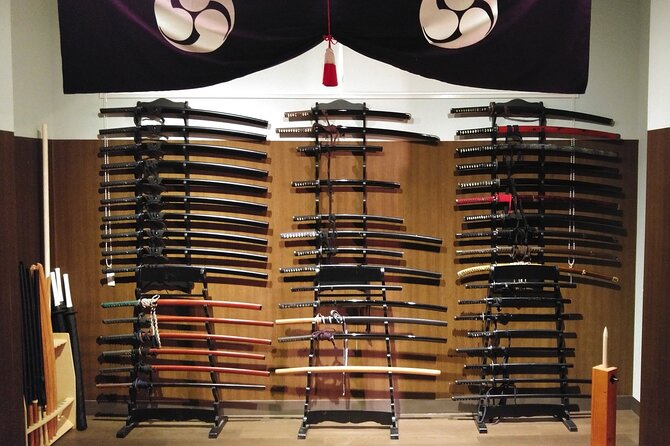
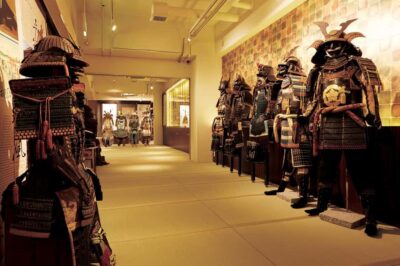
Inside, the modern city falls away quickly. The room is designed to resemble a dojo from the Edo period, roughly 400 years ago. Armor, swords, spears, and other weapons line the space. This display is not just decoration. It gives you something to look at while you wait and helps the costume session feel like more than a standard dress-up photo opportunity.
The setting is still a performance space created for modern visitors, so you should not mistake it for an original Edo-period training hall. That said, the combination of traditional clothing, weapon displays, and the instructors’ demonstrations gives the hour a clear sense of place.
The group limit is 10 people. That matters here because sword instruction works best when you can see the teacher clearly and have enough room to move. A small group also makes it easier for the staff to take photos and keep the final performance organized.
A few more Tokyo tours and experiences worth a look
Choosing a kimono and hakama
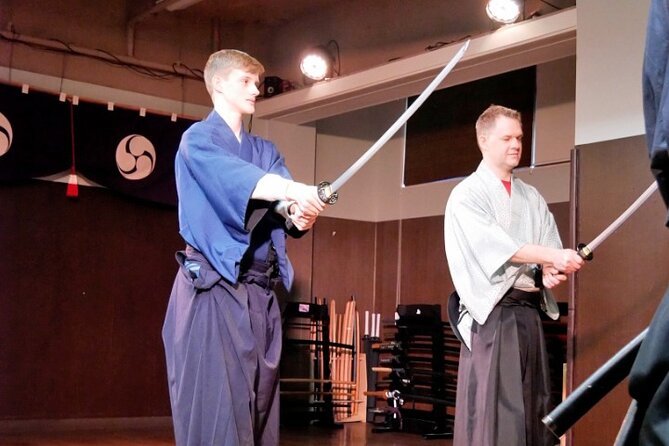
The session begins with the costume. You choose a favorite kimono and hakama, then change into the samurai outfit. The hakama is the pleated lower garment associated with formal Japanese dress, and it gives the outfit a sharper, more ceremonial look than a simple robe.
This is one of the most appealing parts for families. Children can take part in the transformation before the sword lesson even begins, and adults get a chance to enjoy the clothing without needing to arrange a separate rental appointment. The activity supplies the samurai costumes, and all fees and taxes are included in the listed price.
The clothing also works well for photographs. The instructors make time for pictures with the samurai, and the staff can help capture both posed shots and action scenes. If you are visiting alone, you are not left to take only self-portraits. The staff specifically accommodate solo participants by taking photos and filming parts of the activity.
You should wear something comfortable underneath your costume. The session involves standing, moving, and practicing sword motions, so restrictive clothing would not be ideal. The provided details do not specify changing-room arrangements, shoe rules, or costume sizing, so contact the operator if those points matter for your booking.
Learning the katana basics
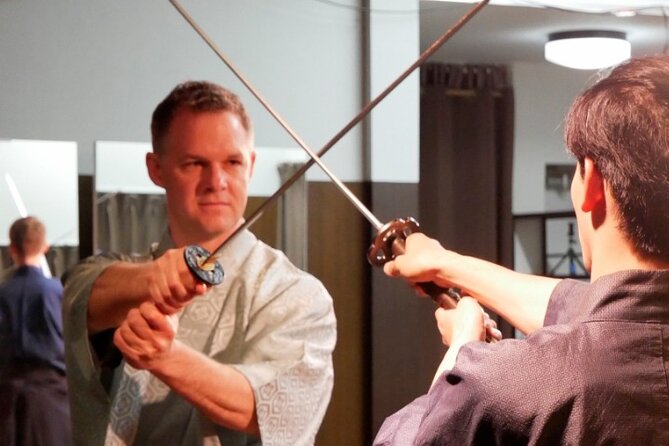
Once dressed, you learn the foundations of handling a Japanese sword. The lesson covers how to draw the sword, how to hold it, how to swing it, and how to return it to its sheath. The instruction also includes safety and basic sword styles.
The activity is aimed at beginners. You do not need previous sword training, and the instructors break the movements into manageable steps. Several descriptions of the session refer to learning about five basic sword moves before moving into the performance. The exact pace can vary with the group, but the structure is clear: watch a demonstration, practice the movements, and then connect them into a short sequence.
This is where the instructors make or break the experience. The teachers are described as professional performers who have appeared in major Japanese dramas and films. That background helps explain the theatrical polish of the demonstrations and the timing used in the final battle scene.
I would approach the sword lesson as stage combat rather than practical combat training. You are learning controlled movements for a choreographed performance, not training to use a katana in real life. That distinction is important, but it does not make the activity less worthwhile. For most people, the appeal is learning how samurai sword scenes are performed, then trying the movements yourself.
The instructors are also described as patient and encouraging with children. Families with children as young as six have taken part, according to the supplied experience details, and older children and teenagers can join in with the adults. Since the maximum group size is 10, the teacher can keep an eye on the practice and help maintain a safe pace.
From sword practice to chambara
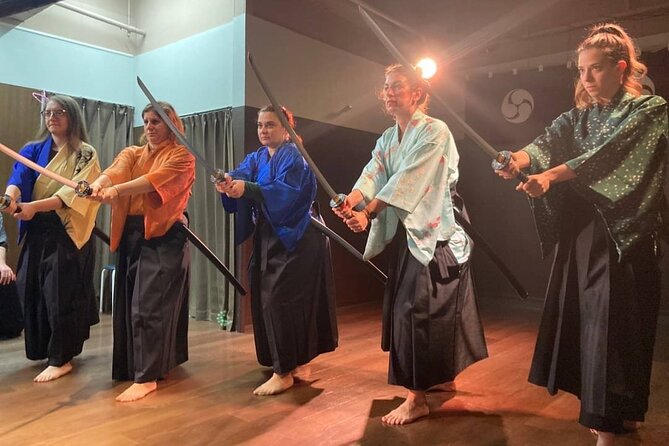
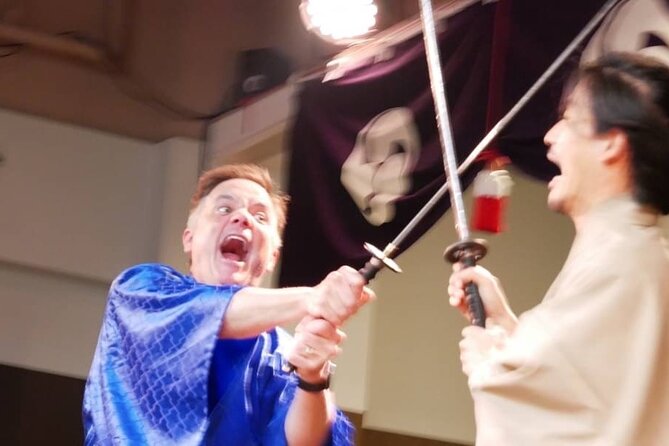
After the basic movements, the lesson turns into a simple chambara, or Japanese sword-fighting performance. You practice a short piece of choreography with another participant or within the group, then perform it with music and sound effects.
This is the point where the activity shifts from class to show. Instead of repeating isolated movements, you have a role to play. The result is less about perfect technique and more about timing, posture, and committing to the scene.
The musical finish adds energy, especially for children. You may begin the hour feeling self-conscious in costume, but the group performance gives everyone a reason to play along. The activity even frames the final sequence as defeating the bad guys to music, which tells you exactly what tone to expect: theatrical, family-friendly, and intentionally playful.
You can record the performance on your smartphone. Staff also take photos and videos, so you can concentrate on the action rather than trying to operate your phone while holding a sword. This is a real advantage over activities that leave you with one hurried snapshot at the end.
The final scene is also why I would not book this if you want a quiet museum visit. You will be moving, posing, following instructions, and performing in front of others. The experience rewards people who are willing to participate rather than stand back and observe.
How much value do you get for $65?
At $65 per person, this is not the cheapest one-hour activity in Tokyo. The price needs to be judged against what is included: the venue, costume, professional instruction, sword lesson, performance, and staff help with photography. You do not need to arrange costume rental separately or pay extra admission fees for the displays.
I think the price is fair if you want a compact activity that combines several elements. You receive a costume experience, a beginner lesson, a staged performance, and a set of photos or videos in one appointment. For a family, the shared performance can also become one of the trip’s memorable group activities.
The value is weaker if you are mainly interested in Japanese armor and weapons. The displays create atmosphere, but this is not presented as a long museum tour or a detailed historical lecture. The emphasis is on participation and entertainment.
Duration matters here. One hour is long enough to change, learn the basic movements, rehearse, and perform, but not long enough for an extended lesson. I would treat it as a high-energy cultural activity to fit between sightseeing stops, not as a full afternoon devoted to samurai history.





Who will enjoy this most?
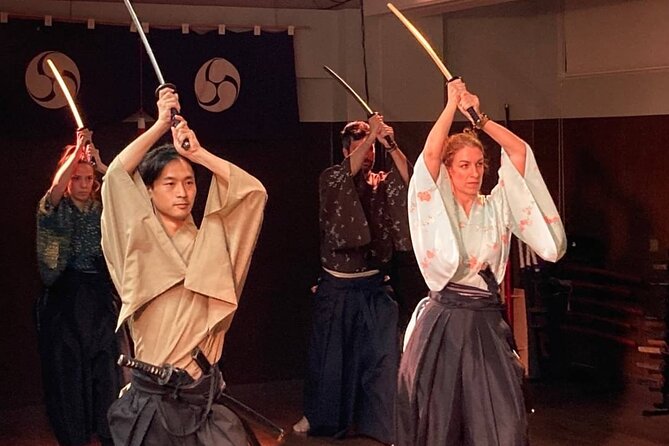
This experience suits families particularly well. Children get the excitement of dressing up, handling a sword under instruction, and taking part in a battle scene. Parents get photographs that show more than a posed costume portrait. The staff’s patient approach is useful when children need extra help with the movements or costume.
It also works for couples and groups of friends. The choreography gives you something to do together, and the photos can capture the activity as a shared scene rather than a series of individual portraits.
Solo visitors can book too. The staff will take photos and video, which removes one of the common problems with costume activities. You may still find the group performance more comfortable if you are willing to join in with other participants, but the activity is not limited to private groups.
The experience is also suitable for adults. The instructors’ professional background, the sword demonstrations, and the staged combat give the session enough structure to avoid feeling like a children-only attraction. Still, the tone is light and theatrical, so adults looking for a serious study of bushido or traditional swordsmanship should set their expectations accordingly.
Most people can participate, but the supplied information does not give detailed accessibility guidance. If you have mobility concerns or need specific costume arrangements, ask Samurai Theater Tokyo before booking.
Practical planning for your Tokyo day
The activity lasts about one hour, and transportation is not included. You make your own way to Samurai Theater Tokyo, then return to the same meeting point when the session ends. Because the venue is near public transportation but located along side roads, plan a little extra time for the final approach.
A mobile ticket is provided, which is useful when you are moving around Tokyo with a phone rather than carrying printed paperwork. Confirmation arrives at booking, and same-day reservations may be possible. I would still reserve ahead if your schedule is tight, especially since the experience is limited to 10 people and is booked frequently.
The session is easy to combine with other Shinjuku-area plans, but do not schedule a major attraction immediately afterward if you need time to change or move across the city. The activity itself ends at the meeting point, and no private transportation is included.
Photography is allowed inside the museum-like venue. Bring a charged phone and enough storage if you want to record the final performance. Staff help with photos and video, but you should not assume that every moment will be filmed from every angle.
The cancellation policy is generous if you plan carefully. You can receive a full refund by canceling at least 24 hours before the start time. Cancellations or changes made less than 24 hours before the activity are not accepted for a refund, and the cut-off follows local Tokyo time.
What makes the experience memorable
The strongest feature is the way the activity moves through several stages without wasting much time. You begin with the visual appeal of armor and weapons, shift into traditional clothing, learn basic sword movements, and finish with a filmed performance.
That sequence gives the hour a clear story. You are not simply handed a costume and told to pose. You get a role, a few movements to learn, and a final scene to complete.
The instructors add another layer. Their work in Japanese dramas and movies means they understand how to make a sword movement look clear and dramatic. Just as important, the supplied feedback repeatedly highlights their friendliness, patience, and ability to keep both children and adults involved.
I also like that the staff make room for memory-making without forcing you to choose between participation and photography. You can focus on the lesson while the team helps capture pictures and video. For many people, those recordings will be the most useful souvenir because they show the movement and atmosphere of the activity.
The chief limitation remains the length. You will learn a handful of introductory moves, not a complete sword discipline. The historical setting is designed for the experience, not a preserved Edo building. If you understand those boundaries, the activity delivers what it promises.
Should you book Samurai Theater Tokyo?
Book it if you want an active Tokyo experience with costumes, simple sword instruction, music, and photos. It is especially well suited to families, first-time visitors who want something beyond temples and shopping, and solo participants who want staff help recording the moment.
Skip it if you want a long historical tour, a museum focused on original artifacts, or serious martial arts training. At $65 for about an hour, the value depends on enjoying the full package rather than measuring the activity by instruction time alone.
For most people, I would book it as a lively break in a Tokyo itinerary. The costume, the Edo-style dojo, the professional instructors, and the final choreographed battle create a clear memory of Japan without demanding a full day.
FAQ
Where does the samurai experience take place?
It takes place at Samurai Theater Tokyo, 40 Yokoteramachi, Shinjuku City, Tokyo 162-0831, Japan.
How long does the activity last?
The experience lasts approximately one hour.
What is included in the price?
All fees and taxes, a professional guide or instructor, and samurai costumes are included.
Is transportation included?
No. Private transportation is not included. You travel to the meeting point on your own.
Where does the activity end?
The activity ends back at the meeting point at Samurai Theater Tokyo.
Can I book as a solo participant?
Yes. One person can join the experience, and staff can take photos and videos for solo participants.
Can I take photos and videos?
Yes. Photography and video recording are allowed inside the venue, and staff help take photos and videos during the experience.
What will I learn about sword use?
You learn how to draw a sword, hold it, swing it, and return it. The session also covers basic sword movements, styles, and safety.
How large is the group?
The activity has a maximum of 10 participants.
Can I cancel for a full refund?
Yes, if you cancel at least 24 hours before the experience start time. Cancellations or changes made less than 24 hours before the start time are not accepted for a refund.
More Samurai & Ninja Experiences in Tokyo
More tours in Tokyo we've reviewed











Samurai & Ninja Experiences, compared.
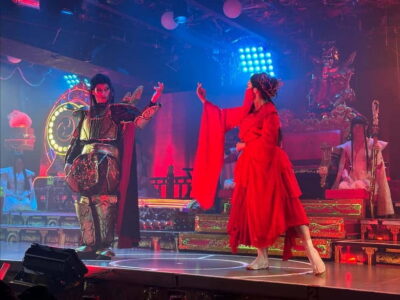 ★ 4.5Tokyo: Samurai Restaurant Show Ticket with 2 DrinksFrom $551h 30m
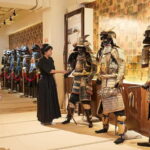
 ★ 4.6Tokyo: Samurai Ninja Museum Guided tour and ExperienceFrom $27
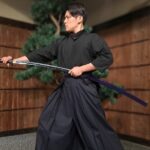
 ★ 5.0Tokyo: Samurai Sword & Archery Class from Samurai DescendantFrom $1933 hours
 ★ 5.0Ninja Experience (Family Friendly) at Samurai Ninja Museum TOKYOFrom $47
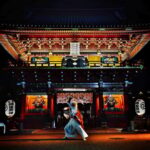
 ★ 4.6Tokyo: Samurai Entertainment Night Show in Kanda ShrineFrom $412 - 3 hours
 ★ 5.0Tokyo Sword Experience – includes Museum Ticket/Ninja ExperienceFrom $84