
Reviewed · SAMURAI & NINJA EXPERIENCES
Tokyo Sword Experience – includes Museum Ticket/Ninja Experience
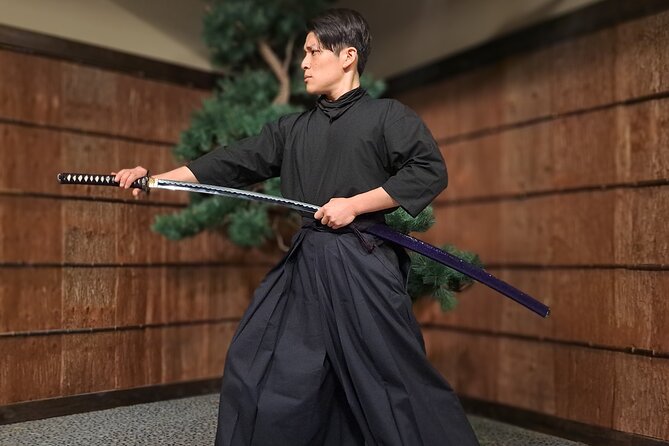
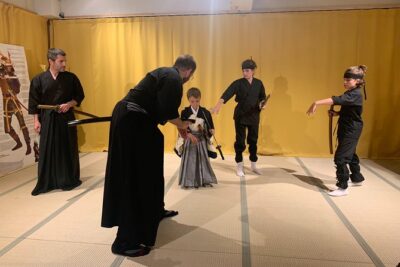
The exciting part here is the hands-on sword lesson. You put on a hakama, learn basic iaido movements with a replica sword, and practice a simple fight under instruction. This feels more involved than simply posing in a costume.
I like the mix of serious sword training and lighter fun. The museum tour adds context, while the ninja-star activity and costume photos give families and first-time visitors an easy way into samurai culture. I also like the central Asakusa setting, just down the street from Senso-ji Temple.
The main caution is that the experience may not be as small or quick as the headline suggests. Groups can swell, and the free museum, armor, and ninja activities may stretch the visit well beyond the advertised 75 minutes. Also, do not book this expecting to use a real sword or sharp blade.
In This Review
- Key points to know before booking
- What happens when you arrive in Asakusa
- Learning iaido with a practice sword
- Be clear about the real-sword question
- The samurai and ninja museum
- Throwing ninja stars and taking photos
- Timing, queues, and group size
- Is the $84.23 price good value?
- Who will enjoy this most?
- My booking advice
- FAQ
- Where does the Tokyo Sword Experience begin?
- Where does the activity end?
- How long does the experience last?
- Are real swords used?
- Can children join?
- Is the museum tour included?
- Are ninja activities included?
- Can I cancel for a full refund?
Key points to know before booking
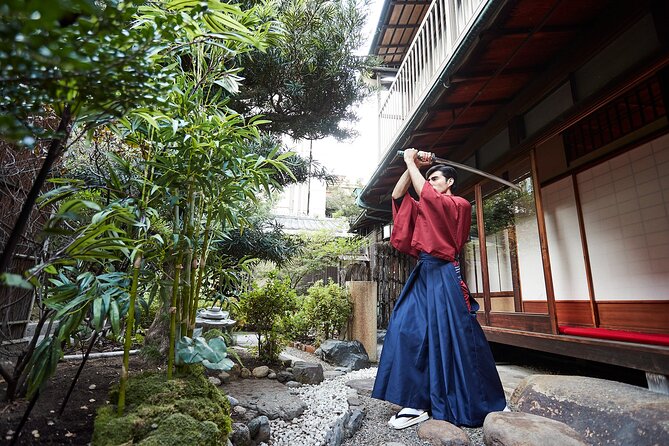
- You wear a traditional hakama: Dressing is part of the experience, with time for sword poses and photos.
- The sword lesson uses a replica: You learn basic iaido technique and take part in a controlled practice fight.
- A museum and ninja activity are included: Expect a guided samurai history tour and plastic ninja-star throwing.
- Group size can affect the pace: Some sessions have been described as crowded, especially during busy periods.
- Children under six cannot enter: Age limits may also apply to younger participants in any katana-related activity.
- The advertised 75 minutes may not tell the whole story: Optional or complimentary activities can add substantial time.
What happens when you arrive in Asakusa
You meet at the Samurai Ninja Museum Asakusa Tokyo at 1-chome-8-13 Nishiasakusa, in Taito City. The activity returns to this same meeting point, and the venue is near public transportation.
The location works well in a day of sightseeing. Senso-ji, Tokyo’s best-known Buddhist temple, is close by, so you can pair the activity with the Kaminarimon gate, Nakamise shopping street, and the temple grounds. Allow extra time to find the entrance, since one person reported confusion about the location and another arrived early while the building appeared closed.
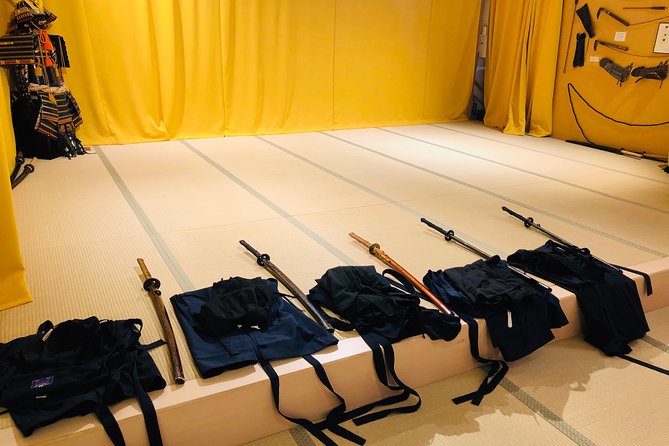
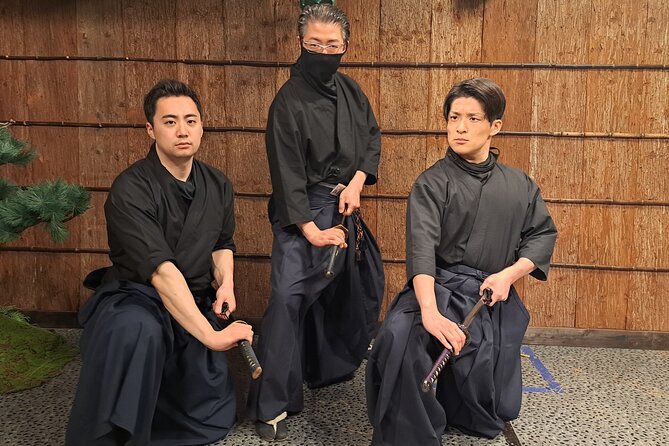
The first stage is usually preparation. Staff help you put on a hakama, the pleated lower garment associated with formal Japanese dress. You may also have the chance to wear a more complete samurai outfit, including a helmet and armor pieces.
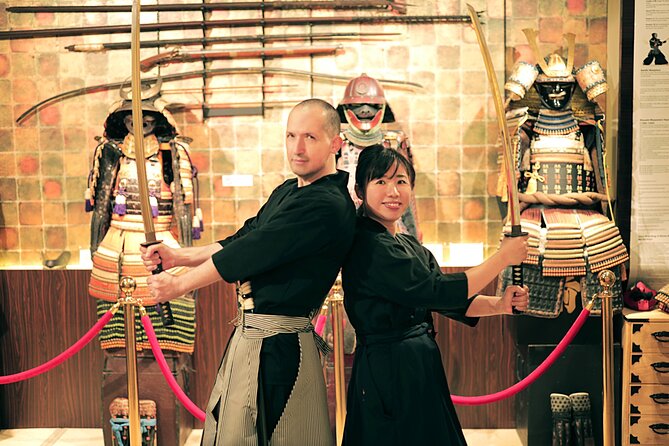
This is costume clothing rather than museum-grade historical gear. Some pieces are modern plastic and fasten with clips, so keep your expectations sensible. Still, the clothing changes the mood quickly, and the sword poses make a good group or couple photo.
Staff members named in the feedback include Leon, who has helped with dressing and photographs, along with Ren, who has led the history portion. Ryo, Akira, Hector, Koki, and other instructors have also been praised for making the session friendly and clear. Staffing can change, but the experience is designed for an English-speaking international audience.
A few more Tokyo tours and experiences worth a look

Learning iaido with a practice sword
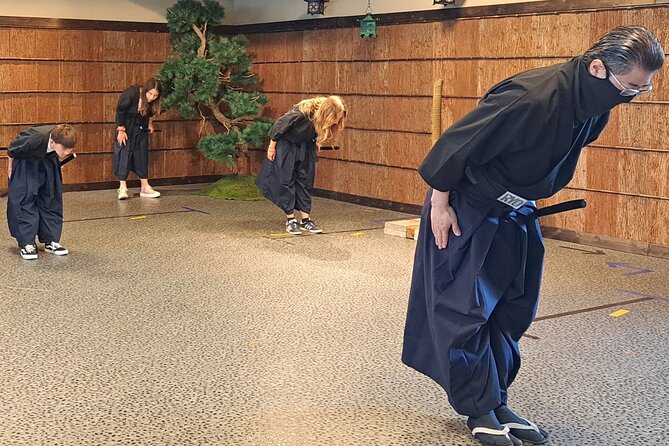
The central lesson introduces basic iaido movements. Iaido is built around controlled drawing, handling, and returning of the sword. You are not simply handed a blade and told to swing. The instructor demonstrates the motions, then breaks them into steps for you to copy.
You practice with a replica sword. The emphasis is on posture, grip, footwork, timing, and safe handling. The instructor may correct your hand position or movement repeatedly, which is useful because the excitement of the activity can make people rush.
One participant described learning a kata from Ryo-sensei before taking part in a foam-sword fight. That simple sequence is important: you first learn the form, then use it in a playful setting. The lesson gives you enough structure to feel that you are doing more than waving a prop.
The sword fight is controlled and uses safe replica or foam swords. It is not a martial-arts class, and you should not expect a long bout or advanced technique. Think of it as a short, supervised activity that lets you test the movements you have just learned.
I like this part because it balances discipline with humor. The teacher keeps the group moving, while the duel gives you a clear goal. Couples and friends can enjoy it together, though the quality of the session depends heavily on group size and how much individual practice time is available.
Be clear about the real-sword question
This is the most important booking detail. The current activity information says that a recent Japanese law prohibits facilitating or selling activities involving a real sword. It specifically states that this experience does not use a real sword or sharp blade.
Some published accounts describe a supervised attempt to cut tatami or bamboo with an old katana. One person called the sword 200 years old, another described it as 400 years old, and others praised the cutting as the highlight. The provider has also described an authentic Edo-period katana in responses to complaints.
Those details do not match the current safety wording. For that reason, I would plan on a replica-sword experience only. If cutting a tatami mat with a real katana is the main reason you want to book, contact the operator before paying and ask exactly what your chosen date includes.
This distinction also matters for age. Children under six cannot enter the samurai venue. Separate feedback says some teenagers were not allowed to take part in katana cutting, and one family was told that only people aged 18 or older could join that portion.
The supplied booking information does not clearly establish one universal age rule for every sword activity. If you are booking for anyone under 18, confirm the restriction directly with Maikoya or the booking agent. Do not assume a child’s reduced ticket guarantees access to every part of the program.
The samurai and ninja museum
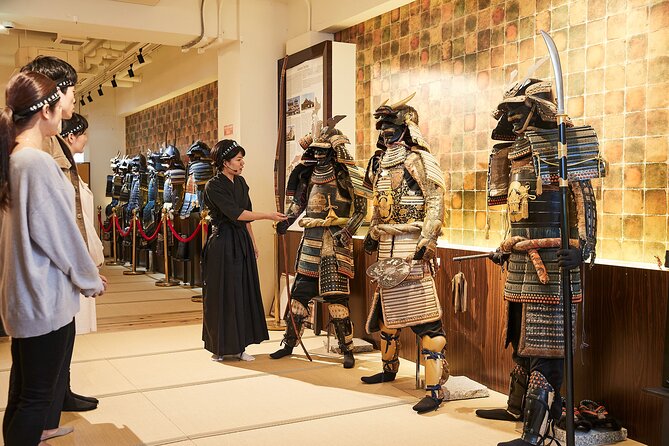
The museum tour is included, and a guide leads you through samurai and ninja material. The museum is small, with one description calling it a four-room space. That means it is not a major national museum with rows of rare objects and long galleries.
Its value is the explanation. A good guide can turn armor, weapons, and related displays into a short introduction to samurai life and Japanese martial traditions. Ren and other guides have been praised for making the history clear, entertaining, and easy to follow.
The amount of talking may not suit every child. One family found the museum less engaging for younger visitors because it had few interactive displays. If your children need constant activity, the sword practice and ninja section will probably hold their attention better than the museum itself.
English ability can vary by guide. The sword instructor has been described as fluent in English, while one museum guide was harder for a visitor to understand. That is not unusual for a multilingual activity, but it is worth keeping in mind if detailed historical explanation is your top priority.
The best approach is to treat the museum as a compact introduction rather than the main attraction. You are coming for the combination of explanation and participation, not for a full afternoon of curatorial study.
Throwing ninja stars and taking photos
The ninja portion is lighter and less demanding. You throw plastic ninja stars at polystyrene targets. They are designed to prevent serious injury, so this is a simple target activity, not weapons training.
It can feel a little silly, but that is part of its appeal. Children, families, and groups who are less interested in sword technique get something active to do. The activity also breaks up the history talk and gives you another photo opportunity.
The costume photographs work in much the same way. You pose with swords against studio or samurai-themed backgrounds, and staff may help take pictures and videos. The quality can vary, and the setting is more playful than authentic.
If polished professional portraits matter to you, bring modest expectations. The value is in the memory and the chance to play the role, not in a formal studio shoot. Wear comfortable clothing underneath the hakama, since you will be changing into layered costume pieces and moving through several activities.
A few more Tokyo tours and experiences worth a look




Timing, queues, and group size
The advertised duration is about 1 hour 15 minutes. That is a useful guide for the core activity, but you should not build a tight restaurant reservation immediately afterward.
The free services can add time. The museum tour, armor trial, photos, and ninja-star throwing may be part of your visit, and some people report a total closer to two hours. One account describes an itinerary that took more than four hours because activities were spread across three locations and the organization was slow. That appears to be an unusual case, but it shows why you need a buffer.
Group size is the other practical issue. The listed maximum has appeared as four people, while another note says a booking can include up to five, and the operator says other booking sites may add participants. The provider has also said the average group is about eight people, with occasional larger or smaller sessions.
The feedback includes reports of more than 20 people in a sword room and about 25 people waiting for cutting. The operator has said it moved to a larger venue, expanded the number of sessions, and aims for smaller groups. Conditions may therefore be better than during older visits, but the possibility of a busy session remains.
Why does this matter? Sword practice works best when you receive close instruction and have room to move. In a large group, you may spend more time watching other people take turns, and photos become harder when everyone is gathered in one area.
Ask about the expected group size if personal attention is important to you. Arrive on time, but do not arrive so early that you expect the venue to open before its scheduled hours. Most importantly, keep your afternoon flexible.
Is the $84.23 price good value?
At $84.23 per person, this is not a cheap photo stop. It is also more than a simple museum admission, so value depends on how much of the activity you use.
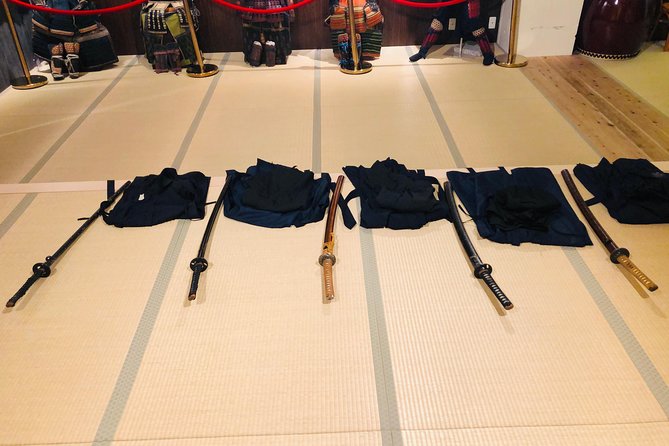
For that price, you receive hakama wear, sword posing, guided instruction with a replica sword, a controlled sword fight, museum access and explanation, and the ninja-star activity. The package offers several different elements, which makes it more appealing if you want a full cultural activity rather than one short demonstration.
The price looks better for couples, families with eligible children, and friends who will actually take part in the practice and photos. It looks weaker if you mainly want a serious museum visit, a private lesson, or confirmed access to real-sword cutting.
The operator has described the experience as costing about half as much as similar samurai activities. I cannot treat that comparison as a guarantee, but the package does offer more than a basic costume rental. The question is whether the session is organized well on your date and whether the group stays manageable.
A crowded room can reduce the value quickly. You may still enjoy the lesson, but less personal instruction and more waiting make the per-person price feel high. A quiet session with a good instructor can feel far more worthwhile.
Who will enjoy this most?
I would choose this for a first visit to Tokyo if you want a hands-on introduction to samurai culture. It suits couples, friends, solo visitors who enjoy joining group activities, and families with children old enough to enter and follow safety instructions.
It is especially good for someone who has always wanted to wear samurai clothing, learn a kata, and handle a practice sword under supervision. The mix of serious instruction and playful ninja activities keeps the experience from becoming a lecture.
I would hesitate if you want historical authenticity at every step. The costumes are modern replicas, the ninja stars are plastic, and the current description rules out real swords. The museum is also small, and the session may feel crowded during busy periods.
You should also reconsider if your schedule is tight. The core time is listed as 75 minutes, but the included extras can extend the visit. If you have a timed meal, show, or train, leave a generous gap.
The activity requires moderate physical fitness. You will dress in costume, stand for instruction, handle a replica sword, and take part in basic movements. Service animals are allowed, and the venue is near public transportation.
My booking advice
I would book this when the goal is fun, photos, basic sword form, and a short introduction to samurai and ninja culture. The strongest part is the guided sword lesson, especially when the instructor takes time to demonstrate and correct the movements.
Before booking, confirm three things: the age rule for every person in your party, the expected group size, and whether any real-sword cutting is offered at all. The current information points to replica swords, so make that the basis of your decision.
Also plan for the full package, not just the stated 75 minutes. You can ask staff about skipping complimentary sections if you are short on time, but do not count on moving through a busy session quickly.
FAQ
Where does the Tokyo Sword Experience begin?
It begins at Samurai Ninja Museum Asakusa Tokyo, located at 1-chome-8-13 Nishiasakusa, Taito City, Tokyo 111-0035, Japan.
Where does the activity end?
The experience ends back at the meeting point.
How long does the experience last?
The listed duration is approximately 1 hour 15 minutes. The museum, ninja, costume, and photo portions may make your total visit longer.
Are real swords used?
The current activity information says the experience does not involve a real sword or sharp blade and uses safe replicas. Because some older descriptions refer to supervised katana cutting, confirm the exact program before booking if this matters to you.
Can children join?
Children under six cannot enter the samurai venue. Additional age restrictions may apply to katana-related activities, so confirm the rules for anyone under 18 before booking.
Is the museum tour included?
Yes. A free guided tour of the samurai and ninja museum is included.
Are ninja activities included?
Yes. The experience includes throwing plastic ninja stars at targets.
Can I cancel for a full refund?
You can cancel at least 24 hours before the local start time for a full refund. Cancellations or changes made within 24 hours are not accepted for a refund.
More Tickets in Tokyo


More Tickets & Passes in Tokyo
More Samurai & Ninja Experiences in Tokyo
More tours in Tokyo we've reviewed











Samurai & Ninja Experiences, compared.
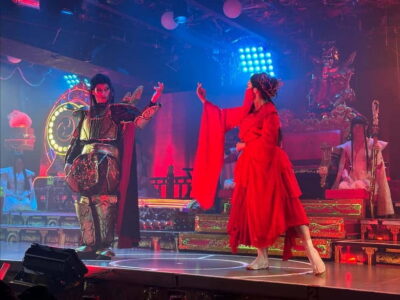 ★ 4.5Tokyo: Samurai Restaurant Show Ticket with 2 DrinksFrom $551h 30m
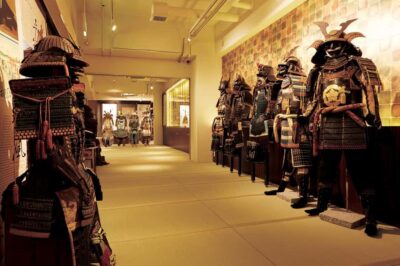 ★ 4.6Tokyo: Samurai Ninja Museum Guided tour and ExperienceFrom $27
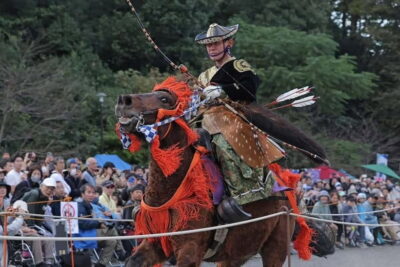 ★ 5.0Tokyo: Samurai Sword & Archery Class from Samurai DescendantFrom $1933 hours
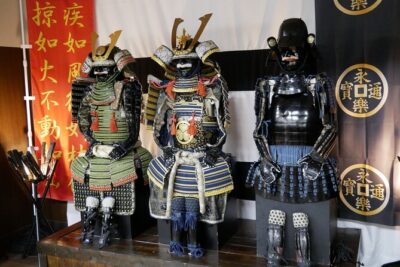 ★ 5.0Best Samurai Experience in TokyoFrom $65
 ★ 5.0Ninja Experience (Family Friendly) at Samurai Ninja Museum TOKYOFrom $47
 ★ 4.6Tokyo: Samurai Entertainment Night Show in Kanda ShrineFrom $412 - 3 hours