
Reviewed · SAMURAI & NINJA EXPERIENCES
Tokyo: Samurai Entertainment Night Show in Kanda Shrine
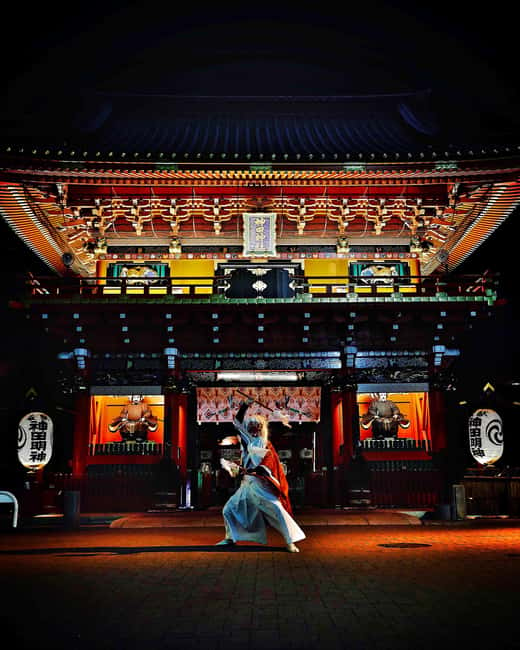
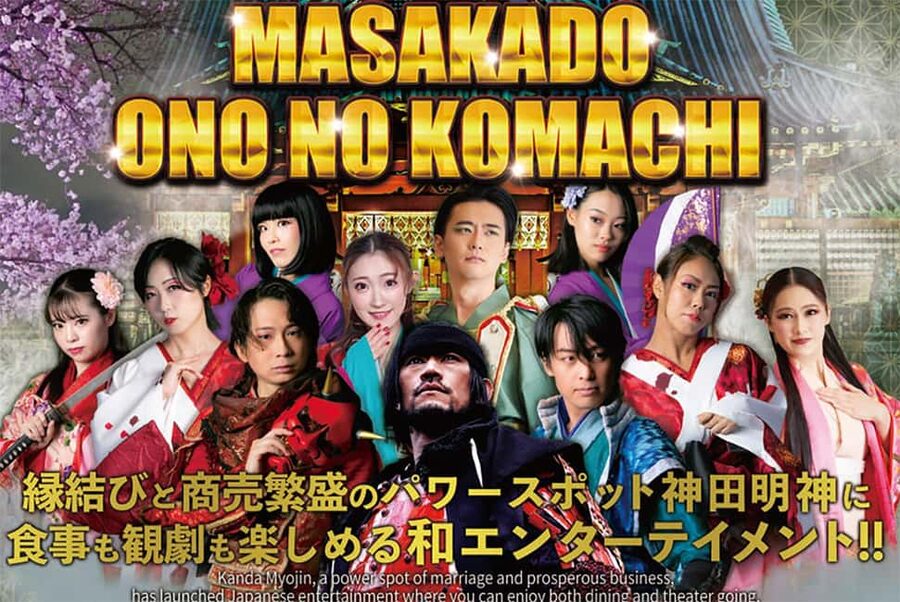
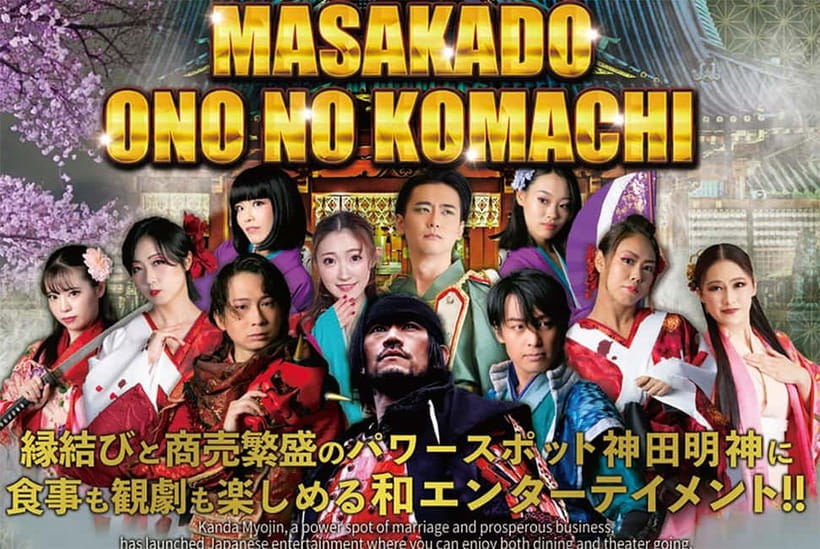
Tokyo’s Kanda Myojin Shrine becomes a small theater for a lively samurai tale inspired by Taira no Masakado, a legendary rebel later linked with the shrine. The show blends swordplay, dance, costumes, music, lights, and folklore rather than presenting a straight historical lecture.
I like the intimate room, where you are close to the performers, and the chance to meet the cast for photos after the show. The main drawback is that the story can feel hard to follow, especially if you expect a dialogue-heavy drama or a long series of sword fights. Food and drinks also need to be ordered before the performance begins.
In This Review
- Key points to know before booking
- Why Kanda Myojin makes a good stage
- The 7 PM welcome, drinks, and dinner choices
- The samurai story at 8:15 PM
- What the production does best
- The cast meet-and-photo time
- Timing your Tokyo evening
- Is the $41 price good value?
- Who will enjoy this show most?
- Practical rules that matter
- Should you book the Kanda Myojin samurai show?
- FAQ
- Where does the samurai show take place?
- What time should I arrive?
- How long is the performance?
- Is dinner included?
- Are drinks included?
- Can I take photos or record the performance?
Key points to know before booking
- The shrine setting adds real atmosphere: Kanda Myojin is one of Tokyo’s best-known shrines, associated with business success and love.
- The show runs from 8:15 to 9:15 PM: Plan to arrive well before the 8 PM entry cutoff.
- It is more than sword fighting: Expect dance, theatrical movement, sound effects, music, lighting, costumes, and folklore.
- Dinner is optional: The show price includes one drink or unlimited drinks, depending on the option you choose. Food is ordered separately.
- Photos come at the end: Cameras and recording are not allowed during the main performance, but you can take pictures with the performers afterward.
- The small venue helps the connection: The cast can speak with the audience before and after the show, often in English.
Why Kanda Myojin makes a good stage
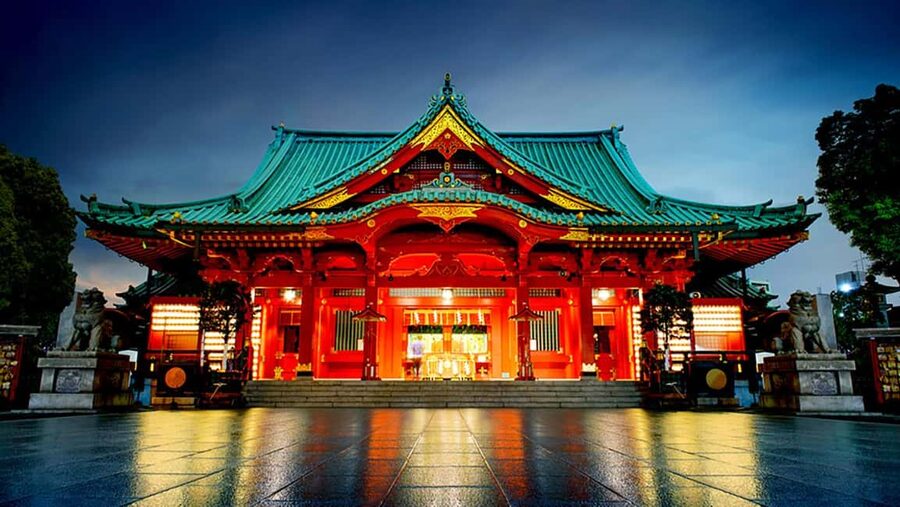
Kanda Myojin is not just a convenient address. It gives the evening a sense of place that a regular theater cannot match. The shrine is an important Tokyo religious site, known as Kanda Myojin or Kanda Shrine, and is traditionally connected with prosperity in business and love.
The experience takes place at The Show restaurant in the basement of Kanda-Myojin Bunka-Koryu-kan, or Cultural Exchange Hall. You are inside a purpose-built performance space, but the shrine grounds are right outside. If you walk to the venue, the approach can shift from city streets to the softly lit shrine complex, which makes the evening feel more special before the curtain even rises.
I recommend arriving early enough to look around the shrine grounds. The doors open at 7 PM, and the main show does not begin until 8:15 PM. That hour gives you time to get oriented, order food, and enjoy the setting instead of rushing straight into your seat.
The location can be a little confusing, so allow extra time. Look for the B1 entrance to the cultural exchange hall and ask staff for The Show restaurant if needed. You must arrive by 8 PM, and entry is not allowed after 8:15 PM.
A few more Tokyo tours and experiences worth a look
The 7 PM welcome, drinks, and dinner choices
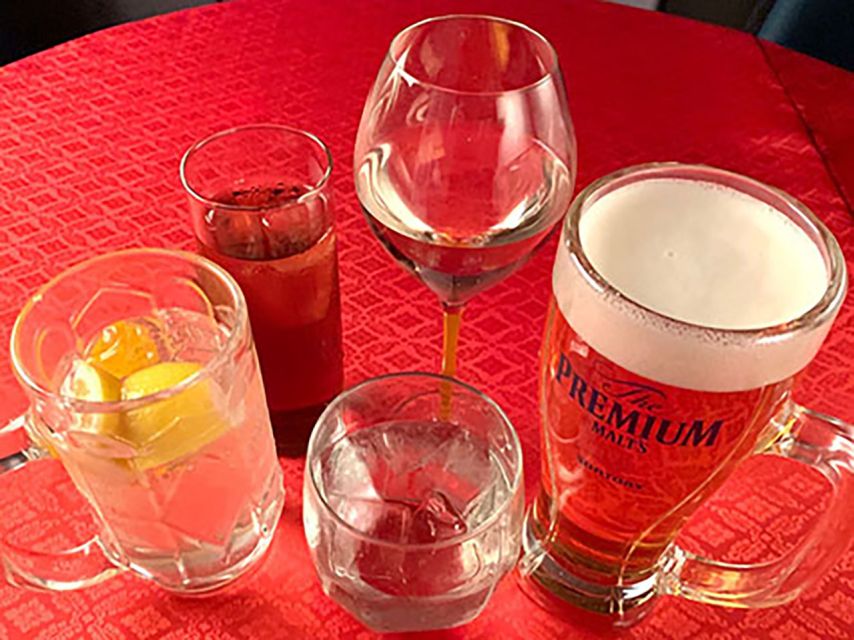
Your evening begins with a welcome at the restaurant. The included drink depends on the package you book: some options provide one drink, while others include unlimited drinks. Alcoholic drinks are available with the unlimited plan, according to the experience details and past visits.
Food is not automatically included in the basic show package. You can order from an a la carte menu, and a chicken hot pot course is offered. Each person receives an individual pot with broth and seasonal vegetables. You add the chicken yourself, wait until the meat changes color, dip it into the sauce, and eat it. Udon noodles can be added toward the end so they do not overcook.
This setup is a fun part of the evening, but it is not a formal Japanese banquet. The meal is simple, filling, and designed to work around a theater schedule. Some diners enjoy the hot pot and other menu items, while others prefer a lighter order. If you have a particular diet, check the menu before committing to a full meal.
Food and drink orders must be placed before showtime. Once the performance starts, you should not count on ordering another drink or finishing a meal while the action is underway. That rule makes sense: the show moves quickly, and the performers may work close to the tables and audience.
The food is best treated as a useful dinner option rather than the main reason to book. At about $41 per person, the package can offer good value if you choose unlimited drinks and want dinner theater in a shrine setting. If you only want the performance, the one-drink option may make more sense. Check exactly what your selected package includes before paying.
The samurai story at 8:15 PM
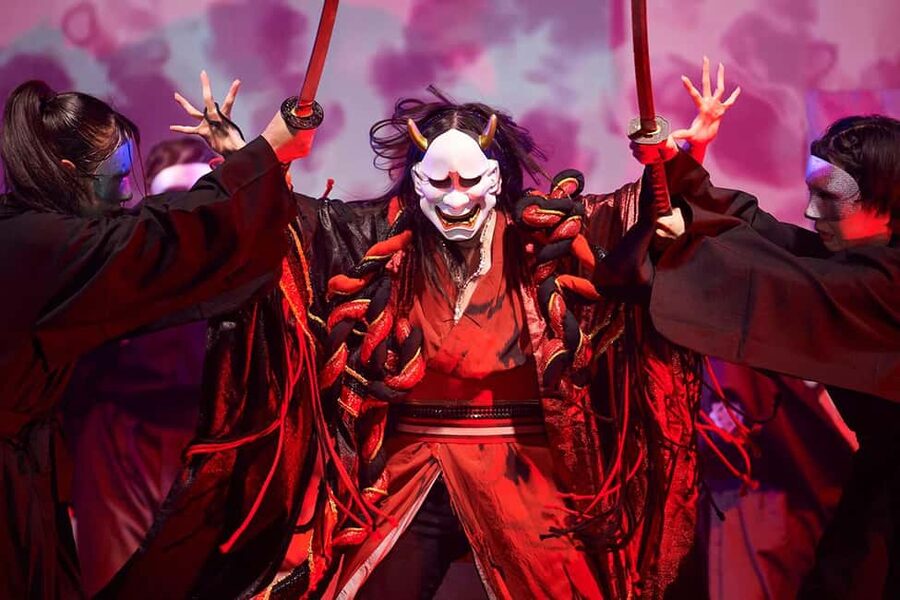
The central figure is Taira no Masakado, a powerful historical and legendary figure associated with Kanda Myojin. The performance presents his story through a mix of history, fantasy, Japanese folklore, and modern stage techniques.
Do not expect a museum-style account of Masakado’s life. The production uses broad theatrical images and physical storytelling. A short written guide explains what happens in each part, so read it while you eat or drink. It helps, especially because there is not much spoken dialogue.
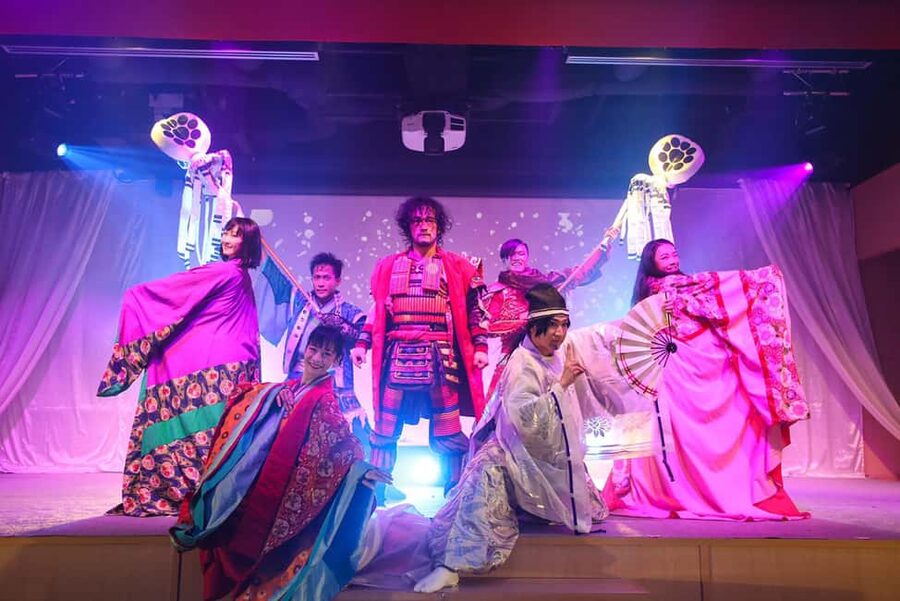
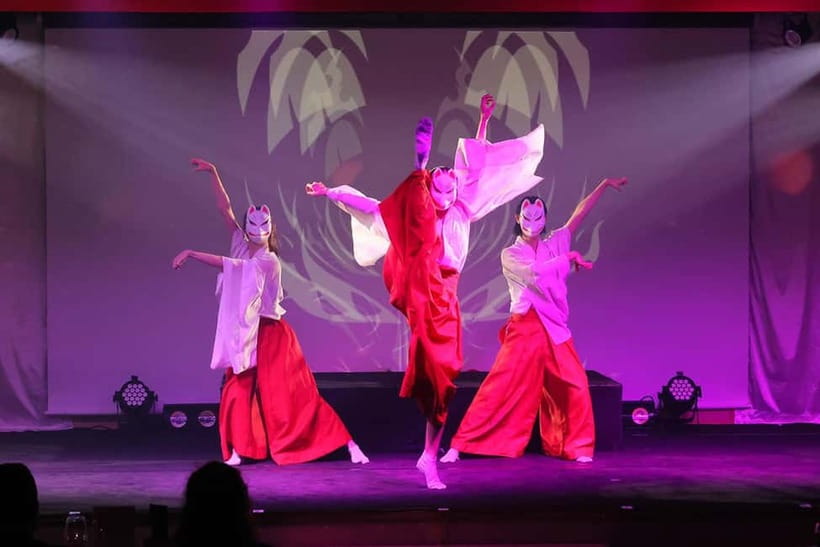
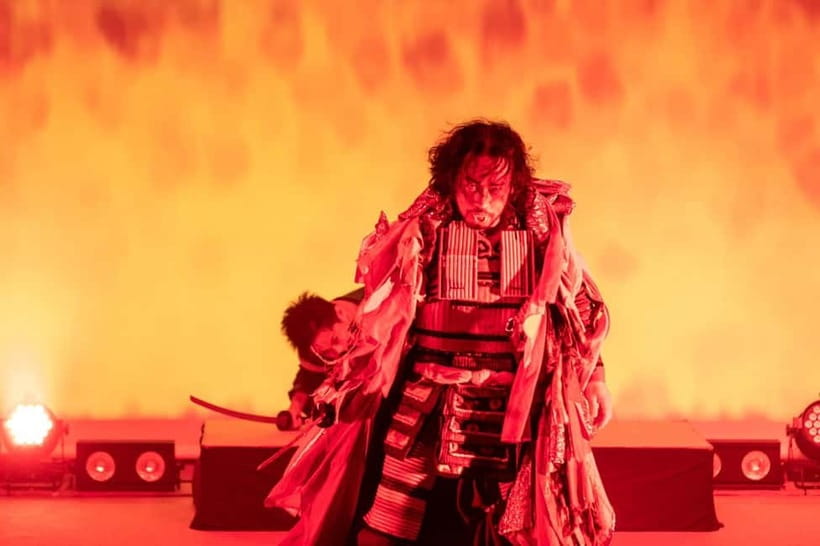
The show is carried by movement. Performers use expressive gestures, athletic footwork, choreographed confrontations, dance, and dramatic poses. Music and sound effects give the scenes their force, while lighting and costumes create a striking visual frame.
The samurai theme is present, but this is not a nonstop sword duel. You will see swordplay, yet the performance also includes mythical and folkloric figures. Some material may feel closer to live-action anime or Japanese fantasy theater than to a strict historical reenactment. That mix is exactly what gives the show its broad appeal, but it may disappoint you if you want a detailed lesson in samurai warfare.
The room is relatively small, which works in your favor. You can see the actors’ expressions and feel the energy of their movement without needing a giant stage. Action may take place beyond the central performance area, so keep your attention moving rather than staring only at the front.
Seat assignments are made by the restaurant, and you cannot request a particular place. The first four rows are considered front seats. If being close to the action matters to you, book the front-seat option if one is offered, but do not assume you can select an exact chair.
What the production does best
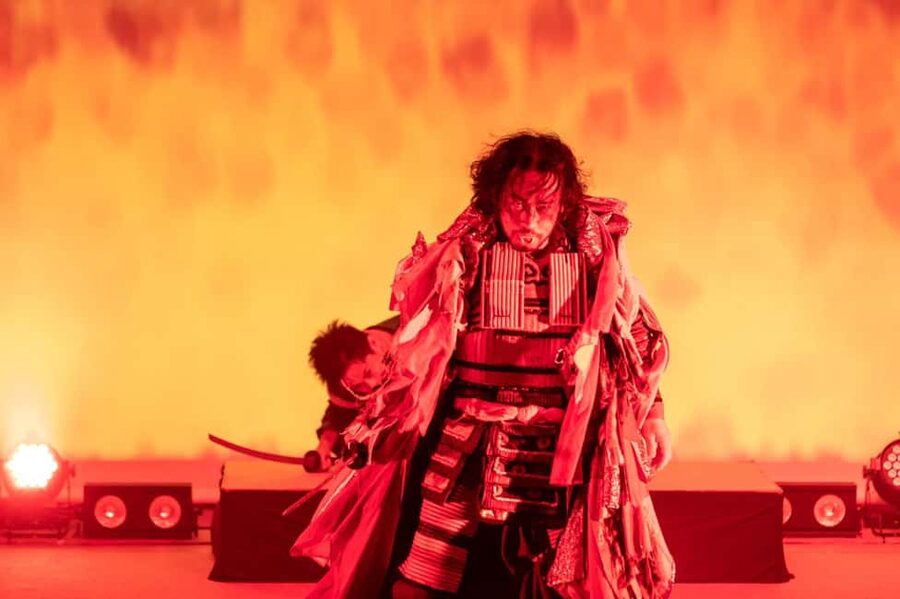
The strongest part of the evening is the cast’s commitment. The performers use large expressions and precise movement, which helps communicate the story even when language is limited. Their energy remains high across the one-hour show, and the costumes give each character a clear visual identity.
Music is another major part of the experience. The score and sound effects help move the story from one scene to the next, while the lighting adds a modern theatrical touch. This is a traditional subject presented with contemporary stage tools.
The production also gives different characters room to make an impression. The story includes Masakado and other folklore-inspired figures, including characters connected with the Spiderwoman and the Butterfly and the Black Fox. The result is a sequence of dramatic scenes rather than a simple hero-versus-villain story.
The show may be especially appealing if you enjoy Japanese mythology, dance, costume design, or physical theater. You do not need to arrive with a strong interest in samurai history. The emotions are communicated through performance, and the cast’s movement does much of the work.
There are limits. Because the story moves through legends and fantasy, the plot may not be immediately clear. The short written outline helps, but I would not book this expecting a fully explained historical narrative. The sword fighting is part of the show, not the whole show.
The cast meet-and-photo time
At 9:15 PM, the formal performance ends and the cast becomes available to the audience. This is one of the most appealing parts of the experience. You can speak with the performers, take pictures, and pose with the Japanese samurai characters.
The photo period continues until 10 PM, when the venue closes. You can take photos during this final period, even though photography and video are forbidden during the main show. The cast is known for being approachable, and staff can help make the interaction easy for international visitors.
Bring your phone or camera for this part, but keep it put away during the performance. The no-recording rule is firm and protects the show for everyone in the room. You may see a final moment of the production where photography is permitted, but follow the staff’s directions rather than assuming filming is allowed throughout the encore.
A small point about tipping: tipping is not a normal part of service in Japan. Some people choose to offer a tip directly to performers as a personal thank-you, but it is not listed as an included requirement. If you want to do this, carry small bills and be prepared for the moment to move quickly.
A few more Tokyo tours and experiences worth a look
Timing your Tokyo evening
The schedule is easy to follow:
- 7 PM: Doors open
- 7 to 8:15 PM: Food and drinks
- 8:15 to 9:15 PM: Samurai performance
- 9:15 to 10 PM: Photos and conversation with the cast
- 10 PM: Closing time
This makes the show a good fit for an evening after sightseeing in Asakusa, Akihabara, or central Tokyo, provided you leave enough time to reach Kanda. It is not a late-night event, but the 10 PM finish still leaves room for a short walk or a train ride back to your hotel.
Do not cut the timing close. The restaurant asks you to arrive by 8 PM, and late entry is not possible after 8:15 PM. Arriving at 7:30 PM gives you time to find the basement venue, settle in, and order without pressure.
The total visit lasts about two to three hours, depending on how early you arrive and how long you stay for photos. The show itself is one hour, but the meal and cast interaction make the whole evening longer than a standard theater ticket.
Is the $41 price good value?
At $41 per person, this is reasonably priced for a Tokyo evening that combines a shrine visit, live theater, and a drink. The value depends mainly on the package you choose.
The one-drink option is a sensible choice if you have already eaten and mainly want the show. The unlimited-drinks option can be worthwhile if you plan to use the full hour before the performance, especially if alcoholic drinks are important to you.
Food costs extra, but the menu gives you control. You can order the chicken hot pot or choose other a la carte items. That is better than paying for a fixed dinner you may not want, though it means the final bill can rise above the advertised starting price.
The small room is also part of the value. You are not paying for a huge commercial production. You are paying for a close-up performance, a special location, and direct contact with the cast. For many people, the photo session and personal interaction are worth more than another standard stage show.
If your budget is tight, book the basic package and eat elsewhere. If you want a complete night out, add dinner and choose the drink plan that matches your habits.
Who will enjoy this show most?
I would recommend it to adults, older children, and anyone curious about Japanese folklore. Children around 10 and 12 have enjoyed the show, but parents should know that the subject matter and theatrical action may be more interesting to older children than to very young ones.
It also works well for solo visitors. The meal period gives you a natural chance to talk with people at your table, and the cast interaction at the end makes the evening social without requiring you to arrive with a group.
You should consider it if you like:
- Japanese history and mythology
- Dance and physical theater
- Costumes, lights, and sound design
- Small venues where performers are close by
- Dinner theater with an informal atmosphere
- Meeting performers after a show
You may want a different activity if you need a fully translated spoken play, a strict historical presentation, or continuous sword combat. The story is partly explained through movement, music, and visual effects, so an open mind helps.
The venue is wheelchair accessible. One visitor who used a wheelchair found getting back to a hotel challenging, so think about your transportation home in advance. The activity itself is accessible, but Tokyo’s evening journey afterward may require some planning.
Practical rules that matter
Several restrictions are easy to overlook. Food and drinks are not allowed inside once the show begins, and all orders should be made before 8:15 PM. Cameras, video recording, and audio recording are not allowed during the performance.
You can take photos at the end, including pictures with the cast. Keep your phone available for that period, but do not use it during the main show.
Seat assignments are controlled by the restaurant. Front seating means rows one through four, but you cannot request a specific seat. If you are traveling with friends, the provider should handle seating, but exact placement is not guaranteed by the supplied information.
The activity offers free cancellation up to 24 hours before the start time, and a reserve-now, pay-later option is available. It is also offered in a small-group format, which fits the intimate room better than a large coach-style outing.
Should you book the Kanda Myojin samurai show?
Book it if you want a lively, visually driven night of Japanese culture with a memorable setting and a personal finish. The show’s strongest features are the committed cast, close seating, costumes, music, and the chance to talk with performers after the final scene.
Choose your package carefully. The advertised $41 price is attractive for the show and included drink, but food is extra and the drink allowance varies. Arrive early, read the story guide, eat before the performance, and save your camera for the photo session.
I would not call this a pure history lesson or a sword-fighting exhibition. It is a compact stage production that combines Masakado’s legend with fantasy, dance, and modern theatrical effects. If that sounds like your kind of Tokyo evening, Kanda Myojin offers a memorable way to spend two to three hours.
FAQ
Where does the samurai show take place?
The show takes place at The Show restaurant in the basement of Kanda-Myojin Bunka-Koryu-kan, located at Kanda-Myojin Shrine.
What time should I arrive?
Doors open at 7 PM, and you should arrive by 8 PM. Entry is not possible after 8:15 PM.
How long is the performance?
The main show runs from 8:15 to 9:15 PM. Photos and conversations with the cast continue until 10 PM, making the full activity about two to three hours.
Is dinner included?
Food is not included in the basic activity details. An a la carte menu is available, including an individual chicken hot pot with seasonal vegetables and broth.
Are drinks included?
The package includes either one drink or unlimited drinks, depending on the option selected when booking. Food and drink orders must be placed before the show begins.
Can I take photos or record the performance?
No. Cameras, video recording, and audio recording are not allowed during the show. You can take photos with the performers from 9:15 to 10 PM.
More Temples & Meditation in Tokyo

More Shows & Performances in Tokyo
More Samurai & Ninja Experiences in Tokyo
More tours in Tokyo we've reviewed



Samurai & Ninja Experiences, compared.
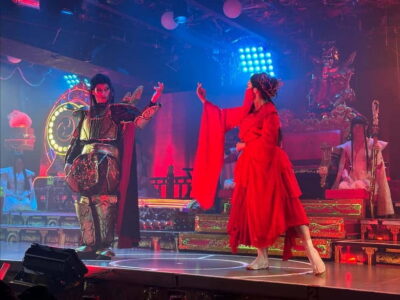 ★ 4.5Tokyo: Samurai Restaurant Show Ticket with 2 DrinksFrom $551h 30m
 ★ 4.6Tokyo: Samurai Ninja Museum Guided tour and ExperienceFrom $27
 ★ 5.0Tokyo: Samurai Sword & Archery Class from Samurai DescendantFrom $1933 hours
 ★ 5.0Best Samurai Experience in TokyoFrom $65
 ★ 5.0Ninja Experience (Family Friendly) at Samurai Ninja Museum TOKYOFrom $47
 ★ 5.0Tokyo Sword Experience – includes Museum Ticket/Ninja ExperienceFrom $84