
Reviewed · SAMURAI & NINJA EXPERIENCES
Tokyo: Samurai Sword & Archery Class from Samurai Descendant
The unusual part comes first: this is a hands-on dojo class, not a staged samurai show. You learn sword forms, practice attack and defense, cut targets, and shoot a Japanese horseback archery bow under Yoshioki Sumida, a samurai descendant and master of both arts.
I like the serious teaching and the mix of sword and bow work. I also like the historical thread, from the bow of 1,000 years ago to the sword that became central after Japan’s civil wars ended. The drawback is clear: at $193 per person, this costs more than a quick photo session, and the class can be physically demanding.
In This Review
- Key Points
- A Serious Class, Not a Samurai Photo Op
- Getting to the Machida Dojo
- Starting With Sword Etiquette and Iai
- Gekken Sparring and the Problem of Timing
- Cutting Targets Requires More Than Strength
- Shooting a Japanese Horseback Archery Bow
- A Demonstration From a Working Master
- What the $193 Price Really Buys
- Who Will Enjoy This Most
- Small Details That Improve the Morning
- Should You Book This Samurai Class?
- FAQ
- Where does the samurai sword and archery class take place?
- How long does the experience last?
- How much does the class cost?
- What activities are included?
- Is training clothing provided?
- Is the class taught in English?
- How many people can participate?
- Can children participate?
- What should I bring, and who should avoid the activity?
Key Points
- Cutting while moving: Slashing targets after learning the proper blade line is much harder than movie swordplay makes it look.
- A real dojo setting: Toyama-Ryu BIZENKAI is on the third floor near JR Machida Station, not in central Tokyo.
- Two old disciplines in one class: You handle a practice sword and try Japanese archery with a horseback-style bow.
- Instruction from Yoshioki Sumida: Sumida teaches with patience, precision, humor, and clear basic English.
- A three-hour workout: Expect repeated movements, concentration, and possible soreness the next day.
- Small-group attention: The class accepts up to 15 people, with shared instruction and occasional close correction.
A Serious Class, Not a Samurai Photo Op
Many samurai-themed activities give you a costume, a quick pose, and a few dramatic swings. This class takes another route. You change into training clothes, enter a working dojo, and begin as a student.
The difference matters. You learn posture, grip, etiquette, timing, and control before moving toward more difficult work. Sumida is exact about technique and safety, but the teaching is also friendly. His assistants help explain movements and keep beginners on track.
The class is offered in Japanese and English. Sumida’s English is described as basic but clear, and he checks that people understand before moving ahead. If your Japanese is limited, you should still be able to follow the lesson, especially by watching demonstrations closely.
The mood is serious without being stiff. You are expected to listen and be punctual, but you are also encouraged to ask questions and enjoy the experience. This balance is one of the class’s strongest points.
A few more Tokyo tours and experiences worth a look
Getting to the Machida Dojo

The dojo, Toyama-Ryu Bizen-kai, is about a 10-minute walk from JR Machida Station. It is on the third floor, reached by stairs at the back, between a sword shop and vending machines on the first floor.
That location is practical, but do not confuse Machida with central Tokyo. From some Tokyo neighborhoods, the trip can take around 90 minutes, so allow plenty of time. Arriving about 30 minutes early is useful. You can get your bearings, speak with the instructor, and possibly watch training or a demonstration before the formal class begins.
The exact meeting instructions matter here. The dojo is not necessarily the sort of place you will spot from a large street sign. Look for the sword shop and vending machines, then use the rear staircase.
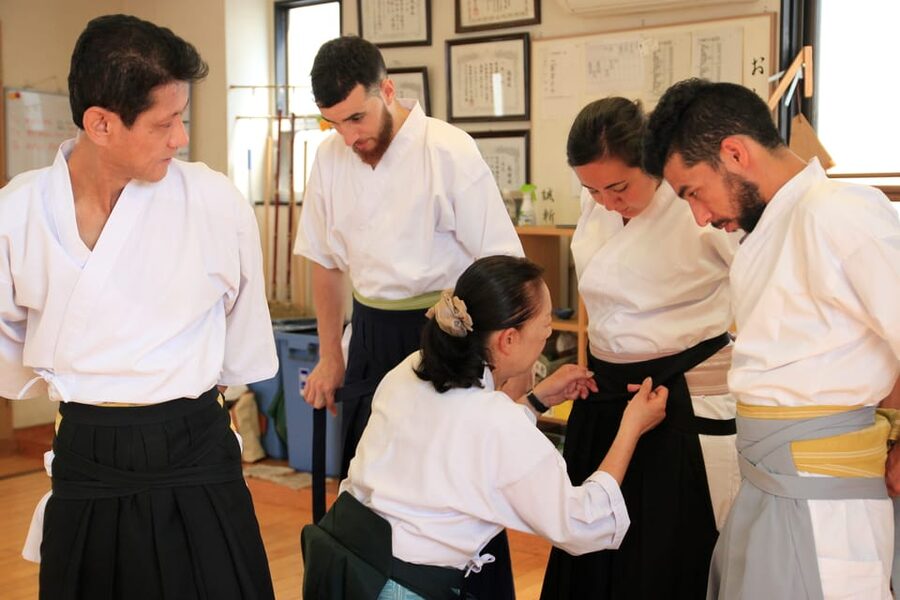
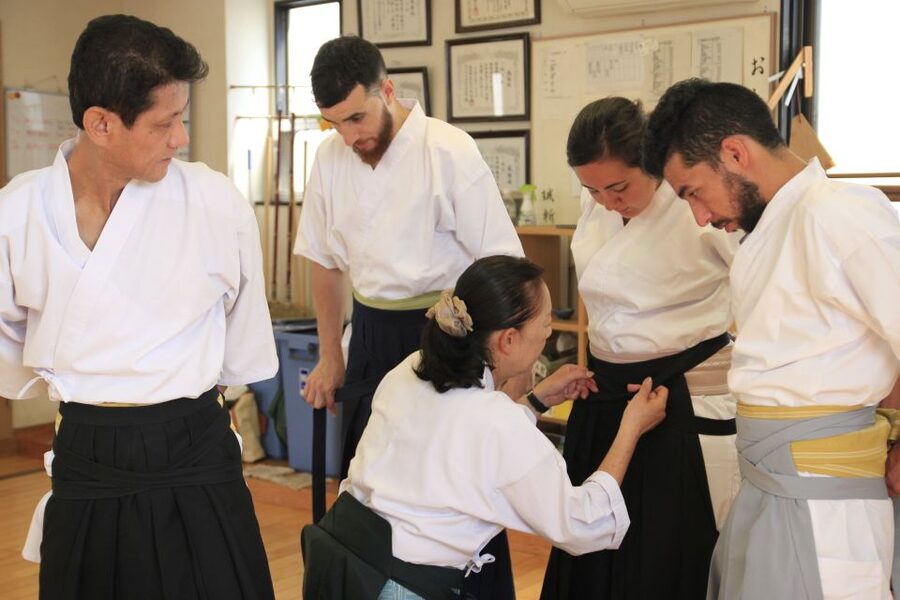
Wear comfortable clothing beneath the provided uniform, and send the height and weight of every participant after booking. The training uniform is supplied, and clean clothing helps the class feel more like practice than dress-up.
Starting With Sword Etiquette and Iai
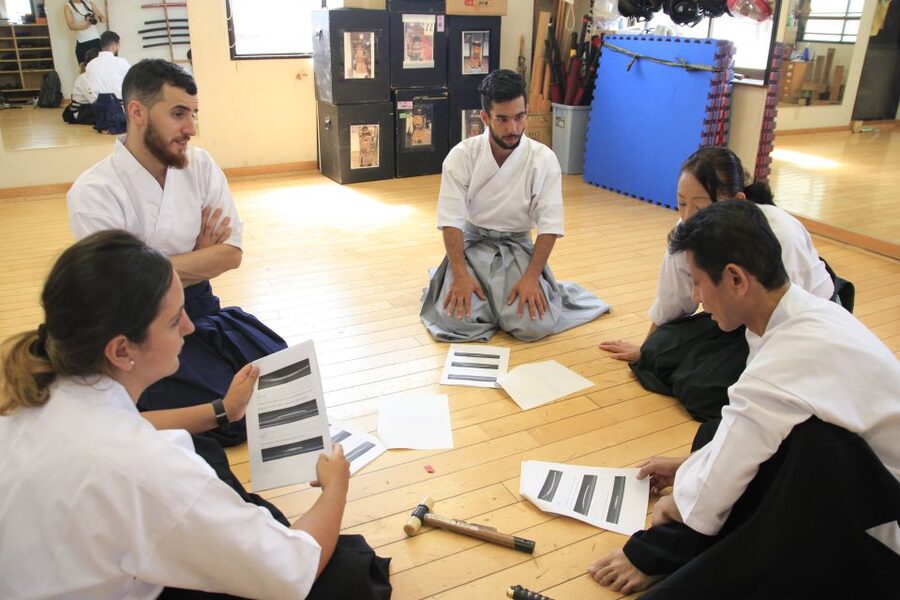
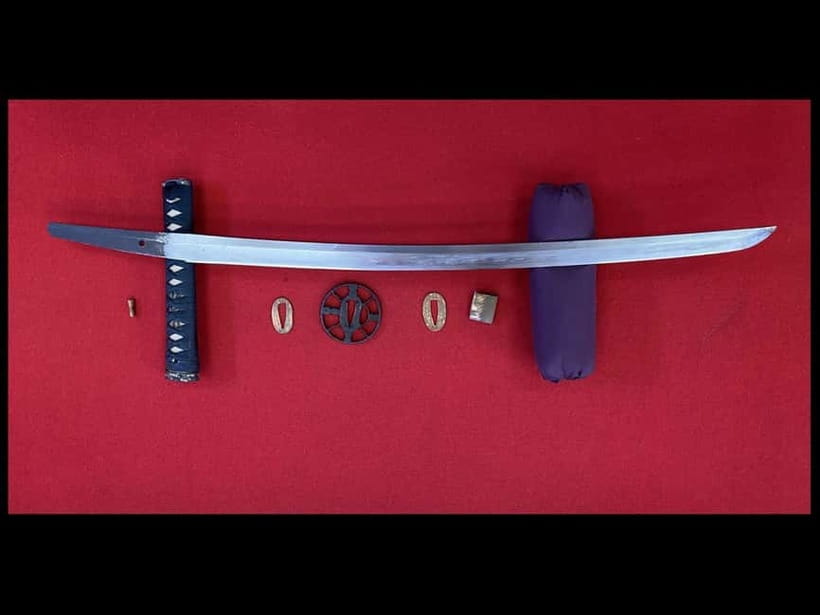
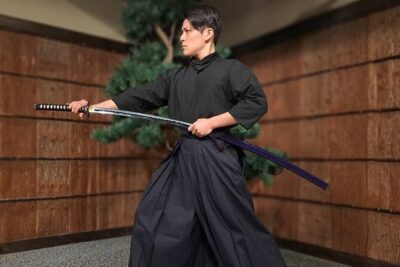
After a short introduction, you change into training wear and receive an explanation of Japanese swords. This is more than a quick prop talk. You learn about the sword’s construction and how it was handled, carried, and respected.
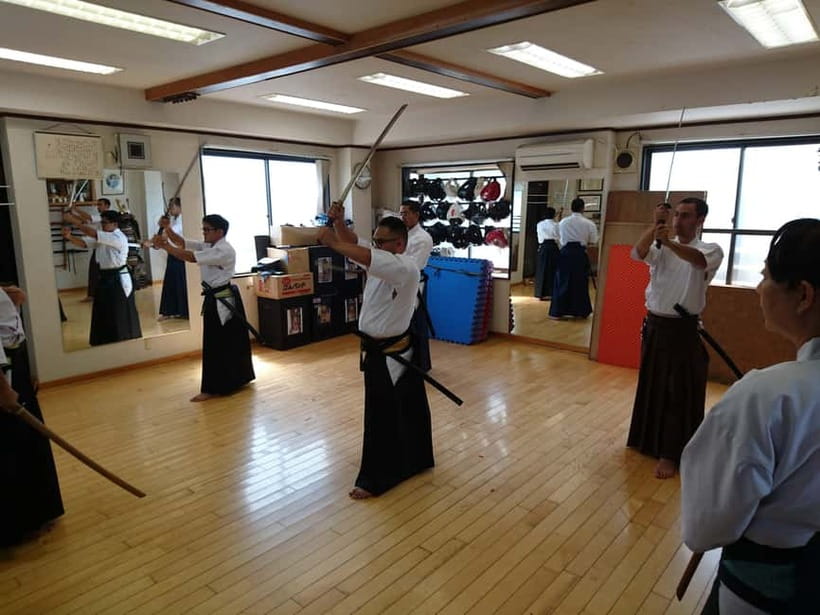
The first practical section is iai. Here you use a practice or mock sword to learn controlled handling and swinging. Iai is built around precise forms rather than wild motion, so the small details matter: stance, grip, draw, cut, and return.
You will likely find this slower and more demanding than expected. A sword has to travel along the right line, and your body must stay balanced while your hands and feet work together. The instructor corrects posture and movement repeatedly because form is the point of the exercise.
This section is especially good for beginners. You do not need previous martial arts experience, but you do need to pay attention. The instruction gives you a useful lesson in why movie swordplay often looks wrong. A blade is not something to wave around for effect.
Gekken Sparring and the Problem of Timing
The gekken section introduces attack and defense with a practice sword. You work on timing and learn when to strike, when to protect yourself, and how to respond to another person’s movement.
This is usually the most playful part of the class, but it still demands focus. You are not simply trading fast blows. You are trying to remember footwork, distance, guard position, and the instructor’s corrections at the same time.
The sparring is friendly, yet it is not entirely effortless. Participants describe the class as fun, intense, and physically active. If you have never held a sword, you may spend the first part concentrating just on keeping your hands and feet in the correct places.
Sumida and his assistants create a supportive setting for beginners. They explain, demonstrate, and correct without treating mistakes as a problem. Still, listen carefully to safety instructions. The class involves repeated swinging and movement, so it is not a passive cultural lecture.
Cutting Targets Requires More Than Strength
The target-cutting section is the moment many people picture when they book this experience. The important detail is that you are taught the technique first. The goal is not to hack at a target with brute force.
You work on the blade line, the angle of the cut, and the movement of your body. One activity checks whether the blade is traveling correctly. You also slash multiple targets while moving, which is difficult even after you have learned the basic motion.
That difficulty is useful. It shows the gap between a dramatic sword pose and actual swordsmanship. Power alone will not fix a poor angle or unstable stance. The training makes you concentrate on control, accuracy, and follow-through.
The supplied information refers to mock or practice swords in the lesson, while several class descriptions also mention real sword handling and cutting. Follow the instructor’s directions about which equipment is used at each stage. Do not assume that every sword in the room is a prop, and never touch a blade without permission.
You should also expect a workout. Repeated cuts can tire your shoulders, arms, and back, especially if you are unused to the movements. Some people feel sore the next day. Bring a drink and pace yourself.
A few more Tokyo tours and experiences worth a look




Shooting a Japanese Horseback Archery Bow
The bow section connects the class to an older period of samurai warfare. About 1,000 years ago, the bow was the main weapon of the samurai. Later, matchlock guns became more powerful, and after civil war ended roughly 400 years ago, the sword took the central role.
You do not ride a horse during this activity. Instead, you try a Japanese bow associated with traditional horseback archery. The bow is long and its handling differs from the compact bows many people know from modern archery.
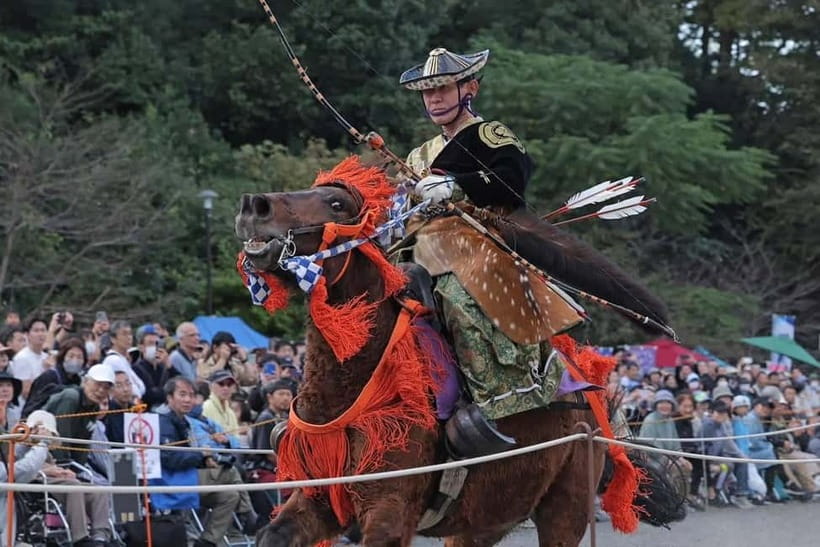
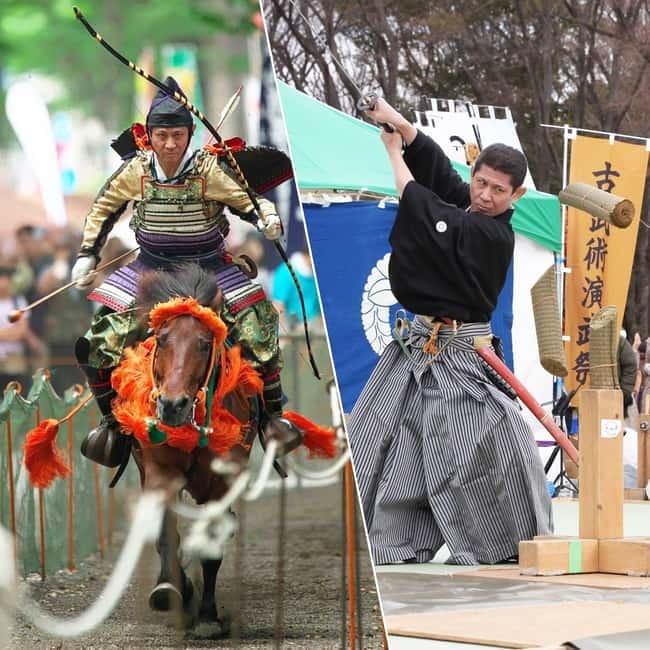
Sumida is one of the rare instructors presented as having mastered both swordsmanship and traditional Japanese horseback archery. He can show you a discipline that is less familiar than the katana, with emphasis on posture, patience, and a smooth release.
The bow section is not just a photo moment. You handle the equipment and shoot arrows under instruction. You may find it physically awkward at first, particularly if you are left-handed. The class is taught right-handed, and one left-handed participant found that this mattered more during archery than sword work.
If someone in your group plans to film the activity, a wide-angle lens is useful for the bow section. Ask before taking photos or video, and keep your camera out of the way while other people are shooting.
A Demonstration From a Working Master
A live demonstration of Toyama-ryu, including advanced techniques by a seventh-grade practitioner, is part of the experience. This gives you a sharp contrast with your own beginner work.
You will see movements that are fast, controlled, and difficult to copy after a single lesson. That is part of the value. The demonstration shows the long road behind the basic forms you have just practiced.
The class does not pretend that three hours makes you a samurai swordsman or archer. Instead, it gives you a brief look at the discipline, concentration, and repetition required to progress. I prefer this honest approach to a polished show that makes difficult skills look easy.
What the $193 Price Really Buys
At $193 per person, this is a costly three-hour activity. You are paying more than you would for a museum visit, a short cultural demonstration, or a casual costume experience.
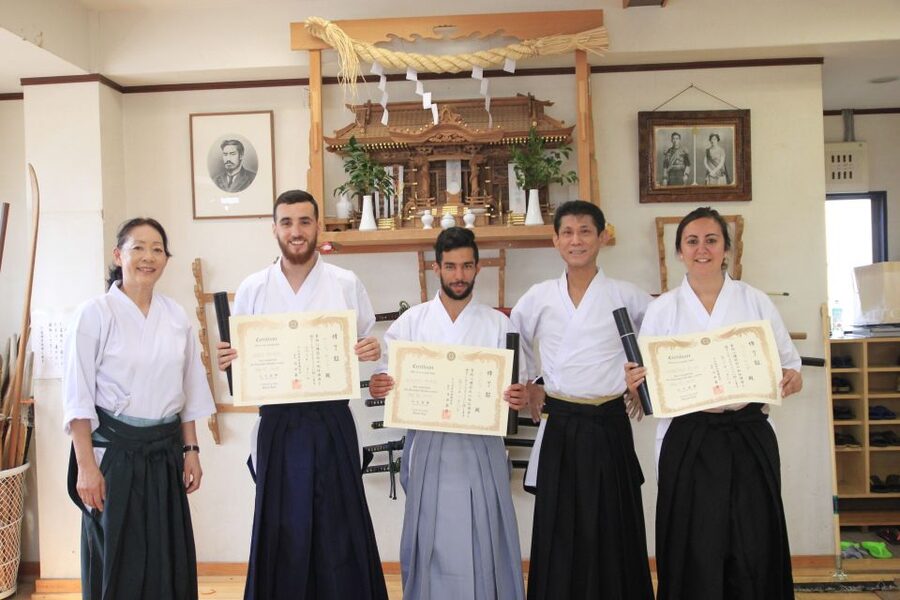
The value comes from the combination of instruction and access. Your price includes an instructor, training clothes, a practice sword, sword lessons, sparring, target cutting, archery, historical explanation, and a demonstration. You are not simply watching someone else perform.
Small-group size also affects the value. Up to 15 people can participate, so the experience is not guaranteed to feel private. Some sessions may have only a few students, which allows much more individual correction. In a full group, you will need to share the instructor’s attention.
The class is a better buy for someone who wants to learn basic technique than for someone seeking only a souvenir photograph. If you are curious about martial arts, the cost is easier to justify. If you want a short, theatrical activity with little exertion, choose something else.
Who Will Enjoy This Most
I would recommend this class to adults and physically capable older teenagers who want a cultural activity with real practice. It suits people interested in Japanese history, martial arts, swords, archery, or traditional training.
You do not need prior experience. Beginners are welcomed, and the instruction covers the basics. You do need enough strength to swing a sword, enough balance to move safely, and enough attention to follow directions.
This is not suitable for pregnant people, anyone with back, heart, or mobility problems, wheelchair users, people with epilepsy, or people with visual impairments. The activity information also says children under 18 are not suitable, although it separately notes that minors may participate with parental permission and supervision if they have the strength to swing the sword. Confirm this point with the organizer before booking a minor.
Alcohol and drugs are not allowed. Bring water or another drink, and let the organizer know everyone’s height and weight so the supplied uniforms fit.
Small Details That Improve the Morning
Arrive early and be punctual. The dojo can take time to reach from central Tokyo, and the instructor values promptness.
Expect to change into training wear and take part in a shared class. Comfortable movement matters more than dressing for the rest of your sightseeing day.
Keep your camera ready for approved photo opportunities, but do not let photography distract from the safety instructions. The most interesting images will come from the training, the uniforms, the bow, and the dojo setting.
Remember that this is a physical class. You may leave tired, and your arms or back may feel it the following day. That is not a flaw, but it is something to plan around if you have a packed evening afterward.
Free cancellation is available up to 24 hours before the activity for a full refund, and you can reserve now and pay later. Check the available start times when choosing your date.
Should You Book This Samurai Class?
Book it if you want real instruction in a real dojo, not a fast stage show. The class gives you an unusual chance to study sword forms, sparring, cutting, and Japanese archery in one visit, with a teacher whose family connection and years of practice shape the lesson.
Think twice if you dislike exercise, have physical restrictions, or mainly want a central Tokyo activity. Machida is outside the core sightseeing zone, the group may include as many as 15 people, and $193 is a serious spend.
For the right person, this can be one of the most distinctive experiences in Japan. Go early, listen closely, respect the dojo, and expect to work. The class is at its best when you treat it as training, not entertainment.
FAQ
Where does the samurai sword and archery class take place?
It takes place at Toyama-Ryu Bizen-kai, also written as 戸山流備前会 BIZENKAI. The dojo is on the third floor, about a 10-minute walk from JR Machida Station.
How long does the experience last?
The class lasts three hours.
How much does the class cost?
The listed price is $193 per person.
What activities are included?
You receive a lecture on Japanese swords, practice iai forms, learn attack and defense timing in gekken, spar with a practice sword, practice target cutting, and try shooting arrows with a Japanese horseback archery bow.
Is training clothing provided?
Yes. A practice uniform is provided. You must send the organizer the height and weight of every participant.
Is the class taught in English?
The listed languages are Japanese and English. The instructor, Yoshioki Sumida, provides instruction in English, and class participants have found his explanations clear enough for beginners with limited Japanese.
How many people can participate?
The maximum group size is 15 people. It is a shared class, though some sessions may have fewer participants.
Can children participate?
The information says children under 18 are not suitable, but it also says minors may participate with parental permission and supervision if they have enough muscle strength to swing the sword. Confirm eligibility with the organizer before booking.
What should I bring, and who should avoid the activity?
Bring a camera and drinks. Alcohol and drugs are not allowed. The class is not suitable for pregnant people, people with back, heart, mobility, or visual problems, wheelchair users, or people with epilepsy.
More Workshops & Classes in Tokyo
More Samurai & Ninja Experiences in Tokyo
More tours in Tokyo we've reviewed








Samurai & Ninja Experiences, compared.
 ★ 4.5Tokyo: Samurai Restaurant Show Ticket with 2 DrinksFrom $551h 30m
 ★ 4.6Tokyo: Samurai Ninja Museum Guided tour and ExperienceFrom $27
 ★ 5.0Best Samurai Experience in TokyoFrom $65
 ★ 5.0Ninja Experience (Family Friendly) at Samurai Ninja Museum TOKYOFrom $47
 ★ 4.6Tokyo: Samurai Entertainment Night Show in Kanda ShrineFrom $412 - 3 hours
 ★ 5.0Tokyo Sword Experience – includes Museum Ticket/Ninja ExperienceFrom $84