
Reviewed · IMPERIAL PALACE & SHOGUN TOURS
Imperial Palace East Garden and Edo Castle Walking Tour in Tokyo
Tokyo’s Imperial Palace East Garden tour gives you a clear look at the site where Edo Castle once ruled Japan. You’ll walk past old castle foundations, carefully kept gardens, ponds, and the former Honmaru and Ninomaru areas while your guide explains samurai life, shoguns, emperors, and the city’s changing role.
I like the small group of no more than 12 people, which makes it easier to hear the guide and ask questions. I also like the way the best guides use pictures and simple visual aids to explain buildings and castle features that are now gone. The main drawback is simple: this is a garden and ruins walk, not a palace interior visit, and some sections are uphill.
In This Review
- Key points to know
- Starting at Wadakura Fountain Park
- Walking through the old Edo Castle grounds
- What the ruins can and cannot show you
- Ninomaru Garden, ponds, and seasonal scenery
- The guide is the main reason to book
- Timing, pace, and what to bring
- How this compares with visiting alone
- Who will get the most from this walk
- Should you book the Imperial Palace East Garden tour?
- FAQ
- Where does the tour start?
- Where does the tour end?
- How long does the experience last?
- Does the tour enter the Imperial Palace buildings?
- Does the tour visit Edo Castle?
- Is admission included?
- Is a guide included?
- How many people can join the tour?
- Should I wear comfortable shoes?
- What happens if the weather is poor?
Key points to know
- Edo Castle history: See castle ruins and foundations while learning how the site changed from shogun headquarters to the Imperial Palace grounds.
- Wadakura Fountain Park: Begin beside an attractive public park with large water features and a calm setting near the palace.
- English-speaking guides: Guides such as Kenta, Sato, Kei, Glenda, Miko, and Kaz are praised for clear explanations, humor, and helpful answers.
- Two and a half hours: Plan for the full stated duration, not a quick one-hour stroll.
- Free admission included: The $25 price covers the guide, fees, and taxes, while snacks are your responsibility.
- Outdoor-only visit: You explore the East Gardens and surrounding grounds, since the palace buildings are not open to the public.
Starting at Wadakura Fountain Park
Meet your guide at the Starbucks Coffee beside Wadakura Fountain Park, at 3-1 Kōkyogaien in Chiyoda City. This is a useful starting point because the park gives you a little breathing room before the history begins. You are near the Imperial Palace, yet away from the noise and tight streets found in many parts of central Tokyo.
The park is known for its fountains and calm design. It was first built in 1961 to mark the wedding of Emperor Akihito and Empress Michiko, then redesigned and reopened in 1995 for the wedding of Crown Prince Naruhito and Crown Princess Masako. Those dates give your guide a natural way to connect modern imperial life with the older castle story ahead.
Allow time to find the meeting point. The supplied directions identify the Starbucks clearly, and the mobile ticket makes carrying paper confirmation unnecessary. You should still have your booking details ready on your phone.
The first stop lasts about 30 minutes and has no admission charge. It is not the main event, but it helps set the scene. You begin with a modern public space tied to the imperial family, then move toward the older military center that shaped Tokyo.
A few more Tokyo tours and experiences worth a look

Walking through the old Edo Castle grounds
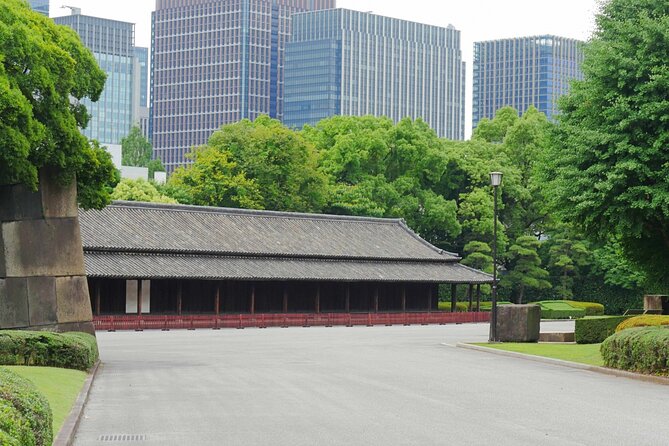
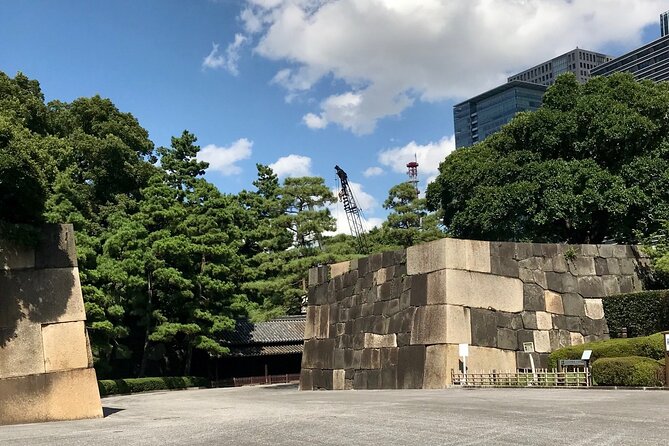
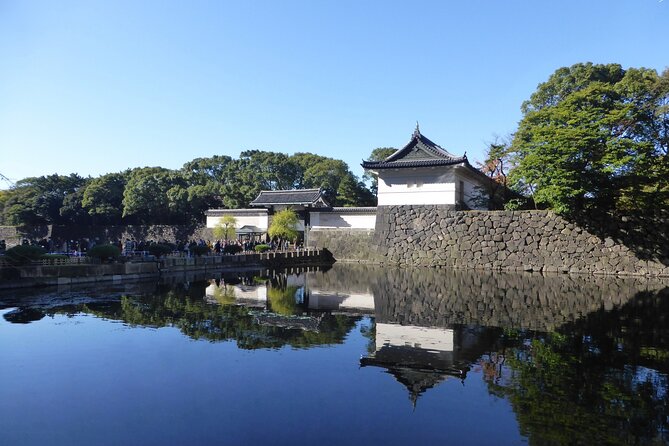
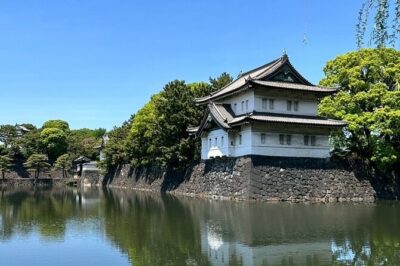
The East Gardens occupy part of the former Edo Castle site. Edo Castle was the seat of the Tokugawa shoguns, the military rulers who governed Japan for centuries. Today, you will not see a complete castle rising above the trees. Instead, you will read the site through stone walls, open spaces, garden design, and the remains of former structures.
This is where a guide adds real value. Without explanation, a broad lawn or low stone base can seem like just another park feature. With a guide, you can understand where major castle areas once stood and how the site was organized.
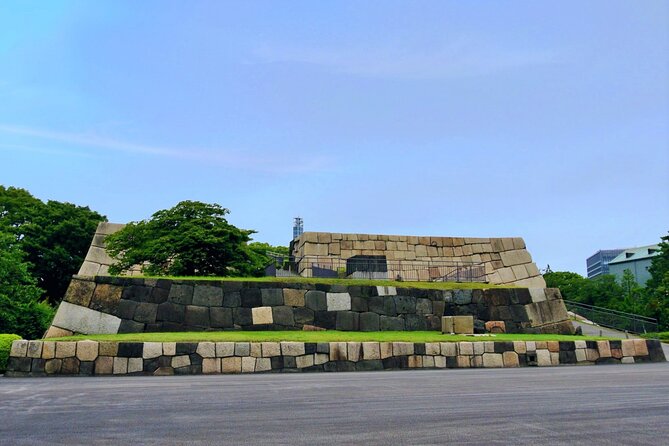
The walk focuses on the former Honmaru area, where important castle buildings once occupied the main compound. You also visit the Ninomaru Garden, known for traditional Japanese scenery, ponds, and carefully arranged plantings. The contrast is pleasing: one part points to defense and power, while another offers quiet views shaped by garden traditions.
You should expect a steady walk rather than a difficult hike. One account describes some hills and steep paths, but no stairs. Comfortable shoes are important, especially because the tour lasts around two and a half hours and takes place outdoors.
What the ruins can and cannot show you
The biggest expectation to set is that you do not enter the Imperial Palace buildings. Public access is limited, so this experience stays in the East Gardens and nearby grounds. You will not tour royal rooms, see palace interiors, or walk through Edo Castle as a preserved building.
That limitation matters if you are choosing between several Tokyo attractions. If your main goal is an interior palace visit, this is not the right product. If you want context for the site, open-air views, and an explanation of how Edo Castle shaped Tokyo, the garden setting works well.
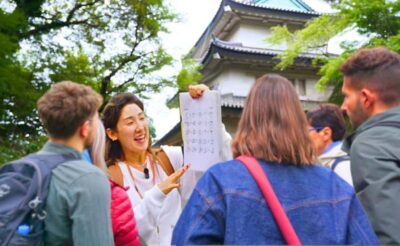
The ruins are more rewarding when you enjoy historical clues rather than grand architecture. Your guide may use photographs or other visual material to show what the castle tower, buildings, and grounds looked like before they disappeared. Kenta is especially praised for bringing visual pages and a lively style, while Miko is noted for using pictures to explain the former castle tower and garden areas.
This sort of explanation helps you picture a place that no longer exists in its original form. You are not simply looking at an old wall. You are comparing the present park with the castle complex that once controlled Japan.
Ninomaru Garden, ponds, and seasonal scenery
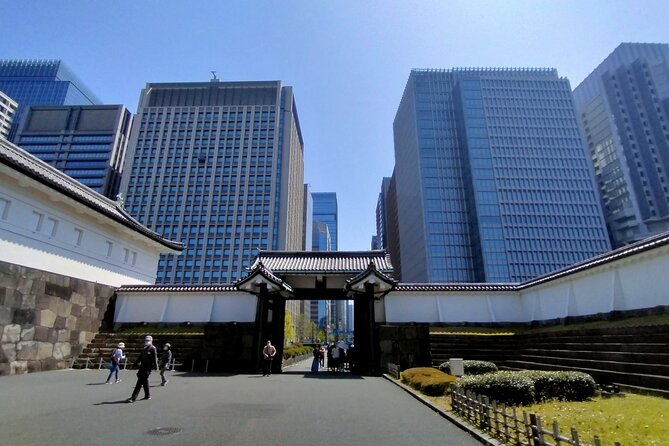
Ninomaru Garden is likely to be the prettiest section of the walk. Its traditional layout, ponds, trees, and clipped plantings offer a softer experience after the more historical castle remains. You may see carp in the water, which can catch the sunlight and add a small flash of color to an otherwise quiet setting.
Season matters. Cherry blossoms can appear in spring, and autumn can bring changing leaves, but the timing is not guaranteed. An October visit may still show plenty of green with few flowers or little fall color. You should come for the garden’s design and calm spaces first, with seasonal color treated as a bonus.
That is also why expectations are important. Some people find the gardens beautiful and serene, while others expect more flowers or dramatic castle remains. The grounds are carefully maintained, but this is not a spectacle at every turn. The pleasure comes from the combination of open space, Japanese garden design, and stories that explain what you are seeing.
Your guide’s pacing can make a difference here. Guides including Sato, Kei, Glenda, and Kaz are praised for keeping explanations clear and engaging. On a rainy day, one guide adjusted the route and used spots with better shelter while continuing the discussion. The experience still depends on weather, but a flexible guide can make a wet morning far more comfortable.
The guide is the main reason to book
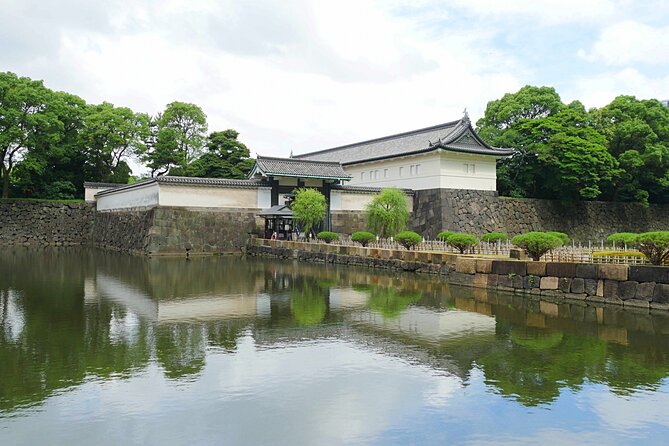
At $25 per person, the admission itself is not the reason to pay. The East Gardens are free, and Wadakura Fountain Park costs nothing to enter. You are paying for interpretation, organization, and the chance to understand a large historical site without sorting out the story alone.
That can be good value during a first Tokyo visit. The tour connects the samurai and Edo periods with the modern emperor and imperial family. It also gives you a framework for later sightseeing. After two and a half hours, you should have a better sense of why central Tokyo looks and functions as it does.
The guide quality appears to be the strongest part of the experience. Kenta is repeatedly praised for humor, energy, clear English, and his ability to explain a lot without losing the group. Sato is described as friendly and measured, giving enough detail without overloading the walk. Kei is praised for answering questions and caring for the group in poor weather. Glenda receives strong marks for clear English, historical detail, and practical suggestions for other Tokyo sights.
Guide assignments can change, so you should not assume you will receive a particular person. Still, the range of praised guides suggests that the experience is designed around live explanation rather than a fixed audio script.
A small group helps. With a maximum of 12 people, you can usually stay close enough to hear and ask questions. The group size also makes it easier to move through garden paths without the feel of a large organized procession. You may meet a few other people, but the format remains fairly personal.
Other walking tours we've reviewed in Tokyo



Timing, pace, and what to bring
The stated duration is approximately 2 hours and 30 minutes. Treat that as the real planning figure. Do not schedule a tight lunch reservation or a train departure immediately afterward. A prior description apparently left some uncertainty about the length, so you should build your day around the full walk.
Wear comfortable shoes. The route includes hills and some steep paths, even though no stairs are specifically expected. You will be outside for most of the experience, so clothing suited to the day’s weather is sensible.
Snacks are not included. Eat beforehand or carry something small if you need it, but do not expect food service as part of the activity. The meeting point is near public transportation, which makes it practical to combine with other central Tokyo stops.
The tour ends back at the meeting point. That is convenient if you want to continue around the Imperial Palace area, but it also means you should not count on being dropped at another attraction.
Most people can participate, and service animals are allowed. One guide even arranged a wheelchair for a tired and dizzy member of a group, but you should not treat that individual act as a guarantee of full wheelchair access across every path. The grounds include hills, so anyone with limited mobility should consider the terrain before booking.
How this compares with visiting alone
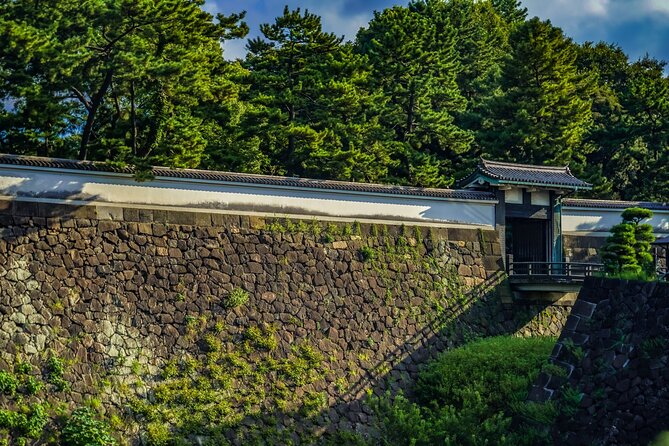
You can enter the East Gardens without paying an admission fee, so independent sightseeing is a reasonable alternative. Going alone gives you control over pace and allows you to linger at the ponds, gardens, or ruins as long as you wish.
The tradeoff is context. Edo Castle’s remains are not always self-explanatory, and the imperial connection can be confusing if you do not know how the shogunate and emperor fit into Japanese history. A good guide turns scattered stones, walls, and garden spaces into a readable story.
I would choose this tour for a first visit to Tokyo, especially if you want a gentle introduction to Japanese history without committing to a museum or a full-day excursion. I would skip it if you prefer to wander silently, already know the Edo period well, or mainly want elaborate flowers.
The score of 4.9 from 510 ratings, with 98 percent recommending it, reflects the strong response to the guides and the educational approach. Still, the lower rating included an important warning: the gardens may feel less impressive if you expect constant floral displays or major preserved buildings. That is a fair concern, and it is best handled by booking for the stories and setting rather than for a palace interior.
Who will get the most from this walk

This experience suits you if you want:
- A short introduction to Edo-period and imperial history
- A guide who can explain ruins and vanished buildings
- A small group instead of a large bus tour
- A calm outdoor activity in central Tokyo
- A walk that combines gardens, ponds, castle remains, and cultural background
- A useful first activity before exploring more of the city
Families can also find it workable. A guide was praised for being patient with children, and the outdoor setting gives younger participants more visual variety than a long indoor lecture. The full duration and hills still require reasonable walking stamina.
It is less suited to anyone seeking access inside the palace, a flower-focused garden visit, or a very short orientation walk. The East Gardens are free, so the value depends on how much you want the guide’s explanation.
Should you book the Imperial Palace East Garden tour?
I would book this at $25 if you want historical context and prefer learning as you walk. The price is fair because the group is limited to 12, the guide speaks English, and the route covers both Wadakura Fountain Park and the East Gardens over a substantial two and a half hours.
Go in with the right picture: you will see public gardens and Edo Castle ruins, not palace rooms or a complete castle. Wear good shoes, allow extra time afterward, and visit in a season when you will be happy with greenery even if blossoms or fall color are limited.
Free cancellation is available up to 24 hours before the start time for a full refund. Changes or cancellations inside that window are not refunded, and poor weather may lead to another date or a full refund. For a first-time Tokyo visit, this is a sensible, reasonably priced way to make an otherwise quiet historical site easier to understand.
FAQ
Where does the tour start?
The tour starts at Starbucks Coffee beside Wadakura Fountain Park, at 3-1 Kōkyogaien, Chiyoda City, Tokyo 100-0002, Japan.
Where does the tour end?
The activity ends back at the starting meeting point.
How long does the experience last?
The tour lasts approximately 2 hours and 30 minutes. Plan for the full period when arranging the rest of your day.
Does the tour enter the Imperial Palace buildings?
No. The tour does not enter the Imperial Palace buildings. It explores the East Gardens and surrounding grounds.
Does the tour visit Edo Castle?
Yes. The route explores the former Edo Castle site, including castle ruins and the former Honmaru area.
Is admission included?
Yes. All fees and taxes are included, and the garden stops have no separate admission charge.
Is a guide included?
Yes. An English-speaking local guide leads the walk.
How many people can join the tour?
The group has a maximum of 12 participants.
Should I wear comfortable shoes?
Yes. This is a walking tour lasting about two and a half hours, with some hills and steep paths. Comfortable shoes are recommended.
What happens if the weather is poor?
The activity requires good weather. If it is canceled because of poor weather, you will be offered another date or a full refund.
More Walking Tours in Tokyo
More Imperial Palace & Shogun Tours in Tokyo


More tours in Tokyo we've reviewed








Imperial Palace & Shogun Tours, compared.
 ★ 5.0Tokyo: Imperial Palace and Shogun Historical Walking TourFrom $22
 ★ 4.9Tokyo: Imperial Palace Japanese History Walking TourFrom $32
 ★ 4.9Tokyo: Imperial Palace and Shogun Walking TourFrom $162 hours
 ★ 4.8Tokyo: Imperial Palace East Gardens Walking TourFrom $192h 30m
 ★ 4.5Tokyo: Imperial Palace, Sensō-ji Temple, & Tokyo Tower TourFrom $404 hours
 ★ 5.0Tokyo Castle, Imperial Palace, Shogun & Garden Walking TourFrom $31