
Reviewed · SAMURAI & NINJA EXPERIENCES
Tokyo: Samurai Restaurant Show Ticket with 2 Drinks
Tokyo’s Samurai Restaurant Show is less a quiet lesson in Japanese history and more a neon-powered stage spectacle. Samurai, ninjas, dancers, music, costumes, lights, and sound pile up in a small theater in Kabukicho. The effect is strange, loud, colorful, and very much its own thing.
I like the close-up view of the performers, which makes the energy easy to feel, and the two included drinks, which help make the $55 price easier to swallow. The main caution is volume: the stage is close, and several people found the music extremely loud, so earplugs are a smart idea.
In This Review
- Key points
- What This Tokyo Show Really Is
- Inside the Samurai Restaurant in Kabukicho
- The Opening Acts: Samurai, Ninjas, and Dancers
- Neon Lights, Loud Music, and Sensory Overload
- Two Drinks and Snack Food
- Is the $55 Ticket Good Value?
- Timing, Seating, and Late Arrival
- Who Will Enjoy This Show Most?
- How to Build the Evening Around It
- Final Verdict: Book It If You Want Tokyo at Full Volume
- FAQ
- Where is the Samurai Restaurant Show located?
- How long does the show last?
- Are drinks included in the ticket?
- Can children attend the show?
- What identification should I bring?
- What items and behavior are not allowed?
Key points
- Kabukicho setting: The show is in Shinjuku’s famous entertainment district, an electric area worth seeing before or after the performance.
- Two drinks included: Choose alcoholic or non-alcoholic drinks, with extra food and drinks available for purchase.
- High-energy production: Expect samurai, ninjas, dancers, neon lighting, loud music, elaborate costumes, and frequent visual changes.
- Spectacular interior: The venue reportedly cost more than 10 billion yen to create, and the interior is part of the attraction.
- Short pauses between acts: Scene changes create breaks for drinks and snacks, though they can interrupt the momentum.
- Adults only: You must be at least 18 and bring a passport or ID card, with a copy accepted.
What This Tokyo Show Really Is
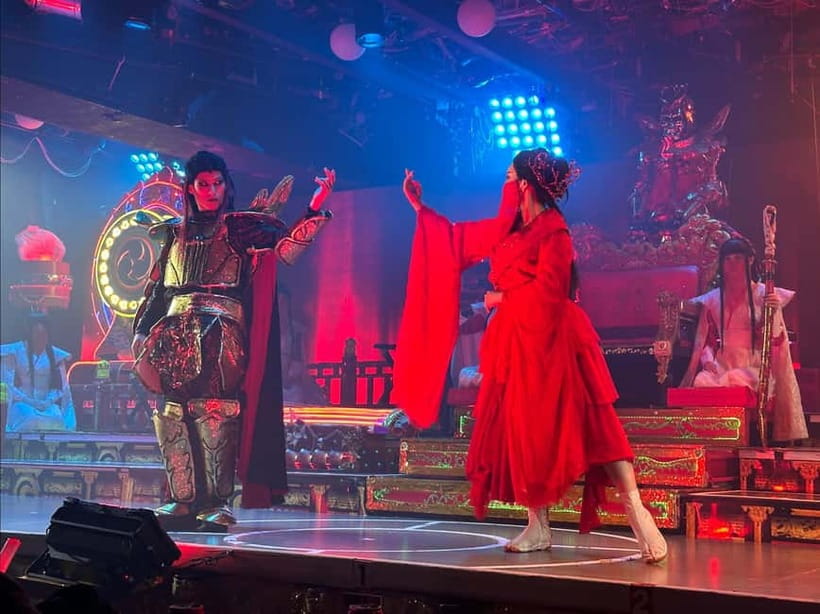
The name may suggest a formal display of samurai culture. That is not quite the right expectation. This is a theatrical fantasy built around samurai and ninja imagery, with modern music, neon effects, choreography, and a generous dose of theatrical excess.
I would describe it as a Tokyo night out rather than a history presentation. You are not going to receive a detailed account of sword technique or feudal Japan. You are going to see performers charging onto a compact stage while colored lights flash and the music pushes the action along.
That difference matters. If you want a calm, traditional performance, this may feel too loud and chaotic. If you want the kind of wonderfully odd spectacle that Tokyo does so well, the show fits the bill.
The performance lasts about 90 minutes according to the activity details, while the ticket description also refers to a two-hour show ticket. Plan your evening around roughly 90 to 120 minutes, allowing time for seating, pauses, and the full presentation.
If you're still narrowing it down, here are other tours in Kabukicho we've reviewed.

Inside the Samurai Restaurant in Kabukicho
The venue sits in Kabukicho, in the heart of Shinjuku. This is one of Tokyo’s best-known nightlife districts, filled with bright signs, restaurants, bars, and late-night entertainment. It is an interesting place to visit, but it is not the most peaceful part of the city.
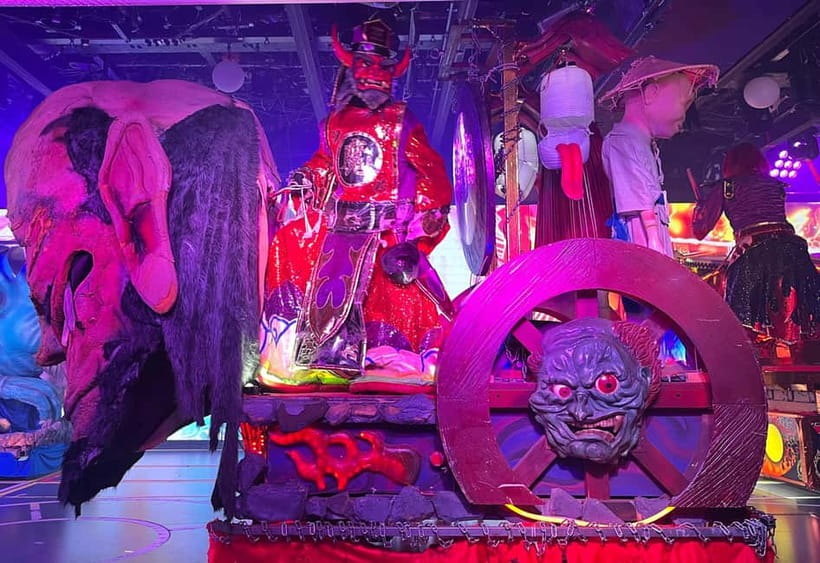
The theater interior is deliberately extravagant. The venue was created at a reported cost of more than 10 billion yen, and you can spend time looking around before the show begins. Even if the performance were not on stage, the room itself would be worth taking in for its color, decoration, and theatrical design.
I suggest arriving with enough time to appreciate the setting. The reception is inside the entrance of Samurai Restaurant, so you do not need to search for a separate meeting point or wait for hotel pickup. Hotel transportation is not included, and you make your own way to Kabukicho.
The district also gives you a useful before-and-after plan. You can eat in Shinjuku before the show, then stop for a drink or dessert afterward. The food inside is limited mostly to snack-style choices, so do not treat the included drinks as a full dinner.
The Opening Acts: Samurai, Ninjas, and Dancers
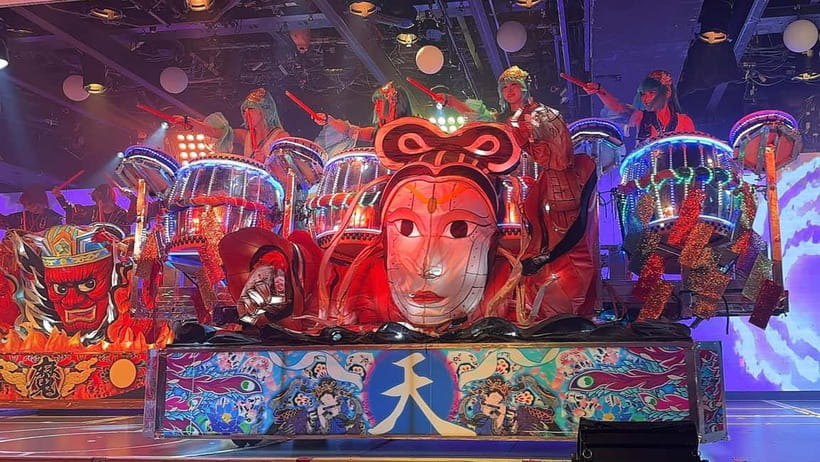
Once seated, you can expect a show built around movement and visual impact. Samurai and ninjas provide the central theme, while dancers and other performers add energy between the action scenes.
The stage is close to the audience. That is good news if you want to see costumes, expressions, and choreography clearly. It also means the sound reaches you with force. One practical detail is easy to overlook: bring earplugs, or ask the staff for them if available.
The performers are a major reason this works. The presentation depends on enthusiasm, timing, and a willingness to go big. The production does not ask you to sit quietly and analyze every scene. It aims to keep your attention through fast dance sections, striking outfits, music, and sudden changes in mood.
The storyline may be hard to follow. Several comments describe the plot as unclear or random, but that is not necessarily a problem if you approach the show as a visual party. The emotional thread is less important than the spectacle.
Neon Lights, Loud Music, and Sensory Overload
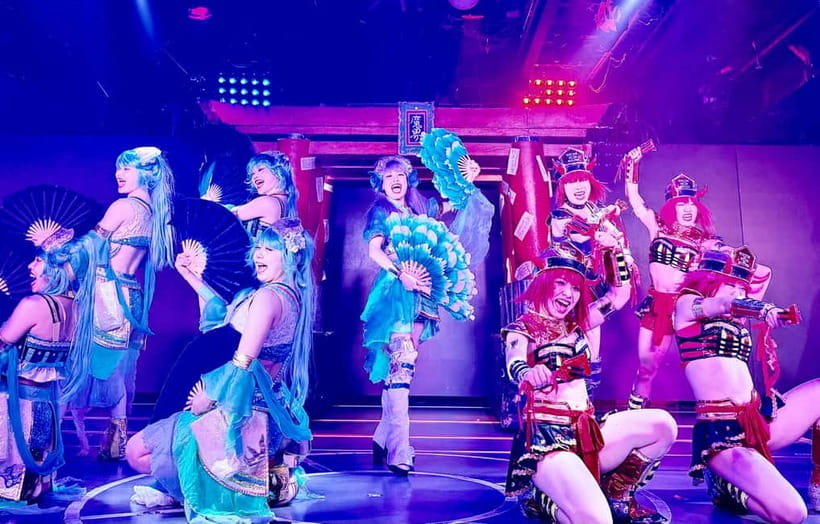
The show uses neon light and sound to create its punch. You will see colorful effects, elaborate costumes, and a stage that changes tone from one act to the next. The overall style blends old samurai imagery with modern Japanese pop-stage energy.
This mix is probably the most interesting part of the experience. It is not traditional theater, yet it uses recognizable images from Japanese culture. It is not a nightclub, yet the music and lighting can feel just as forceful. It is not a museum display, yet the setting gives you a dramatic version of samurai and ninja themes.
The result can feel like sensory overload. That is exactly what many people want, but it is worth stating plainly. If flashing lights trigger discomfort, or if you dislike very loud music, this may not be your best evening activity. One person specifically compared the show to a psychedelic experience, and another warned that it was loud enough to require ear protection.
The compact stage also creates short pauses between some scenes. These breaks allow the crew to change the decor and give you time to eat or drink. The pauses may briefly slow the pace, but they are part of how the production handles its small performance area.
Two Drinks and Snack Food
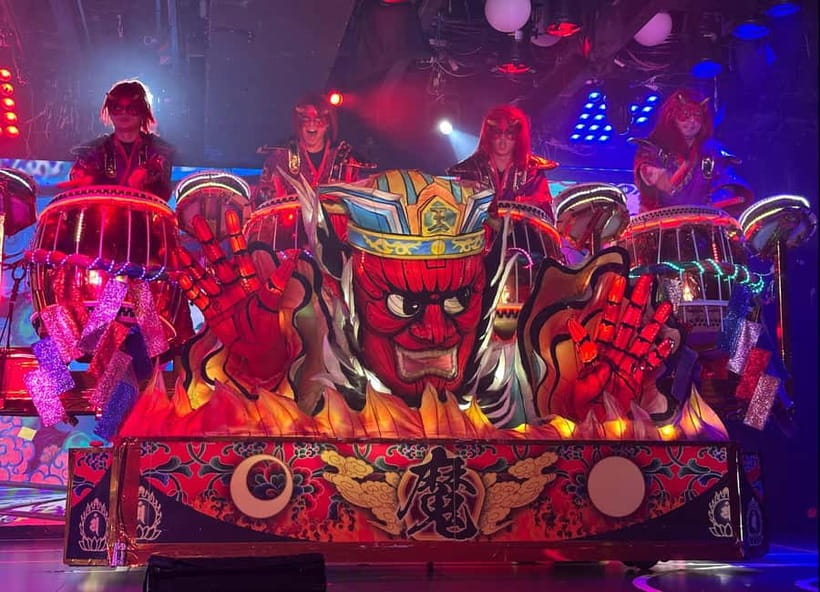
Your ticket includes two drinks of your choice. You can select alcoholic or non-alcoholic options, which makes the package useful for people who do not drink. The drinks are served as part of the evening rather than as a separate bar visit.
Food and additional drinks cost extra. The choices described by customers include snacks such as popcorn and similar light items. Some people enjoyed the food, but the range is not large enough to replace a proper meal.
My advice is simple: eat before the show or plan dinner afterward. You can still order snacks inside, but arrive expecting refreshments rather than a restaurant meal. This also helps you judge the price fairly. At $55 per person, the ticket covers the performance and two drinks, but you may spend more if you want food, souvenirs, or additional beverages.
The pauses between acts are a useful time to take a drink and look around. The atmosphere is social, and the included drinks add to the feeling of a night out. Just remember that intoxication is not allowed, and the venue can refuse entry to drunk customers.
Is the $55 Ticket Good Value?
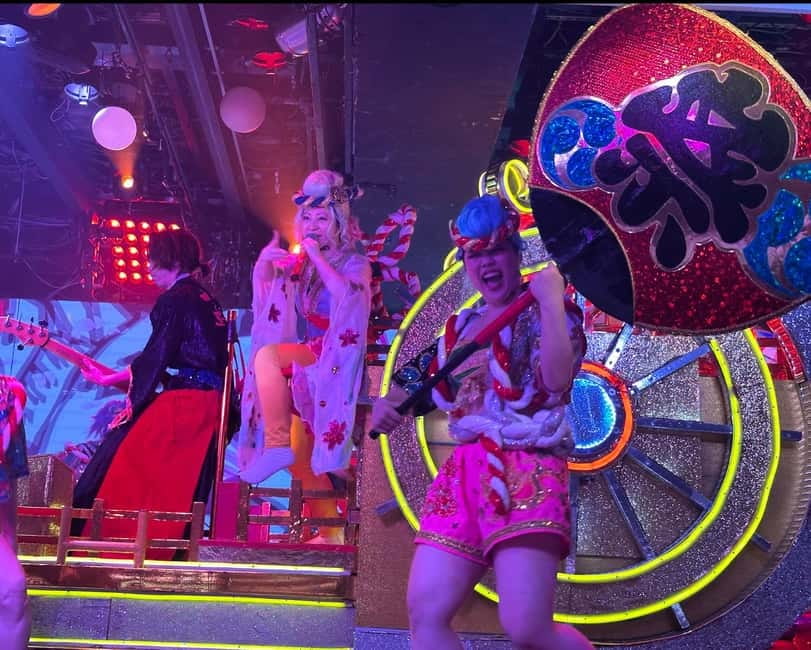
At $55, this is not a bargain attraction in the usual sense. You are paying for a purpose-built venue, a full stage production, performers, lighting, sound, and two drinks. The price makes more sense if you want an evening show rather than a short photo stop.
I see the best value for someone visiting Tokyo for the first time and looking for one memorable night in Shinjuku. The show is unusual enough that it will not feel like another standard sightseeing stop. You also get the Kabukicho setting, the dramatic interior, and the chance to sit back for a concentrated burst of entertainment.
The value is weaker if you mainly want cultural depth. The performance uses samurai and ninja themes, but it should not be confused with a traditional theater performance or a guided explanation of Japanese history. You are paying for style, energy, and production rather than academic detail.
The two drinks help. They give you something to enjoy during the pauses and make the evening feel more complete. Still, keep a small food budget in mind if you are hungry, since snacks and extra drinks are not included.
Timing, Seating, and Late Arrival
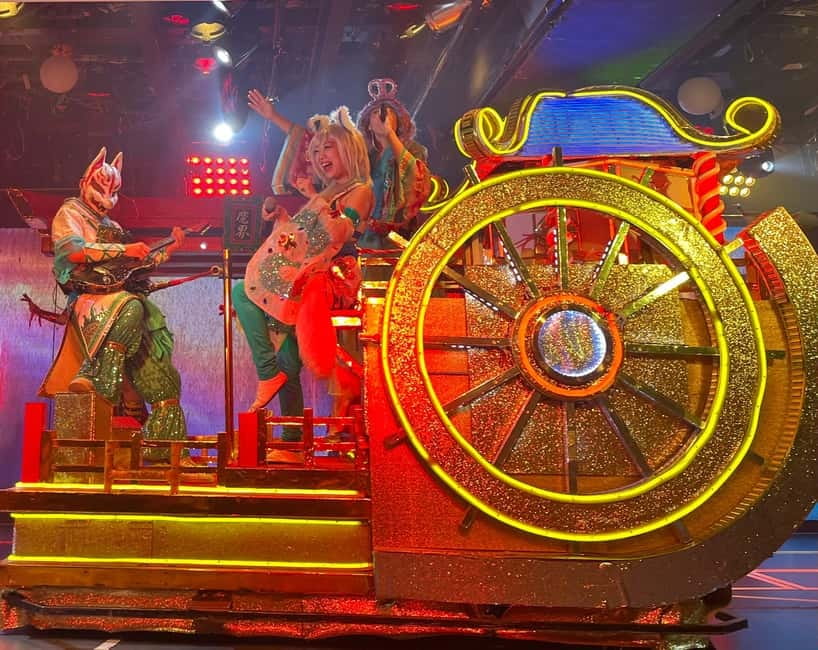
Check the available starting times when booking because the show schedule can vary. The activity is listed as lasting 90 minutes, but allow a little extra time for arrival, seating, pauses, and the full show ticket period described in the package.
Late arrival has a clear downside. If you miss the scheduled start, you may need to wait until the intermission before being seated. That is both practical and considerate to the performers, but it means you should not cut your journey across Shinjuku too closely.
The meeting point is straightforward: reception is inside the entrance of Samurai Restaurant. There is no hotel pickup or drop-off, so you should allow time to find the venue in Kabukicho and pass through the surrounding entertainment district.
Bring your passport or another ID card. A copy is accepted, which is useful if you prefer to keep your original passport secured at your hotel, provided you follow the venue’s identification rules.
Who Will Enjoy This Show Most?
I would recommend it to adults who enjoy spectacle, music, dance, costumes, and a slightly wild night out. Groups are a particularly good match because the show gives everyone something to react to, from the visual effects to the performers’ comic or dramatic energy.
It also suits you if you have already spent the day walking around Tokyo and want to sit down for a while without choosing a quiet activity. One useful feature is the short format. You get a strong dose of entertainment without committing an entire evening to a long theater production.
The show is not suitable for children under 18. Cosplay, bizarre costumes, sunglasses, professional cameras, outside food, and outside drinks are not allowed. You should also avoid arriving intoxicated.
People sensitive to flashing lights or loud sound should think carefully before booking. The stage is close, and the music can be very powerful. Ask about earplugs if you need them, and choose a different show if intense lighting is a serious concern.
How to Build the Evening Around It
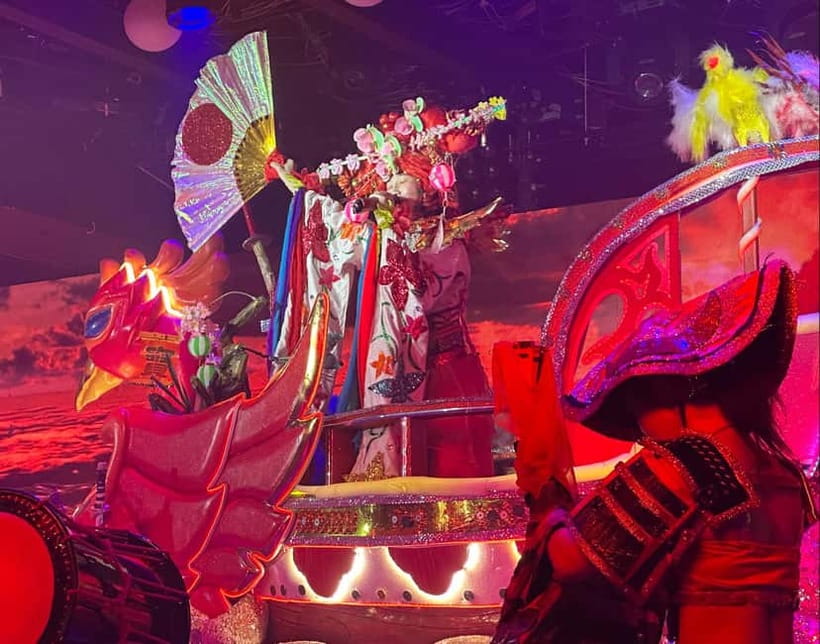
For a smooth plan, schedule dinner before the performance or after it. The venue offers snack-type food, but you should not count on it for a full meal.
Arriving early gives you time to find the reception desk, show your identification, inspect the interior, and settle before the music begins. It also protects you from the late-arrival rule, which can leave you waiting until intermission.
Afterward, you are already in Shinjuku, one of Tokyo’s liveliest nightlife zones. You can continue the evening nearby or head back to your hotel. The show works well as a centerpiece for a Kabukicho night, rather than as an isolated activity across town.
The host or greeter speaks English, which makes arrival and basic arrangements easier for international visitors. Do not expect hotel transportation, though. You handle the trip to and from the restaurant yourself.
Final Verdict: Book It If You Want Tokyo at Full Volume
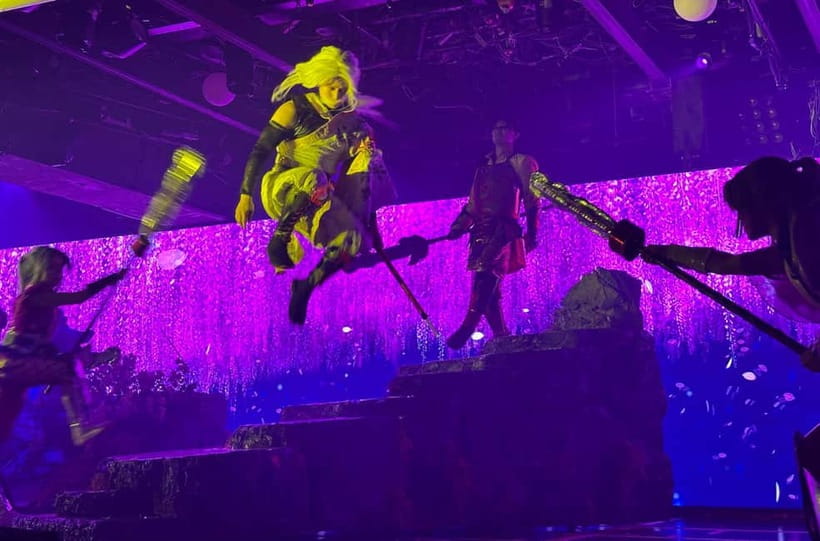
Book this show if you want a colorful, loud, highly unusual Tokyo experience with samurai, ninjas, dancers, neon, and two drinks. The strongest parts are the performers’ energy, the close stage, the over-the-top interior, and the way traditional Japanese images collide with modern stage design.
Skip it if you want a quiet evening, a detailed cultural lesson, or a substantial dinner included in your ticket. Also think twice if loud music and flashing lights are likely to make you uncomfortable.
For the right audience, the $55 price is fair. You get a complete night-time production in one of Tokyo’s most famous entertainment districts, with enough visual drama to give you a story to tell long after the show ends.
FAQ
Where is the Samurai Restaurant Show located?
The show is located in Kabukicho, Shinjuku, in the heart of Tokyo. Reception is inside the entrance of Samurai Restaurant.
How long does the show last?
The activity is listed as 90 minutes. The ticket information also describes a two-hour show ticket, so allow roughly 90 to 120 minutes for the complete experience.
Are drinks included in the ticket?
Yes. The ticket includes two alcoholic or non-alcoholic drinks of your choice. Additional food and drinks are not included.
Can children attend the show?
No. Children under 18 cannot enter, so this is an adults-only activity.
What identification should I bring?
Bring your passport or an ID card. A copy of your passport or ID is accepted.
What items and behavior are not allowed?
Sunglasses, outside food and drinks, professional cameras, costumes, cosplay, bizarre clothing, and intoxication are not allowed. If you arrive late, you may need to wait until intermission to be seated.
More tours in Kabukicho we've reviewed
Samurai & Ninja Experiences, compared.
 ★ 4.6Tokyo: Samurai Ninja Museum Guided tour and ExperienceFrom $27
 ★ 5.0Tokyo: Samurai Sword & Archery Class from Samurai DescendantFrom $1933 hours
 ★ 5.0Best Samurai Experience in TokyoFrom $65
 ★ 5.0Ninja Experience (Family Friendly) at Samurai Ninja Museum TOKYOFrom $47
 ★ 4.6Tokyo: Samurai Entertainment Night Show in Kanda ShrineFrom $412 - 3 hours
 ★ 5.0Tokyo Sword Experience – includes Museum Ticket/Ninja ExperienceFrom $84