
Reviewed · IMPERIAL PALACE & SHOGUN TOURS
Tokyo: Imperial Palace and Shogun Walking Tour
Tokyo’s Imperial Palace East Gardens give you a rare look at where Japan’s rulers once made decisions that shaped the country. Beneath the quiet ponds and clipped trees are Edo Castle ruins, guardhouses, moats, and immense stone walls built to protect the Tokugawa shoguns.
I like the tour’s clear two-hour route and its low $16 price. I also like having a guide explain why a plain stone foundation or gate mattered, rather than walking past it with no context. The main consideration is that this is a walking tour of the East Gardens, not a tour through the private imperial residence.
The guides are a major part of the experience. Tony, Blake, Jim, Miguel, Embla, Thomas, and others have been praised for explaining Japanese history in simple terms, answering questions, keeping a comfortable pace, and offering useful Tokyo suggestions. The tour is a strong first-day choice, though hot, rainy, or cold weather can affect your enjoyment.
In This Review
- Key points to know before you book
- Why Edo Castle matters in the middle of Tokyo
- Meeting at Wadakura Fountain Park
- Ote-Mon Gate: the right place to begin
- The palace grounds and the shift from shogun to emperor
- Hyakunin Bansho Guardhouse and the human side of security
- Fujimi-yagura and the castle’s vanished skyline
- East Gardens: history softened by plants and water
- Ninomaru Garden and its koi-filled ponds
- The castle tower base and reading the stone walls
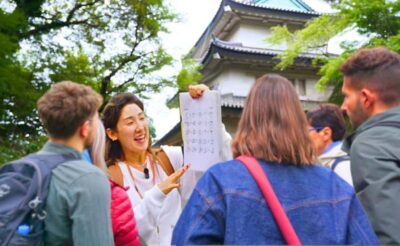
- What the guides add to the two-hour walk
- Is $16 good value for this Tokyo experience?
- Who will enjoy this walk most?
- Useful booking details
- Should you book the Imperial Palace and Shogun Walking Tour?
- FAQ
- How long does the Imperial Palace and Shogun Walking Tour last?
- What language is the tour offered in?
- Where does the tour meet?
- Where does the tour finish?
- What will I see on the tour?
- Is the tour wheelchair accessible?
- Can I cancel for a full refund?
- Do I have to pay when I book?
Key points to know before you book

- The castle tower is gone, but its huge stone base remains, giving you a sense of Edo Castle’s scale and power.
- Ninomaru Garden is the quiet heart of the walk, with seasonal plants, ponds, bridges, and koi.
- The route connects feudal Japan to modern Tokyo, so you learn not only about shoguns but also about the city around you today.
- Guides make the plain-looking details matter, from guardhouse routines to the purpose of moats and stone walls.
- The pace includes a short chance to sit and rest, useful during warm weather or for families.
- The tour costs $16 and lasts two hours, a good value if you want historical context without giving up half a day.
Why Edo Castle matters in the middle of Tokyo
The Imperial Palace area can seem almost too calm for central Tokyo. Roads, office towers, and major stations are close by, yet the East Gardens offer broad paths, ponds, walls, and open lawns with little of the city’s visual noise.
That calm is part of the point. The gardens occupy the former grounds of Edo Castle, the political center of the Tokugawa shogunate. From 1603 until 1867, the shoguns governed Japan from here, while the emperor remained in Kyoto for much of that period.
A guide helps you sort out the titles and changing power structure. You will hear about samurai rule, the Tokugawa family, the end of feudal government, and the shift toward modern Japan. The best guides, including Tony and Jim, are especially good at linking those past events to Tokyo today.
I like this approach because the tour does not treat history as a list of dates. A wall becomes a defensive system. A gate becomes a controlled entrance. A garden becomes part of the private world of the ruling family. The setting does much of the teaching, and the guide fills in the parts you cannot see.
A few more Tokyo tours and experiences worth a look
Meeting at Wadakura Fountain Park
The tour begins in front of Starbucks at Kokyo Gaien Wadakura Fountain Park, at coordinates 35.6830391, 139.7614181. This is a practical meeting point near the Imperial Palace grounds, but give yourself time to find the exact Starbucks and identify your guide.
The walk returns to the same starting point, which makes planning easier. You do not need to work out a new meeting spot at the end or guess which side of the palace area you have reached.
Because the activity lasts two hours, it fits neatly into a morning or afternoon in Tokyo. You can pair it with other sights around the palace district, but avoid booking something immediately afterward if you want time for photographs, questions, or a slower look at the gardens.
The activity is listed as wheelchair accessible. You should still consider that it takes place outdoors on a garden route, so anyone with mobility concerns may want to confirm the current path conditions and meeting arrangements before booking.
Ote-Mon Gate: the right place to begin

The first major stop is Ote-Mon Gate, where the guide spends about ten minutes. This was one of the principal entrances to Edo Castle, and it gives you an immediate lesson in how access to the shogun’s residence was controlled.
Look closely at the scale and construction. A castle entrance was not simply a doorway. It was part of a layered defense, with gates, walls, water, and guarded passageways working together.
This is also where a guide earns the $16 fee early in the walk. Without explanation, you might see an old gate and take a few photographs. With context, you begin to picture officials, samurai, messengers, and visitors moving through a tightly managed seat of power.
The ten-minute stop is short enough to keep the tour moving. If you enjoy architectural details, you may wish the group could linger longer, but the route has several more substantial stops ahead.
The palace grounds and the shift from shogun to emperor
The next portion, listed at about fifteen minutes, introduces the Tokyo Imperial Palace and its grounds. The modern imperial residence is not the same thing as the former Edo Castle, though the sites overlap in important ways.
This distinction matters. Japan’s political center changed over time, and the grounds carry several layers of that change. The Tokugawa shogunate ruled from Edo, the city that became Tokyo. Later, power shifted back to the emperor during the Meiji period, and the imperial court moved to Tokyo.
Your guide’s job here is to make that transition easy to follow. Tony has been especially praised for connecting Japanese history with the structure of modern Tokyo, while other guides have explained the meaning of the palace grounds and the role of the imperial household.
Do not expect a grand interior palace visit. The attraction is the outdoor setting, the surviving castle features, and the stories attached to them. If you want lavish rooms or a detailed look at the current imperial residence, this is not that kind of activity.
Hyakunin Bansho Guardhouse and the human side of security
The Hyakunin Bansho Guardhouse receives about ten minutes. Its name is linked to a guard unit of one hundred men, and the stop helps turn the castle’s defenses into something more human.
A massive wall can feel abstract. A guardhouse suggests daily work: watching entrances, checking movement, and protecting the shogun’s inner domain. Your guide may also explain how different parts of the castle served different levels of access and authority.
This is a useful stop for families and first-time visitors because it gives the political story a physical scale. You are not only hearing about the shogunate at the level of famous leaders. You are also considering the people who kept the system running.
The stop is brief, so listen closely and ask questions while the group is gathered. Guides such as Blake and Thomas have been praised for keeping people involved rather than delivering a stiff lecture.
Other walking tours we've reviewed in Tokyo



Fujimi-yagura and the castle’s vanished skyline

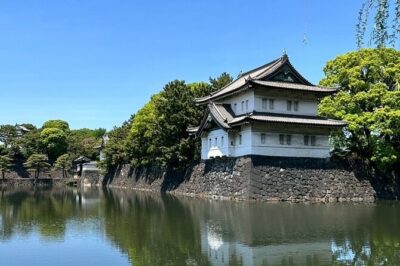
The Fujimi-yagura is scheduled for about fifteen minutes. This surviving watchtower is one of the clearest reminders that Edo Castle was a fortified compound, not merely a residence surrounded by gardens.
The name refers to viewing Mount Fuji, though the important point for your visit is the tower’s defensive role and position within the castle grounds. It helps you imagine a much larger complex than the ruins now reveal.
The castle’s main tower no longer rises above Tokyo. Instead, the tour takes you to the remains of its base later in the route. That absence is worth noticing. You are walking through the footprint of power, not a perfectly restored castle.
I find this more interesting than a complete reconstruction would be. The empty spaces encourage you to picture the lost structures, while the surviving walls and towers show how formidable the original site was.
East Gardens: history softened by plants and water

The Imperial Palace East Gardens receive the longest early visit, about thirty minutes. This is where the tour shifts from military architecture to the quieter beauty of the grounds.
The gardens are carefully arranged, with paths, ponds, trees, flowers, and historic remains sharing the same space. Their seasonal appearance will change during the year, so the visual experience is not fixed. Spring flowers, summer greenery, autumn color, and winter structure each give Ninomaru Garden a different mood.
One practical benefit is the break in pace. After gates and walls, you can slow down and look around. A short pause during the walk may also be possible, and one family specifically appreciated having time to sit and buy a drink from a vending machine.
The gardens are not simply decoration. Their placement within the castle grounds helps explain how rulers separated formal defense from private life. The walk shows you how authority could be surrounded by both force and refinement.
The East Gardens are also the tour’s best chance for photographs. You get water, stonework, plants, and open views rather than only large city buildings. Bring comfortable shoes, since the experience remains a walking tour from start to finish.
Ninomaru Garden and its koi-filled ponds

Ninomaru Garden is the emotional center of the route, with about thirty minutes devoted to it. This was associated with the shogun’s inner garden, and today it offers a peaceful contrast to the political tension of Edo Castle.
The garden includes tranquil ponds filled with koi. Watching the fish move through the water gives you a simple, memorable moment in the middle of a history tour. The ponds also reflect the trees and garden features, making this a good place to stop for photographs without rushing.
Your guide can explain how Japanese garden design uses water, stone, plants, and controlled views. Do not expect a long formal lesson in gardening, but do expect the setting to become more meaningful when you understand that this was part of an elite residential world.
Season matters here. The garden’s look depends on what is flowering or changing color at the time of your visit. Even without peak seasonal displays, the ponds and careful planting give the final part of the walk a calm finish.
The castle tower base and reading the stone walls
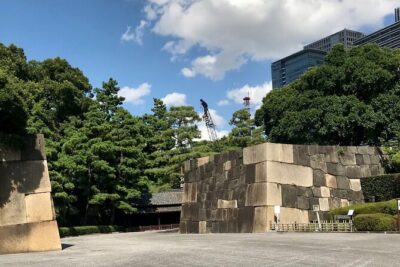
The remains of the castle tower base are among the most useful sights for understanding Edo Castle’s size. The tower itself is gone, but the broad stone foundation shows how large and imposing it once was.
This is where the title’s promise about massive stone walls pays off. Ask your guide to explain how the stones were fitted, how the walls worked with moats, and why the design made a direct attack difficult.
You may find the stones more impressive in person than in photographs because scale is hard to judge on a screen. The walls are not just old masonry. They are evidence of money, labor, engineering, and political fear concentrated in one place.
The guide’s storytelling matters most here. Blake has been praised for using imaginative details to bring the gardens and castle to life. Tony has been praised for explaining events in a clear order and tying them to daily life in Japan today.
What the guides add to the two-hour walk
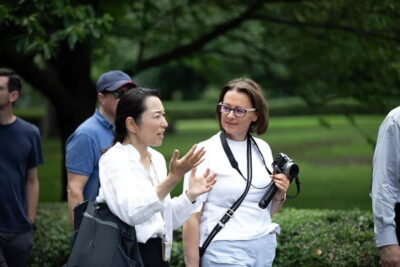
The activity is offered in English, with a live English-speaking guide. The guide assigned to your departure can vary, so you should not book on the assumption that you will receive one particular person. Still, several names have drawn repeated praise for their style.
Tony is noted for broad explanations, clear answers, and practical suggestions for food and other things to do in Tokyo and beyond. Blake is praised for a friendly, interactive manner and a comfortable pace. Jim is described as patient and good at keeping teenagers interested.
Embla, Miguel, Thomas, Mayumi, Dylan, Lasse, Michi, and others have also been praised for making the subject approachable. The common thread is not theatrical performance. It is the ability to explain why the site matters and respond to questions without making the walk feel formal or robotic.
I recommend asking questions. The route covers a lot in two hours, and your guide may be able to adjust the emphasis toward castle defenses, Japanese culture, the imperial household, or modern Tokyo.
Is $16 good value for this Tokyo experience?
At $16 per person, this is inexpensive for a two-hour guided activity in central Tokyo. You are paying for interpretation, not admission to a private interior or a long list of included extras. The main value comes from understanding what you are seeing.
You could walk through the East Gardens independently, but the ruins do not always explain themselves. A guardhouse may look like a small old building. A stone base may look like a platform. The guide connects those objects to the people and systems that once used them.
The price is especially fair for a first visit to Japan. Several hours in a museum could provide more detail, but this tour gives you fresh air, gardens, water, castle remains, and a clear introduction to Japanese political history.
The tradeoff is depth. Two hours cannot cover every era, every building, or every feature of the palace grounds. If you already have a strong grasp of the Tokugawa period, you may prefer a longer specialist tour or an independent visit at your own pace.
Who will enjoy this walk most?
I would choose this tour for first-time visitors who want historical bearings early in a Tokyo stay. It is also a good fit for families, business groups, couples, and solo visitors who prefer a human explanation rather than reading signs at every stop.
History fans will appreciate the connection between shogun rule, castle design, and the transition to modern Japan. Garden lovers will enjoy Ninomaru Garden and the koi ponds, though the tour gives equal weight to military remains and political stories.
The walk suits people who want a manageable activity. At two hours, it is long enough to feel substantial but short enough to fit around lunch or another Tokyo sight. You will need to walk outdoors, so comfortable footwear and clothing suited to the day are sensible.
The tour is less suitable if you want to enter the current imperial residence, see a fully restored castle interior, or spend an entire afternoon taking photographs. It is also not ideal for anyone hoping to avoid all walking.
Useful booking details
You can cancel up to 24 hours before the activity for a full refund. A reserve-now, pay-later option is also available, which helps if your Tokyo schedule is still shifting.
Starting times vary, so check availability for your chosen date. The meeting point is Starbucks Kokyo Gaien at Wadakura Fountain Park, and the tour finishes back there.
If you have mobility needs, the activity is identified as wheelchair accessible. The only included service is the guided walking tour itself, so plan separately for drinks, food, and any other palace-area visits.
Should you book the Imperial Palace and Shogun Walking Tour?
Book it if you want the East Gardens to make sense, not just look pretty. For $16, you get a focused route through Ote-Mon Gate, the Hyakunin Bansho Guardhouse, Fujimi-yagura, the castle tower base, Ninomaru Garden, and the koi ponds, with an English-speaking guide tying the pieces together.
I would especially recommend it near the start of your Tokyo visit. The tour gives you a useful framework for Japanese history and may help you understand the city’s modern layout and culture. It is also a good choice for families and mixed-age groups because the pace is manageable and the subject can be explained at different levels.
Skip it if your priority is palace interiors or a long, unhurried garden visit. Otherwise, this is a calm, well-priced way to see where power was actually exercised and to leave Tokyo’s most famous palace grounds with more than photographs.
FAQ
How long does the Imperial Palace and Shogun Walking Tour last?
The tour lasts two hours.
What language is the tour offered in?
The tour is conducted in English with a live English-speaking guide.
Where does the tour meet?
The meeting point is in front of Starbucks Kokyo Gaien at Wadakura Fountain Park. The coordinates are 35.6830391, 139.7614181.
Where does the tour finish?
The tour returns to the starting point at Starbucks Kokyo Gaien Wadakura Fountain Park.
What will I see on the tour?
You will visit Ote-Mon Gate, the Tokyo Imperial Palace grounds, Hyakunin Bansho Guardhouse, Fujimi-yagura, the Imperial Palace East Gardens, and Ninomaru Garden. The route also includes the remains of the castle tower base, large stone walls, moats, and koi-filled ponds.
Is the tour wheelchair accessible?
Yes. The activity is listed as wheelchair accessible.
Can I cancel for a full refund?
Yes. You can cancel up to 24 hours in advance for a full refund.
Do I have to pay when I book?
No. A reserve-now, pay-later option is available, so you can hold a place without paying immediately.
More Walking Tours in Tokyo
More Imperial Palace & Shogun Tours in Tokyo


More tours in Tokyo we've reviewed











Imperial Palace & Shogun Tours, compared.
 ★ 5.0Tokyo: Imperial Palace and Shogun Historical Walking TourFrom $22
 ★ 4.9Tokyo: Imperial Palace Japanese History Walking TourFrom $32
 ★ 5.0Imperial Palace East Garden and Edo Castle Walking Tour in TokyoFrom $25
 ★ 4.8Tokyo: Imperial Palace East Gardens Walking TourFrom $192h 30m
 ★ 4.5Tokyo: Imperial Palace, Sensō-ji Temple, & Tokyo Tower TourFrom $404 hours
 ★ 5.0Tokyo Castle, Imperial Palace, Shogun & Garden Walking TourFrom $31