
Reviewed · LUNCH EXPERIENCES
Tokyo: Hidden Gems Guided Bike Tour with Lunch
Tokyo’s best stories are not all found on its major avenues. This five-hour ride takes you from Asakusabashi Station through Asakusa, Sumo town, and Fukagawa, linking famous sights with quieter local streets. You get a traffic briefing, a rental bike, lunch, and an English-speaking guide, with a maximum of five people.
I like the mix of old Tokyo and daily worship: you see Kaminarimon and Senso-ji, then visit Fukagawa Fudo-son to watch how a Buddhist temple fits into present-day life. I also like the Edo Museum stop, which gives you a physical sense of how people lived 150 years ago. The main drawback is that five hours on a bike requires reasonable comfort in city traffic, and vegetarian lunch choices may be limited.
In This Review
- Key points to know before booking
- Why this bike tour works for seeing east Tokyo
- Starting at Asakusabashi with a short traffic lesson
- BANDAI figures and the first look at Asakusa
- Kaminarimon and Senso-ji without making them the whole day
- Crossing toward Ryogoku and the Sumida River view
- Lunch in Ryogoku, Tokyo’s Sumo district
- Fukagawa Fudo-son and everyday Buddhist practice
- The Fukagawa Edo Museum and a street-level view of 150 years ago
- A short café stop and return to Asakusabashi
- What the $96 price really covers
- Who will enjoy this ride most
- Should you book the Asakusa hidden-gems bike tour?
- FAQ
- Where does the Tokyo bike tour start and finish?
- How long does the bike tour last?
- Is lunch included?
- What attractions are included?
- Can children join the tour?
- What happens if the weather is bad?
Key points to know before booking
- Small-group cycling: The group is limited to five participants, making it easier to hear the guide and keep the ride moving.
- A useful east Tokyo route: You visit Asakusa, Ryogoku, and Fukagawa rather than spending the whole tour around one landmark.
- Lunch and bike included: The $96 price covers the rental bike, guide, lunch, museum entry, and insurance.
- Guide Shogun: Shogun has led this route at a brisk pace and adds historical context along the way.
- A close look at Edo life: The Fukagawa Edo Museum shows how Tokyo streets and homes looked around 150 years ago.
- Important limits: You must be at least 150 centimeters tall and 15 years old, and the tour can be cancelled in unsafe weather.
Why this bike tour works for seeing east Tokyo
Tokyo is enormous, so a guided ride can save you from spending half a day figuring out train connections between nearby districts. This route links places that make sense together geographically and historically. You start near Asakusabashi, ride toward Asakusa, continue across the Sumida River area to Ryogoku, then head south to Fukagawa before returning to the station.
The ride is not built around checking off every major sight in central Tokyo. Instead, it shows how east Tokyo changes from a major tourist center to a Sumo district, then to an area where temple worship and Edo-era stories take the lead. That gives the tour a clear theme: follow the city’s older neighborhoods by bicycle.
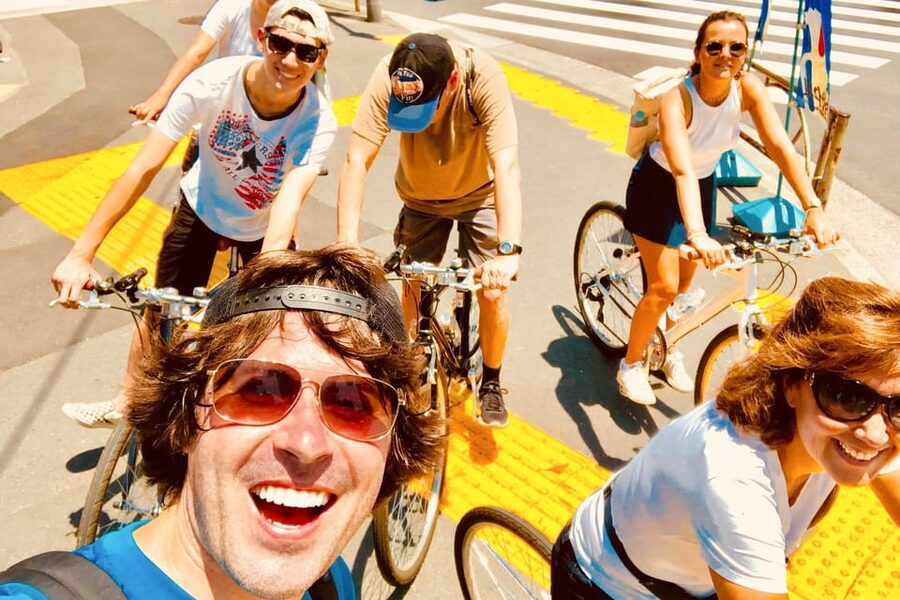
The group limit of five matters here. Tokyo roads can feel complicated, and a small group is easier to manage at intersections and narrow stretches. It also gives you a better chance to ask questions during stops. The tour is conducted in English, and Shogun is specifically praised for keeping the trip moving while still adding historical information.
The pace is worth noting. One review describes Shogun taking the group at speed to fit in a strong historical tour of east Tokyo. That sounds useful if you want to cover ground, but it also means this is not a slow, leisurely pedal with long stretches for taking photos. You should be ready to ride when the group rides and start on time.
Other cycling tours in Tokyo
Starting at Asakusabashi with a short traffic lesson
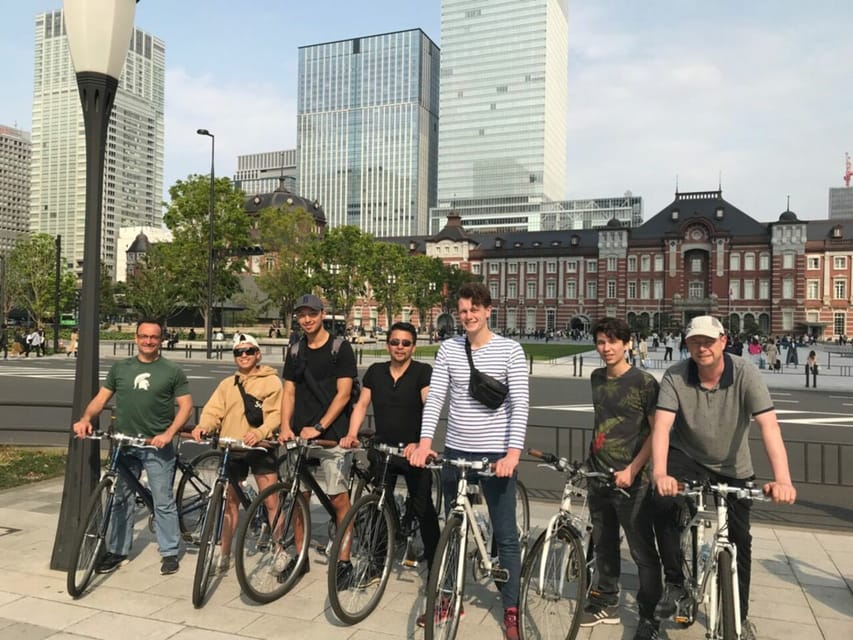
You meet the guide outside Exit A3 of Asakusabashi Station on the Toei Asakusa Line. The tour begins with a short explanation of Japanese traffic rules before you set off. This is a small but valuable step, especially if you are not used to cycling in Tokyo.
The tour welcomes all cycling levels, but that does not mean the route is effortless. You need to be comfortable enough to ride for several hours and follow directions in an urban setting. Comfortable shoes are recommended, while cycling clothing and special footwear are not included.
The bike rental is included, as is insurance. You cannot leave luggage at the bike office, so bring only what you can manage on the ride. Large bags are a poor fit for this activity, and the instructions recommend using station lockers before meeting the guide.
BANDAI figures and the first look at Asakusa
The first stop is the BANDAI head office, where you have about 20 minutes to see the large anime figures outside. Dragon Ball and Doraemon are among the characters featured, making this a fun photo stop even if you are not a serious animation fan.
It is a clever opening because it shows modern Japanese popular culture before the tour turns toward older Tokyo. You do not need to spend much time here, and the stop gives the group a relaxed way to get used to the bikes and the route.
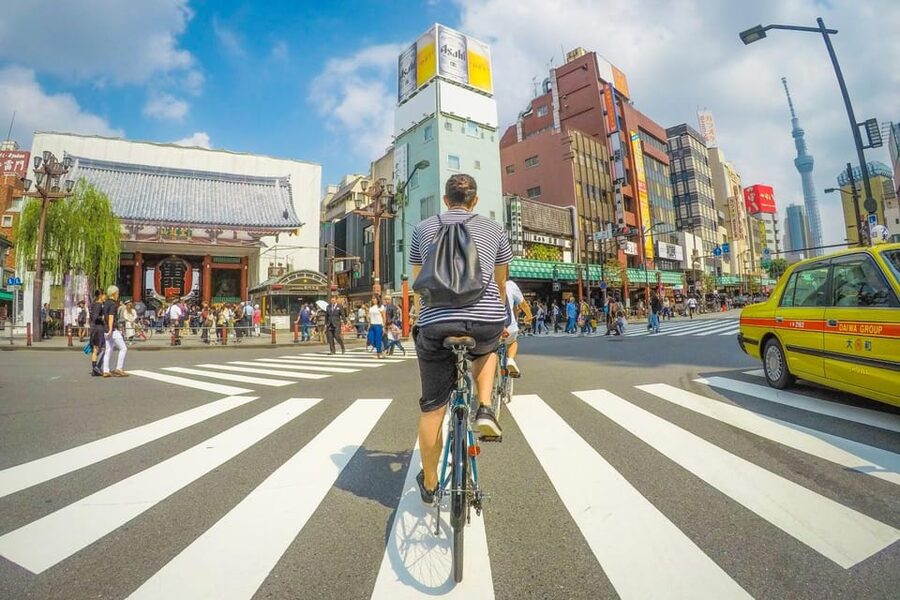
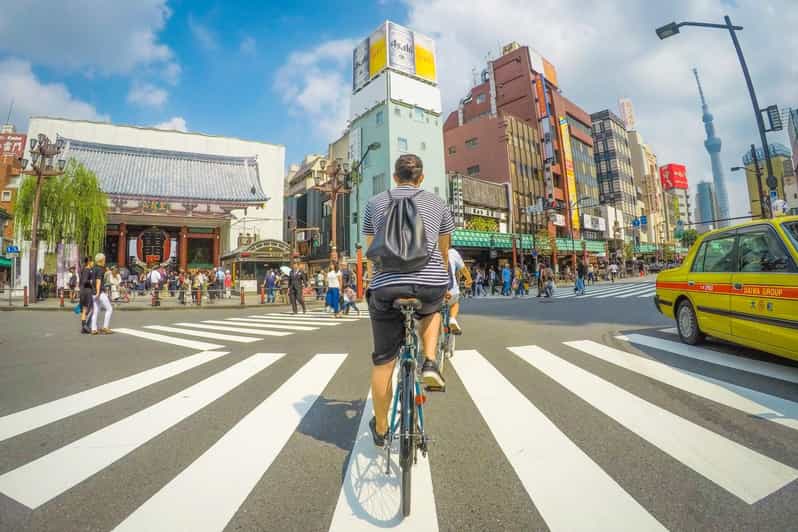
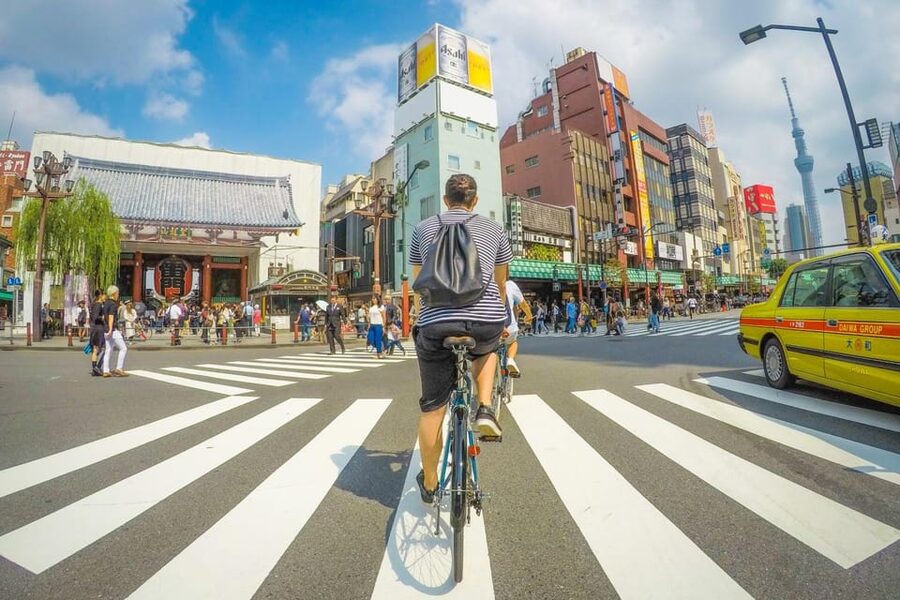
From there, you continue into Asakusa. The area has drawn visitors since the Edo period, from 1603 to 1868, and it remains one of Tokyo’s most recognizable historic districts. The guide helps connect the streets and buildings to the older role of the neighborhood rather than leaving you with only a quick photo opportunity.
Kaminarimon and Senso-ji without making them the whole day
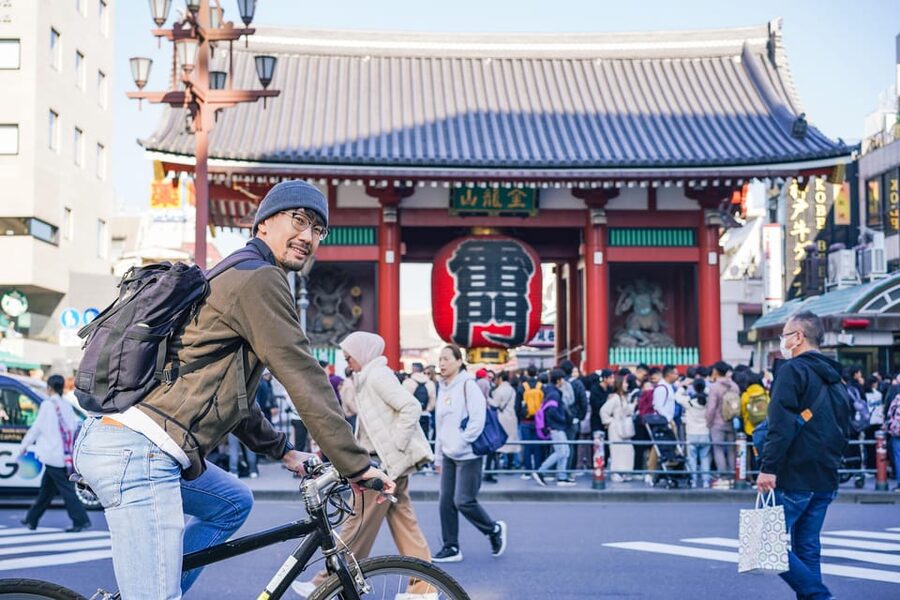
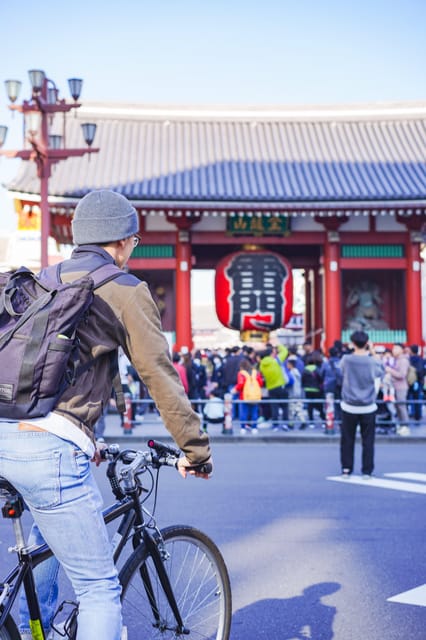
Kaminarimon, the Thunder Gate, receives about 10 minutes. It is one of Asakusa’s most familiar sights, marked by its huge lantern and strong visual entrance to the temple district. Ten minutes is enough for a photo and a quick explanation, but not enough for a long stop in front of every detail.
You then spend about 30 minutes at Senso-ji Temple. This is the best-known Buddhist temple in Asakusa and one of the busiest places on the route. The point of doing it by bike is not that the temple will be empty. Rather, the ride lets you reach the area efficiently and then move on to less visited parts of east Tokyo.
I appreciate that the tour does not pretend Asakusa is a secret corner of the city. Kaminarimon and Senso-ji are major sights, and you will share them with plenty of other people. The value comes from putting these landmarks into a wider route that continues beyond the usual temple visit.
Crossing toward Ryogoku and the Sumida River view
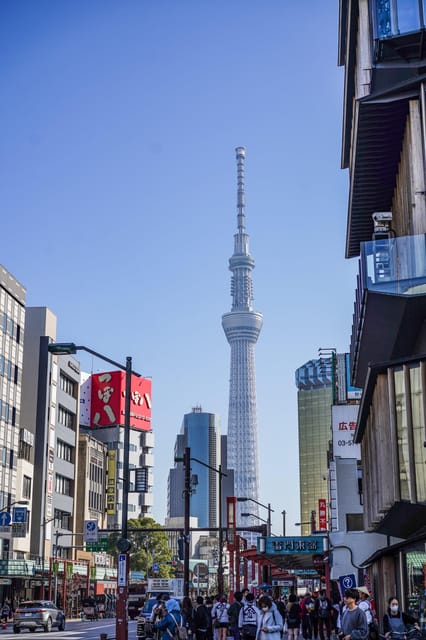
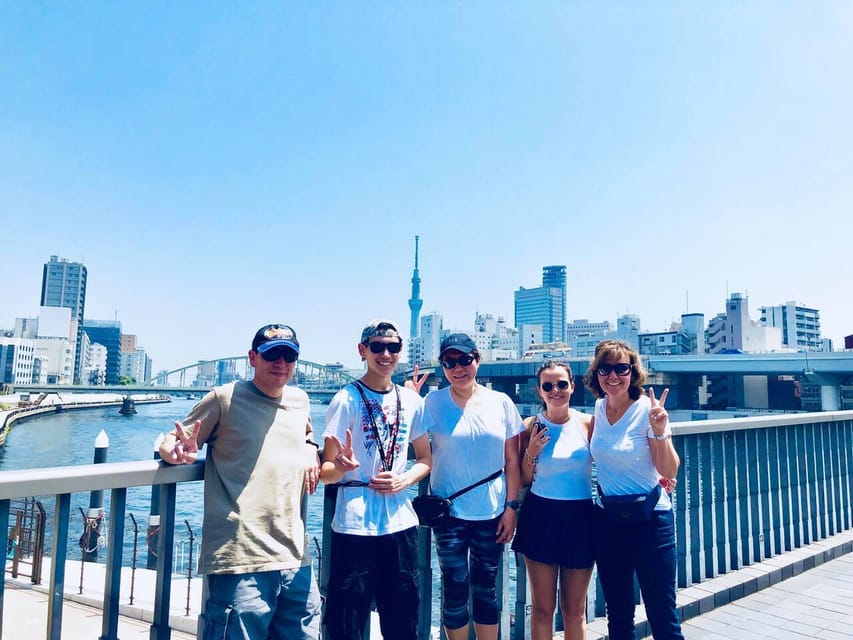
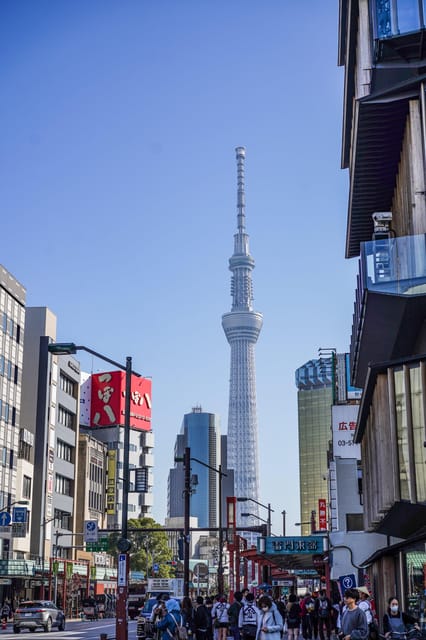
After Asakusa, you ride across a scenic bridge with views of the Sumida River and Tokyo Skytree. At 634 meters, Skytree is a striking reference point on this part of the route. The view gives you a sense of east Tokyo’s scale while the bicycle keeps the experience outdoors and active.
This is one of the moments when cycling adds something that a train ride cannot. You see the river, bridge, tower, and changing neighborhoods in one continuous movement. You also avoid the stop-and-start feel of a long walking route between districts.
The exact order can change because of traffic, weather, or local operating conditions. That flexibility is sensible in Tokyo, but it means you should not treat each stop time as fixed. The listed schedule totals roughly three hours and 40 minutes at stops, leaving the rest of the five-hour tour for riding and transitions.
Other guided tours in Tokyo
Lunch in Ryogoku, Tokyo’s Sumo district
Ryogoku is known as Sumo town, and the tour pauses here for a short walk around the area followed by lunch at a local restaurant. Lunch lasts about 45 minutes and is included in the price, which makes the middle of the tour a useful break from cycling.
The Sumo connection gives Ryogoku a different character from Asakusa. Here, the historical focus shifts from temple streets and old-town sightseeing to Japan’s national sport. The supplied details do not specify the restaurant or exact menu, so you should think of this as a local meal included in the tour rather than a guaranteed specialty dining experience.
Vegetarian diners should plan carefully. The tour information warns that many Japanese restaurants are not fully prepared with vegetarian menus, so choices may be limited. If you need a strict vegetarian meal, contact the operator before booking rather than assuming a broad menu will be available.
One strong practical point is the lack of a hard-sell warehouse stop. Some city tours add shopping detours that eat into your sightseeing time. This experience keeps the route focused on neighborhoods, food, temples, and the museum.
Fukagawa Fudo-son and everyday Buddhist practice
After lunch, you cycle to Naritasan Fukagawa Fudo-do, also called Fukagawa Fudo-son. The visit lasts about 35 minutes. Here, the emphasis is on seeing a Japanese Buddhist temple and learning how people worship in daily life.
That distinction matters. At Senso-ji, the setting is famous and crowded. Fukagawa Fudo-son gives the tour another view of religious life, one that is less about a landmark entrance and more about how a temple functions for people who live nearby.
A guide is especially useful at a place like this. Without context, a visitor can easily miss the meaning of the rituals, layout, and acts of worship. You should still be respectful, follow the guide’s instructions, and remember that this is an active religious site rather than a stage set for sightseeing.
The Fukagawa Edo Museum and a street-level view of 150 years ago
The Fukagawa Edo Museum is the tour’s clearest history lesson. You spend about 45 minutes inside, looking at a recreation of Edo-era streets and learning how people lived around 150 years ago.
This stop helps put the earlier parts of the route into focus. Asakusa’s long popularity, Ryogoku’s older identity, and Fukagawa’s temple life all become easier to understand when you can see the scale of homes, streets, and neighborhood life from the period.
The museum entry fee is included. That improves the value of the tour because you do not have to choose between paying for an extra museum and staying within your planned budget. Forty-five minutes is enough for a guided introduction, though anyone who enjoys reading every display may want more time than the schedule allows.
The museum also breaks up the outdoor portion at the right point. By then, you have been riding, sightseeing, and eating. A focused indoor stop gives you a chance to rest while adding substance to the day.
A short café stop and return to Asakusabashi
The route includes a 15-minute stop at a local café before you return to Asakusabashi Station. The information does not state whether a drink is included, and additional food and drinks are not part of the package, so carry some spending money.
The café stop is brief, but it gives you a final pause before the ride back. Since the tour ends where it began, you do not need to arrange a separate transfer from Fukagawa or the museum. That is useful if you have dinner plans or another activity in Tokyo afterward.
Allow a little breathing room after the scheduled finish. Traffic, weather, and the group’s pace can affect the order and timing. The operator is clear that the group leaves on time, and if you arrive late and miss it, you cannot join later, reschedule, or receive a refund.
What the $96 price really covers
At $96 per person, this is not the cheapest way to see Asakusa. You could visit the temple district independently for far less. The price makes more sense if you want several districts connected by bike, an English-speaking guide, lunch, a rental bike, insurance, and entry to the Fukagawa Edo Museum.
The small group also adds value. With no more than five participants, the guide can explain traffic rules, keep the group together, and answer questions more easily than on a large bus tour. You are paying for structure and access to several parts of east Tokyo in one half-day, not just transportation between two sights.
I would book it if you are trying to understand how different east Tokyo neighborhoods relate to one another. I would skip it if you mainly want extended time at Senso-ji, a quiet photography session, or a fully flexible day.
Who will enjoy this ride most
This tour fits adults and older teenagers who like active sightseeing and can manage a five-hour outing. Children under 15 cannot join, and everyone must be over 150 centimeters tall. The route welcomes all cycling levels, but city riding still calls for attention and basic confidence.
It is a good match for a first visit to Tokyo if you want a guided orientation to Asakusa, Ryogoku, and Fukagawa. It also works for a repeat visit because the route moves beyond the standard central Tokyo circuit.
You should bring comfortable shoes and avoid bringing luggage. Wear practical clothes that let you pedal easily. Since the tour may be cancelled in unsuitable weather, check the forecast and consider your own travel insurance before participating.
Should you book the Asakusa hidden-gems bike tour?
Book this experience if you want history with movement. The route gives you famous Asakusa landmarks, a river and Skytree view, Sumo district context, Buddhist worship, an Edo-era museum, and lunch in one organized outing. Shogun’s brisk guiding style suits you if you prefer covering ground and learning as you go.
Think twice if vegetarian dining is essential, if you dislike cycling in city traffic, or if you want to linger at each stop. For the right pace and interests, the included bike, meal, museum ticket, insurance, and small group make $96 a fair price for a focused introduction to east Tokyo.
FAQ
Where does the Tokyo bike tour start and finish?
The tour starts outside Exit A3 of Asakusabashi Station on the Toei Asakusa Line. It ends back at the same meeting point.
How long does the bike tour last?
The activity lasts five hours. Starting times vary, so you need to check availability when booking.
Is lunch included?
Yes. Lunch at a local restaurant in the Ryogoku area is included. Additional food and drinks are not included.
What attractions are included?
The route includes the BANDAI head office, Kaminarimon, Senso-ji Temple, Naritasan Fukagawa Fudo-do, and the Fukagawa Edo Museum. Museum entry is included.
Can children join the tour?
Participants must be at least 15 years old and taller than 150 centimeters, or about 4 feet 11 inches.
What happens if the weather is bad?
The tour may be cancelled for safety reasons in unsuitable weather. The itinerary order may also change because of weather, traffic, or local operating conditions.
More Lunch Experiences in Tokyo

More Guided Tours in Tokyo
More Cycling Tours in Tokyo
More tours in Tokyo we've reviewed

Lunch Experiences, compared.
 ★ 4.5Tokyo: Mt.Fuji & Lake Kawaguchiko 1-Day Bus Tour w/Optional LunchFrom $77
 ★ 4.6From Tokyo: Snow Monkey 1 Day Tour with Beef Sukiyaki LunchFrom $1511 day
 ★ 4.8Tokyo: Sumo Experience and Chanko Nabe LunchFrom $95
 ★ 4.5Tokyo: Tsukiji Fish Market Tour with 6 Stops & Seafood LunchFrom $943 hours
 ★ 4.6Tokyo: 1 Day Bus Tour with Meiji-Jingu,Odaiba,lunch&SkytreeFrom $839 hours - 570 minutes
 ★ 5.0Mt. Fuji, Oishi Park & Arakurayama Pagoda Bus Tour with LunchFrom $99