
Reviewed · E-BIKES
3h Tokyo E-Bike Tour: Hidden Gems, and Local Life with guide
Tokyo makes a lot more sense from a bicycle seat. In three hours, this small-group ride links major sights with ordinary streets, old shopping areas, office districts, and local corners that are easy to miss from a train. The e-bike saves your legs, while guides such as Yo, Jenny, Ted, Take, and Kazu add the local context.
I like the choice of two different routes: the morning ride covers Tokyo Station, the Imperial Palace, Ginza, Tsukiji, and Nihonbashi, while the afternoon trip heads toward Akihabara, Kappabashi, Asakusa, and Ryogoku. I also like the small groups, with no more than six people per booking, which makes it easier to ask questions and stay together.
The catch is simple: you need to be comfortable riding on busy city streets. Tokyo traffic can be demanding, and the summer heat is serious. This is not a sightseeing bus with a quick look out the window. You must ride a bicycle, follow the guide, and pay attention.
In This Review
- Key points to know before you book
- Starting near Kanda with a useful city overview
- The morning ride: Tokyo Station, the Imperial Palace, and Tsukiji
- Tokyo Station and Marunouchi
- Imperial Palace moat and Otemon Gate
- Ginza backstreets and Tsukiji
- Nihonbashi and local lanes
- The afternoon ride: Akihabara, Asakusa, and sumo country
- Akihabara’s youth culture
- Kappabashi Tool Street
- Asakusa and Tokyo’s oldest temple setting
- Ryogoku and the sumo district
- Why the e-bike changes the experience
- Guides, group size, and the feel of the ride
- Price, timing, and practical value
- Is this Tokyo e-bike tour right for you?
- FAQ
- Where does the Tokyo e-bike tour start and finish?
- How long is the experience?
- What is included in the price?
- Is food included?
- What age and height requirements apply?
- What happens if it rains?
Key points to know before you book
- Two routes, two different Tokyos: Morning brings grand civic buildings, palace grounds, Ginza, and Tsukiji. Afternoon brings pop culture, cooking tools, temples, sumo territory, and older neighborhoods.
- Electric assistance makes a long city ride manageable: The bikes help you cover ground without arriving exhausted, especially in hot weather.
- Small groups keep the ride personal: The maximum is six people per booking, though other participants may join.
- Local guides shape the experience: Yo, Jenny, Ted, Take, Kazu, Yoshiko, Ninja, and other guides lead rides, with a strong focus on history, safety, and daily life.
- The backstreets are the real reward: You may pass through local lanes, residential areas, small bars, and roads that are practical by bike but awkward by train.
- Weather and fitness matter: Rain can cancel the ride, and you must be at least 147 centimeters tall and able to ride a bicycle.
Starting near Kanda with a useful city overview
The meeting point is Cycling Holiday Tokyo, about a minute from the west exit of JR Kanda Station. The shop has a restroom, waiting area, and luggage storage for nonvaluable items, which is handy if you are carrying more than you want on the bike.
After fitting a helmet and getting used to the e-bike, you set out with an English-speaking guide. The electric assistance is designed to make riding easier, not to turn the tour into a motorized rush. You still pedal, steer, stop, and keep your eyes on the road.
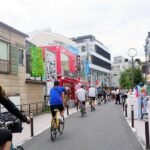
Kanda is a good place to begin. It is a compact downtown district shaped by office workers, narrow streets, and small Japanese-style bars. The neighborhood gives you an early look at a less polished side of central Tokyo. It is not a grand monument stop, but it helps explain how the city works after the big sights fade from view.
A guide may also adjust the route based on traffic, pedestrians, the season, or whether it is a weekday or weekend. That flexibility is useful in Tokyo, where a road can feel calm one hour and crowded the next. It also means the exact stops are not guaranteed in every detail.
Other cycling tours in Tokyo
The morning ride: Tokyo Station, the Imperial Palace, and Tsukiji
The morning route is the better choice if this is your first close look at central Tokyo and you want a strong mix of famous sights and local streets.
You ride through the financial district, where modern office buildings create a sharp contrast with the older parts of Kanda. This section is mainly about seeing Tokyo’s business center from street level. The large buildings are photogenic, but the value comes from moving through the district rather than simply stopping at one viewpoint.
Tokyo Station and Marunouchi
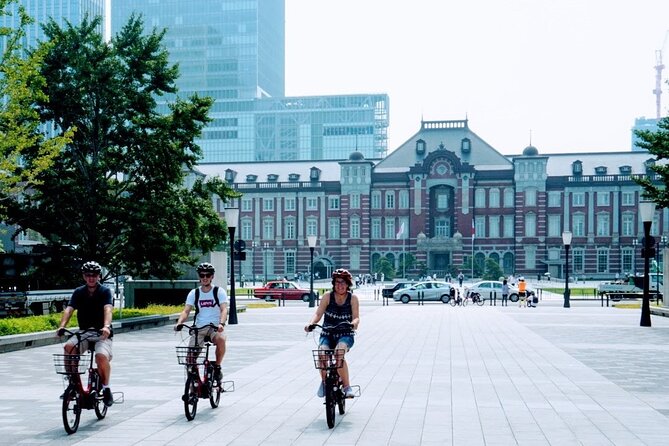
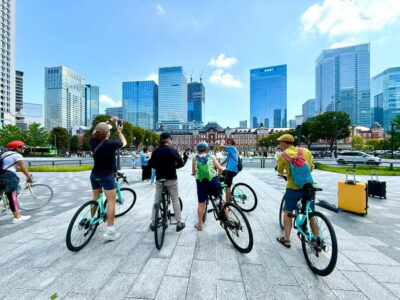
At Tokyo Station Marunouchi Ekimae Hiroba, you view the red-brick Marunouchi station building from Gyoko-dori Street. The guide explains the station’s history, giving the architecture a little more meaning than a quick photograph would.
The stop itself is brief, about five minutes. That is enough for a look and some pictures, but not enough for an interior visit or a long architectural study. I see this as an orientation stop rather than a major attraction visit.
Imperial Palace moat and Otemon Gate
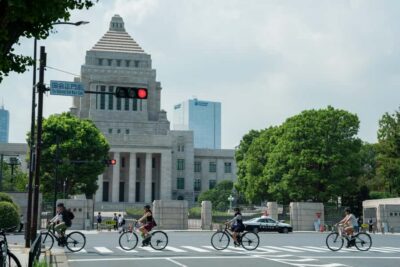
Next comes Kokyo Otemon Gate. From across the moat, you look toward the Fujimi-yagura tower, a traditional watchtower associated with the Imperial Palace grounds. This is one of the ride’s best moments because the open moat and formal gate create breathing room in the middle of central Tokyo.
The route also includes the Imperial Palace East Gardens area, a large green space of roughly 200,000 square meters. You get a sense of how much open ground sits behind the city’s office towers. Depending on the route and conditions, the guide may point out seasonal flowers and explain the setting around the palace.
At Sakuradamon, you pass through one of the famous traditional castle gates. These stops work well together: moat, tower, gate, and garden show the former castle district as a connected place instead of a list of isolated photo points.
Ginza backstreets and Tsukiji
The bike then heads through Ginza. You might ride the main avenues, or the guide may take you through quieter backstreets depending on conditions. That choice matters. The main roads show Ginza’s luxury retail face, while the side lanes offer a more everyday view of the district.
At Tsukiji Outer Market, small old-fashioned food shops line the streets. The stop lasts around ten minutes, so you should not expect a full meal or a long shopping session. Food and drinks are not included, and purchases are your responsibility.
Still, Tsukiji is a useful stop because it connects modern Tokyo with its food culture. You can look at specialty shops, note what locals buy, and ask the guide about Japanese ingredients or eating customs. Several guides also point out food options and local places to eat after the ride, which can help you plan the rest of your day.
Other guided tours in Tokyo

Nihonbashi and local lanes
The morning route also reaches Nihonbashi Bridge. This is a symbolic center of Tokyo, and road distances traditionally begin from this point. The guide explains the bridge’s role and its place in the city’s development.
Between the major stops, the ride uses local streets and passages that are difficult to cover efficiently on foot. This is where the tour earns its keep. You are not simply collecting famous landmarks. You are connecting them through the city’s working neighborhoods, seeing how the grand parts of Tokyo sit beside small shops, homes, and narrow lanes.
The afternoon ride: Akihabara, Asakusa, and sumo country
Choose the afternoon route if you want a stronger dose of Tokyo’s pop culture, traditional neighborhoods, and specialist shopping streets.
Akihabara’s youth culture
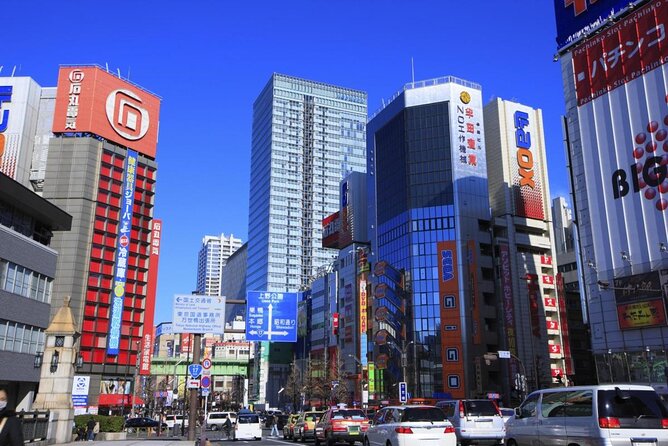
Akihabara is the first major afternoon stop. It is known for anime, games, electronics, maid cafés, and other parts of Japanese youth and geek culture. The ride does not promise a long shopping session or a detailed tour of every subculture. Instead, the guide gives you a brief introduction to why this neighborhood developed such a distinct identity.
Five minutes is a short stop, so think of Akihabara as a visual and cultural snapshot. If the area interests you, make a note to return later on foot. The bike tour helps you identify places worth revisiting, but it cannot replace an afternoon spent browsing the arcades and shops.
Kappabashi Tool Street
Kappabashi Street is a more unusual stop. Shops here sell kitchen utensils, professional cooking tools, Japanese knives, restaurant supplies, and other equipment. You may have time to look around and shop, with the exact time depending on the group and road conditions.
This is one of the most practical stops on the route. You get a look at a specialist shopping street rather than another general tourist district. If you want to buy a knife or kitchen item, ask the guide about timing and packing before you commit. The tour continues, so large or delicate purchases may not be convenient to carry.
Asakusa and Tokyo’s oldest temple setting
Asakusa brings a classic Tokyo scene, with its famous old temple and long connection to traditional city life. The stop lasts about ten minutes, enough for an introduction, photographs, and a quick explanation of temple customs.
One particularly useful part of this stop is learning how to behave at a Japanese temple. A guide may explain rituals and etiquette that you can use during the rest of your Japan trip. That small bit of instruction can make later visits feel less awkward and more respectful.
Again, ten minutes is not enough to explore every lane around Asakusa. Treat this as a first look. You may want to return later for more time at the temple, shops, and food stalls.
Ryogoku and the sumo district
The afternoon route continues to Ryogoku, the area associated with sumo. If timing is lucky, you might see actual sumo wrestlers. That possibility is appealing, but it is not a promised part of the experience, so do not book the ride solely for that reason.
Ryogoku adds a different layer to the city. After Akihabara’s modern subculture and Asakusa’s temple traditions, sumo country shows another part of Japan’s public identity. The guide can place the neighborhood in context while you ride through it.
The route returns to Nihonbashi before heading back to Kanda. The result is a broad cross-section of Tokyo in a short period, though each stop is necessarily brief.
Why the e-bike changes the experience
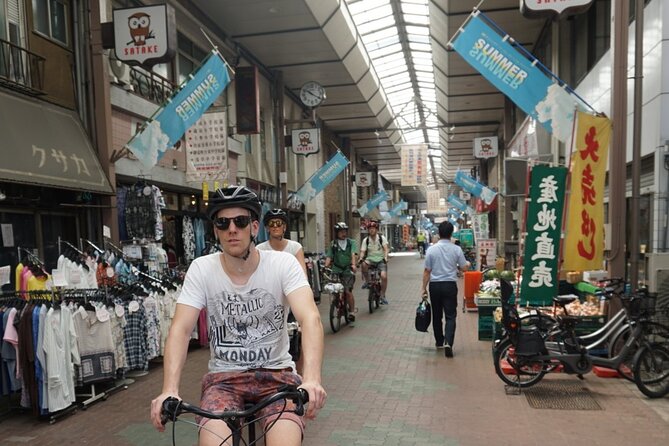
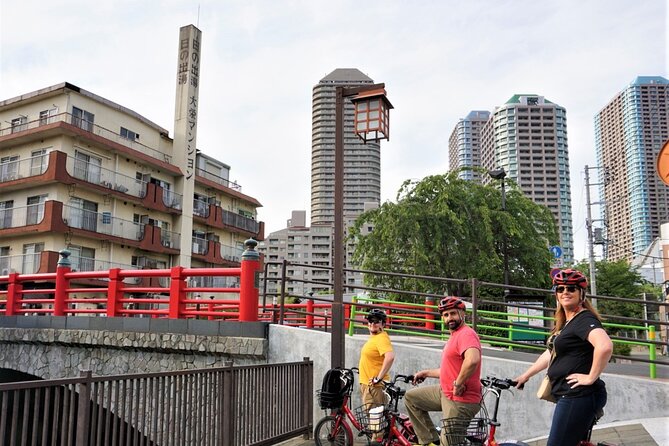
Tokyo is easy to cross by train, but trains do not show you the spaces between stations. A bicycle lets you move through those gaps. You can stop for a photograph, turn into a quieter street, and see the transition from office towers to small homes without repeatedly entering and exiting stations.
The electric assist matters most on a three-hour ride. You still need basic cycling ability, but the motor reduces the effort of covering a large area. This is especially helpful during Tokyo’s hot, humid months. Several riders found the bikes easy to operate, with a front basket useful for water and a small bag.
The e-bike does not remove every physical demand. You must watch traffic, follow signals, stay with the group, and manage the bike around pedestrians. One practical warning: it can be easy to fall behind if you stop watching the guide. Keep a steady eye on the person leading the ride, especially at turns.
Helmets are provided and must be worn. Insurance, simple rain gear, and seasonal items such as winter gloves or summer cooling products are included. You should still bring sunscreen and a towel in summer, plus warm clothes and gloves in winter. An electrolyte drink is a smart choice in July and August.
Guides, group size, and the feel of the ride
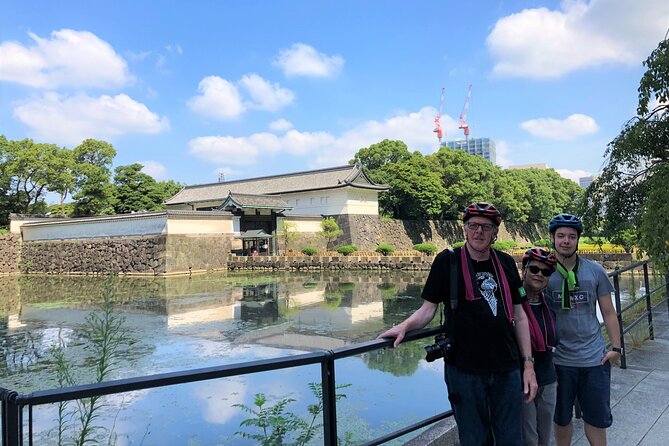
The strongest part of this experience is the guide. Different dates may be led by people such as Yo, Jenny, Ted, Take, Kazu, Yoshiko, Ninja, or other members of the team. Their styles differ, but the ride consistently centers on local history, culture, safety, and conversation.
Yo is repeatedly described as patient and easygoing. Jenny is praised for keeping groups together and for pointing out less obvious places to eat and drink near Ginza. Ted is known for answering questions and taking care with safety. Take mixes history, food, and practical attention, including water and snacks on one ride. Kazu focuses on making the city easy to understand as you move through it.
These details matter because a bicycle tour can become stressful if the guide rides too fast or gives poor instructions. Here, the guide’s role is not just to lead the route. It is to help you read the city and decide where you may want to return later.
The maximum of six people per booking supports that personal feel, though the tour may include other participants. The minimum is two people overall, so a solo booking can still operate if others are scheduled. Most people can participate if they meet the age, height, and cycling requirements.
Children must be at least 12 years old, and the minimum height is 147 centimeters. You cannot join if you do not know how to ride a bicycle. Families with teenagers may find this a good fit, provided everyone can handle city riding.
Price, timing, and practical value
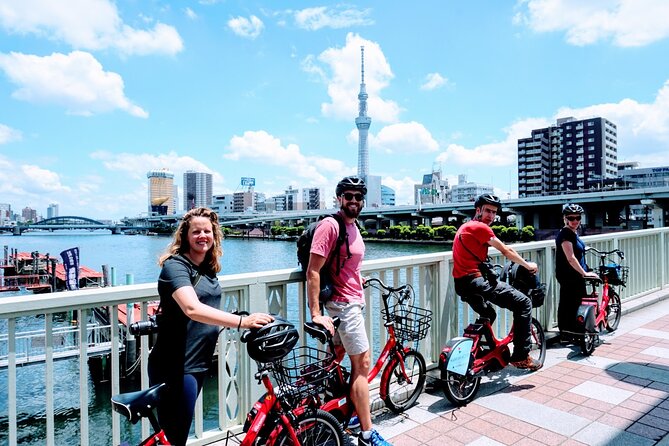
At $63.01 per person, the tour is fairly priced for three hours of bike rental, helmet, English guide, insurance, and route planning. You also get luggage storage for nonvaluable items and simple weather-related equipment.
The value is strongest if you want orientation. In one morning or afternoon, you can identify areas to revisit, learn where the major districts connect, and get advice about food and local streets. A standard walking tour may offer more time at each monument, while a train-based day may cover more distance with less street-level detail. This ride sits between the two.
I would not choose it if you want a slow visit inside museums, temples, or markets. The stops are short, and the focus is movement. I would choose it early in a Tokyo stay, when a broad introduction can help you plan the next few days.
The activity lasts about three hours and starts and ends at the Kanda shop. Morning and afternoon departures use different routes, so check the selected time carefully. Food and drinks cost extra, and any shopping at Tsukiji or Kappabashi is self-paid.
Weather is the main scheduling risk. The operator checks the forecast the day before and may cancel for rain, offering another date or a full refund. If rain begins during the ride, the guide decides whether to continue or return. In extreme summer heat, the tour may also be canceled or stopped for safety, with a refund if the ride ends for that reason.
For a normal cancellation, you receive a full refund if you cancel at least 24 hours before the start time. Last-minute changes are not accepted, so leave yourself some room when planning.
Is this Tokyo e-bike tour right for you?
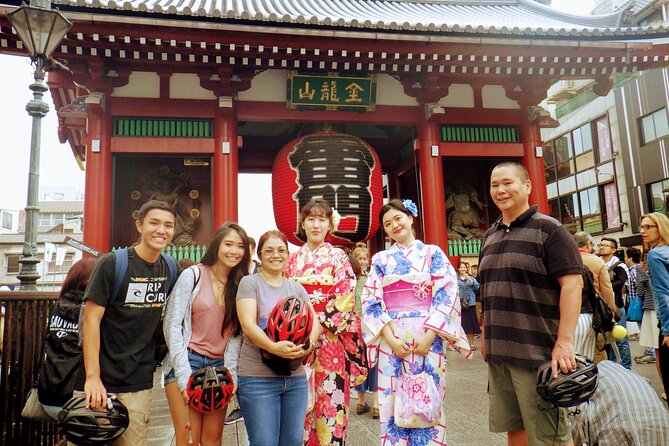
I would book this ride if you want to cover a lot of Tokyo without spending the whole day underground or on foot. It suits first-time visitors who want a clear city overview, returning visitors who want local streets, and families with active children aged 12 and up.
Pick the morning route for the Imperial Palace, Tokyo Station, Ginza, Tsukiji, and Nihonbashi. Pick the afternoon route for Akihabara, Kappabashi, Asakusa, and Ryogoku. If food, tools, and traditional neighborhoods interest you most, the afternoon ride has the more distinctive mix. If you want grand civic Tokyo and palace scenery, choose the morning.
Skip it if you are nervous on busy roads, cannot ride confidently, or dislike hot and humid weather. You should also avoid relying on the tour for long shopping or temple visits, since the schedule keeps moving.
For the right cyclist, this is one of the most efficient ways to get your bearings in Tokyo. The e-bike handles much of the strain, while the guide supplies the local detail that a map cannot. At $63.01, it offers a useful first look at the city and plenty of ideas for where to go next.
FAQ
Where does the Tokyo e-bike tour start and finish?
The tour starts at Cycling Holiday Tokyo, 3-chome-8-6 Uchikanda, Chiyoda City, near the west exit of JR Kanda Station. It ends back at the same meeting point.
How long is the experience?
The tour lasts approximately three hours.
What is included in the price?
The price includes an electric-assist bicycle, helmet, English-speaking guide, insurance, simple rain gear, winter gloves, summer cooling products, and luggage storage for nonvaluable items.
Is food included?
No. Food and drinks are self-paid at the shop or during the route.
What age and height requirements apply?
Participants must be at least 12 years old and at least 147 centimeters tall. You must also know how to ride a bicycle.
What happens if it rains?
The tour may be canceled because of rain, with the option of another date or a full refund. If rain starts during the ride, the guide decides whether to continue or return to the meeting point.
More E-Bikes in Tokyo
More Guided Tours in Tokyo
More Cycling Tours in Tokyo
More tours in Tokyo we've reviewed










E-Bikes, compared.
 ★ 5.0Tokyo Top Highlights 3h Guided E-bike TourFrom $63
 ★ 4.8Tokyo: 3-Hour Bike or E-Bike City Highlights TourFrom $453 hours
 ★ 4.8Tokyo: 3-hour Guided E-Bike Tour of the City’s Hidden GemsFrom $65
 ★ 5.0Tokyo: 3-Hour Bike/E-Bike Tour of the City’s HighlightsFrom $63
 ★ 5.03-Hour Tokyo Private E-Bike Tour Starting from Your HotelFrom $145
 ★ 4.7Tokyo: 3-Hour Bike or E-Bike Tour of City’s Hidden GemsFrom $603 hours