
Reviewed · TOKYO FOOD TOURS
Tokyo West-Side Cycling & Food Tour
Tokyo’s west side feels far removed from the neon center, and that is the point of this 3.5-hour ride. With guide Andy leading the way, you pedal through Koenji, Nakano, and Asagaya on quiet back streets, riverside paths, and ordinary neighborhood lanes most sightseeing routes skip.
I like the small maximum of eight people, which makes it easier to ask questions and stay together. I also like the mix of cycling, local snacks, and lunch, since food gives you a direct way into daily life. The main consideration is that you need to be comfortable riding 12 to 15 kilometers through narrow streets, uneven surfaces, and occasional crowds.
In This Review
- Key points to know before you book
- Why West Tokyo makes a better bike route than central Tokyo
- Starting at Koenji Station with a mamachari
- Koenji and the character of everyday streets
- Along the Zenpukuji River
- Snacks that make local food less intimidating
- A local-style lunch in Nakano or Asagaya
- What Andy adds to the ride
- How difficult is the 12 to 15 kilometer route?
- Rain, timing, and the value of the all-inclusive setup
- Who should book this Tokyo bike tour?
- Should you book the West-Side Cycling and Food Tour?
- FAQ
- Where does the Tokyo West-Side Cycling and Food Tour start?
- Where does the tour finish?
- How long does the tour last?
- How far do you cycle?
- How many people can join the tour?
- What kind of bicycle is provided?
- Are helmets available?
- Is food included?
- Can the tour accommodate dietary restrictions?
- What happens if the weather is bad?
- What is the cancellation policy?
Key points to know before you book
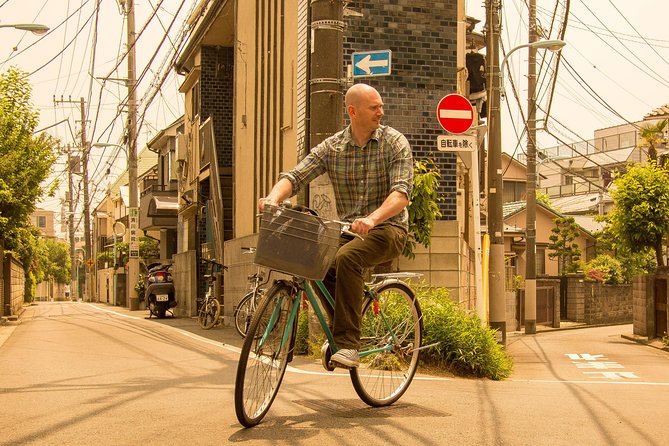
- Ride a real Japanese mamachari: These salvaged city bicycles are modest, practical, and fitted with front baskets for a standard backpack.
- Explore Koenji, Nakano, and Asagaya: The route focuses on local neighborhoods rather than Tokyo’s major sights.
- Eat as you go: Street food snacks and a Japanese-style lunch are included in the price.
- Learn how Tokyo works: Andy talks about housing, schooling, religion, food, bicycles, and ordinary routines.
- Expect a flat urban ride: The route includes back streets, the Zenpukuji River, walking sections, and planned food breaks.
- Plan for four hours: The advertised duration is about 3.5 hours, but the actual outing can run from 3.5 to 4 hours.
Why West Tokyo makes a better bike route than central Tokyo
Tokyo is often introduced through Shibuya crossings, Shinjuku towers, temple gates, and crowded shopping streets. Those places have their value, but they show only one slice of the city.
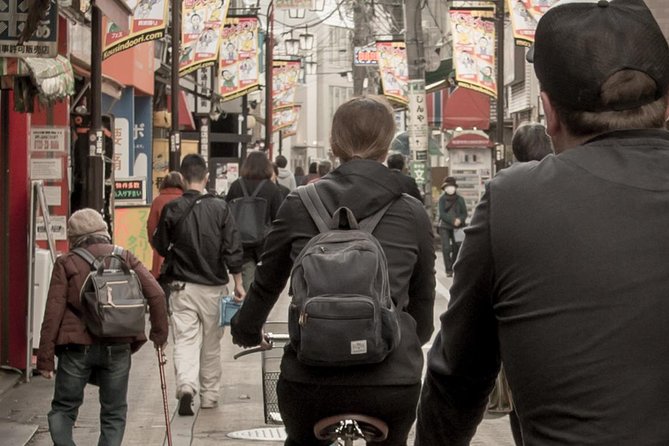
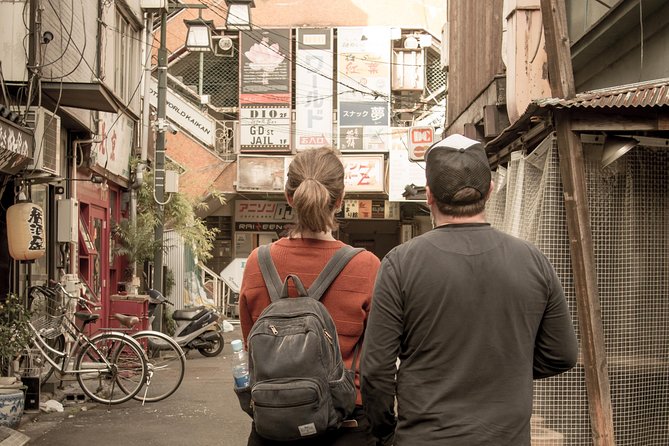
This ride takes you west from the usual sightseeing circuit, into Nakano, Koenji, and Asagaya. Here, the interest comes from the way the city is used. You see narrow residential lanes, small commercial streets, bike parking systems, local eateries, riverside paths, and the small details of neighborhood life.
I like this kind of route because it gives you useful context. Instead of simply pointing at a famous building, Andy can explain how people live in the area, how bicycles fit into the daily routine, and why different parts of Tokyo feel so distinct despite being part of one enormous city.
You will not spend the morning checking off major monuments. The tour specifically avoids grand sightseeing stops and fine dining. That is a strength if you want a calmer, more ordinary side of Tokyo, but it may disappoint you if this is your only free morning and you want famous landmarks.
A few more Tokyo tours and experiences worth a look
Starting at Koenji Station with a mamachari
The meeting point is Koenji Station, at 4-chōme-48-2 Kōenjiminami in Suginami City. The tour ends back at the same place, so you do not need to work out a different return route after lunch.
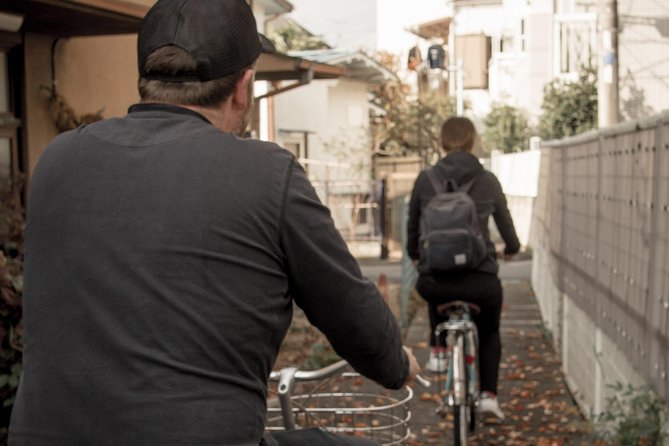
Your bike is a salvaged mamachari, the familiar Japanese city bicycle with an upright riding position and a front basket. These are not sporty road bikes. They are practical neighborhood machines, sometimes creaky or squeaky, but maintained for urban riding.
That detail matters. You are not being placed on a flashy racing bicycle for a fast workout. The mamachari helps you ride at a steady pace and blend into the setting. It also gives the outing a distinctly local feel.
The bikes are Japanese-sized, so height matters. You should be over 140 centimeters, or about 4 feet 7 inches, to ride comfortably. Helmets are available for everyone on request. A standard backpack should fit in the front basket, though you should still keep valuables secure.
The ride is described as mainly flat, but flat does not mean effortless. You need to control a bicycle through narrow streets, uneven surfaces, and potentially crowded areas. Basic urban cycling ability is not optional here. You should already feel comfortable steering, braking, and adjusting your speed around other people.
Koenji and the character of everyday streets
Koenji is one of the first areas where the tour begins to show you a less polished, more lived-in Tokyo. The route uses back streets and smaller lanes, where the reward is not one grand view but a sequence of small observations.
Andy’s role is important here. He has lived in Japan for more than 20 years, and his explanations focus on how local life works rather than memorized sightseeing facts. You can ask about customs, food, housing, schools, religion, work, or anything else you notice along the way.
That open conversation is one of the best reasons to choose a small group. With no more than eight people, you have a fair chance to ask a question without turning the tour into a lecture. The guide can also keep an eye on the group as you move through tight streets.
The route includes walking sections, so this is not three and a half hours of nonstop pedaling. You may stop to look around, talk, eat, and handle practical bits of city cycling. One unusual feature is a chance to experience Tokyo’s bicycle parking systems firsthand, an everyday detail that most visitors never notice.
Along the Zenpukuji River
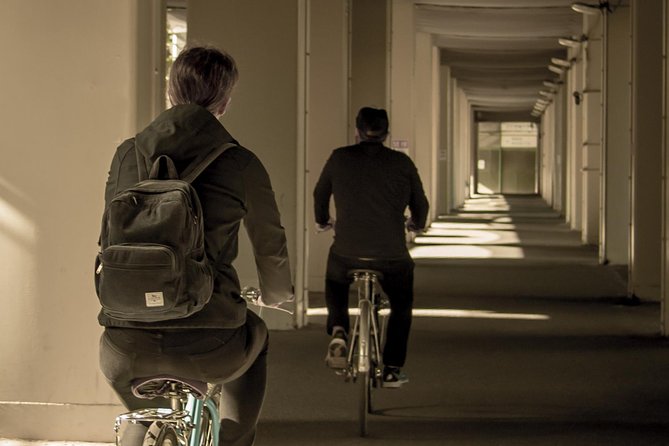
The ride continues toward the Zenpukuji River and its riverside bike paths. This gives the outing a welcome change of pace after the twisting urban lanes.
A riverside route also helps you understand Tokyo’s scale. The city is dense, but it is not one solid block of buildings. Waterways, paths, small green spaces, and residential pockets break up the city in ways that are easy to miss from a train window.
You can coast along this section and take in a quieter side of the west. It is one of the more scenic parts of the route, though you should keep your expectations realistic. This is a neighborhood cycling outing, not a countryside ride or a grand scenic tour.
The pace is designed to keep the group together and allow for stops. That makes it approachable for people with basic cycling skills, but stronger riders should not expect a demanding workout. The appeal is seeing more, not riding faster.
Snacks that make local food less intimidating
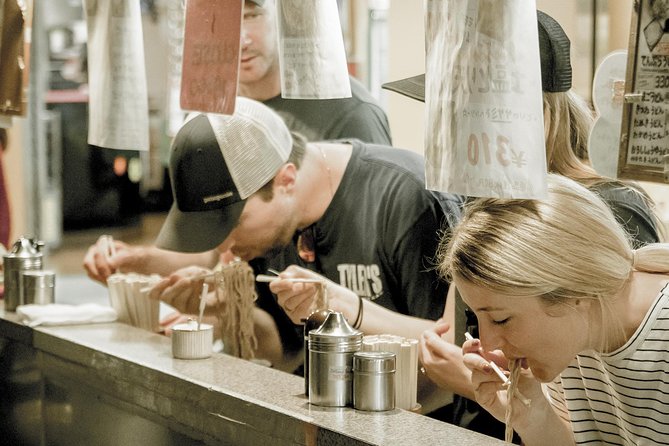
Food is built into the ride rather than added as a rushed stop at the end. Along the route, Andy offers a tailored selection of popular local snacks, giving you the chance to try things you might not recognize or order on your own.
That is valuable in Tokyo, where even a simple counter can feel hard to enter when you do not know the menu or the local routine. The tour takes away some of that uncertainty and gives the food a setting and explanation.
You should expect typical local eateries and casual eating rather than fine dining. The tour description is clear about this. You may find yourself sharing counter space with hungry salarymen, which is part of the point. Lunch becomes a look at how people actually eat during the day, not a formal restaurant event.
The food also has limits. Japanese cuisine often includes meat and seafood, and dashi, a stock used in many dishes, is a common base. Personal tastes, allergies, and dietary restrictions can be difficult to handle at the local eateries used on the route.
If you have strict dietary needs, contact the operator before booking and be prepared for limited choices. This tour is a better fit if you are curious and flexible about food. It is not the safest choice if you require tightly controlled ingredients.
A few more Tokyo tours and experiences worth a look


A local-style lunch in Nakano or Asagaya
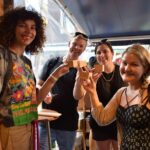
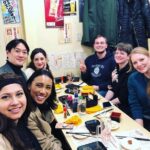
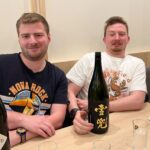
The lunch stop is one of the tour’s anchors. Rather than sending you to a restaurant selected for international tourism, the route takes you to an ordinary local-style place. The exact food selection can vary, since the tour is shaped by the day’s conditions, the group, and the local stops available.
That flexibility is part of the charm, but it also means you should not book this expecting a fixed tasting menu. The included meal adds real value to the $99.49 price, especially because it comes with snacks and a guide who can explain what you are eating.
The three neighborhoods give the meal useful context. Nakano, Koenji, and Asagaya each have their own feel, and the ride connects them through the spaces between the station areas. You are not simply transported from one restaurant to another. You see the streets, shops, lanes, and local routines that surround them.
I would think of lunch as a cultural stop as much as a food stop. It gives you a chance to watch how a casual Japanese eatery functions and to ask questions while the bikes are parked.
What Andy adds to the ride
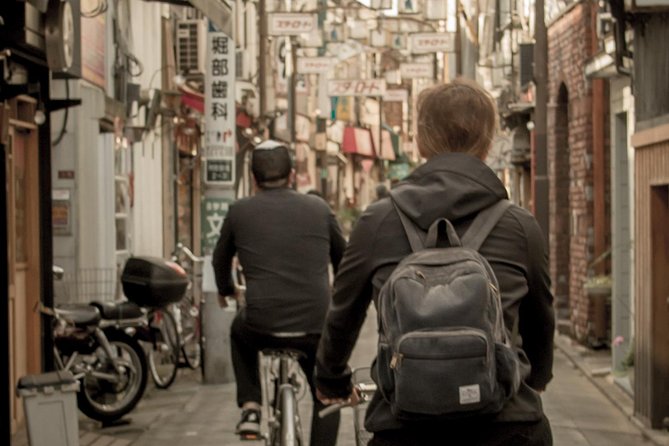
Many city bike tours succeed or fail based on the guide. Here, Andy is central to the experience. His style is friendly, social, and conversational, with a strong focus on helping you feel at ease on the bikes.
He is also an Australian from Melbourne, which may make conversation especially easy for English-speaking visitors. His long residence in Japan gives him a useful position: he can explain local customs clearly while also understanding the questions that outsiders tend to ask.
The strongest part of his guiding is the range of subjects. Expect more than directions and place names. The ride can touch on Japanese culture, daily routines, housing, schooling, religion, food, work, and bicycle use.
Andy also gives practical help beyond the route. One review describes receiving a follow-up message with details about the food sampled and suggestions tailored to personal interests. That kind of after-tour help can be useful early in a Tokyo visit, when you are still deciding how to spend the rest of your time.
How difficult is the 12 to 15 kilometer route?
You should be a confident city cyclist, but you do not need advanced cycling skills. The route is mainly flat and includes regular breaks, walking, food stops, and a relaxed pace.
The challenge comes from the setting. Tokyo’s west-side streets can twist sharply, narrow without warning, and carry pedestrians, bicycles, and local traffic. Uneven surfaces also require attention. You need to listen to Andy’s instructions and ride defensively.
Families can take part if everyone meets the height and cycling requirements. An 11-year-old has completed the outing successfully, but the tour is not a passive sightseeing trip. Children need to manage their own bicycles for the full route and stay alert around other road users.
You should wear comfortable clothing and shoes suited to pedaling and walking. The supplied information does not specify a dress code, but an outdoor activity is best approached with practical clothing rather than formal sightseeing wear.
Rain, timing, and the value of the all-inclusive setup
This is an all-season, all-weather outing, and the ride generally proceeds in light rain. Basic ponchos are provided if needed. Still, weather can affect your comfort, the speed of the group, and the finishing time.
The stated duration is approximately 3 hours 30 minutes, with a rough real-world range of 3.5 to 4 hours. Group size, weather, eating speed, and cycling pace all affect the finish. Do not schedule a tight reservation immediately afterward.
At $99.49 per person, the price is not cheap for a half-day activity. But it includes the bicycle, cycling liability insurance for the cycling portion, snacks, lunch, and a small group capped at eight people. You are also paying for route planning and local interpretation in neighborhoods that are less simple to explore on a first visit.
I see the value most clearly if you are interested in ordinary Tokyo life and want food included. If you mainly want exercise, a cheaper bicycle rental may suit you better. If you want famous sights, your money may be better spent on a conventional city sightseeing tour.
Group discounts and mobile ticketing are available. The tour is near public transportation, and starting and ending at Koenji Station keeps the logistics simple.
Who should book this Tokyo bike tour?
I would recommend it to first-time visitors who want an easy introduction to the city beyond Shibuya and Shinjuku. It also works well near the beginning of a trip, when Andy’s local advice can help you make better choices for the days ahead.
It suits couples, families with cycling-ready children, and small groups of friends. Solo visitors can also fit in comfortably, since the maximum group size keeps the social side manageable.
You should book it if you enjoy:
- Riding at a relaxed pace
- Casual Japanese food
- Asking questions about daily life
- Small groups
- Quiet streets and local neighborhoods
- Exploring places you might not find alone
Think twice if you dislike cycling in tight urban spaces, need a guaranteed menu, want formal sightseeing commentary, or have a hard deadline after the tour.
Free cancellation is available up to 24 hours before the start time for a full refund. Changes or cancellations within 24 hours are not accepted for a refund. If poor weather or an insufficient number of bookings causes the tour to be canceled, you are offered another date or a full refund.
Should you book the West-Side Cycling and Food Tour?
Book it if you want to understand Tokyo through its neighborhoods, food counters, river paths, and daily routines rather than through its headline attractions. The combination of a local guide, modest mamachari bicycles, included food, and a maximum of eight people creates a personal half-day outing.
The key question is simple: are you comfortable riding 12 to 15 kilometers through narrow streets? If yes, this is a strong choice for an authentic, low-key look at west Tokyo. If not, choose a walking or sightseeing tour instead.
FAQ
Where does the Tokyo West-Side Cycling and Food Tour start?
The tour starts at Kōenji Station, at 4-chōme-48-2 Kōenjiminami, Suginami City, Tokyo 166-0003, Japan.
Where does the tour finish?
The activity ends back at the meeting point near Kōenji Station.
How long does the tour last?
The advertised duration is about 3 hours 30 minutes. The outing can take roughly 3.5 to 4 hours depending on the group, weather, eating speed, and cycling pace.
How far do you cycle?
You should expect to cycle approximately 12 to 15 kilometers, or 7.5 to 9.5 miles.
How many people can join the tour?
The maximum group size is eight people.
What kind of bicycle is provided?
You ride a salvaged Japanese mamachari bicycle. Each bike has a front basket that can hold a standard-sized backpack.
Are helmets available?
Yes. Helmets can be provided for all participants on request.
Is food included?
Yes. The tour includes local snacks and a Japanese-style lunch.
Can the tour accommodate dietary restrictions?
Japanese food often includes meat, seafood, and dashi. Since the tour visits typical local eateries, personal tastes, allergies, and dietary needs can be difficult to accommodate.
What happens if the weather is bad?
The tour generally proceeds in rainy weather, and basic ponchos are provided. If the experience is canceled because of poor weather, you are offered a different date or a full refund.
What is the cancellation policy?
You can cancel at least 24 hours before the start time for a full refund. Cancellations or changes made less than 24 hours before the start time are not accepted for a refund.
More Cycling Tours in Tokyo
More Food Experiences in Tokyo
More Tokyo Food Tours in Tokyo
More tours in Tokyo we've reviewed











Tokyo Food Tours, compared.
 ★ 5.0Tokyo: Shinjuku Food Tour (13 Dishes at 4 Local Eateries)From $86
 ★ 4.9Tokyo: Shinjuku Food Tour (15 Dishes and 4 Eateries)From $853 hours
 ★ 5.0Best of Shinjuku: Izakaya Food Tour (4 Stops, 14+ Tastings)From $92
 ★ 5.0Tokyo Night Foodie Tour in Shinjuku – Seasonal Sushi, Wagyu BeefFrom $111
 ★ 5.0Eat and Drink Like a Local: Tokyo Ueno Food Tour-Taverns&RamenFrom $95
 ★ 5.0Tokyo: Shibuya Food Tour (13 dishes and 4 Eateries)From $77