
Reviewed · E-BIKES
Tokyo Top Highlights 3h Guided E-bike Tour
Tokyo is easier to understand from a bicycle seat. This three-hour e-bike tour links grand landmarks with quiet shrines, local streets, gardens, and waterfront views that are hard to connect on foot. You cover much more ground than on a walking tour, yet the motor keeps hills and long roads manageable.
I like the choice of three routes, and I like the small maximum of six people. Guides including Hiro, FK, Shinobu, Miky, and Takuro have been praised for clear explanations, humor, photography, and careful support. The main catch is that much of the ride takes place on city streets, so you need basic cycling skill, steady attention, and comfort around traffic.
In This Review
- Key points to know before booking
- Why an e-bike is a smart way to see Tokyo
- Starting in Tsukiji with a small group
- Tokyo City Route: stations, sweets, gardens, and shrines
- Tokyo Station
- Ningyocho Street
- Kiyosumi Teien
- Tomioka Hachimangu
- Tokyo Bay Route: local shrines, Odaiba, and evening views
- Sumiyoshi Shrine and Tsukuda Tendai Jizoson
- Skytree, teamLab Planets, and Tokyo Big Sight
- Aqua City Odaiba and the Gundam statue
- Tokyo Tower Route: temples, a steep shrine, and Hibiya Park
- Zojo-ji Temple and Tokyo Tower
- Atago Shrine and its uphill road
- National Diet Building, Imperial Palace, and Hibiya Park
- Guides, pace, and the personal feel
- Price, fitness, and who should book
- Weather, timing, and practical planning
- Should you book the Tokyo e-bike tour?
- FAQ
- Where does the Tokyo e-bike tour start and finish?
- How long does the tour last?
- Which Tokyo routes can I choose?
- What equipment is included?
- Are children allowed to join?
- Do I need to be fit to join?
- What happens if it rains?
Key points to know before booking

- Three very different routes: Pick Tokyo City for gardens and older neighborhoods, Tokyo Bay for sunset and lights, or Tokyo Tower for central sights and government landmarks.
- A real small-group ride: The tour has a maximum of six people, allowing guides to adjust the pace and answer questions.
- Easy-to-use e-bikes: The bikes require little technical skill and reduce the effort on longer rides and uphill sections.
- Local stops, not just famous photo points: Ningyocho sweets, small shrines, temples, Hibiya Park, and local streets add texture to the big-name sights.
- A snack is included: You receive a Japanese convenience snack or traditional sweet during the ride, though allergies and vegetarian needs cannot be accommodated.
- Traffic is part of the deal: You ride on public roads. Listen closely to the guide, keep a safe distance, and never follow through a red light.
Why an e-bike is a smart way to see Tokyo
Tokyo is huge. Its most interesting areas are spread across a city that can take time to cross by train, especially when you want to connect temples, parks, waterfront districts, and modern landmarks in one outing.
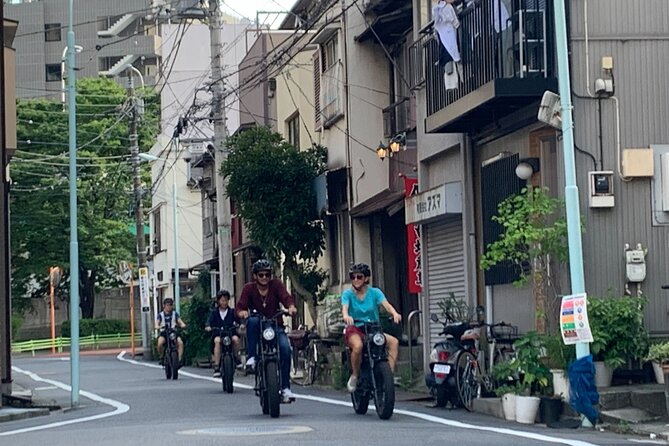
An e-bike gives you a useful middle ground. You are close enough to notice neighborhood details, but you do not spend the whole day walking between sights. The bikes are described as simple to operate, with no complicated gear changes. That matters if you are a casual cyclist rather than a serious rider.
You still pedal, but the motor helps with distance and hills. This is especially useful on the Tokyo Tower route, which climbs toward Atago Shrine. Several people found the ride manageable even in hot weather, though Tokyo in summer can still feel demanding when you stop at lights or wait in the sun.
The ride is not a private sightseeing car. You share roads with vehicles and must follow the group carefully. One important safety point is worth stating plainly: the guide may set the pace, but you are responsible for obeying traffic signals. If you are nervous on roads, tell the guide before departure and stay near the front.
Other cycling tours in Tokyo
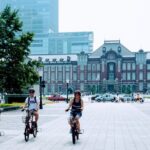
Starting in Tsukiji with a small group
The meeting point is the e-bike shop at 6-chōme-11-5 Tsukiji, in Chuo City. All three routes begin and end there, so you do not need to navigate back from a distant neighborhood at the end.
Arrive 15 minutes before the listed start time. That extra time is used for the bike briefing. If you arrive earlier and the shop appears closed, wait for the guide, who is scheduled to arrive 15 minutes before the tour.
The group maximum is six people. That is a useful size for cycling through Tokyo, since a large line of bikes would be harder to manage at intersections. It also gives you a better chance to ask about a shrine, a building, or an unfamiliar custom without losing the guide in a crowd.
The shop provides the e-bike and helmet. Gloves are supplied in winter. Luggage storage is available, and a knapsack can be rented free of charge. The tour ends where it starts, which makes the outing easy to fit into a day of sightseeing around Tsukiji and central Tokyo.
Tokyo City Route: stations, sweets, gardens, and shrines
The Tokyo City Route is the best choice if you want a broad introduction to central and eastern Tokyo. It combines major architecture with calmer districts and traditional sites.
You pass through Ginza, Japan’s famous luxury shopping district. The route lets you see the polished streets without turning the ride into a shopping trip. That is good news for your budget and your schedule.
Tokyo Station
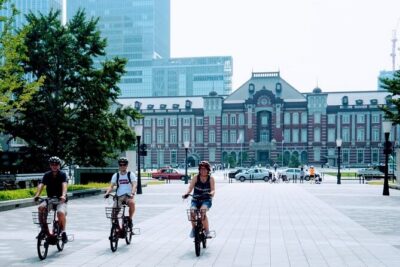
The first main stop is Tokyo Station, originally built in 1914. Its Western-style design looks striking beside the high-rise buildings around it. The stop is brief, about 15 minutes, but it gives you time to take in the contrast between old station architecture and modern Tokyo.
This is a good early stop because it helps set the city’s visual theme. Tokyo is not simply old or new. The two often sit side by side.
Ningyocho Street
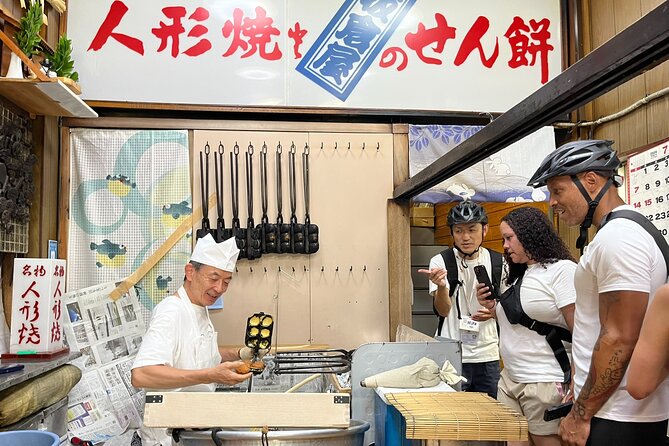
Next comes Ningyocho, known historically as doll town. The district no longer offers the traditional dolls suggested by its name, but it retains an older neighborhood feel and a strong food tradition.
You spend about 20 minutes here and receive a traditional sweet. This is one of the tour’s more personal touches. Rather than rushing past a district for a single photograph, you get a small taste of local culture and a reason to pause.
Other guided tours in Tokyo



Kiyosumi Teien
Kiyosumi Teien is a Japanese garden and one of the quieter stops on the city route. You leave the bike and walk through the grounds for about 25 minutes. The garden provides a calm break after riding through city streets.
I especially like this stop for the change of pace. Tokyo can feel intense, but a garden such as this shows how carefully designed spaces create stillness inside the city. The admission fee is included, so you do not need to handle another payment during the tour.
Tomioka Hachimangu
The final listed stop on this route is Tomioka Hachimangu Shrine in the Fukagawa area. It is an important Shinto site with connections to the early development of sumo.
You have around 30 minutes here. The shrine gives the guide room to explain how religious sites fit into daily life in Tokyo, rather than treating the grounds as a quick photo stop. If you want a route with temples, gardens, and older neighborhoods, this is likely the strongest option.
Tokyo Bay Route: local shrines, Odaiba, and evening views
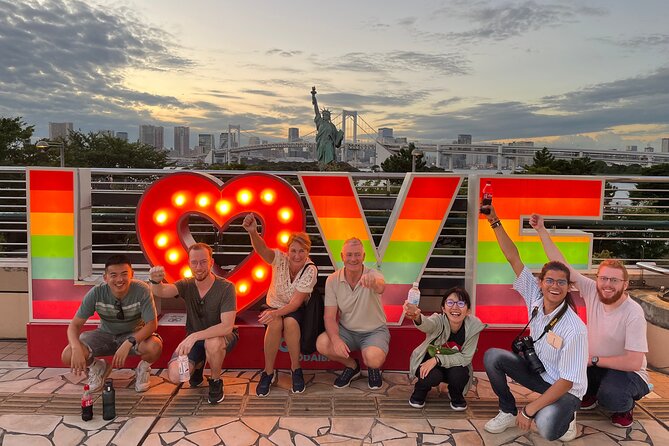
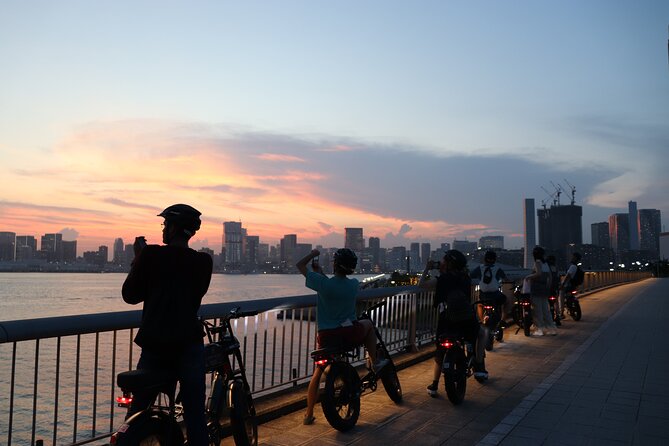
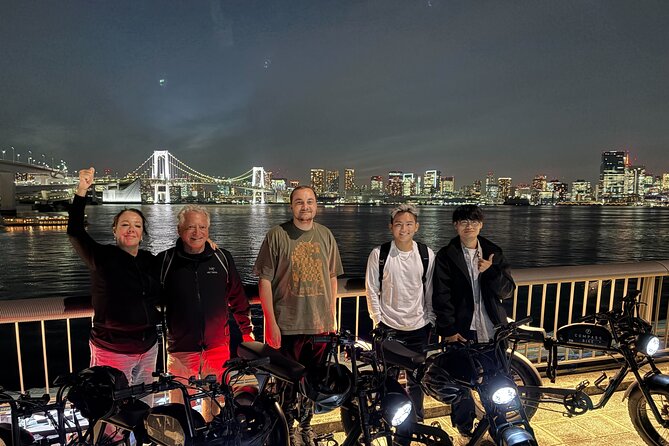
The Tokyo Bay Route is the one I would consider for a late afternoon or sunset start. It begins with less familiar local areas and finishes among modern waterfront landmarks and city lights.
The exact timing affects the mood. A departure around 3:45 or 4 p.m. can give you changing light, sunset views, and illuminated buildings later in the ride. Weather and traffic can affect the finish, so do not schedule an important reservation immediately afterward.
Sumiyoshi Shrine and Tsukuda Tendai Jizoson
The route starts with Sumiyoshi Shrine, located in a local part of Tokyo. The ride to the shrine lets you see ordinary residential areas rather than only major attractions. You have about 15 minutes at the site.
The next stop is Tsukuda Tendai Jizoson, a small temple tucked away from the main tourist paths. The stop lasts only about five minutes, but it shows the value of having a guide who knows the city beyond its headline sights.
Skytree, teamLab Planets, and Tokyo Big Sight
You pass Tokyo Skytree, described as the world’s largest radio tower, with only a short viewing pause. You also pass teamLab Planets TOKYO, the well-known modern art museum. These are drive-by landmarks rather than full admissions, so you should not book this route expecting to enter either attraction.
At Tokyo Big Sight, you stop for about 10 minutes. The exhibition center is recognizable for its unusual design, making it a fun place for photographs. This part of the tour is about seeing how Tokyo’s newer districts are shaped by large-scale architecture and planned waterfront development.
Aqua City Odaiba and the Gundam statue
Aqua City Odaiba is the longer break, lasting roughly 30 minutes. You receive a Japanese snack selected by the guide, often described in the tour information as a convenience-store snack. It is a simple but welcome pause, especially after several road sections.
The Gundam Base Tokyo stop lasts around 10 minutes. The giant Gundam statue is about 19.7 meters high, and its size is difficult to appreciate in photographs alone. This is a lighthearted stop, but it also captures Tokyo’s modern pop-culture identity.
The route includes views around Rainbow Bridge, Tokyo Bay, and Odaiba. At night, the waterfront becomes the main event. The combination of open water, sunset, and lit-up buildings is a strong reason to choose this route over the city option.
Tokyo Tower Route: temples, a steep shrine, and Hibiya Park
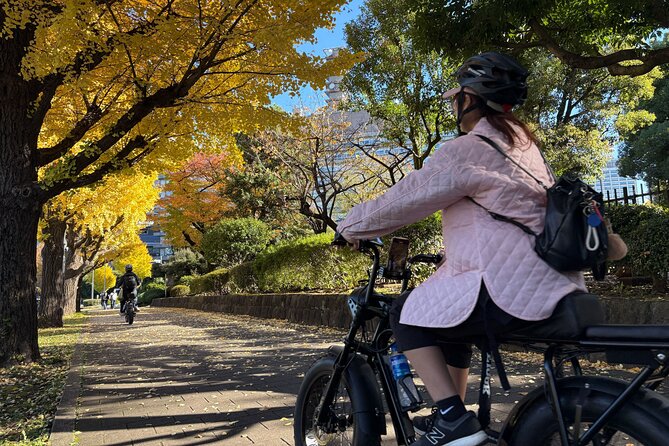
The Tokyo Tower Route offers a compact central-Tokyo story. You see major religious sites, government buildings, the Imperial Palace area, and a leafy park.
Zojo-ji Temple and Tokyo Tower
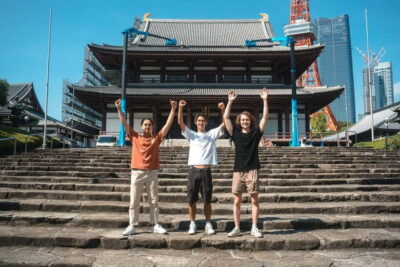
Zojo-ji Temple is the first major stop, with about 30 minutes to look around. Its importance is tied to the powerful Tokugawa shogun family, giving the guide a natural opening to explain Japan’s political and religious past.
The route then passes Tokyo Tower, the 333-meter landmark. You do not enter the tower, but the ride gives you a close view of its scale and upkeep. This is a pass-by stop, so choose another activity if you specifically want an observation deck visit.
Atago Shrine and its uphill road
Atago Shrine sits on a small mountain, making it the route’s main physical challenge. The e-bike assistance helps considerably on the climb, but it does not remove the need to balance, steer, and pedal.
You spend about 20 minutes at the shrine. I would choose this route if you want a little more effort and a satisfying contrast between a city street and a high, quiet religious site. If hills make you uncomfortable, the Tokyo City Route may be a better fit.
National Diet Building, Imperial Palace, and Hibiya Park
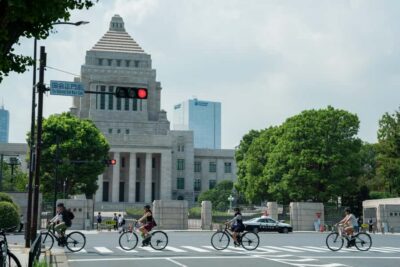
The National Diet Building dates from 1936 and offers an impressive example of formal government architecture. The stop itself is short, around five minutes, but the ride toward it includes a traditional snack collected near Hibiya Park.
You pass the Imperial Palace area, once the site of a huge castle. The route includes views of a pond where ducks gather, another small detail that keeps the ride from becoming a parade of monuments.
Hibiya Park is the final stop, with about 20 minutes to park the bikes and enjoy the snack. The park contains around 150 types of trees and 350 types of flowers, making it a pleasant place to finish. This route has a nice rhythm: temple, tower, hill, government district, palace area, and park.
Guides, pace, and the personal feel
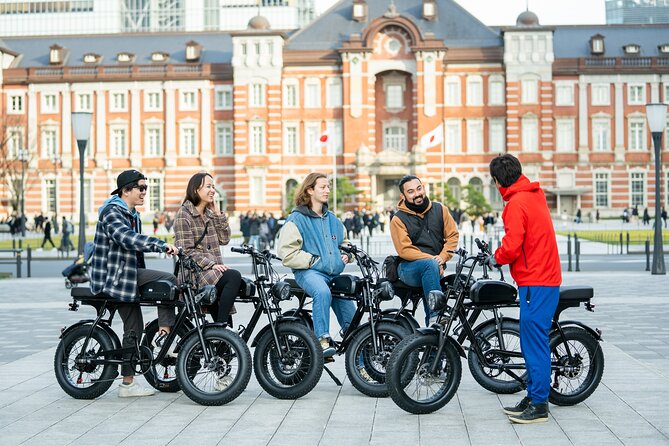
The guide can make or break a cycling tour, and this experience has several names worth noting. Hiro is repeatedly praised for safety, humor, English explanations, and the use of an iPad to show historical background. FK is noted for explaining customs and local places, while Shinobu is praised for leading a family-friendly ride.
Miky, Sho, Taiki, YK, Javi, Mihori, and Takuro have also led rides. The strongest pattern is attentive guiding. Guides stop to explain sights, help with photographs, answer questions, and make bathroom breaks possible when needed.
The pace is usually described as comfortable, with enough exercise but no exhausting workout. Still, one rider found the guide too fast and raised concerns about traffic signals. Take that seriously. A group ride requires concentration, and you should never copy unsafe road behavior simply to stay together.
Price, fitness, and who should book
At $63.67 per person, the tour offers reasonable value if you want transportation, equipment, a guide, several stops, and a snack in one package. Admission is free at most stops, and entry to Kiyosumi Teien is included on the city route.
The value is strongest for a first or second day in Tokyo, when you want to understand how districts relate to one another. It is less useful if you prefer long, independent visits at each landmark, since several places are viewed briefly or from outside.
You must be at least 147 centimeters tall, older than 12, and under 120 kilograms. A moderate fitness level is required. The tour is suitable for people who know how to ride a bicycle, including beginners to e-bikes, but it is not suitable for anyone who cannot ride confidently on public roads.
The provider cannot accommodate allergies or vegetarian diets. If that affects you, bring your own food and confirm what the snack arrangement allows before booking.
Weather, timing, and practical planning
This activity depends on good weather. If rain or another safety concern makes the ride impossible, you may be offered a different date, a rental tour, a special alternative outing, or a refund. If the weather changes during the ride, the tour can also be canceled.
Allow extra time after the scheduled finish. Traffic can delay the return by about 30 minutes. You cannot join after the start because the group will already be on the road, so arriving early is essential.
Free cancellation is available up to 24 hours before the start time. Cancellations or changes made inside that window are not refunded or accepted.
Should you book the Tokyo e-bike tour?
I would book this if you want to see several sides of Tokyo in one outing: famous buildings, quiet religious sites, gardens, residential streets, and waterfront districts. The Tokyo City Route is best for gardens and traditional neighborhoods, the Tokyo Bay Route for sunset and night views, and the Tokyo Tower Route for central landmarks with a hill climb.
I would skip it if you dislike cycling in traffic, need a fully private pace, or want long indoor visits at places such as teamLab Planets or Tokyo Tower. For everyone else who can ride a bike and wants more than a standard bus loop, the e-bike format makes a strong introduction to Tokyo.
FAQ
Where does the Tokyo e-bike tour start and finish?
The tour starts at 6-chōme-11-5 Tsukiji, Chuo City, Tokyo 104-0045, Japan. Every route returns to the same meeting point.
How long does the tour last?
The experience lasts approximately three to four hours. Traffic can delay the end by about 30 minutes.
Which Tokyo routes can I choose?
You can choose the Tokyo City Route, Tokyo Bay Route Sunset and Night, or Tokyo Tower Route. The stops differ by route, so check the selected itinerary before booking.
What equipment is included?
The tour includes an e-bike and helmet. Gloves are provided during winter. Luggage storage is available at the e-bike shop, and a knapsack can be rented free of charge.
Are children allowed to join?
Participants must be older than 12 and at least 147 centimeters tall. Children aged 12 and younger are not permitted.
Do I need to be fit to join?
You need a moderate level of physical fitness and must know how to ride a bicycle. The electric assistance reduces strain, including on the uphill section toward Atago Shrine.
What happens if it rains?
The tour requires good weather. If poor weather prevents the ride, you may be offered a different date or a full refund. Other alternatives may also be offered, including a rental tour or a special non-bike outing.
More E-Bikes in Tokyo

More Guided Tours in Tokyo
More Cycling Tours in Tokyo
More tours in Tokyo we've reviewed







E-Bikes, compared.
 ★ 5.03h Tokyo E-Bike Tour: Hidden Gems, and Local Life with guideFrom $63
 ★ 4.8Tokyo: 3-Hour Bike or E-Bike City Highlights TourFrom $453 hours
 ★ 4.8Tokyo: 3-hour Guided E-Bike Tour of the City’s Hidden GemsFrom $65
 ★ 5.0Tokyo: 3-Hour Bike/E-Bike Tour of the City’s HighlightsFrom $63
 ★ 5.03-Hour Tokyo Private E-Bike Tour Starting from Your HotelFrom $145
 ★ 4.7Tokyo: 3-Hour Bike or E-Bike Tour of City’s Hidden GemsFrom $603 hours