
Reviewed · E-BIKES
Tokyo: 3-Hour Bike or E-Bike City Highlights Tour
Tokyo makes more sense from a bicycle seat. In three hours, you can ride from the temples of Shiba Park to the Imperial Palace, Tokyo Station, Akasaka, Aoyama, and Shibuya Crossing. It is a fast, useful introduction to a city too spread out to understand on foot.
I like the small-group feel and the chance to cover roughly 15 to 20 kilometers without wrestling with Tokyo’s train map. I also like the choice of Bianchi or Fuji cross bikes and e-bikes, plus guides such as Naoki, Atsu, Kosei, and Rikuu, who are praised for safety, humor, and clear English. The main caution is simple: you do ride on roads with traffic, and this is not a gentle park cruise.
In This Review
- Key points worth knowing
- Why a bicycle is a smart way to meet Tokyo
- Starting beside Commodore Perry’s statue
- Zojo-ji Temple and the quiet side of Shiba Park
- Hibiya Park, the Imperial Palace, and Tokyo Station
- Ote-mon Gate and Chidorigafuchi
- Akasaka Palace and the National Stadium
- A tucked-away stop, Aoyama, and Cat Street
- Shibuya Crossing and the finish at the Bell of Peace
- Bike choice, road conditions, and personal comfort
- What the $45 price really buys you
- Who will get the most from this ride
- Should you book the Tokyo bike tour?
- FAQ
- How long is the Tokyo bike tour?
- Where does the tour start?
- Where does the tour finish?
- What sights are included?
- Are e-bikes available?
- Are helmets included?
- What is included in the price?
- Who cannot join the tour?
- Can I cancel or pay later?
Key points worth knowing
- A big-city orientation in three hours: Ride between major sights that would take much longer to connect on foot.
- A useful mix of old and new Tokyo: See Zojo-ji Temple, palace grounds, Tokyo Station, the National Stadium, Cat Street, and Shibuya Crossing.
- E-bikes help on longer rides: Choose one if you do not cycle often or are unsure about your stamina.
- Traffic is part of the experience: You may move between sidewalks and roads, so confidence on a bicycle matters.
- Guides add the human touch: Naoki, Atsu, Kosei, KJ, Keiji, and others are praised for local stories and careful pacing.
- Budget for a helmet: Helmets cost an extra ¥1,000 each and are paid in cash on site.
Why a bicycle is a smart way to meet Tokyo
Tokyo is huge, but its main sights are not always far apart in a straight line. The problem is that the city’s size can make a first day feel like a series of train platforms and underground corridors. A bike gives you a sense of how the districts fit together.
This tour begins near Daimon Station and ends near Shibuya. That route is useful because it links several different versions of Tokyo: temple grounds, formal government districts, leafy park roads, fashionable Aoyama, and the neon-heavy streets around Shibuya.
You are not simply stopping for a photograph and moving on. The guide keeps the group together, explains what you are seeing, and gives you a running introduction to the city. The sightseeing stops are fairly short, so the ride itself remains central. One participant described it as more of a sightseeing ride than a long talk at every stop, which is a fair way to set your expectations.
The route appears to vary. Some rides cover about 15 kilometers, while another group reported roughly 20 kilometers. Weather, group speed, traffic, and the exact route can affect the total. Plan for a real ride, not a quick spin around one neighborhood.
Other cycling tours in Tokyo
Starting beside Commodore Perry’s statue
Meet your guide around the statue of Commodore Perry, about a three-minute walk from Daimon Station’s A6 exit. It is a fitting starting point for a tour about Tokyo’s meeting of old and new.
Perry’s arrival in Japan is tied to the opening of the country to greater foreign contact in the 19th century. The tour does not promise a long history lecture here, but the statue gives your guide a natural opening to explain how Tokyo changed from a shogun’s capital into a modern world city.
This is also where you get your bicycle and a small pouch for your phone, wallet, or keys. The supplied bikes are Bianchi and Fuji cross bikes, while the e-bike option is intended for people who do not cycle often or who are concerned about stamina.
Take a moment to check the saddle, gears, and brakes before setting off. One rider had a bike with slipping gears, while the rest of the equipment worked well. Report any problem right away. It is much easier to swap or adjust a bike before leaving than halfway across Tokyo.
Zojo-ji Temple and the quiet side of Shiba Park
Zojo-ji Temple is the first major stop, with about 15 minutes for a visit and guided explanation. The temple’s large wooden gate and broad grounds make an immediate contrast with the towers and office buildings nearby.
The setting is part of the appeal. You can look from traditional temple architecture toward Tokyo Tower, seeing in one frame the city’s religious past and its modern skyline. That contrast is one of the strongest visual themes of the tour.
Fifteen minutes is enough for orientation and photos, but not enough for a detailed temple visit. If Zojo-ji is high on your list, return later for more time. On the bike tour, the value comes from placing the temple within the city rather than studying every building.
From here, the ride continues through central Tokyo toward Hibiya Park. The route uses a mixture of quieter stretches and city streets. Your guide sets the pace and watches the group, but you still need to ride attentively.
Hibiya Park, the Imperial Palace, and Tokyo Station
Hibiya Park gets only a short visit, roughly three minutes. That may sound brief, but it serves as a quick breath between longer stretches of riding and introduces one of central Tokyo’s pleasant public green spaces.
The Imperial Palace receives more time, about 15 minutes for a visit, photos, and commentary. You should not expect access to every part of the palace grounds on this tour. Instead, the stop gives you a look at the formal center of Japan’s government and the open spaces around it.
The palace area is especially good for understanding Tokyo’s scale. Wide roads and carefully maintained grounds replace the tight lanes found in older districts. Your guide can explain the role of the palace and point out details you might otherwise cycle past.
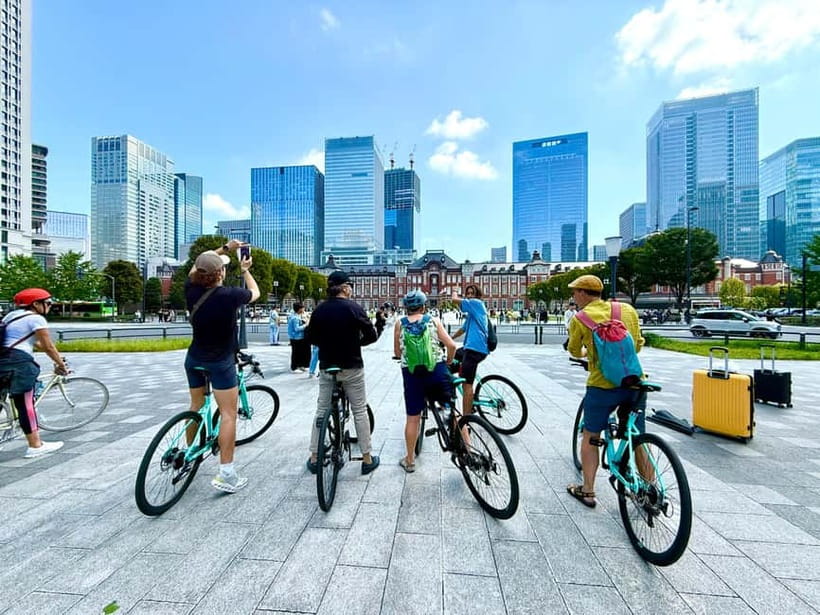
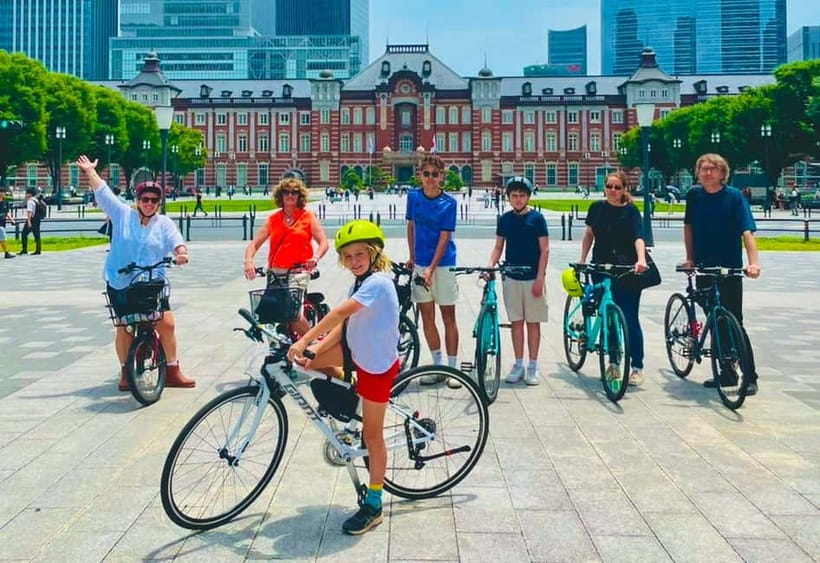
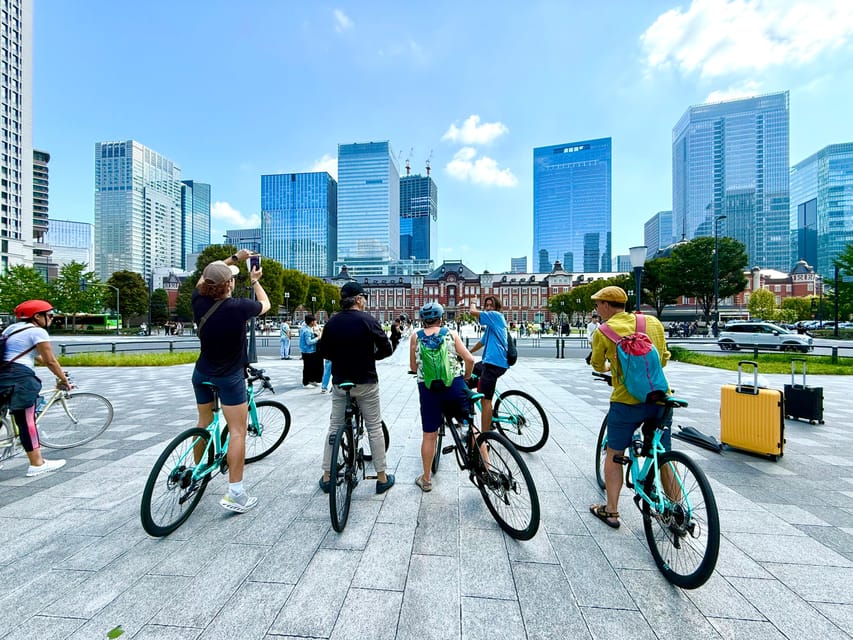
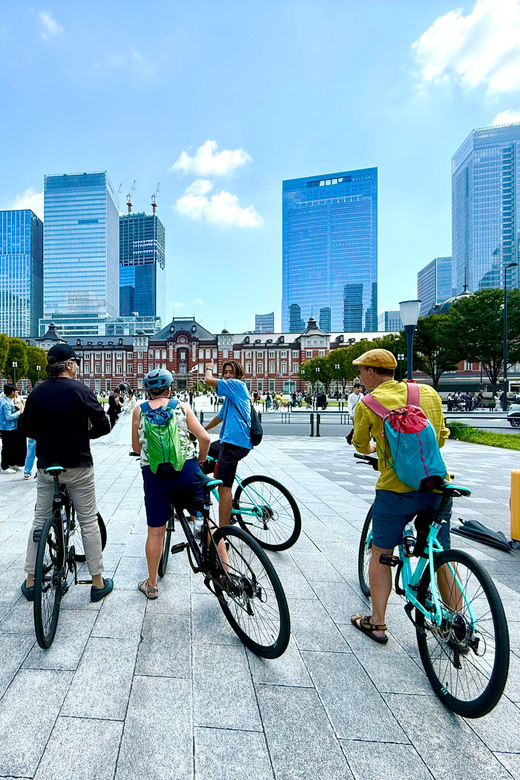
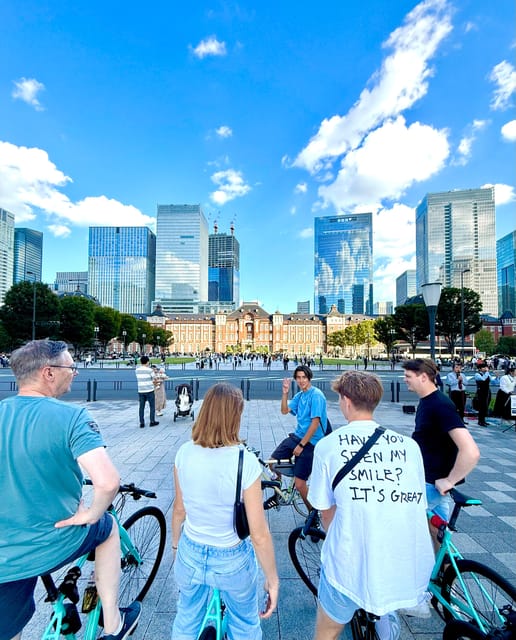
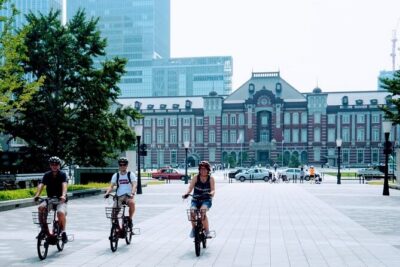
Tokyo Station follows, with about 10 minutes for photos and sightseeing. The red-brick Marunouchi building is one of the city’s most recognizable pieces of architecture. It also shows how Tokyo pairs old-looking facades with a modern rail network carrying enormous numbers of people every day.
You will not have time to explore the station interior or its shopping passages. That is fine. The stop is about seeing the building from the outside and learning where this major transport hub fits into the city.
Ote-mon Gate and Chidorigafuchi
Ote-mon Gate is another short stop, around five minutes. The gate is associated with the former Edo Castle and gives you a clear sense of the defensive design that once shaped the capital.
The details are easy to miss when you are moving around Tokyo by train. On a bicycle, you can pull over, hear the explanation, and look closely before continuing. This is one of the quiet strengths of the tour: small historical details become part of a larger route.
Chidorigafuchi offers another five-minute break and photo stop. The area is known for its moat and tree-lined paths, with especially attractive scenery during cherry-blossom season. The tour does not guarantee blossoms or extended time here, so treat it as a quick look rather than a full park visit.
The short stops also keep the tour moving. If you prefer long visits inside temples, gardens, or museums, this format may feel rushed. If your goal is to see a broad section of Tokyo in one morning or afternoon, the brisk rhythm works well.
Other city tours we've reviewed in Tokyo



Akasaka Palace and the National Stadium
The State Guest House Akasaka Palace is a photo stop of about 10 minutes. Its formal European-style exterior is unusual in Tokyo and adds another visual change to the route.
You will see the palace from the outside rather than take a full interior tour. The stop works best as part of the city’s architectural sampler: temple, imperial grounds, railway station, formal guest house, and contemporary sports venue.
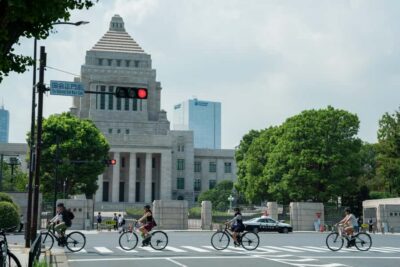
The New National Stadium receives about 10 minutes for sightseeing and photographs. Built for the Tokyo Olympic Games, it represents the city’s modern public face. The building and its surrounding district offer a strong counterpoint to Zojo-ji and Ote-mon Gate earlier in the ride.
At this point, you will have crossed a substantial portion of central Tokyo. The tour is not only about famous monuments. It is also about showing you how the city changes block by block.
A tucked-away stop, Aoyama, and Cat Street
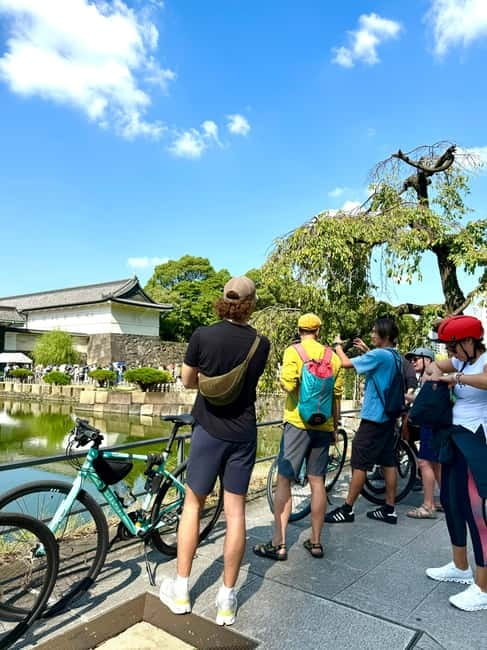
The itinerary includes a less-publicized stop with about 15 minutes of guided time. The exact location can vary, but this is where the route may feel more personal and less like a checklist of major landmarks.
That stop is valuable because Tokyo’s character often appears in smaller streets rather than at its headline sights. Your guide may share a local detail, suggest places to return to, or explain an everyday custom. Do not expect a guaranteed specific attraction here, but do expect a change of pace.
Aoyama St. Grace Cathedral is a very brief three-minute photo and sightseeing stop. It is an attractive landmark in an area known for polished shops, galleries, and broad avenues. The stop is mainly visual, so you will not spend long inside.
Cat Street gets about five minutes. This area connects the feel of Harajuku and Shibuya, with shops, street style, and a more youthful atmosphere. Five minutes is enough to identify the area and get a taste of it, but you will want to return on foot if shopping is part of your plan.
Some groups have made a quick convenience-store stop, including 7-Eleven, during the ride. It is a practical touch, especially in hot weather or when you need a drink or small snack. It is not listed as a guaranteed stop, so bring water and do not depend on it.
Shibuya Crossing and the finish at the Bell of Peace
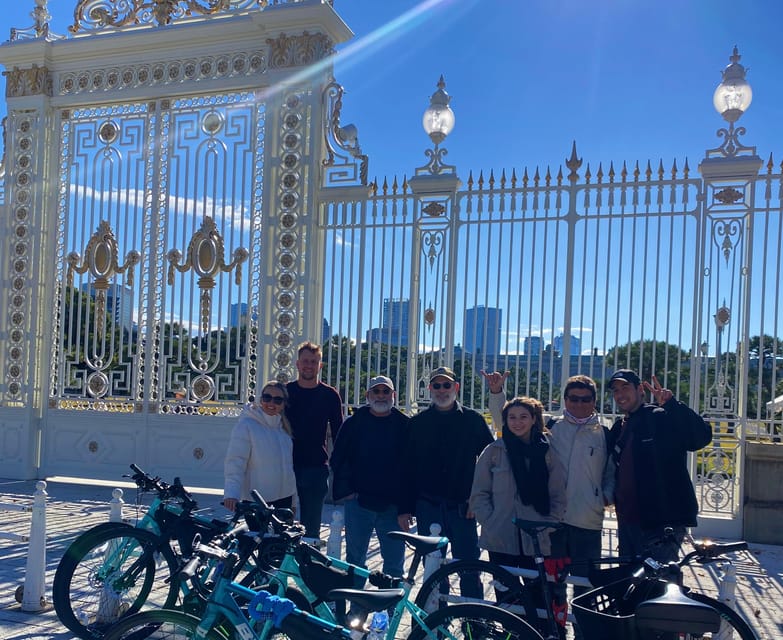
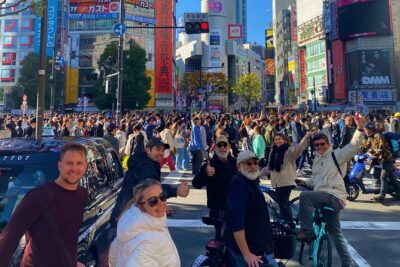
The final major sightseeing stop is Shibuya Crossing, with about 10 minutes for photographs and a guided look. After the quieter palace and park sections, Shibuya gives you Tokyo at full volume: huge screens, dense pedestrian movement, and a district built around youth culture and nightlife.
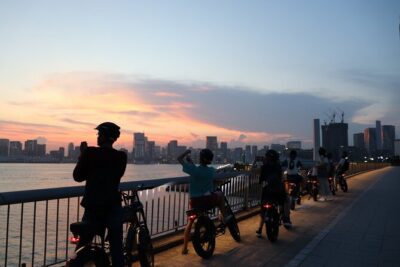
The bicycle does not turn the crossing into a private viewing platform. You will stop nearby, hear the guide’s explanation, and take in the scene. The tour may pass through Shibuya in the evening on some schedules, when the signs are especially striking, but the exact mood depends on your start time.
Tower Records Shibuya is a quick three-minute photo stop. Even if you are not shopping for music, the building is a recognizable marker of Shibuya’s pop culture identity.
The tour ends at the Bell of Peace. Because the start is near Daimon and the finish is in Shibuya, you are well placed to continue exploring one of Tokyo’s best-known districts after the ride. Ask your guide for suggestions. Guides such as Naoki and Miguel have been especially good at sharing ideas for later in the visit.
Bike choice, road conditions, and personal comfort
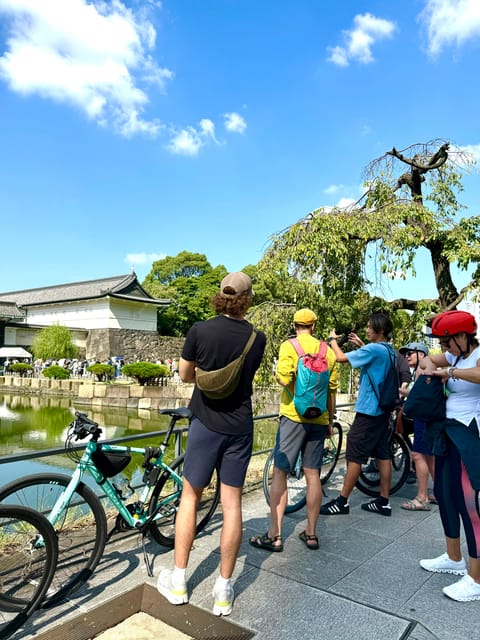
The standard cross bikes are a good fit for riders who are comfortable pedaling for several hours. The e-bike is the smarter choice if you cycle only occasionally, lack stamina, or want to save energy for the rest of your day.
A few hills appear on the route, and riders have found the electric assistance helpful. Tokyo is not a punishing cycling city on this route, but three hours and up to 20 kilometers can feel different from a short rental ride.
You may ride on both sidewalks and roads. That point matters. Several people felt safe with guides who checked on the group, managed the pace, and handled traffic carefully. Another rider found the road sections more stressful than expected. If you are not comfortable riding near cars, this is not the right activity.
The tour is not suitable for children under 12, pregnant women, people with back problems, or anyone who cannot ride a bicycle. Comfortable shoes, water, and loose, practical clothes are the right choices.
Helmets are not included. You can get one on site for ¥1,000 per unit in cash. I would budget for one. The small pouch is included and useful, but avoid carrying anything that could fall out while riding.
What the $45 price really buys you
At $45 per person, the tour is reasonably priced for three hours of bike use, an English-speaking guide, insurance, and a route connecting several distant districts. You are paying less for lengthy access to any single attraction and more for the time saved moving between places.
That value is strongest at the beginning of your Tokyo stay. You can see where Shiba, the palace area, Aoyama, Harajuku, and Shibuya sit in relation to one another. Then you can return by train or on foot to the places that caught your attention.
Private and small-group options are available. A small group is preferable for city cycling because it is easier to hear instructions, ask questions, and stay together at intersections. Larger groups may be divided into smaller riding units for easier movement.
The price does not include the helmet, child seat, food, or drinks. A child seat costs ¥3,000, though children under 12 are not suitable for the activity as described, so clarify the arrangement before booking. Free cancellation is available up to 24 hours ahead, and you can reserve now and pay later.
Who will get the most from this ride
I would choose this tour if you have only a few days in Tokyo, want a quick city orientation, or enjoy seeing a place through local streets rather than from a train window. Solo visitors can also benefit, since the guide gives you company and helps you see areas you might not reach alone.
It suits active couples, friends, and families with older teenagers who already ride confidently. The route has enough variety to keep the ride interesting, and the frequent short stops prevent it from becoming a long, uninterrupted workout.
Choose the e-bike if your fitness is average, you are tired from walking, or you do not cycle regularly. Choose the standard bike if you ride often and want more exercise.
I would skip it if you want an indoor cultural tour, dislike city traffic, have back problems, or prefer spending an hour at each temple and garden. Tokyo’s weather also matters. The ride can be hot in summer and wet in rainy conditions. A poncho from a convenience store can help, but poor weather will still change the feel of the outing.
Should you book the Tokyo bike tour?
Book it early in your stay if you want to get your bearings fast. The strongest features are the wide route, the friendly guides, and the balance between major sights and less obvious streets.
Pick the e-bike if you have any doubt about your stamina, and pay the extra ¥1,000 for a helmet. Do not book unless you are genuinely comfortable cycling on roads and changing between sidewalk and street riding.
For $45, this is a strong-value introduction to central Tokyo. It will not replace a full visit to Zojo-ji, the Imperial Palace area, or Shibuya, but it can show you where to spend your time afterward. That makes it especially useful on a first or second day in the city.
FAQ
How long is the Tokyo bike tour?
The tour lasts three hours. The full ride may cover roughly 15 to 20 kilometers, depending on the group and route.
Where does the tour start?
Meet the guide near the statue of Commodore Perry. The meeting point is about a three-minute walk from Daimon Station’s A6 exit.
Where does the tour finish?
The tour finishes at the Bell of Peace in the Shibuya area.
What sights are included?
Stops and photo visits include Zojo-ji Temple, Hibiya Park, the Imperial Palace, Tokyo Station, Ote-mon Gate, Chidorigafuchi, Akasaka Palace, the New National Stadium, Aoyama St. Grace Cathedral, Cat Street, Shibuya Crossing, and Tower Records Shibuya.
Are e-bikes available?
Yes. You can select an e-bike option when booking. It is recommended if you do not cycle often or are concerned about riding long distances.
Are helmets included?
No. Helmets are available on site for ¥1,000 per unit, payable in cash.
What is included in the price?
The price includes an English-speaking guide, a Bianchi or Fuji cross bike or e-bike depending on your selection, local stories and advice, a small bike pouch, and bike insurance.
Who cannot join the tour?
The activity is not suitable for children under 12, pregnant women, people with back problems, people who cannot ride a bike, or anyone uncomfortable with cycling in city traffic.
Can I cancel or pay later?
You can cancel up to 24 hours in advance for a full refund. A reserve-now, pay-later option is also available.
More E-Bikes in Tokyo
More City Tours in Tokyo
More Cycling Tours in Tokyo
More tours in Tokyo we've reviewed










E-Bikes, compared.
 ★ 5.0Tokyo Top Highlights 3h Guided E-bike TourFrom $63
 ★ 5.03h Tokyo E-Bike Tour: Hidden Gems, and Local Life with guideFrom $63
 ★ 4.8Tokyo: 3-hour Guided E-Bike Tour of the City’s Hidden GemsFrom $65
 ★ 5.0Tokyo: 3-Hour Bike/E-Bike Tour of the City’s HighlightsFrom $63
 ★ 5.03-Hour Tokyo Private E-Bike Tour Starting from Your HotelFrom $145
 ★ 4.7Tokyo: 3-Hour Bike or E-Bike Tour of City’s Hidden GemsFrom $603 hours