
Reviewed · TSUKIJI MARKET TOURS
Tokyo: Tsukiji Fish Market Tour with 6 Stops & Seafood Lunch
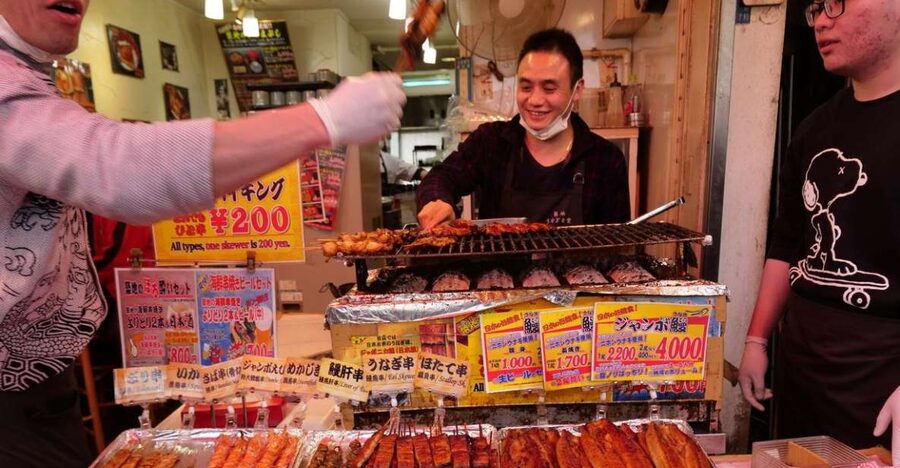
Tsukiji is no longer Tokyo’s central wholesale fish market, but its Outer Market still feels like the city’s seafood pantry. This three-hour walk pairs oysters, eel, tuna, omelet, mochi, and other tastings with a Buddhist temple, a Shinto shrine, a donburi lunch, and a high view over Tokyo.
I like the small group, limited to seven people, and the way a guide can help you order at crowded stalls. I also like the cultural balance: you learn how to behave at a temple and shrine instead of treating Tsukiji as one long food stop. The main drawback is that the market can be packed, and some people find the pace too slow in crowds while others wish they had more time to shop.
In This Review
- Key points at a glance
- Why Tsukiji still matters after the wholesale market moved
- Starting at Tsukiji Hongan-ji
- Eating your way through the Outer Market
- Namiyoke Inari Jinja and the market’s working traditions
- Sitting down to a seafood donburi lunch
- Finishing above the city at Shiodome Media Tower
- What the small-group format changes
- Practical details before you reserve
- Should you book the Tsukiji food tour?
- FAQ
- Where does the Tsukiji tour meet?
- Is the meeting point at Tsukijishijo Station?
- How long does the experience last?
- Is lunch included?
- Are the market tastings included?
- Can vegetarians or vegans join?
- Is the tour suitable for wheelchair or stroller users?
Key points at a glance
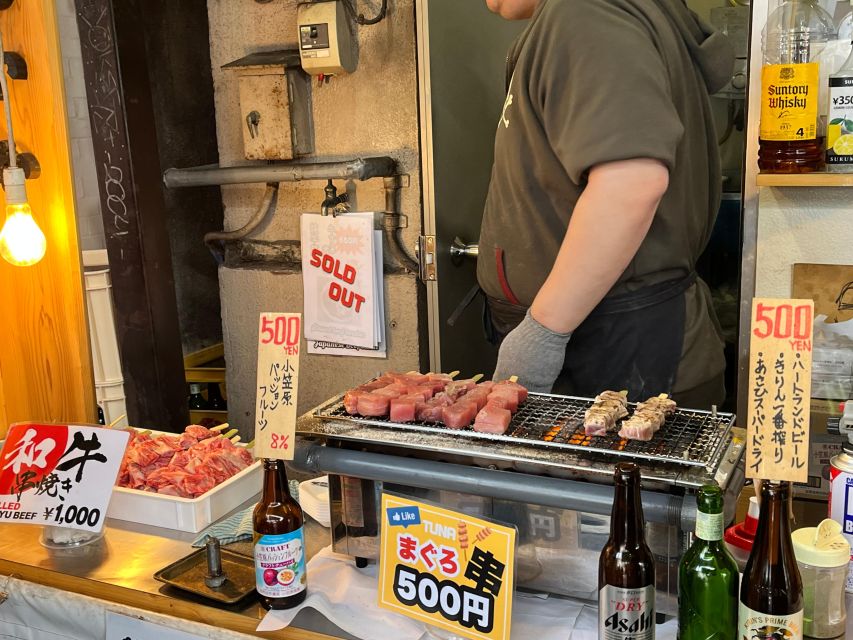
- Five or more tastings: Expect chances to try market foods such as tuna sushi, oysters, grilled eel, tamagoyaki, and sweet taiyaki-style treats.
- Two religious sites: Tsukiji Hongan-ji and Namiyoke Inari Jinja add useful context about Buddhist and Shinto customs.
- Seafood donburi lunch: Your included meal has a value limit of 1,500 yen, with drinks purchased separately.
- Small English-speaking group: The maximum group size is seven, so it is easier to ask questions and stay with your guide.
- Shiodome observation stop: The tour ends with a view from Shiodome Media Tower, including Tokyo Bay and the market area.
- Bring cash and arrive early: Street food is extra, and the group cannot wait for late arrivals at the Tsukiji Station meeting point.
Why Tsukiji still matters after the wholesale market moved
Many people hear Tsukiji Fish Market and picture the old wholesale auction halls. Those operations moved to Toyosu, but this tour focuses on Tsukiji’s Outer Market, where small shops, food counters, knife sellers, seafood vendors, and prepared-food stalls continue to serve cooks and curious eaters.
That distinction matters. You will not be touring the former wholesale auction floor. Instead, you will walk through the public market streets, where the atmosphere comes from close-packed stalls and the steady work of buying, preparing, and eating food.
I think this is a better fit for most first-time visitors who want to taste the market without planning every stop themselves. A guide can point out what is worth trying, explain unfamiliar ingredients, and help you move through tight crowds. You can also ask to see or buy something specific, although the exact route and tastings may vary.
The tour costs $94 per person. That is not a bargain if you only want to wander around and buy one snack. It becomes more reasonable when you add the five or more tastings, the included lunch, a certified guide, tour photos, the temple and shrine visits, and the small-group format. You are paying for orientation and access to a planned food experience, not simply entry to a market.
A few more Tokyo tours and experiences worth a look

Starting at Tsukiji Hongan-ji
Meet at the main gate of Tsukiji Hongan-ji, near Tsukiji Station. Pay close attention to that station name. Tsukijishijo Station is a different stop, and going to the wrong one can put you on the wrong side of the neighborhood.
Look for a guide holding a red or orange MagicalTrip sign. The group begins promptly, so give yourself time to find the gate and sign in. If you arrive late and miss the group, you cannot join later, receive a refund, or reschedule.
The first stop is Tsukiji Hongan-ji, a Buddhist temple with about 20 minutes for a guided visit. This is a smart opening because it gives you a little cultural grounding before the food begins. You learn about Japanese worship traditions, temple etiquette, and local views of religion.
The temple stop is not a long lecture. It is a short introduction that helps you notice what you are seeing. Your guide can explain how to act respectfully and what people are doing during worship. If you have never visited a Japanese temple, this can prevent the usual uncertainty about where to stand, what to do, and how to behave.
Eating your way through the Outer Market
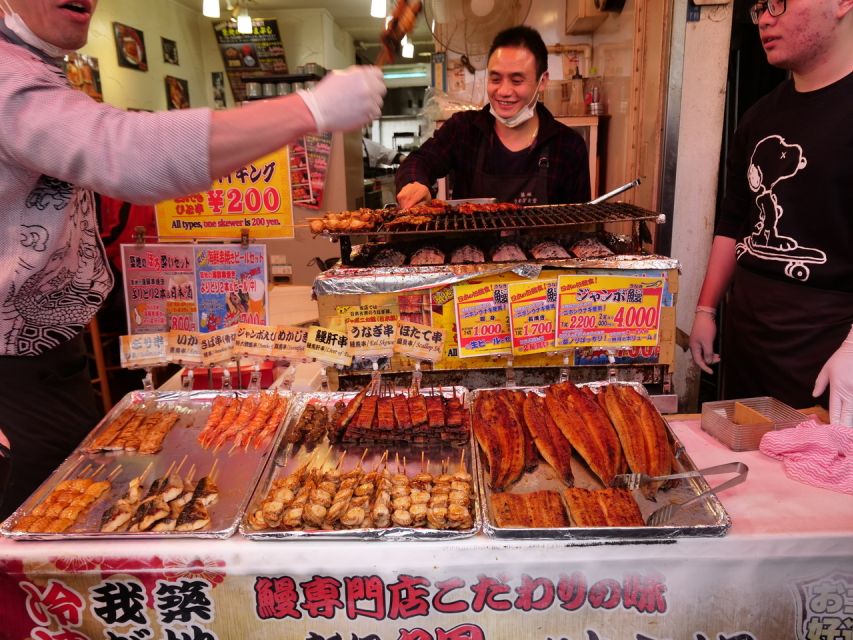
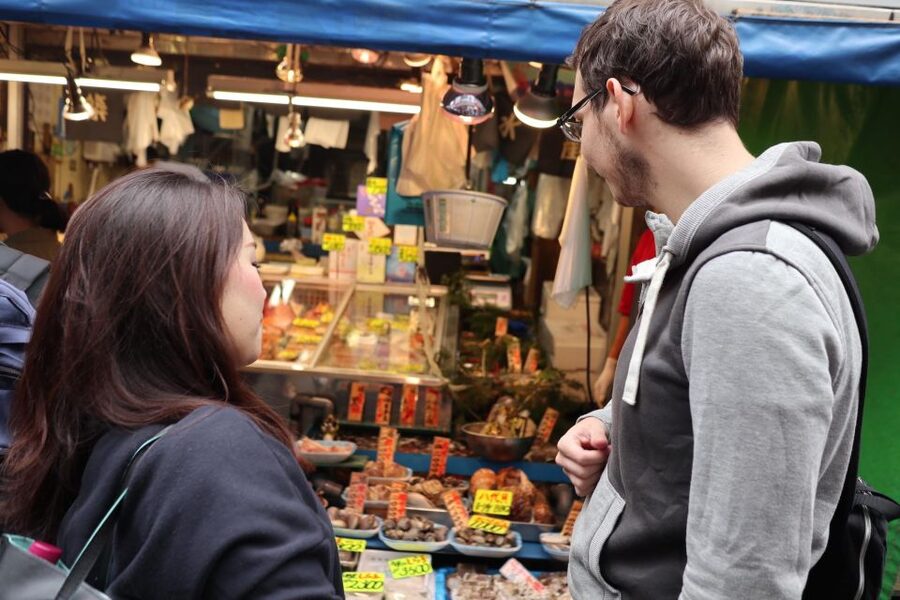
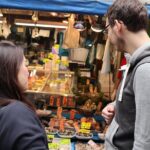
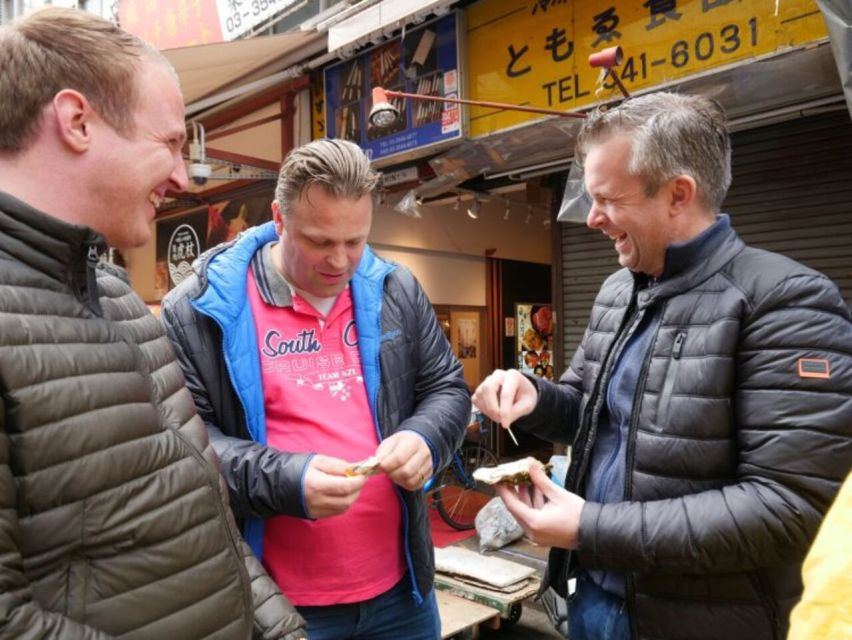
The main market walk takes about an hour and combines a guided stroll, shopping time, and at least five tastings. This is the heart of the experience.
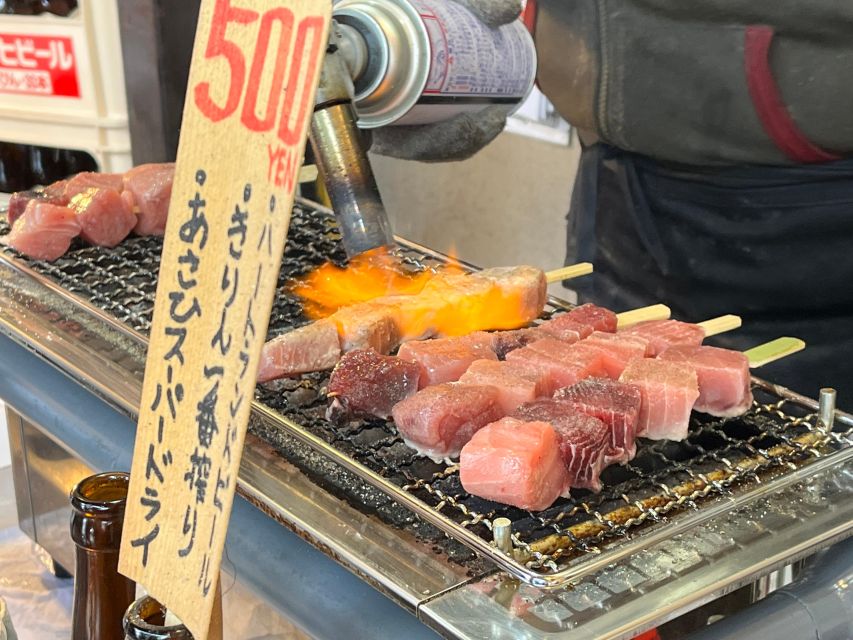
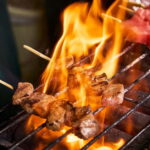
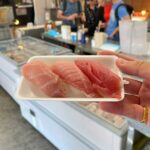
The exact foods depend on what is available, but the tasting examples and past tour routes give you a good sense of the range. You might try tuna sushi, a grilled eel skewer, a thick rolled omelet, an oyster, sashimi, or a custard-filled mochi. One particularly playful item is tuna-shaped taiyaki, a sweet filled pastry made in a fish shape.
The food is not limited to raw fish. That is helpful if you enjoy Japanese cooking but are not ready for a morning of sashimi. You might move from seafood to grilled items, egg, and sweets, sampling small portions rather than committing to a full serving at every stall.
I would use the guide actively here. Ask what is freshest, what a particular fish is, how a seasoning is used, and which products travel well in luggage. Several guides, including Meg, Kiyo, Mai, Max, Taka, and Hina, have been singled out for clear food explanations and practical help with buying ingredients or seasonings.
The market can be very crowded, especially around late morning and on Saturdays. At 11 a.m., the streets may require a slow shuffle rather than a brisk walk. Keep your group in sight, watch your elbows and bags, and do not stop in the middle of a narrow passage to take a photo.
This is also where the tour’s tradeoff appears. A guide helps you find stalls that might be hard to choose on your own, but a group cannot linger at every counter. If browsing and photography matter more to you than tastings, you may wish you had extra free time after the tour.
Street food purchases are not included, so bring cash. The tour fee covers the arranged tastings, while anything you independently buy is yours to pay for. Drinks are also extra. Japanese beer or sake can accompany the meal or snacks, but it is not included in the $94 price.
Namiyoke Inari Jinja and the market’s working traditions
After the market walk, the group visits Namiyoke Inari Jinja for about 20 minutes. This Shinto shrine is closely tied to the Tsukiji neighborhood and its working community.
The visit gives you a useful contrast with the Buddhist temple. Instead of only seeing Tsukiji as a place to eat, you get a look at the religious customs that remain part of daily Japanese life. Your guide can explain the difference between the two traditions and show you how worshippers approach the shrine.
This stop is also a chance to slow down. The market streets are crowded and noisy, while a shrine visit gives the walk a more reflective pause. The contrast is one of the tour’s strongest features, especially if you are interested in how food, work, neighborhood identity, and religion overlap in Japan.
Do not expect an extended historical tour. The stop lasts about 20 minutes, so the value comes from a clear explanation and a quick look rather than a detailed study of the shrine.
Sitting down to a seafood donburi lunch
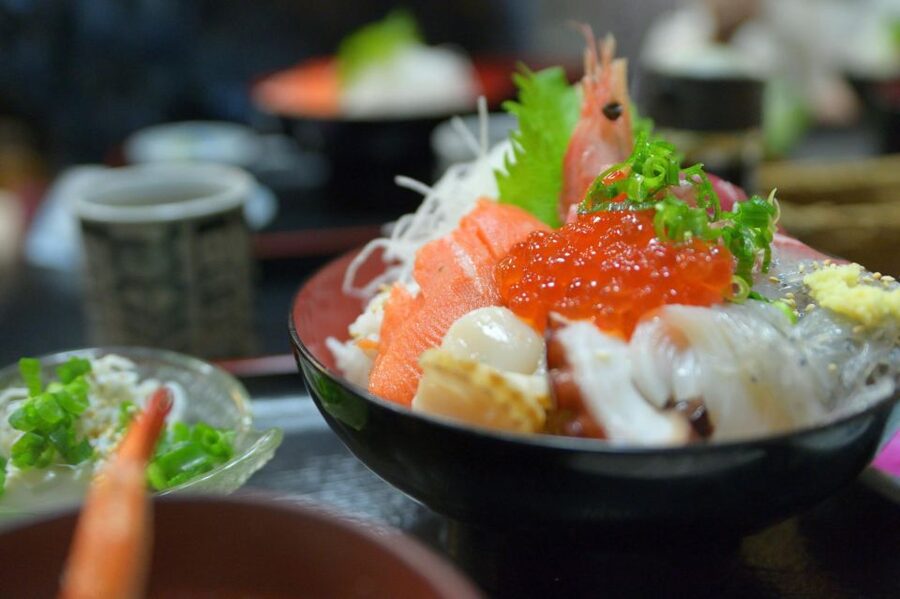
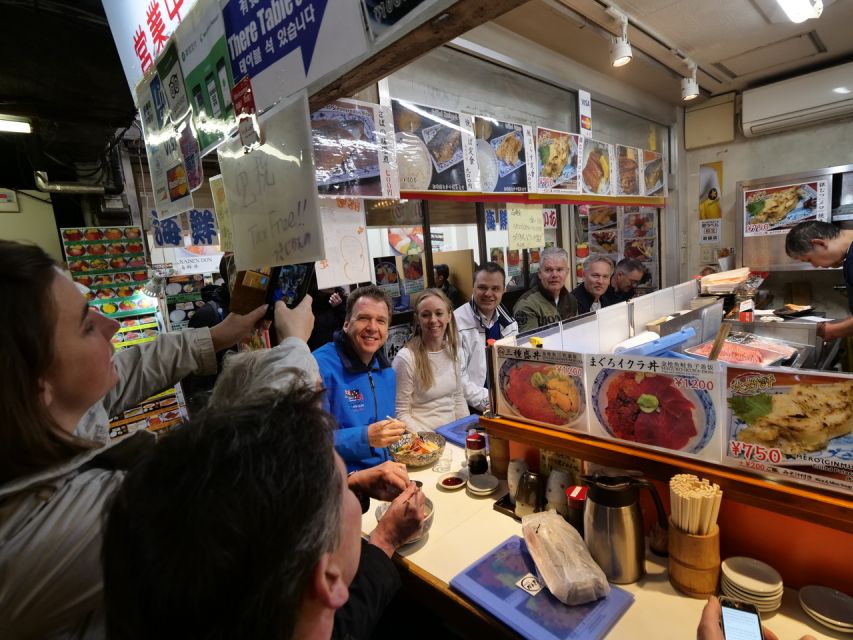
The tour then returns to Tsukiji Outer Market for an included lunch lasting about an hour. You sit down at a seafood restaurant for donburi, a bowl of rice topped with ingredients such as seafood.
After walking and sampling food, the seated meal is welcome. It gives you time to eat at a normal pace, compare impressions with the group, and ask your guide about dishes you have just tried.
The lunch allowance is up to 1,500 yen. That is enough to make the meal a real part of the tour, but it is worth keeping your expectations in check. This is not an unlimited restaurant credit or an upscale tasting menu. It is a solid market lunch built into the walking route.
Fresh fish is the main attraction. Some meals may include sashimi or ikura, and the food can be a highlight for people who want to try seafood in Tokyo without guessing where to sit. You can buy beer or sake separately if you want the classic market combination of a cold drink and seafood.
Dietary planning needs care. The tour information says vegetarian and vegan options are not available, and the operator cannot guarantee allergy-free food. Food is prepared in kitchens outside the tour company’s control, and substitutions may not be possible at every stop. If you have allergies or strict dietary rules, contact the provider before booking and be prepared for limits.
Other shopping tours in Tokyo
Finishing above the city at Shiodome Media Tower
The final stop is Shiodome Media Tower, with about 20 minutes for a guided visit. The observation area gives you a high view toward the market, Tokyo Bay, and the city.
This is a nice change of scale. At street level, Tsukiji is about narrow lanes, handwritten signs, seafood counters, and close-up details. From above, you can see how the market fits into Tokyo’s larger urban setting.
Several guides have taken groups to a high observation area around the 46th floor of the Caretta Shiodome complex. The stated itinerary names Shiodome Media Tower, so the exact viewing location may depend on the guide and current access. Either way, the point is a final elevated look over the neighborhood rather than another food stop.
The view also makes the tour feel complete. You begin with religious buildings, move through the market at eye level, eat lunch, then finish by looking back at the district from above.
The tour returns to the Tsukiji Hongan-ji main gate. Some guides have helped people find trains afterward, but that is personal assistance rather than a listed part of the experience. Plan your onward route yourself, especially if you have a flight or timed reservation.
What the small-group format changes
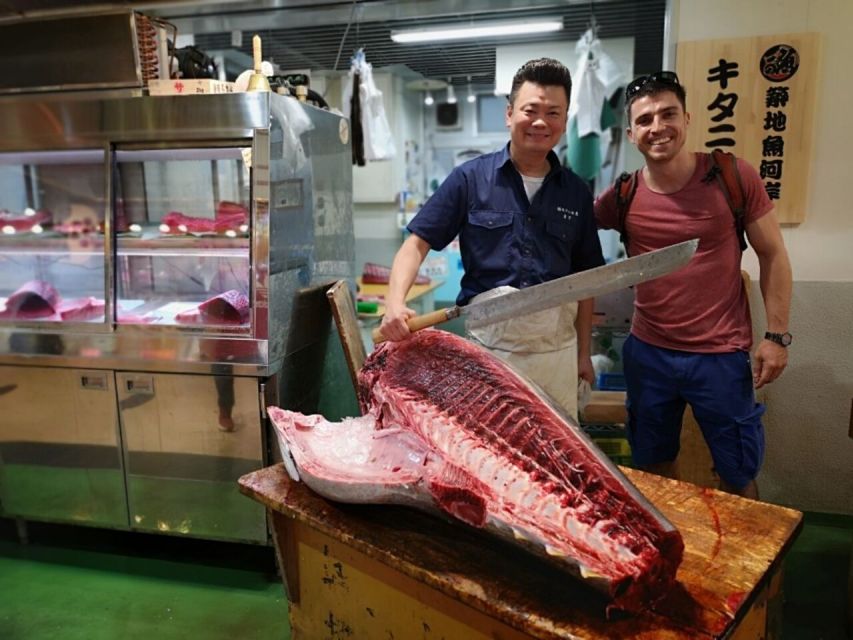
With a maximum of seven participants, this is smaller than a standard bus or mass-market food tour. You can ask about ingredients, request help finding a product, and hear explanations without shouting across a crowd.
The group size also makes the cultural stops easier. At the temple and shrine, your guide can answer questions about customs instead of giving a speech to a large pack of people.
There is one exception to keep in mind: very small bookings can sometimes become a private or nearly private walk, while a full group will feel slower in the narrow market lanes. The experience may therefore feel more relaxed or more constrained depending on attendance and crowd levels.
The guides are a major part of the value. English ability has been praised repeatedly, and named guides such as Mai, Meg, Naoki, Ken Take, Kiyo, Taka, Maiko, Momo, Yoko, and Max have been noted for food advice, cultural explanations, and help with local transport. Guide quality can vary from person to person, but the format gives a good guide plenty of room to make the walk personal.
Practical details before you reserve
The tour lasts three hours and is offered in English. All ages may join, but the route includes places that are not accessible by wheelchair or stroller. If mobility equipment is important for your group, ask the provider about the current route before paying.
Wear comfortable shoes. You will walk through crowded market lanes, stand at stalls, visit religious sites, and finish with a short city walk to the viewing area. Keep your belongings compact so you do not bump into shoppers or stall workers.
Bring cash for food and shopping outside the included tastings and lunch. Drinks are also separate. If you want a beer or sake with your bowl, budget for it.
The activity allows free cancellation up to 24 hours before the start time, and you can reserve now and pay later. Check the available start times before booking, since market conditions and crowd levels affect how pleasant the walk feels.
For families, the food variety can work well, especially if children like trying small bites. For couples and friends, the tour offers an easy shared activity with a proper meal. Solo visitors also fit the format nicely because a small group and guide remove much of the uncertainty of eating alone in a crowded market.
Should you book the Tsukiji food tour?
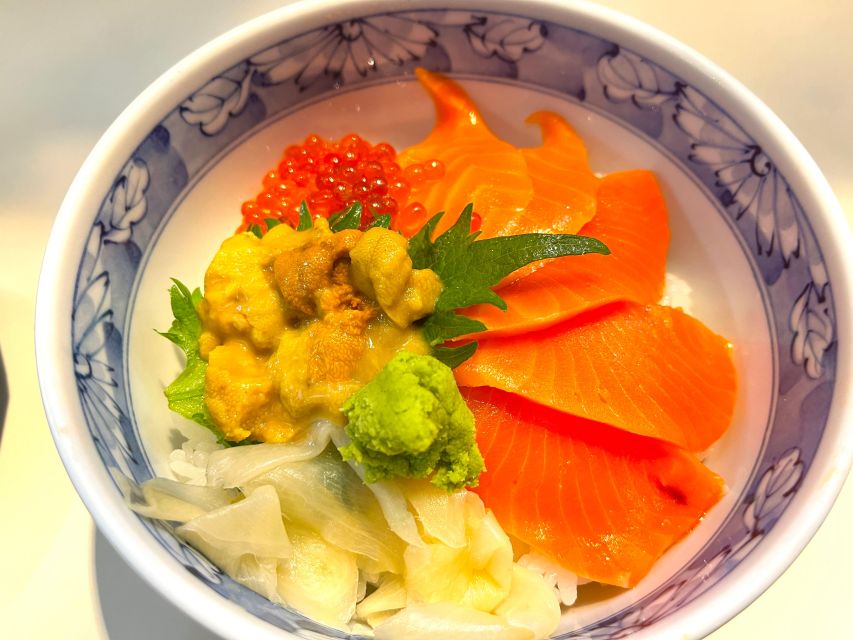
Book it if you want a guided introduction to Tsukiji that combines food with Japanese religious customs. The best reasons are the small group, the chance to try several foods without planning each stall, and the included donburi lunch. The Shiodome view is a useful bonus.
Skip it if you already know Tsukiji well, prefer to shop at your own speed, or want a tour of the former wholesale fish market. This is an Outer Market food and culture walk, not an auction-floor visit.
At $94, it makes sense for a first visit when you value guidance, tastings, lunch, and a clear three-hour route. Arrive at the correct station, bring cash, accept that the market may be crowded, and treat the seafood stops as tastings rather than a full restaurant crawl. For those conditions, this is a practical way to get your bearings and eat very well in one of Tokyo’s most distinctive neighborhoods.
FAQ
Where does the Tsukiji tour meet?
The meeting point is at Tsukiji Station, by the main gate of Tsukiji Hongan-ji. Look for the guide holding a red or orange MagicalTrip sign.
Is the meeting point at Tsukijishijo Station?
No. The meeting point is Tsukiji Station, so take care not to go to Tsukijishijo Station by mistake.
How long does the experience last?
The tour lasts three hours. It includes the temple, market walk and tastings, shrine, lunch, and Shiodome viewing stop.
Is lunch included?
Yes. Seafood donburi lunch is included, up to a maximum value of 1,500 yen. Beer and sake are not included.
Are the market tastings included?
Yes. The tour includes five or more food tastings in the market. Extra street food purchases are paid separately, so bring cash.
Can vegetarians or vegans join?
The tour information says vegan and vegetarian options are not available. Allergy-free food and dietary substitutions cannot be guaranteed, so contact the provider before booking if you have food restrictions.
Is the tour suitable for wheelchair or stroller users?
Not all locations on the route are accessible by wheelchair or stroller. Check with the provider before booking if your group needs an accessible route.
More Markets in Tokyo
More Shopping Tours in Tokyo
More Tsukiji Market Tours in Tokyo
More tours in Tokyo we've reviewed











Tsukiji Market Tours, compared.
 ★ 5.0Tokyo Tsukiji Fish Market Food and Culture Walking TourFrom $99
 ★ 5.0Tokyo: Tsukiji Fish Market Food and Walking tourFrom $30
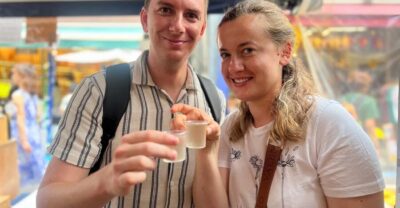 ★ 4.9Tokyo: Tsukiji Fish Market Guided Walking TourFrom $222 hours
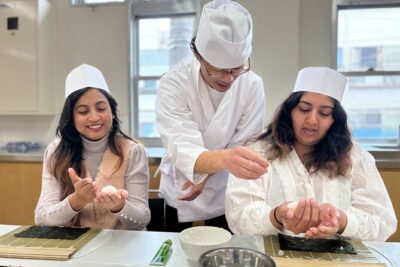 ★ 5.0Tokyo Sushi Making Class in Tsukiji with Professional ChefFrom $49
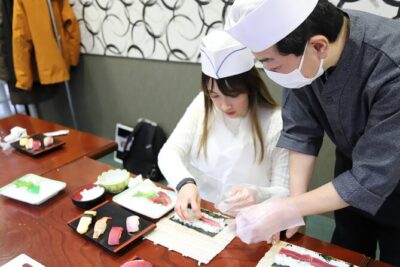 ★ 5.0Tsukiji Fish Market Guided Tour and Sushi Making with Pro ChefFrom $104
★ 4.7Tokyo: Tsukiji Fish Market Food and Culture Walking TourFrom $963 hours
★ 5.0Tsukiji Fish Market Guided Tour and Sushi Making with Pro ChefFrom $104
★ 4.7Tokyo: Tsukiji Fish Market Food and Culture Walking TourFrom $963 hours