
Reviewed · CYCLING TOURS
Tokyo Great Cycling Tour
Tokyo reveals itself quickly from a bicycle. In six hours, you can move from the food stalls of Tsukiji Jogai Market to quiet temple grounds, fashionable districts, Meiji Jingu Shrine, and the Imperial Palace. A bike gets you between these places far faster than walking, while still letting you notice the streets between the headline sights.
I like the small maximum of 12 people, which gives the guide room to watch the group and explain what you are seeing. I also like the human touch from guides such as Toshi, Nick, and Naoko. One practical drawback is the physical effort: you need a moderate level of fitness, and hot weather can make six hours in the saddle demanding.
In This Review
- Key details to know before you ride
- Why a bicycle makes sense in Tokyo
- Starting at Tsukiji Jogai Market
- Zojo-ji Temple and Tokyo Tower
- The city between the famous sights
- Meiji Jingu Shrine in its broad setting
- The Imperial Palace and the route home
- Guides, safety, and the small-group feel
- Food and hot-weather flexibility
- Is the $99.49 price good value?
- Who should book this Tokyo cycling tour?
- My recommendation for the six-hour ride
- FAQ
- Where does the Tokyo Great Cycling Tour start?
- What time does the tour begin?
- How long does the experience last?
- Where does the tour finish?
- How many people can join the tour?
- Which major sights are included?
- Is the tour suitable for every fitness level?
- What happens if the weather is poor?
- Can I cancel for a full refund?
- What happens if the minimum group size is not reached?
Key details to know before you ride
- Tsukiji is still worth seeing: The outer market remains active with shoppers and visitors, even after the inner market moved to Toyosu.
- You cover four major Tokyo sights: The route includes Tsukiji Jogai Market, Zojo-ji Temple, Meiji Jingu Shrine, and the Imperial Palace.
- The group stays small: No more than 12 people join the ride, creating a more personal setting than a large coach tour.
- The route mixes old and new Tokyo: You will see temples and shrines beside Tokyo Tower, expensive apartments, offices, and shopping districts.
- Guides pay close attention to safety: Toshi, Nick, and Naoko are among the guides associated with the tour, and careful support is a repeated strength.
- Weather can change the plan: In hot conditions, a planned picnic may become lunch at an izakaya, and poor weather can lead to a new date or full refund.
Why a bicycle makes sense in Tokyo
Tokyo is huge, and its best-known sights are spread across several districts. On foot, you would spend much of the day moving between them. On public transport, you would get there efficiently, but miss the changing streets, apartment towers, side roads, and small pockets of calm between stops.
A bicycle gives you a useful middle ground. You cover distance without being sealed inside a train or bus, and you can reach streets that larger vehicles cannot. That matters here because the experience is not only about checking off temples and palaces. It is about seeing how very different parts of Tokyo sit close together.
The ride begins at 9:00 a.m. and lasts about six hours. That makes it a major part of your day, not a quick orientation spin. You should expect a steady physical outing rather than a gentle sightseeing loop with only a few minutes of riding.
The small-group format helps. With a maximum of 12 people, the guide can keep an eye on the group and respond to questions without trying to manage a crowd. The experience also feels more flexible than a large organized tour, although the exact pace will still depend on the group and road conditions.
Other cycling tours in Tokyo
Starting at Tsukiji Jogai Market
The meeting point is Tokyo Great Tours at 1-chōme-3-2 Shinkawa in Chuo City. The tour begins from there at 9:00 a.m. and returns to the same meeting point at the end.
One of the first major stops is Tsukiji Jogai Market, the outer market area that remains active after the inner wholesale market moved to Toyosu. You can expect a mix of local shoppers and people seeking Tokyo food culture, with the market providing an immediate sense of the city’s energy.
The stop is scheduled for about 15 minutes, so this is not a long food crawl. I would treat it as a quick introduction and a chance to take in the setting, not as time for a leisurely meal or detailed shopping trip. If you want to buy food, you will need to keep an eye on the clock.
This opening stop gives the tour a useful start. You see a working part of Tokyo before moving on to grand religious buildings and imperial sights. It also sets up one of the tour’s main themes: Tokyo is not one single kind of city. Its food streets, office districts, temple grounds, and ceremonial spaces all share the same urban frame.
Zojo-ji Temple and Tokyo Tower
The next major stop is Zojo-ji Temple, an old Buddhist temple with a memorable visual contrast. Traditional temple architecture sits with Tokyo Tower rising behind it, giving you one of those views that explains Tokyo better than a long speech could.
You have about 15 minutes here. That is enough for a short look and a guide’s explanation, but not enough for a slow, detailed visit to every part of the temple grounds. If you care deeply about Buddhist art or temple architecture, you may want to return on your own later.
For a first look at Tokyo’s religious heritage, though, Zojo-ji is well chosen. The setting shows how older buildings have not simply been pushed out by modern development. They remain part of the city’s daily visual life, framed by towers and surrounded by busy districts.
The short stop also helps keep the whole route moving. This is a sightseeing ride, not a sequence of long indoor visits. You get a clear sense of each place, then return to the bicycle and see more of Tokyo between attractions.
The city between the famous sights
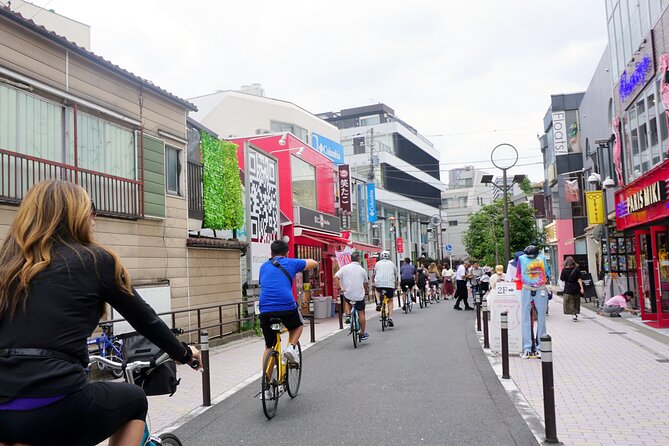
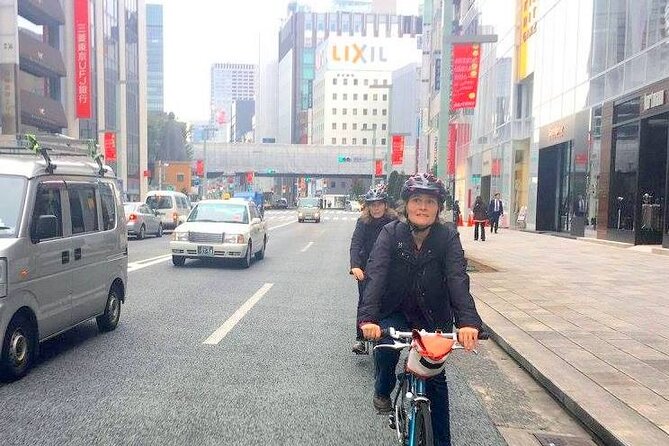
Some of the most useful parts of the route are the stretches that connect the named stops. You pass areas filled with tall, expensive apartment buildings, shopping spaces, and office towers. These districts may not appear on a first-time visitor’s must-see list, but they help explain the scale and wealth of modern Tokyo.
You also pass a cemetery set in the middle of fashionable areas. That detail gives the route some welcome contrast. In Tokyo, a quiet cemetery can sit close to high-end buildings and busy commercial streets, creating a pause without requiring a long journey outside the city center.
I like this part of the ride because it puts the temples and shrines in context. You are not being moved from one isolated attraction to another. You are seeing the ordinary urban fabric around them, including places that a bus route might pass too quickly for you to notice.
The exact experience of these connecting sections will depend on the guide’s route and the day’s conditions. Still, they are important to the value of the tour. The named stops give you structure, while the cycling helps you understand how Tokyo’s neighborhoods fit together.
Meiji Jingu Shrine in its broad setting
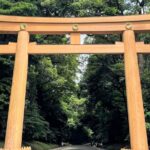
Meiji Jingu Shrine is described as Tokyo’s most popular Shinto shrine, and the tour allows about 20 minutes here. That is the longest scheduled stop among the main attractions, giving you a little more time to absorb the site.
The shrine brings a different religious tradition into the day. Zojo-ji introduces Buddhism, while Meiji Jingu represents Shinto. Seeing both in one ride gives you a useful basic framework for understanding Japan’s religious culture without turning the outing into a formal lecture.
You should expect a guided visit rather than a long, private period for quiet reflection. Twenty minutes goes quickly, especially if the group is gathering, listening, and moving through the grounds. If the shrine matters especially to you, note its details during the tour and consider making a separate visit later.
This stop also breaks up the urban ride with a more ceremonial setting. After apartment towers, offices, and commercial streets, Meiji Jingu offers a different pace and visual mood. The contrast is one of the day’s strengths.

The Imperial Palace and the route home
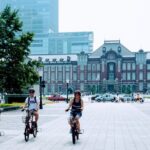
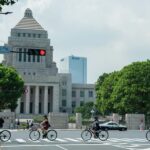
The final major stop is the Imperial Palace, the home of Japan’s Emperor and Empress. The visit lasts about 15 minutes, so you should think of it as a viewpoint and history stop rather than a full palace tour.
The palace is a fitting final landmark because it connects Tokyo’s modern capital with the country’s imperial institution. The guide can place the site within the wider story of Japan, while the ride itself gives you a better sense of how the palace sits within the present-day city.
Do not expect access to every palace area based on the information provided. The stop is short, and the experience ends back at the original meeting point. That return is convenient if you have dinner plans or another activity nearby, although you should allow time to finish the ride and regroup before scheduling anything tight.
By this stage, you will have seen food culture, Buddhist tradition, Shinto practice, modern development, a cemetery, and the imperial center. That range is the tour’s main achievement.
Guides, safety, and the small-group feel
The guides named in the available details include Toshi, Nick, and Naoko. Their role is more than pointing out sights. You need someone who can manage a bicycle group, explain local history while keeping the route moving, and watch the physical welfare of the people riding.
The strongest praise centers on personal care and safety. One guide looked after a solo rider closely during very hot weather, while other guide pairs were credited with keeping people safe and comfortable. That matters more on a six-hour ride than a polished introduction at the meeting point.
A group of up to 12 is a sensible size for city cycling. It is small enough for a guide to notice problems, but large enough to have the social feel of a shared outing. If you prefer total independence, this will still feel structured. If you want help navigating Tokyo by bike, the format is a good fit.
You should also be honest about your own fitness. The tour requires a moderate level of physical ability. If you can ride a bicycle comfortably but are unsure about six hours, consider the heat, the length of the day, and your energy for sightseeing after the tour.
Food and hot-weather flexibility
The usual plan can include a picnic, but weather may change it. In hot conditions, the picnic was changed to lunch at an izakaya, a Japanese pub-style restaurant. That is a useful sign that the tour can respond to comfort and safety rather than following a fixed plan at all costs.
The food arrangement is not presented as the central feature, so you should book this for the cycling and sightseeing first. Still, a lunch change can make a real difference on a hot Tokyo day. Sitting down indoors may be more sensible than eating outside halfway through a long ride.
Weather remains an important consideration. The experience requires good weather, and poor conditions can lead to a different date or a full refund. Tokyo can be hot and humid, so the season and forecast should influence your decision.
Is the $99.49 price good value?
At $99.49 per person, the price is not the cheapest way to move around Tokyo. You could use public transport for far less, and many of the temples, shrines, and public areas on the route do not charge an admission fee.
But transport alone is not what you are paying for. The cost includes a six-hour guided route, a bicycle-based way to connect several districts, safety support, local explanations, and the ability to see more than you could reasonably cover on foot. The small group also adds value, especially if you want questions answered and do not enjoy large coach tours.
I see the price as fair for someone who values time and orientation. You can cover a wide section of central Tokyo in one day, then return to the areas that interested you most. The value is weaker if you already know Tokyo well, prefer to set your own pace, or dislike spending most of a day on a bicycle.
The tour is often booked well in advance, with an average booking lead time of 46 days. That suggests you should not leave it until the last moment if the date matters to your plans.
Who should book this Tokyo cycling tour?
I would recommend it to first-time visitors who want a broad introduction to Tokyo without spending the day underground on trains. It is also a good match for people who enjoy active sightseeing and want modern neighborhoods included along with famous landmarks.
Families with older children may find the format appealing, provided everyone can manage a six-hour cycling outing. Couples, solo visitors, and small groups can also benefit from the personal attention of a maximum 12-person group.
I would be more cautious if you have limited fitness, dislike hot weather, or want long visits inside each attraction. The scheduled stops are short, especially at Zojo-ji and the Imperial Palace. This is a wide-angle tour, not a detailed study of one shrine or temple.
Free cancellation is available up to 24 hours before the start time for a full refund. Changes or cancellations inside that window are not accepted, and the amount paid is not refunded. Since weather and minimum group size can affect the departure, check the final confirmation and keep some flexibility in your schedule.
My recommendation for the six-hour ride
Book this tour if you want to see a lot of Tokyo in one active day, especially if the city is new to you. The strongest reasons are the useful mix of old and modern Tokyo, the route’s reach, the maximum 12-person group, and the guides’ attention to safety and comfort.
Skip it if you want a slow temple visit, a short casual ride, or complete control over your schedule. For the right rider, $99.49 buys more than a bicycle outing. It buys a clear first picture of Tokyo, from Tsukiji’s food streets to the Imperial Palace, with the city’s changing neighborhoods visible all along the way.
FAQ
Where does the Tokyo Great Cycling Tour start?
The tour starts at Tokyo Great Tours, 1-chōme-3-2 Shinkawa, Chuo City, Tokyo 104-0033, Japan.
What time does the tour begin?
The tour starts at 9:00 a.m.
How long does the experience last?
The cycling tour lasts approximately six hours.
Where does the tour finish?
The activity ends back at the original meeting point.
How many people can join the tour?
The group has a maximum of 12 people.
Which major sights are included?
The route includes Tsukiji Jogai Market, Zojo-ji Temple, Meiji Jingu Shrine, and the Imperial Palace.
Is the tour suitable for every fitness level?
No. Participants should have a moderate level of physical fitness.
What happens if the weather is poor?
If poor weather causes cancellation, you will be offered a different date or a full refund.
Can I cancel for a full refund?
Yes. You can cancel at least 24 hours before the experience start time for a full refund.
What happens if the minimum group size is not reached?
You will be offered a different date or experience, or you can receive a full refund.
More Cycling Tours in Tokyo
More tours in Tokyo we've reviewed






Cycling Tours, compared.
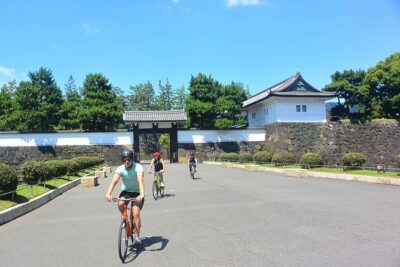 ★ 5.0Tokyo Guided Small-Group Biking TourFrom $106
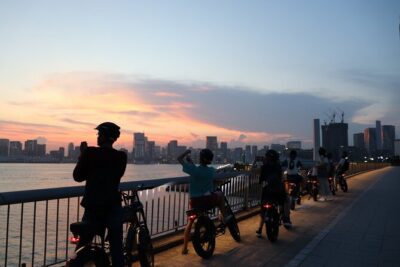 ★ 5.0Tokyo Top Highlights 3h Guided E-bike TourFrom $63
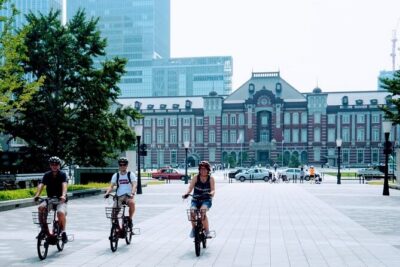 ★ 5.03h Tokyo E-Bike Tour: Hidden Gems, and Local Life with guideFrom $63
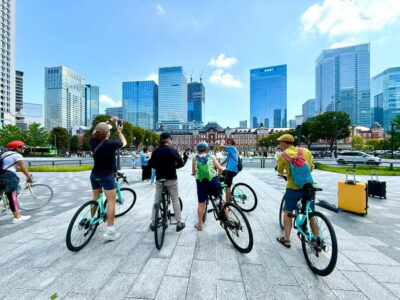 ★ 4.8Tokyo: 3-Hour Bike or E-Bike City Highlights TourFrom $453 hours
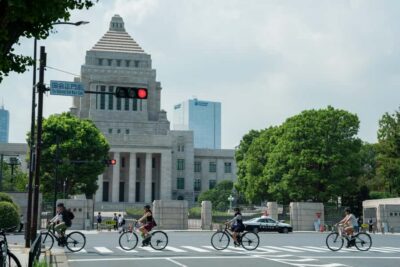 ★ 4.8Tokyo: 3-hour Guided E-Bike Tour of the City’s Hidden GemsFrom $65
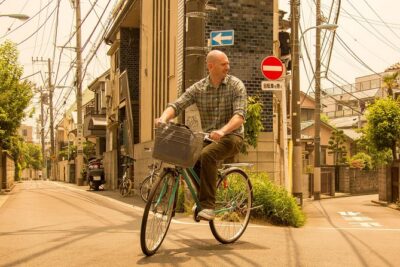 ★ 5.0Tokyo West-Side Cycling & Food TourFrom $99