
Reviewed · SUMO EXPERIENCES
Tokyo: Sumo Experience and Chanko Nabe Lunch
Tokyo’s sumo experience turns a Japanese national sport into a friendly, hands-on lesson. Former professional wrestlers explain the rituals, show how bouts work, and may invite you into the ring for a playful match. You then eat chanko nabe, the hearty hot pot traditionally linked with sumo training.
I especially like the small-group format, limited to six participants, and the warm, funny style of the wrestlers. I also like that lunch is part of the experience, not an afterthought: the wrestlers prepare the hot pot, and you get time for photographs and conversation.
The main consideration is timing and location. This is a fixed two-hour activity beginning at 1 PM, with Monday sessions in Asakusa and Thursday sessions in Ryogoku. You need to arrive early and use the voucher map to find the exact meeting point.
In This Review
- Key points to know before booking
- Why this sumo lesson works so well in Tokyo
- Meeting the former wrestlers
- Understanding the rituals, rules, and ring
- Your turn in the ring
- Chanko nabe makes this a proper lunch
- Asakusa on Monday or Ryogoku on Thursday
- How much value do you get for $95?
- Who should book this experience?
- Practical advice for a smoother visit
- Should you book the Tokyo sumo experience?
- FAQ
- Where does the sumo experience take place?
- How long does the experience last?
- What time does the activity start?
- Is the instruction in English?
- Is lunch included?
- What food is served?
- Can I request a vegetarian or Halal meal?
- Will every participant wrestle a sumo wrestler?
- Is the activity wheelchair accessible?
Key points to know before booking
- Learn directly from former professionals: English explanations cover sumo rules, rituals, training, and competition.
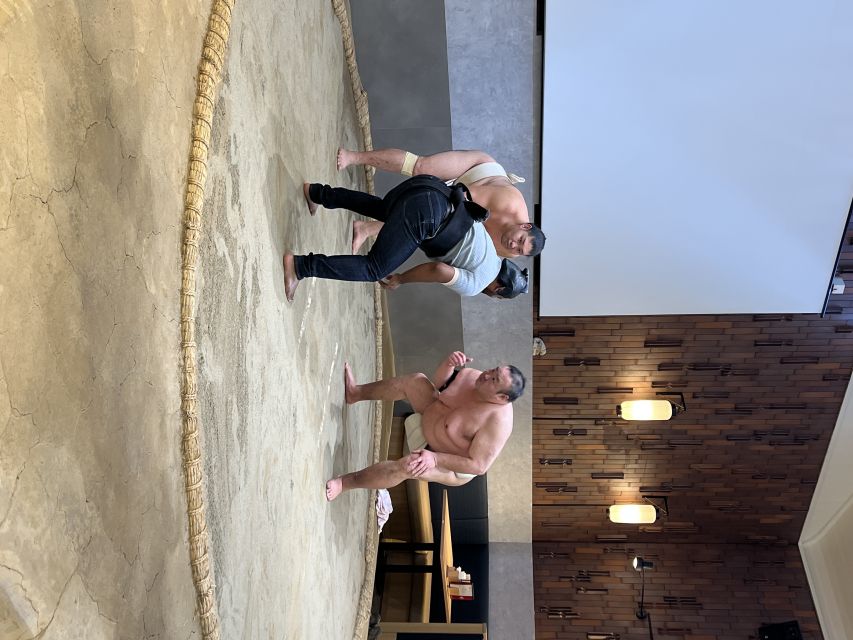
- Try a playful bout: You may be invited to put on a sumo costume and face a wrestler in the ring.
- Eat chanko nabe for lunch: The wrestlers prepare this filling Japanese hot pot, with food and lunch included.
- Choose the neighborhood carefully: Monday sessions take place in Asakusa, while Thursday sessions are in Ryogoku.
- Expect a compact schedule: The activity lasts two hours and starts promptly at 1 PM.
- Plan for a personal experience: The listed group limit is six, though the room may include more tables or participants at some sessions.
Why this sumo lesson works so well in Tokyo
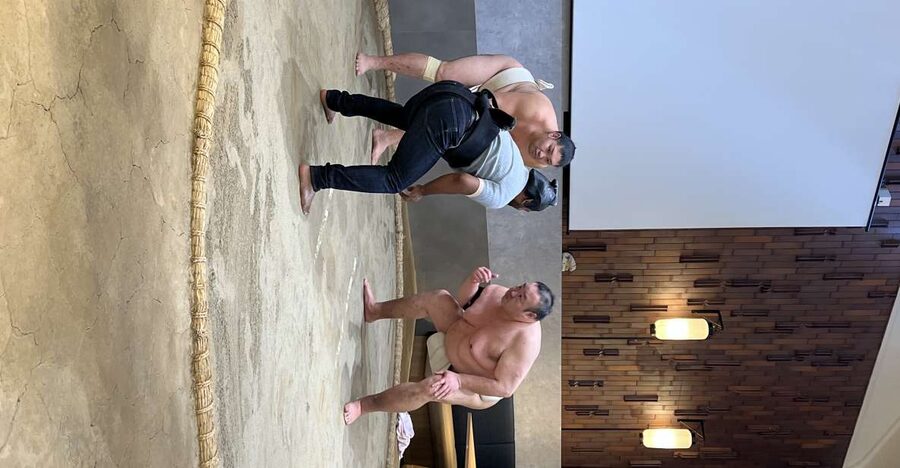
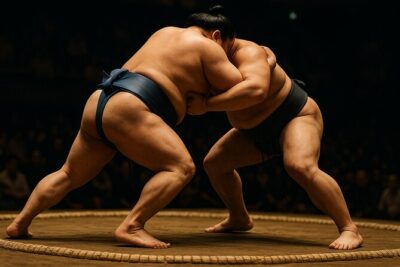
Sumo can look simple from the outside: two large athletes push, shove, and try to force one another out of a circular ring. The real sport is more layered. The bowing, salt throwing, foot stamping, ring entrance, and careful preparation all carry meaning, but it is easy to miss those details when you watch a bout without guidance.
This experience gives you the missing context. Former professionals explain what you are seeing in English, then demonstrate the movements and rituals at close range. You are not just watching a staged performance. You are learning how the sport is organized and why its formal gestures matter.
I like this approach for first-time visitors because it does not assume you already follow sumo. You can arrive knowing nothing beyond the name and still understand the basic rules by the end. The explanations also cover training and competition, so the lesson connects the ceremony to the physical work behind it.
The tone is deliberately playful. That matters. Sumo has a serious cultural and athletic side, but a two-hour introduction would feel heavy if it treated every ritual like a museum lecture. The wrestlers use humor and audience interaction to keep the lesson moving, while still giving you useful information.
A few more Tokyo tours and experiences worth a look
Meeting the former wrestlers
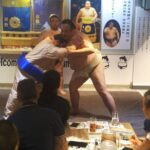
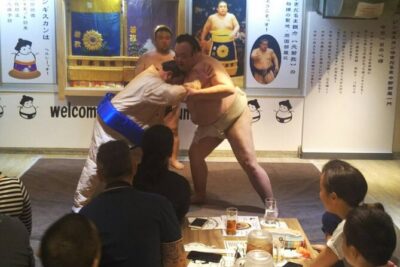
The central attraction is the chance to meet retired sumo wrestlers face to face. Their size and strength are part of the spectacle, but their role here is not simply to pose for photographs. They explain the sport, demonstrate techniques, answer questions, and invite people to participate.
The English instruction is one of the strongest practical features. You do not need an interpreter or a Japanese-speaking companion to follow what is happening. The presenters have been praised for clear English, friendly teaching, and good comic timing.
Some sessions feature wrestlers known as Audrey and Jumbo. Their showmanship helps turn the demonstration into something more lively than a standard talk. The exact presenters may vary, so I would treat those names as a useful possibility rather than a promise for every date.
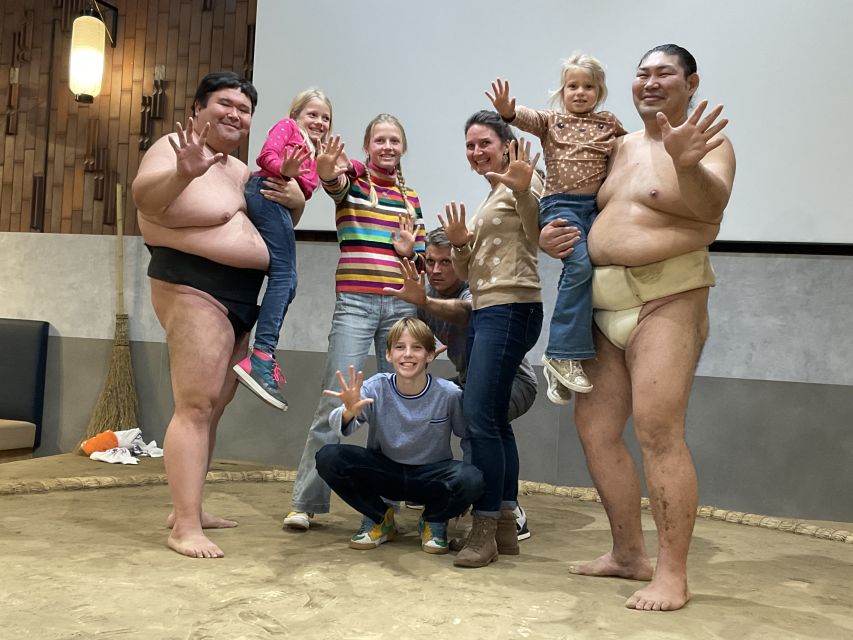
The atmosphere is informal. The wrestlers are friendly with children and adults, and they make room for photographs. If you are shy about participating, you can watch the demonstrations and enjoy the meal. If you want a story to tell when you get home, you can volunteer for the ring.
Understanding the rituals, rules, and ring
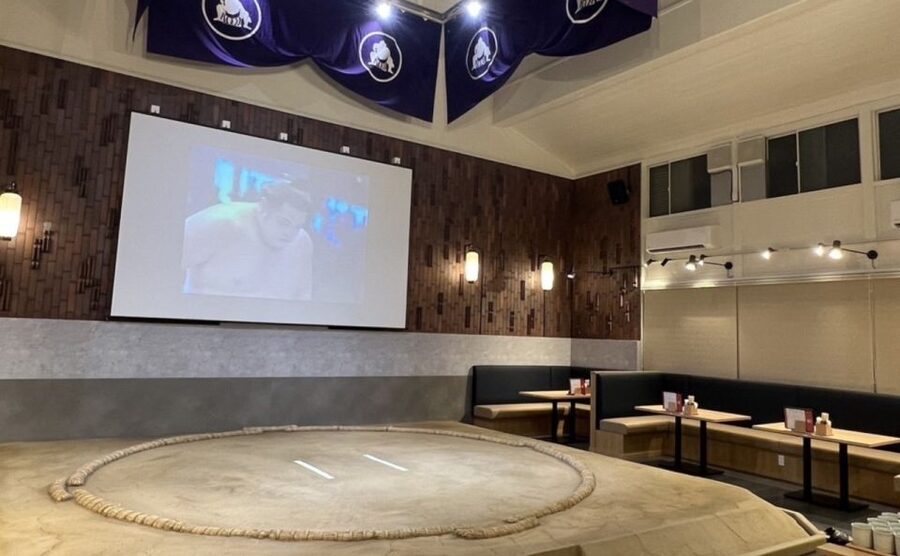
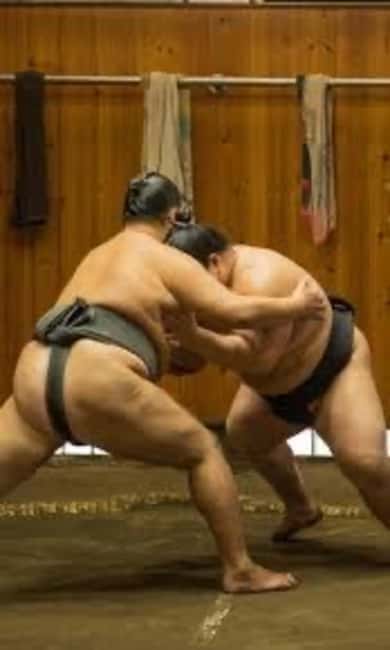
The lesson helps explain why sumo is more than a short burst of strength. The ring and the movements around it follow established rules. The wrestlers show how a bout begins, what techniques can be used, and how a match is won.
You also get a closer look at the rituals that surround competition. These gestures can seem slow when you are eager to see the actual bout, but they are part of what makes sumo distinct. With an English explanation, you can connect the actions to discipline, respect, preparation, and the ceremonial side of the sport.
The demonstrations are not presented as a formal tournament. That is important to understand before you book. This is an educational performance with interactive comedy, not a chance to watch current professional wrestlers compete in an official match.
Still, the physical demonstrations show plenty of power. One activity participant weighing about 105 kilograms described feeling like a child when trying to push against a professional. That gives you a useful sense of the strength involved, even in a lighthearted encounter.
Your turn in the ring
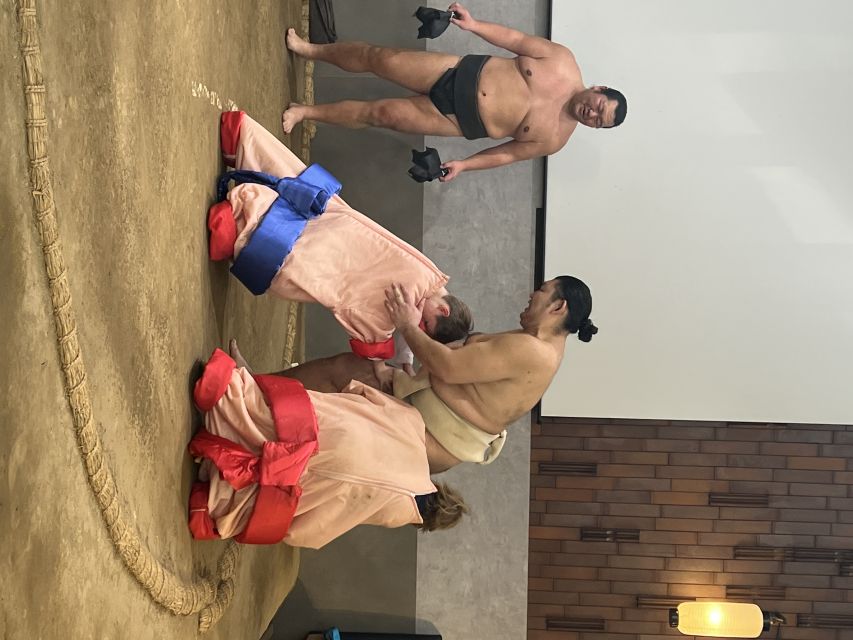
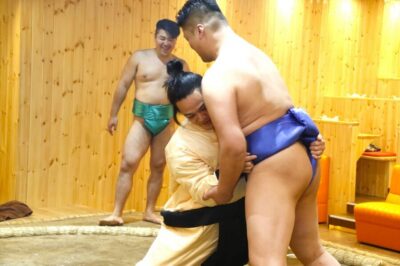
The interactive part is where this experience becomes memorable. Some people from the audience may be chosen to put on a sumo wrestler costume and help with the demonstration. Not everyone can be selected, so you should not book it with the assumption that you will wrestle.
The wording matters here: this is a playful duel. The wrestlers control the demonstration, and the goal is laughter, photographs, and a better feel for the sport. You do not need athletic skill, but you should be comfortable with a little public attention if you volunteer.
Families often find this section especially enjoyable. Children can watch the wrestlers demonstrate their strength, and some may have the chance to try a sumo pose or bout, depending on the session. Adults can join in too, and the activity is not limited to people who already know the rules.
I would wear clothes that allow easy movement and avoid booking this as your only plan for the hour afterward. The activity is only two hours, but the interactive section can involve standing, posing, and moving around the ring. The supplied information does not specify a dress code, so comfortable clothing is the sensible choice.
Even if you are not picked, you are not left out. The format includes demonstrations, explanations, and time for pictures. The experience is designed so that watching is still worthwhile.
Chanko nabe makes this a proper lunch
After the sumo lesson, you eat chanko nabe, a Japanese-style hot pot prepared by the wrestlers themselves. The dish is closely associated with sumo training because it is filling and gives athletes plenty of energy. Here, it serves a practical purpose too: it turns the workshop into a complete midday activity.
The meal is served hot and quickly, according to the experience details. It has been described as plentiful and delicious, with dessert and drinks included in some sessions. The exact menu can vary, so I would think of the meal as a generous Japanese lunch rather than a fixed restaurant tasting menu.
You prepare or assemble the hot pot yourself, adding an interactive food element to the afternoon. That gives you something to do while continuing the social side of the experience. Sitting around the ring also keeps the sumo theme present during lunch instead of ending the cultural part as soon as the demonstration finishes.
The food is not merely a prop. It helps explain the daily life connected with sumo. Chanko nabe is associated with stamina and communal meals, so eating it after learning about training gives the dish a useful cultural context.
Vegetarian and Halal meals can be requested, but you need to note the requirement in your reservation or contact the provider by email at least two days before the date. Do not wait until the door opens. Dietary requests need advance planning.
A few more Tokyo tours and experiences worth a look



Asakusa on Monday or Ryogoku on Thursday
The neighborhood depends on your chosen day. Monday sessions take place in Asakusa, while Thursday sessions are held in Ryogoku. The exact address is sent with your voucher and map, so you should check that document rather than rely on a general Tokyo map search.
This split is useful when planning your day. Asakusa is a natural match for a sightseeing schedule centered on old Tokyo streets and traditional attractions. Ryogoku is the better fit if you want to pair the experience with the area most closely associated with sumo.
The activity itself ends back at the meeting point. There is no hotel pickup or drop-off, so you are responsible for reaching the venue and continuing to your next stop. That is not a problem for most independent visitors, but it does mean you should allow time to find the exact entrance.
Arrival matters. The activity starts at 1 PM and runs on a fixed schedule. The information says the door opens at 12:40, though it lists the time as 12:40 AM, which conflicts with the afternoon start. Confirm the opening time on your voucher or with the provider, and plan to arrive before 1 PM rather than cutting it close.
How much value do you get for $95?
At $95 per person, this is not the cheapest Tokyo lunch. You are paying for more than the food, though. The price includes entrance, participation, and lunch, plus English instruction from former professionals and the chance to interact directly with them.
The value is strongest if you want a focused cultural activity rather than a standard restaurant meal. A meal alone would cost less. A sumo explanation, demonstration, costume interaction, photographs, and hot pot lunch together make the price easier to justify, especially for a first visit to Japan.
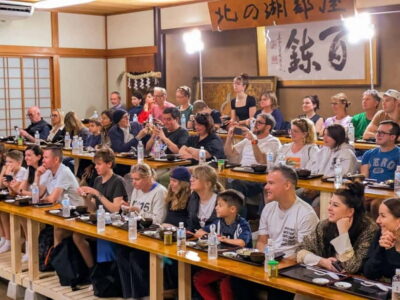
The small-group limit of six also helps. A compact group usually gives you a better chance to hear the explanations and ask questions. That said, one account describes a room with more tables and people than expected. The listed group type is small, but the overall venue may feel larger than an intimate private lesson.
I would not choose this solely for an official sumo match. This is a workshop and demonstration, not a tournament ticket. If you want to watch live competition, you need a different plan. If you want a friendly introduction that combines sport, culture, food, and participation, the price is reasonable for Tokyo.
Who should book this experience?
This suits families particularly well. The wrestlers make an effort to include children, and the playful demonstrations keep younger participants interested. It also works for adults who want something more active than a standard guided walk.
It is a good choice for first-time visitors who find sumo confusing. You will get the basic structure, the rituals, the training side, and the physical reality of the sport in one short session. The English teaching removes a major barrier.
Food-focused visitors should also consider it. Chanko nabe is not just lunch here. You see how it fits into the world of sumo, then eat it in the same setting as the demonstration.
This may not suit you if you dislike audience participation or want a quiet, formal cultural lecture. The wrestlers use humor, invite volunteers, and create a social atmosphere. You can watch without taking part, but the room is built around interaction.
It also may not suit a very tight sightseeing schedule. The activity is two hours, begins at a set time, and has no pickup. Add travel time to and from the venue, especially if you are crossing Tokyo between Asakusa, Ryogoku, and another district.
Practical advice for a smoother visit
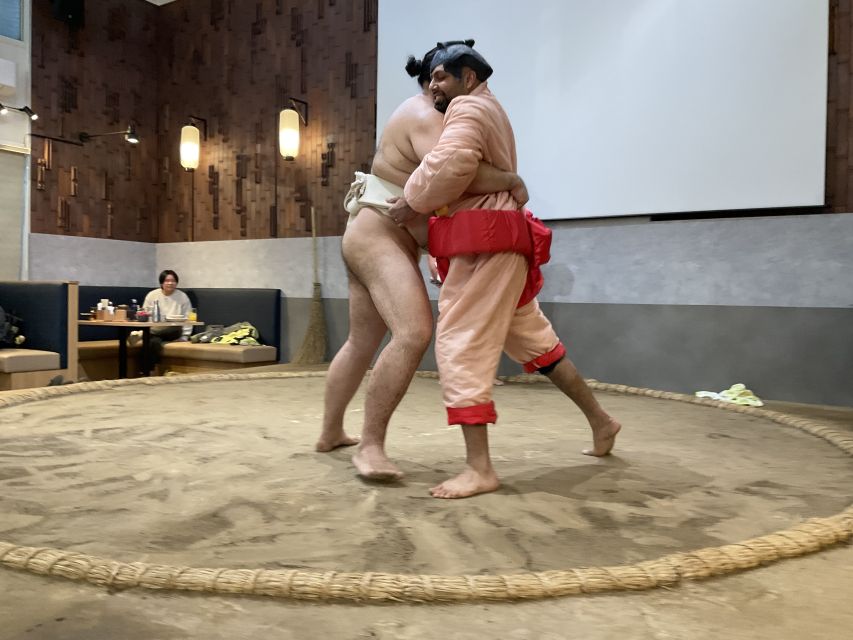
Book with the correct day and district in mind. Monday means Asakusa, and Thursday means Ryogoku. Since the voucher contains the exact meeting point, read the map before leaving your hotel.
Arrive early. The start time is 1 PM, and late arrival could mean missing the opening explanation. The door opening time is given as 12:40, but because the supplied information labels it AM, check the final voucher for clarification.
Tell the provider about vegetarian or Halal requirements no later than two days before participation. The standard meal is chanko nabe, so dietary planning is more important here than on an ordinary sightseeing stop.
Bring a camera or phone. There is time for photographs with the wrestlers, and the ring provides a memorable setting. If you hope to participate, volunteer when invited, but remember that selection is not guaranteed.
The activity is wheelchair accessible, which makes it an option for a wider range of visitors. You should still use the provider’s exact meeting-point details when checking access arrangements.
Cancellation is free up to 10 days in advance for a full refund. That is useful if your Tokyo plans are still moving around, but the cutoff is earlier than many short activities, so mark the date on your calendar.
Should you book the Tokyo sumo experience?
I would book this if you want a lively introduction to sumo with clear English explanations, direct contact with former professionals, and a real Japanese lunch. The combination is efficient: in two hours, you learn the rules and rituals, watch demonstrations, take photographs, try a playful bout if selected, and eat chanko nabe.
The strongest reasons to go are the friendly wrestlers, the chance to see the sport at close range, and the way lunch adds cultural meaning rather than just filling time. It is particularly good for families and visitors who have never watched sumo before.
Skip it if your main goal is an official tournament or a quiet museum-style visit. For everyone else, $95 is a fair price for a compact, entertaining experience that gives you both context and a chance to take part.
FAQ
Where does the sumo experience take place?
The activity takes place in Asakusa on Mondays and in Ryogoku on Thursdays. The exact meeting point and map are sent with your voucher.
How long does the experience last?
The activity lasts two hours.
What time does the activity start?
It starts promptly at 1 PM. You need to arrive before the start time. The information says the door opens at 12:40, but lists that time as 12:40 AM, so confirm the exact opening time with your voucher.
Is the instruction in English?
Yes. The instructor language is English, and former professional sumo wrestlers explain the sport in English.
Is lunch included?
Yes. Lunch is included, along with the entrance and participation fees.
What food is served?
You eat chanko nabe, a Japanese-style hot pot prepared by the wrestlers. Drinks and dessert may also be included as part of the lunch service.
Can I request a vegetarian or Halal meal?
Yes. Note the requirement in your reservation or contact the provider by email at least two days before the activity.
Will every participant wrestle a sumo wrestler?
No. Some audience members may be selected to wear a sumo costume and help with the demonstration, but participation is not guaranteed for everyone.
Is the activity wheelchair accessible?
Yes. The activity is listed as wheelchair accessible. It ends back at the meeting point, and hotel pickup and drop-off are not included.
More Lunch Experiences in Tokyo
More Sumo Experiences in Tokyo
More tours in Tokyo we've reviewed



Sumo Experiences, compared.
 ★ 4.8Tokyo: Sumo Show Experience with Chicken Hot Pot and a PhotoFrom $1032 hours
 ★ 4.8Tokyo: Sumo Show and Dining ExperienceFrom $7990 minutes - 2 hours
 ★ 5.0the SUMO showFrom $89
 ★ 5.0Tokyo Shinjuku Sumo Show & Experience with PhotoFrom $79
 ★ 4.8Tokyo: Sumo Show and Experience in ShinjukuFrom $691h 30m
 ★ 4.6Tokyo: Sumo Tournament Tour with Chair Seat TicketsFrom $141