
Reviewed · TOURS
Tokyo’s Scariest Shitamachi Ghost Tour
Tokyo’s darker side is not found in a haunted house. It is tucked beside office towers, old temples, cemeteries, and ordinary streets where people still treat unhappy spirits with care. This evening tour connects those places through grim tales, folklore, and Edo-era history, ending in Asakusa.
I like the small maximum of eight, which gives you room to ask questions and chat with your guide. I also like the route itself: it moves beyond the usual sightseeing circuit and shows how Japanese beliefs about death, revenge, and appeasing spirits shape real places. The main caution is simple: this is a walking-heavy history tour with ghost stories, not a nonstop scare show.
In This Review
- Key points at a glance
- What kind of ghost tour is this?
- 6 p.m. at Tokyo Station: a practical start
- Otemachi and the shrine office workers avoid turning their backs on
- Minamisenju: tragedy, worship, and uneasy places
- Asakusa after dark, from Sensoji to Kappabashi
- The stories: frightening, tragic, or simply fascinating?
- Why the cultural angle is worth your time
- Price, group size, and what you really get
- Who should book it?
- My verdict: book for the city behind the city
- FAQ
- How long does Tokyo’s Scariest Shitamachi Ghost Tour last?
- What time does the tour begin?
- Where does the tour meet?
- Where does the tour end?
- Is public transportation included?
- Is food included?
- How large is the group?
- Can children join the tour?
- Is the tour refundable if I cancel?
Key points at a glance
- Three very different districts: Start among Otemachi offices, continue through Minamisenju, and finish around Asakusa’s temples and old streets.
- Guides who add personality: Guides named Joris, Maik, Mike, Frank, Haruka, Melissa, and Michael have led departures, with the assigned guide varying by date.
- More grim history than jump scares: Expect tragic stories, cultural traditions, and folklore. Some departures include only a handful of supernatural tales.
- A serious evening walk: The route lasts about three hours and can involve 8,000 steps or more, so wear good walking shoes.
- One snack, not dinner: A local snack is included, but you should eat before the 6 p.m. start.
- Budget for transit: Public transportation costs about 400 yen per person and is not included in the $114.95 price.
What kind of ghost tour is this?
The title promises Tokyo’s scariest side, but the experience works best when you think of it as a nighttime walking tour about death, spirits, and Japanese custom. You will hear stories of revenge, tragedy, old crimes, and supernatural reports while visiting the places tied to them.
That distinction matters. Some people come hoping for a steady stream of ghost legends and leave disappointed because much of the talk is historical or cultural. Others enjoy the fact that the tour explains why shrines exist, how spirits are appeased, and why certain locations still carry an uneasy reputation.
I would not book this solely for theatrical fright. There are creepy stops, graveyards, dark stories, and unsettling folklore, but the tone depends heavily on the guide and the questions you ask. Guides such as Joris, Maik, Frank, Haruka, and Melissa have been praised for being funny, warm, and able to explain Japanese culture in clear English.
The small-group format helps. With no more than eight people, you can ask why a shrine is placed in a certain spot or how a local legend developed. It also makes the evening feel more like a private conversation than a lecture, though the exact experience depends on the group and assigned guide.
If you're still narrowing it down, here are other tours in Tokyo we've reviewed.

6 p.m. at Tokyo Station: a practical start
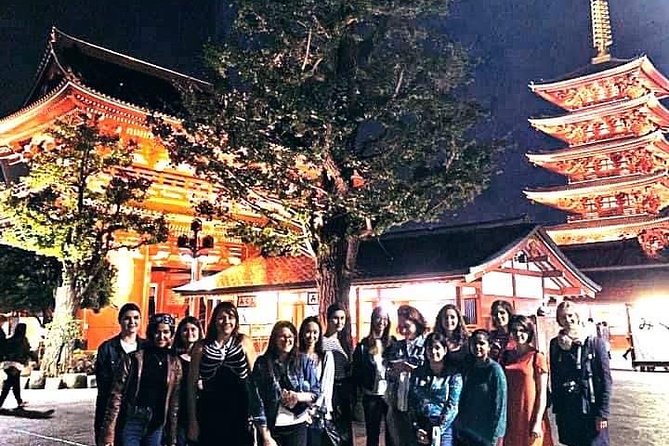
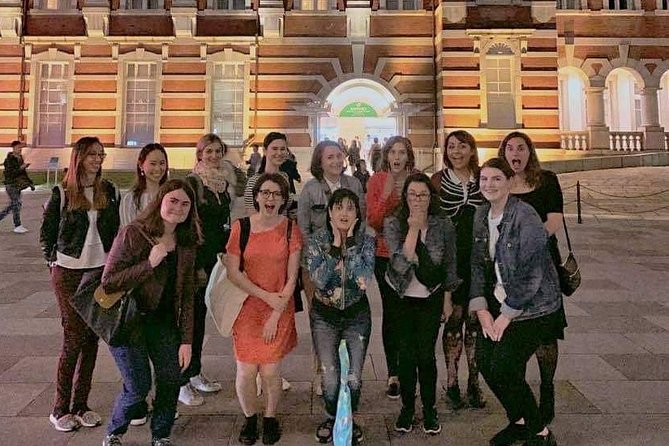
The meeting point is the Yamato Transport baggage service counter at the Marunouchi North Exit of Tokyo Station. That is a busy place, so give yourself time to find the correct exit and dome area. The start time is 6 p.m., when office districts begin to empty and the change from daylight to night becomes part of the setting.
Your first transport costs extra. The total public transportation expense is around 400 yen per person during the tour, so bring cash. The route uses transit between districts, then continues on foot. This is not a coach tour, and you should not expect to sit for long stretches.
The evening timing works well for the subject. Otemachi feels especially different after dark, when modern office buildings surround a site connected to an angry spirit. The tour then shifts into older neighborhoods, where temples, lanes, and religious sites give the stories a more grounded setting.
Eat before you meet the guide. The tour includes one local snack because it runs around dinner time, but it does not include a full meal or a planned dinner stop. A small bite helps, but it will not replace dinner after several hours of walking.
Otemachi and the shrine office workers avoid turning their backs on
The first stop lasts about 20 minutes and takes place in Otemachi. Here, the contrast is the point. You are surrounded by Tokyo’s corporate center, yet the story focuses on a shrine and the vengeful spirit associated with the area.
The tale includes a striking local belief: people working in nearby offices still do not want to turn their backs toward the shrine’s location. That detail gives the stop its power. You are not hearing about a distant castle or an isolated forest. The story is tied to a place surrounded by daily commuters and high-rise workplaces.
Admission is free. The value comes from the explanation, not from entering a paid attraction. Your guide provides the context that you would almost certainly miss while passing through Otemachi on your own.
This first stop is also a useful test of the tour’s style. If you like stories that connect folklore with Japanese ideas about respect and spiritual balance, you will probably settle in quickly. If you want dramatic ghost effects, you may find the pace too quiet.
Minamisenju: tragedy, worship, and uneasy places
The Minamisenju portion lasts about 40 minutes. Your guide visits several places of interest, including two separate places of worship with tragic histories and reports of paranormal activity. The exact stories are tied to the sites, so the atmosphere comes from standing in the locations rather than hearing a general collection of legends.
This part of the tour shows why Japanese ghost stories often sit close to religious practice. A troubling spirit is not always treated as a monster to be defeated. The response may involve a shrine, prayer, ritual, or ongoing respect. That difference gives the tour a useful cultural angle and keeps it from feeling like a standard Western ghost walk.
You might find these stories sadder than scary. Death and loss are central themes, and the guide may spend more time explaining the historical setting than building suspense. That is one reason some people rate the tour highly for its cultural value, while others feel the supernatural material is too thin.
The locations are free to visit, but remember that you are touring active religious sites and neighborhood streets. Keep your voice low, follow the guide’s instructions, and treat shrines and temples as places of worship rather than stage sets. One especially worthwhile element is learning how to pray and pay your respects properly at a sacred shrine.
Asakusa after dark, from Sensoji to Kappabashi
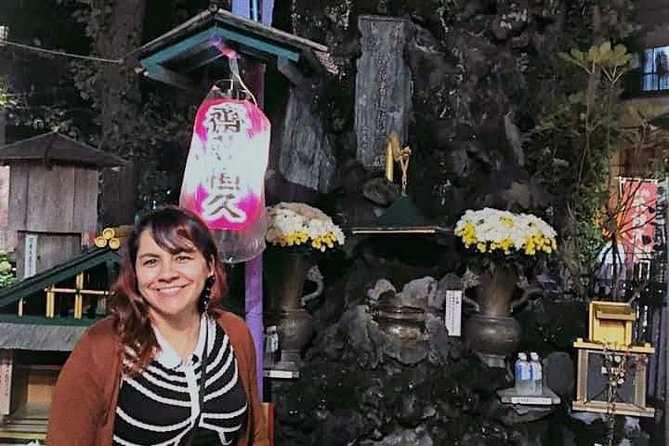
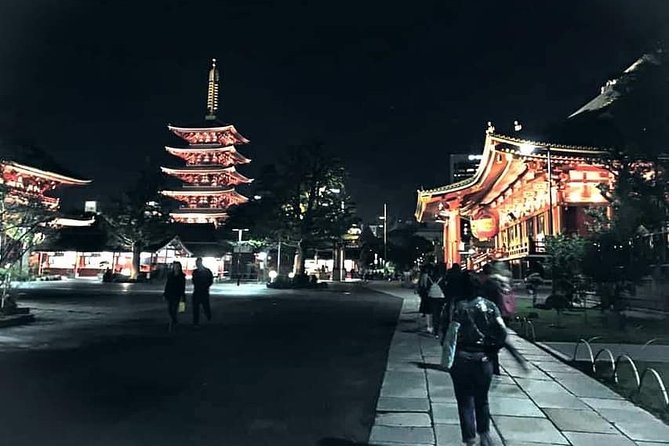
The longest section takes about 1 hour and 20 minutes in Asakusa. It includes a viewpoint, Sensoji Temple, streets around the temple, Old Hag’s Pond, and Kappabashi. This is where the tour becomes both a ghost walk and a nighttime introduction to one of Tokyo’s most atmospheric districts.
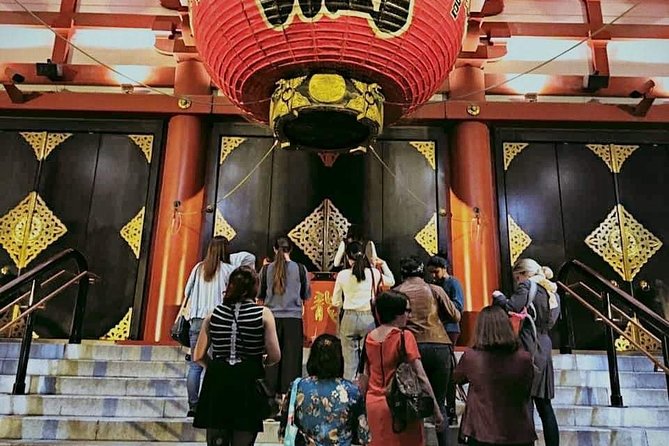
Sensoji is familiar to many visitors by day, but darkness changes your attention. Instead of racing through the gate, incense, and main temple buildings for photographs, you hear stories linked to the surrounding area. The nearby streets offer a different view of Asakusa, especially if you have already visited the temple during daylight.
Old Hag’s Pond supplies one of the more memorable names on the route. The stop has a strong folklore feel, and the title alone signals that the material may be disturbing. The tour does not sanitize the darker parts of Tokyo’s past, so younger children may need a gentler version of the stories.
Kappabashi adds another change of scene. It is known for shops connected with restaurant supplies, yet at night it becomes part of a route about old tales and strange associations. You will see parts of Asakusa that are easy to skip on a normal sightseeing day.
The Asakusa section is also where comfortable shoes matter most. Several people have described the outing as a good hike, with one account estimating roughly 8,000 steps. You should be ready to walk, stand, cross streets, and keep moving between stops. If you need frequent rest breaks, ask about the pace before booking.



The stories: frightening, tragic, or simply fascinating?
The central question is what you mean by a ghost tour. If you want ten or fifteen short supernatural tales, this may not satisfy you. Some departures have included only around five main stories, and several accounts describe the material as mostly historical, tragic, or cultural rather than paranormal.
If you enjoy the connection between place and belief, the balance makes more sense. The stories explain why a shrine matters, why a site gained an eerie reputation, and how people respond to spirits that are believed to remain unsettled. You get fewer tales, but each one is attached to a real location.
The best guides appear to shape the experience. Joris has been praised for engaging conversation and broad knowledge of Tokyo’s past. Maik has been described as funny and good at mixing scary tales with cultural insight. Frank has handled questions well and added citywide context. Haruka has helped people find other places to visit after the tour, while Melissa has been praised for a warm, personal approach.
Those names are not a guarantee of who you will meet. The guide varies. Still, the repeated praise for the guides’ humor, patience, English, and personal attention is important because the route itself is not a theatrical production. Your guide is the main storyteller, interpreter, and pace setter.
Why the cultural angle is worth your time
Japanese ghost traditions are closely tied to ideas of duty, memory, and respect for the dead. The tour uses spooky places to explain a broader way of seeing the city. You may learn why people make offerings, how shrines can be linked to unhappy spirits, and why a tragic event can shape the reputation of a neighborhood for generations.
I find that approach more useful than a simple list of haunted addresses. Tokyo can seem modern and fast, but older beliefs remain visible in the way people use shrines and temples. This tour gives you a reason to look twice at religious sites you might otherwise photograph and leave.
It also takes you beyond the standard Asakusa route. You still visit Sensoji, but the evening includes Otemachi, Minamisenju, Old Hag’s Pond, and Kappabashi. Those stops make the experience worthwhile for someone who has already seen Tokyo’s major sights and wants a different thread to follow through the city.
The tradeoff is that the tour may feel like a long conversation while riding the subway and walking. Some people enjoy that relaxed format. Others feel the transit time and small talk reduce the amount of spooky content. Be honest about which type of evening you want.
Price, group size, and what you really get
At $114.95 per person, this is not a cheap casual walk. Add roughly 400 yen for public transport, plus dinner before or after, and the cost becomes significant. The price makes the most sense if you value a small group, a guide who can answer questions, and access to unusual stories connected to real Tokyo locations.
You are paying for about three hours of guiding, route planning, translation, cultural explanation, and an included local snack. Admission to the sites is free. The tour does not offer a show, a private vehicle, or a meal.
The maximum group size is eight. That is a genuine advantage in Tokyo, where crowded tours can make it hard to hear or ask questions. You should receive more personal attention than on a large bus-style outing, though a group of eight still means the pace and interests of others affect your night.
This tour is booked about 20 days ahead on average, so do not leave it until the last minute if your Tokyo schedule is tight. Confirmation arrives within 48 hours, subject to availability. The booking is non-refundable and cannot be changed, so check your date, meeting point, and walking ability before paying.
Who should book it?
I would recommend this experience to adults and older children who like local history with an eerie edge. It suits repeat visitors, curious first-time visitors, and anyone who prefers neighborhood stories to a standard list of major sights.
It is also a good match for people who enjoy talking with a guide. The strongest part of the evening is the chance to ask about Japanese beliefs, Tokyo’s past, shrines, and the meaning behind the stories. Guides such as Joris, Maik, Frank, Haruka, and Melissa have been praised for making that conversation lively.
The tour can be adapted to be family-friendly, but you should still ask about the tone if you are bringing young children. Some stories involve death, violence, or disturbing folklore. The material is not designed as a light children’s attraction.
I would skip it if you want a short, polished scare experience with frequent ghost tales. I would also skip it if you dislike long walks, subway transfers, or standing outdoors after dark. This is an active evening, not a seated storytelling session.
My verdict: book for the city behind the city
Book this tour if you want Tokyo’s unsettling stories explained in their cultural setting, and if you are happy to walk several miles for them. The route reaches places you may not find on a normal sightseeing plan, and the small group gives the guide room to make the evening personal.
Go in expecting grim history, folklore, shrine customs, and a few genuinely creepy locations. Do not expect every stop to deliver a supernatural shock. Eat first, carry cash for transport, wear sneakers, and allow more than three hours in case the walk runs long.
For the right audience, this is a thoughtful and unusual way to see Tokyo after dark. For a dedicated ghost-story fan, the title may set expectations too high. The decision comes down to one question: do you want scares alone, or do you want the darker beliefs and tragedies of the city tied to the places where they happened?
FAQ
How long does Tokyo’s Scariest Shitamachi Ghost Tour last?
The tour lasts approximately three hours. Some accounts describe the outing as lasting three or more hours, so you should avoid scheduling a tight dinner reservation immediately afterward.
What time does the tour begin?
The tour starts at 6 p.m.
Where does the tour meet?
The meeting point is the Yamato Transport Tokyo Station Marunouchi North Exit Baggage Service Counter in the Marunouchi North Exit dome area of Tokyo Station.
Where does the tour end?
The tour ends at 1-chome-2-35 Asakusa in Taito City. The guide can drop you at a nearby restaurant or bar, or at the entrance to a metro station.
Is public transportation included?
No. Public transportation costs about 400 yen per person during the tour and should be paid separately. Bring cash.
Is food included?
One local snack is included because the tour takes place around dinner time. A full dinner is not included, and there is no planned dinner stop, so eat before the tour.
How large is the group?
The activity has a maximum of eight travelers.
Can children join the tour?
The tour can be made family-friendly. Some stories are dark, so ask for the family-friendly approach if you are bringing children.
Is the tour refundable if I cancel?
No. The experience is non-refundable and cannot be changed for any reason after booking.
More tours in Tokyo we've reviewed







Tours, compared.
 ★ 5.0Mt Fuji and Hakone 1-Day Bus Tour Return by Bullet TrainFrom $163
 ★ 5.01-Day Tokyo Bus TourFrom $129
 ★ 5.0Tokyo: Shinjuku Food Tour (13 Dishes at 4 Local Eateries)From $86
 ★ 4.4Tokyo Mt Fuji 5th St & Hakone Cruise Bus Tour w/Bullet TrainFrom $15410 hours
 ★ 5.0Flagship 2-Hours Official Street Go-Kart Tour – Tokyo Bay ShopFrom $642 hours to 2 hours 30 minutes (approx.)
 ★ 4.7Tokyo: Mt. Fuji Tour, Hakone Ropeway, Owakudani, Lake AshiFrom $5410 hours