
Reviewed · SHINJUKU TOURS
Licensed Guide Shinjuku Dramatic Tour (Tokyo)
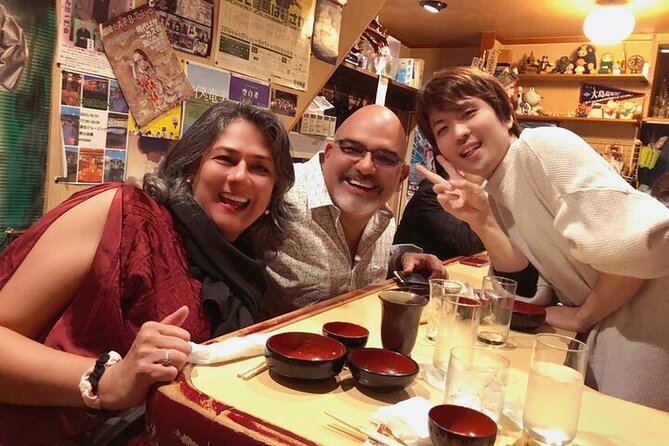
Shinjuku changes character after dark. This private two-hour walk takes you from tiny Golden Gai bars and Omoide Yokocho food stalls to Kabukicho’s Godzilla Road, a shrine, Korean Town, and a maid cafe. The main appeal is the guide’s local knowledge and the access to places you might pass without understanding.
I like the wide cultural range and the fact that you see both old Tokyo customs and newer subcultures in one short outing. I also like the private format, which lets your group ask questions and set the pace instead of following a large crowd.
The main consideration is timing. Seven stops in about two hours means short visits, and the tour does not include food, drinks, or paid admissions. If you want long meals or time inside each venue, you will need to return on your own.
In This Review
- Key points about the Shinjuku evening walk
- Why this tour gives you more than a Kabukicho walk
- Golden Gai: tiny bars and a movie connection
- Omoide Yokocho: Tokyo food and after-work life
- Omoide no Nukemichi: a photogenic lane with a different feel
- Hanazono Shrine: a quiet lesson in how to pray
- Godzilla Road: a quick photo stop with a timed roar
- Shin-Okubo Korean Town: culture that has blended into Tokyo
- Maidreamin and the many sides of Japanese subculture
- The guide matters more than the ticket price
- Meeting at Shinjuku Prince Hotel at 5:00 p.m.
- Who will enjoy this Shinjuku tour most
- Should you book the Licensed Guide Shinjuku Dramatic Tour?
- FAQ
- How long is the Licensed Guide Shinjuku Dramatic Tour?
- What time does the tour start?
- Where does the tour meet?
- Where does the tour end?
- Are food, drinks, or admission fees included?
- Can I cancel for a full refund?
Key points about the Shinjuku evening walk
- Golden Gai after dark: See the compact bar district known for its tiny drinking spaces and connections with Japanese film.
- Food culture in Omoide Yokocho: Learn about yakitori, oden, takoyaki, okonomiyaki, sake, and the after-work culture around Shinjuku Station.
- A practical shrine lesson: At Hanazono Shrine, your licensed guide explains how to pray in the Japanese style.
- A full look at modern Shinjuku: The route covers Godzilla Road, Shin-Okubo Korean Town, host and hostess clubs, and maid-cafe culture.
- Private and affordable: At $28.53 per person, the tour offers a personal guide without the cost of a large private sightseeing package.
- A useful evening start: Meeting at 5:00 p.m. gives you an easy way to begin a night in Shinjuku.
Why this tour gives you more than a Kabukicho walk
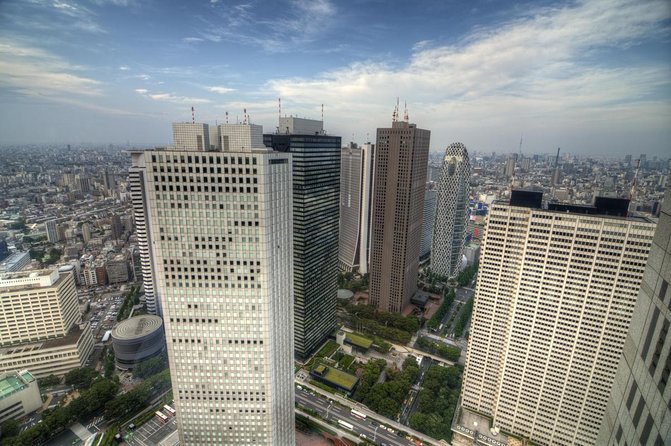
Many first visits to Shinjuku focus on bright signs, large crowds, and the famous entertainment district. This tour gives you a wider picture. You see places tied to food, religion, cinema, work culture, Korean influence, Japanese pop culture, and nightlife.
That mix is the strongest reason to book. The guide is not simply leading you from one photo stop to another. The stated aim is to explain the culture and history of Shinjuku, with a national government-licensed guide interpreter handling the walking tour. The feedback supplied for this experience places particular weight on the guide’s friendly, funny manner and ability to explain local secrets.
You should also expect a brisk pace. The listed stops add up to about 95 minutes, leaving roughly 25 minutes for walking, introductions, and moving through the district. That is enough time to get your bearings and learn what you are seeing, but not enough for extended shopping, a full meal, or a long stop in every neighborhood.
A few more Tokyo tours and experiences worth a look

Golden Gai: tiny bars and a movie connection
The first stop is Shinjuku Golden Gai, scheduled for about 10 minutes. This famous cluster of narrow lanes and very small bars feels unlike the broad avenues around Shinjuku Station. The tour connects Golden Gai with film, noting that many films have been made there.
A short guided explanation matters here. On your own, you can photograph the lanes, but you may not understand why the district has such a strong place in Tokyo’s cultural image. The guide can give the setting context and point out the most useful details during the brief visit.
Do not expect a bar crawl. Admission is free, and the tour does not include drinks. The 10-minute stop is best treated as an introduction, not a chance to settle in for a drink or inspect several bars. If Golden Gai interests you most, plan to return later, following the guide’s advice about where to go and how to behave in this compact nightlife area.
Omoide Yokocho: Tokyo food and after-work life
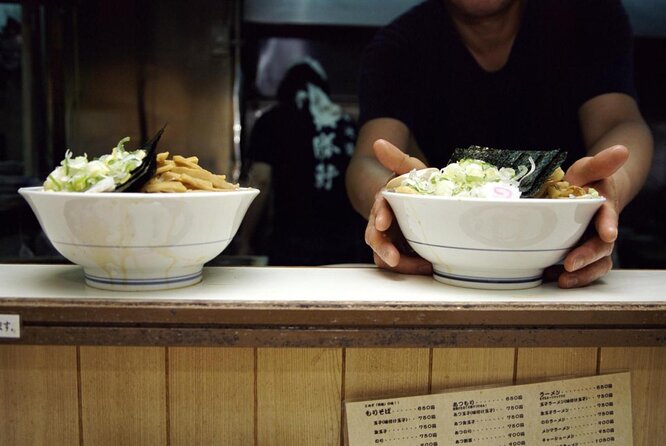
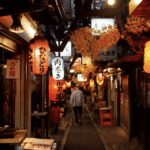
At Omoide Yokocho, also known as the corner of memories near Shinjuku’s west exit, you get a look at a very different side of the district. The narrow food lanes are associated with yakitori, oden, takoyaki, okonomiyaki, sake, and other familiar Japanese foods.
The guide uses this stop to explain Japanese food culture, not just point out menu items. You can also see Japanese businesspeople eating and drinking after work, which gives the place a link to office culture as well as cuisine.
Again, the schedule allows about 10 minutes. That is enough for an explanation and a quick look, but not a proper meal. Snacks and drinks are not included, so bring money if you want to eat later or return after the tour. Since the activity ends back at the starting point, you can easily use the walk as a guide to a later dinner.
This is one of the most useful stops for first-time visitors who want a little cultural explanation with their street food. You learn what you are looking at before deciding which dishes to try.
Omoide no Nukemichi: a photogenic lane with a different feel
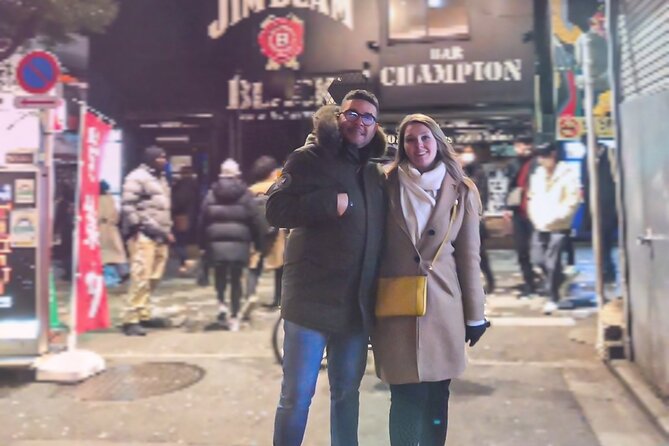
Omoide no Nukemichi is presented as a visually unusual place, one that may not immediately feel like the Japan shown in standard sightseeing images. The guide points out the most photogenic spot during a 10-minute visit.
The value here is visual contrast. Shinjuku is often represented by enormous signs and high-rise streets, but smaller passages can tell a different story. This stop gives you a chance to notice texture, scale, and the odd turns that make a walking tour worthwhile.
There is little reason to expect a major attraction or a long explanation. It is a quick photo and orientation stop. If you enjoy street photography, keep your camera ready, but respect the fact that these lanes are part of a working neighborhood rather than a staged exhibit.
Hanazono Shrine: a quiet lesson in how to pray
Hanazono Shrine is the clearest change of mood on the route. It is described as the most popular shrine in Shinjuku, and the tour uses the 10-minute stop to teach you how to pray.
That practical lesson is worth having. Japanese shrines have a customary approach to purification and prayer, and a guide can explain the steps in a simple way. You are not left guessing what to do at the entrance or prayer area.
The shrine also provides a pause from the entertainment streets. You move from food stalls and nightlife signs to a religious site that remains part of daily life in the city. The visit is short, so do not expect a full tour of the grounds or an extended history lecture. Still, it adds balance to an evening that could otherwise focus only on bars, clubs, and pop culture.
I especially like this pairing of old and new Tokyo. The experience does not treat Shinjuku as only a party district. It shows you a place of worship within the same urban area.
Other guided tours in Tokyo

Godzilla Road: a quick photo stop with a timed roar
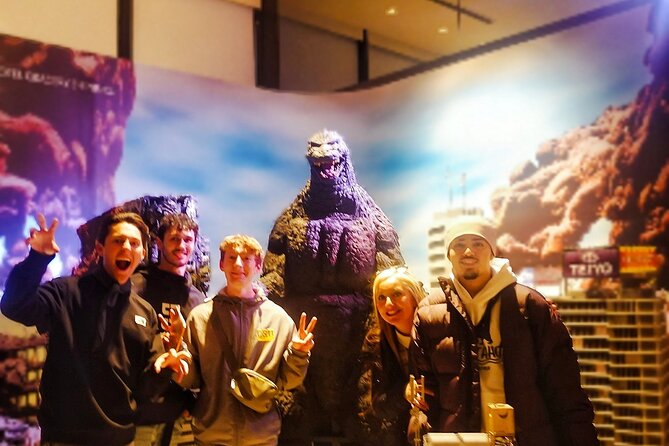
The Godzilla Road and Godzilla Head stop lasts about five minutes. The guide shows you a photogenic angle toward the Godzilla head and explains that the character represents Japan.
The most unusual detail is the hourly cry. Godzilla roars every hour, so your timing may allow you to hear it. The schedule does not guarantee that you will catch the sound, but the possibility adds a bit of fun to the stop.
Five minutes is enough for a photo and a quick look. It is not enough to explore the surrounding entertainment area in depth. Think of this as a memorable landmark between neighborhoods, not as a major attraction requiring an admission ticket.
For families, this may be one of the easiest moments to enjoy. Younger visitors get a famous monster, while adults get a clear example of how popular characters become part of a city’s public identity.
Shin-Okubo Korean Town: culture that has blended into Tokyo

The longest stop is Shin-Okubo Korean Town, with about 30 minutes scheduled. This area lets you see Korean culture as it has developed within contemporary Japan. The tour presents the Korean boom and the ways Korean influences have blended into the city.
That makes this more than a food detour. Depending on what is open and visible during the walk, you might notice Korean restaurants, shops, and pop-culture references, but the confirmed focus is the cultural blend itself. Your guide’s explanation is important because the area can be easy to reduce to shopping and eating without seeing the larger exchange between Japan and Korea.
The stop also introduces Japanese subcultures such as host clubs and hostess clubs. These businesses are part of Shinjuku’s nightlife economy, but the tour does not include paid entry. The guide’s role is to explain what these venues are and how they fit into the district.
Thirty minutes gives this section enough room to ask questions. If you are interested in modern Asian culture, nightlife, or the way neighborhoods change with new influences, this may be the most informative part of the tour. It is also a useful reminder that Tokyo culture is not fixed or isolated. Different trends are continually meeting in the city.
Maidreamin and the many sides of Japanese subculture
The final stop is Maidreamin Shinjuku East-exit Store, where you can see the maid-cafe concept. The visit is scheduled for about 20 minutes, and the guide also introduces other forms of Japanese subculture, including escape games, game centers, batting centers, and rock bars.
The tour description does not include admission, food, or drinks, and it specifically says that places requiring an entry fee are not visited. So you should treat this as an introduction and viewing opportunity rather than a full maid-cafe session. If you want to order something or spend time inside afterward, that would be separate from the tour.
This stop works well because it avoids making Japanese subculture seem like one single thing. Host clubs, hostess clubs, maid cafes, gaming, batting, and rock bars serve different audiences and offer different forms of entertainment. The guide helps you sort out those differences during a short visit.
Some people will find this section fascinating. Others may prefer temples, gardens, or traditional food. That is an honest dividing line for this experience. You should book it because you want to understand modern Tokyo, not because you are seeking a classic sightseeing route.
The guide matters more than the ticket price
At $28.53 per person, this is a low-cost way to add structure to an evening in Shinjuku. You are paying mainly for the licensed guide’s explanations, route planning, and ability to connect places that otherwise seem unrelated.
The value improves if you are visiting Tokyo for the first time, feel unsure about nightlife districts, or want cultural background without committing to a long full-day tour. A private group also means you can ask questions without competing with a large party.
The price does not cover snacks, drinks, or entry fees. That keeps the cost down, but it also means your total evening budget will rise if you decide to eat at Omoide Yokocho or visit a venue after the walk. Since the tour ends at the meeting point, you can make those choices afterward.
The activity has an average booking lead time of 49 days. That suggests planning ahead is sensible, especially if your Tokyo dates are fixed. Confirmation arrives when you book, and free cancellation is available up to 24 hours before the 5:00 p.m. start. Poor weather can lead to a different date or a full refund, since the walk requires good weather.
Meeting at Shinjuku Prince Hotel at 5:00 p.m.
The meeting point is Shinjuku Prince Hotel, 1-chōme-30-1 Kabukichō, Shinjuku City, Tokyo 160-8487. The location is near public transportation, which makes it practical for an evening outing.
Arrive with comfortable shoes and a charged phone. The ticket is mobile, and the route includes several neighborhoods and walking connections. The tour begins at 5:00 p.m. and returns to the meeting point, giving you a familiar place to finish the evening.
The activity is private, so only your group takes part. That matters if you are traveling with family members of different ages or want to ask detailed questions about local customs. Most people can participate, but the experience still involves city walking and short stops on foot.
Who will enjoy this Shinjuku tour most
I would recommend it to you if you want a quick, guided introduction to the many faces of Shinjuku. It suits first-time visitors, families with older children, culture fans, photographers, and anyone curious about nightlife without wanting to explore every district alone.
It is also a good choice if you have only one free evening. In two hours, you cover food lanes, a shrine, a movie-linked district, a giant monster landmark, Korean Town, and Japanese pop culture. Few self-guided walks would connect all those subjects so neatly.
You may want another tour if your main goal is a sit-down food experience, paid attractions, shopping, or a slow historical walk. The schedule is tight, and no food or drinks are included. Golden Gai and Omoide Yokocho are sampled rather than explored at length.
Should you book the Licensed Guide Shinjuku Dramatic Tour?
Book this tour if you want context, variety, and a private guide at a modest price. The strongest part is the combination of places: a shrine beside nightlife, traditional food culture beside Korean influence, and familiar Japanese pop culture beside working entertainment districts.
The guide’s friendly and humorous style is central to the experience, and the route is designed to reveal parts of Shinjuku you might not notice on your own. Just keep your expectations realistic. This is a fast evening orientation, not a long meal, club visit, or detailed tour inside every stop.
For $28.53 per person, I think it is a sensible choice for a first Shinjuku night. Use the walk to learn the district, then return to the food lane, shrine, cafe area, or nightlife street that interests you most.
FAQ
How long is the Licensed Guide Shinjuku Dramatic Tour?
The tour lasts approximately two hours.
What time does the tour start?
The tour starts at 5:00 p.m.
Where does the tour meet?
The meeting point is Shinjuku Prince Hotel, 1-chōme-30-1 Kabukichō, Shinjuku City, Tokyo 160-8487, Japan.
Where does the tour end?
The activity ends back at the meeting point.
Are food, drinks, or admission fees included?
No. Snacks and drinks are not included, and the tour does not visit places that require admission fees.
Can I cancel for a full refund?
Yes. You can cancel at least 24 hours before the experience start time for a full refund. Cancellations or changes made less than 24 hours before the start time are not accepted, and poor weather may result in another date or a full refund.
More Guided Tours in Tokyo
More Shinjuku Tours in Tokyo

More tours in Tokyo we've reviewed



Shinjuku Tours, compared.
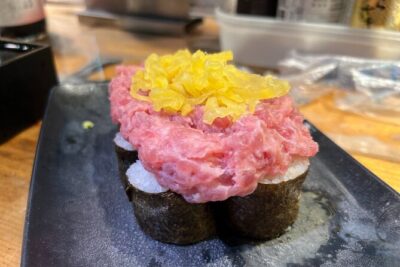 ★ 5.0Tokyo: Shinjuku Food Tour (13 Dishes at 4 Local Eateries)From $86
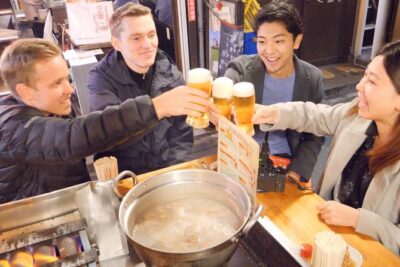 ★ 5.0Tokyo Bar Hopping Tour in Shinjuku (All-You-Can-Drink + Dinner)From $106
 ★ 4.9Tokyo: Shinjuku Food Tour (15 Dishes and 4 Eateries)From $853 hours
 ★ 5.0Best of Shinjuku: Izakaya Food Tour (4 Stops, 14+ Tastings)From $92
 ★ 4.9Tokyo: Shinjuku Local Bar and Izakaya Guided Walking TourFrom $343 hours
 ★ 5.0Tokyo Shinjuku Chopsticks Making ClassFrom $20