
Reviewed · WORKSHOPS
Tokyo: Private Manga Drawing Class with Professional Artist
Tokyo manga workshops often stop at a quick cartoon sketch. This one goes further. In a small studio near Shindaita Station, published manga artist Yumiko teaches you how professionals ink, shade, correct, and add texture. You work with G-pens, maru-pens, brush pens, and classic screentone sheets, not just a pencil and a souvenir postcard.
I like the small maximum of six people, which gives Yumiko time to adjust your hand position and mark up your page. I also like the choice of three difficulty levels, from basic inking to a full character design. The main drawback is the price: $141 for 150 minutes is a serious spend, especially if you already draw well or only want a quick introduction.
In This Review
- Key points to know before you book
- A Tokyo manga class built around real studio technique
- Start with paper, pens, and the tools behind manga
- Choose an activity that matches your drawing level
- Build a character with shapes and balance
- Add shadows and texture with classic screentones
- Finish with corrections, critique, and a signed keepsake
- Is $141 a fair price for 150 minutes?
- Who will get the most from Yumiko’s workshop?
- Small practical details that make the session easier
- Should you book this Tokyo manga class?
- FAQ
- Where does the manga drawing class meet?
- How long does the class last?
- Is prior drawing experience required?
- What drawing tools can I use?
- Can children join the class?
- What do I take home?
Key points to know before you book
- Draw with published artist Yumiko: See her portfolio, ask about manga genres, and get direct feedback on your page.
- Use real manga tools: Try G-pens, maru-pens, brush pens, dip ink, alcohol markers, white-ink pens, and correction fluid.
- Pick your own challenge: Choose inking practice, a character outline, or a complete character design.
- Learn classic screentone work: Cut and apply halftone sheets with an art knife and burnishing spoon for shadows and texture.
- Bring home more than one drawing: Your finished artwork, practice sheets, a mini tool handbook, and a signed portrait are included.
- Easy for beginners: No drawing background is needed, and children age six and up can take part.
A Tokyo manga class built around real studio technique
The lesson begins just outside the single exit at Shindaita Station on the Keio Inokashira Line. That simple meeting point matters in Tokyo, where some stations have a maze of exits. Walk through the ticket gates, step outside, and meet the guide there.
The studio session lasts 150 minutes. That is long enough to learn a few techniques properly, but not so long that a young artist or a first-time student is likely to lose patience. The private-group setup keeps the class focused on your work rather than on a large room moving at one speed.
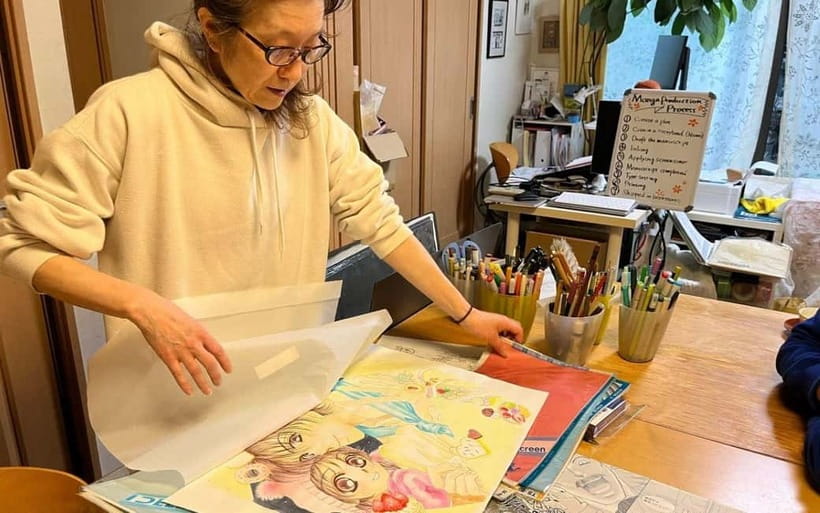
Your instructor is Yumiko, a professional manga artist with serial work in Japanese magazines. Early in the session, you can look through her portfolio and ask about the genres she works in, including shōnen, shōjo, and seinen. Tell her which series or character you like. That gives her a useful starting point when she adapts the lesson to your interests.
English is the main language. Japanese support is available, and one booking included a translator who met the student at the station. If you want to ask detailed questions about drawing or publishing, keep your questions clear and specific. The combination of English instruction and Japanese support should make the process comfortable for most visitors.
Other private tours in Tokyo



Start with paper, pens, and the tools behind manga
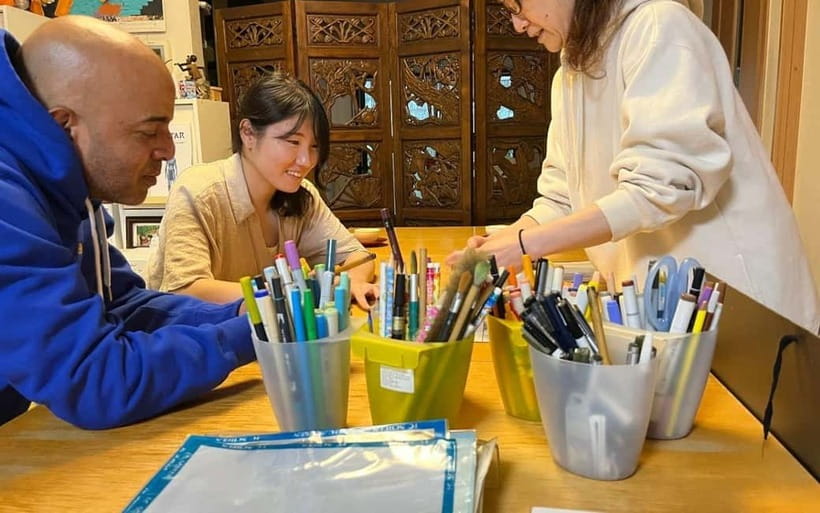
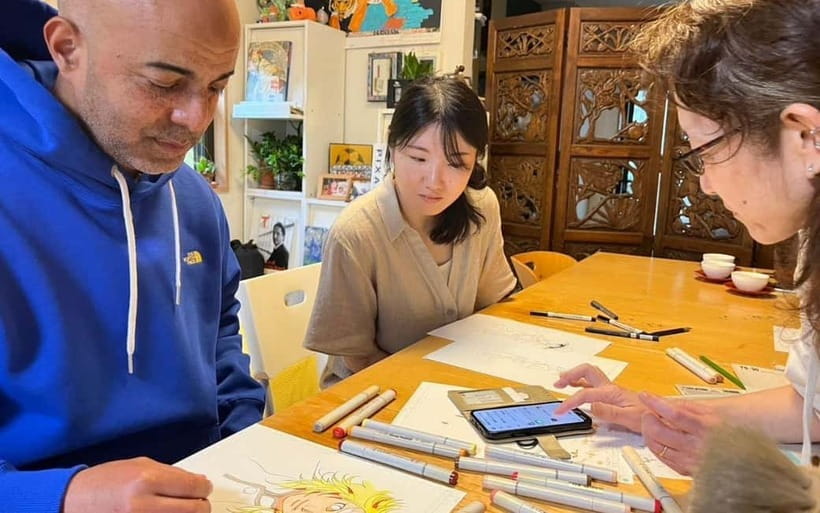
The tools are a major reason to choose this class. You can compare a G-pen, maru-pen, and brush pen rather than simply being told that they produce different lines. Each has a different feel, and line control is one of the first things that separates a flat drawing from one with shape and weight.
You also learn why the paper matters. Yumiko compares premium Kent paper with ordinary copy paper, explaining how tooth and paper weight affect ink. Copy paper is cheap and convenient, but it may not handle ink in the same way as paper made for manga work. This is practical information if you plan to buy supplies in Tokyo or continue drawing at home.
The session also places traditional tools in a current context. You may see how dip ink, alcohol markers, screentones, and digital tablets fit into a modern manga workflow. That is useful because manga is not only about one old-fashioned pen. Many artists mix hand-drawn and digital methods, and this class gives you a clearer sense of where each tool belongs.
Expect a few honest frustrations. Ink can smudge. A line can wobble. Your hand may tire, and a curve that looks easy on the page can prove stubborn. Yumiko addresses these pain points directly, which is more helpful than being handed a perfect sample and told to copy it.
Choose an activity that matches your drawing level
You do not need prior drawing experience. At the start, choose from three levels with printed guideline sheets. The options let you decide how much structure you want.
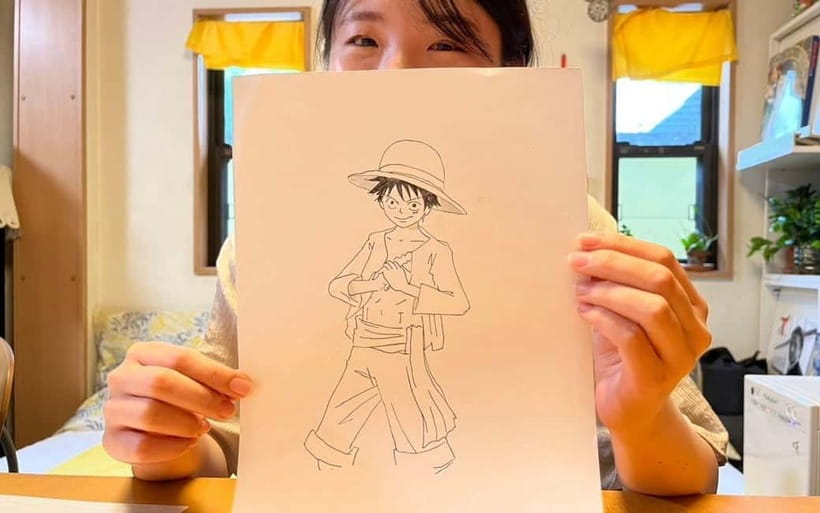
At the easiest level, you can work on inking practice. This is the sensible choice if you have never used a dip pen or if your main goal is to understand line control. It also suits a child who wants to finish a clear piece without spending the whole class wrestling with anatomy.
The next level uses a character outline. You get more freedom while still having a framework to follow. This is a good middle ground for someone who has drawn before but does not yet feel ready to design a figure from a blank page.
The most demanding option is a full character design. You can create a new character at your own pace, request a chibi style, try an action pose, or build an expression sheet. The flexibility is valuable, but remember that a complete character takes longer than a simple practice page. If your time is limited, do not choose a difficult pose just because it looks impressive.
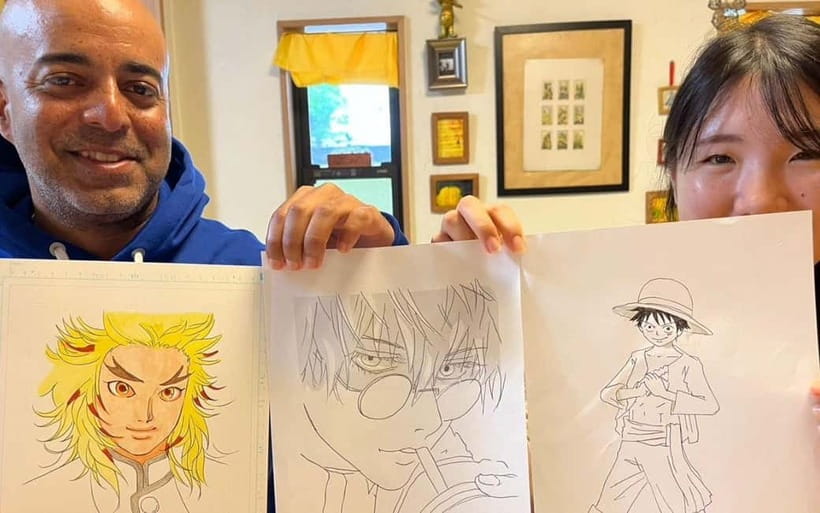
You can also name a favorite character. One student was able to draw Tanjiro from scratch and received a similar drawing signed by Yumiko. That kind of personal subject can make the lesson more memorable, but it also helps to keep your expectations realistic. You are learning a process, not commissioning a finished studio illustration.
Build a character with shapes and balance
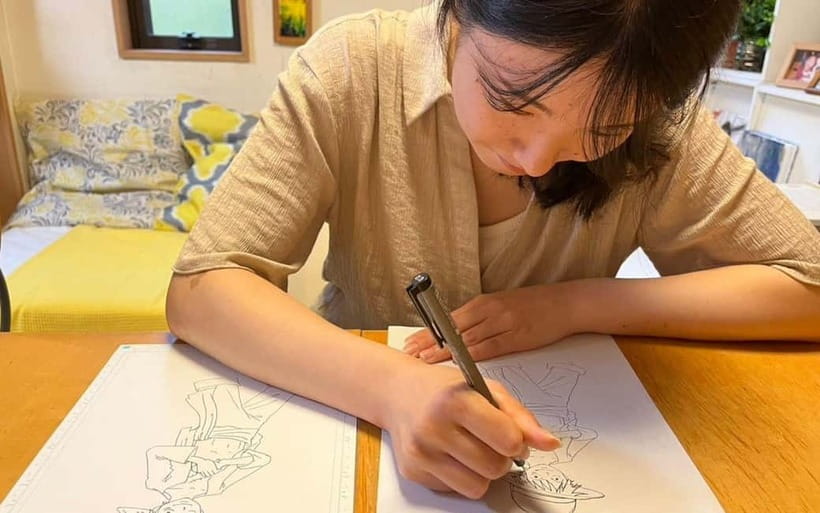
For character work, Yumiko starts with basic shapes and proportions. You learn about head-to-body ratios, the balance line, and the way a pose carries weight. These foundations may sound simple, but they are the part beginners often skip when they rush toward hair, costumes, and dramatic eyes.
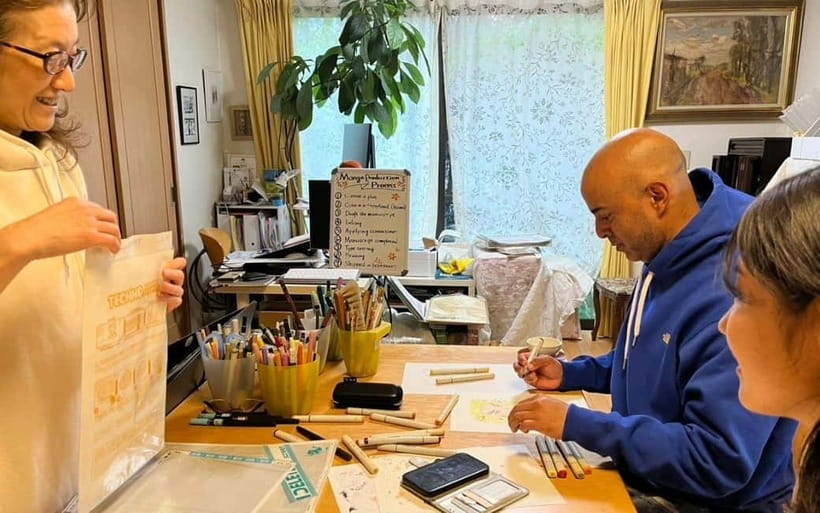
The artist moves around the room and checks posture and hand angles. If you need help, she can demonstrate directly on your page. That personal correction is one of the best parts of a six-person class. A printed tutorial can show what a correct hand looks like, but it cannot notice that you are gripping the pen too tightly or turning your wrist awkwardly.
You practice line weight as well. Thicker lines can suggest volume or bring an edge forward, while lighter lines can keep another part from looking heavy. You may work on tapering, feathering for hair shine, and speed lines for motion.
One useful trick is to rotate the page instead of twisting your wrist to make a clean curve. It sounds minor, yet it can save a beginner from many shaky lines. These small habits are the kind of instruction that remains useful after you leave Tokyo.
Add shadows and texture with classic screentones
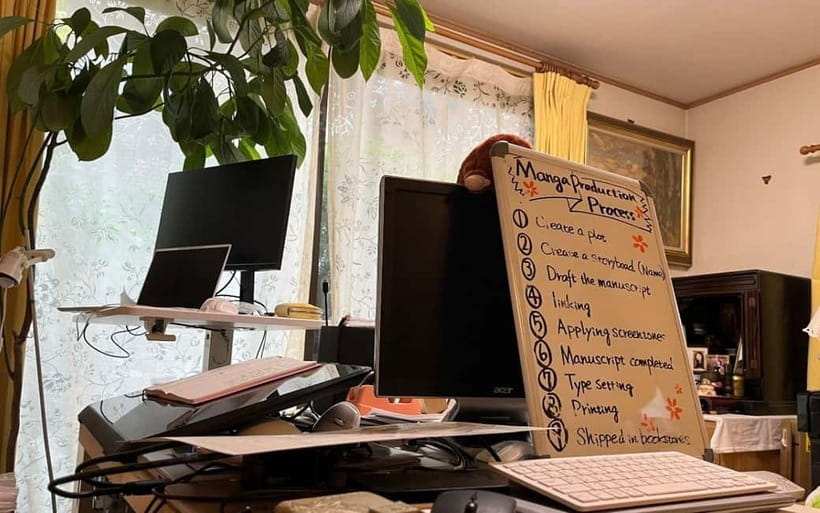
Screentone is the technique that gives this class its strongest sense of old-school manga craft. You choose halftone sheets for shadows, backgrounds, or sparkle effects, then cut and apply them to the page.
The work is hands-on. You use an art knife to trim the sheet and a burnishing spoon to press and blend the edges. The goal is not merely to stick a gray dot pattern onto the paper. You learn how to make the tone sit cleanly within the drawing and how different dot or line patterns change the feel of a scene.
This section may take more patience than expected. Cutting a narrow edge accurately is not as quick as clicking a digital shading tool. If you are especially interested in screentone, tell Yumiko early so you can leave enough time for it. One student who had already taken another manga class planned to return specifically to learn more about screentone work.
For beginners, screentone is also a good reminder that manga depends on design choices beyond drawing faces. Texture, shadow, contrast, and empty space all affect the mood of a panel. Even a simple character sheet can look more finished once those choices are handled well.
A few more Tokyo tours and experiences worth a look



Finish with corrections, critique, and a signed keepsake
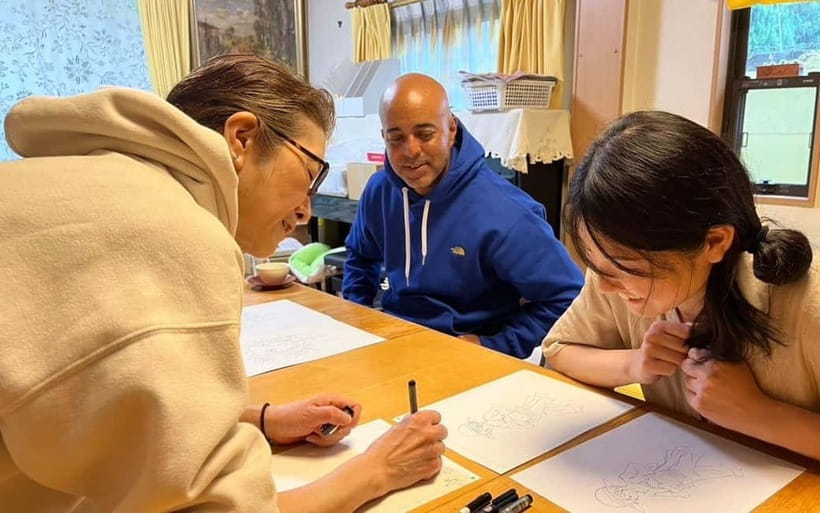
Near the end, you add final marks and clean up mistakes. White-ink pens help create highlights, while correction fluid gives you a way to repair small errors. These are not magic fixes, but they show how artists keep working when a line goes wrong.
Yumiko gives one-on-one feedback and marks areas to improve. This is where the private format pays off most. You can ask why a face looks flat, how to make hair move, or where a line should become heavier. The critique is tied to your actual drawing rather than to a general lecture.
You take home the original artwork and practice sheets. A mini handbook lists the tools used in class and where to buy them in Tokyo, which is handy if you want to stop at an art shop before leaving Japan. You can also take photographs with Yumiko and your finished piece.
The signed portrait is an especially nice extra. It gives you a polished example to keep beside your own drawing, and it turns the class into more than a stack of exercises. For a fan of a particular series, this personal souvenir may be part of the value.
Is $141 a fair price for 150 minutes?
At $141 per person, this is not a casual budget activity. You are paying for a professional instructor, art materials, personalized feedback, a small group, original artwork, practice sheets, and the take-home handbook. The value improves if you plan to use what you learn after the class.
A short tourist sketch session would cost less, but it would not normally include the same range of tools or a detailed critique. On the other hand, a serious hobbyist who already owns manga supplies may find the cost harder to justify unless direct instruction from a published artist is the main goal.
The price makes the most sense for three types of people:
- A manga fan who wants a hands-on activity tied to Japanese publishing culture.
- A beginner who wants a friendly starting point with proper tools.
- A parent booking for an older child or teenager who will continue practicing at home.
It is less suitable if you dislike structured instruction, want to wander through a studio independently, or only have time for a quick souvenir activity. The class is private, but it is still a lesson, not a free-form art café.
Who will get the most from Yumiko’s workshop?
This is a strong choice for families with children age six and up, though the youngest participants will probably do best with the simplest level. Comfortable clothes are enough, and you should bring a camera if you want photos of the process and finished work.
Older children and teenagers may get the most from the mix of character design and professional advice. One 18-year-old student left with new tools and ideas for practicing at home. That is a useful outcome for anyone who wants more than a single afternoon activity.
Adult beginners should not feel out of place. You can start with inking practice, ask for a chibi character, or work from a guideline sheet. If you already draw, request an action pose, expression sheet, or full design so the session does not feel too basic.
The class also suits fans who want to ask about manga as a career. You can discuss portfolios, publishing, and breaking into the industry. Do not expect a formal career consultation, but the chance to ask a working artist direct questions is valuable.
Small practical details that make the session easier
Plan your route to Shindaita Station before you leave. The meeting point is outside the ticket gates, and the station has one exit, so the arrival process should be simple. Transportation to the studio and meals are not included.
The activity is wheelchair accessible. The instructor speaks English, with Japanese support available, and the maximum group size is six. It is private rather than a large public class, but the supplied details do not promise that every booking will contain only one household, so confirm the exact group arrangement if that matters to you.
You can cancel up to 24 hours before the start time for a full refund. The reserve-now, pay-later option can help if you are still arranging your Tokyo schedule. Check the available start times before booking, since the 150-minute duration is fixed but the session time is not listed in advance.
Should you book this Tokyo manga class?
Book it if you want to understand how manga is made by hand, not just buy manga goods in a shop. The strongest parts are Yumiko’s direct corrections, the choice of difficulty, and the chance to work with G-pens and screentones. You leave with both a personal drawing and practical ways to keep improving.
I would especially recommend it to a manga fan, a young artist, or anyone who has tried drawing characters and wants better control of line, proportion, and shading. The price is high for a short activity, so casual sightseers may prefer a cheaper art workshop.
If you decide to go, arrive with a character or style in mind, but stay open to the easier option if the drawing proves demanding. That balance lets you enjoy the fun of making a character while still learning the professional habits that make this class worth the cost.
FAQ
Where does the manga drawing class meet?
Meet the guide just outside the ticket gates of Shindaita Station on the Keio Inokashira Line. The station has a single exit.
How long does the class last?
The session lasts 150 minutes.
Is prior drawing experience required?
No. You can choose from three difficulty levels, and printed guideline sheets are provided.
What drawing tools can I use?
You can try G-pens, maru-pens, brush pens, dip ink, alcohol markers, screentone sheets, white-ink pens, and correction fluid. An art knife and burnishing spoon are used for screentone work.
Can children join the class?
Children age six and up can participate. Children under five are not suitable for the activity.
What do I take home?
You take home your original artwork, practice sheets, and a mini handbook listing the tools used and where to buy them in Tokyo. The highlights also include a portrait drawn and signed by the manga artist.
More Workshops & Classes in Tokyo
More Private Tours in Tokyo



More tours in Tokyo we've reviewed





Workshops, compared.
 ★ 5.0Sushi Making Tokyo Roll and Authentic Japanese Sushi ClassFrom $59
 ★ 4.9Tokyo: Roll and Authentic Sushi Making Class in AsakusaFrom $581h 40m
 ★ 5.0Tokyo Shinjuku Chopsticks Making ClassFrom $20
 ★ 4.9Tokyo: Sushi Making Class in a Happi Coat near a Famous SpotFrom $421h 30m
 ★ 4.8Chopstick Making Workshop in GinzaFrom $251 hour
 ★ 5.0Tokyo Sushi Making Class in Tsukiji with Professional ChefFrom $49