
Reviewed · TSUKIJI MARKET TOURS
Tokyo: Guided Walking Tour of Tsukiji Market with Breakfast
Tsukiji is best understood with your appetite switched on. This 150-minute morning walk leads you through the market’s narrow lanes, where wholesalers work, food stalls cook, and breakfast may mean grilled seafood, wagyu beef, fish cake, omelette, and dashi rather than toast.
I like the small groups of up to 10, which make it easier to hear the guide and move through crowded lanes. I also like the food flexibility: guides such as Yumi, Nori, Rico, and Minoko have helped people choose alternatives when a dish did not suit them. The main drawback is that English ability can vary by guide, so explanations may occasionally take patience.
In This Review
- Key points to know
- Why Tsukiji works so well in the morning
- Meeting at Tsukiji Hongwanji Temple
- Walking into the Outer Market
- Seven tastings, and what you actually eat
- The human side of the tour
- Is $85 a fair price?
- Timing, access, and practical comfort
- Who should book this market breakfast?
- Should you book the Tsukiji breakfast walk?
- FAQ
- Where does the Tsukiji market tour meet?
- How long does the activity last?
- What language is the tour offered in?
- How many people are in the group?
- What food is included?
- Is breakfast included in the price?
- Can the food be adjusted?
- Is the tour wheelchair accessible?
- What should I bring?
- Can I cancel the booking?
Key points to know
- Seven breakfast tastings: Expect grilled seafood or beef skewers, Japanese omelette, tuna sandwiches, fried fish paste, a drink, Japanese tea, and dashi soup.
- A useful starting point: The tour meets at Tsukiji Hongwanji Temple, only about 50 meters from Tsukiji Station’s Exit A1.
- Market access without guesswork: Your guide helps you find stalls, communicate with vendors, and understand unfamiliar foods.
- Culture with your breakfast: The temple and market provide a simple way to connect Japanese religion, food, and daily work.
- Small and adaptable: Groups are limited to 10, and guides may adjust tastings for picky eaters or dietary preferences.
- Good timing for a full Tokyo day: The tour ends early enough for you to keep exploring Tsukiji on your own.
Why Tsukiji works so well in the morning

Tsukiji Outer Market is not a single indoor hall waiting to be toured. It is a working food district of shops, restaurants, stalls, wholesalers, and small businesses packed into busy streets. That makes it exciting, but also easy to find confusing when you are seeing it for the first time.
The guided walk gives you a purpose as you move through the market. Instead of simply pointing at fish or taking photos of unfamiliar products, you stop to taste them and hear how they fit into Japanese food culture.
This is a breakfast tour, but it is also a lesson in how food reaches the table. You see expert wholesalers handling their trade while nearby vendors prepare quick portions for customers. The contrast between the professional market workers and the casual food stalls gives Tsukiji its particular character.
I would not book this expecting a quiet, polished museum visit. The lanes can be crowded, the pace can change as the group waits at food stalls, and the market feels active rather than staged. That is precisely the point, but you should be comfortable walking through a busy food district.
A few more Tokyo tours and experiences worth a look



Meeting at Tsukiji Hongwanji Temple
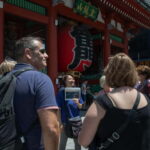
The tour begins in front of Tsukiji Hongwanji Temple. From Tsukiji Station on the Hibiya Line, take Exit A1, turn left, and look for the temple entrance about 50 meters away. This is a very practical meeting point, especially if you are arriving by subway and do not want to search for a shop or street corner.
Before entering the market, you view the temple exterior and learn about its place in the area. The building has an unusual ancient Buddhist-inspired design with Indian influences, so it does not look like the standard wooden temple many visitors expect in Tokyo.
The temple stop adds needed context to the meal ahead. Japanese cuisine is tied to customs, religious practices, seasonal habits, and ideas about respect for ingredients. The guide uses the temple and market together to show that food here is not only fuel or entertainment.
The temple portion is an exterior visit, not a full temple tour. If you want a long architectural visit or extensive religious instruction, this experience will feel brief. If you want a short cultural introduction before breakfast, it fits the morning well.
Walking into the Outer Market
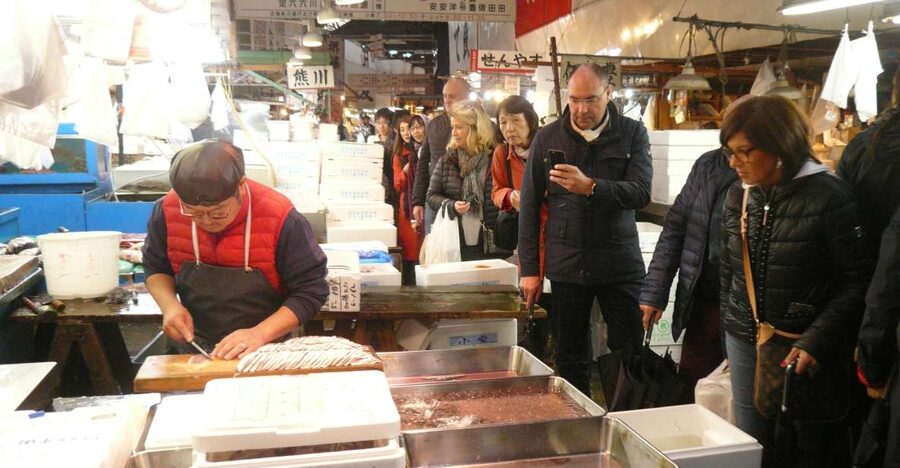
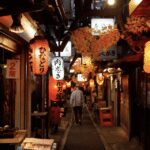
From the temple, you head into Tsukiji Outer Market. The route takes you past restaurants, specialist shops, food stalls, and wholesale businesses. You may see unusual products and charismatic workers handling their jobs while customers squeeze through the same streets.
A guide matters here because the market can be hard to read at first. Signs may not be in English, and the most interesting food is not always the item with the clearest display. Your guide can explain what you are seeing, point out useful stops, and help with communication at the stalls.
The group size is limited to 10 people. That does not make the market empty, but it keeps the tour more manageable than a large coach group. Guides can gather everyone around a tasting, answer questions, and adjust the route or food choices more easily.
Several people have ended up on what felt like a private tour because their group was small. You should not count on that, since availability and booking numbers change, but a small booking can give you more time for questions and personal recommendations.
Wear comfortable shoes. You will spend the full 150 minutes walking and standing, and market pavement is not the place for delicate footwear. Keep your belongings close and stay aware of other shoppers and workers. This is a working market, not a closed attraction.
Seven tastings, and what you actually eat
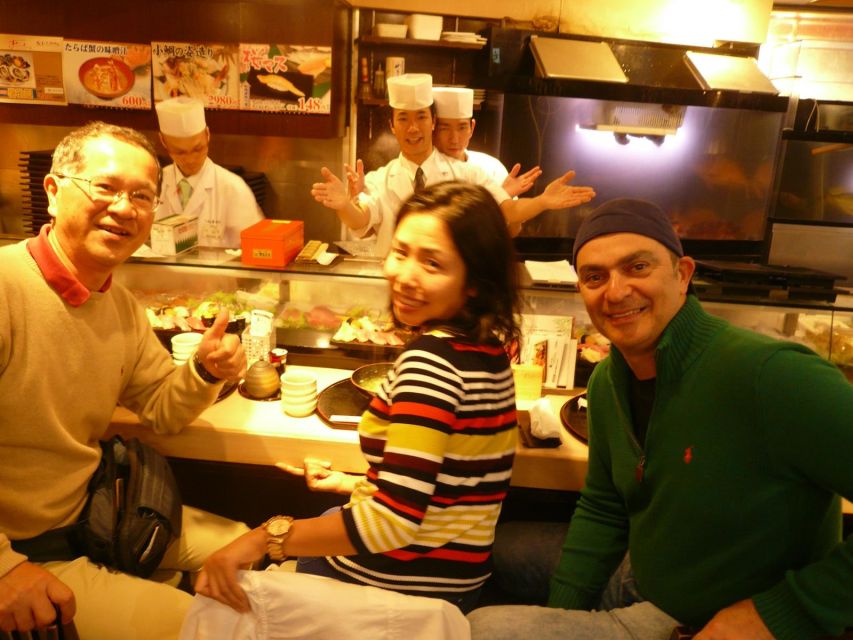
The included food is the strongest reason to book this tour. Seven tastings give you a broad sample without requiring you to choose every dish on your own.
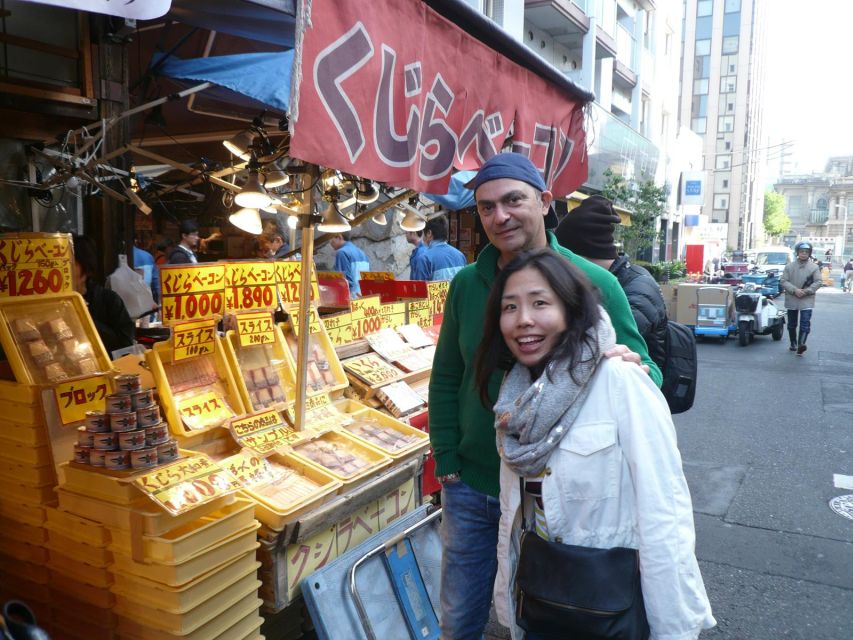
The food list includes grilled seafood or beef skewers, a Japanese-style omelette, tuna sandwiches, fried fish paste skewers, a drink, Japanese tea, and dashi soup stock. Depending on the available stalls and your preferences, you may also encounter related Japanese treats such as mochi or onigiri, as some tours have included those foods.
The skewers offer the most immediate market flavor. A grilled seafood skewer lets you try a fresh preparation in a small portion, while a beef option, including wagyu, gives you a more luxurious taste without committing to a full restaurant meal.
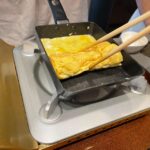
The omelette is a useful reminder that Japanese breakfast is not limited to raw fish. A Japanese-style omelette has a different texture and seasoning from the Western breakfast version, and it gives the tour some variety between seafood tastings.
The tuna sandwich may sound less traditional than the other items, but it shows how Japanese food businesses adapt familiar formats to local ingredients. The fried fish paste skewer provides another texture and flavor, and the tea and dashi help you notice the quieter side of the meal.
Dashi is especially worthwhile because it forms the base of many Japanese dishes. Tasting it on its own helps you recognize the savory stock behind soups, sauces, and other foods you may encounter elsewhere in Japan.
You should arrive hungry. Seven tastings can add up to a proper breakfast, especially when several items are filling. The food comes in samples, but this is not a token nibble tour.
The guides have also shown flexibility with food choices. If you do not want to eat a particular item, tell the guide clearly. Past groups have received alternatives, and guides have helped picky eaters find something more suitable. Still, the supplied information does not promise a specific dietary program, so anyone with allergies or strict restrictions should confirm what can be accommodated before booking.
The human side of the tour
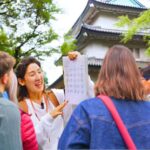
The best part of a guided market walk is often the small help that would be difficult to arrange alone. Your guide may speak with vendors, translate what you are choosing, and help you understand what you are buying.
That support is useful even if you are comfortable traveling independently. At Tsukiji, you may want to ask about an ingredient, compare two unfamiliar items, or purchase something for later. A guide can make those moments less awkward and help you avoid ordering blindly.
The guides also give advice beyond the seven included tastings. Previous groups have received suggestions for later meals, more market exploration, and other parts of Tokyo. One guide even helped a participant find the way back to a hotel, though you should see that as personal assistance rather than a promised transfer service.
Guide quality can vary. The experience is offered in English, and many participants have found their guides warm, helpful, and easy to spend a morning with. One person found the guide’s English difficult to follow at times, but managed with patience and clarification.
Names associated with especially positive tours include Yumi, Nori, Rico, Minoko, and other local guides. You cannot select one of them from the information provided, so book for the format and market experience rather than for a guaranteed individual guide.
Other walking tours we've reviewed in Tokyo
Is $85 a fair price?
At $85 per person, this is not the cheapest way to eat at Tsukiji. You can walk into the Outer Market on your own and pay separately for breakfast. The question is what you are paying to avoid.
The fee includes the guide and seven local tastings. You also receive help finding stalls, understanding food, speaking with vendors, and moving through an area that can feel confusing on a first visit. For a first morning in Tokyo, that combination can justify the price.
The value is strongest if you are curious but cautious. If you want to try unfamiliar food yet do not know what to order, the guide reduces the guesswork. It is also useful if you want cultural context rather than a series of disconnected snacks.
The value is weaker if you already know Tsukiji well, speak Japanese comfortably, or prefer to spend your food budget on one large meal. Independent visitors may also prefer the freedom to linger at a favorite stall instead of following a set tasting route.
Because the tour ends soon enough for you to keep exploring the market, you can treat the $85 as an introduction rather than your entire Tsukiji visit. You might use the guided portion to learn the area, then return to shops or restaurants that caught your attention.
Timing, access, and practical comfort

The activity lasts 150 minutes, or two and a half hours. Starting times vary, so check availability when you book. Morning timing suits Tsukiji because the experience is built around breakfast and the market’s working rhythm.
The meeting point is easy to reach from Tsukiji Station. That convenience matters in Tokyo, where a tour can lose its appeal if the first task is finding an obscure pickup point.
The tour is wheelchair accessible according to the activity information. The market itself remains a busy street setting, so anyone who needs extra space or a slower pace should discuss practical needs when booking.
Cancellation is free up to 24 hours in advance for a full refund. You can also reserve now and pay later, which helps if your Tokyo schedule is still changing. These policies are useful, but the real planning point is simpler: do not arrive late. One person missed the start after arriving late, even though a refund was eventually arranged.
Who should book this market breakfast?
I would recommend this tour to first-time Tokyo visitors who want a guided introduction to Japanese food without spending a full day on a formal cooking class. It also suits couples, families, and small groups with mixed levels of food confidence.
Families may appreciate the flexibility. One family with a picky teenager found that the guides offered alternatives rather than forcing every tasting. That makes the experience easier for groups where one person is eager to try everything and another is not.
Food lovers will get the most from the tour, but you do not need to be an expert. The appeal is the range: seafood, beef, omelette, tuna, fish paste, tea, and dashi all appear within one morning.
I would be more cautious if you dislike crowds, need a completely predictable menu, or want a quiet cultural walk. Tsukiji is active, and food availability can shape the exact stops. The guide can adapt some choices, but cannot turn a working market into a calm private dining room.
Should you book the Tsukiji breakfast walk?
Book it if you want a friendly, practical introduction to Tsukiji and would rather taste seven small specialties with help than make every choice alone. The temple stop, market access, vendor assistance, and food variety give the tour more substance than a simple snack crawl.
The biggest strengths are the guides’ personal help, the small-group format, and the willingness to adjust tastings. The main caution is the variable English delivery and the fact that $85 costs more than exploring independently.
For a first Tokyo morning, I think the price is reasonable if you arrive hungry, wear good shoes, and treat the tour as both breakfast and orientation. Afterward, keep wandering the market on your own. That is when the guide’s advice can pay off, because you will know what you are looking at and what you want to try next.
FAQ
Where does the Tsukiji market tour meet?
Meet in front of Tsukiji Hongwanji Temple. From Tsukiji Station on the Hibiya Line, take Exit A1, turn left, and walk about 50 meters to the temple entrance.
How long does the activity last?
The guided walking tour lasts 150 minutes, or two and a half hours.
What language is the tour offered in?
The live tour guide speaks English.
How many people are in the group?
The tour is limited to 10 participants, although some departures may have fewer people.
What food is included?
The seven tastings include grilled seafood or beef skewers, a Japanese-style omelette, tuna sandwiches, fried fish paste skewers, a drink, Japanese tea, and dashi soup stock.
Is breakfast included in the price?
Yes. The seven local tastings are provided as a Japanese street-food breakfast during the market walk.
Can the food be adjusted?
Guides have accommodated preferences by offering alternatives when participants did not want certain foods. The provided information does not specify a fixed allergy or dietary menu, so contact the provider if you have strict restrictions.
Is the tour wheelchair accessible?
Yes, the activity is listed as wheelchair accessible.
What should I bring?
Bring comfortable shoes, since the experience involves walking through the market for two and a half hours.
Can I cancel the booking?
You can cancel up to 24 hours in advance for a full refund. The activity also offers a reserve-now, pay-later option.
More Guided Tours in Tokyo



More Walking Tours in Tokyo
More Tsukiji Market Tours in Tokyo

More tours in Tokyo we've reviewed






Tsukiji Market Tours, compared.
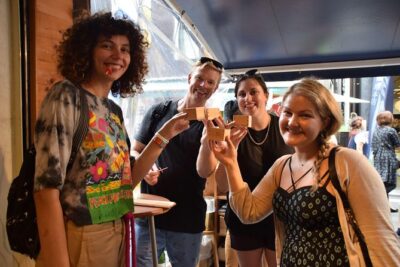 ★ 5.0Tokyo Tsukiji Fish Market Food and Culture Walking TourFrom $99
 ★ 5.0Tokyo: Tsukiji Fish Market Food and Walking tourFrom $30
 ★ 4.9Tokyo: Tsukiji Fish Market Guided Walking TourFrom $222 hours
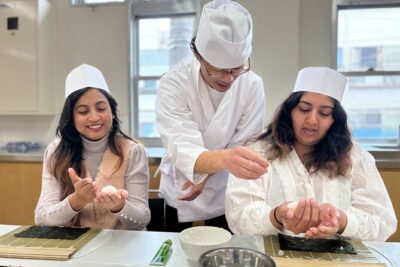 ★ 5.0Tokyo Sushi Making Class in Tsukiji with Professional ChefFrom $49
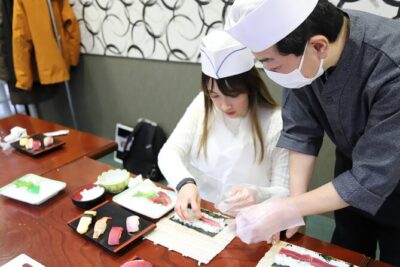 ★ 5.0Tsukiji Fish Market Guided Tour and Sushi Making with Pro ChefFrom $104
★ 4.7Tokyo: Tsukiji Fish Market Food and Culture Walking TourFrom $963 hours
★ 5.0Tsukiji Fish Market Guided Tour and Sushi Making with Pro ChefFrom $104
★ 4.7Tokyo: Tsukiji Fish Market Food and Culture Walking TourFrom $963 hours