
Reviewed · TSUKIJI MARKET TOURS
Tsukiji Fish Market Guided Tour and Sushi Making with Pro Chef
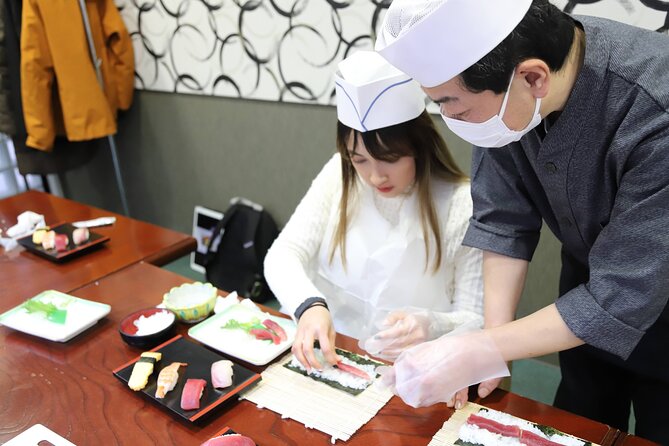
Tsukiji’s seafood story makes more sense when you follow it from market stall to sushi plate. This four-hour experience begins at Tsukiji Honganji Temple, continues through the outer market and small wholesale areas, then puts you at a worktable with a professional sushi chef.
I like the way the tour links food with Japanese customs and temple culture, rather than treating Tsukiji as only a place to grab snacks. I also like the hands-on finish: you make five kinds of nigiri and one rolled sushi, then eat your work with dashi soup, green tea, and sushi prepared by the chef. The main caution is value. At $104.13, this is not a bargain if you want a long food crawl with lots of included tastings. You will need to buy extra market food yourself.
In This Review
- Key points to know before booking
- From Tsukiji Honganji to the market lanes
- What you actually see at Tsukiji’s outer market
- The small classroom above the market
- Making five nigiri styles and one roll
- How the temple and seafood themes fit together
- Price, group size, and what is included
- Practical advice for a smoother morning
- Who will get the most from this Tsukiji experience?
- Should you book it?
- FAQ
- Where does the tour begin?
- How do I find the guide?
- How long does the experience last?
- Does the tour visit the former inner Tsukiji market?
- What kinds of sushi will I make?
- Is lunch included?
- What should I wear?
- Is the sushi classroom accessible without stairs?
- Can the experience accommodate dietary restrictions?
Key points to know before booking
- The outer Tsukiji market is the focus: You visit the shopping and food area, not the former inner wholesale market, which moved to Toyosu in 2018.
- The sushi class is hands-on: You prepare five nigiri types and one roll with step-by-step help from a professional chef.
- The tour begins at a temple: Expect a short cultural introduction at Tsukiji Honganji, including guidance on Buddhist temple customs.
- Food tastings are not generally included: Bring cash if you want to sample snacks or buy ingredients from market stalls.
- The venue may change: The sushi lesson can take place in Tsukiji, Asakusa, or Yotsuya, depending on availability.
- Plan for stairs and walking: The classroom is on the third floor of a traditional building with no elevator, and comfortable shoes are essential.
From Tsukiji Honganji to the market lanes
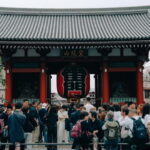
Meet your guide at the main gate of Tsukiji Honganji Temple, at 3-chome-15-1 Tsukiji. This detail matters: use the front, main-gate side of the temple, not the back entrance suggested by some map directions.
Look for a guide holding a Japan Wonder Travel board. The tour leaves at the scheduled time, and the group cannot wait for late arrivals. If you miss the start, the tour cannot be extended and there is no refund for arriving late that day.
The temple gives the morning a useful starting point. Guides such as Ko, Sachi, Monami, Mari, and Yuki have been praised for explaining local customs in clear English. Depending on the guide, you may learn how to approach and pray at a Buddhist temple, along with some background on the area.
I appreciate this beginning because it gives you a little cultural footing before you enter the food market. It also sets expectations correctly: the first part is not an all-food tasting tour. It mixes temple customs, local history, and food culture.
A few more Tokyo tours and experiences worth a look


What you actually see at Tsukiji’s outer market
Tsukiji remains a major destination for Japanese shoppers and cooks, but the name can cause confusion. The former inner market, where wholesale fish auctions and business trade took place, moved to Toyosu on October 6, 2018. This tour visits the outer Tsukiji market, including shopping streets and a small wholesale area.
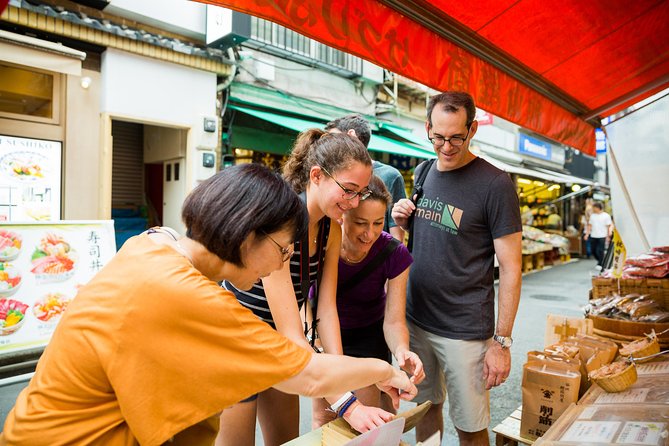
Your guide leads you through several parts of the district, including the Tsukiji Jogai Market and the Tsukiji Nippon Fish Port Market. You may see seafood, Japanese ingredients, prepared foods, snacks, cooking tools, and kitchen goods. Some items can be unfamiliar, and the guide’s role is to explain what you are looking at and how it fits into Japanese food culture.
This is where the tour earns its keep for first-time visitors. Tsukiji can be easy to experience as a blur of signs, smells, narrow lanes, and enticing displays. A guide can point out useful shops, explain the difference between ingredients, and help you make sense of how seafood moves from the ocean through distribution and sale.
Several guides have been singled out for practical advice on food quality and pricing. Monami, for example, has been praised for helping visitors find good places to eat while keeping an eye on cost. Other guides, including Tad, Ko, and Yuki, have been noted for giving groups time to look around instead of racing from stall to stall.
Still, keep the limits in mind. The guide-led walk focuses on explanation and orientation, not a full meal. Food from market stalls is generally purchased separately. If you want to try snacks or seafood along the way, carry cash and allow room in your budget.
A group can also make spontaneous sampling less easy. With up to 22 people, the group may need to keep moving, and you cannot always stop at every stall that catches your eye. If your main goal is to eat your way through Tsukiji, an independent visit with a flexible schedule may suit you better.
The small classroom above the market
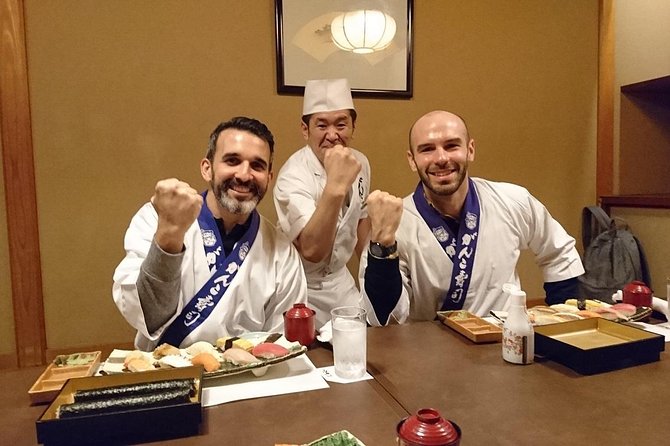
After the market walk, you head to a Japanese-style classroom in a traditional building near the market. The room is on the third floor and can be reached only by stairs, so this is not a good fit if stairs are a problem.
The setting is simple rather than luxurious. One unfavorable account found the room too basic for the price, while other experiences praised the clean tables, fresh seafood, and comfortable working space. I would treat this as a practical cooking classroom, not a polished restaurant or a private chef’s studio.
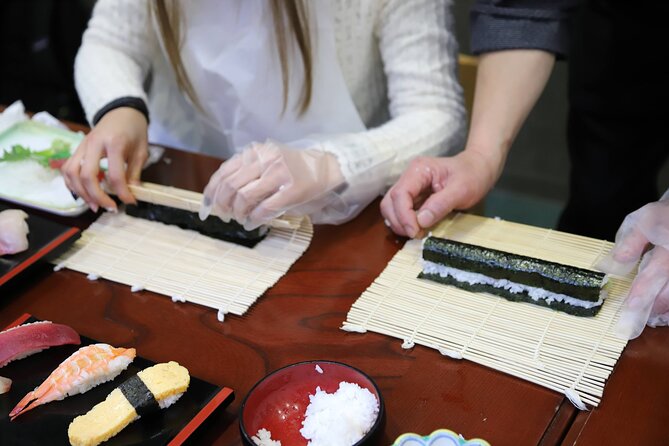
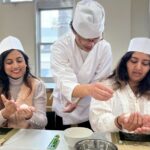
The class is usually delivered with support in Japanese and English. A sushi master uses demonstrations and, in some sessions, a presentation to explain the process. You receive ingredients and work through each step at your own place, with help available as you make the sushi.
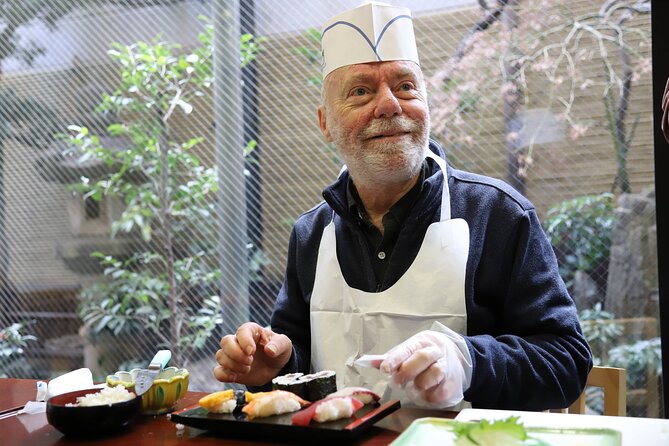
That format makes the activity approachable. You do not need prior sushi-making experience, and the lesson is designed as an introduction. Families have brought children and teenagers, including 12, 16, and 18-year-olds, and found the class accessible and enjoyable.
Making five nigiri styles and one roll
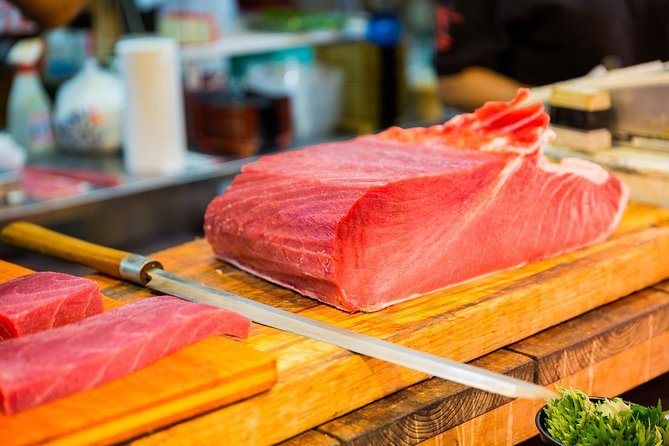
The central lesson covers five types of nigiri sushi and one rolled variety. You learn how to handle the rice and ingredients, shape the sushi, and assemble the pieces under the chef’s direction.
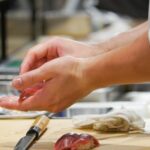
This is more instructive than simply watching a chef prepare lunch. Even a basic piece of nigiri involves more care than many people expect. The chef’s demonstrations show the control needed to prepare fish properly, and some sessions include a close look at deboning.
One useful point to note is that the class may not cover every technique in equal detail. If you want to learn exactly how fish is sliced for sushi, ask about it during the lesson. One participant wished for a more detailed demonstration of slicing, and the class may move quickly when the ingredients are being cleared away.
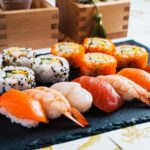
You then eat the sushi you made for lunch. The meal also includes sushi prepared by the master, expertly prepared wasabi, traditional dashi soup, and green tea. The contrast is part of the fun: you can compare your own pieces with the chef’s work and see where precision matters.
The food element is a strong reason to choose this tour over a simple market walk. You do not just hear about sushi’s connection to the sea. You handle the ingredients, learn basic preparation, and taste the result.
How the temple and seafood themes fit together
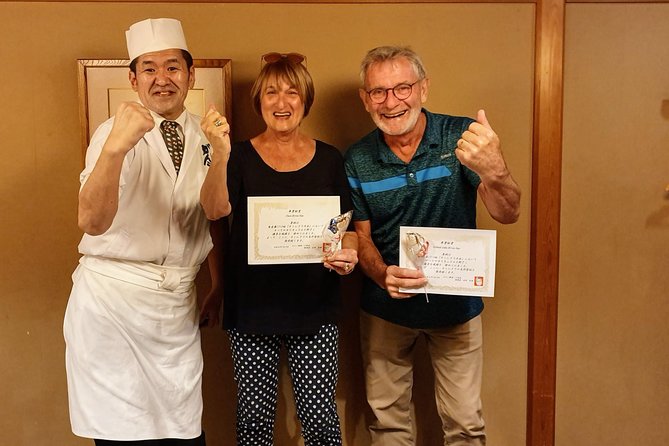
The experience works best when you view it as a food-and-culture lesson, not two unrelated activities. Tsukiji’s market reflects Japan’s close relationship with seafood, while the temple introduction gives you a short look at customs that shape daily life.
You may learn a few Japanese words and customs during the walk. The guide can also explain how the market developed, what different vendors sell, and why certain ingredients or utensils matter. This context turns a shopping street into a place with a clearer purpose.
I especially like that the tour does not limit itself to fish counters. Japanese food culture includes knives, bowls, seasonings, preserved items, sweets, and cooking tools. Seeing those alongside fresh seafood helps you understand that sushi depends on more than the fish placed on top.
The temple stop will appeal to you if you want a cultural introduction during your first Tokyo visit. If you already know Tsukiji well and want only wholesale operations or advanced sushi technique, it may feel too basic.
A few more Tokyo tours and experiences worth a look

Price, group size, and what is included
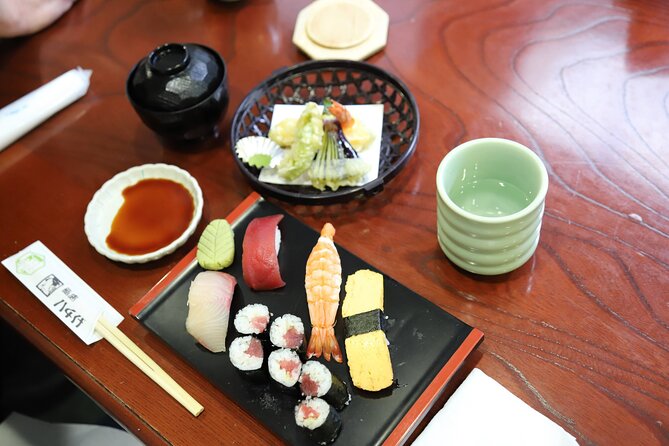
The listed price is $104.13 per person, with a tour length of about four hours. That is a fairer price for you if you value a guide, a structured market orientation, a professional sushi lesson, lunch, soup, tea, and chef-prepared sushi.
It is less attractive if you calculate the price only by the amount of food. The market walk does not function as an included tasting tour, so you may spend more on snacks and purchases. One practical way to judge the cost is to compare it with booking a sushi class alone. Here, the extra value comes from the market context and the cultural stops.
The maximum group size is 22 people. That is not an intimate private tour, but the cooking format still gives you a worktable and direct instruction. A smaller group might allow more individual attention and more freedom to stop at stalls. On the other hand, the larger format can work well for families or first-time visitors who want a planned introduction.
The end point is usually Tsukiji, but on some dates it may be Asakusa or Yotsuya because the sushi venue can change. The operator may not confirm the classroom location until the day of the tour. Do not book a tight connection or an important appointment immediately afterward, since the finish can run late.
The activity includes the guided experience and sushi lesson. Hotel pickup, drop-off, transport to and from attractions, extra food, drinks beyond those provided, and personal purchases are not included.
Practical advice for a smoother morning
Wear comfortable walking shoes. The market portion is on foot, and the classroom requires stairs.
Arrive early at the main gate of Tsukiji Honganji Temple. The guide leaves sharply at the start time, and late arrival means losing part or all of the experience.
Bring cash for food from the market. You may want to buy snacks, seafood, seasonings, or utensils, but those purchases are your responsibility. It is also sensible to bring your own water. Green tea is provided, but one useful practical note is that water may not be available.
Check the market calendar before booking your day. The fish market and wholesale area are closed on Wednesdays, Sundays, and other market closure days. The tour schedule may therefore not operate as you expect on those dates.
Food restrictions need careful attention. You should enter allergies and dietary requirements when booking or contact the provider after booking. However, the tour states that vegetarian, halal, gluten-free, kosher, and some allergy-related requests may not be accommodated. Do not assume the sushi class can be adapted safely without written confirmation.
Who will get the most from this Tsukiji experience?
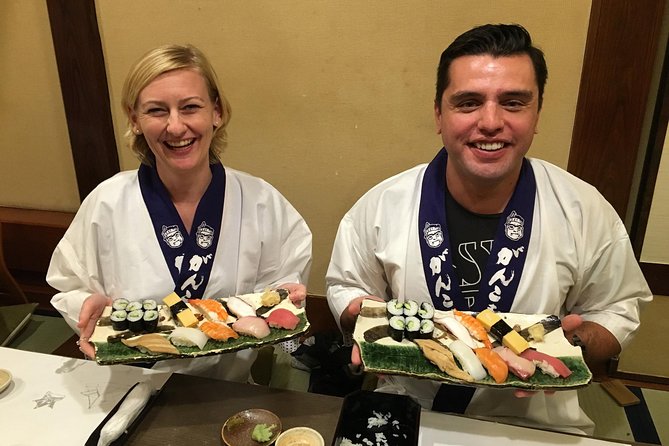
I would recommend this tour to a first-time Tokyo visitor who wants a guided introduction to Tsukiji without planning every stop alone. It suits you if you enjoy learning what ingredients are used, asking questions, and then turning that information into a meal.
Families can also get good value from it. The combination of temple customs, market sights, and a practical cooking class gives children and teenagers several ways to take part. The class is not only a lecture, and the meal gives everyone a clear reward at the end.
It is also a good choice for a food-focused visitor who wants to understand sushi beyond restaurant etiquette. You will not become a sushi professional in four hours, but you will gain a better feel for the work involved and the care given to fresh ingredients.
I would choose something else if you want a serious wholesale-market tour, a long list of included tastings, a private guide, or advanced knife and fish-slicing instruction. The outer market is a public shopping and food area, not the former inner business market, and the lesson is aimed at beginners.
Should you book it?
Book this experience if you want a well-organized first look at Tsukiji followed by a friendly sushi class. Its strongest feature is the connection between seeing ingredients in the market and preparing them with a chef later.
The price makes sense when you count the guide, cultural stops, sushi instruction, lunch, dashi, tea, and chef-made pieces. It makes less sense if you expect every market snack to be included or want a luxury setting.
Before paying, check the market closure date, confirm your dietary needs, allow extra time after the four-hour estimate, and be ready for a possible classroom change to Asakusa or Yotsuya. If those conditions suit you, this is a tasty and useful way to get beyond simply photographing Tsukiji’s signs.
FAQ
Where does the tour begin?
The meeting point is the main gate of Tsukiji Honganji Temple at 3-chome-15-1 Tsukiji, Chuo City, Tokyo. Meet at the front side of the temple, not the back side.
How do I find the guide?
The guide will be waiting at the meeting point with a board displaying Japan Wonder Travel.
How long does the experience last?
The activity lasts approximately four hours, although the finish can be delayed. Avoid scheduling an important appointment immediately afterward.
Does the tour visit the former inner Tsukiji market?
No. The former inner market moved to Toyosu in 2018. This experience visits the outer Tsukiji market and a small wholesale area.
What kinds of sushi will I make?
You will learn to make five types of nigiri sushi and one rolled type.
Is lunch included?
Yes. You eat the sushi you make, along with sushi prepared by the sushi master. Traditional dashi soup and green tea are also offered.
What should I wear?
Wear comfortable walking shoes because the tour is mainly a walking activity.
Is the sushi classroom accessible without stairs?
No. The classroom is on the third floor of a traditional building and can be reached only by stairs.
Can the experience accommodate dietary restrictions?
You should provide allergies and dietary requirements during booking or contact the provider after booking. Vegetarian, halal, gluten-free, kosher, and some allergy-related requests may not be accommodated, so request confirmation before booking.
More Guided Tours in Tokyo



More Sushi Making Classes in Tokyo
More Tsukiji Market Tours in Tokyo
More tours in Tokyo we've reviewed





Tsukiji Market Tours, compared.
 ★ 5.0Tokyo Tsukiji Fish Market Food and Culture Walking TourFrom $99
 ★ 5.0Tokyo: Tsukiji Fish Market Food and Walking tourFrom $30
 ★ 4.9Tokyo: Tsukiji Fish Market Guided Walking TourFrom $222 hours
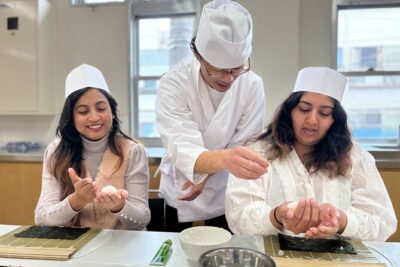 ★ 5.0Tokyo Sushi Making Class in Tsukiji with Professional ChefFrom $49
★ 4.7Tokyo: Tsukiji Fish Market Food and Culture Walking TourFrom $963 hours
★ 5.0Tokyo Sushi Making Class in Tsukiji with Professional ChefFrom $49
★ 4.7Tokyo: Tsukiji Fish Market Food and Culture Walking TourFrom $963 hours
 ★ 5.0Tsukiji Fish Market: Street Food & Culture Walking TourFrom $33