
Reviewed · SUMO EXPERIENCES
Tokyo Sumo Morning Training/ Sumo Practice with Wrestlers
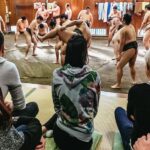
The remarkable part of this Tokyo experience is the setting: you enter a real sumo stable while wrestlers carry out their daily training. This is not a tournament performance with bright lights and cheering crowds. It is a quiet working session, often viewed from close to the ring, where strength, repetition, and strict manners matter.
I like the chance to see the wrestlers’ routine rather than just a match, and I like having a guide explain what is happening as the practice unfolds. The included photo with a wrestler is another nice touch. The main drawback is that you must remain quiet and stay until the practice ends, while the stable may be cold and seating may be on the floor.
In This Review
- Key points to know before you book
- Seeing sumo before the public ever arrives
- Inside the stable, quiet is part of the experience
- Why a working stable feels different from a tournament
- The etiquette is strict, and it matters
- Floor mats, cold rooms, and what to wear
- The wrestlers’ intensity is the main reward
- Is $99.10 a fair price?
- Who will enjoy this most?
- How to get the most from the hour
- Should you book this Tokyo sumo experience?
- FAQ
- How long does the sumo training experience last?
- Where does the experience meet?
- Can I take photos inside the stable?
- Can I leave during the practice?
- Is food allowed inside the stable?
- Do I have to sit on the floor?
- Can women enter the sumo ring?
- Is a Yokozuna guaranteed to be present?
- What is the cancellation policy?
Key points to know before you book
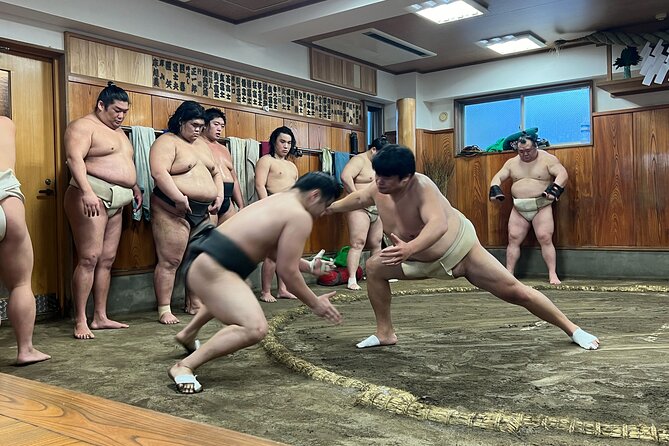
- Real training inside a sumo stable: Watch the wrestlers perform their daily practice at close range rather than seeing a staged demonstration.
- A guide adds context: Learn about sumo rules, training, customs, and the wrestlers’ daily life during the visit.
- The schedule can change: The stable and meeting time are confirmed after booking and can vary with the practice calendar.
- Expect strict etiquette: Phones must be silent, flash photography and video are forbidden, and you cannot leave halfway through.
- Floor seating may be required: Some stables have no chairs, so comfortable clothing and a willingness to sit on a mat help.
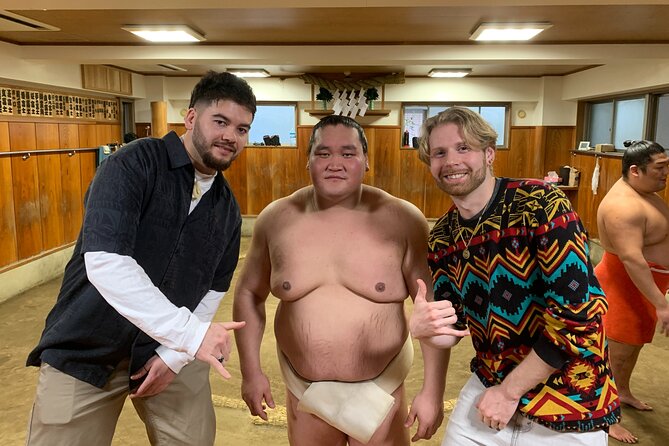
- A photo is included: After practice, you may have a chance to pose with a wrestler, depending on the arrangements that day.
Seeing sumo before the public ever arrives
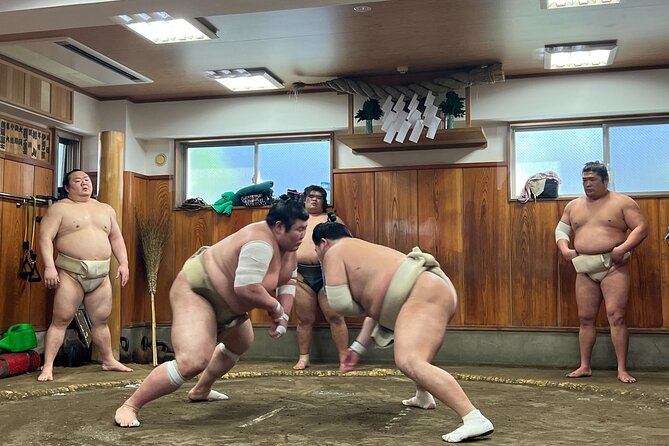
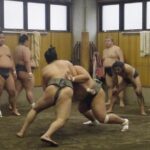
Sumo is easy to encounter in Tokyo during a tournament, but a morning practice offers something different. You see the sport before the noise of competition takes over. The wrestlers repeat their drills, work on balance and force, and face one another with a level of focus that can make even a short session feel intense.
The experience begins at a meeting point in Tokyo’s Sumida City area, listed as 1-chōme-2-8 Chitose. The exact location and time may change, so you must check the message sent after booking. Do not rely only on the original reservation screen.
After meeting your guide, you spend about five minutes hearing an introduction to sumo before walking to the stable. That briefing is useful, especially if you know little about the sport. One practical point: if the explanation takes place near a busy road or station, it may be difficult to hear clearly. Stay close to the guide, and ask for clarification before entering.
The main stable visit is scheduled for about 55 minutes, though the practice can be shorter or longer. Some sessions have lasted around two hours, while others may finish earlier, particularly when a major tournament is approaching. The timing depends on the stable’s own routine, not on a fixed show schedule.
A few more Tokyo tours and experiences worth a look

Inside the stable, quiet is part of the experience
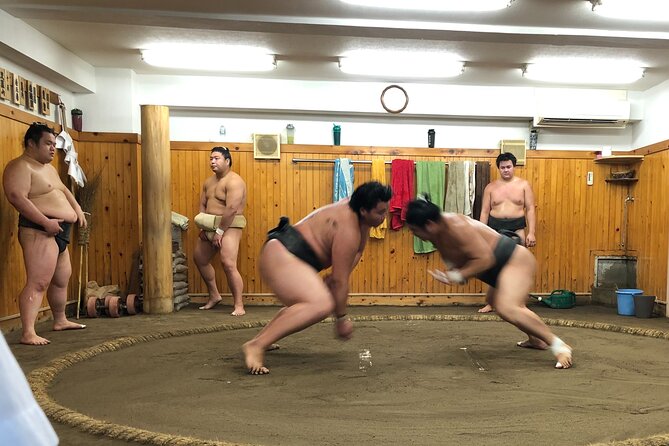
Once inside, you are not attending a performance in the usual sense. The wrestlers are training, and your job is to watch without interrupting. The room can feel surprisingly serious. There may be little conversation, no music, and no dramatic announcement before a bout begins.
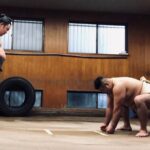
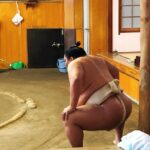
That quiet helps you notice the details. You can watch how wrestlers prepare their bodies, how they approach the ring, and how much ceremony surrounds even a simple exchange. The power is obvious, but so is the control. Sumo training is not only about pushing another person backward. It also involves balance, timing, footwork, posture, and discipline.
The guide may provide live commentary through a headset or pass written notes during practice. This can make a major difference. Without explanation, you may see a series of short collisions and miss the purpose behind them. With context, the repeated movements become easier to follow.
I especially like this format for first-time sumo watchers. You do not need to know the ranks, rules, or names in advance. The guide helps you understand what you are seeing without turning the session into a classroom lecture.
Still, the balance between explanation and silence matters. One complaint about the experience was that too much talking distracted from the practice. The best approach is to treat the guide’s information as support, not the main event. The wrestlers should remain your focus.
Why a working stable feels different from a tournament
A tournament is the polished public face of sumo. You have formal bouts, spectators, judges, and a clear contest structure. At a stable, you see the less public side: repetition, preparation, fatigue, and the habits that build a professional wrestler’s skill.
That makes the visit valuable even if you have already attended a tournament. You are not simply watching winners and losers. You are seeing athletes train together, often in a much more intimate space.
There is also an important uncertainty. A stable may be associated with a top-ranked wrestler or even a Yokozuna, but there is no guarantee that a particular champion will be present that morning. The stable itself may be one where a Yokozuna trains, yet the schedule and the wrestler’s presence are not confirmed until the day of the visit.
That uncertainty is worth accepting. Book this for the chance to see a genuine practice session, not for a promise of a celebrity appearance.
The etiquette is strict, and it matters
This is one of the few Tokyo activities where your behavior directly affects the people you have come to see. Keep your cellphone on silent. Photos are allowed without flash or shutter sounds, but video recording is not permitted.
Do not stretch your legs toward the ring. Showing the soles of your feet to the wrestlers is considered rude. Sit or position yourself in a way that shows respect, and avoid sudden movements that could break someone’s concentration.
You cannot leave the stable in the middle of practice, and once you leave, you cannot re-enter. Use the restroom before meeting the guide. Eating is not allowed inside, though water and sports drinks are permitted.
These rules may sound fussy if you are used to sightseeing tours, but they make sense here. The wrestlers are not putting on a private show for the group. They are working. Your quiet presence is the privilege, and the stable’s routine comes first.
Floor mats, cold rooms, and what to wear
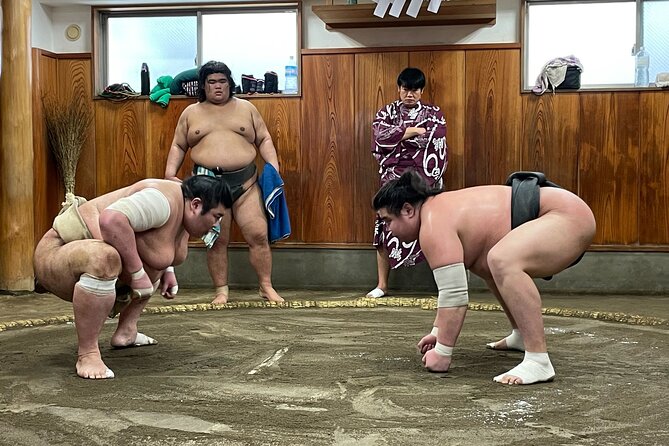
Some stables do not have chairs. You may sit on the floor, sometimes cross-legged, for the entire practice. One session lasted more than two hours, and sitting that way became uncomfortable. If your hips, knees, or back are sensitive, this is an important consideration.
Wear comfortable clothes that allow you to sit on a mat. You will remove your shoes before entering the practice area, and men must remove their shoes before stepping onto the dohyo, the sumo ring. Women may take part fully from the designated seating area but are not permitted to enter the dohyo because of the religious and cultural traditions observed at the facility.
The stable may also be chilly, especially in cold or rainy weather. You might wait outside before entering, and the practice room itself may not feel warm. A light extra layer is sensible, even if the day outside seems mild.
The tour is near public transportation, and most people can participate. The practical challenge is less about walking than about sitting quietly and comfortably for the whole session.
A few more Tokyo tours and experiences worth a look

The wrestlers’ intensity is the main reward
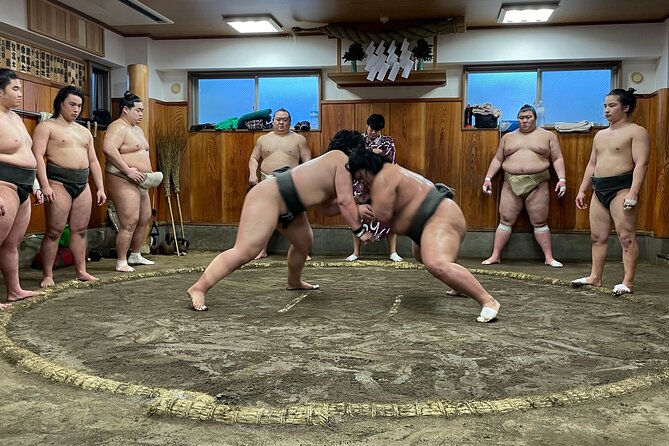
The strongest reason to book is the training itself. Sumo wrestlers are large, but size alone does not explain what you see in the room. The force of the clashes is striking, as is the ability to stop, reset, and repeat the same demanding work.
You may see warmups, repeated bouts, and other stages of practice. The exact content varies. That is part of the appeal, but it also means no two sessions are guaranteed to look alike.
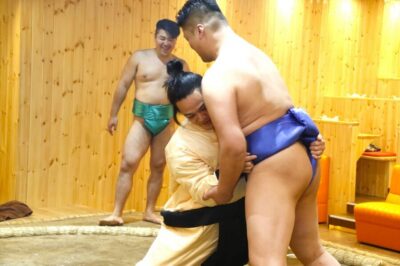
At the end, the experience may include time to speak with wrestlers and take photos. This can be the most personal part of the visit. The wrestlers have been described as friendly and willing to pose, but you should still follow the guide’s instructions and remember that the photo opportunity depends on the stable’s schedule.
The photo is a pleasant souvenir, but it should not be the reason you book. The heart of the experience is sitting quietly and watching the training.
Is $99.10 a fair price?
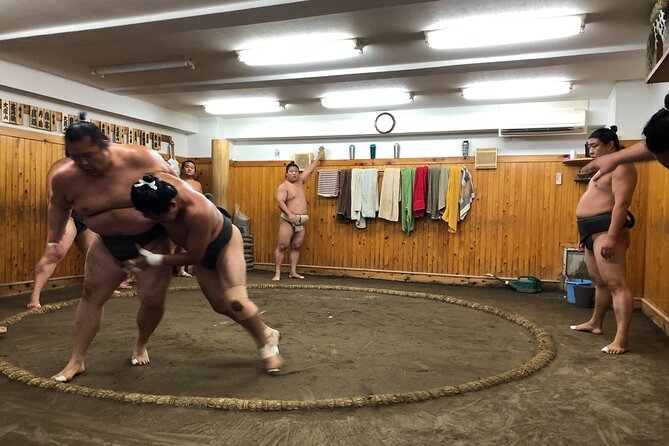
At $99.10 per person, this is not a cheap one-hour activity. You are paying for access to a setting that is normally difficult to enter, along with the guide, organization, and photo opportunity.
The value depends on your interest. If sumo is a major reason for your Japan trip, the close view of a real stable can justify the cost. A standard tournament ticket gives you the excitement of competition, but it does not provide the same look at daily practice.
If you are only mildly curious, the price may feel high, especially if the practice ends early or the session contains more explanation than action. One particularly poor experience involved a cancellation only 29 minutes before the scheduled start, while the person was already on the way. Stable schedules can change, so you should monitor messages closely on the day.
The operator offers free cancellation if you cancel at least 24 hours before the start time. Cancellations or changes inside that window are not refunded or accepted. If the operator sends an update, read it carefully. Missing a changed meeting point or arriving late can mean losing the booking without compensation.
Who will enjoy this most?
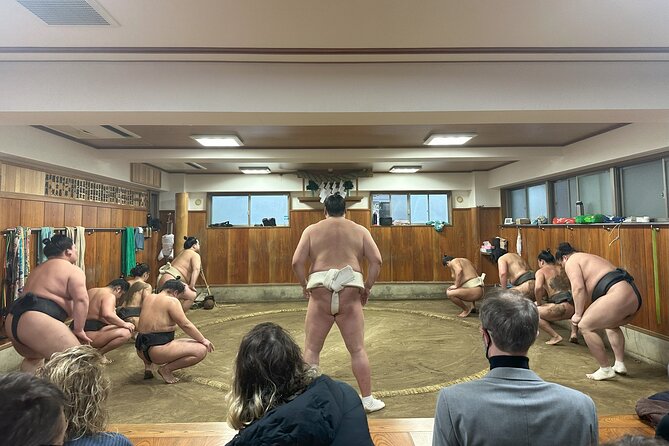
I would choose this experience for a sumo fan, a first-time visitor who wants cultural context, or anyone who values access to working places over polished sightseeing shows. It also suits families if everyone can remain quiet and seated for the full session.
Children may enjoy the strength and movement, but the rules are firm. This is not a free-form activity where you can wander out when attention fades. A child who needs frequent breaks may struggle.
The experience is also a good fit for photographers who can work without flash or sound. It is not right for someone hoping to film the session, chat freely during practice, or take part in a long hands-on wrestling demonstration.
The supplied information includes two different versions of the experience. The main description focuses on watching professional wrestlers train inside a stable. One review describes a short amateur sumo activity with retired wrestlers or other performers instead. Check the exact option you are booking, especially if the title includes Sumo Practice with Wrestlers. Do not assume every departure includes the same format or the same people.
How to get the most from the hour
Read the operator’s message as soon as you receive it. Confirm the meeting place, time, and stable location, since these may change by date.
Arrive early. A late arrival can be especially disruptive when the group must enter quietly, and there is no promise of a refund if you miss the meeting point.
Use the restroom first, bring water, and silence your phone before entering. Keep your camera ready for still photos, but turn off the flash and shutter sound. Do not bring food into the stable.
Dress for floor sitting and possible cold. If you need a chair, ask in advance, but be prepared for a mat. Most important, plan to stay until the end. Leaving in the middle is not allowed.
Finally, lower your expectations in the right way. You are not guaranteed a Yokozuna, a full tournament-style match, a two-hour session, or constant action. You are paying for a chance to observe a real training routine under changing conditions.
Should you book this Tokyo sumo experience?
I would book it if you have a real interest in sumo and want to see the sport in its working environment. The close view, guide commentary, and chance to take a photo with a wrestler give the visit more substance than a simple photo stop.
I would skip it if you need a flexible one-hour attraction, dislike sitting on the floor, or expect a staged show with guaranteed star wrestlers. The strict silence rules, possible cold, schedule changes, and uncertain duration are not minor details.
For the right person, this is one of Tokyo’s more unusual cultural experiences. Go for the discipline, the rituals, and the chance to watch athletes train at close range. Treat the photo as a bonus, and you will have a better idea of what you are buying.
FAQ
How long does the sumo training experience last?
The planned duration is about one hour, including a short introduction and roughly 55 minutes inside the stable. Practice may be shorter or longer depending on the day’s training.
Where does the experience meet?
The listed meeting point is 1-chōme-2-8 Chitose, Sumida City, Tokyo 130-0025, Japan. The exact meeting place and time may vary by date and are sent after booking.
Can I take photos inside the stable?
Yes. Photos are allowed without flash or shutter sounds. Video recording is not allowed.
Can I leave during the practice?
No. You cannot leave the stable in the middle of practice, and you cannot re-enter after leaving. Use the restroom before arrival.
Is food allowed inside the stable?
No. Eating is not allowed. You may drink water and sports drinks.
Do I have to sit on the floor?
Possibly. Some stables do not have chairs, so you may need to sit on a floor mat for the practice.
Can women enter the sumo ring?
Women may fully join the experience from designated seating areas, but they cannot enter the dohyo at this facility because of its religious and cultural traditions.
Is a Yokozuna guaranteed to be present?
No. The stable may be one where a Yokozuna trains, but you will not know if he is present until the morning of the experience.
What is the cancellation policy?
You receive a full refund if you cancel at least 24 hours before the local start time. Cancellations or changes made less than 24 hours in advance are not accepted or refunded.
More Morning in Tokyo
More Sumo Experiences in Tokyo

More tours in Tokyo we've reviewed








Sumo Experiences, compared.
 ★ 4.8Tokyo: Sumo Show Experience with Chicken Hot Pot and a PhotoFrom $1032 hours
 ★ 4.8Tokyo: Sumo Show and Dining ExperienceFrom $7990 minutes - 2 hours
 ★ 5.0the SUMO showFrom $89
 ★ 5.0Tokyo Shinjuku Sumo Show & Experience with PhotoFrom $79
 ★ 4.8Tokyo: Sumo Show and Experience in ShinjukuFrom $691h 30m
 ★ 4.6Tokyo: Sumo Tournament Tour with Chair Seat TicketsFrom $141