
Reviewed · KAMAKURA & ENOSHIMA DAY TRIPS
Kamakura: Private Guided Walking Tour with Local Guide
Kamakura’s appeal comes from its mix of samurai-era temples, quiet shrines, gardens, and seaside-town character, all within an easy trip from Tokyo. This private walking tour gives you a local guide to sort the famous sights from the many worthwhile choices, then explain what you are seeing in plain English or Japanese.
I like the freedom to request a route, and I like that guides can adjust the day to your pace. Shinji, An, Yuki, Emiko, and others have helped visitors fit major temples, lunch, train connections, and even a possible glimpse of Mount Fuji into one well-managed outing. The main drawback is that the $106 price does not include entrance fees, meals, or transportation between sites, and the tour is not confirmed until a guide accepts it.
In This Review
- Key points to know before booking
- Why a private Kamakura tour can be worth it
- Starting in Kamakura and choosing your route
- The Great Buddha, Kamakura’s essential stop
- Hase-dera’s gardens and seasonal hydrangeas
- Zeniarai Benten and the money-washing tradition
- Hokoku-ji and its bamboo garden
- Tsurugaoka Hachimangu and the central temple district
- Food, photos, and the small personal touches
- Four hours or six hours?
- Transport, cost, and practical limits
- Who should book this Kamakura tour?
- Should you book it?
- FAQ
- How long is the Kamakura walking tour?
- What languages are available?
- Is the tour private?
- Does the price include entrance fees?
- Is food included?
- Is transportation included?
- Can I be picked up at my accommodation?
- Can I customize the itinerary?
- What happens if my guide has not accepted the tour?
Key points to know before booking
- Choose four or six hours: Four hours suits a focused visit, while six hours gives you room for several temple areas and lunch.
- Visit the Great Buddha from inside: This is more than a photo stop, since you can enter the interior of Kamakura’s famous statue.
- Shape the day around your interests: Ask for temples, shrines, gardens, food, photography, or a faster pace.
- Use the guide’s local judgment: Your guide can choose a practical route through Kamakura’s many sites and help avoid crowded periods.
- Expect a walking tour, not a private car: Local trains, buses, or taxis may be needed, at your own cost.
- The guide matters: Nationally licensed guides such as Shinji, An, Yuki, and Emiko have been praised for planning, flexibility, and clear explanations.
Why a private Kamakura tour can be worth it
Kamakura is only about an hour from Tokyo, but its sightseeing is spread across several areas. You have the Great Buddha and Hase-dera in the west, Tsurugaoka Hachimangu and the central streets farther inland, and important Zen temples near Kita-Kamakura. Trying to pick a sensible order on your own can take nearly as much thought as the sightseeing itself.
A private guide solves that problem. You can arrive with a short wish list, or simply say that you want the best introduction to Kamakura. The guide then helps set the pace and chooses what fits. That matters most on a four-hour tour, when a poorly planned route can waste time moving between distant stops.
The strongest part of this experience is the personal attention. You are not following a fixed group itinerary or waiting for strangers. If you want to linger at a shrine, move quickly through a temple, stop for food, or ask repeated questions about Japanese customs, the day can change around you.
The tour is limited to a private group of up to seven people. That makes the $106 per person cost easier to justify for a family or small group, especially if you value direct explanations and help with local transport. For one person or a couple on a tight budget, the price is less of a bargain once entrance fees, food, and train or taxi costs are added.
A few more Kamakura tours and experiences worth a look
Starting in Kamakura and choosing your route
Pickup is on foot from your accommodation if it is within a reasonable distance. Otherwise, you and your guide arrange a meeting point. Several guides have met people at Kamakura Station, which is practical if you are coming from Tokyo by train.
Before the day begins, you can send your preferred sights by email. This is worth doing. One visitor gave Emiko a list ahead of time, and she organized the six-hour schedule carefully. Another told Shinji what mattered most, and he built a route that included the Great Buddha, Hase-dera, Tsurugaoka Hachimangu, Kencho-ji, and Engaku-ji, ending close to the train station.
You can also ask the guide to make the choices. That is useful because Kamakura has more temples and shrines than most first-time visitors can sensibly fit into one day. Tell your guide if food is important, if you prefer a quick pace, or if you want time for photographs.
The exact schedule depends on your guide and requests, so do not treat the listed sights as a guaranteed fixed order. Think of them as the main menu. Your guide may substitute other temples or shorten the route to match opening hours, seasonal conditions, or your train departure.
The Great Buddha, Kamakura’s essential stop
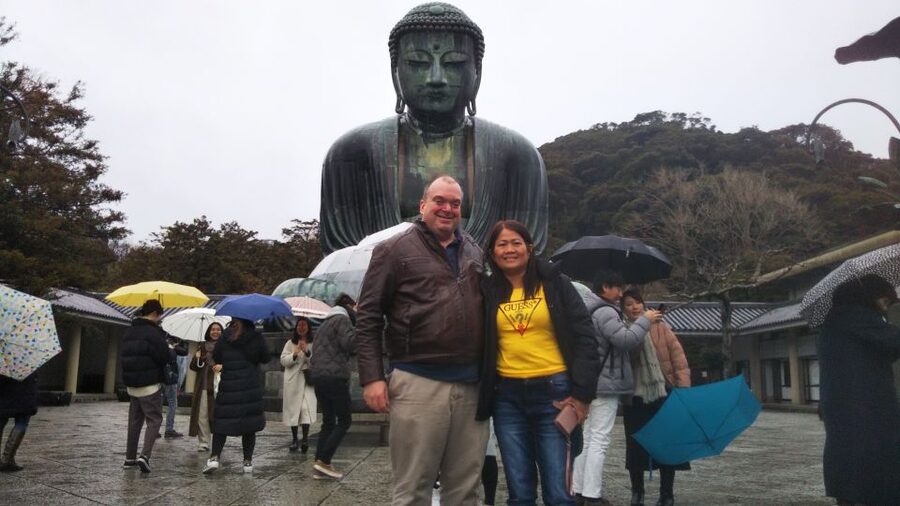
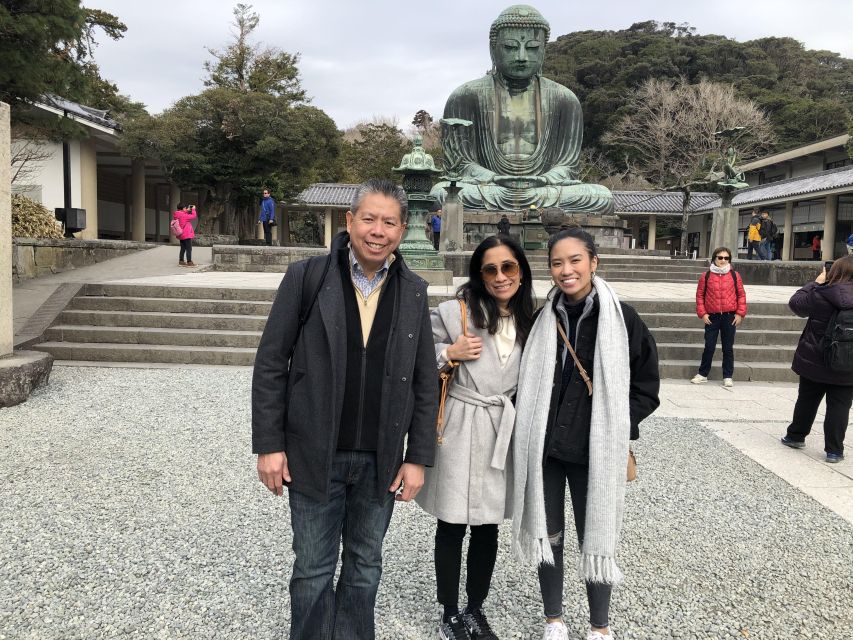
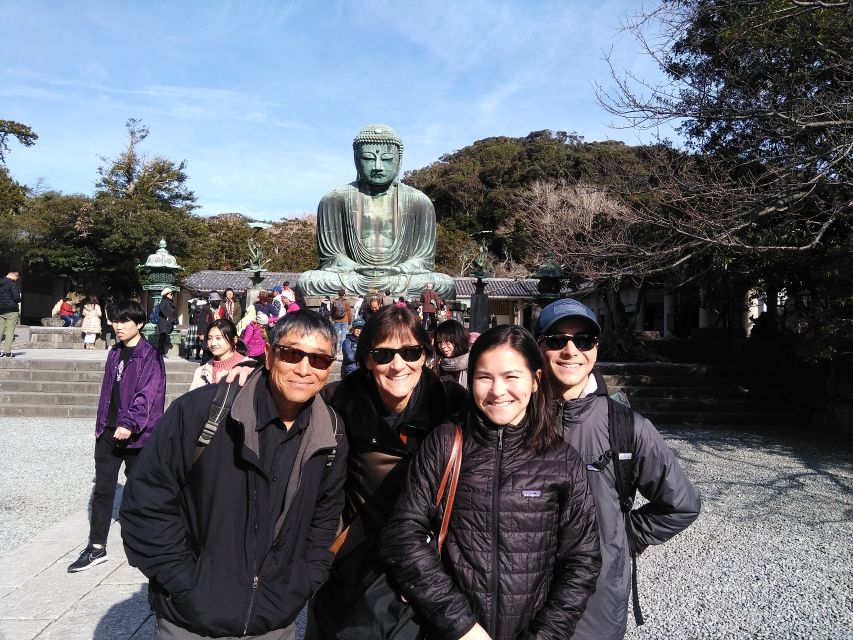
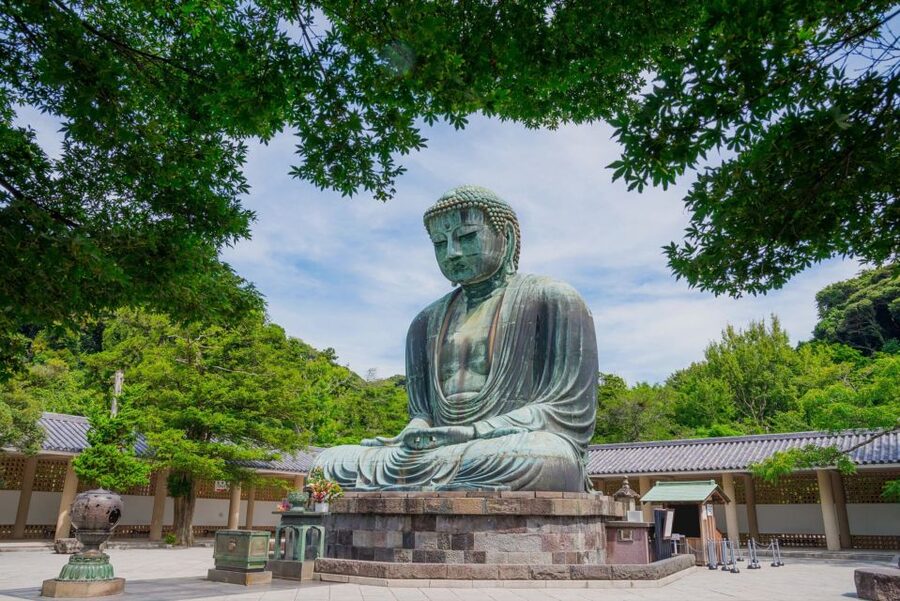
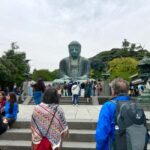
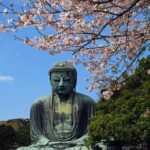
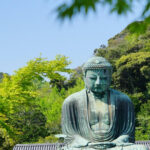
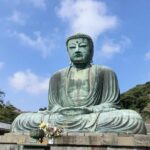
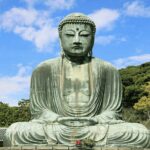
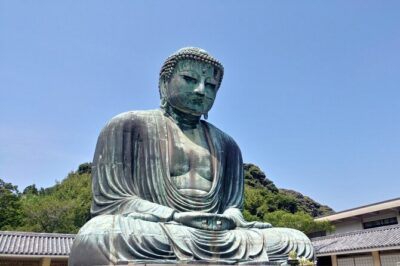
The Great Buddha at Kotoku-in is the obvious centerpiece of a first Kamakura visit. The bronze figure is large, calm, and remarkably direct in its effect. You can admire it from the temple grounds, take photographs, and, for an additional admission fee, enter the interior of the statue.
That interior visit is one of the more unusual details of the tour. Many sightseeing stops end with a photograph from outside. Here, you can step inside the hollow structure and better understand how such a huge bronze image was made.
Your guide can provide the religious and historical setting rather than leaving you with only a large statue and a camera stop. Ask questions about Buddhist imagery, the role of Kamakura as a center of political power, or how the city’s temples differ from one another.
The site can be busy, especially at popular times, so your guide’s timing and route choices matter. The Great Buddha is also a short walk from Hase-dera, making these two western Kamakura sights a natural pair.
Hase-dera’s gardens and seasonal hydrangeas
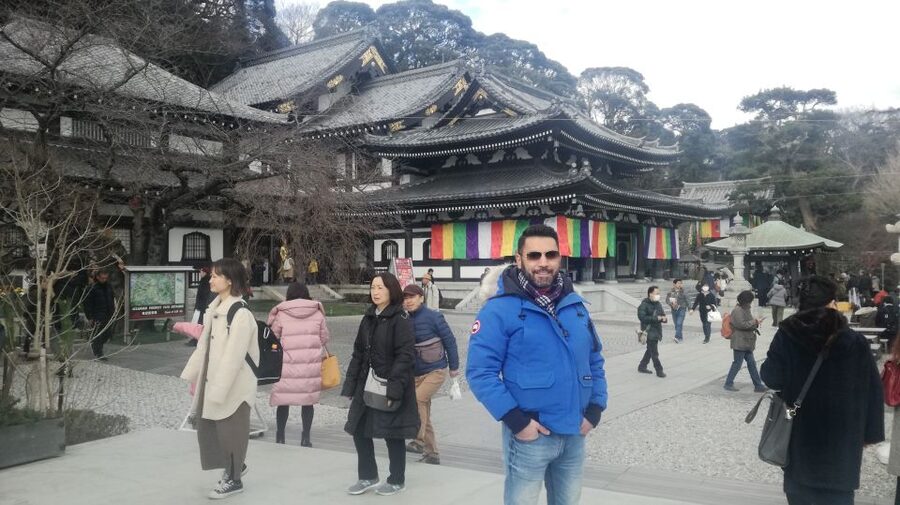
Hase-dera offers more variety than a single temple building. Its gardens, slopes, religious statues, and views give you reasons to slow down. During the rainy season, around June, about 2,500 hydrangeas in roughly 40 varieties bloom together, creating one of Kamakura’s most colorful seasonal displays.
If you are visiting in June, tell your guide that the hydrangeas are a priority. The paths can become especially popular at that time, and a private guide can help you understand how to fit Hase-dera into the day without turning the whole tour into a long wait.
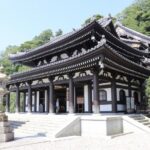
Outside hydrangea season, Hase-dera still earns its place for the gardens and temple atmosphere. I would pair it with the Great Buddha if you have only four hours. The two sites are close enough to make efficient use of your time, though you should expect walking and some uneven or sloping sections typical of temple grounds.
Zeniarai Benten and the money-washing tradition
Zeniarai Benten adds a folklore stop to the day. At this shrine, local tradition says that washing money in the spring’s sacred water can help bring more money in the future.
You should treat this as a cultural custom and a bit of fun, not a financial plan. The appeal is in seeing how a living belief fits into a working shrine visit. A guide can explain the practice, show you how the setting differs from a standard shrine, and answer questions about Japanese religious customs.
This is the sort of stop that is easy to miss without help. It is less immediately famous than the Great Buddha, but it gives the day a more personal feel. Ask your guide to include it if you want unusual local traditions rather than only the best-known monuments.
Other walking tours we've reviewed in Kamakura
Hokoku-ji and its bamboo garden
Hokoku-ji is known for its bamboo forest garden, a compact but memorable place to pause. Tall bamboo creates a shaded setting that feels very different from the open streets and larger temple grounds elsewhere in Kamakura.
The tour includes the chance to sample matcha while looking into the bamboo garden. That tea stop is not included in the price, but it adds a quiet cultural break to a long walking day. If you enjoy gardens, tea, and photography, Hokoku-ji is a strong choice.
There is a practical tradeoff. Kamakura’s main sights are not all clustered together, so reaching Hokoku-ji may require local public transport or a taxi, depending on your route. Those costs are extra. On a six-hour tour, there is more room to include it alongside other eastern Kamakura sights. On a four-hour schedule, you may need to choose between Hokoku-ji and several major central temples.
Tsurugaoka Hachimangu and the central temple district
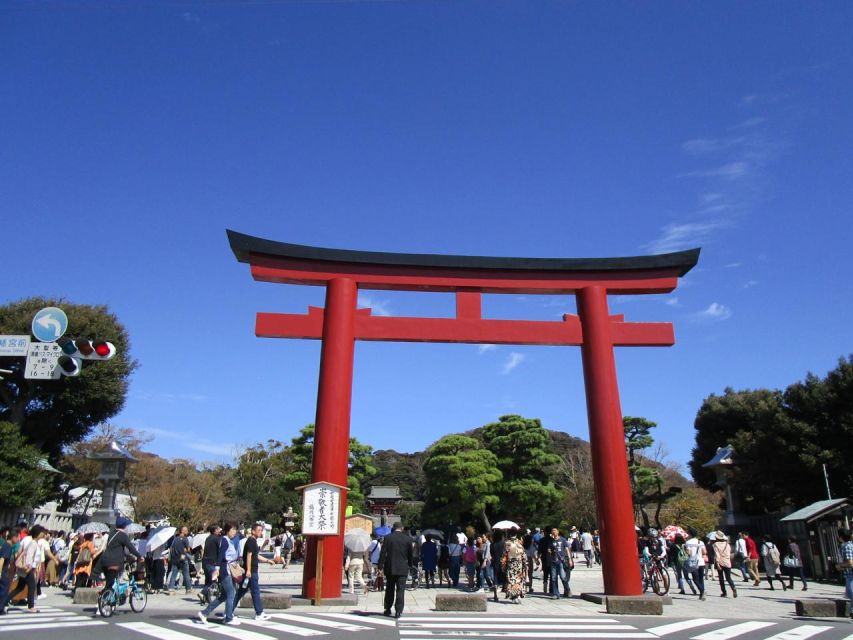
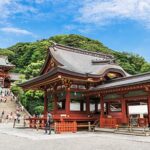
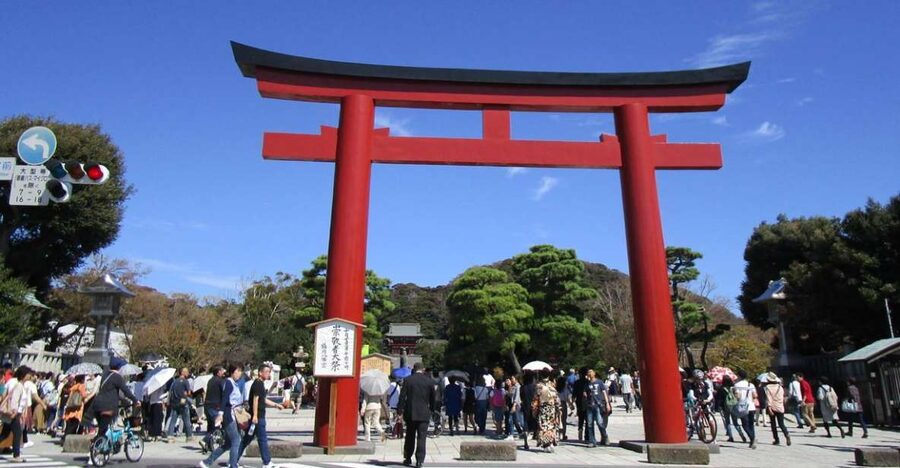
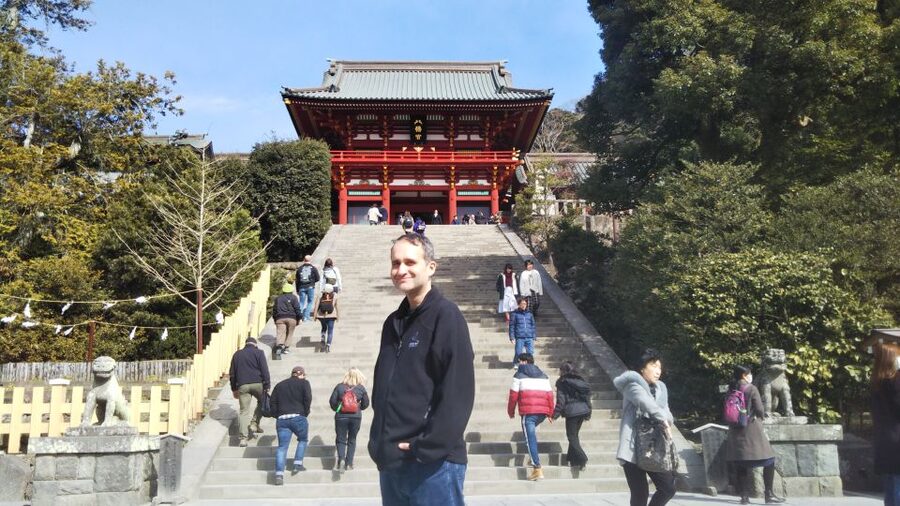
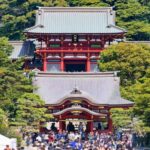
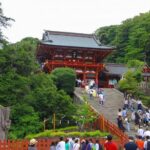
Tsurugaoka Hachimangu is one of Kamakura’s most important shrines and a natural anchor for a central walking route. Its broad approach and formal scale give you a different experience from the more enclosed spaces at Zeniarai Benten or Hokoku-ji.
A guide adds value here because the visual details can otherwise blur together after a morning of shrines and temples. You can ask about Shinto practices, shrine architecture, and the connection between Kamakura’s religious sites and its samurai past.
Near the central and northern areas, your guide may suggest Kencho-ji or Engaku-ji. These Zen temples are particularly useful if you want a stronger sense of Kamakura’s Buddhist tradition. One carefully planned route included both, then finished with only a short walk to the station, which is a smart way to avoid ending the day far from your return train.
You should not expect to see every major site in four hours. Kamakura rewards selection, not frantic box-checking. If these central temples are important to you, book six hours or make them your main request before the tour.
Food, photos, and the small personal touches
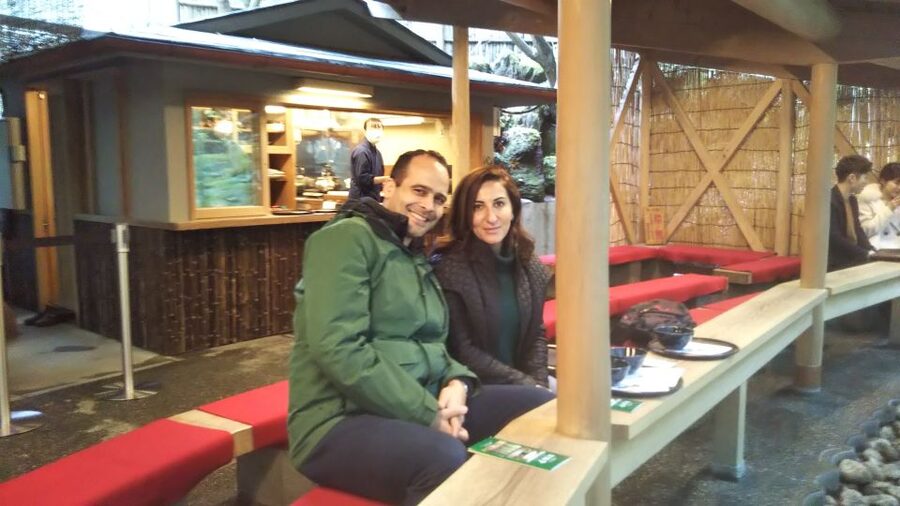
Food is not included, but lunch can become an important part of the experience. Guides have taken visitors to sushi, soba, and tempura restaurants, and one guide helped make food a central part of the plan. If you have dietary needs or a strong interest in Japanese food, mention it before the tour.
Your guide can also point out photo opportunities. Yuki adjusted her schedule for a group that liked to move quickly, found a sushi lunch, and met them at the train station. Another guide changed the route to help include a rare view of Mount Fuji.
Those details show what private guiding is good at. You are not only receiving facts at fixed stops. You are getting help with the practical parts of a day in Japan: where to eat, how to reach the next site, how long to stay, and where to turn for a better photograph.
The quality of the day depends partly on the guide assigned to you. Past guides have included Koba, Shinji, An, Yuki, Kei, Emiko, Hirosan, Taku, Hide, Goto, Tome, Yutaka, and others. You cannot assume that you will receive a particular person, so if a named guide is important to you, ask the local team before booking.
Four hours or six hours?
Choose four hours if you want a concentrated introduction. A sensible shorter route might focus on the Great Buddha, Hase-dera, and one central shrine or temple. It is also a good fit if Kamakura is one stop in a packed Tokyo itinerary.
Choose six hours if you want the guide to connect several areas. You will have a better chance of including the Great Buddha, Hase-dera, Tsurugaoka Hachimangu, a Zen temple, a meal, and either Zeniarai Benten or Hokoku-ji. Even then, you should agree on priorities in advance.
The longer tour is not simply six hours of walking without pause. A good schedule can include lunch, tea, photographs, and transport between areas. Tell your guide your preferred pace. One guide handled a fast-moving group well, while another adjusted a limited schedule to fit three destinations.
Transport, cost, and practical limits
The tour is primarily on foot. A private vehicle is not included, and you may use public transportation or local taxis between sites. Transportation costs are separate, and you should carry Japanese yen for them. If you want a private vehicle, it must be arranged at least five days in advance.
Entrance fees, food, and drinks are also extra. That makes the $106 per person price best understood as payment for planning and personal guiding, not an all-inclusive day trip. For a private group of several people, the value can be good because the guide’s attention is shared only among your party. For a solo visitor, the cost is harder to defend unless expert context and route planning are high priorities.
The activity is wheelchair accessible, but the tour still involves walking around temple and shrine grounds. Ask the local team to discuss your route and mobility needs before the day, especially if you want to include several different sites.
The experience runs rain or shine. Bring suitable clothing and shoes, and do not assume that bad weather will automatically cancel the outing.
You can cancel up to 24 hours before the start for a full refund, and reserve now while paying later. Keep in mind that the tour is not confirmed until a guide accepts it. The local team usually contacts you about the arrangements, but confirmation can take time, so do not wait until the final hours to clarify your meeting point and route.
Who should book this Kamakura tour?
I would choose this tour if you want Kamakura explained rather than simply photographed. It suits first-time visitors, families, couples, small groups, and anyone who finds the number of temples and shrines confusing.
It is also a good choice if you care about food, photography, Japanese culture, or a particular temple. The private format lets you ask questions freely and change the pace without holding up a larger group.
You may prefer an independent day if you already know Kamakura well, want the lowest possible cost, or dislike paying extra for transport and entrance fees. You should also avoid assuming that every attraction listed will fit into a four-hour booking. Send your priorities early and let the guide build a realistic plan.
With a rating of 4.8 from 60 reviews, the praise centers on friendly personal service, careful route planning, strong English, and the ability to adapt. The best evidence is in the practical results: guides have handled holiday closures, fitted in lunch, met people at the station, managed quick paces, and timed the final stop near the return train.
Should you book it?
Book this private Kamakura tour if you want a flexible day with a real person who can connect the Great Buddha, temple gardens, shrines, food, and local customs. The six-hour option offers the best value for a small group with several interests, while four hours works for a focused first look.
Before paying, decide your top three priorities and ask about transportation, entrance fees, and the guide’s availability. If you do that, this tour can turn Kamakura’s scattered sights into a well-paced and much more meaningful day from Tokyo.
FAQ
How long is the Kamakura walking tour?
You can choose a tour lasting four or six hours. Starting times depend on availability.
What languages are available?
Live guiding is available in English and Japanese.
Is the tour private?
Yes. It is a private group experience, with a maximum of seven passengers.
Does the price include entrance fees?
No. Entrance fees are not included and must be paid separately.
Is food included?
No. Food and drinks are not included. Your guide may help you choose a restaurant, but you pay for meals yourself.
Is transportation included?
No. The tour is a walking day tour, and public transportation or local taxis may be used between sites. Transportation costs are separate.
Can I be picked up at my accommodation?
Pickup on foot is included if your accommodation is within a reasonable walking distance. A private vehicle is not included.
Can I customize the itinerary?
Yes. You can request particular sites, interests, and pacing preferences, or ask your guide to plan the route.
What happens if my guide has not accepted the tour?
The booking is not confirmed until a guide contacts you. The local team continues looking for a guide and sends updates. If you cancel at least 24 hours before the start, no cancellation fee applies and you can receive a full refund.
More Guided Tours in Kamakura
More Walking Tours in Kamakura
More Kamakura & Enoshima Day Trips in Kamakura
More tours in Kamakura we've reviewed

Kamakura & Enoshima Day Trips, compared.
 ★ 4.5Tokyo: Kamakura & Enoshima Day Trip including Temple TicketsFrom $589 hours - 570 minutes
 ★ 4.5Tokyo: Mt. Fuji, Kamakura, Big Buddha, & Lake Ashi Day TripFrom $4910 - 11 hours
 ★ 4.5From Tokyo: Kamakura & Enoshima 1-Day Bus TourFrom $66
 ★ 5.0Kamakura Historical Walking Tour with the Great BuddhaFrom $98
 ★ 5.0Kamakura Private Tour: Temples, Nature, and the Great BuddhaFrom $98
 ★ 5.0Kamakura Walking Tour – The City of ShogunFrom $35