
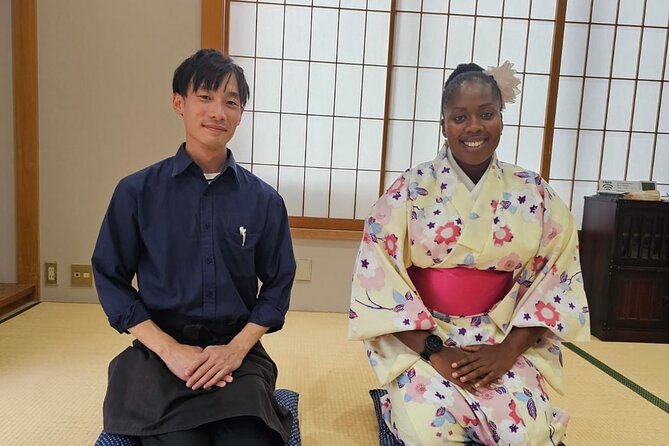
Reviewed · TOKYO FOOD TOURS
Kimono and Tea Ceremony in Asakusa Private Food Tour With Guide
Asakusa is at its most memorable when you are dressed for the setting. This four-hour tour helps you put on a traditional or modern kimono, complete with an obi sash and wooden sandals, then leads you through Senso-ji, Nakamise Shopping Street, and the Kaminarimon gate before tea, A5 Wagyu, and Japanese sweets.
I like the small maximum of eight people, which gives the guide room to answer questions and help with photos. I also like the mix of culture and food: you are not only watching a tea ceremony, you are tasting several Japanese treats along the way. The main consideration is the $290 price, which is a serious spend for half a day, especially since hairstyling, alcohol, and overnight kimono rental cost extra.
In This Review
- Key points to know before booking
- Why wearing a kimono changes the Asakusa walk
- Senso-ji, one hour among Asakusa’s landmarks
- Nakamise Shopping Street and the Kaminarimon approach
- Kaminarimon and the best photo stop
- Tea ceremony with food, not just a costume change
- What guide Adam adds to the four hours
- Is $290 a fair price for half a day?
- Timing, meeting point, and what to prepare
- Who will enjoy this Asakusa experience most?
- Should you book the Kimono and Tea Ceremony Food Tour?
- FAQ
- Where does the tour begin?
- What time does the tour start?
- How long does the experience last?
- How many people can join the tour?
- What food and drinks are included?
- Is hotel transportation included?
- Can I cancel for a full refund?
Key points to know before booking
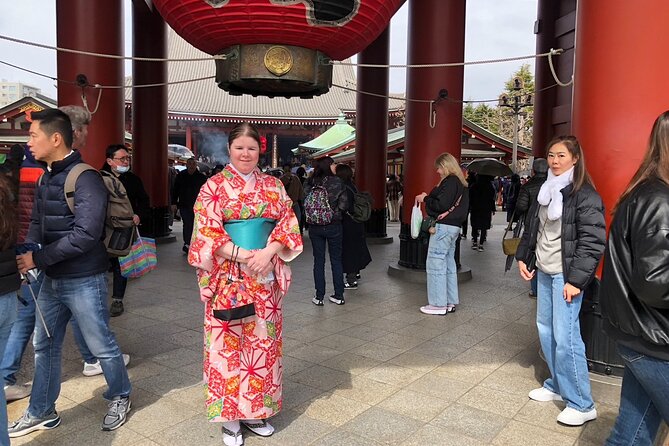
- Kimono dressing is the heart of the experience: Choose a traditional or modern style, then add an obi sash and wooden sandals for your walk through Asakusa.
- Guide Adam may shape the day: His explanations about life in Japan and local details have been a major part of the experience for past participants.
- Senso-ji provides the setting: The route includes Tokyo’s oldest temple, Nakamise Shopping Street, and the famous Kaminarimon gate.
- Food is included beyond tea: You receive two soft drinks, water, A5 Wagyu, ice cream, and local desserts.
- The group stays small: No more than eight people join, a useful limit for dressing help, conversation, and photographs.
- The schedule ends around mid-afternoon: The 11:00 a.m. start and roughly four-hour length leave time for more Asakusa or Tokyo sightseeing.
Why wearing a kimono changes the Asakusa walk
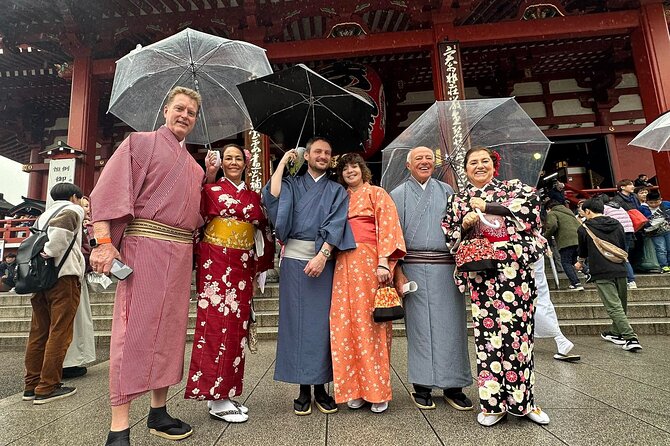
Many Asakusa visits follow the same route: walk through Kaminarimon, browse Nakamise, take a few temple photos, and move on. This tour gives that route a different purpose. You are not simply looking at traditional clothing in shop windows. You are dressed in it while walking through one of Tokyo’s best-known historic districts.
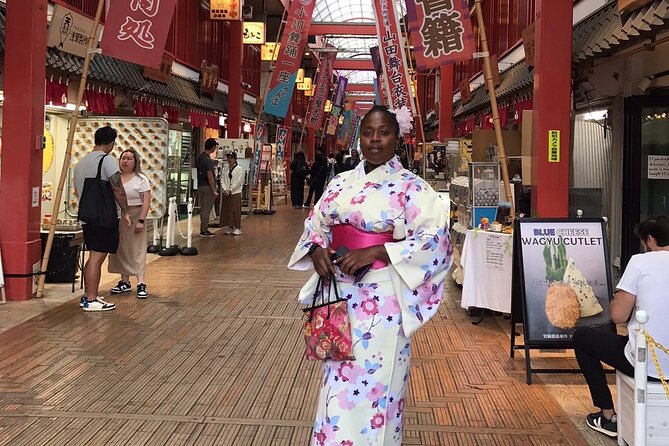
The dressing session is practical rather than a quick costume photo. You choose between a traditional or modern kimono, then receive help with the obi sash and wooden sandals. That matters because the clothing is fitted and layered, and the sandals change your pace. You should expect to walk more carefully than you would in sneakers.
The outfit also creates the best photo opportunities of the day. Senso-ji, Nakamise, and Kaminarimon offer recognizable Asakusa backdrops, and the small group size makes it easier to pause without holding up a large crowd. The supplied tour details do not promise professional photography, so plan to use your own phone or camera.
Hairstyling is available for an additional charge. An overnight kimono rental is also offered at extra cost, which could appeal if you want to continue sightseeing in the outfit after the tour. Neither option is included in the $290 price, so check the added cost before booking if the full look matters to you.
A few more Tokyo tours and experiences worth a look
Senso-ji, one hour among Asakusa’s landmarks
The first listed stop is Senso-ji, with about an hour allocated to the temple. This is Tokyo’s oldest temple and one of its most important Buddhist sites. The visit gives the tour a cultural anchor before the shopping and food portions begin.
Senso-ji is useful for first-time visitors because the setting makes several parts of Asakusa easy to understand. You can connect the temple, its entrance gates, the approach road, and the surrounding shops instead of seeing them as separate photo stops. Your guide can also add context about the area and explain what you are looking at as you walk.
The temple visit is listed as free, so there is no separate admission charge to budget for. The hour should be enough for an introduction, photographs, and a walk through the main area, though it is not a long temple study. If you want to inspect every corner at a slow pace, you may prefer to return later on your own.
Wearing a kimono here is both fun and slightly conspicuous. You will draw attention in the way anyone in formal traditional clothing does, which is part of the appeal but may not suit someone who dislikes being photographed. The experience works best if you are comfortable being visible and taking your time.
Nakamise Shopping Street and the Kaminarimon approach
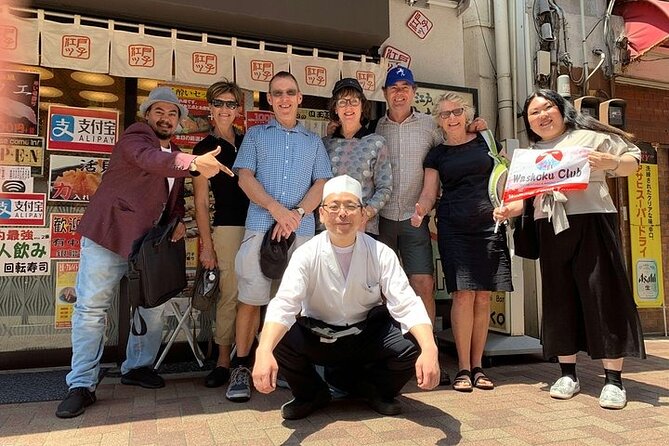
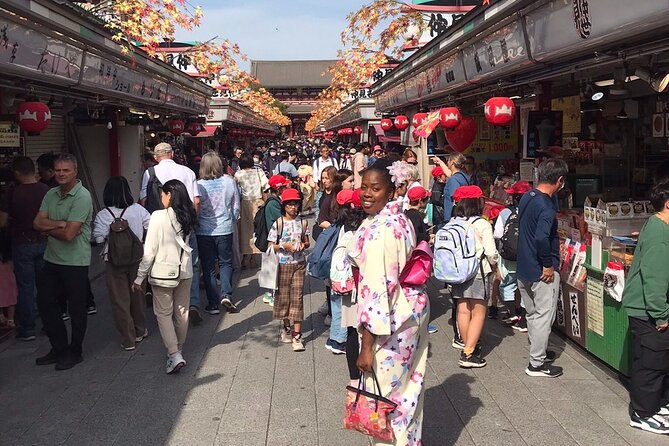
The largest portion of the route is connected with Nakamise Shopping Street, with around two hours listed for the area. Nakamise runs about 250 meters along the approach to Senso-ji, with shops selling traditional souvenirs, snacks, and sweets on both sides.
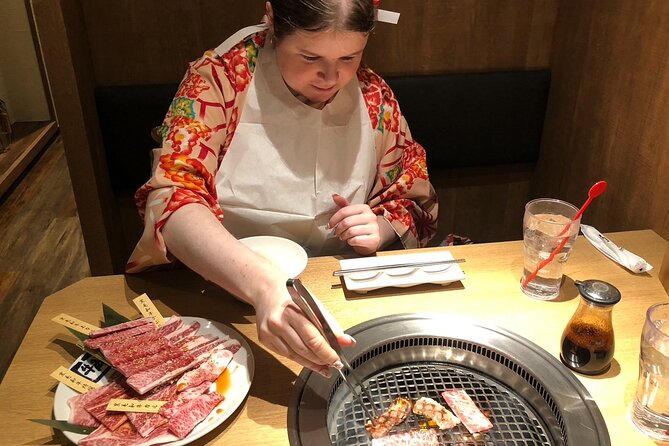
This is where the tour’s food focus becomes most useful. Rather than treating the street as a rushed shopping corridor, you can ask about the snacks and local sweets you see, then connect what you are eating with the neighborhood around you. Tea, soft drinks, ice cream, and other Japanese treats are included, along with A5 Wagyu beef.
The food is a strong reason to compare this tour with a basic kimono rental. A rental gives you the clothing and the chance to walk around. This experience adds a guide, a tea ceremony, a culture walk, drinks, dessert, and a beef tasting. That package helps explain the price, though it remains expensive if your main goal is simply to wear a kimono for photographs.
The food schedule is not set out dish by dish, so you should not book expecting a precise tasting menu. You know that A5 Wagyu, ice cream, local desserts, tea, two soft drinks, and water are included. Alcohol is not included, though it may be purchased by people aged 18 and above.
One useful detail from the experience is the guide’s reported flexibility. Adam adjusted plans for one group that chose to skip an onsen, leaving more time for other activities, including a favorite sushi stop. The published route here focuses on Asakusa, so treat that flexibility as a possible feature of the day rather than a promise of a particular restaurant or onsen visit.
Kaminarimon and the best photo stop
Kaminarimon, or the Thunder Gate, is the outer gate leading toward Senso-ji. It is about 11.7 meters tall and 11.4 meters wide, with a large lantern and guardian statues that make it one of Asakusa’s most familiar sights.
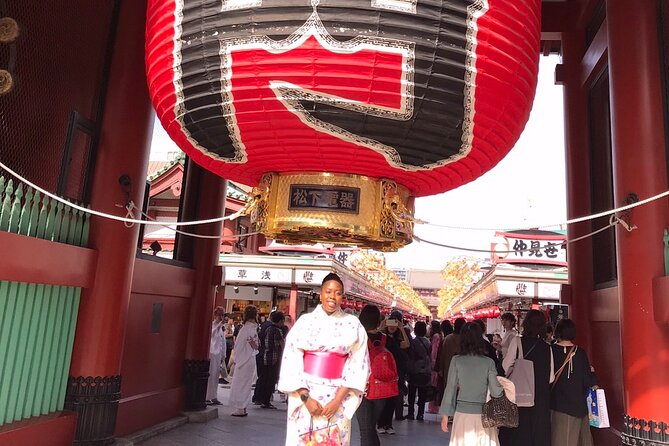
The gate is listed as a separate one-hour stop, even though it connects naturally with the temple and Nakamise route. That gives your guide time to explain the entrance and help the group pause for photographs. In a kimono, this is likely to be one of the day’s most useful photo locations because the gate instantly identifies the place.
The area is also a practical reminder that Asakusa is a major sightseeing district. You will share the approach with many other people, and the tour cannot make the famous gate private or quiet. The benefit of a small group is not solitude. It is the ability to move and stop with less fuss than a large organized tour.
Tea ceremony with food, not just a costume change
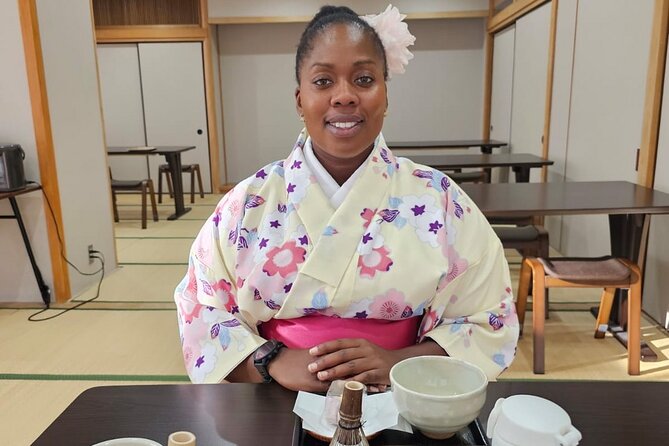
The tea ceremony keeps the experience from becoming only a dressed-up walking tour. You receive an actual tea ceremony experience, with the guide helping you understand the cultural setting rather than leaving you to pose in the clothing.
The supplied details do not specify the tea style, ceremony venue, length, or whether guests prepare the tea themselves. For that reason, I would view this as an introduction rather than a formal, lengthy study of tea practice. You will get a focused cultural activity within a half-day itinerary, not a full course in Japanese tea.
That balance will suit you if you want a first look at several Japanese traditions in one outing. It may disappoint you if the tea ceremony is your single reason for booking and you want a highly specialized or extended ceremony. Ask the operator for current ceremony details if that part of the experience is especially important to you.
The food helps make the ceremony approachable. Tea, sweets, ice cream, drinks, and A5 Wagyu give the day a relaxed social rhythm. You are learning, walking, eating, and taking photos rather than sitting through one long formal presentation.
A few more Tokyo tours and experiences worth a look


What guide Adam adds to the four hours
The guide can make or break a compact cultural tour, and Adam is specifically named in the experience information. His role is not limited to leading the route. He has shared background about living in Japan and added small facts that helped explain the places and customs along the way.
That kind of commentary is valuable in Asakusa, where it is easy to see the major sights without understanding how they fit together. A good guide can turn a gate, a temple approach, a shop, or a food stop into part of a connected story. Adam also appears to be comfortable adapting the schedule when a group has a different priority.
The tour caps participation at eight people. That is small enough for direct conversation and useful when several people need help with kimono details or want photographs. It is not a private tour, however. If you book as a couple or a small family, you may share the morning with other people who have different interests and walking speeds.
The company name given for the experience is Japan Local and Fun Experiences. The supplied information also refers to the Japan Local Experience Club and Aya Washoku in responses, so you should check your confirmation for the exact operating contact and meeting instructions.
Is $290 a fair price for half a day?
At $290 per person, this is not a bargain activity. The value depends on how many included elements you would otherwise arrange separately.
You are paying for roughly four hours, kimono dressing assistance, a guided culture walk, a tea ceremony, a maximum group size of eight, A5 Wagyu, two soft drinks, water, ice cream, and local desserts. The route also covers three major Asakusa sights: Senso-ji, Nakamise Shopping Street, and Kaminarimon.
The price makes more sense if you want one organized experience that combines clothing, food, photos, and cultural explanation. It is less convincing if you already plan to rent a kimono independently, visit Asakusa without a guide, and choose your own restaurants. In that case, you may prefer to spend the difference on a separate tea ceremony and meal.
The fact that the activity is often booked about 67 days ahead suggests that you should not leave it until the last minute if your dates are fixed. The information does not give a season-by-season price or a cheaper child rate, so compare the final booking total carefully.
Timing, meeting point, and what to prepare
The tour begins at 11:00 a.m. at the Asakusa Culture Tourist Information Center, located at 2-chome-18-9 Kaminarimon, Taito City, Tokyo 111-0034. It ends back at the same meeting point, which is convenient if you want to continue around Asakusa afterward.
The four-hour schedule should finish at about 3:00 p.m., although the exact end time can vary. You can then return to the temple area, continue shopping, or make your way to another Tokyo district. Since there is no hotel pickup or drop-off, allow time to reach the meeting point using Tokyo’s public transportation.
Wear something comfortable underneath the kimono and avoid planning a long, fast walk immediately afterward. Jeans and sneakers are specifically discouraged for the tea ceremony setting, but you should also remember that the wooden sandals may affect comfort. The tour information says most people can participate, yet it does not provide detailed guidance about mobility needs or the physical demands of walking in the outfit.
A mobile ticket is provided, and confirmation is received at booking. You can cancel for a full refund up to 24 hours before the local start time. Changes or cancellations made within 24 hours are not accepted for a refund.
Who will enjoy this Asakusa experience most?
I would recommend it to you if you want a polished introduction to several Japanese customs without spending a full day on a single activity. Couples, first-time Tokyo visitors, small families, and friends who care about photographs and food should find the format appealing.
It is also a good fit if you want a guide who can explain everyday Japanese context, not just recite dates about temples. Adam’s personal background and small local details were singled out as useful parts of the experience, and the flexible approach may help groups with mixed interests.
You may want another option if you dislike group activities, have difficulty walking in wooden sandals, or want a formal tea ceremony with extensive instruction. The group is small, but it is still shared. You should also think twice if $290 feels high for a four-hour activity and you are mainly interested in clothing rental.
Should you book the Kimono and Tea Ceremony Food Tour?
Book it if you want Asakusa wrapped into one easy half-day: kimono dressing, temple sights, a tea ceremony, A5 Wagyu, sweets, and a guide who can adjust the pace. The small group and included food give it more substance than a simple photo session.
Skip it if your priority is low cost, a private ceremony, or a long kimono rental. For the right visitor, the value is in the combination. You get to walk through some of Tokyo’s most recognizable streets while dressed for the setting, then sit down for tea and food before the afternoon is gone.
FAQ
Where does the tour begin?
It begins at the Asakusa Culture Tourist Information Center at 2-chome-18-9 Kaminarimon, Taito City, Tokyo 111-0034, Japan.
What time does the tour start?
The scheduled start time is 11:00 a.m.
How long does the experience last?
The experience lasts approximately four hours and ends back at the meeting point.
How many people can join the tour?
The tour has a maximum of eight participants.
What food and drinks are included?
The included items are tea, two soft drinks, water, A5 Wagyu beef, ice cream, and local desserts.
Is hotel transportation included?
No. Hotel pickup and drop-off are not included.
Can I cancel for a full refund?
Yes. You can cancel at least 24 hours before the local start time for a full refund. Cancellations or changes made less than 24 hours before the start are not accepted for a refund.
More Tea Ceremony & Matcha in Tokyo


More Tokyo Food Tours in Tokyo
More Asakusa Tours in Tokyo
More tours in Tokyo we've reviewed


Tokyo Food Tours, compared.
 ★ 5.0Tokyo: Shinjuku Food Tour (13 Dishes at 4 Local Eateries)From $86
 ★ 4.9Tokyo: Shinjuku Food Tour (15 Dishes and 4 Eateries)From $853 hours
 ★ 5.0Best of Shinjuku: Izakaya Food Tour (4 Stops, 14+ Tastings)From $92
 ★ 5.0Tokyo Night Foodie Tour in Shinjuku – Seasonal Sushi, Wagyu BeefFrom $111
 ★ 5.0Eat and Drink Like a Local: Tokyo Ueno Food Tour-Taverns&RamenFrom $95
 ★ 5.0Tokyo: Shibuya Food Tour (13 dishes and 4 Eateries)From $77