
Reviewed · MT FUJI DAY TRIPS
Kamakura Tour with Pro Photographer: Anime Train & Fuji Sunset
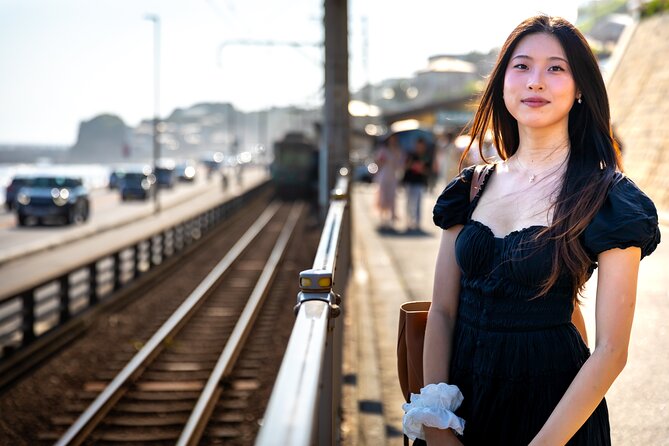
Kamakura’s famous Slam Dunk train crossing is more than an anime photo stop. It is a real seaside corner where the Enoshima Line rolls past, the ocean opens behind it, and a professional photographer helps turn a quick visit into a polished set of portraits. The route then continues to Shichirigahama Beach for views toward Enoshima and, on a clear day, Mount Fuji.
I like two things here: the photographer does the picture-taking, so nobody in your group is stuck behind the camera, and the promised 30-plus edited portraits arrive within 72 hours. I also like the personal posing guidance and the local stories from guides such as Luis, who knows the area well. The main drawback is weather: Fuji may be hidden, and poor conditions can cancel the outing.
In This Review
- Key points at a glance
- Why the Kamakura train crossing matters
- One hour of portraits beside the Enoshima Line
- Walking toward Shichirigahama Beach
- What the 72-hour photo delivery is worth
- Timing your 3:30 pm start
- Who gets the most from this photo tour
- Practical limits you should know before booking
- Should you book the Kamakura photography experience?
- FAQ
- Where does the tour start?
- What time does the experience begin?
- How long does the photography tour last?
- Where does the tour end?
- Is transportation included?
- Will I see Mount Fuji?
- How many edited photos will I receive?
- When will the photos be delivered?
- What happens if the weather is poor?
Key points at a glance
- Slam Dunk’s real-life crossing: Begin at Kamakurakōkō-Mae Station, the best-known photo setting on the route.
- A photographer-led session: Get help with natural poses, candid moments, and more styled portraits.
- Two coastal locations: Spend about one hour at the station and crossing, then about 30 minutes at Shichirigahama Beach.
- Fuji is weather dependent: Enoshima and the sea are part of the plan, but Mount Fuji is never guaranteed.
- 30-plus edited images: Receive a digital gallery within 72 hours, useful if you want a finished souvenir rather than phone snapshots.
- Small group format: The maximum group size is eight, with group discounts available.
Why the Kamakura train crossing matters
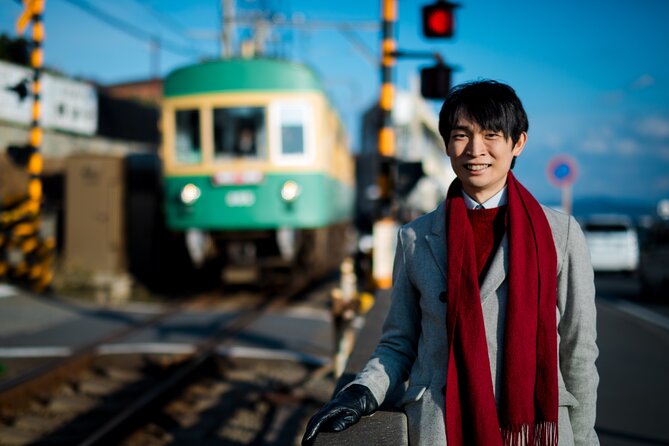
The appeal begins at Kamakurakōkō-Mae Station, often called Kamakura High School Station in English. This is the setting associated with Slam Dunk, making it a must-see for anime fans who want to connect the animated world with a real Japanese place.
The crossing is memorable because several elements meet in one frame. You have the Enoshima Line, the road and rails, the sea beyond, and the steep coastal setting around the station. A passing train can add movement and color to the photograph, though you should think of it as a natural moment rather than a staged prop that will appear exactly on command.
Your photographer meets you at the station and directs the session from there. That changes the experience from simply arriving, taking one rushed picture, and leaving. You receive help with where to stand, how to angle your body, and how to look relaxed. Those small instructions matter, especially if you usually feel awkward in front of a camera.
The station area is also a public place, so you should expect other people and ordinary local activity. This is not a private studio. The charm comes from photographing you in a working seaside setting, with the train line and coast doing much of the visual work.
If you're still narrowing it down, here are other tours in Kamakura we've reviewed.
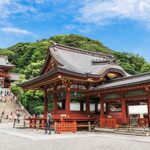
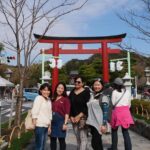
One hour of portraits beside the Enoshima Line
The first part lasts about one hour. That gives the photographer time to work through several types of images instead of taking a single group shot at the crossing.
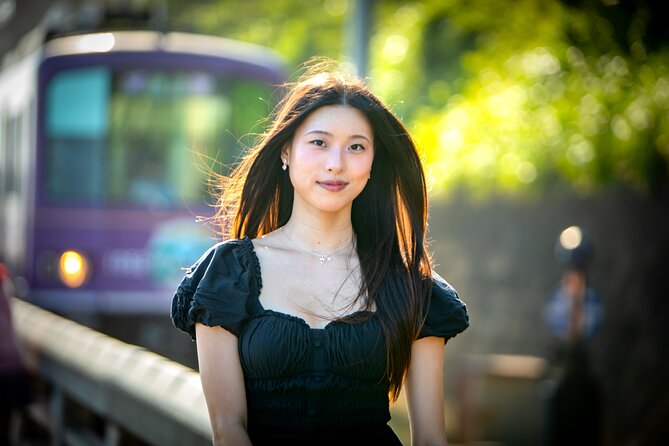
You can expect a mix of candid and posed portraits. The candid photographs should feel less formal, while the styled pictures give you more control over the final look. The photographer’s job is not only to press the shutter. You are also given personalized direction so you do not have to invent every pose yourself.
This is particularly useful for couples, families, and solo visitors. If you are alone, the outing solves the basic problem of getting good photographs without asking strangers to take several attempts. If you are traveling as a couple, you can both appear in the pictures. Families can also get a shared set of photographs rather than one parent being missing from nearly every frame.
The train itself is part of the visual story. A passing carriage may create the anime connection you came for, while a quiet interval lets you focus on portraits with the sea behind you. Since train timing and conditions are not provided, I would keep expectations flexible. The photographer can guide you around the setting, but no photo session can guarantee a particular train moment.
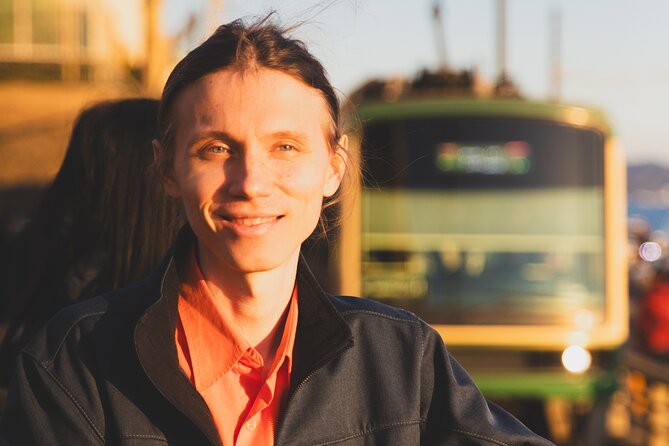
Luis is the photographer-guide named for this experience. He lives nearby and brings local knowledge of the area, along with practical advice about looking good in photographs. The feedback connected with this experience also highlights his patience and communication, including his ability to keep a rainy-day session feeling worthwhile. That personal approach may be the biggest difference between this outing and a self-guided visit.
Walking toward Shichirigahama Beach
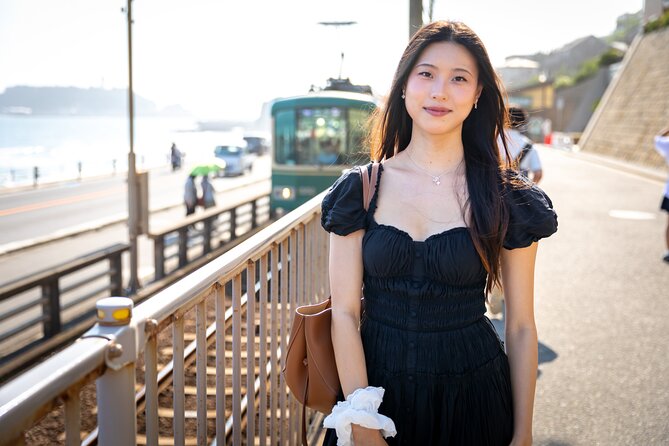
After the station session, the route heads along the coast toward Shichirigahama Beach. This section takes about 30 minutes and changes the mood of the photographs.
At the crossing, the train and anime connection take center stage. At the beach, the frame opens up. You can pose with the sea behind you, Enoshima in the distance, and Mount Fuji if visibility is good. The beach gives the photographer more room to create full-body portraits and wider scenes.
The Fuji view is the great bonus, not a promise. Clear air and favorable weather are needed, and the experience specifically notes that Mount Fuji is visible only when conditions allow. You may still receive attractive coastal photographs if Fuji remains hidden, but I would book this for the combination of Kamakura, the railway, and the sea rather than for Fuji alone.
Rain also deserves attention. The experience requires good weather and may be canceled if conditions are poor. If the operator cancels, you are offered another date or a full refund. A light change in conditions can also alter the look of the coast, so flexible expectations help.
Shichirigahama is not presented as a long beach visit or a swimming stop. It is a short photography location. You should be prepared to keep moving and to use the half-hour well, especially if you want several different compositions before the session ends back at the meeting point.
What the 72-hour photo delivery is worth
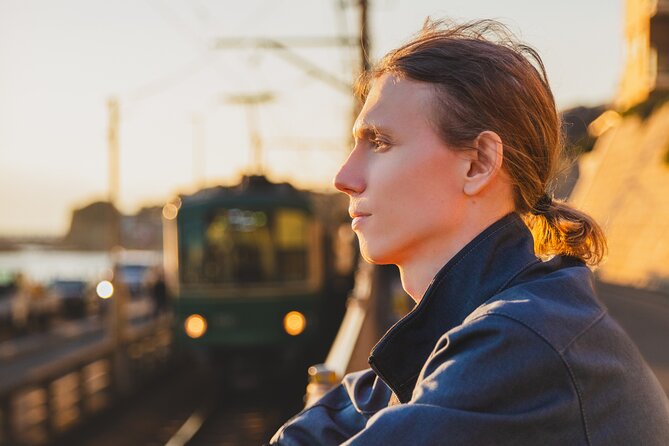
The price is $103.41 per person. That is not the cheapest way to see the crossing, since you can arrange your own visit and take photographs with a phone. The value comes from combining a local guide, a two-hour session, professional shooting, posing help, and at least 30 edited images.
For a solo visitor, the price can make particular sense. Paying for a professional session means you return with photographs that include you, rather than a folder full of scenery and selfies. Couples may also find the cost worthwhile because both people can be in the main images.
The digital gallery is delivered within 72 hours. That timing is useful if Kamakura is part of a larger Japan trip and you want to share the photographs while the journey is still fresh. The images are professionally edited, so you are paying for a finished product, not just unprocessed files.
The exact selection of images is not described beyond 30-plus edited portraits. You should therefore view the number as a minimum promise rather than a guarantee of a particular balance between solo, couple, group, candid, and train photographs. If you have a strong preference, tell the photographer at the start.
Group discounts are available, and the maximum group size is eight. A small group should make it easier to receive individual attention than on a large sightseeing tour, though you may still share the locations and photographer’s time with other members of the booking.
Timing your 3:30 pm start
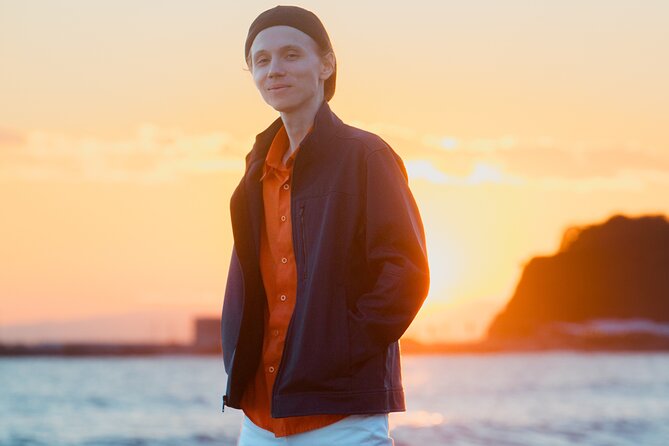
The meeting time is 3:30 pm at Kamakurakōkō-Mae Station, at 1 Chome-1 Koshigoe, Kamakura, Kanagawa 248-0033. You arrange your own transportation to the station, so allow extra time for finding the correct platform, walking through the station area, and meeting the photographer.
The late-afternoon schedule is designed for coastal light and a possible sunset finish. The itinerary does not promise a particular sunset time or exact lighting, and seasonal conditions can vary. Still, the timing gives the session a more flattering chance than a harsh midday shoot, especially at the open beach.
You should arrive ready to begin at 3:30 pm. There is no separate transportation included, and the activity ends back at the meeting point. Since the entire experience lasts about two hours, it works best as a focused Kamakura activity rather than something to squeeze into a packed hour between distant sights.
The station is near public transportation, which makes it practical to reach without arranging a private vehicle. I would avoid planning an important reservation immediately afterward. The stated duration is approximate, and you will enjoy the session more if you are not watching the clock.
A few more Kamakura tours and experiences worth a look
Who gets the most from this photo tour
This outing suits Slam Dunk fans first. The crossing is the central attraction, and the photographer adds context about the anime connection and the local setting. You do not need to be an expert fan, but the experience has more meaning if you recognize why this particular railway view matters.
It also suits anyone who wants professional holiday portraits in Japan. Solo visitors, couples, families, and small groups can all use the format. The photographer can provide posing advice, which helps if you want photographs that look more natural than a standard vacation snapshot.
The tour is a good fit for people who prefer an easy, guided session over researching locations and managing camera equipment. It is less suitable if you want a long historical tour of Kamakura, extensive sightseeing, or a full-day coastal walk. The cultural and historical information is included as part of the photography outing, but the main purpose is making photographs.
Most people can participate, and service animals are allowed. The available information does not provide detailed mobility notes, so you should ask the operator directly if you need specific assistance with the station, crossing, or beach route.
Practical limits you should know before booking
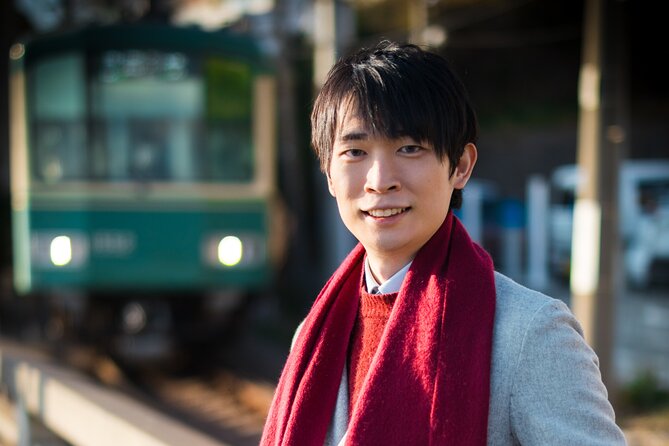
The strongest result depends on your attitude toward weather and timing. Fuji may be obscured, rain can affect the session, and train photographs depend on what happens during the visit. Those are normal limits of an outdoor shoot, but they matter if you are booking mainly for one exact image.
The good news is that poor weather is not simply your problem after booking. If the experience is canceled because of conditions, you can choose a new date or receive a full refund. You can also cancel for a full refund up to 24 hours before the 3:30 pm start time. Inside that window, the payment is not refunded and changes are not accepted.
Wear something you are comfortable being photographed in, since the session includes both posed and candid images. The provided details do not specify a dress code, special equipment, or a required level of fitness. Your main preparation is to reach the meeting point on time and communicate the kinds of photographs you want.
A mobile ticket is available, and confirmation is sent when you book. The activity is capped at eight people, which keeps the format personal without making it a private shoot by default.
Should you book the Kamakura photography experience?
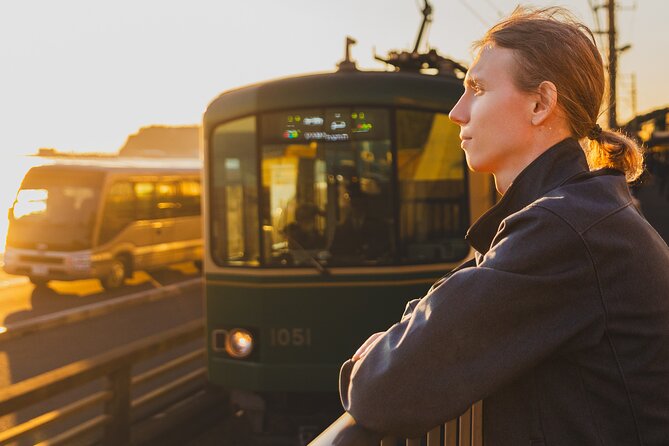
Book it if you want more than a quick picture at the Slam Dunk crossing. The combination of a real anime location, a professional photographer, beach portraits, and 30-plus edited images gives the $103.41 price a clear purpose.
I would especially recommend it for solo visitors, couples, and fans who want a lasting souvenir from Kamakura. The personal guidance from Luis, when he is your photographer, is also useful if you are not comfortable posing.
Skip it if your priority is guaranteed Mount Fuji scenery, a long Kamakura sightseeing tour, or the lowest possible cost. Fuji depends on weather, the session is short, and you must arrange your own transportation. For everyone else, this is a compact way to turn one famous railway crossing and a stretch of coast into a polished record of your Japan trip.
FAQ
Where does the tour start?
The tour starts at Kamakurakōkō-Mae Station, located at 1 Chome-1 Koshigoe, Kamakura, Kanagawa 248-0033, Japan.
What time does the experience begin?
The scheduled start time is 3:30 pm.
How long does the photography tour last?
The experience lasts approximately two hours.
Where does the tour end?
The activity ends back at the meeting point at Kamakurakō-Mae Station.
Is transportation included?
No. You need to arrange your own transportation to the meeting point.
Will I see Mount Fuji?
Mount Fuji may be visible from Shichirigahama Beach when the weather allows. The view is not guaranteed.
How many edited photos will I receive?
You will receive 30 or more professionally edited photos in a digital online gallery.
When will the photos be delivered?
The edited photographs are delivered digitally within 72 hours of the tour.
What happens if the weather is poor?
The experience requires good weather. If it is canceled because of poor conditions, you can choose another date or receive a full refund.
More Kamakura & Enoshima Day Trips in Kamakura
More tours in Kamakura we've reviewed
Mt Fuji Day Trips, compared.
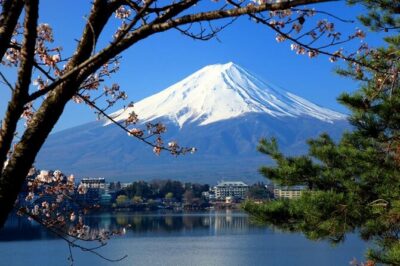 ★ 5.0Mt Fuji and Hakone 1-Day Bus Tour Return by Bullet TrainFrom $163
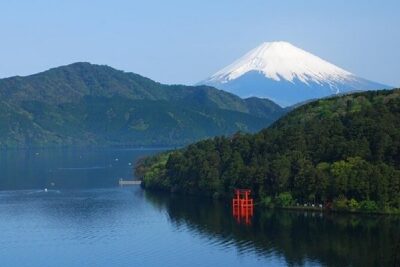 ★ 4.0Mt Fuji & Hakone Cruise, Drum Show Bullet Train 1 Day from TokyoFrom $149
 ★ 4.4Tokyo Mt Fuji 5th St & Hakone Cruise Bus Tour w/Bullet TrainFrom $15410 hours
 ★ 4.5From Tokyo: Mount Fuji Full-Day Sightseeing TripFrom $6810 hours
 ★ 4.7Tokyo: Mt. Fuji Tour, Hakone Ropeway, Owakudani, Lake AshiFrom $5410 hours
 ★ 4.4Tokyo:Mt.Fuji,Kawaguchiko Oishi Park,Arakurayama Sengen ParkFrom $5410 hours