
Reviewed · KAMAKURA & ENOSHIMA DAY TRIPS
Kamakura Private Custom Tour
Kamakura packs centuries of temples, shrines, gardens, and seaside food into a compact trip from Tokyo. The smartest feature of this private seven-hour tour is its flexible route: instead of following one fixed path, you can shape the day around your interests and use local trains and buses to reach three or four major sites.
I like the chance to see the Great Buddha, Tsurugaoka Hachimangu, Hasedera, Jomyo-ji, and Komachidori without having to work out Kamakura’s spread-out transport system yourself. I also like that the guide’s transportation, lunch, and admission fees are covered, while the guide can adjust the pace to your group.
The main drawback is cost. At $149.58 per person, you still pay your own local transportation and some entrance fees, so the final bill rises. The tour also requires a moderate level of fitness, with walking, stairs, and public transportation throughout the day.
In This Review
- Key points to know before booking
- Why a private day works well in Kamakura
- The Great Buddha at Kotoku-in
- Tsurugaoka Hachimangu and Kamakura’s political past
- Hasedera’s Kannon and flower garden
- Jomyo-ji, matcha, and a quieter pause
- Komachidori for snacks, shops, and seafood
- Public transportation is part of the experience
- What the guide adds to the day
- Is $149.58 per person good value?
- Who will enjoy this Kamakura day?
- FAQ
- Where does the tour start?
- What time does the tour begin?
- How long does the tour last?
- Where does the tour end?
- Is this a private tour?
- Which transportation is used?
- How much should I budget for my transportation?
- Are temple and shrine entrance fees included?
- Can I cancel for a full refund?
- Should you book this private Kamakura tour?
Key points to know before booking
- A private route, not a fixed group schedule: Your guide arranges the day around your interests and needs.
- Three or four main sights are realistic: Kamakura’s temples and shrines are spread out, and trains and buses take time.
- The Great Buddha is an open-air bronze image: You can pay a small extra fee to step inside the statue.
- Hasedera is especially appealing in June: Its flower garden is known for hydrangeas.
- Local transport is not included: Set aside about ¥2,000 per person for trains and buses.
- Guides named for this experience include Akira and Nobuo Kono: Both are described as attentive, kind, and strong on Kamakura’s history.
Why a private day works well in Kamakura
Kamakura was a political center in the 12th century, and its religious sites are scattered around the town rather than grouped in one easy-to-walk district. That gives the city its appeal, but it can make an independent day feel disjointed.
A private guide helps connect the sites. You are not just checking off a Buddha, a shrine, and a temple. You can ask how Buddhist and Shinto traditions appear side by side, why certain places mattered to Kamakura’s rulers, and how to adjust the plan when your group needs more time at one stop.
The route is not completely unlimited. With roughly seven hours and public transportation, three or four stops make more sense than trying to force all five listed places into the day. Your guide decides the final balance with you, which is useful if you care more about gardens and temples than shopping, or prefer food and local streets over another formal religious site.
The 9:00 am start at Kamakura Station gives you a clear meeting point and a full day ahead. The activity finishes back at the station, so you do not have to figure out where the tour ends or arrange a separate return point.
A few more Kamakura tours and experiences worth a look
The Great Buddha at Kotoku-in
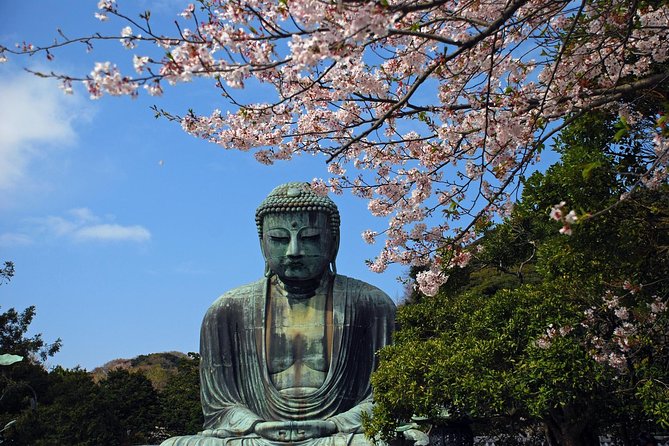
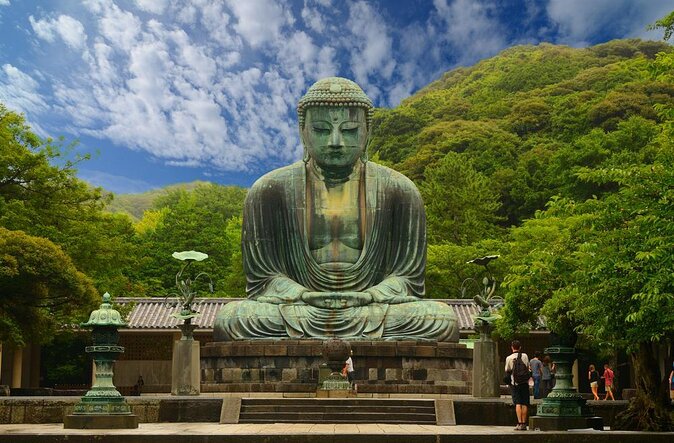
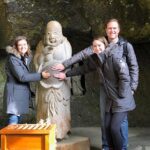
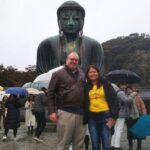
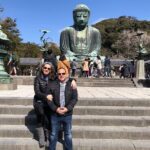
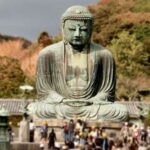
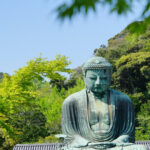
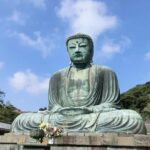
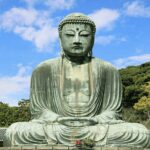
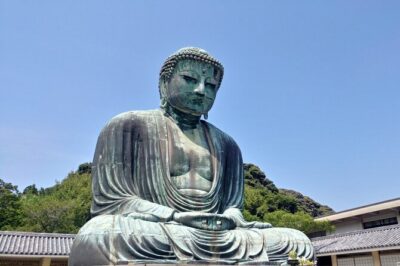
The Great Buddha of Kamakura is the visual anchor of this outing. The open-air bronze image gives Kotoku-in a different feel from a temple where the main figure is enclosed in a dark interior. You can see the statue from outside, take in its scale, and then pay an additional ¥200 adult admission fee to enter inside the Buddha.
That interior visit is a fun detail, especially for first-time visitors. The comparison to climbing inside the Statue of Liberty is useful, although the two experiences are not identical. It gives you a close look at how the statue was made and adds something beyond the usual photograph from the temple grounds.
Plan about one hour here. That is enough for the statue, the temple setting, and the interior option without making the stop drag. Admission is not included in the tour price, and the listed adult charge is ¥200, with a reduced ¥150 rate for elementary school children.
Kotoku-in is a good first stop because it offers an immediate sense of Kamakura’s scale and religious importance. The limitation is that the statue itself is the main attraction, so visitors wanting a large complex of buildings or a long garden walk may find this stop more focused than expected.
Tsurugaoka Hachimangu and Kamakura’s political past
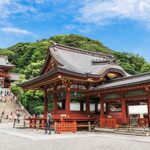
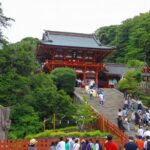
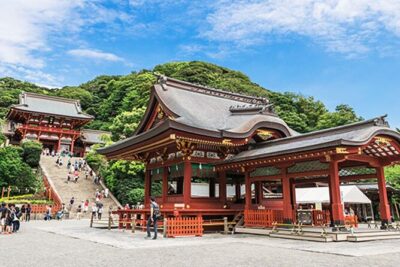
Tsurugaoka Hachimangu is Kamakura’s major Shinto shrine and one of the best places to connect the town’s religious life with its political past. It was first built in the middle of the 12th century, and later generations of the Minamoto family shaped Kamakura’s role as Japan’s first shogunate center.
Allow about an hour. The shrine gives you a different experience from the Buddhist temples on the route. You will move from bronze Buddhist imagery and temple grounds to a Shinto setting tied closely to the warrior government that made Kamakura important.
This stop is especially useful if you want context rather than pretty buildings alone. A guide can explain the difference between the sites and place Tsurugaoka Hachimangu within the story of Minamoto no Yoritomo, the first shogun associated with Kamakura’s rise.
There is no listed admission charge for this stop. Since the shrine is one of Kamakura’s best-known sights, it can feel more formal and visited than Jomyo-ji. That is not a flaw, but it means the private tour’s value depends partly on how well your guide helps you read the site instead of simply leading you through it.
Hasedera’s Kannon and flower garden
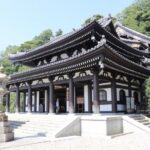
Hasedera is given the longest scheduled stop, about 90 minutes, and that extra time makes sense. The temple is known for its eleven-faced Kannon, a Buddhist figure associated with mercy and relief from suffering. For many people, this is the most reflective temple visit of the day.
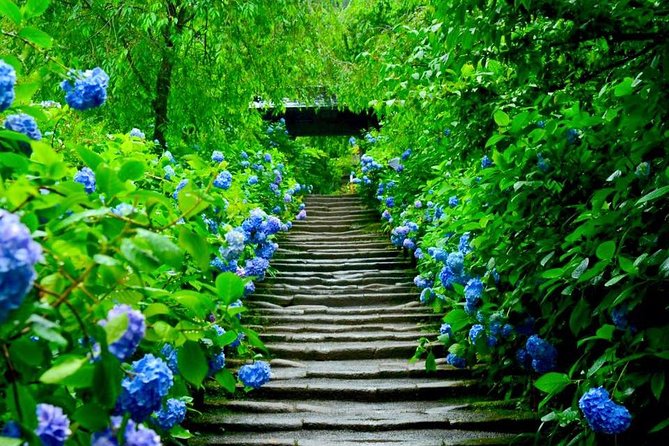
The temple also has a flower garden, with hydrangeas especially notable in June. If your visit falls in that month, Hasedera becomes more than an interior religious site. The garden adds color and a seasonal reason to linger, though the exact display will depend on timing.
Admission is an additional ¥300 per person. It is one of the clearer extra costs to plan for, along with Kotoku-in and the local trains and buses.
Hasedera may require more walking than the shorter stops, and the tour’s moderate fitness recommendation matters here. You should be prepared to spend much of the day on your feet. If someone in your party has limited stamina, tell the guide at the beginning so the itinerary can be adjusted.
Jomyo-ji, matcha, and a quieter pause
Jomyo-ji was built in 1188 and is identified as one of Kamakura’s five great Zen temples. Compared with the larger-name sights, it offers a more measured stop and a chance to slow down.
The special touch here is matcha, Japanese powdered green tea, served with sweets. This is not simply another temple photo opportunity. The tea break gives you a cultural activity tied to the setting, and it can be a welcome pause after walking between several religious sites.
The scheduled time is about one hour. An admission charge is listed as ¥100 for adults over 14 and ¥50 for children under 15. The pricing information for children is written in a way that overlaps at age 14, so families should confirm the applicable rate when booking or at the entrance.
Jomyo-ji is a good choice for you if gardens, Zen settings, and traditional tea appeal more than shopping. If your priority is seeing the most famous landmarks, your guide may choose fewer stops or shorten this one. That is where the private format helps: you can make the tradeoff instead of accepting someone else’s schedule.
Other private tours in Kamakura
Komachidori for snacks, shops, and seafood
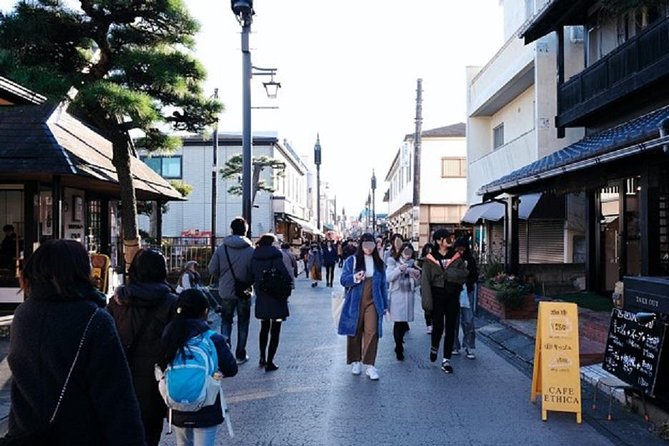
Komachidori is Kamakura’s main shopping street, lined with stores, stalls, and restaurants. It supplies a change of pace after the temples and shrine. Here, you can browse local goods, stop for food, and see the everyday commercial side of a town built around historic sites.
There is no admission fee. The tour gives this stop about an hour, which is long enough to look around without letting shopping swallow the whole day.
Kamakura’s location near the sea means seafood is a natural part of the food scene. The area is also associated with locally harvested vegetables, so this is a sensible place to ask your guide what is seasonal or particular to the region.
Food is not included, and the information does not promise a specific restaurant or tasting menu. Think of Komachidori as guided free time rather than a formal food tour. You can use the hour for lunch or snacks, but you will pay directly for anything you eat.
Public transportation is part of the experience
This is not a private-car tour. You and your guide use trains and buses to move around Kamakura, with your own transportation costs estimated at ¥2,000 per person.
That arrangement has two sides. The obvious advantage is local know-how. Kamakura’s sites are spread out, and a guide who understands the bus system can save you from wasting time with wrong stops or poorly timed connections. One of the strongest practical points from the feedback is exactly this: the guide’s familiarity with local transport is a real benefit.
The other side is that public transportation adds walking, waiting, boarding, and navigating. It also means the number of stops is limited. The tour says three or four sites may be possible, not all five on every departure.
For you, this format works best if you want to see Kamakura as a town rather than move through it behind a car window. It is less suitable if you want a private vehicle, minimal walking, or a tightly packed list of every major sight.
What the guide adds to the day
The tour includes an English-speaking professional guide, and the activity is private, so only your group participates. That is important here because the itinerary is built around your interests rather than a standard group route.
You may be paired with Akira or Nobuo Kono, both named guides associated with this experience. Akira is described as attentive to individual needs, kind, and focused on keeping the outing comfortable. Nobuo Kono is noted for clear explanations and a strong command of the sites and their history.
Those qualities matter more in Kamakura than a polished script would. You may want a simple overview of the shogunate, detailed explanations of Buddhist and Shinto practice, advice on food, or help deciding which temple to skip. A good private guide can adjust the amount of explanation and walking to suit your group.
The guide’s transportation, lunch, and admission fees are included. Your own lunch is not listed as included, and your transportation and specified entrance fees remain extra. The difference is worth noting when you compare the headline price with the actual day’s cost.
Is $149.58 per person good value?
The price is $149.58 per person, with group discounts available. For a private activity lasting about seven hours, that can be fair value if you are traveling with people who share your interests and want help handling Kamakura’s transport.
You are paying for more than a tour of individual monuments. The price includes a dedicated English-speaking guide, the guide’s local transportation, the guide’s lunch, and any admission charge the guide may have. You also receive a route built around your needs rather than a fixed group itinerary.
Still, calculate the extras. Your transportation is estimated at ¥2,000 per person. Hasedera costs ¥300 per person, and Kotoku-in costs ¥200 per adult. Jomyo-ji also lists a small admission fee, while food at Komachidori is your responsibility.
A solo visitor may find the price harder to justify. A couple, family, or small group can spread the value across several people, especially if the private format prevents the day from becoming too tiring for one member of the group.
Who will enjoy this Kamakura day?
I would choose this tour if you want historical context but do not want to spend your morning decoding train and bus routes. It also suits families and mixed-interest groups because the guide can balance temples, shrines, gardens, tea, shopping, and food.
It is a good match for first-time Kamakura visitors who want an organized introduction. The route covers the city’s major types of attractions: the Great Buddha, a major Shinto shrine, Buddhist temples, a garden, a Zen setting, and a shopping street.
You should think twice if you want a completely independent day, a food-focused tour, or a private car. The experience is active, public-transport based, and limited by the time needed to move between sites.
Free cancellation is available up to 24 hours before the 9:00 am start for a full refund. Changes or cancellations inside that 24-hour window are not accepted for a refund.
FAQ
Where does the tour start?
The tour starts at Kamakura Station, at 1-chōme-1-15 Onarimachi, Kamakura, Kanagawa 248-0012, Japan.
What time does the tour begin?
The scheduled start time is 9:00 am.
How long does the tour last?
The activity lasts approximately seven hours.
Where does the tour end?
The tour ends back at the meeting point at Kamakura Station.
Is this a private tour?
Yes. Only your group participates in the activity.
Which transportation is used?
The guide and your group use public transportation, including trains and buses, to get around Kamakura.
How much should I budget for my transportation?
Your transportation is not included. The estimated cost is ¥2,000 per person.
Are temple and shrine entrance fees included?
Your entrance fees are not included. The listed charges include ¥300 per person for Hasedera and ¥200 per person for Kotoku-in. Jomyo-ji lists ¥100 for adults over 14 and ¥50 for children under 15.
Can I cancel for a full refund?
Yes. You can cancel at least 24 hours before the experience start time for a full refund. Cancellations or changes made less than 24 hours before the start are not refunded or accepted.
Should you book this private Kamakura tour?
Book it if you want a flexible, guided day and value local help with Kamakura’s spread-out temples and buses. The strongest reasons are the private format, the ability to shape the route, and the chance to combine major sights with a quieter stop such as Jomyo-ji and its matcha service.
Skip it if you prefer to set your own pace, avoid public transportation, or spend the day at only one or two sites. Before booking, decide which three or four stops matter most to you, then tell the guide at the start. That simple step will help turn a long list of possibilities into a more comfortable and satisfying Kamakura day.
More Private Tours in Kamakura
More Kamakura & Enoshima Day Trips in Kamakura
More tours in Kamakura we've reviewed

Kamakura & Enoshima Day Trips, compared.
 ★ 4.5Tokyo: Kamakura & Enoshima Day Trip including Temple TicketsFrom $589 hours - 570 minutes
 ★ 4.5Tokyo: Mt. Fuji, Kamakura, Big Buddha, & Lake Ashi Day TripFrom $4910 - 11 hours
 ★ 4.5From Tokyo: Kamakura & Enoshima 1-Day Bus TourFrom $66
 ★ 5.0Kamakura Historical Walking Tour with the Great BuddhaFrom $98
 ★ 5.0Kamakura Private Tour: Temples, Nature, and the Great BuddhaFrom $98
 ★ 5.0Kamakura Walking Tour – The City of ShogunFrom $35