
Reviewed · KAMAKURA & ENOSHIMA DAY TRIPS
Kamakura 4hr Private Trip with Government-Licensed Guide
Kamakura packs samurai history, Buddhist temples, Shinto shrines, wooded hills, and the sea into a compact day trip from Tokyo. The best feature here is the freedom to choose only two or three sights, so you can focus on the Great Buddha and Hasedera, explore quiet Zen temples, or add Enoshima and the beach. I like the private format and the guide’s help with trains, local customs, restaurants, and crowded routes.
I also like that you meet at Kamakura Station, rather than trying to find a tour bus or hotel pickup point. Guides such as Shinji, An, Hiro, Yasuho, and Goto have helped families, older visitors, photographers, and first-time Japan visitors adjust the plan. The tradeoff is clear: four hours passes quickly, and admission fees, train fares, lunch, and other personal costs are extra.
In This Review
- Key points at a glance
- Why a private four-hour visit works in Kamakura
- Meeting at Kamakura Station and getting your bearings
- Tsurugaoka Hachimangu Shrine and central Kamakura
- The Great Buddha at Kotoku-in
- Hasedera Temple and the views above the town
- Hokoku-ji and its small bamboo grove
- Zen temples in Kita-Kamakura
- Eastern Kamakura temples and Zeniarai Benten
- Hiking trails, the beach, and Enoshima
- What the guides add
- Price, time, and what you actually pay for
- Who should book this Kamakura tour?
- Should you book it?
- FAQ
- How long is the Kamakura private tour?
- Where do I meet the guide?
- How many attractions can I choose?
- Is private transportation included?
- Are entrance fees included?
- Is lunch included?
- Can I cancel for a full refund?
Key points at a glance
- Pick two or three sights: Build the outing around temples, shrines, the Great Buddha, bamboo, hiking, or Enoshima.
- Private attention: Only your party takes part, so the pace and subject matter can fit your interests.
- Meet at Kamakura Station: The tour begins on foot and uses public transportation rather than a private vehicle.
- Great Buddha and Hasedera are strong choices: They give you Kamakura’s most recognizable sights in a manageable half-day.
- Local help matters: Guides can explain Buddhist and Shinto customs, assist with trains, and suggest restaurants.
- Plan for extra costs: Transport, entrance fees, lunch, and personal purchases are not included.
Why a private four-hour visit works in Kamakura
Kamakura is easy to underestimate. It sits close enough to Tokyo for a simple day trip, yet its sights are spread between the station area, the western temple district, northern Kita-Kamakura, wooded eastern valleys, and the coast.
On your own, you can certainly visit the famous places. The challenge is deciding what fits into a short visit, finding the right train or walking route, and understanding why one shrine is Shinto while the next temple is Buddhist. A licensed local guide gives you a practical framework without forcing you into a fixed bus itinerary.
The experience is designed for two or three selected sites, not all 18 places in the long list of possible stops. That matters. The listed visits have suggested times of roughly 5 to 15 minutes, but those are too brief for a full experience at many temples. Your guide will need to balance travel time, walking, entrance queues, photographs, and conversation.
For a first visit, I would choose the Great Buddha, Hasedera Temple, and either Tsurugaoka Hachimangu Shrine or Komachi Shopping Street. If you have already seen the headline sights, choose Engaku-ji, Kencho-ji, or one of the smaller temples instead.
A few more Kamakura tours and experiences worth a look
Meeting at Kamakura Station and getting your bearings
The standard meeting point is Kamakura Station, with the guide joining you on foot in the designated area. This is a smart starting point because the station is the natural hub for the town and its rail connections.
The tour does not include a private car. You walk and use public transportation, and you pay those fares yourself. That makes the outing feel more like a day in Kamakura than a sealed-off sightseeing trip, but it also means you should wear comfortable shoes and keep your schedule realistic.
Several guides have helped visitors deal with train problems and changing arrival times. Shinji was praised for waiting patiently after a train accident delayed a family, while Isao met one group in Yokohama and helped them travel by subway and train to Kita-Kamakura before continuing into town. Those examples show why meeting instructions and a little flexibility matter.
The station meeting also makes this tour useful for people staying in Tokyo or Yokohama. Hotel pickup is not a private vehicle service, although a pickup can be offered on foot within the stated Kamakura area. Confirm the exact meeting details before you set out.
Tsurugaoka Hachimangu Shrine and central Kamakura
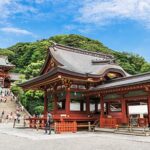
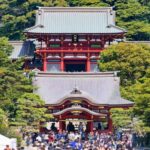
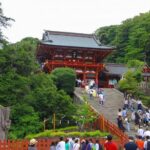
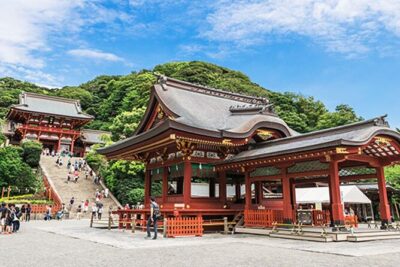
Tsurugaoka Hachimangu is Kamakura’s major Shinto shrine and a logical choice if you want the town’s political and samurai story. It is dedicated to Hachiman, linked with Emperor Ojin and long associated with the Minamoto family and samurai in general.
The shrine works well early in the tour because it introduces the difference between a Shinto place of worship and the Buddhist temples you may visit later. Your guide can explain the symbols, rituals, and setting instead of leaving you to guess what each structure means.
The stated visit time is only about 10 minutes, so ask for more time if this is a priority. New Year is a special case. Tsurugaoka Hachimangu can be extremely crowded during the first three days of January, and the main street, Wakamiya-oji, may close to traffic. That can create a memorable festive setting, but it also slows movement.
From here, Komachi Shopping Street is an easy way to add food, snacks, souvenirs, and a more everyday side of Kamakura. It is a better choice for you if temples alone feel too formal. Keep an eye on the clock, since browsing and eating can quickly consume a four-hour tour.
The Great Buddha at Kotoku-in
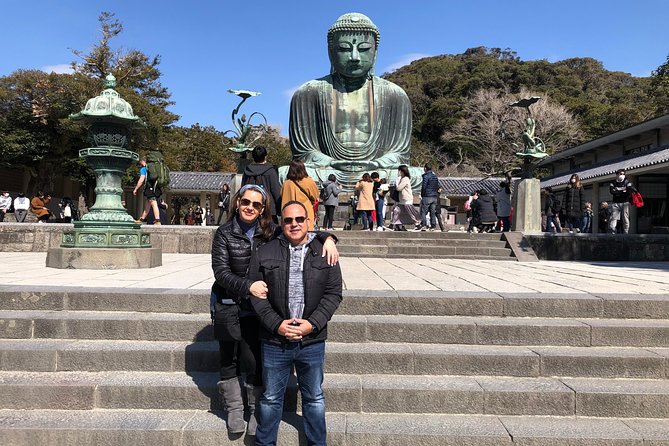
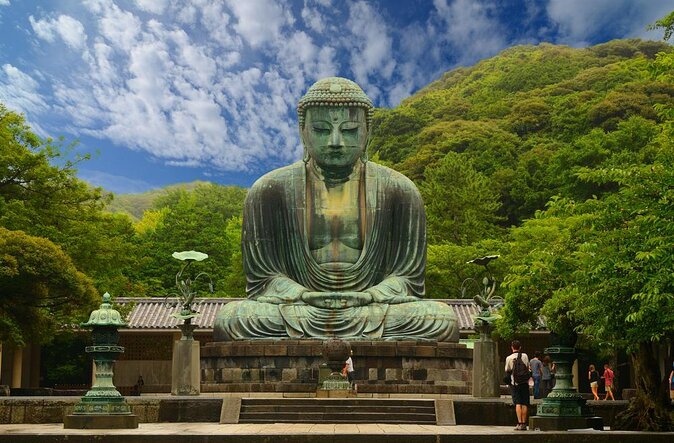
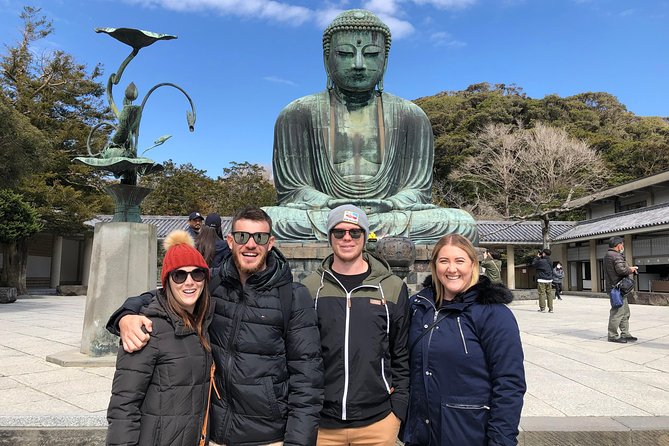
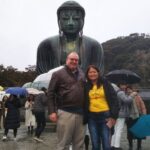
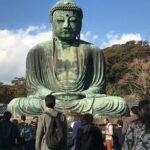
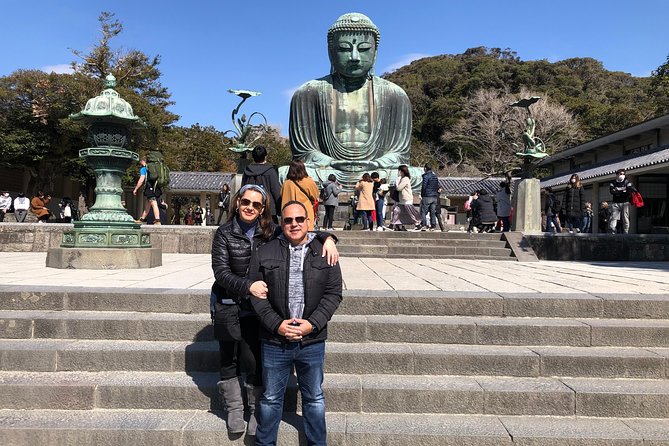
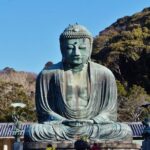
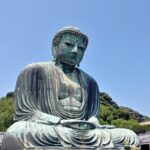
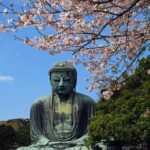
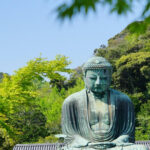
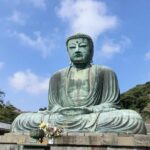
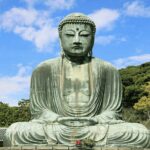
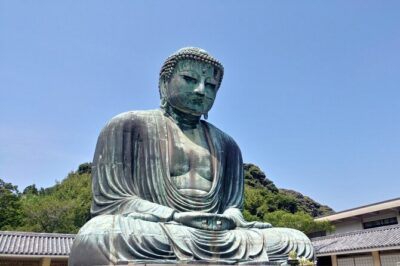
The Great Buddha of Kamakura is the outing’s clearest visual landmark. The bronze Amida Buddha is about 11.4 meters tall and sits in the grounds of Kotoku-in Temple.
The statue is impressive because of its scale and setting, but the value of a guide comes from the details around it. Ask about Amida Buddha, the temple grounds, and how this statue fits into Kamakura’s Buddhist tradition. The guide can also help you see the site efficiently when you have several stops competing for time.
Admission to Kotoku-in is not included. The visit is listed at about 10 minutes, which is enough for a quick look and photographs but not a leisurely stop. If the Great Buddha is your main reason for booking, tell the guide before the tour so the schedule protects that time.
The Great Buddha pairs naturally with Hasedera. Together, they make a strong first-time route through western Kamakura. You get the town’s best-known statue, then a temple with gardens, views, and a major Kannon image.
Hasedera Temple and the views above the town
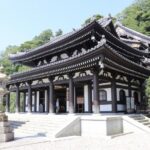
Hasedera is a Jodo Buddhist temple famous for its eleven-headed Kannon, a gilded wooden statue about 9.18 meters tall. The temple also offers elevated views toward Kamakura and the coast, making it more varied than a quick shrine stop.
The climb and uneven ground may require more effort than the short itinerary wording suggests. Take your time on steps and ask the guide to adjust the pace if anyone in your party has mobility concerns. The tour is described as suitable for most participants, but it remains a walking experience.
Hasedera is especially useful for families and photographers. It gives you a large religious image, garden spaces, and a viewpoint, while the guide can explain the meaning of Kannon as a figure of mercy. Masako, one of the named guides, was singled out for preparing a custom route and following up on questions about Hasedera.
Allow more than five minutes if this temple matters to you. The short listed duration is best understood as a rough planning marker, not a promise that you will fully explore every corner.
Other guided tours in Kamakura
Hokoku-ji and its small bamboo grove
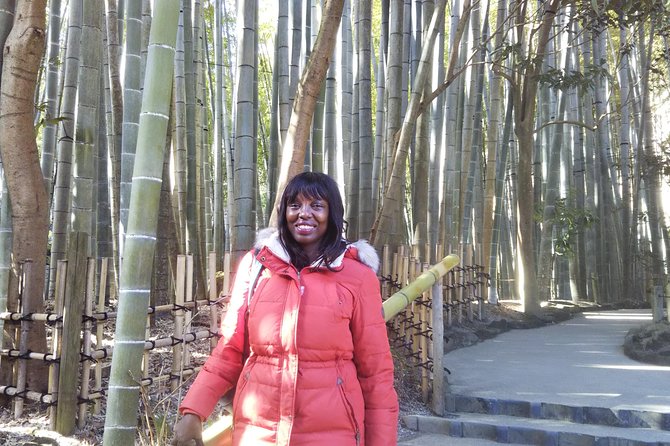
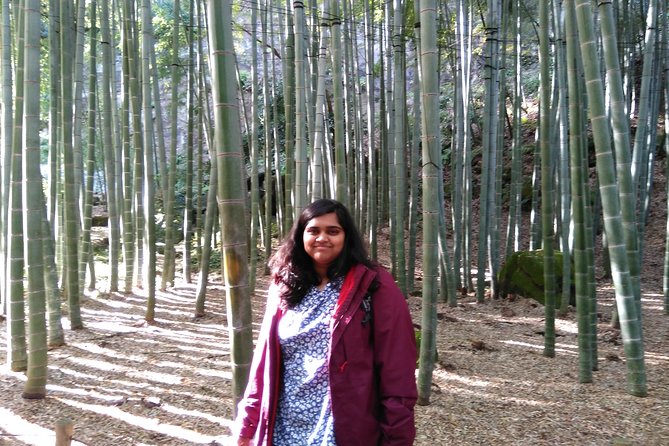
Hokoku-ji is a compact Zen temple known for its bamboo grove of more than 2,000 stalks behind the main hall. Narrow paths run through the grove, creating a cool, quiet change of mood after the larger central sights.
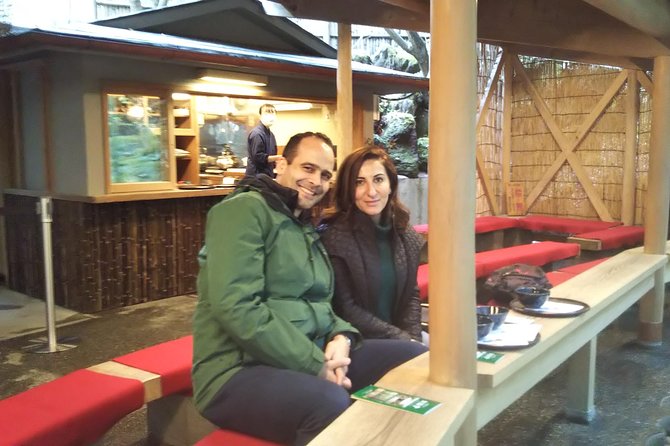
This is a good choice if you want a striking setting without spending hours at a sprawling temple. You may also have the chance to enjoy matcha and Japanese sweets here, as Shinji arranged for one family. That workshop was not listed as a standard inclusion, so treat it as something to ask about rather than something guaranteed.
Entrance is extra, as are drinks and food. The suggested stop is about 15 minutes, which may suit a quick walk through the bamboo but leaves little room for a relaxed tea break. If you want photographs or time to sit, choose Hokoku-ji as one of your main stops rather than squeezing it between several major temples.
Zen temples in Kita-Kamakura
Kita-Kamakura gives you a quieter temple route and a useful alternative to the Great Buddha district. Engaku-ji is the number two temple among Kamakura’s five great Zen temples. It was founded in 1282 by Hojo Tokimune and is one of the leading Zen temples in eastern Japan.
Kencho-ji is ranked first among the five great Zen temples and was founded in 1253. It is the oldest Zen temple in Kamakura. These sites are especially good for you if temple architecture, gardens, meditation traditions, and Japanese religious history interest you more than shopping.
Jochiji, ranked fourth, is a branch temple of the Engaku-ji school. Jufukuji, ranked third, belongs to the Kencho-ji school and was established by order of Minamoto Yoritomo’s wife. Tokeiji is a smaller Rinzai temple, while Eisho-ji is the only surviving nunnery in Kamakura and is known as a flower temple.
The drawback is that you cannot see this whole group in four hours along with the Great Buddha and Hasedera. Pick one or two. Engaku-ji is the practical choice for a first Zen visit, while smaller temples may suit a repeat visit or anyone seeking a calmer route.
Eastern Kamakura temples and Zeniarai Benten
Eastern Kamakura offers smaller religious sites among wooded hills. Zeniarai Benten Shrine is known for its money-washing spring. The name means coin washing, and local belief holds that money washed in the spring will increase.
This is a memorable stop because it gives you an active custom rather than just another building to photograph. Your guide can explain how to behave at the shrine and help you follow the steps respectfully. Admission is free, though you will handle your own small personal expenses.
Ankokuronji and Myohonji are Nichiren temples along the southeastern hills. Ankokuronji is associated with Nichiren’s arrival in Kamakura around 1253. Myohonji was founded in 1260 and has a setting among the hills.
Jomyo-ji, ranked fifth among the five great Zen temples, sits in eastern Kamakura and was founded by the Ashikaga family. Zuisen-ji lies at the back of a narrow valley surrounded by wooded hills and is a branch temple of Engaku-ji.
These eastern sites take more planning because they do not form one quick cluster with every famous highlight. Ask your guide to build a route around one area instead of crisscrossing town. Otherwise, you may spend too much of the four hours moving between stops.
Hiking trails, the beach, and Enoshima
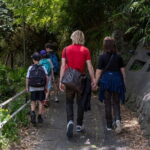
Kamakura’s wooded hills create attractive walking routes linking temples and shrines. A short section of trail can add fresh air and a change from formal sites, but a 15-minute trail visit will be only a sample. Tell your guide if you want nature to be a real part of the tour.
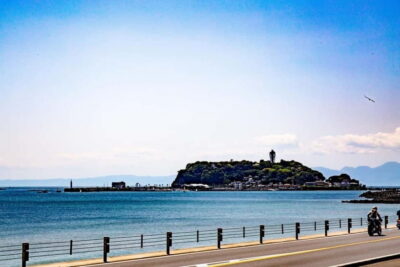
Enoshima is a separate choice with a different feel. The island lies just west of Kamakura, connected to the mainland by a bridge. It has a shrine and other attractions, and its coastal setting gives you a look at the seaside side of the area.
One family chose the beach and Enoshima instead of following a temple-heavy plan. Hiro also took them to a local Japanese restaurant, where they sat at a floor-level table and learned about traditional food. Lunch is not included, and this sort of restaurant stop should be arranged as part of the custom plan.
Enoshima can be a fine choice if you have already seen major temples or want a less purely historical afternoon. It is not the best choice if your priority is the Great Buddha, Hasedera, and several central shrines in one short outing. Travel time matters, so be honest about your priorities at the start.
What the guides add
The strongest part of this experience is the human help. The guides do more than point toward a temple entrance. Yoshi, Shinji, An, Hiro, Isao, Yasuho, Takako, Masako, Yuki, Andy, and Goto are among the guides named in the tour material, and their approach can vary.
Useful help reported across the experience includes:
- Explaining Shinto and Buddhist practices in plain language
- Helping you use trains from Tokyo, Yokohama, and nearby stations
- Adjusting the plan for children, older family members, photographers, or weather
- Suggesting restaurants and teaching you how to eat unfamiliar dishes
- Using personal booklets, photographs, or visual aids to explain symbolism
- Waiting patiently when a train delay changes your arrival time
Goto was noted for strong English and for bringing a booklet of images. Andy used visual material to explain the history of the places visited. Hiro helped a child practice Japanese and arranged a traditional lunch. These details make the private format more useful than simply hiring someone to walk you between gates.
English ability may not be identical with every guide. One person wanted slightly stronger English communication, so if detailed discussion is important to you, request an English level that suits your party when booking.
Price, time, and what you actually pay for
The listed price is $108.99 per person, with group discounts available. Since this is a private activity, the total value depends on your group size and how much you would otherwise pay for individual guides, transport help, and the time lost finding your way.
You are not paying for entrance tickets or a private vehicle. Train and local transport fares, temple admissions, lunch, and personal purchases come separately. Guide entry fees are covered only for sights included under the stated tour terms, so ask for clarity if you want several paid temples.
For a couple or family, the price can make sense because you get a plan built around your interests and do not wait for a large group. For a solo visitor, the per-person cost is harder to justify unless you place high value on history, local conversation, or transport support.
The four-hour limit is the main constraint. One person found the tour finished earlier than expected and felt another activity could have been added. To avoid that, decide on two main sights plus one flexible option, and tell the guide if you want the full four hours used.
Free cancellation is available up to 24 hours before the start time for a full refund. Changes or cancellations inside that window are not accepted for a refund.
Who should book this Kamakura tour?
I would choose this experience if you want a private, flexible introduction and do not want to spend your first Kamakura day sorting out rail connections and temple routes. It suits families particularly well, since the guide can slow down, answer children’s questions, or swap a temple for the beach.
It also fits older visitors who want a manageable plan, photographers who need time at selected sites, and repeat visitors who prefer small temples over the standard highlights. People interested in Japanese religious practice will get more from the sites with a guide than from a quick solo walk.
I would not choose it if you want a full-day hike, a fixed luxury vehicle, or a detailed visit to many temples. This is a walking tour with public transport and a short clock. You need to select carefully.
Should you book it?
Book this tour if you want to see Kamakura with a local guide who can shape the day around two or three clear interests. For a first visit, request Tsurugaoka Hachimangu, the Great Buddha, and Hasedera, then ask the guide to protect enough time at each one.
Choose a Zen temple route if you have already seen the major sights. Pick Enoshima or the beach if the coast matters more than another temple. Confirm transport, entrance fees, English communication, and the exact meeting point before you go.
The experience earns its price through flexibility and personal help, not through included extras. If you value context, patience, and a smoother four-hour plan, it is a strong choice. If you prefer to wander slowly and spend little, Kamakura’s trains and temples are manageable on your own.
FAQ
How long is the Kamakura private tour?
The experience lasts approximately four hours.
Where do I meet the guide?
The standard meeting point is Kamakura Station. The guide meets you on foot within the designated Kamakura area.
How many attractions can I choose?
The tour includes a customizable plan built around two or three sites from the available choices.
Is private transportation included?
No. The tour uses public transportation and walking. Private transportation is not included.
Are entrance fees included?
No. Entrance fees are generally extra. Guide entry fees are covered only for sights listed under the tour terms.
Is lunch included?
No. Lunch and other personal expenses are not included. A guide may help suggest or arrange a local restaurant as part of a custom plan.
Can I cancel for a full refund?
Yes. You can cancel at least 24 hours before the experience start time for a full refund. Cancellations or changes made less than 24 hours in advance are not accepted for a refund.
More Private Tours in Kamakura
More Guided Tours in Kamakura
More Kamakura & Enoshima Day Trips in Kamakura
More tours in Kamakura we've reviewed

Kamakura & Enoshima Day Trips, compared.
 ★ 4.5Tokyo: Kamakura & Enoshima Day Trip including Temple TicketsFrom $589 hours - 570 minutes
 ★ 4.5Tokyo: Mt. Fuji, Kamakura, Big Buddha, & Lake Ashi Day TripFrom $4910 - 11 hours
 ★ 4.5From Tokyo: Kamakura & Enoshima 1-Day Bus TourFrom $66
 ★ 5.0Kamakura Historical Walking Tour with the Great BuddhaFrom $98
 ★ 5.0Kamakura Private Tour: Temples, Nature, and the Great BuddhaFrom $98
 ★ 5.0Kamakura Walking Tour – The City of ShogunFrom $35