
Reviewed · SUMO EXPERIENCES
Tokyo Sumo History Tour with Chanko Nabe Lunch
Sumo makes more sense when you see the place where it began, the arena where modern tournaments are held, and the rituals that turn a match into a ceremony. This three-hour walk through Ryogoku connects all three, then finishes with a proper bowl of chanko-nabe, the hotpot linked with sumo wrestlers.
I like the clear route from old temple grounds to present-day professional sumo. I also like the flexible museum-or-stables plan, plus the chance to stand beside a life-sized ring and study the sport’s gestures up close. The main limitation is simple: you do not watch live sumo or meet wrestlers, and the Kokugikan visit is from outside.
In This Review
- Key points at a glance
- Why Ryogoku is the right place to learn sumo
- Outside the Kokugikan: seeing the home of grand tournaments
- Ekō-in Temple and the Chikara-zuka Monument
- Museum treasures, or a look at two working stables
- The replica ring at Ryogoku Edo Noren
- Chanko-nabe: a filling finish to the walk
- What the $91.04 price really covers
- Timing, meeting point, and the shape of the morning
- Who will get the most from this sumo experience
- Booking details and cancellation choice
- Should you book the Tokyo Sumo History Tour?
- FAQ
- Where does the tour start and finish?
- How long does the sumo tour last?
- Is a visit inside the Kokugikan arena included?
- Will I see the Sumo Museum?
- Is lunch included in the tour price?
- How many people can join the tour?
Key points at a glance
- Sumo’s starting point: Visit the former main gate of Ekō-in Temple and the Chikara-zuka Monument, tied to the first organized sumo matches.
- Kokugikan from the outside: Learn about the stadium, its three annual grand tournaments, banners, and ceremonial entrances without entering the seating area.
- Museum or historic stables: See ceremonial aprons, photos, and trophies when the Sumo Museum is open. On closed days, visit two stables with different designs instead.
- Hands-on ring lesson: Use the full-size replica ring at Ryogoku Edo Noren to learn about salt-throwing, pre-bout movements, and sumo poses.
- Individual hotpot lunch: Finish with chanko-nabe in your own pot, while drinks and extra food cost more.
- Small-group format: The group is limited to 20 people, and the 10 a.m. start leaves the rest of your day free.
Why Ryogoku is the right place to learn sumo
Ryogoku is not a theme park built around sumo. It is the part of Tokyo where the sport’s major institutions, monuments, restaurants, and training stables sit close together. That makes this tour useful even if you know little about sumo.
You begin at Ryogoku Station, in the heart of what locals and visitors call sumo town. Champion portraits greet you near the station, giving you a quick sense of how much the sport shapes the area. This is a good meeting place because you can get your bearings before the walking starts.
The route is compact, but it is not just a series of photo stops. Your English-speaking guide explains how sumo moved from sacred ritual into a professional sport. That context helps you notice details that can otherwise seem mysterious, such as why wrestlers throw salt, why banners appear near the stadium, and why the ring itself carries such importance.
The guide has been identified as Maik or Malik in tour feedback, while the provider is listed as Maikel T. The spelling may vary in your booking details, so check the confirmation if knowing your guide’s name matters to you. The useful point is that the tour depends heavily on spoken explanation, and the guide’s role is to connect each site rather than simply point at it.
A few more Tokyo tours and experiences worth a look

Outside the Kokugikan: seeing the home of grand tournaments
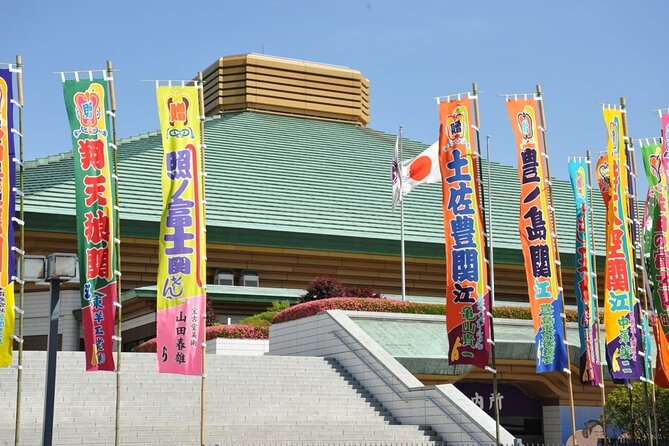
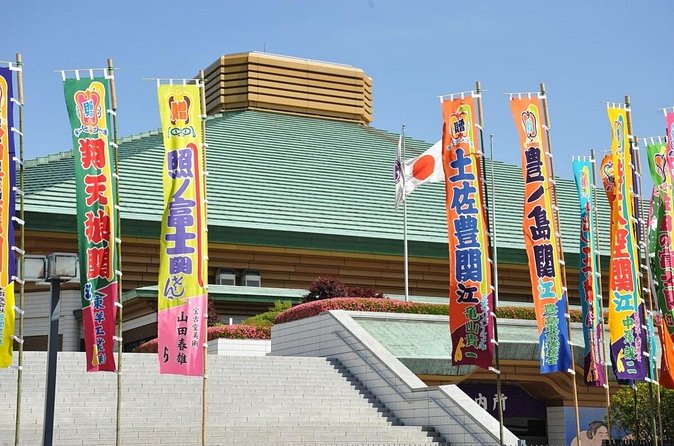
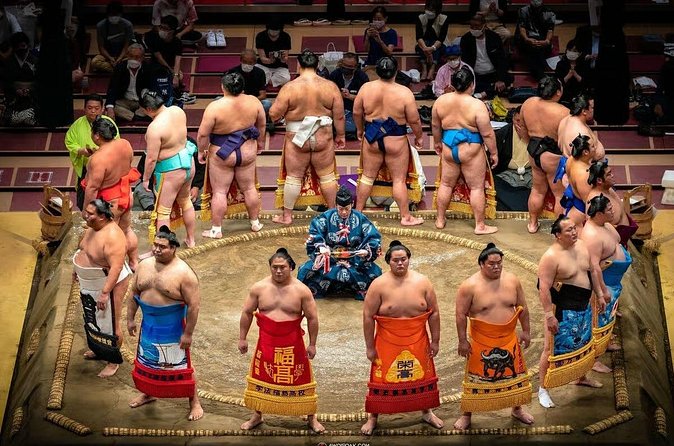
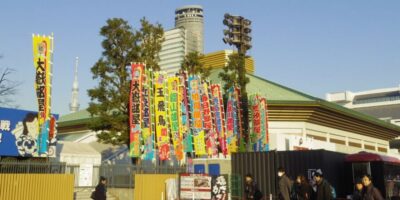
The Ryogoku Kokugikan is the tour’s first major landmark. You view the famous sumo stadium from outside, rather than entering the arena seating area. That distinction matters, especially if you are hoping to watch a bout.
The stadium hosts three grand tournaments each year. Your guide explains the purpose of the colorful banners and the meaning behind the wrestlers’ grand entrances. You will not get the full atmosphere of tournament day without a ticket, but the outside stop gives you a useful introduction to the building and its place in Japanese sport.
I like this part because it keeps expectations honest. You see where major matches happen, but the tour does not pretend that an exterior visit replaces live competition. If you already have a tournament ticket, this walk can help you understand what you are about to watch. If you do not, it still gives you the setting without charging you for arena entry that is not included.
Allow about 20 minutes here. That is enough time for an overview, photographs, and questions, but not enough for a full architectural visit. The tour is about sumo culture and history, not a guided tour of the stadium interior.
Ekō-in Temple and the Chikara-zuka Monument
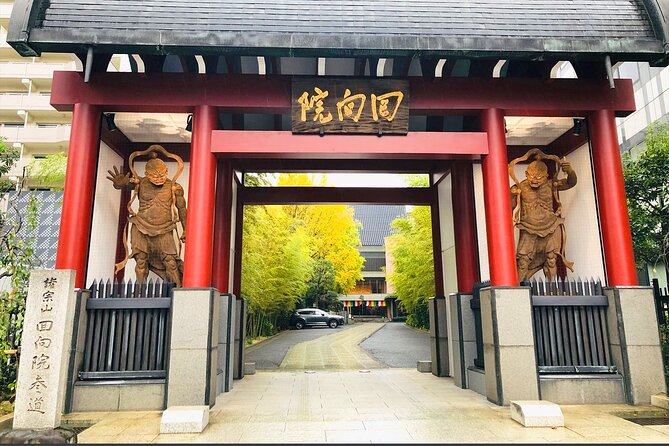
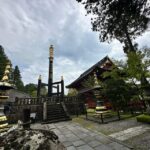
The next stop takes you to the former main gate of Ekō-in Temple, the place connected with the beginnings of organized sumo matches. This is where the tour shifts from modern sport to older religious and community traditions.
At the Chikara-zuka Monument, you pay respect to past wrestlers and referees who helped shape sumo. The monument gives the sport a human scale. Sumo is often presented through its current champions, but this stop reminds you that generations of wrestlers, officials, and supporters built the tradition over time.
The temple grounds also help explain why sumo has never been only about winning a contest. Ritual, discipline, ceremony, and public respect are part of the sport’s identity. Your guide can make those links clear in a way that a quick visit on your own may not.
This stop lasts about 20 minutes. Wear shoes suited to walking, and expect the tour to move between streets and outdoor sites. The route is near public transportation, but the experience itself is a walking tour, so comfortable footwear is a sensible choice.
Museum treasures, or a look at two working stables
When the Sumo Museum is open, you spend about 30 minutes with displays of ceremonial aprons, photographs, and trophies. It is a compact collection, but the objects help bring the sport’s visual language into focus.
Ceremonial aprons are especially useful for understanding how sumo honors rank, achievement, and tradition. Photographs show how the sport has changed, while trophies connect the displays to the tournaments you hear about at the Kokugikan. Since the museum is small, this is not a long museum session. Think of it as a focused stop that adds detail to the stories you have already heard.
The museum may be closed on some days. The alternative is not a lesser version of the tour. Instead, your guide takes you to two historic sumo stables, each with its own design, and explains daily life for wrestlers.
That change can be valuable because stables show the sport from the inside. You learn about where wrestlers train and live, rather than only seeing trophies and ceremonial objects. The two options offer different kinds of understanding: the museum focuses on artifacts and public history, while the stables focus on routine and the working life of a rikishi.
You should not assume the museum will be open on your date. If the collection is your main reason for booking, check the schedule or ask before reserving. If you are more interested in how wrestlers live and train, the stable visit may suit you better.
The replica ring at Ryogoku Edo Noren
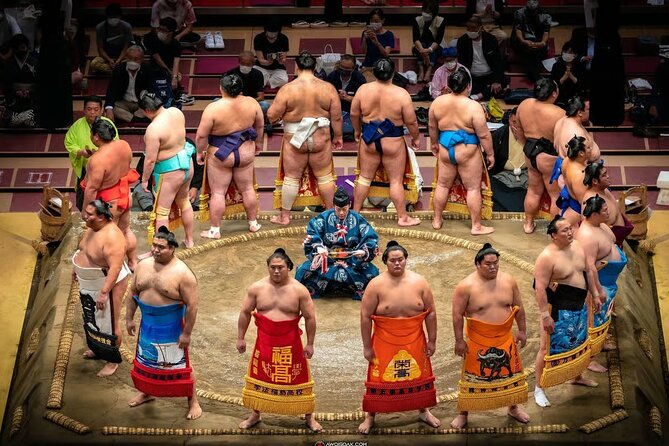
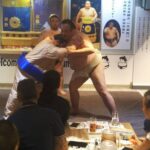
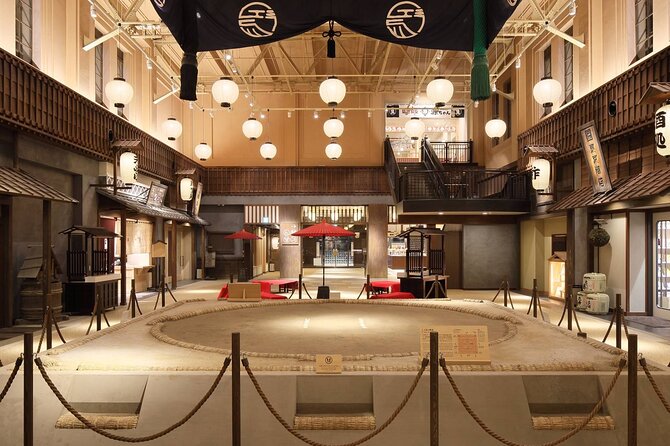
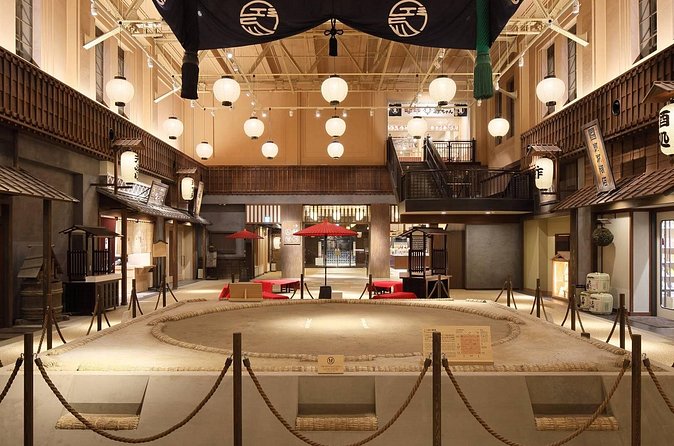
At Ryogoku Edo Noren, the tour becomes more physical and visual. You stand beside a life-sized replica sumo ring and learn what happens before the match begins.
Your guide explains salt-throwing, pre-bout movements, and other rituals. These gestures can look slow or puzzling when you first see them, especially if you are watching a tournament without a guide. Here, you get the meaning behind the actions and can try sumo poses for photographs.
This is one of the most useful stops for first-time fans. You do not need to understand rankings, tournament rules, or Japanese terms before arriving. The ring provides a clear setting for the lesson, and the chance to pose keeps the explanation from becoming too formal.
It also works for people who already follow sumo. You may know the basic movements but still gain a better sense of their sequence and purpose. The activity is not a training session, and it does not turn you into a wrestler. It gives you a closer look at the ceremony surrounding the bout.
Plan on about 20 minutes here. Because the stop takes place beside a replica ring, it is also a good opportunity for a memorable photo that shows the scale of the space more clearly than a distant stadium picture.
Other historical tours in Tokyo
Chanko-nabe: a filling finish to the walk
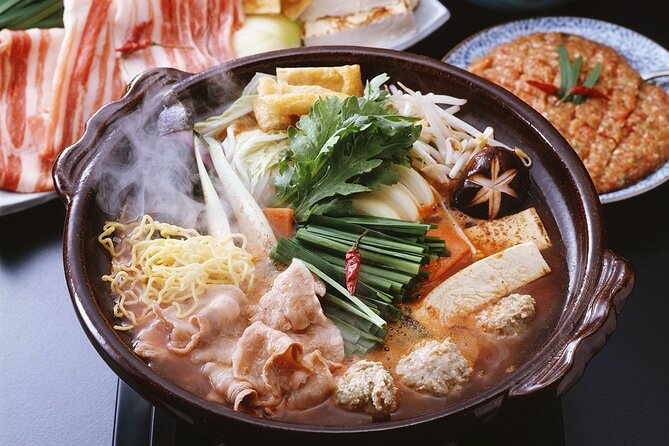
The tour ends with chanko-nabe, the traditional hotpot associated with sumo wrestlers. Each person receives an individual pot, which makes the meal feel like a proper part of the experience rather than a shared extra added at the end.
Chanko-nabe is a practical food for a demanding sporting life, and the meal gives you a direct taste of that connection. It is also a welcome change of pace after walking through Ryogoku. The planned lunch lasts about one hour, so you have time to eat rather than rush through a quick tasting.
The specific restaurant can vary according to availability, though Chanko Edosawa is named as the planned stop. The important thing is to expect the sumo hotpot set, not a broad restaurant menu included in the price.
Drinks and additional food are not covered. Budget a little extra if you want beverages or anything beyond the included chanko-nabe set. The meal is the main food component of the tour, so do not treat it as a full restaurant outing with several courses.
For many people, this will be the most satisfying ending. The walk gives you facts and places, while lunch gives you a concrete connection to the wrestlers’ world. It is also a strong reason to choose this tour over a basic neighborhood walk that stops at the stadium and ends there.
What the $91.04 price really covers
At $91.04 per person, this is not the cheapest way to walk around Ryogoku. You can see the outside of the Kokugikan, the station portraits, and public monuments without paying for a tour.
The price becomes easier to justify if you value explanation and structure. It covers an English-speaking guide, a planned route through the key sumo sites, the museum or stable visit, the replica-ring lesson, and chanko-nabe lunch. You are paying for the links between these places, not simply for admission.
There are no separate admission fees listed for the stops, and arena seating is not included. That means the main value lies in the guide and the meal. If you are already an expert on sumo and prefer to explore independently, the cost may feel high. If you want someone to explain rituals, history, and wrestler life in plain English, the package is more appealing.
The small maximum of 20 people also matters. This is not a private tour, but it should be more manageable than a large coach group. Group size can affect how easily you hear the guide and how much time you have for questions, so the limit is a useful middle ground.
Timing, meeting point, and the shape of the morning
The tour starts at 10 a.m. at the 7-ElevenJapan at 1-3-20 Yokoami, Sumida City, Tokyo 130-0015. Arrive with enough time to find the exact meeting point, since a convenience store entrance can be easy to pass in a busy station area.
The activity lasts about three hours and ends back at the meeting point. That return is handy if you want to continue exploring Ryogoku, visit another Tokyo district, or keep a scheduled afternoon plan.
The listed stops add up to roughly two hours and 40 minutes, with the remaining time allowing for walking and transitions. You should expect a steady walking morning rather than a seated lecture. Most people can participate, and the meeting point is near public transportation.
A mobile ticket is provided. Keep it accessible on your phone, and make sure your battery is charged before setting out. This is a small practical point, but it avoids a needless scramble at the start of a timed tour.
Who will get the most from this sumo experience
This tour suits first-time visitors to sumo especially well. You learn the basic vocabulary and customs without needing prior knowledge, and the replica ring makes the lesson easy to follow.
It also fits people who already plan to visit the Kokugikan during tournament season. The tour will not give you an arena ticket, but it can make the bouts more meaningful by explaining the banners, entrances, and rituals beforehand.
Families and mixed-interest groups may appreciate the variety. The route includes outdoor landmarks, a possible museum or stable visit, a photo stop, and lunch. That is more engaging than spending three hours on a single formal history talk.
You should think twice if your main goal is to see active wrestlers. The tour’s own information is clear on this point: it does not promise a live practice, a tournament, or direct contact with rikishi. The stable option brings you closer to the sport’s working world, but you should not book expecting a wrestler appearance.
It may also be less suitable if you want complete control over your schedule. The tour takes about three hours, begins at a fixed time, and includes lunch at a location that may change with availability. Those limits are normal for a guided activity, but independent explorers may prefer to set their own pace.
Booking details and cancellation choice
Confirmation is issued at booking, and free cancellation is available if you cancel at least 24 hours before the 10 a.m. start time. Cancellations or changes made less than 24 hours ahead are not refunded or accepted.
The experience requires a minimum number of participants. If that minimum is not met and the tour is canceled, you are offered another date or experience, or a full refund. Keep the local Tokyo time in mind when making changes.
Because the Sumo Museum may close on some days, check what alternative is planned if the museum matters to you. The stable visit is included as the replacement, so the tour still has a defined program.
Should you book the Tokyo Sumo History Tour?
Book it if you want sumo explained through real places, clear rituals, and a traditional hotpot meal. The strongest parts are the connection between Ekō-in Temple and modern professional sumo, the museum-or-stable flexibility, and the individual chanko-nabe lunch.
Skip it if you mainly want a live match, a stadium interior visit, or a chance to meet wrestlers. For that, you need a separate tournament ticket or another activity.
At $91.04, the tour is best value for a first visit to Ryogoku, a mixed group with different levels of sumo interest, or anyone who wants a guide to make the neighborhood’s details meaningful. If that sounds like your morning in Tokyo, this is a well-shaped introduction with an honest limit: it teaches you how to understand sumo, but it does not show you a live bout.
FAQ
Where does the tour start and finish?
The tour starts at 10 a.m. at the 7-ElevenJapan at 1-3-20 Yokoami, Sumida City, Tokyo 130-0015. It ends back at the meeting point.
How long does the sumo tour last?
The experience lasts approximately three hours, including the walking route and chanko-nabe lunch.
Is a visit inside the Kokugikan arena included?
No. You see the Ryogoku Kokugikan from the outside. Arena seating during tournaments requires a separate ticket and is not included.
Will I see the Sumo Museum?
You visit the Sumo Museum when it is open. If it is closed, the guide takes you to two historic sumo stables instead.
Is lunch included in the tour price?
Yes. Chanko-nabe is included, with each person receiving an individual hotpot. Drinks and additional food are not included.
How many people can join the tour?
The activity has a maximum of 20 participants.
More Lunch Experiences in Tokyo



More Historical Tours in Tokyo
More Sumo Experiences in Tokyo

More tours in Tokyo we've reviewed





Sumo Experiences, compared.
 ★ 4.8Tokyo: Sumo Show Experience with Chicken Hot Pot and a PhotoFrom $1032 hours
 ★ 4.8Tokyo: Sumo Show and Dining ExperienceFrom $7990 minutes - 2 hours
 ★ 5.0the SUMO showFrom $89
 ★ 5.0Tokyo Shinjuku Sumo Show & Experience with PhotoFrom $79
 ★ 4.8Tokyo: Sumo Show and Experience in ShinjukuFrom $691h 30m
 ★ 4.6Tokyo: Sumo Tournament Tour with Chair Seat TicketsFrom $141