
Reviewed · TOURS
Nihonbashi Ningyocho Tour Seven Lucky Shrines and Treats
Nihonbashi Ningyocho is one of Tokyo’s best areas for seeing old neighborhood life without leaving the city center. This private walk links seven Shichifukujin shrines across a compact 2.8-kilometer route, from the fortune-focused Koami Shrine to Suitengu, where people pray for safe childbirth and healthy babies. I like the small scale of the route and the chance to explore with Tomo, who uses clear visual aids and adjusts the starting time by message when possible.
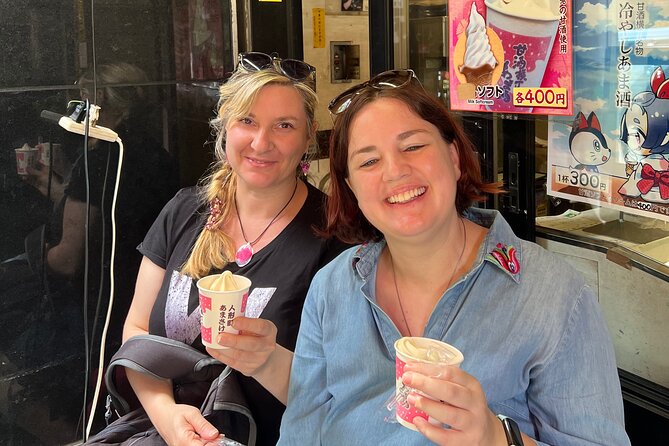
I also like that the walk includes two traditional snacks, not just shrine visits. Tomo can point you toward local souvenir shops and restaurants after the tour, which adds value if you want to keep exploring Ningyocho. The main consideration is that shrine fees, fortune slips, protective amulets, and Goshuin stamps cost extra, so your final spending depends on how many optional items you choose.
In This Review
- Key points to know before booking
- Why seven small shrines make a good Tokyo walk
- Koami Shrine, the tour’s strongest opening
- Suitengu and prayers for family well-being
- Suginomori Shrine and the lottery connection
- Four smaller stops with different characters
- The included snacks add needed flavor
- What the private format changes
- Is $68 a fair price?
- Getting to the meeting point and ending the walk
- Who will enjoy this walk most?
- Booking, cancellation, and weather notes
- FAQ
- How long does the Nihonbashi Ningyocho shrine tour last?
- How far do you walk?
- Is this a private tour?
- How many shrines do you visit?
- Are snacks included?
- Are shrine donations and purchases included?
- Where does the tour begin and end?
- Should you book the seven-shrine walk?
Key points to know before booking
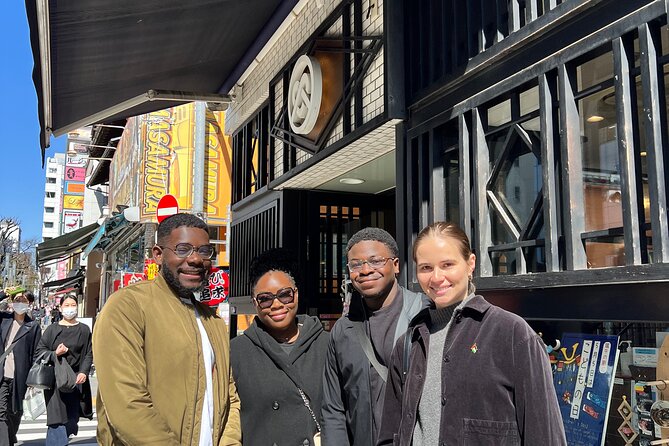
- Seven shrines in 2.8 kilometers: You get a focused introduction to Nihonbashi Ningyocho without a long-distance hike.
- A fully private experience: Only your group participates, so the pace and questions can suit your interests.
- Guide Tomo’s visual explanations: Clear visual aids help make local customs and shrine details easier to follow.
- Two snacks are included: The food stop gives the walking route a useful pause and adds a taste of local tradition.
- Several optional shrine purchases: Coin offerings, amulets, omikuji fortune slips, and Goshuin stamps are not included in the $68 price.
- A quieter side of Tokyo: Ningyocho offers a slower, more local feel than Tokyo’s major sightseeing districts.
Why seven small shrines make a good Tokyo walk
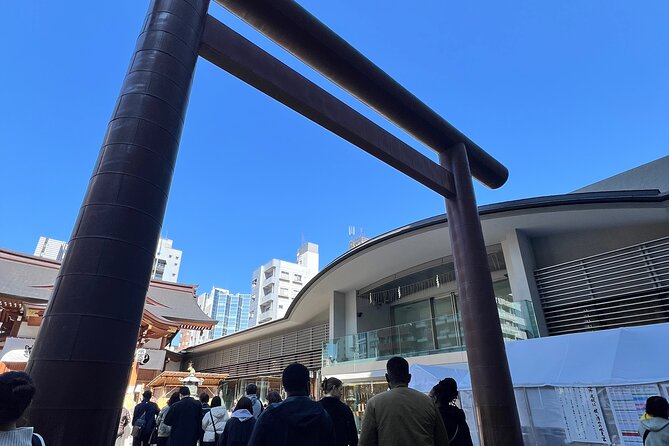
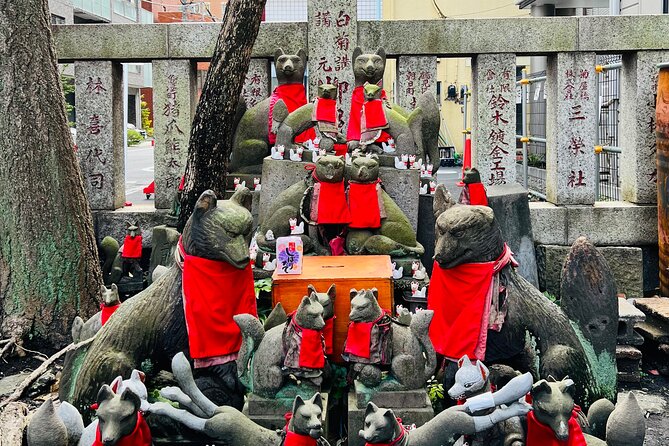
The appeal here is not one grand monument. It is the way seven modest religious sites fit into the streets of Nihonbashi Ningyocho, an area known for preserving an Edo-period atmosphere.
The Shichifukujin are Japan’s Seven Lucky Gods, and each shrine on the route has its own identity. You are not simply ticking off seven similar buildings. Some stops are tiny, some have more room and ceremony, and the architecture varies from place to place.
That variety helps the walk stay interesting. One shrine may feel tucked into the neighborhood, while another has a stronger connection to a particular wish or tradition. Tomo’s role matters here because the meaning of each stop can be easy to miss if you walk past on your own.
The tour lasts about three and a half hours, but the actual route is only 2.8 kilometers. That is a good balance for a first day in Tokyo, a family outing, or anyone who prefers a steady walk with frequent pauses instead of a packed schedule.
If you're still narrowing it down, here are other tours in Tokyo we've reviewed.


Koami Shrine, the tour’s strongest opening
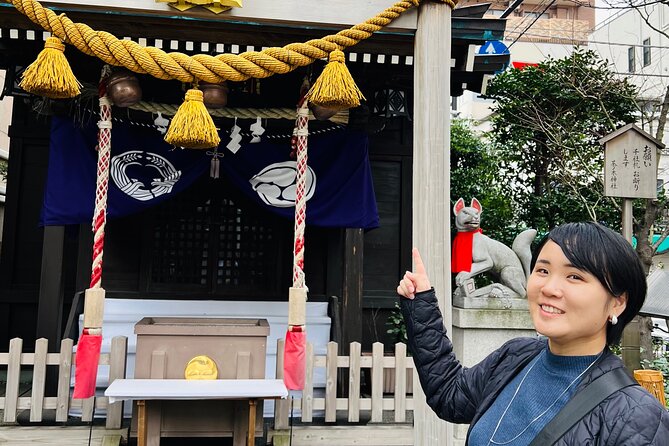
Koami Shrine is the first stop and receives about 15 minutes. It is known for bringing good fortune, and people come from around Japan to pray there.
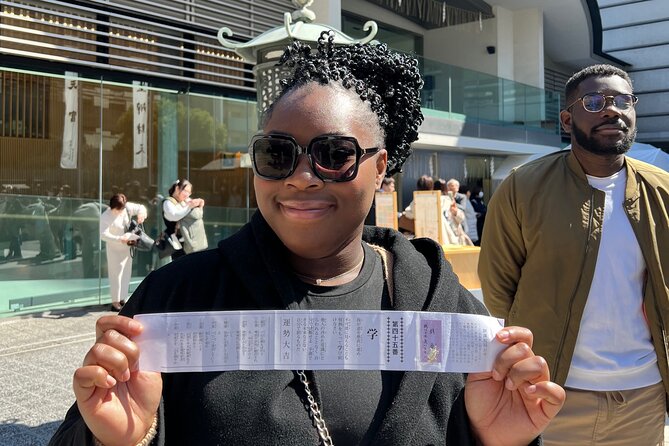
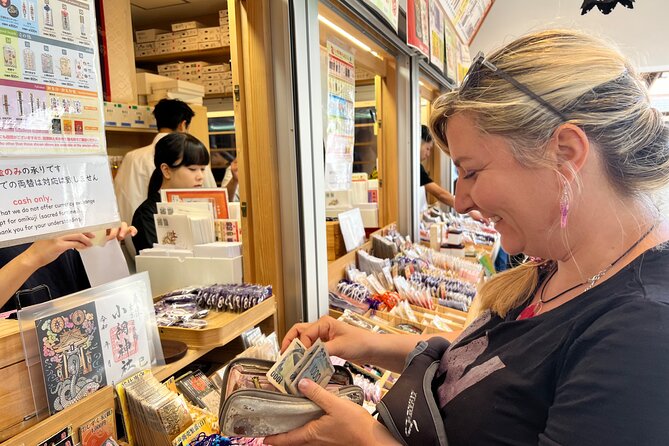
You can offer a prayer, make a wish, buy a protective amulet, draw an omikuji fortune slip, or request a Goshuin stamp. These extras are optional and paid separately, so you can take part in the customs that interest you without feeling obliged to collect everything.
This is a useful place to begin because it introduces the main idea of the walk: shrines are not interchangeable photo stops. Each one has a role, a visual character, and a particular reason people visit.
If you are new to Japanese shrine etiquette, ask Tomo to explain the steps before you approach the worship area. A private guide is especially helpful here, since you can ask small questions without holding up a larger group.
Suitengu and prayers for family well-being
Suitengu is the second stop and allows about 15 minutes. It is associated with prayers for safe childbirth and healthy babies, giving this part of the walk a more personal focus.
The visit follows the same general pattern. You may pray, purchase an amulet, draw an omikuji, and receive a Goshuin stamp, with each item paid for separately. Even if you are not visiting for those specific reasons, Suitengu helps show how shrines can serve different needs within daily life.
The first two stops receive the longest scheduled visits, which makes sense. Koami Shrine and Suitengu are among the more significant points on the route, and Tomo can spend time explaining their customs rather than rushing you through.
Suginomori Shrine and the lottery connection
Suginomori Shrine is scheduled for about 10 minutes. It is connected with the birthplace of the lottery, one of the more unusual details on this route.
That story gives the walk a welcome change of subject. The tour is not limited to broad ideas about luck. It also connects shrine tradition with a specific local story about fortune and chance.
You can again choose from prayer, an amulet, an omikuji, and a Goshuin stamp. Ten minutes is enough for a short visit, though anyone who wants to linger at every shrine may find the schedule a little brisk.
Four smaller stops with different characters
The remaining four shrines are Kasama Inari Shrine Tokyo Bessha, Suehiro Shrine, Matsushima Shrine, and Chanoki Shrine. Each receives about 10 minutes.
Kasama Inari Shrine Tokyo Bessha adds another architectural and religious variation to the route. Suehiro Shrine and Matsushima Shrine continue the walk through the compact streets of Ningyocho, while Chanoki Shrine completes the seven-shrine circuit.
The value of these stops is their contrast. The route includes shrines of different sizes and styles, so you get a better sense of how religious sites fit into an ordinary Tokyo neighborhood. Some may feel grander, while others may be easy to overlook without a guide.
You should not expect seven large temple complexes. This is a neighborhood walk, not a parade of major monuments. If you want dramatic gates, huge gardens, or long visits at each site, this tour may feel modest. If you enjoy small details and local atmosphere, the scale is part of the appeal.
At each stop, you can offer prayers and make a wish. You can also buy a protective amulet, draw a fortune slip, or receive a Goshuin stamp. Since none of those costs is included, decide ahead of time if you want to collect all seven stamps or simply listen and observe.




The included snacks add needed flavor
Two snacks are included in the $68 price. The exact snacks are not specified, so you should treat this as a pleasant part of the walk rather than booking it for a particular food item.
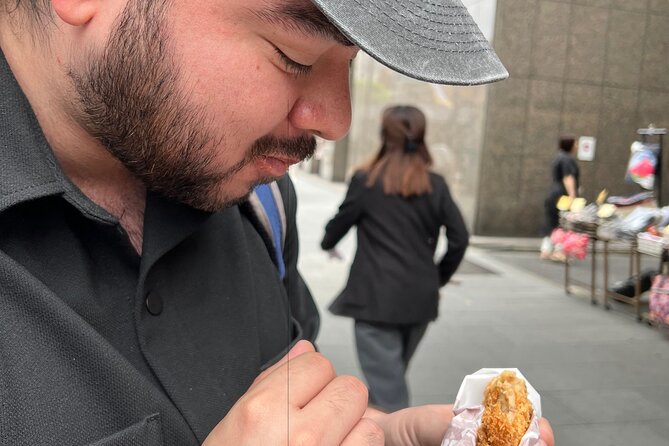
That said, the food matters. A shrine walk can become repetitive if it is only a sequence of explanations and photographs. A snack stop gives you a short break and lets the neighborhood’s food culture share the stage with its religious traditions.
I would also ask Tomo for local shopping and dining suggestions at the end. She has recommended nearby souvenir shops and restaurants, which is useful because Ningyocho is better suited to small local discoveries than to a strict sightseeing checklist.
What the private format changes
This is a 100 percent private tour. Only your group joins, which gives the experience a different feel from a large walking tour.
You can ask about shrine customs, local history, food, or the meaning of an amulet without worrying about a fixed audience. If you want a slower look at one shrine, the private format makes that more practical. If you prefer to keep moving, you can avoid long stops.
The starting time can be arranged by messaging Tomo when possible. That flexibility is useful if you are fitting the walk between other Tokyo plans, though you should settle the time before the day of the tour.
Tomo has been described as friendly and well informed about the area, with easy-to-understand visual aids. Those visuals can be particularly helpful when a shrine custom or local reference is hard to grasp from spoken English alone.
The walk is described as relaxed and easy to do, but you are still walking for three and a half hours. The route is compact rather than strenuous. Wear comfortable shoes, especially if you plan to continue around Ningyocho after the tour.
Is $68 a fair price?
At $68 per person, this is not the cheapest way to see shrines in Tokyo. You can visit many shrines without paying an admission fee, and all seven stops here are free to enter.
The price pays for the private guide, the local context, the organized route, and two snacks. That makes the value strongest for visitors who want help understanding what they are seeing. If you already know Tokyo shrine customs and prefer to wander alone, you may find the cost harder to justify.
The private format also changes the calculation. A couple, family, or small group can share the benefit of a personal guide without joining strangers. For solo visitors, the price is more noticeable, but the focused route can save planning time.
Remember to budget extra for coin offerings, amulets, omikuji fortune slips, and Goshuin stamps. You do not need to buy any of them. If you want a Goshuin at every shrine, the final amount will be higher than the advertised tour price.
Getting to the meeting point and ending the walk
The meeting point is at the building housing Ningyocho Shizuka Dermatology, at 1-chome 14-10 Nihonbashiningyocho, Chuo City, Tokyo 103-0013. The tour ends back at the same meeting point.
The location is near public transportation, but the supplied details do not specify a station exit or walking time. Confirm the exact meeting instructions after booking, and allow extra time to find the correct building and floor.
Because the activity returns to its starting point, you do not need to plan a complicated pickup. You can arrange your next stop from the same central area, perhaps using Tomo’s suggestions for food or souvenirs.
Who will enjoy this walk most?
I would recommend it to you if you want a quieter, more local-feeling Tokyo outing with a clear theme. It suits first-time visitors who want an introduction to shrine etiquette, as well as repeat visitors who have already seen the city’s major sights.
Families may appreciate the short distances between stops and the snack break. People interested in Japanese religious customs, local fortune traditions, or Goshuin collecting will also get plenty from the route.
The walk can work well for couples and small private groups because the pace is adjustable. Service animals are allowed, and most people can participate.
I would hesitate to recommend it if your main goal is a major landmark, a large garden, or a long food tour. The shrines are compact, and each visit is fairly short. This experience rewards attention to detail more than spectacle.
Booking, cancellation, and weather notes
The activity has a mobile ticket, and confirmation is received at booking. It is often reserved about 60 days ahead, so plan early if your Tokyo dates are fixed.
Free cancellation is available until 24 hours before the start time. Cancellations or changes made inside that window are not accepted for a refund. The cut-off uses Tokyo local time.
The experience requires good weather. If poor weather forces a cancellation, you are offered another date or a full refund. That policy is worth noting because the tour depends on walking between all seven shrines.
FAQ
How long does the Nihonbashi Ningyocho shrine tour last?
The tour lasts approximately 3 hours and 30 minutes.
How far do you walk?
The route covers about 2.8 kilometers.
Is this a private tour?
Yes. Only your group participates in the activity.
How many shrines do you visit?
You visit seven shrines linked to the Shichifukujin, the Seven Lucky Gods.
Are snacks included?
Yes. Two snacks are included in the tour price.
Are shrine donations and purchases included?
No. Coin offerings, protective amulets, omikuji fortune slips, and Goshuin stamps are not included.
Where does the tour begin and end?
It begins at the building housing Ningyocho Shizuka Dermatology in Nihonbashiningyocho and ends back at the same meeting point.
Should you book the seven-shrine walk?
Book this tour if you want Tokyo at neighborhood scale: small shrines, local stories, traditional snacks, and a guide who can explain what you might otherwise miss. Tomo’s flexible approach, clear visuals, and useful suggestions for nearby shops and restaurants add real value.
The strongest reason to choose it is the combination of private guiding and a compact route. You see seven distinct places without spending the day crossing Tokyo. The main drawback is the extra cost of shrine items and the modest size of some stops.
For a calm, focused introduction to Ningyocho, $68 is a reasonable price. For independent visitors who prefer to wander and need no explanation, save your money and explore the route on your own.
More tours in Tokyo we've reviewed








Tours, compared.
 ★ 5.0Mt Fuji and Hakone 1-Day Bus Tour Return by Bullet TrainFrom $163
 ★ 5.01-Day Tokyo Bus TourFrom $129
 ★ 5.0Tokyo: Shinjuku Food Tour (13 Dishes at 4 Local Eateries)From $86
 ★ 4.4Tokyo Mt Fuji 5th St & Hakone Cruise Bus Tour w/Bullet TrainFrom $15410 hours
 ★ 5.0Flagship 2-Hours Official Street Go-Kart Tour – Tokyo Bay ShopFrom $642 hours to 2 hours 30 minutes (approx.)
 ★ 4.7Tokyo: Mt. Fuji Tour, Hakone Ropeway, Owakudani, Lake AshiFrom $5410 hours