
Reviewed · GO-KARTS
Tokyo Bay: Scenic Skyline Go-Kart Tour (120 Minutes)
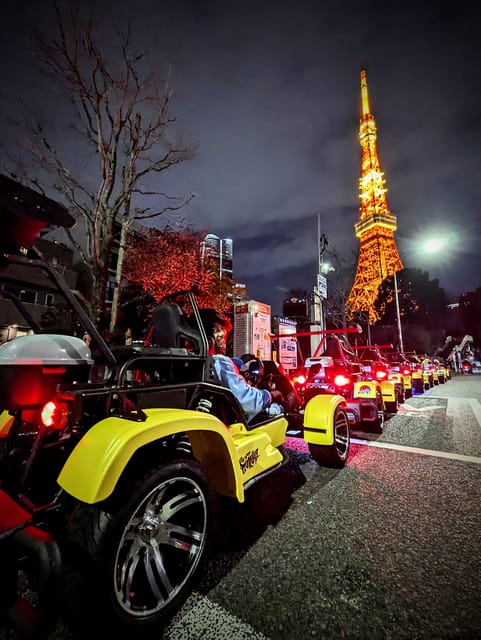
Tokyo looks different from the driver’s seat. This 120-minute street-legal go-kart tour moves from Tokyo Skytree through waterfront districts, Ginza, Tokyo Station, and the Imperial Palace area, giving you a close view of daily city life between the famous sights. I especially like the live two-way radio commentary and the small group of no more than eight people. You get stories and safety directions as you go, rather than trying to follow a guide through a crowded street.
I also like the comfort-focused karts, which use suspension, hydraulic brakes, reinforced frames, and stable handling for city driving. The main catch is the paperwork: you must bring the correct license, and an International Driving Permit must be issued under the 1949 Geneva Convention. Arrive 40 minutes early, because a missing or unacceptable license means you cannot drive and will not receive a refund.
In This Review
- Key points to know before booking
- Starting at Tokyo Skytree with a proper road briefing
- Tokyo Skytree and the city’s northeast edge
- Monzen-Nakacho, Toyosu, and Tokyo’s waterfront
- Ginza and Kabukiza from the driver’s seat
- Tokyo Station and the Imperial Palace surroundings
- What the radio guide adds to the ride
- Cameras, costumes, drinks, and the real price
- The license rules are the part you cannot ignore
- Who will enjoy this Tokyo go-kart route most
- Should you book the 120-minute Tokyo Uptown Route?
- FAQ
- How long is the Tokyo Bay Scenic Skyline Go-Kart Tour?
- Where does the tour start and finish?
- What places does the route visit?
- What driving documents do non-residents need?
- Can I use a digital copy or photo of my license?
- Is the camera included?
- What languages are available for the guide?
- What is included in the $116 price?
Key points to know before booking
- The route covers both old and modern Tokyo: Skytree, Ryogoku, Toyosu, Ginza, Kabukiza, Tokyo Station, and the Imperial Palace area all appear in one ride.
- Radio contact keeps the group together: Your guide provides road-safety instructions and landmark stories while you drive.
- The karts are made for city streets: Suspension, hydraulic brakes, and reinforced frames help first-time drivers feel more secure.
- The tour is small and multilingual: Groups are limited to eight, with guides available in English, German, Spanish, and Persian.
- The camera option has one extra cost: Insta360 use is included, but you need a Micro SD card. Cards can be bought at the facility.
- Your driving documents matter: Non-residents need an accepted permit or, in certain cases, an official Japanese translation from JAF.
Starting at Tokyo Skytree with a proper road briefing
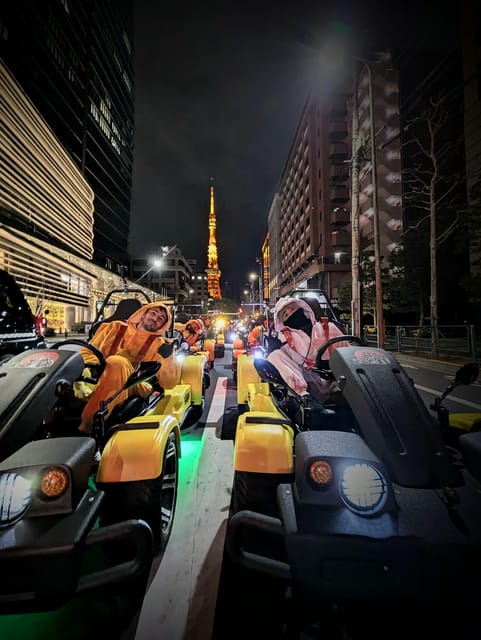
The tour begins at Kartzilla Go Kart Tokyo, near Hiraki Children’s Clinic. Look for the outdoor Kartzilla Go Kart sign, and use Google Maps for the approach. You should arrive at least 40 minutes before departure for check-in, the safety briefing, and driving instructions.
This early arrival is not a casual suggestion. The tour takes place on public roads, so the staff needs to confirm your documents and explain how to operate the kart before the group leaves. Bring your passport, driving license, and International Driving Permit if that applies to you.
You do not need previous go-kart experience. The karts are designed for stable handling, and the guide leads the group throughout the ride. This is not a race, and the pace is intended to be relaxed and suitable for beginners.
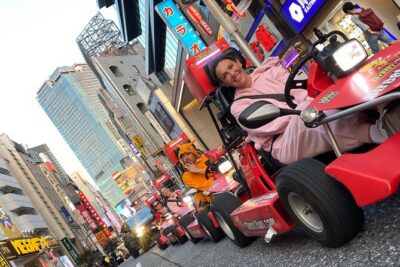
The machines have advanced suspension to soften the ride, hydraulic brakes for controlled stopping, and reinforced frames that can accommodate big and tall riders. Those features matter more here than raw speed. You are sitting in traffic and passing major junctions, so confidence and control are the useful comforts.
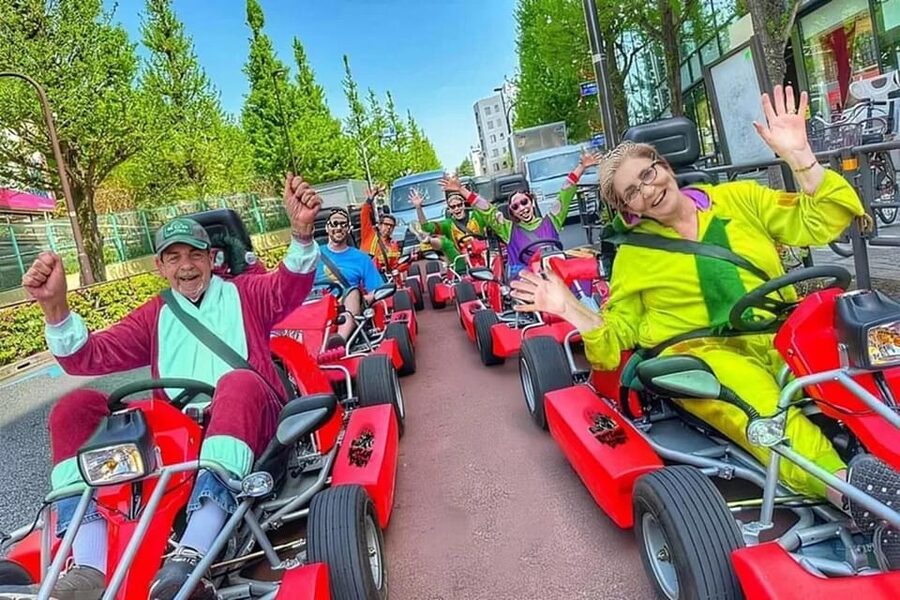
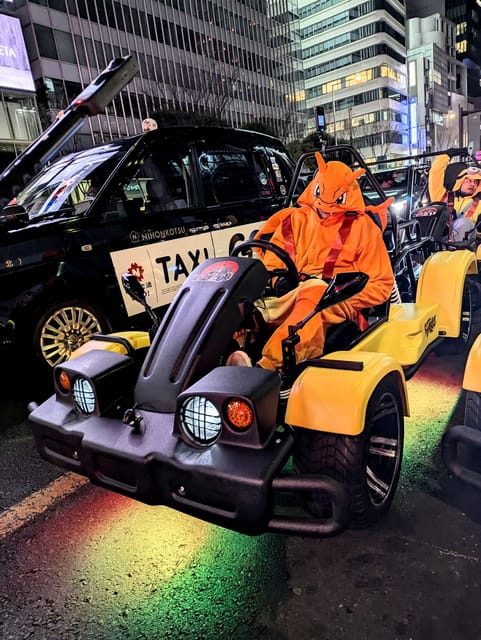
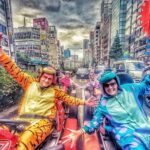
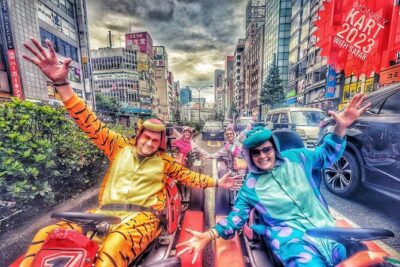
Anime costume rental is included. It adds a playful touch to the outing, though you can also book this for the city views, the radio commentary, and the unusual way it connects several districts in one trip.
A few more Tokyo tours and experiences worth a look
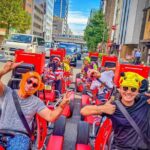
Tokyo Skytree and the city’s northeast edge
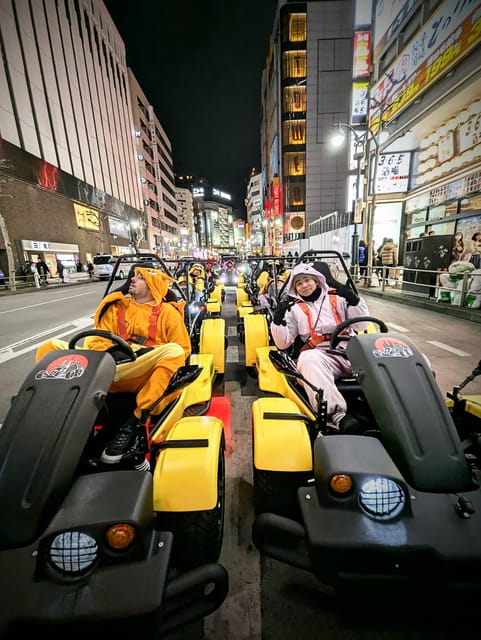
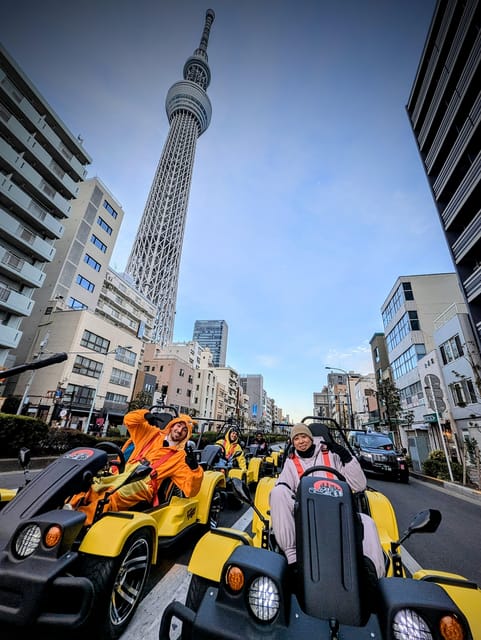
The first major sight is Tokyo Skytree, the enormous broadcasting tower that gives this part of the city its unmistakable shape. Starting nearby lets you see the tower from street level before the route moves into other parts of Tokyo.
The Skytree area is a good opening section because it gives you a clear visual reference point. From the kart, you can watch the tower shift behind you as the group heads toward the next districts. Your guide can share local context over the radio while also giving traffic instructions.
You should not expect a long stop for sightseeing. This is a scenic driving tour, not a series of walking visits. The value is in seeing the city change as you move through it, with the guide pointing out places while you remain on the route.
The itinerary then heads toward Monzen-Nakacho Station. This area offers a different side of Tokyo from the tower and large commercial centers. The route’s appeal is the contrast between major landmarks and ordinary neighborhoods, where the city’s daily rhythm is easier to notice.
Monzen-Nakacho, Toyosu, and Tokyo’s waterfront
Monzen-Nakacho brings the tour into one of Tokyo’s older eastern areas. The station is a route point rather than a lengthy stop, so think of it as a neighborhood view from the road. The guide’s live commentary helps you understand what you are passing instead of simply watching buildings go by.
From there, the route continues to Toyosu Fish Market. Toyosu is one of Tokyo’s best-known food and wholesale districts, and it gives the ride a strong waterfront character. You may see broad roads, modern development, and the working side of the city rather than only the polished shopping streets.
A practical point: meals are not included, and the tour does not promise a market meal or market admission. If you want to eat at Toyosu, plan that separately before or after the go-kart ride. The route lets you see the area, but it is not a food tour.
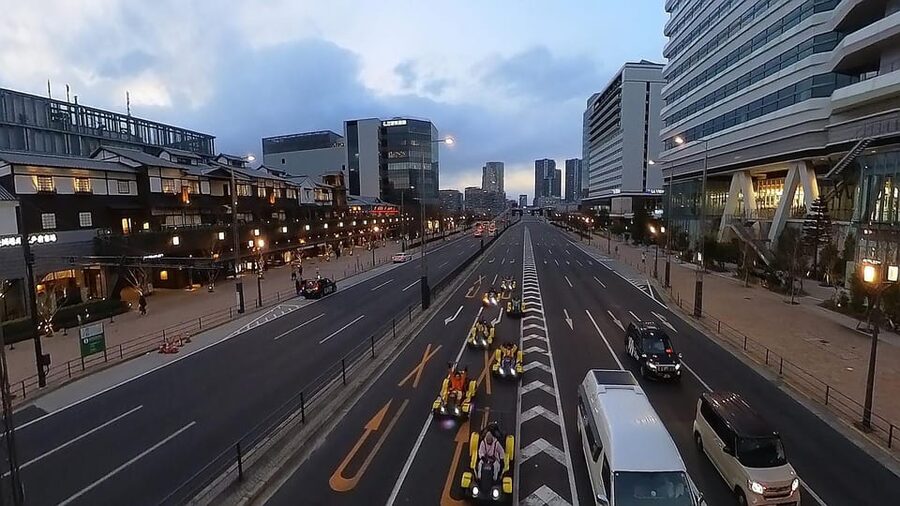
Next comes Ariake Coliseum, followed by Harumi. These stops continue the waterfront portion of the drive and help connect Tokyo’s newer districts with the older central areas later in the route. The scenery here is likely to feel more open than the streets around Ginza or Tokyo Station.
This section is one reason the tour works well for someone who has already seen Tokyo’s main sights on foot. You get a different sense of distance and city planning while moving from one district to another. The tradeoff is that you cannot stop whenever something catches your eye. The group follows a set route and must keep moving with traffic.
Ginza and Kabukiza from the driver’s seat
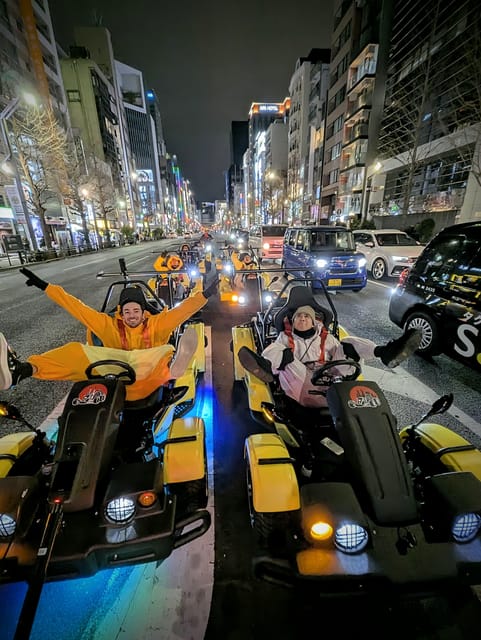
After Harumi, the route heads into Ginza. This is one of Tokyo’s most famous shopping districts, known for department stores, luxury brands, major intersections, and carefully designed streets. From a go-kart, you experience Ginza at eye level rather than from a taxi window or a subway platform.
The live radio matters here. Tokyo’s central streets can be busy and visually demanding, so real-time instructions help the group move together. Your guide can also point out landmarks and explain the character of the area while you focus on safe driving.
Ginza is best appreciated as part of the moving route. You may not have time to enter shops or linger at a crossing, but the ride gives you a broad view of the district’s scale and public life. If your main goal is shopping, schedule that separately. If your goal is to connect several famous places in two hours, this section earns its place.
Kabuki-za follows. The theater is a major reference point in Tokyo’s performing arts world, and its distinctive exterior makes it easy to recognize from the road. The route does not include a performance or interior visit, but your guide can provide live context about the building and its place in Japanese culture.
I like this part of the itinerary because it adds cultural meaning to what could otherwise be a simple sightseeing drive. You are not only collecting skyline photos. You are also passing a theater tied to a traditional Japanese art form, with the guide explaining what you are seeing as it appears.
Tokyo Station and the Imperial Palace surroundings
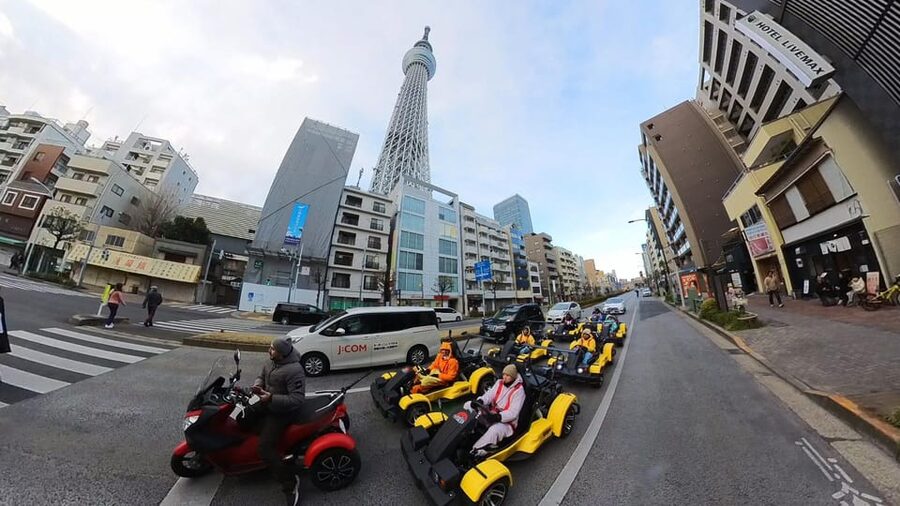
The ride then reaches Tokyo Station, one of the city’s best-known transport landmarks. Its central location makes it a useful transition between the commercial districts and the Imperial Palace area.
From the kart, you get the station as part of the wider city scene, not as a destination for a platform or train transfer. The route is not designed for a full station visit, so do not book this expecting time to explore the building on foot.
The final major area is the Tokyo Imperial Palace surroundings. This section gives the route a more formal and historic feel after the newer waterfront districts and shopping streets. You will see the palace area from public roads, with the guide providing stories and context by radio.
Again, this is a drive-by view rather than palace entry. The tour does not include an interior visit, a palace walking tour, or a separate admission. That limitation is worth understanding before you book. The strength is the sequence: in a single ride, you see Tokyo’s modern waterfront, commercial center, transport hub, and imperial district.
After the palace area, the group returns to Kartzilla Go Kart Tokyo. Because the tour lasts two hours, the schedule is built around continuous movement rather than long sightseeing pauses.
A few more Tokyo tours and experiences worth a look




What the radio guide adds to the ride
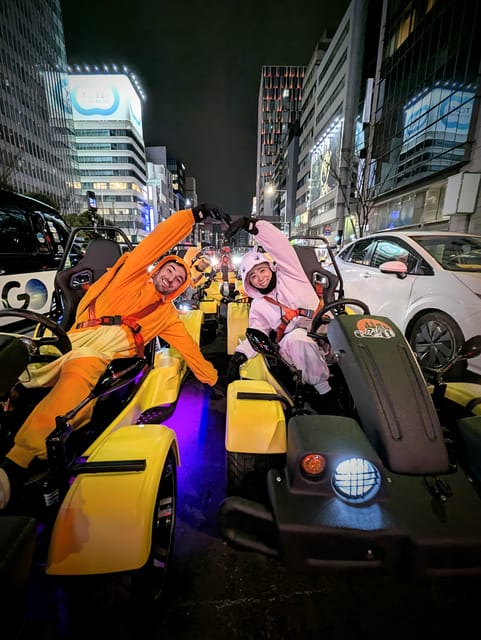
The guide does two jobs at once. First, the guide leads the group and gives safety instructions through a two-way radio. Second, the guide tells stories about landmarks, neighborhoods, and Tokyo culture as you pass them.
That combination is more useful than a prerecorded audio track. Road conditions can change, and live instructions help the group respond together. You can also hear the explanation at the moment you see the landmark, which makes the route easier to follow.
Guides are available in English, German, Spanish, and Persian. The provider does not supply individual guide names, so you should not book this expecting a particular guide. The important point is language coverage and the live format.
The small group size, limited to eight participants, should make the ride easier to manage than a large convoy. It also means the guide can keep attention on the group rather than broadcasting to a crowd. Still, this is a public-road activity. You must listen carefully, follow instructions, and avoid treating the kart like a theme-park ride.
Cameras, costumes, drinks, and the real price
The listed price is $116 per person. That is not a bargain for a simple kart rental, but it covers more than the vehicle. The package includes the street-legal kart, fuel, professional guide, accident insurance, anime costume rental, drinks, and use of an on-board Insta360 camera.
The camera is a useful extra because it records hands-free from the kart. You can capture the route, the city views, and the costume if you choose to wear one. The important catch is the Micro SD card. It is not included, but you can buy one on-site. Bring your own compatible card if you already have one, and confirm the required capacity before relying on it.
Water, tea, and coffee are included. Meals are not, so plan food around the two-hour schedule. Hotel pickup and drop-off are also not included. You need to make your own way to the Kartzilla facility and return from there.
For the right person, the price makes sense because it combines transport-style sightseeing, a guide, safety support, insurance, and recorded memories. It is less attractive if you only want to see Tokyo landmarks quickly or prefer to stop and explore each place. A subway day pass and walking route will cost less, but they will not give you the same continuous street-level view.
Free cancellation is available up to 24 hours before the tour for a full refund. You can also reserve now and pay later, which helps if your Tokyo schedule is still shifting.
The license rules are the part you cannot ignore
You need a valid driving license to take part. Japanese citizens and residents can use a Japanese driving license. Non-residents need an International Driving Permit issued under the 1949 Geneva Convention.
Licenses from Switzerland, Germany, France, Belgium, Monaco, or Taiwan must be paired with an official Japanese translation issued by JAF. Digital licenses, photographs of licenses, and expired documents are not accepted.
This is the most important booking detail. Bring the physical documents required for your nationality, not a phone image. If the staff cannot accept your paperwork on the day, you cannot join and no refund will be provided.
Drivers must be at least 18, and the activity is not suitable for people over 95 or people with visual impairments. The activity is listed as wheelchair accessible, but driving still requires the specified license and physical participation in the kart. If you use a wheelchair, contact the provider before booking to confirm how the accessible arrangements work for your needs.
Alcohol and drugs are not allowed, and alcoholic drinks cannot be taken in the vehicle. Drones are also prohibited.
Who will enjoy this Tokyo go-kart route most
I would choose this tour if you want a playful way to connect several parts of Tokyo and you already hold the correct driving documents. It suits first-time drivers because the karts are built for stability and the guide stays in radio contact.
It is also a good match for couples, friends, and small groups who want photos that feel different from standard sightseeing shots. The anime costume and Insta360 option make the outing more lighthearted, while the route itself provides real cultural and city context.
You may want another activity if you dislike public-road driving, want long stops at landmarks, or cannot meet the license rules. This is not a private chauffeur ride, a food tour, or a palace visit. You will spend the full two hours operating a vehicle and paying attention to traffic.
The route also works best when you treat it as a moving city tour. The sights are the backdrop, the radio guide supplies context, and the kart gives you a close view of streets that you might otherwise pass underground on the train.
Should you book the 120-minute Tokyo Uptown Route?
Book it if you want an unusual, guided view of Tokyo and can bring the correct physical license documents. The strongest reasons are the small eight-person group, the live safety and cultural commentary, and the broad route from Skytree to the Imperial Palace area.
Skip it if you want a low-cost sightseeing day, a long visit inside each landmark, or a tour with hotel transport. At $116, the value comes from the combination of kart, fuel, guide, insurance, costume, drinks, and camera use, not from any one attraction.
My practical advice is simple: confirm your license first, arrive 40 minutes early, bring or buy a Micro SD card if you want video, and leave time for a meal outside the tour. If those details work for you, this is a memorable way to see Tokyo at street level without turning the ride into a race.
FAQ
How long is the Tokyo Bay Scenic Skyline Go-Kart Tour?
The tour lasts 120 minutes, or two hours, including the guided drive through Tokyo’s central and waterfront districts.
Where does the tour start and finish?
It starts and finishes at Kartzilla Go Kart Tokyo, located near Hiraki Children’s Clinic. The building has a clearly marked Kartzilla Go Kart outdoor sign.
What places does the route visit?
The route passes Tokyo Skytree, Monzen-Nakacho Station, Toyosu Fish Market, Ariake Coliseum, Harumi, Ginza, Kabuki-za, Tokyo Station, and the Tokyo Imperial Palace surroundings before returning to the facility.
What driving documents do non-residents need?
Non-residents need an International Driving Permit issued under the 1949 Geneva Convention. Licenses from Switzerland, Germany, France, Belgium, Monaco, or Taiwan require an official Japanese translation issued by JAF.
Can I use a digital copy or photo of my license?
No. Digital licenses, photographs, and expired licenses are not accepted. You must present a valid, accepted physical document on the day of the tour.
Is the camera included?
Use of the on-board Insta360 camera is included, but a Micro SD card is not. You can bring a suitable card or purchase one at the facility.
What languages are available for the guide?
Live guides are available in English, German, Spanish, and Persian.
What is included in the $116 price?
The price includes the street-legal go-kart, fuel, professional local guide, anime costume rental, accident insurance, drinks such as water, tea, and coffee, and use of the on-board Insta360 camera. Meals, hotel pickup and drop-off, and the Micro SD card are not included.
More JDM & Car Culture in Tokyo
More Go-Kart Tours in Tokyo
More tours in Tokyo we've reviewed




Go-Karts, compared.
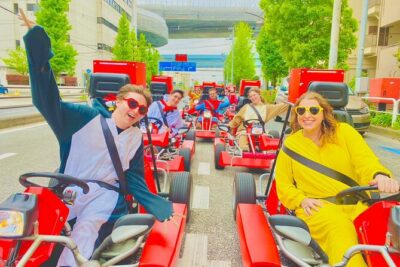 ★ 5.0Flagship 2-Hours Official Street Go-Kart Tour – Tokyo Bay ShopFrom $642 hours to 2 hours 30 minutes (approx.)
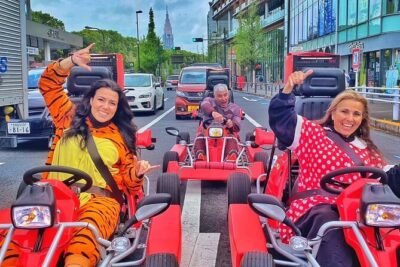 ★ 5.0Official Street Go-Kart in ShibuyaFrom $76
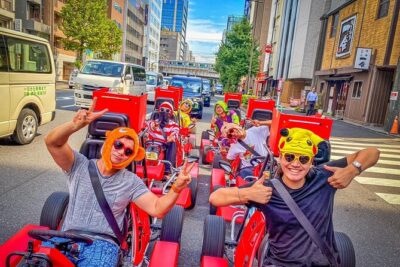 ★ 5.0Official Street Go-Kart Tour – AkihabaraFrom $61
 ★ 5.0Tokyo Go Kart: Asakusa, Skytree, and Akihabara **IDP MUST**From $99
 ★ 5.0Shibuya Official Street Go-Kart in Shibuya AnnexFrom $69
 ★ 4.7Tokyo: Asakusa, Skytree & Akhihabara Go-Kart City ExperienceFrom $961h 10m