
Reviewed · DESSERT TOURS
Tokyo: Hama-rikyu Gardens tour with Japanese Tea & Sweets
Hama-rikyu Gardens gives you a calm, carefully designed break from central Tokyo, with Edo-period ponds, dry garden features, seasonal trees, and a tea stop built into the visit. I like the small maximum of four people, which should make it easier to ask questions and keep the walk relaxed.
I also like that the guide explains why the garden looks the way it does, rather than simply pointing out pretty views. The matcha and Japanese sweets are included, and Nori is specifically praised for being helpful. The main consideration is timing: the garden portion is listed at about 1 hour 30 minutes, while the full experience may run from 1 hour 30 minutes to 2 hours 30 minutes if optional stops are included.
In This Review
- Key points at a glance
- What makes Hama-rikyu Gardens special
- Karesansui and Kaiyushiki: two garden ideas in one visit
- The guided walk and group size
- Matcha and Japanese sweets in the garden
- Optional stop: Advertising Museum Tokyo
- Optional stop: Hayao Miyazaki’s giant clock
- Optional stop: Hibiya Shrine
- Meeting at Otemon Bridge and ending at Shiodome
- Is $85.84 a fair price?
- Who should book this experience?
- Booking, cancellation, and timing advice
- Should you book the Hama-rikyu Gardens tea tour?
- FAQ
- How long does the Hama-rikyu Gardens tour last?
- Is matcha and Japanese tea included in the price?
- How many people can join the tour?
- Where does the tour begin?
- Where does the tour end?
- Can I cancel for a full refund?
Key points at a glance
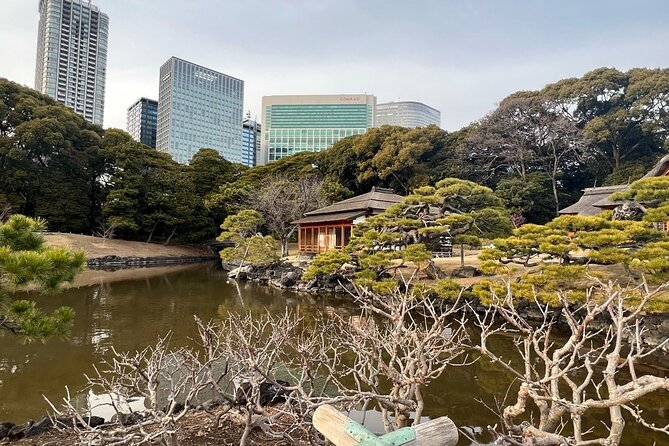
- Edo-period garden design: See both the Karesansui dry garden and the Kaiyushiki circular garden style.
- Tea and sweets included: Matcha green tea and Japanese sweets are part of the tour price.
- Very small group: The experience accepts a maximum of four people.
- Flexible route: Optional stops include Advertising Museum Tokyo, Miyazaki’s giant clock, and Hibiya Shrine.
- Easy onward travel: The walk ends at Shiodome Station, served by the Yurikamome and Toei Oedo lines.
- Comfortable pace: Plan on walking through the garden, so comfortable shoes are a smart choice.
Tokyo can feel like a city built for speed. Hama-rikyu Gardens offers the opposite rhythm. Inside this historic garden, you can pause beside ponds, look across carefully arranged plantings, and learn how Japanese garden design uses water, open space, trees, and borrowed views.
This tour is not just a walk through flower beds. The guide explains the garden’s Edo-period origins and the ideas behind its layout. That matters because many Japanese gardens are easy to admire but harder to understand. A good explanation helps you notice why a path bends, why an island sits where it does, and why different areas use contrasting styles.
The visit also includes matcha green tea and Japanese sweets in a tea ceremony room. That gives the tour a clear finish and adds a cultural activity beyond sightseeing and photography.
What makes Hama-rikyu Gardens special
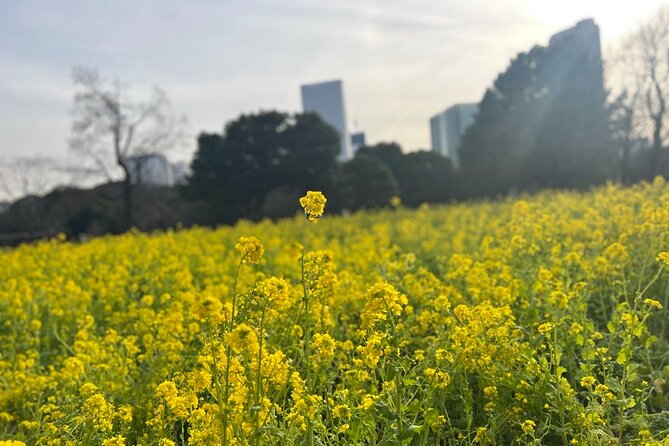
Hama-rikyu is described as the largest of Tokyo’s daimyo gardens. Daimyo were powerful samurai lords during the Edo period, from 1603 to 1868, and their large estates often included formal gardens.
You will see how this type of garden combined beauty with status, leisure, and careful control of nature. The garden is not meant to look wild. Its paths, ponds, trees, and viewing points are arranged to create changing scenes as you move.
That movement is important. A Japanese garden often reveals itself one view at a time. A pond may appear through trees, then open into a broad view. A narrow path may lead to a more formal area. The guide’s explanation can turn these changes from pleasant scenery into something you can read and understand.
The garden’s appearance also changes with the season. The information provided does not specify a particular month or guarantee particular flowers, so you should not book this tour expecting one exact seasonal display. Instead, think of the garden as a place whose trees and plants offer different moods throughout the year.
A few more Tokyo tours and experiences worth a look



Karesansui and Kaiyushiki: two garden ideas in one visit
One highlight is the Karesansui, or dry garden. This style uses elements such as stones and carefully arranged surfaces to suggest natural forms without relying on a large body of water.
The other is the Kaiyushiki garden, a circular garden style designed to be viewed as you walk around it. The experience of moving through the garden is part of the design. You are not simply looking at one fixed scene from one platform.
These terms can sound technical if you encounter them on a sign without explanation. Here, the guide provides context about the background of the garden’s design. I consider that one of the strongest reasons to choose a guided visit rather than entering Hama-rikyu on your own.
You still get time to admire the trees and take photographs, but you also gain a framework for noticing how the garden works. If you enjoy architecture, traditional culture, or photography, these explanations should add real value.
The guided walk and group size
The maximum group size is four people. That is a useful detail in Tokyo, where large walking groups can be awkward on narrow paths and can make it harder to hear the guide.
A group this small also gives you a better chance to ask about the garden’s history or design. The listed review specifically praises a guide named Nori as helpful, and describes the visit as relaxed. You should not assume Nori will lead every departure, but the mention gives you a sense of the intended style: personal, calm, and explanatory rather than rushed.
The walk lasts about 1 hour 30 minutes for the garden portion. The full experience is listed as approximately 1 hour 30 minutes to 2 hours 30 minutes, depending on the route and optional sights.
Wear comfortable walking shoes. This is a walking tour, and even a peaceful garden visit becomes less enjoyable if you are focused on tired feet.
Matcha and Japanese sweets in the garden
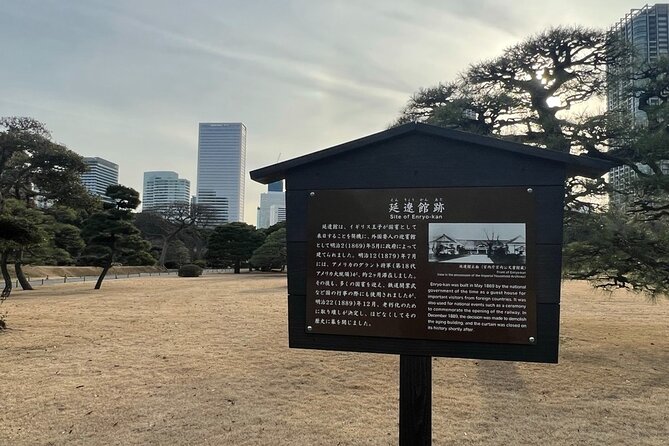
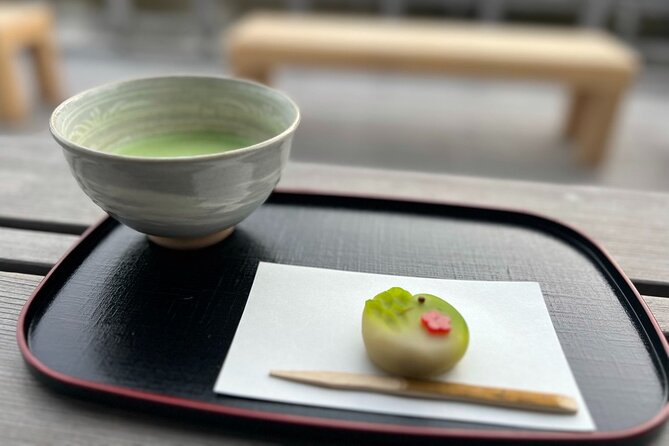
The tea stop is included in the $85.84 price. You will visit a tea ceremony room within the garden, where matcha green tea and Japanese sweets are served.
This is not presented as a full tea ceremony lesson, so you should book it as a chance to enjoy matcha in a traditional setting rather than as an in-depth workshop. The value comes from the setting and the combination of activities: first understand the garden, then sit down for tea within the same historic grounds.
The sweets are also more than a small extra. Japanese sweets served with matcha are often designed to balance the tea’s strong, grassy taste. Since the exact sweets are not specified, the selection may vary. You can expect the tea and sweets to be included, but not a fixed menu.
I like this part of the experience because it gives the visit a natural pause. A garden tour can otherwise become a steady sequence of facts and photographs. The tea room changes the pace and lets you appreciate a simple Japanese custom without having to arrange a separate tea experience across town.
Optional stop: Advertising Museum Tokyo
Advertising Museum Tokyo is an optional stop and takes about 35 minutes. Admission is free.
The museum focuses on Japanese advertising and shows how advertising has changed over time. It also compares Japanese and foreign advertising. This can be an interesting addition if you want to see a different side of Japanese culture, especially after spending time with a traditional garden.
The museum is not essential to the Hama-rikyu visit. If your main goal is garden design and tea, you may prefer to keep the experience short. If you enjoy graphic design, popular culture, or social history, the museum gives the tour a modern counterpoint.
Because this stop is optional, clarify the route and timing with your guide at the start. The advertised total duration can extend to 2 hours 30 minutes, and this museum accounts for a meaningful part of that extra time.





Optional stop: Hayao Miyazaki’s giant clock
Another optional stop is the giant clock at Nippon Television. The clock is described as a steampunk-style copper karakuri clock created by Hayao Miyazaki, the Studio Ghibli animation director.
It takes about 10 minutes, and admission is free. When the time is up, lights come on and the mechanical clock begins moving with music.
This is a quick urban sight rather than a long museum visit. It may appeal strongly to animation fans, families, or anyone interested in unusual Tokyo design. It also gives the route a playful change of tone after the quiet garden and formal tea.
The clock is not the reason to book this experience, but it is a useful optional extra if the timing works. Since the stop is brief, it should not overwhelm the garden portion.
Optional stop: Hibiya Shrine
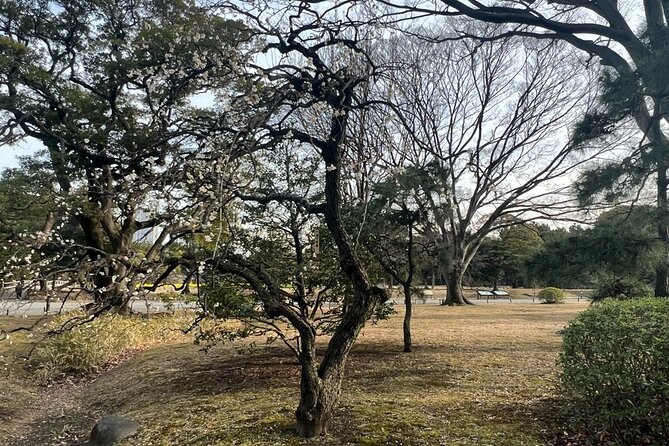
Hibiya Shrine is another optional stop. It is located in an office district and has a history of about 400 years. The shrine enshrines the god of agriculture and the god said to drive away impurity.
The visit takes about 15 minutes and admission is free. Like the clock, it provides a short look at another part of Tokyo rather than a major standalone attraction.
I see this stop as a good choice if you want a compact shrine visit but do not have time for one of Tokyo’s larger temple and shrine districts. Its location in an office area also shows how religious sites can remain part of the city’s working fabric.
Again, the stop is optional. If you prefer more time in Hama-rikyu Gardens, ask whether it can be left out.
Meeting at Otemon Bridge and ending at Shiodome
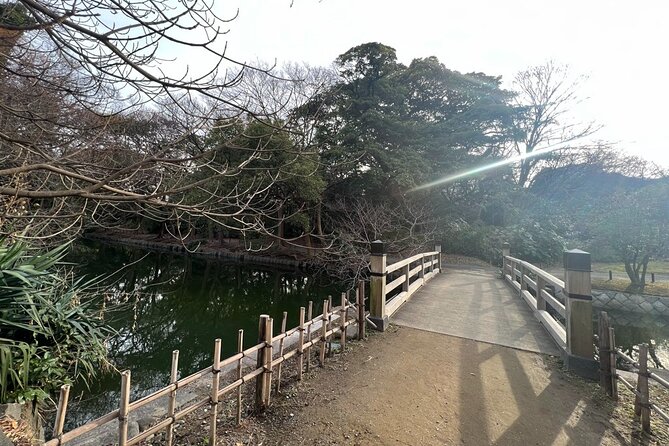
The tour begins at Otemon Bridge. The listed meeting address is 8 Chome-21 Ginza, Chuo City, Tokyo, and the experience ends at Shiodome Station.
Shiodome Station is served by the Yurikamome and Toei Oedo lines. This makes the ending practical if you plan to continue toward other parts of Tokyo. You are not returned to the starting point, so plan your day around finishing in Shiodome.
A one-way route can be an advantage. You avoid retracing your steps and can continue directly to your next destination. It also means you should check the meeting point carefully before setting out, especially in a dense central Tokyo area where several stations and bridges may appear close together on a map.
The ticket is mobile, and booking confirmation is provided at the time of booking. The experience is near public transportation, and most people can participate.
Is $85.84 a fair price?
At $85.84 per person, this is not the cheapest way to enter Hama-rikyu Gardens. You are paying for more than admission, though. The price includes a small-group guided walk, explanations of the garden’s history and design, and matcha with Japanese sweets in the garden’s tea room.
The maximum of four people is the strongest value point. A private or nearly private experience can be worthwhile in Tokyo if you want to ask questions or prefer not to follow a large group.
The price makes less sense if you only want to stroll through the garden, take pictures, and leave. You could potentially visit independently for less, but you would give up the organized explanation and included tea experience.
I would compare it with the cost of arranging two separate activities. If you already plan to visit Hama-rikyu, want to understand what you are seeing, and would otherwise book a tea experience, the combination is easier to justify. If your schedule is tight or your main interest is the garden alone, the cost may feel high.
The free optional stops add interest but should not be counted as the main value. The core worth comes from the garden walk and tea.
Who should book this experience?
This tour suits you if you want a gentle introduction to Japanese garden culture without committing to a long day. The 1 hour 30 minute garden portion is manageable, and the optional stops let you extend the route if you have time.
It is also a good fit for first-time visitors who want more context than a self-guided walk provides. The guide explains both the history and the design, so you can understand the garden rather than simply pass through it.
Photography-minded visitors should enjoy the changing views, trees, ponds, and carefully arranged garden features. The information does not promise special photography instruction, but it does allow time to admire the scenery and take pictures.
The tour may suit couples, solo visitors, and families who appreciate a small group. The four-person limit should help maintain a quiet pace.
You may want to skip it if you dislike guided walks, already know Japanese garden design well, or only have a short window in Tokyo and cannot spare time for a fixed meeting. You may also prefer an independent visit if the $85.84 price is more than you want to spend on a garden and tea.
Booking, cancellation, and timing advice
The experience is often booked about 49 days in advance. That does not guarantee that every date fills, but it suggests that booking ahead is sensible if your Tokyo schedule is fixed.
Free cancellation is available when you cancel at least 24 hours before the start time. Cancellations or changes made less than 24 hours before the experience are not accepted for a refund.
The experience requires a minimum number of participants. If that minimum is not reached and the tour is canceled, you will be offered another date or experience, or receive a full refund.
The total duration can vary because several stops are optional. If you have a train reservation, timed ticket, or lunch booking afterward, allow room beyond the 1 hour 30 minute garden visit.
Should you book the Hama-rikyu Gardens tea tour?
Book this experience if you want a small, quiet cultural outing with useful explanations and a built-in matcha stop. The garden’s Edo-period design, the Karesansui and Kaiyushiki features, and the tea room give the visit more substance than a simple park walk.
The best reason to choose it is the combination of four-person maximum and included tea. Nori’s helpful guidance, as noted in the available feedback, also points toward the friendly, relaxed approach this tour aims to provide.
Skip it if you want a low-cost independent stroll or if you need a tightly fixed schedule. For most visitors who value context, calm pacing, and a little Japanese sweetness with their garden views, the price is reasonable.
FAQ
How long does the Hama-rikyu Gardens tour last?
The experience lasts approximately 1 hour 30 minutes to 2 hours 30 minutes. The garden portion is listed at about 1 hour 30 minutes, while optional stops can add time.
Is matcha and Japanese tea included in the price?
Yes. Matcha green tea and Japanese sweets are included in the tour fee and are served in a tea ceremony room within the garden.
How many people can join the tour?
The experience has a maximum of four travelers.
Where does the tour begin?
The tour begins at Otemon Bridge, at the listed address of 8 Chome-21 Ginza, Chuo City, Tokyo 104-0045, Japan.
Where does the tour end?
The tour ends at Shiodome Station. The station is served by the Yurikamome and Toei Oedo lines.
Can I cancel for a full refund?
Yes, if you cancel at least 24 hours before the experience start time. Cancellations or changes made less than 24 hours before the start time are not accepted for a refund.
More Dessert Tours in Tokyo



More tours in Tokyo we've reviewed










Dessert Tours, compared.
 ★ 5.0Matcha Making Class in Tokyo with Authentic Japanese Sweets SetFrom $21
 ★ 4.9Tokyo: Matcha Making Experience with Mochi Sweets in AsakusaFrom $221 hour
 ★ 5.0Make Traditional Nerikiri Sweets & Matcha experience in ShibuyaFrom $60
 ★ 5.0Private Mochi Sweets Making class near Shibuya areaFrom $79
 ★ 4.7Japanese Traditional Sweets making and Tea CeremonyFrom $181h 35m
 ★ 5.0Tokyo Local Food Tour: Noodles, Skewers, Dumplings, SweetsFrom $74