
Reviewed · JDM & CAR CULTURE
Tokyo: Daikoku Excursion by Drift Car And official driver
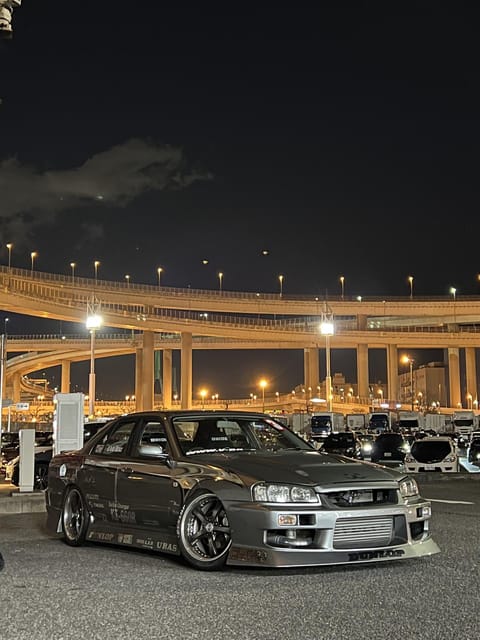
Daikoku Parking Area is the main event here, but the unusual part is getting there in a drift car with an official driver rather than arriving by ordinary tour bus. You will see Tokyo from the passenger seat, then spend time around one of Japan’s best-known car gathering spots.
I like the private group format, which keeps the outing personal for up to three people. I also like the guide’s car knowledge and access to spots that are hard to find on your own. The main drawback is that Daikoku is not reachable by train, bus, or on foot, so you must rely on the arranged vehicle and confirm the exact pickup details before setting out.
In This Review
- Key points at a glance
- Why Daikoku Parking Area matters
- The ride from Tokyo in a drift car
- What the four-hour outing looks like
- The guide makes the difference
- What the private price really means
- Who will enjoy this most
- Practical things to bring and leave behind
- Timing, language, and booking flexibility
- A balanced look at the drawbacks
- Is this Daikoku drift-car tour worth booking?
- FAQ
- How long is the Daikoku drift-car excursion?
- How many people can join the private group?
- Does the tour include hotel pickup and drop-off?
- Is street drifting included?
- Can I reach Daikoku Parking Area by train or bus?
- What languages are available?
- What does the price include?
Key points at a glance
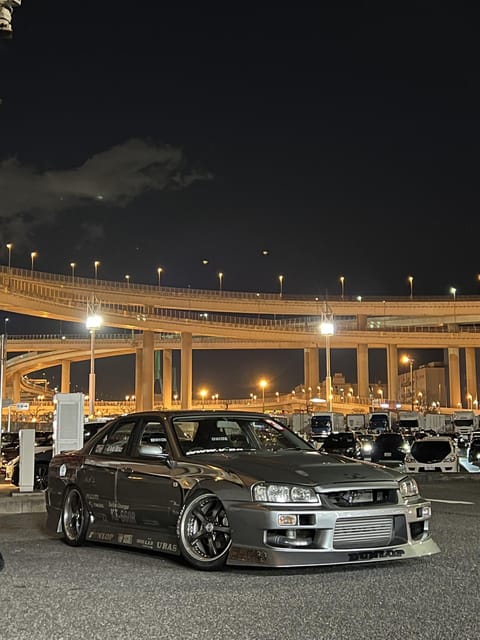
- Daikoku Parking Area: Visit a famous meeting place for Japanese cars and see which vehicles gather there during your outing.
- Passenger-seat drift experience: Ride with a professional driver, with no street drifting involved.
- Private group of up to three: The $530 rate covers the group, not each individual passenger.
- Four hours with transport: Hotel pickup and drop-off in Tokyo are offered, while the meeting information also lists Akihabara Station’s taxi zone.
- French and English guidance: Your driver-guide can explain the cars, the local scene, and the places you visit.
- Car-focused Tokyo: This is for people who want a different side of the city, not a standard sightseeing route.
Why Daikoku Parking Area matters
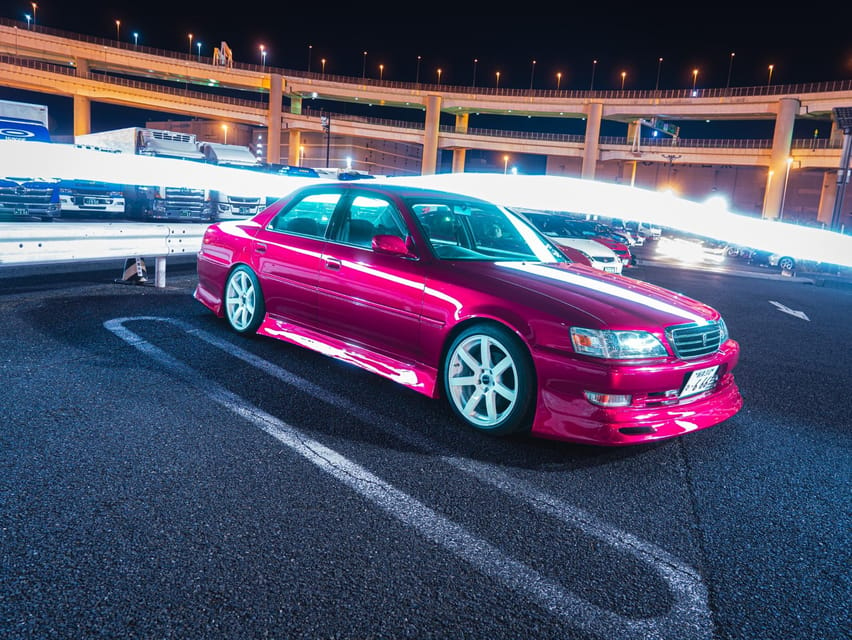
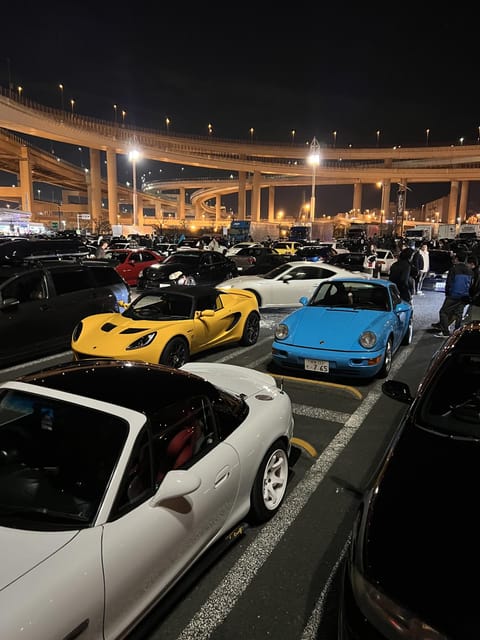
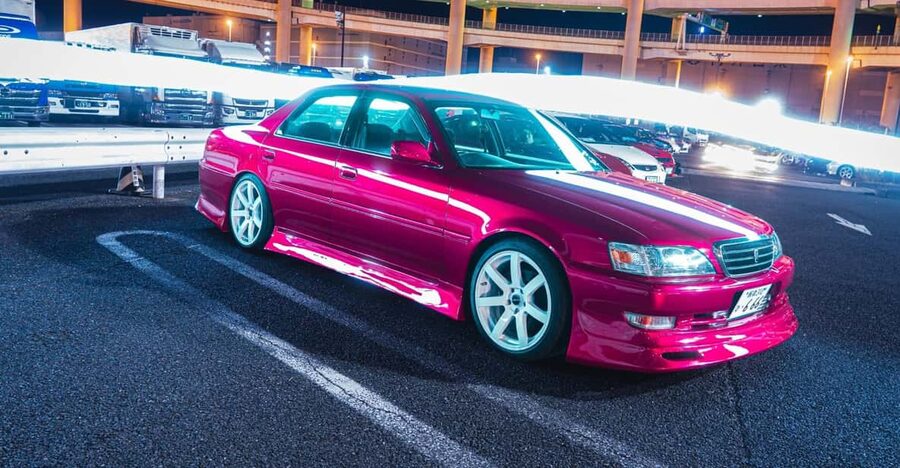
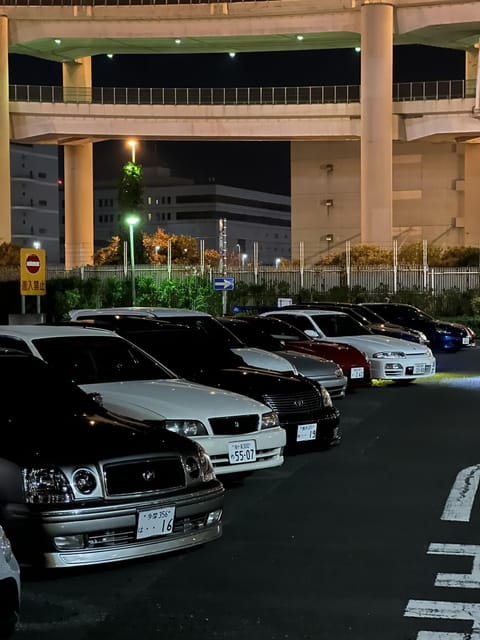
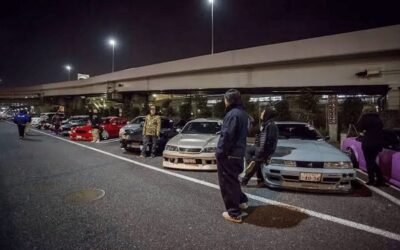
Daikoku Parking Area is not simply a rest stop on the edge of town. It is known as a place where Japanese car fans gather, making it one of the most interesting stops for anyone drawn to drifting, modified cars, performance vehicles, and Japan’s wider car culture.
The appeal is partly the setting. You are away from Tokyo’s famous temples, department stores, and neon streets, looking instead at a working transport area where car enthusiasts may gather. The exact cars present can change, so you should think of the stop as a live scene rather than a museum display with guaranteed exhibits.
That uncertainty is part of the fun, but it also matters when you decide how to spend your money. You are paying for access, transport, and a guide who knows how to find the activity, not for a fixed collection of specific makes or models.
Daikoku is also awkward to reach independently. It cannot be reached by train, bus, or a simple walk from central Tokyo. For visitors without a rental car, that makes this tour far more practical than trying to piece together public transport and a taxi.
A few more Tokyo tours and experiences worth a look


The ride from Tokyo in a drift car
The vehicle is central to the experience. Instead of sitting in a regular minivan while someone talks about cars, you travel with the driver in a drift car and get a passenger’s view of the driving style and atmosphere.
The important safety detail is that this does not include street drifting. The description specifically rules that out, so you should not book this expecting illegal racing or wild activity on public roads. The experience is a ride with a professional driver, not a license to turn Tokyo streets into a racetrack.
That distinction is useful. A car enthusiast may arrive expecting a full track session and find the format more restrained. On the other hand, someone who wants a memorable ride without taking control of a car may find the setup just right.
The drive also gives the guide time to talk with you. The driver is described as having years of experience and a strong interest in Japanese cars. You can ask about the vehicles you see, the local car scene, and the places visited along the route.
I would bring a camera, as suggested, but keep your expectations practical. Photography opportunities depend on the timing, the cars present, and the stops made during your four-hour period. One useful request is to ask for time at selected sites for pictures. A short photo stop can make a big difference when you are surrounded by cars you may not see again.
What the four-hour outing looks like
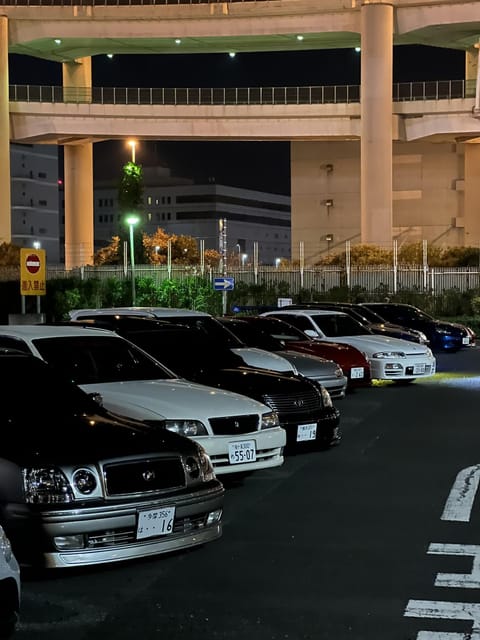
The experience begins with transport from Tokyo. Hotel pickup and return are included, which removes the biggest headache of reaching Daikoku. The published meeting information also gives Akihabara Station’s taxi zone as a meeting point, so you should confirm whether your booking uses hotel pickup or requires you to meet at the station.
That detail is worth settling before the day. Hotel pickup is convenient, but a taxi zone around a large station can be less clear than a named hotel lobby. Keep the provider’s contact details handy and ask for the exact vehicle meeting instructions.
Once you meet the driver-guide, the outing moves toward Daikoku Parking Area. The tour is private, so the group can focus on cars rather than follow the pace of a large party. With a maximum of three people, you also avoid the crowded feel common on coach excursions.
At Daikoku, you can look for the cars gathered there and talk through what you are seeing. The guide’s role is important because the appeal is not only visual. A good explanation helps you understand why particular cars attract attention and how the gathering fits into Japanese car culture.
The itinerary also includes secret or less obvious spots connected with car rallies. The wording is deliberately broad, and no fixed list of locations is provided. That means you should ask what is likely on your date, while accepting that the route may change according to conditions and activity.
The return to Tokyo completes the four-hour schedule. Dinner is not included, so plan to eat before or after the outing. Snacks and drinks are also excluded, and food or beverages are not allowed in the vehicle.
The guide makes the difference
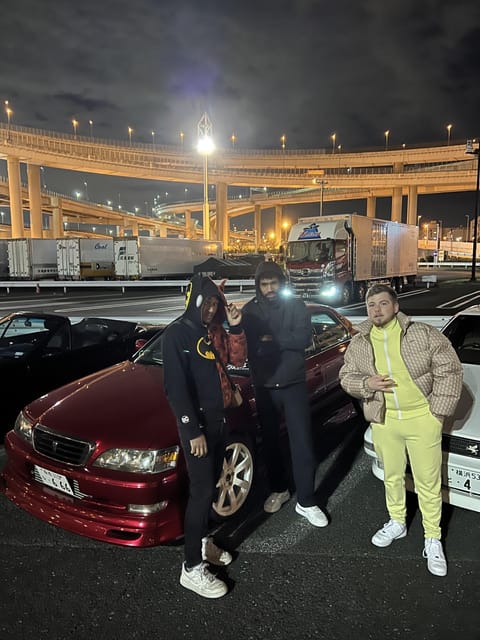
This experience depends heavily on the person behind the wheel. The driver is both your transport provider and your guide, so the quality of the conversation matters nearly as much as the car.
The strongest feature here is the driver’s passion for cars. The guide is expected to explain the vehicles and share knowledge rather than simply drop you at Daikoku. That makes the outing a better fit for someone who wants to ask questions and learn, not just take a quick photograph.
French and English are available. If you have detailed questions about drifting or Japanese cars, it is sensible to bring a short list in advance. The information provided does not give the guide’s personal name, so you cannot select a particular driver by name when booking.
The guide also knows places that may be difficult for an independent visitor to locate. That can include good points for seeing car rallies and other stops connected to the local scene. Do not expect a guaranteed event on every date, but the driver’s local experience gives you a better chance of seeing the area in the right way.
What the private price really means
The cost is $530 per group of up to three people. That is a substantial amount for four hours, but it should not be compared with the price of an ordinary group bus tour.
For three people, the cost works out to about $177 per person. For two people, it is $265 each, and for one person, you carry the full group price alone. The value improves sharply when you can fill all three places.
That fee includes private transportation, parking fees, and admission to Daikoku Parking Area. It also covers the specialist driver-guide and the hard-to-arrange route to a place that public transport does not serve.
I would consider it good value for a small group of dedicated car fans who would otherwise need to arrange private transport and local guidance. I would be more cautious if you are only mildly interested in cars, especially if the group has just one participant.
The price does not include dinner, snacks, or Wi-Fi. Food and drinks are not permitted in the vehicle, so plan accordingly. Bring cash as requested, although the available information does not specify what cash purchases might arise.
A few more Tokyo tours and experiences worth a look
Who will enjoy this most
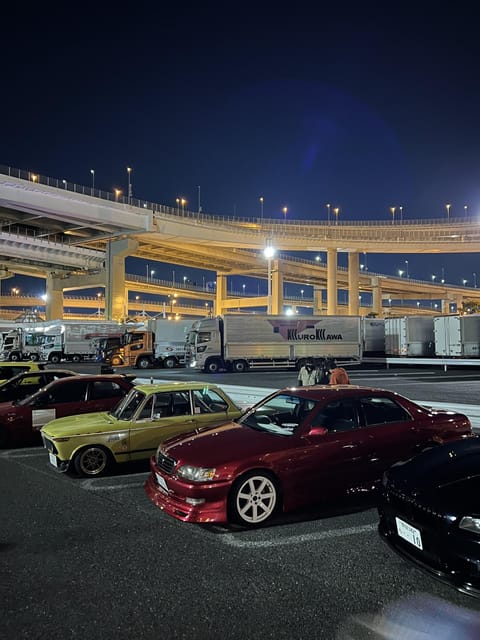
I would recommend this outing first to people who already know they like cars. You do not need to be an expert, but you should be interested in Japanese vehicles, drift culture, rallies, or the social side of car gatherings.
It also suits a couple or small group of friends. The private format means you can ask questions, discuss the cars, and set a comfortable pace without worrying about strangers in a large group.
Photographers may enjoy it, particularly if they ask the guide to pause at suitable sites. The car itself is part of the subject, and Daikoku may offer changing material depending on what gathers there.
This is less suitable for anyone seeking Tokyo’s classic sightseeing sights. You will not be visiting the city’s major temples, gardens, shopping streets, or museums. The point is a specialist outing on the edge of the city.
The activity is also not suitable for pregnant women, people with back problems, wheelchair users, people over 80, babies under one year, or people over 95. Unaccompanied minors are not allowed.
Practical things to bring and leave behind
Bring your passport, camera, jacket, and cash. A jacket is sensible because the activity involves time outside the vehicle, and the tour does not promise an indoor viewing area.
The rules are strict. Smoking, vaping, alcohol, food, and drinks are not allowed in the vehicle. Oversize luggage, baby strollers, pets, bicycles, skateboards, scooters, surfboards, and many other bulky items are prohibited.
You should also avoid bringing sharp objects, weapons, sprays, aerosols, glass objects, and valuables. Sunglasses are listed as not allowed, as are video recording, chewing gum, strong fragrances, and several types of recreational equipment.
Some restrictions are unusually specific, including red wine and swimwear. The safest approach is to arrive with a passport, camera, jacket, and small personal essentials only.
Do not arrive intoxicated, and do not plan a party-style outing. Bachelor and bachelorette groups are not accepted. The rules also prohibit touching animals or marine life, though those activities are not part of this car-focused experience.
Timing, language, and booking flexibility
The tour lasts four hours, but a starting time is not fixed in the information provided. You must check availability for the date and time you want.
French and English guidance is offered. If you need one language in particular, confirm it when booking rather than assuming the driver on every departure speaks both.
The tour allows cancellation up to 24 hours in advance for a full refund. You can also reserve now and pay later, which helps if your Tokyo schedule is still shifting.
Because Daikoku is outside the normal tourist route, allow enough room around the four-hour period for the rest of your day. The listed duration is four hours, but your hotel transfer and meeting instructions should be clear before you commit to a tight dinner reservation or another timed activity.
A balanced look at the drawbacks
The biggest limitation is that the exact car lineup cannot be promised. Daikoku is a gathering point, not a permanent exhibit. You might see remarkable cars, but the selection depends on who arrives during your visit.
The second limitation is the unusual meeting information. Hotel pickup and drop-off are offered, yet Akihabara Station’s taxi zone is also listed as the meeting point. That is not necessarily a problem, but you should get a precise answer before the day.
The third is the narrow focus. If you are not interested in cars, four hours can feel long. The outing gives you a special view of Tokyo, but it does not cover the usual sightseeing highlights.
Finally, the no-food, no-drink, and no-smoking rules may feel strict. They are easy enough to follow for four hours, but you should eat beforehand and avoid bringing bulky bags.
Is this Daikoku drift-car tour worth booking?
Book it if you want a small, specialist car experience and you are happy to pay for private transport, a passionate driver, and access to a place that is difficult to reach alone. The strongest case is a group of three, when the $530 price is shared.
I would especially choose it for a car-focused evening, a photography outing, or a different side of Tokyo after you have already seen the city’s main sights. Ask for photo time, confirm the pickup location, and arrive with the required small essentials.
Skip it if you want a guaranteed car show, a track-driving lesson, street drifting, or a broad Tokyo sightseeing tour. The cars at Daikoku can change, and the ride is an accompanied passenger experience rather than a chance for you to drive.
FAQ
How long is the Daikoku drift-car excursion?
The experience lasts four hours.
How many people can join the private group?
The price covers a private group of up to three people.
Does the tour include hotel pickup and drop-off?
Hotel pickup and drop-off in Tokyo are included. The meeting information also lists Akihabara Station’s taxi zone, so confirm the exact pickup arrangement before departure.
Is street drifting included?
No. The activity specifically states that there is no street drifting. You ride with a professional driver instead.
Can I reach Daikoku Parking Area by train or bus?
No. The provided information states that Daikoku is inaccessible by train, on foot, or by bus.
What languages are available?
Live guidance is available in French and English.
What does the price include?
The $530 group price includes private transportation, parking fees, and entry to Daikoku Parking Area. Dinner, snacks, and Wi-Fi on board are not included.
More Private Drivers in Tokyo
More JDM & Car Culture in Tokyo



More tours in Tokyo we've reviewed






JDM & Car Culture, compared.
 ★ 4.7FAST&FURIOUS EXPERIENCE Tokyo Car Club membershipFrom $138
 ★ 4.8GT-R35 800hp Club Membership – secret underground car meetFrom $205
 ★ 4.8Tokyo: Fast & Furious Tokyo Drift 3 Experience (Kaila Yu SP)From $157
 ★ 4.8Tokyo: Daikoku JDM Car Meet & Night Car Culture TourFrom $984 hours
 ★ 4.8Secret Car Meet: R34 Skyline Car Club MembershipFrom $236
 ★ 4.7Tokyo Drift: Daikoku PA Supreme Car Experience 大黒PAFrom $583 hours