
Reviewed · TSUKIJI MARKET TOURS
Tokyo Tsukiji Fish Market Walking and Exploring Hidden Gems Tour
Tsukiji is best understood one bite at a time, and this small-group food walk gives you a useful route through the market instead of leaving you to guess which stall is worth your yen. You’ll visit a Buddhist temple, try two or three market samples, see a local shrine, and finish with a high view over the area.
I like the intimate cap of 10 people, which keeps the guide close at crowded food counters. I also like that snacks are included, while lunch remains your choice and your expense. The main drawback is timing: two hours passes quickly, and the tour does not include a full meal or a visit to the old inner wholesale market.
In This Review
- Key points to know before booking
- Why this Tsukiji walk is useful
- 10 a.m. at Tsukiji Hongwanji Temple
- Tsukiji market, one sample at a time
- The local restaurant stop and your lunch budget
- Namiyoke Inari Shrine and working Tsukiji
- Caretta Shiodome and the final city view
- Group size, pace, and practical comfort
- Is $26.16 good value?
- Who should book this experience?
- Should you book the Tsukiji market tour?
- FAQ
- Where does the tour begin?
- What time does the tour start?
- Where does the tour end?
- Is lunch included?
- How large is the group?
- What is included in the booking price?
Key points to know before booking
- Start with temple customs: Learn the basic ritual for entering Tsukiji Hongwanji Temple and praying in the Jodo Shinshu tradition.
- Eat as you walk: Two or three food samples are included, with the guide helping you choose and order.
- Follow a local route: The walk connects market stalls, wholesale shops, Namiyoke Inari Shrine, and a Shiodome viewing deck.
- Lunch is separate: A local restaurant stop is planned, but you pay for your own lunch and drinks.
- Keep the group small: A maximum of 10 people makes conversation and food stops easier.
- Meet at 10 a.m.: Arrive at Tsukiji Hongwanji Temple early, since the guide’s waiting allowance is short.
Why this Tsukiji walk is useful
Tsukiji can feel confusing on a first visit. The market area is easy to reach, but its food counters, shops, shrines, and lanes do not always announce what they do best. This tour gives you a human guide at the exact point where local advice helps most: deciding what to taste and how to move through the area.
The experience costs $26.16 per person, which is a fair price if you value orientation and food guidance more than a long sightseeing tour. Your fee covers two hours with a local guide, tour photos, and two or three food samples. It does not cover lunch or soda, so plan on spending extra if you join the restaurant stop.
I would not book this as your only Tsukiji visit if you want a slow morning of shopping and eating. I would book it early in your Tokyo stay, then return later to revisit the stalls that caught your attention. That makes the tour work as both a food tasting and a practical introduction.
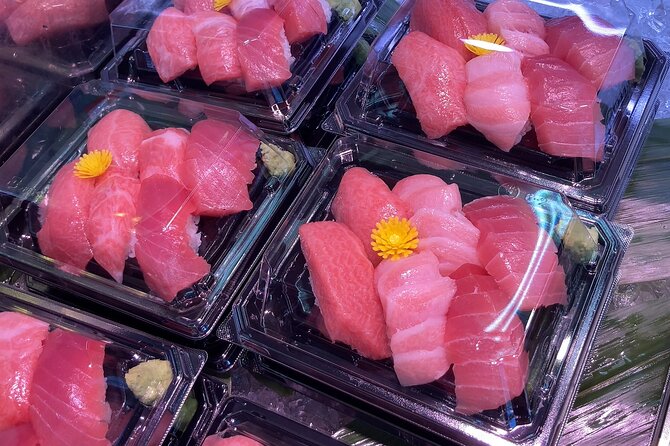
The strongest food praise centers on the guide’s recommendations. Inok is specifically associated with showing people where to find good tuna, wagyu, and ice cream. Those details matter because a market visit can otherwise turn into random snacking, with little sense of what you are trying or why it costs what it does.
A few more Tokyo tours and experiences worth a look


10 a.m. at Tsukiji Hongwanji Temple
The tour begins at Tsukiji Hongwanji Temple, at 3-chome-15-1 Tsukiji. This is a smart meeting point. It gives you a clear landmark near public transportation and starts the morning with culture before the food stalls take over.
The first stop lasts about 20 minutes. You learn how to behave inside a Japanese temple, including the traditional ritual before entering, how to offer incense, and how to pray in the Jodo Shinshu style. For a first-time visitor, this short lesson can prevent the usual awkward pause at the entrance.
I appreciate this kind of introduction because it treats the temple as more than a photo stop. You get a little guidance on what you are seeing and how to show respect. The visit is free, so the value comes from the explanation rather than an admission ticket.
Do not expect a long temple lecture. Twenty minutes is enough for basic customs and a look around, but not enough for an extended study of the building or Buddhist practice. That brevity suits the tour’s food-focused purpose, though visitors who want detailed religious history may want a separate visit.
Tsukiji market, one sample at a time
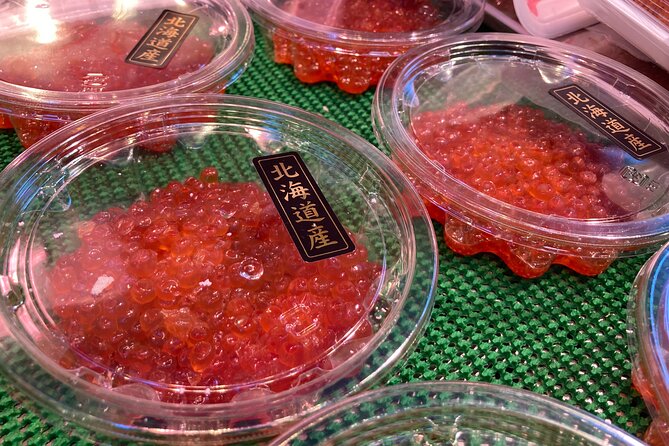
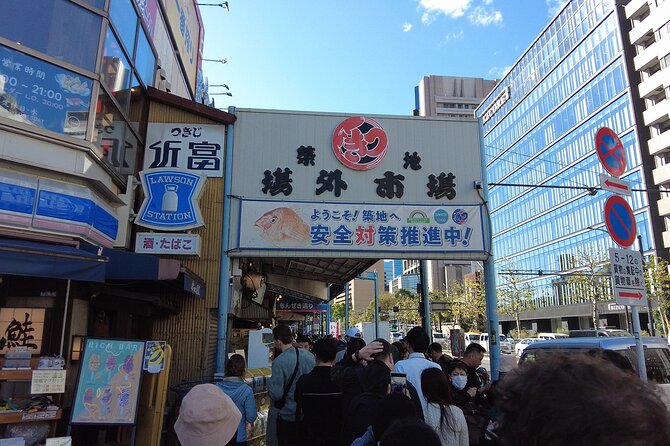
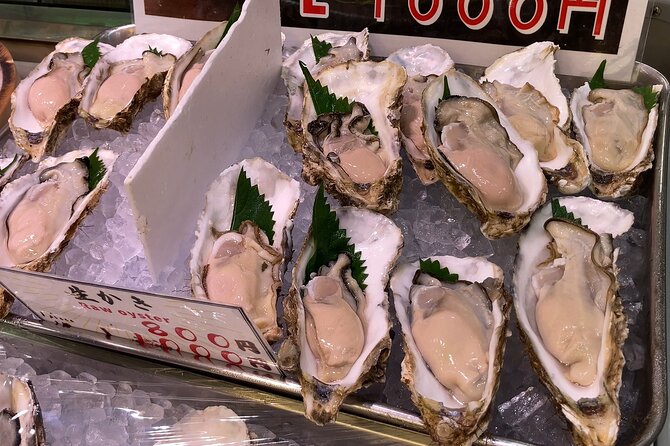
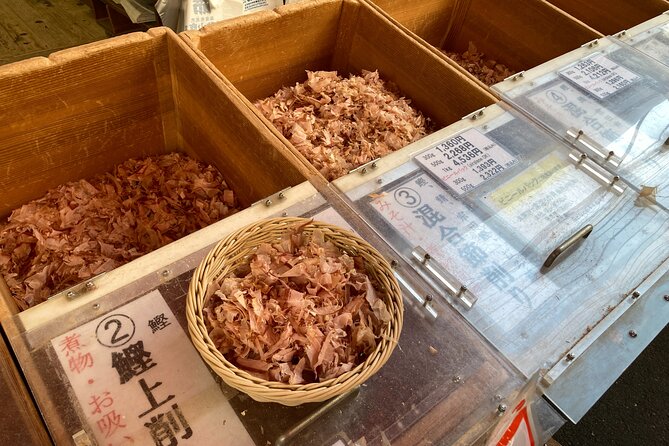
The main market walk takes about an hour. You explore the outside market, where food shops and street stalls sit alongside businesses connected with seafood and Japanese cooking. The guide helps you handle language barriers and leads you toward particular places rather than leaving you to wander without a plan.
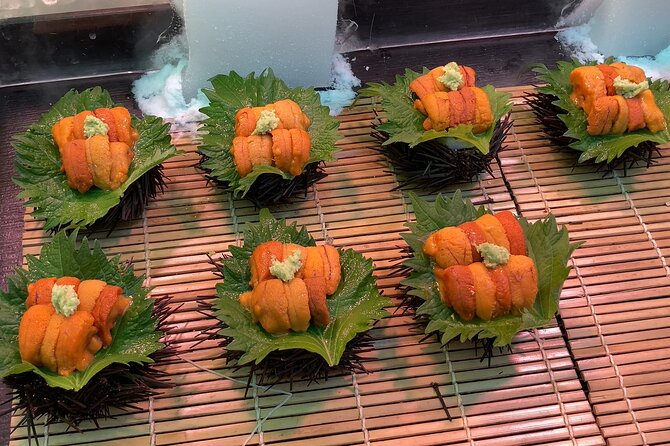
Two or three samples are included in the tour price. The exact food is not fixed in the information provided, so you should treat the tasting as a chance to try what is available that day. The market’s fresh seafood is central to the experience, while the food advice may also include wagyu and ice cream.
This is where the small group matters. With no more than 10 people, you have a better chance of hearing the guide’s advice and staying together at busy counters. A large group would make short food stops slower and less personal.
The guide is also useful when you do not know the words for an ingredient, portion, or cooking method. You can ask what something is before buying it, which is a practical benefit that does not show up in the price of a snack.
One limitation deserves a clear note: Tsukiji’s inner wholesale market moved to Toyosu, so this tour is about the outside market and its surrounding streets. You will see local wholesale shops along the route, but this is not a behind-the-scenes auction visit. If your main goal is the tuna auction, this is the wrong tour.
The local restaurant stop and your lunch budget
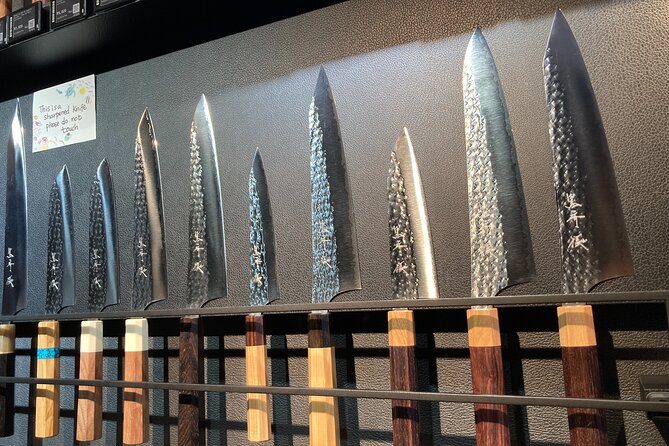
The route includes a stop at a little-known local restaurant for lunch. The guide goes with the group, but lunch is not included. Soda and other soft drinks are also separate.
This setup gives you some freedom. You can decide how much to spend and choose whether the lunch stop fits your appetite after the market samples. It also means the advertised tour price is not your full food budget for the morning.
I would carry enough yen or a payment method accepted by the restaurant, though the provided details do not specify payment options. Keep your lunch expectations modest in terms of time. The whole experience lasts about two hours, so the meal stop is likely part of a compact route rather than a long restaurant visit.
The restaurant is a useful part of the tour because you are not just eating from counters. You get a chance to sit down with the guide and ask about Tsukiji, Japanese food, or the shops you have passed. Still, anyone wanting an extensive meal should plan a separate lunch after the tour.
Namiyoke Inari Shrine and working Tsukiji
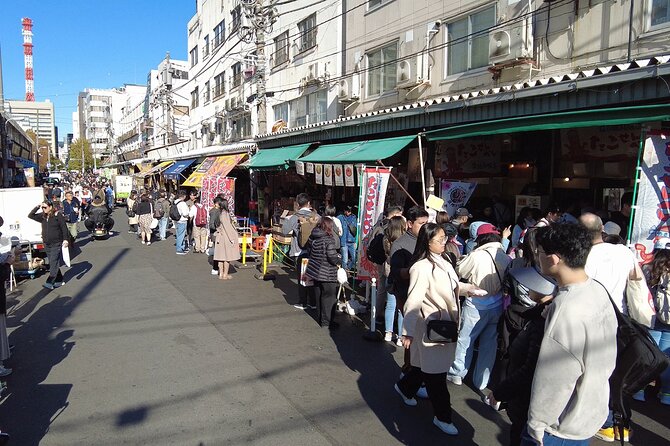
After the market, the group walks to Namiyoke Inari Shrine, a local shrine connected with the Tsukiji area. This stop lasts about 20 minutes and adds a different religious tradition to the temple visit.
The guide explains what Shinto is and connects the shrine with the history of Tsukiji’s fish market. Along the way, you pass wholesale shops that are less visible on the main tourist paths. That route gives you a better sense of Tsukiji as a working district, not only a place designed for visitors to eat.
I like the contrast between the first temple stop and this shrine. You learn basic customs in both settings without needing a full day of religious sightseeing. The two stops also help explain why a food market can have such strong ties to local worship and the people who work there.
Again, the 20-minute visit keeps things moving. You will get an introduction and a look at the area, but you should not expect a long historical tour or extensive time for private exploration. Stay close to the guide, since the walk includes local business streets rather than one contained attraction.
Other walking tours we've reviewed in Tokyo
Caretta Shiodome and the final city view
The tour ends at Caretta Shiodome, at 1-chome-8-2 Higashishimbashi. The final 20 minutes are spent seeing the area from the building’s sky deck and looking toward the remains and surroundings of the Tsukiji market district.
This ending works well. After temple courtyards and narrow market lanes, you finish with a broad view of Tokyo. It gives you a chance to place Tsukiji within the larger city rather than treating the market as an isolated stop.
The view is included, and there is no admission charge listed for the tour stops. The information does not specify how long you can remain at the deck after the tour, so plan to consider the tour finished there. If you want more time for photographs, ask the guide before the group departs.
The final stop also makes the route convenient for continuing your day in Tokyo. You end in Shiodome rather than returning to Tsukiji, so plan your next destination from there. That one-way design saves backtracking, but it means you should not leave anything at the meeting point.
Group size, pace, and practical comfort
A maximum of 10 people gives this outing an intimate feel without making it a private tour. You can ask questions, hear food explanations, and keep track of the group more easily than on a large coach-style excursion.
The pace is active but not described as strenuous. You walk between four stops, spend time standing at market stalls, and may eat while moving through the outside market. Comfortable shoes are a sensible choice, especially if you plan to continue exploring after the tour.
Children can participate if accompanied by an adult. Most people can take part, and the meeting point is near public transportation. The tour uses a mobile ticket, so keep your booking details available on your phone.
Arrive before 10 a.m. The late-arrival policy says the guide waits up to 10 minutes after the start, after which the tour begins and the fee is not refunded. The supplied timing also refers to waiting until 10:40 a.m., which conflicts with the 10-minute rule. I would follow the stricter instruction and arrive early.
Is $26.16 good value?
At $26.16, the tour is priced below many longer guided food outings in Tokyo. The price is most useful if you want a guide to handle the route, language questions, and food choices. The included samples add value, but the tour is not an all-inclusive food crawl.
The real cost depends on lunch. Since the restaurant meal and drinks are separate, you should budget for those in addition to the booking price. If you only want the included samples and sightseeing, you can keep your added spending low. If you want tuna, wagyu, ice cream, lunch, and drinks, your total will rise.
I see the tour as a good orientation purchase, especially for a first visit to Tokyo. It combines food, religion, neighborhood history, and a city view in two hours. A self-guided morning could cost less, but you would need to find the market stops, explain temple customs to yourself, and manage ordering without the guide’s help.
The value is weaker for experienced Tokyo visitors who already know Tsukiji. You may prefer to spend two hours eating at your own pace, since the fixed route and scheduled stops limit free time.
Who should book this experience?
I would recommend it to food-focused visitors who want context with their snacks. It is also a good match for solo visitors and couples who like small groups, families with older children, and anyone concerned about ordering food in an unfamiliar language.
The tour fits well on a first or second Tokyo morning. You get an introduction to Tsukiji without committing half a day, and you finish near Shiodome with time to continue sightseeing.
I would think twice if you need wheelchair-specific details, a full meal included, or access to the Toyosu wholesale market. The supplied information says most people can participate, but it does not provide detailed accessibility information. Ask the provider before booking if you have mobility needs.
Fantasy Travel offers free cancellation when you cancel at least 24 hours before the start time. Changes or cancellations inside that window are not refunded, so keep the 10 a.m. meeting time in mind.
Should you book the Tsukiji market tour?
Book it if you want good food guidance in a short format, especially with a small group and a local guide such as Inok. The best parts are the focused tasting stops, the practical temple and shrine customs, the less obvious wholesale lanes, and the final Shiodome view.
Skip it if you want a long, unhurried market morning or a full lunch included in the price. For most first-time visitors who want Tsukiji to make sense quickly, $26.16 is a reasonable trade for local direction, a few samples, and a route that connects food with the neighborhood around it.
FAQ
Where does the tour begin?
It begins at Tsukiji Hongwanji Temple, 3-chome-15-1 Tsukiji, Chuo City, Tokyo 104-8435, Japan.
What time does the tour start?
The tour starts at 10:00 a.m.
Where does the tour end?
It ends at Caretta Shiodome, 1-chome-8-2 Higashishimbashi, Minato City, Tokyo 105-7090, Japan, at the building’s sky deck.
Is lunch included?
No. The tour includes two or three food samples, but lunch at the local restaurant is at your own expense. Soda and other soft drinks are not included.
How large is the group?
The tour has a maximum of 10 people.
What is included in the booking price?
The price includes two hours with a local guide, tour photos, and two or three food samples at Tsukiji Fish Market.
More Shopping Tours in Tokyo

More Walking Tours in Tokyo
More Tsukiji Market Tours in Tokyo
More tours in Tokyo we've reviewed







Tsukiji Market Tours, compared.
 ★ 5.0Tokyo Tsukiji Fish Market Food and Culture Walking TourFrom $99
 ★ 5.0Tokyo: Tsukiji Fish Market Food and Walking tourFrom $30
 ★ 4.9Tokyo: Tsukiji Fish Market Guided Walking TourFrom $222 hours
 ★ 5.0Tokyo Sushi Making Class in Tsukiji with Professional ChefFrom $49
 ★ 5.0Tsukiji Fish Market Guided Tour and Sushi Making with Pro ChefFrom $104
★ 4.7Tokyo: Tsukiji Fish Market Food and Culture Walking TourFrom $963 hours