
Reviewed · SAMURAI & NINJA EXPERIENCES
Tokyo: Samurai History Walking Tour
Tokyo’s samurai story is not confined to a museum display. It unfolds at castle ruins, a grave tied to an early warrior leader, and a temple cemetery connected to Japan’s most famous tale of loyalty and revenge. This tour follows that story across central Tokyo, from the samurai’s beginnings in the 900s to their fall in 1868.
I like the clear historical arc, and I like that guide John explains both the legend and the less romantic truth behind the warrior class. The tour also uses public transport when needed, which gives your legs a break without turning the outing into a bus tour.
The catch is simple: four hours on foot can be tiring, and food is not part of the plan. Bring a snack, expect about 400 yen for transport, and budget another 800 yen if you want both paid areas at Sengaku-ji.
In This Review
- Key points to know before booking
- Following the samurai story from the 900s to 1868
- Meeting at Marunouchi Square and Tokyo Station
- Edo Castle ruins and the political center of old Tokyo
- Taira no Masakado’s Grave and the early warrior story
- Sengaku-ji and the 47 Ronin gravesite
- A four-hour route with public transport breaks
- What John adds to the experience
- Is $33 a fair price for four hours?
- Who should book this Tokyo history walk?
- The final call on John’s samurai tour
- FAQ
- How long is the Tokyo Samurai History Walking Tour?
- Where does the tour meet?
- Where does the tour finish?
- Which sites are included?
- Is public transport used?
- How much does transport cost?
- Are the Sengaku-ji cemetery and museum included?
- What language is the tour offered in?
- Can I cancel or pay later?
Key points to know before booking
- Samurai history in three powerful locations: See Edo Castle ruins, Taira no Masakado’s Grave, and Sengaku-ji’s 47 Ronin gravesite.
- John leads the tour in English: He is known for explaining Japanese history clearly and answering questions with extra context.
- A genuine walking tour: You will walk for much of the four hours, with occasional public transport to rest your legs.
- Extra costs are modest but separate: Transport is about 400 yen per person, while the Sengaku-ji cemetery and museum cost 300 and 500 yen.
- The route crosses central Tokyo: Meet outside Tokyo Station and finish at Takanawa Gateway Station.
- Best for curious history fans: The tour suits adults, families with teenagers, and anyone who wants context rather than a quick photo stop.
Following the samurai story from the 900s to 1868
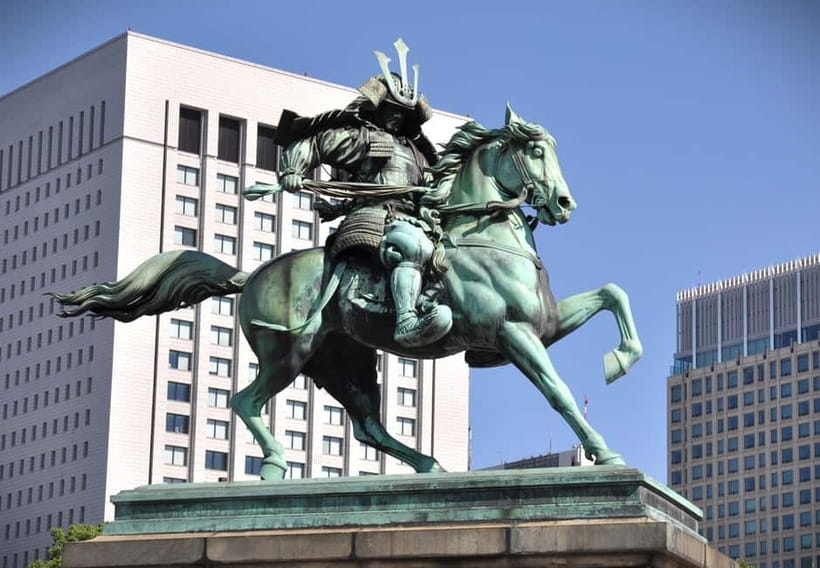
The smart idea here is the timeline. Instead of treating samurai as a single unchanging group, John uses places in Tokyo to explain how they began, gained power, and eventually disappeared as a ruling class.
That matters because the usual samurai picture is too neat. Films and popular stories often present them as noble warriors guided by a fixed code. The real story was more complicated. Samurai were part of a changing military and political system, and their role shifted over many centuries.
The tour asks direct questions. Were samurai honorable defenders, or were they simply armed men serving powerful families? How did warriors from the 900s become the ruling class of Japan? Why did their position end in 1868?
You will not get a simple answer at every stop, and that is a strength. John’s approach, based on the comments about his tours, is to explain the background plainly and invite questions. Families with teenage children have found that useful because the subject can be discussed without turning into a dry lecture.
A few more Tokyo tours and experiences worth a look

Meeting at Marunouchi Square and Tokyo Station
You meet outside the Marunouchi Central Exit of JR Tokyo Station, in Marunouchi Square. This is a practical starting point, but Tokyo Station has many exits and can feel confusing if you are in a hurry.
The guide sends a Google Maps location on the day of the tour. Check your email and the GetYourGuide app for messages, and keep an eye out for John, described as a bald white male. That detail may sound blunt, but it is useful in a crowded station district.
If your hotel is within a reasonable distance of Tokyo Station, John can meet you there and lead you to the start. This is available for one group only, so it should not be treated as a standard pickup service.
The opening guided section lasts about 30 minutes. You begin in the grand Marunouchi setting before moving into the historical story. I like this arrangement because it gives you time to find the meeting point, settle in, and understand why Tokyo is such a strong place for studying samurai history.
Edo Castle ruins and the political center of old Tokyo
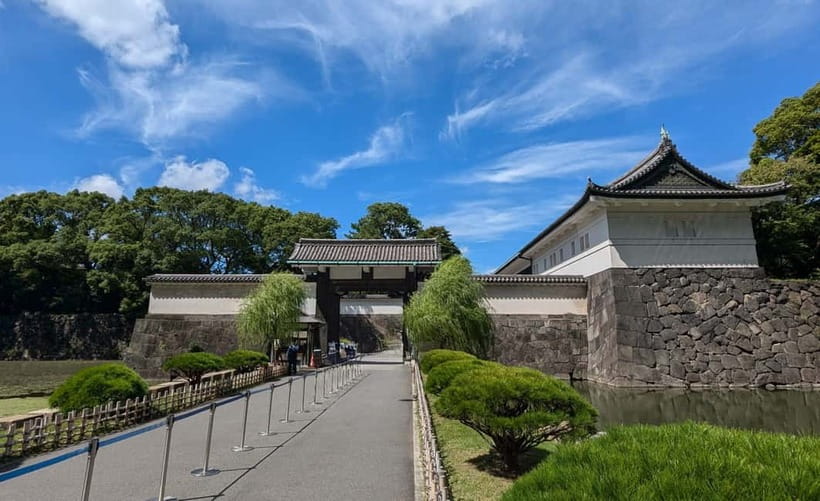
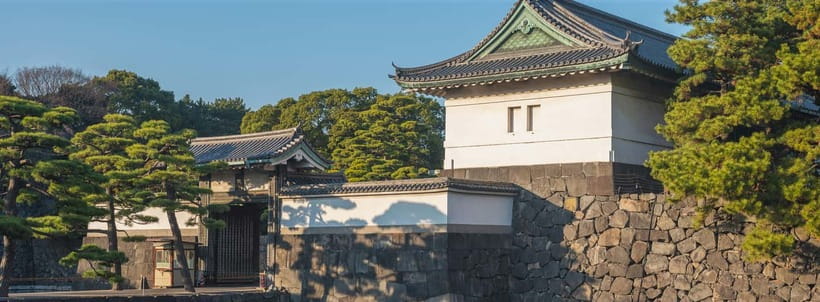
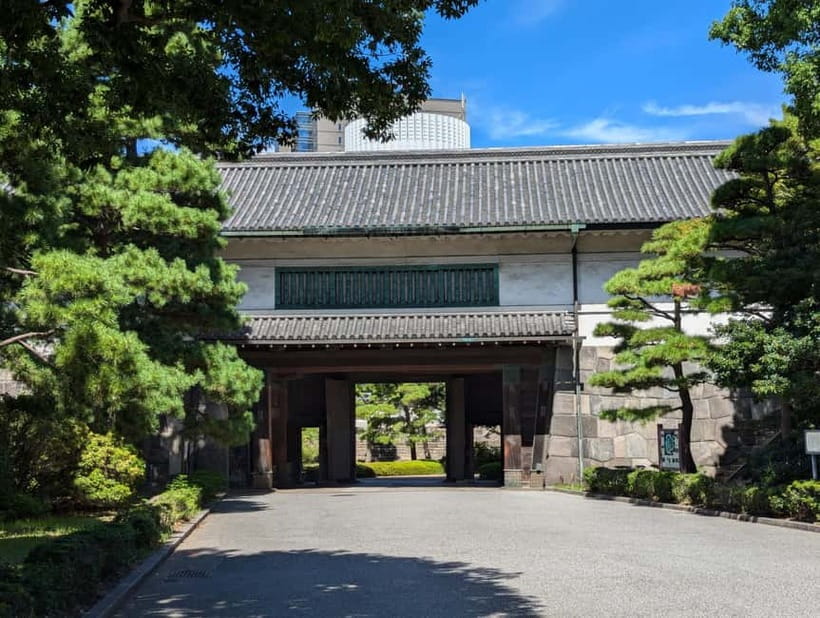
The main castle portion lasts about 105 minutes, making it the longest stop. Today, you visit the East Gardens of the Tokyo Imperial Palace, where the remains of Edo Castle connect modern Tokyo with the city’s former military and political center.
Do not expect a complete castle complex. The appeal is in the surviving ruins and the explanation that brings them to life. Without a guide, stone foundations and open spaces can be hard to read. John’s role is to show you what these remains mean and how the castle fits into the wider story of samurai rule.
This is also where the tour can move beyond warrior clichés. A castle was not only a place for battles. It was a center of power, administration, status, and control. The ruins help you think about how samurai authority operated in practice.
You should allow time for walking on paths and through open garden areas. The tour information warns that it is not ideal for people who tire very easily, though extra rests can be arranged. Comfortable shoes are more important than dressing for a photo. The route is also not suitable for wheelchair users.
The East Gardens are a good place to ask questions. If you want to understand how samurai power changed over time, this is likely the most useful part of the tour. You can ask John to connect the early warrior class with the later military government and the final end of samurai rule.
Taira no Masakado’s Grave and the early warrior story
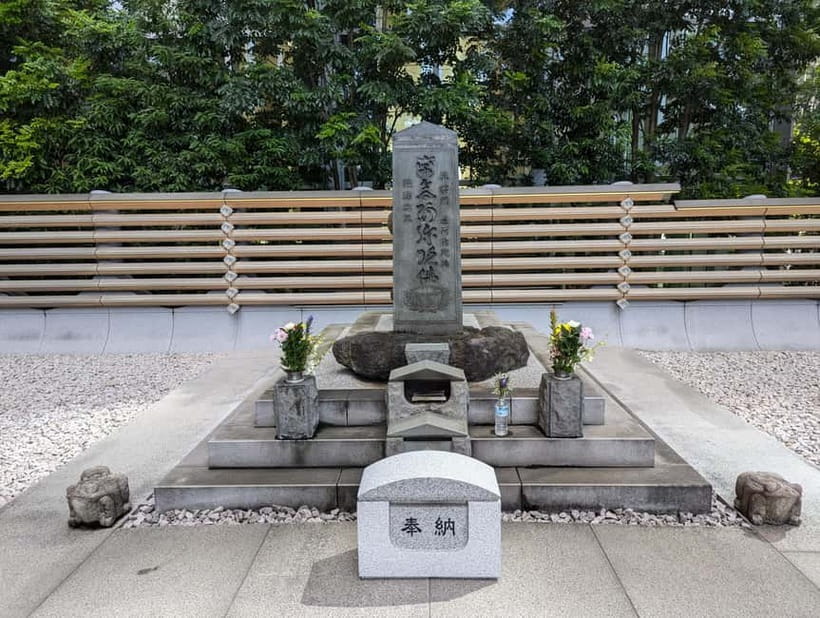
Taira no Masakado’s Grave represents the early stage of the samurai story. The tour information places the origins of samurai history in the 900s, and this stop gives that beginning a physical location in Tokyo.
The value of this visit is not the size of the site. Graves and small memorial places can be easy to pass without noticing. Their importance comes from the person connected to them and from the story John tells around the location.
This is a useful contrast with Edo Castle. The castle shows organized power at its height, while Masakado’s grave points back toward the early warrior world from which later samurai institutions grew.
You should listen for the distinction between historical fact, later memory, and popular legend. Japanese history often carries all three at once, and a good guide helps you see where one ends and another begins. John’s ability to answer questions is especially useful here, since this is the kind of stop where a short explanation can leave you wanting more context.
The stop also keeps the tour from becoming only a story about famous castles and battles. You get a sense of how individual figures, memorials, and later traditions shape the way samurai history is remembered.
Sengaku-ji and the 47 Ronin gravesite
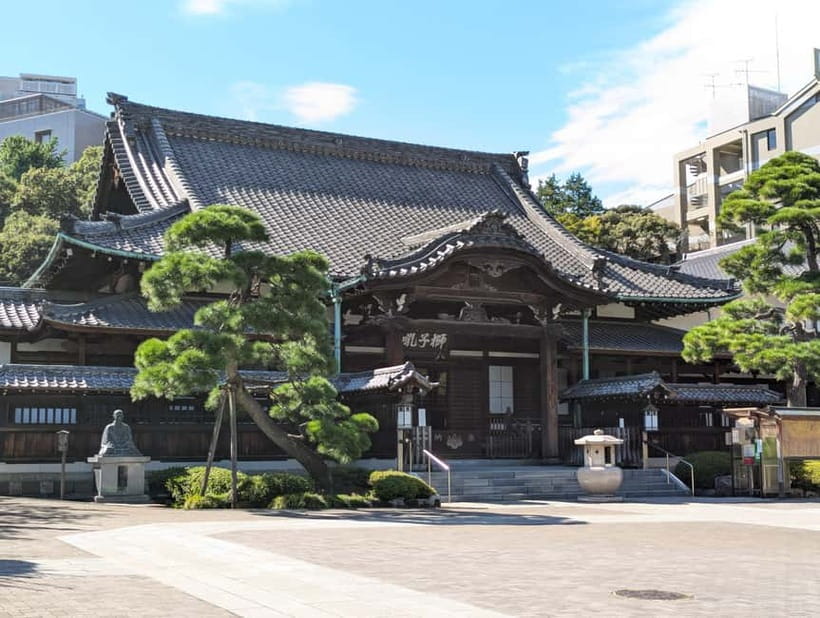
The tour finishes its historical route at Sengaku-ji, a temple associated with the graves of the 47 Ronin. This is the most famous stop for many people booking the tour, and it carries a different mood from the castle ruins.
The 47 Ronin story is often presented as the perfect example of loyalty and honor. Sengaku-ji gives John a chance to explain why the story became so powerful, while also addressing the harder questions behind the legend.
You pay separately to enter the cemetery and museum. The cemetery costs 300 yen, and the museum costs 500 yen. If you want the full visit, budget 800 yen per person on top of the tour price.
The paid areas are worthwhile for anyone who wants more than a quick look at the temple grounds. The gravesite gives the story a personal focus, while the museum adds objects and information connected with the episode. If you are watching every yen, you can decide how much to see after considering your interests and remaining time.
This stop also gives the tour a strong ending. The story of the 47 Ronin is tied to the late samurai period, close to the era when samurai rule came to an end in 1868. You finish with a famous example of loyalty, but also with a better sense that samurai identity was shaped by politics, storytelling, and changing social rules.
Other walking tours we've reviewed in Tokyo




A four-hour route with public transport breaks
The experience is described as a walking tour, but you will not walk every stretch between the sites. Public transport is used occasionally, with transport costs running about 400 yen per person.
That small extra expense is a practical benefit. Tokyo is large, and linking several samurai sites on foot could turn an informative outing into a test of stamina. Short rides help preserve your energy for the explanations and major stops.
Still, this is not an easy sightseeing stroll. The total duration is four hours, and the main castle section alone lasts nearly two hours. You may be standing, walking, and moving between stops for much of the morning or afternoon.
Bring water and a snack from a convenience store before meeting. The tour generally does not stop for food because the schedule is short. You can eat along the way if you get hungry, but do not count on a restaurant break.
The route begins at Tokyo Station and ends at Takanawa Gateway Station. That makes the finish convenient if you are continuing around southern central Tokyo, but it does mean you should not expect to return to the starting point.
What John adds to the experience
The guide makes or breaks a history walk. John leads in English and brings substantial knowledge of Japanese history and culture to the route. The strongest feedback about him focuses on his ability to explain, answer questions, and add interesting facts without losing the group.
That style is especially useful for this subject. Samurai history can quickly become a pile of names, dates, battles, and complicated titles. A guide who can connect each stop to the larger story helps you remember what you are seeing.
John is also a good fit if your group includes teenagers. Families have found the subject satisfying for adults and younger people alike, which suggests that the tour is not pitched only at specialists.
You should ask questions as you go. The tour is built around discussion, and John is described as willing to answer questions and add context. If you are interested in the difference between samurai ideals and actual behavior, say so early. That is one of the central themes of the experience.
The tour provider is Temples and Trails Tours Japan. Private and small-group options are available, which can make a difference if you prefer to ask many questions or want a more relaxed pace.
Is $33 a fair price for four hours?
At $33 per person, the tour is priced reasonably for a four-hour guided experience in Tokyo. You are paying for a live English-speaking guide, not admission to a major attraction or a vehicle waiting for you.
The base price does not include transport, which costs about 400 yen per person, or the Sengaku-ji cemetery and museum. Add 800 yen if you plan to enter both paid areas. Those extras are clear and relatively limited, but you should include them when comparing the total cost.
The value is strongest if you want historical interpretation. The sites themselves may not provide enough English information to explain how the samurai developed and fell. John’s explanations are the main product, while the locations give the story a physical setting.
The value is weaker if you want a broad Tokyo sightseeing tour. You will see important historical places, but the focus stays tightly on samurai history. There is no planned meal stop, and the tour does not promise extended time at unrelated attractions.
You can also reserve now and pay later, with free cancellation up to 24 hours before the start for a full refund. Those terms help if your Tokyo schedule is still shifting.
Who should book this Tokyo history walk?
I would recommend it to you if you enjoy history but do not want to spend a full day inside museums. The route gives you real places, a clear timeline, and enough time for questions.
It is also a good choice for families with older children or teenagers. The questions about honor, loyalty, violence, and political power offer more to discuss than a simple sightseeing stop.
Small groups and private bookings suit people who prefer a personal pace. You can ask for extra rest if needed, but you should still be comfortable walking for several hours.
I would be cautious if you tire easily, use a wheelchair, or want frequent meal breaks. The experience is not suitable for wheelchair users, and it is not recommended for people who tire very easily. It is also listed as unsuitable for people over 95 years old.
The final call on John’s samurai tour
Book this tour if you want to understand how the samurai became part of Japan’s ruling system and why that system ended. The combination of Edo Castle ruins, Taira no Masakado’s Grave, and Sengaku-ji gives the subject a useful beginning, middle, and end.
Skip it if you want a relaxed stroll with plenty of café time. The route is active, food is not scheduled, and the most important parts are the guide’s explanations rather than big visual attractions.
For an English-speaking history fan, the $33 price is fair. Add the modest transport and Sengaku-ji fees, wear good shoes, bring a snack, and arrive ready to ask questions. John’s clear storytelling and the route’s strong historical structure make this one of the better short ways to place Tokyo’s samurai past in context.
FAQ
How long is the Tokyo Samurai History Walking Tour?
The tour lasts four hours.
Where does the tour meet?
The usual meeting point is outside the Marunouchi Central Exit of JR Tokyo Station, in Marunouchi Square.
Where does the tour finish?
The tour finishes at Takanawa Gateway Station.
Which sites are included?
The route includes the Edo Castle ruins in the Tokyo Imperial Palace East Gardens, Taira no Masakado’s Grave, and Sengaku-ji, including the 47 Ronin gravesite.
Is public transport used?
Yes. Although this is a walking tour, public transport is used occasionally to give your legs a rest.
How much does transport cost?
Transport costs about 400 yen per person and is not included in the tour price.
Are the Sengaku-ji cemetery and museum included?
No. The cemetery costs 300 yen, and the museum costs 500 yen. These fees are paid separately.
What language is the tour offered in?
The tour is offered in English, with a live guide.
Can I cancel or pay later?
You can cancel up to 24 hours before the tour for a full refund. You can also reserve now and pay later.
More Historical Tours in Tokyo



More Walking Tours in Tokyo
More Samurai & Ninja Experiences in Tokyo

More tours in Tokyo we've reviewed











Samurai & Ninja Experiences, compared.
 ★ 4.5Tokyo: Samurai Restaurant Show Ticket with 2 DrinksFrom $551h 30m
 ★ 4.6Tokyo: Samurai Ninja Museum Guided tour and ExperienceFrom $27
 ★ 5.0Tokyo: Samurai Sword & Archery Class from Samurai DescendantFrom $1933 hours
 ★ 5.0Best Samurai Experience in TokyoFrom $65
 ★ 5.0Ninja Experience (Family Friendly) at Samurai Ninja Museum TOKYOFrom $47
 ★ 4.6Tokyo: Samurai Entertainment Night Show in Kanda ShrineFrom $412 - 3 hours