
Reviewed · MT FUJI DAY TRIPS
Mt. Fuji and Lake Kawaguchi Day Trip with Private Car
Seeing Mount Fuji from several angles in one day is the main appeal here. You ride in a private car from Tokyo to shrines, spring-fed ponds, lava caves, traditional villages, and Lake Kawaguchi, rather than piecing the route together by train and bus.
I like the hotel pickup and private vehicle, especially for families or a group of four. I also like the freedom to skip a stop and ask for a boat ride, lunch break, or better Fuji photo point, as several drivers, including Maz, Zee, Newton, and Waheed, have done for their groups.
The catch is time. Ten hours is tight, particularly on weekends, in poor traffic, or when the ropeway has a long wait. The impressive list of stops is best treated as a menu, not a promise that you will comfortably visit every one.
In This Review
- Key points to know before booking
- Why a private car makes Fuji easier
- Chureito Pagoda and Arakura Fuji Sengen Shrine
- Oshino Hakkai’s spring water and small-town atmosphere
- Saiko Iyashi no Sato Nenba, a reconstructed village
- The Narusawa Ice Cave and Fugaku Wind Cave
- Lake Kawaguchi and the Fuji Five Lakes view
- The Mt. Fuji Panoramic Ropeway
- Mt. Fuji 5th Station, the tempting extra stop
- The ten-hour problem: what can actually fit
- Weather, crowds, and the Fuji view
- What is included and what you will pay extra
- Who should book this private Fuji day
- Should you book it?
- FAQ
- Where does the tour begin?
- How long does the experience last?
- How many people can join the private tour?
- Is public transportation included?
- Is bottled water included?
- Are attraction admission fees included?
- How much is the Mt. Fuji 5th Station fee?
- Is the Mt. Fuji 5th Station visit guaranteed?
- Can I ride the Mt. Fuji Panoramic Ropeway?
- What happens if poor weather cancels the experience?
Key points to know before booking
- Private transport from Tokyo: Your group of up to four gets hotel pickup, an air-conditioned vehicle, bottled water, and a direct return.
- A full Fuji-area sampler: The route can include Chureito Pagoda, Oshino Hakkai, Saiko Iyashi no Sato Nenba, two lava caves, Lake Kawaguchi, the ropeway, and the 5th Station.
- The ropeway can consume your schedule: A wait of 75 to 90 minutes has occurred, making other stops harder to fit in.
- You control the day, but only within ten hours: A good driver can help reorder stops, yet traffic and queues may force hard choices.
- Admission fees are extra: The caves, traditional village, ropeway, and optional 5th Station are not covered. The 5th Station fee is listed as JPY 2,100.
- Weather decides the payoff: Fuji can be hidden by cloud, even when the rest of the day is pleasant.
Why a private car makes Fuji easier
The Fuji Five Lakes area is spread out. Tokyo trains and buses can get you there, but the journey involves changes, station navigation, and fixed departure times. A private car removes much of that friction and lets you look out the window instead of studying signs.
For a group of four, the listed price of $528.41 works out to about $132 per person before entrance fees. That is not a bargain in the same way as a public bus, but it can be reasonable if you value hotel pickup, a full day of transport, and the ability to adjust the route.
You are paying for access and flexibility more than luxury. The vehicle is described as air-conditioned, but one poor experience reported an older, less comfortable van, while other visits used a clean and comfortable Toyota Vellfire. Vehicle quality may vary, so it is sensible to confirm the vehicle type and request a non-smoking driver if that matters to you.
The strongest part of this experience is the driver. Maz, Salman, Salomon, Abdul, Alil, Zee, Newton, and Waheed are among the names associated with especially helpful days. The best drivers explain how long each stop will take, suggest an efficient order, answer questions, and let you choose.
That service is not guaranteed to be identical every day. One driver was praised for local information and careful planning, while another was described as mainly driving without explaining the places. If cultural background matters to you, state that clearly when booking and confirm what level of guiding you expect.
A few more Tokyo tours and experiences worth a look
Chureito Pagoda and Arakura Fuji Sengen Shrine
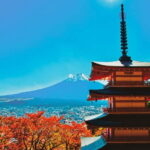
Chureito Pagoda is the classic opening image: a five-tiered pagoda, Mount Fuji beyond it, and seasonal cherry blossoms when the timing is right. The viewpoint sits above the town and requires a climb of many stairs, so allow more effort than the short 30-minute stop suggests.
That half hour may be enough for a quick photo if the steps are clear and the viewpoint is not crowded. It is less generous if you want to pause, take several pictures, and enjoy the view. Cloud can also turn this famous Fuji scene into a shrine-and-pagoda visit without the mountain.
Nearby Arakura Fuji Sengen Shrine gives the trip a more religious and historical setting. Fuji worshippers traditionally began their ascent from this area, and the shrine is reached through forest and steps. The stop is free and usually planned for about 20 minutes.
The two stops are close in spirit but different in mood. Chureito is about the view, while the shrine gives you a quieter sense of the old Fuji pilgrimage route. If your group has limited time, tell the driver whether the photo view or the shrine matters more.
Oshino Hakkai’s spring water and small-town atmosphere
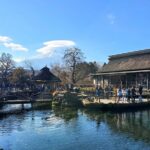
Oshino Hakkai is a village in the foothills of Mount Fuji, known for clear spring water flowing from the mountain. The ponds, traditional buildings, shops, and Fuji views make this one of the easier stops for a mixed-age group.
The planned 30 minutes goes quickly. You can see the water, take photographs, and browse a little, but a relaxed visit with food or shopping may require extra time. This is also a useful place to pause before the more physical cave visits.
The village can feel more commercial than the shrine or forest stops. That is not necessarily a flaw. It gives you a practical look at how a famous local sight serves visitors, but you should not expect an untouched rural village.
Saiko Iyashi no Sato Nenba, a reconstructed village
Saiko Iyashi no Sato Nenba is a recreated Japanese village beside Lake Saiko. Its traditional-style houses contain shops, displays, crafts, and opportunities to rent traditional clothing.
I like this stop because it adds human scale to a day otherwise dominated by viewpoints and transport. The buildings make good photo settings, and the village offers a clearer sense of older rural architecture than a quick roadside stop.
Thirty minutes is enough for a brisk walk through part of the site. It is not enough if you want to enter several houses, rent clothing, shop carefully, and stop for photographs. Admission is not included, so keep cash or another accepted payment method available.
One useful variation came from Newton, who explained the village’s background while driving and helped the group spend time where it mattered most. That is the difference a good guide can make: the buildings become more than photo props.
The Narusawa Ice Cave and Fugaku Wind Cave
The Narusawa Ice Cave and Fugaku Wind Cave are lava tubes formed in the volcanic area around Mount Fuji. Both sit in or near the Aokigahara forest, and each visit is planned for only about 15 minutes.
These are unusual stops, but they are not effortless sightseeing. Uneven ground, stairs, low passages, and cool underground conditions may make them uncomfortable for some people. The supplied information does not promise that every visitor can enter easily, so ask the operator about conditions if anyone in your party has mobility concerns.
The short stop length means you should treat the caves as quick experiences, not major excursions. They are valuable because they show the volcanic side of Mount Fuji, while the shrines, lakes, and villages show its cultural and scenic sides.
Admission is extra for both caves. If you need to shorten the day, these are logical places to cut, especially if a lake cruise or ropeway ride matters more to you.
Other private tours in Tokyo


Lake Kawaguchi and the Fuji Five Lakes view
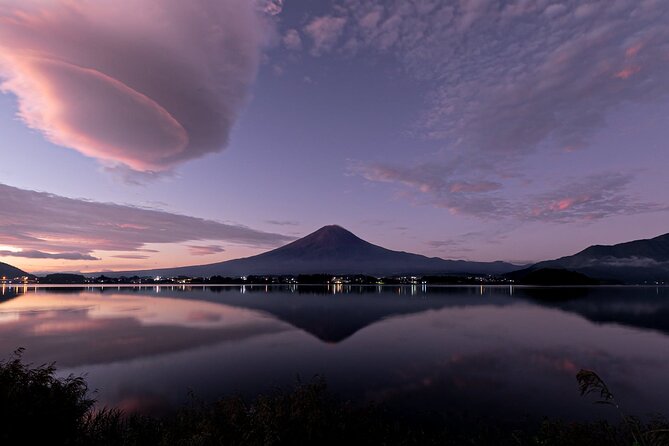
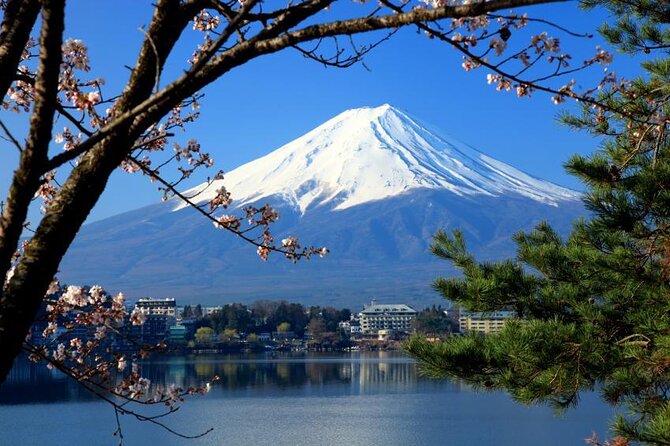
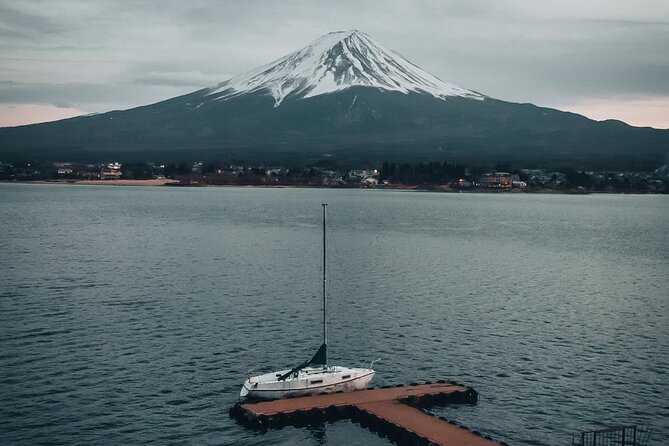
Lake Kawaguchi is the center of the day’s scenic portion. From the shore, you may see Mount Fuji reflected across the water, though cloud cover can change the view from hour to hour.
The wider Fuji area includes five lakes: Yamanaka, Kawaguchi, Saiko, Shoji, and Motosu. This tour does not promise extended visits to all five, but the Lake Kawaguchi area gives you access to several viewpoints and activities in one place.
You may be offered time for a cruise, motorboat, or paddle boat if the schedule permits. One group skipped the ropeway because the wait reached 90 minutes and instead arranged a motorboat trip with the driver. That is exactly where a private tour can work well, provided the driver communicates the timing honestly.
The lake stop is scheduled for about an hour, but that hour may need to cover walking, photographs, food, and an activity. Decide in advance if you want water time or simply the best Fuji viewpoint.
The Mt. Fuji Panoramic Ropeway
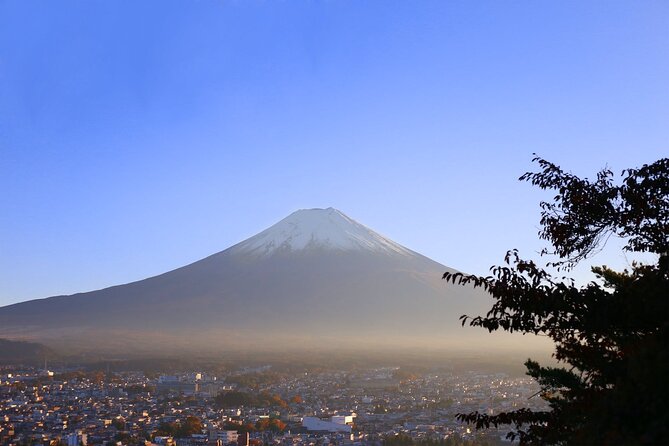
The panoramic ropeway near Lake Kawaguchi is one of the most popular choices on the route. It offers a high view over the lake and toward Mount Fuji, and the ride gives you a different angle from the shore-level photographs.
The key warning is the queue. Waits of 75 minutes and 90 minutes have been reported, even when that was considered relatively short. Add the ride, time at the top, and the return queue, and this attraction can take a large share of your ten-hour day.
There is also a swing near the upper area. A useful practical tip is to buy the swing ticket at the small gift shop before walking up. The ticket is about 500 yen per adult, based on the supplied experience, and the swing operator takes photographs during the short ride.
Do not assume the ropeway is automatically the best choice. If the line is long, ask your driver to explain what you will lose elsewhere. A private tour is most useful when you make that decision early, rather than waiting in line and then rushing through the village or caves.
Mt. Fuji 5th Station, the tempting extra stop
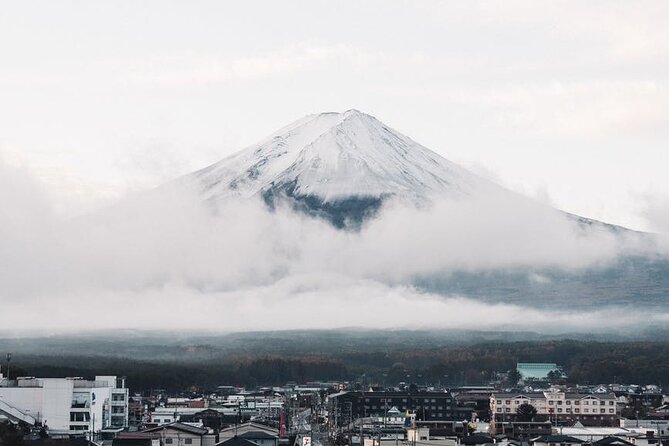
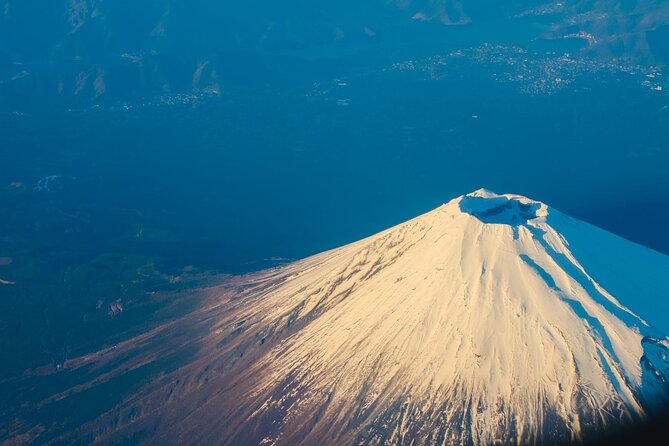
The 5th Station is listed as optional. At roughly 2,300 meters, it is a popular starting point for the Yoshida Trail, with shops, restaurants, shrines, and views toward the Fuji Five Lakes when conditions are clear.
It is also the stop most likely to cause confusion about timing. The 5th Station fee of JPY 2,100 is not included, and access may depend on current conditions. One account described a driver steering the group toward a lower station instead, while another group did reach the 4th Station.
Ask at the beginning of the day if the 5th Station is realistically possible on your date. Do not simply assume that calling it optional means it can be added without dropping something else. If reaching the mountain itself is your top goal, make that clear before visiting the pagoda, caves, or ropeway.
The ten-hour problem: what can actually fit
The advertised route contains nine possible stops, with the 5th Station marked optional. Even without unusual delays, that is a lot for one day from Tokyo.
Driving time, traffic, parking, stairs, queues, lunch, entrance purchases, and restroom breaks all count against the clock. A day can work if you choose a few priorities and move efficiently. It becomes stressful if you expect a leisurely visit at every location.
I would choose three levels of priority:
- Must see: Pick one major Fuji viewpoint, such as Chureito or the ropeway, plus Lake Kawaguchi.
- Strong additions: Add Oshino Hakkai and either Saiko Iyashi no Sato Nenba or the caves.
- Only if time allows: Add both caves, a boat ride, and the 5th Station.
Traffic has caused late pickups and missed attractions. One group was picked up about 80 minutes late after an accident and found that several sites had closed or could no longer fit. The driver may not control the road, but the operator should help you revise the plan as soon as a delay occurs.
The clearest advice is to agree on priorities before leaving Tokyo. Ask the driver to estimate travel times and tell you when a queue will force a change. You should not have to discover halfway through the day that every remaining stop has become a rushed ten-minute visit.
Weather, crowds, and the Fuji view
Mount Fuji is the star, but Fuji does not perform on demand. Several good days included clear views, while another was diminished by poor weather. You may see the mountain repeatedly from different points, or only catch brief appearances between clouds.
The tour requires good weather. If the operator cancels because of poor conditions, you are offered another date or a full refund. Even when the tour runs, a cloudy day can reduce the value of the photo-focused stops.
Weekends and holidays bring another risk: road congestion and long ropeway lines. One practical complaint specifically suggested avoiding holidays and weekends. If your schedule allows, a weekday gives this private route a better chance of covering more ground.
What is included and what you will pay extra
The $528.41 price covers the group, up to four people, rather than charging each passenger separately. It includes private transportation in an air-conditioned vehicle and bottled water, along with pickup and drop-off at your hotel.
All admission fees are excluded. Expect additional charges for Saiko Iyashi no Sato Nenba, Narusawa Ice Cave, Fugaku Wind Cave, the panoramic ropeway, and the optional 5th Station. A cruise, motorboat, paddle boat, traditional clothing rental, and swing ticket may also cost extra if you choose them.
For four people, the group rate is easier to justify. For one or two people, public transportation will likely be cheaper, though it will not offer the same door-to-door convenience or ability to change the route.
Who should book this private Fuji day
I would recommend it most strongly to a group of four, families with an infant, older relatives, or anyone who dislikes changing trains and buses. A private vehicle also helps if you want to carry shopping bags, avoid a fixed group schedule, or arrange a boat ride instead of the ropeway.
It is less suitable if your main goal is a slow, deeply guided cultural tour. The quality of commentary depends heavily on the driver, and some drivers have provided much more explanation than others.
It is also a poor match for anyone who wants every listed stop visited at leisure. You can see many sites, but you need to choose. The experience works best as a flexible regional sampler, not as a leisurely visit to nine separate attractions.
Booking is free to cancel up to 24 hours before the start time. Changes or cancellations inside that window are not accepted for a refund. Confirmation is sent at booking, and most people can participate, but the stairs, caves, and walking deserve consideration for your own group.
Should you book it?
Book this tour if you want the easiest way to reach several Fuji-area sights from Tokyo and you are willing to make choices. The private car, hotel pickup, and flexible driver can save a great deal of effort, and the scenery is excellent when the mountain appears.
Before you commit, decide your top two or three stops and ask whether the driver can provide historical explanation as well as transport. If the 5th Station is essential, confirm its feasibility and cost in advance. If the ropeway is essential, accept that a long queue may mean dropping the caves or village.
At $528.41 for up to four people, the price can be fair for convenience and coverage. It is not fair if you treat the long stop list as a guaranteed, relaxed schedule. Go in with a short priority list, flexible expectations, and enough extra money for admissions, and this can be a very effective Fuji day.
FAQ
Where does the tour begin?
The tour begins with pickup at your hotel in Tokyo, and hotel drop-off is also offered at the end.
How long does the experience last?
The experience lasts approximately 10 hours.
How many people can join the private tour?
The price covers one private group of up to four people.
Is public transportation included?
No. The experience uses private transportation in an air-conditioned vehicle.
Is bottled water included?
Yes. Bottled water is listed among the included services.
Are attraction admission fees included?
No. Admission fees are excluded from the tour price.
How much is the Mt. Fuji 5th Station fee?
The listed 5th Station fee is JPY 2,100, and it is not included.
Is the Mt. Fuji 5th Station visit guaranteed?
No. The 5th Station is listed as optional.
Can I ride the Mt. Fuji Panoramic Ropeway?
Yes, the ropeway is included as a possible stop, but its admission fee is extra.
What happens if poor weather cancels the experience?
You will be offered a different date or a full refund if the experience is canceled because of poor weather.
More 1-Day Tours in Tokyo
More Private Tours in Tokyo
More Mt Fuji Day Trips in Tokyo
More tours in Tokyo we've reviewed



Mt Fuji Day Trips, compared.
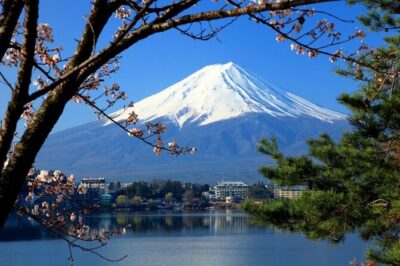 ★ 5.0Mt Fuji and Hakone 1-Day Bus Tour Return by Bullet TrainFrom $163
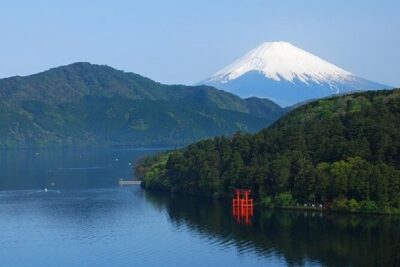 ★ 4.0Mt Fuji & Hakone Cruise, Drum Show Bullet Train 1 Day from TokyoFrom $149
 ★ 4.4Tokyo Mt Fuji 5th St & Hakone Cruise Bus Tour w/Bullet TrainFrom $15410 hours
 ★ 4.5From Tokyo: Mount Fuji Full-Day Sightseeing TripFrom $6810 hours
 ★ 4.7Tokyo: Mt. Fuji Tour, Hakone Ropeway, Owakudani, Lake AshiFrom $5410 hours
 ★ 4.4Tokyo:Mt.Fuji,Kawaguchiko Oishi Park,Arakurayama Sengen ParkFrom $5410 hours