
Reviewed · MT FUJI DAY TRIPS
Mt Fuji and Hakone 1-Day Bus Tour Return by Bullet Train
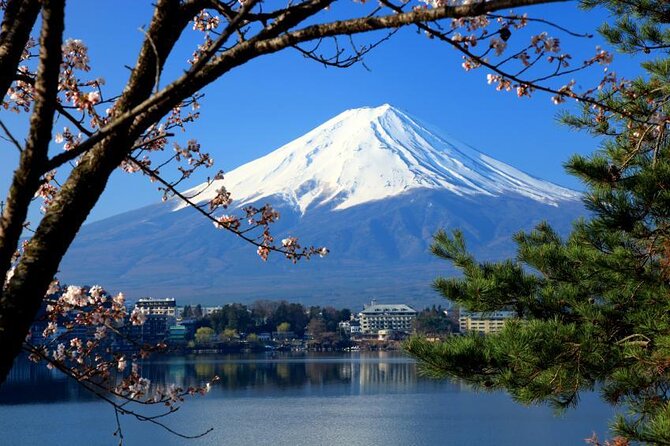
Mt. Fuji and Hakone make a fine one-day escape from Tokyo, especially when clear skies reveal Japan’s snow-capped icon. This tour packs the mountain, a buffet lunch, the Hakone Ropeway, Lake Ashi, and a bullet train ride into one long day.
I like the smart one-way design: you ride a coach out and return from Odawara to Tokyo by Shinkansen, avoiding a second long bus journey. I also like the variety, since you see Fuji from high ground, a gondola, and a lake rather than from one roadside stop.
The catch is the pace. You have roughly 30 to 40 minutes at several stops, and weather can close the 5th Station, ropeway, or cruise. This is a strong sightseeing sampler, not a slow countryside outing.
In This Review
- Key points to know before booking
- A big day from Tokyo to Mount Fuji
- Reaching the 5th Station of Mount Fuji
- A buffet lunch near the foot of Fuji
- The Hakone Ropeway and volcanic views
- Cruising across Lake Ashi
- Returning to Tokyo by Shinkansen
- Guides who make the long day easier
- What the $163.26 price buys you
- Weather, closures, and the honest downside
- Who should book this Fuji and Hakone day trip?
- Should you book it?
Key points to know before booking
- Mt. Fuji 5th Station is weather dependent: Snow, wind, cloud, and road restrictions can send the bus to another Fuji-area stop.
- The return by Shinkansen saves time: You finish independently at Odawara Station, then ride to Tokyo Station.
- Guides are a major part of the experience: Sora, Hiro, Momo, Levin, Yui, Yuta, and others have been praised for humor, clear English, and helpful instructions.
- Hakone gives you three kinds of scenery: The Ropeway offers volcanic views, while the Lake Ashi cruise brings water and mountain views.
- Lunch requires a deliberate choice: Vegetarian and Muslim-friendly options can be requested, but certified halal and vegan meals are not available.
- The day can feel rushed: With a maximum of 43 people, meeting times matter, and late arrivals cannot join partway through.
A big day from Tokyo to Mount Fuji
This is an efficient way to cover two famous destinations without learning several separate train and bus connections. The coach leaves from Matsuya Ginza at 7:20 a.m. or LOVE Shinjuku at 7:50 a.m., so you need an early start and a reliable plan for reaching the meeting point.
The full experience lasts about 11 hours and is scheduled to finish at Tokyo Station around 6:10 p.m. The group can be as large as 43 people, which explains the firm departure times and short stops. I would treat the schedule as a framework rather than a promise, since Tokyo traffic, mountain roads, weather, and transport operations can all shift the order.
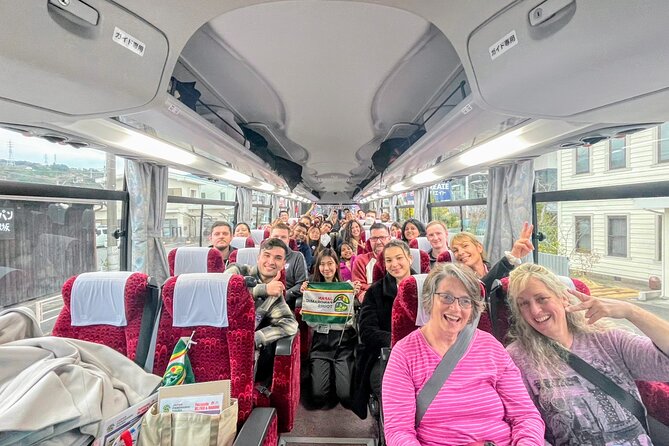
Your English-speaking guide handles explanations and group movement. Multilingual audio guidance is available in English, French, Italian, Spanish, German, Portuguese, and Ukrainian. The bus has air conditioning and free Wi-Fi, though I would bring snacks. The long road sections are part of the bargain.
A few more Tokyo tours and experiences worth a look
Reaching the 5th Station of Mount Fuji
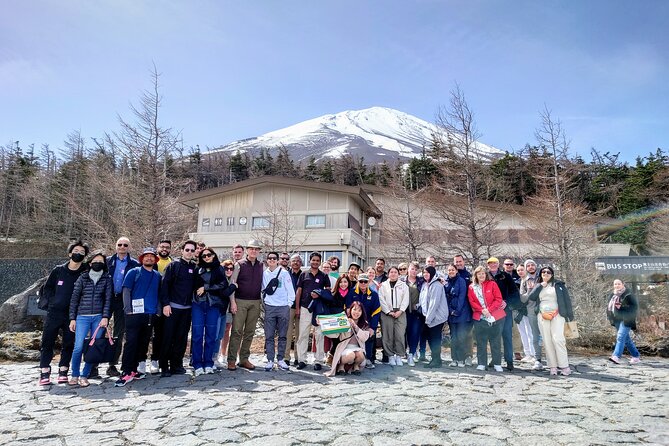
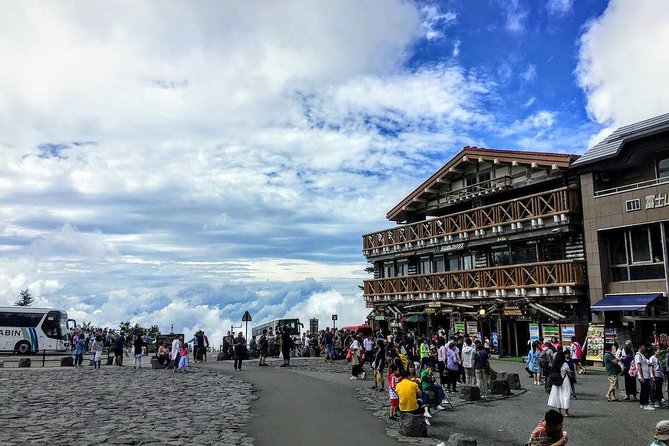
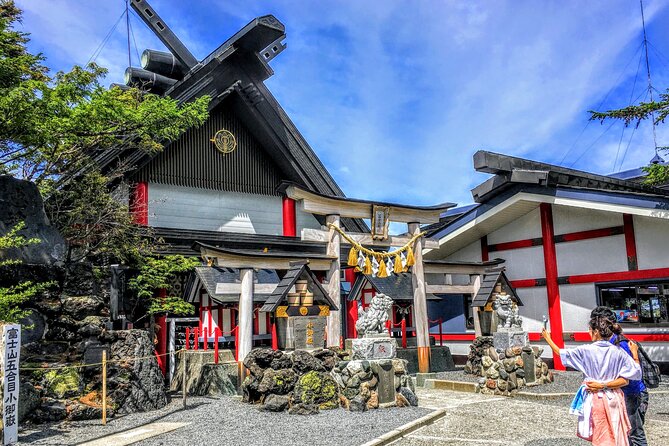
The first major stop is usually Mt. Fuji’s 5th Station, about halfway up the mountain, at roughly 2,300 meters. You get around 30 minutes to breathe the colder mountain air, look across the surrounding area, and visit a Shinto shrine with a strong sense of place.
The point is not climbing Fuji. It is getting close to the upper slopes without needing hiking equipment or a full day. Small shops and mountain facilities may be open, but the short visit is mainly for views, photographs, and a quick look at the shrine.
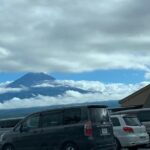
Clear weather matters more here than almost anywhere else. Some outings have reached the 4th Station instead, while heavy snow or road restrictions have redirected the group to places such as Oshino Hakkai. That substitute can still provide excellent Fuji views, but it is not the same as standing high on the mountain.
Clouds can also roll in quickly. You might see the full cone of Fuji one minute and only a gray wall the next. If seeing the mountain is your main goal, choose a season and forecast with care, but accept that no tour can control the view.
Wear layers and bring protection from wind and cold. Conditions at the 5th Station can be much harsher than in central Tokyo, and one especially severe outing had extreme wind and subzero conditions. Safety closures are possible, and refunds are not given for every individual activity that changes during the day.
A buffet lunch near the foot of Fuji
After the mountain stop, the group heads to lunch near the bottom of Fuji. The buffet uses local fresh ingredients and gives you about 40 minutes to eat.
I see the meal as practical fuel rather than the main event. It saves you from searching for food in an unfamiliar area and keeps a large group moving. Several diners have found the food tasty, though the buffet presentation may feel less traditionally Japanese than expected. One person preferred the idea of a bento, while another found the meal delicious.
You must select the lunch option in advance. If you book without lunch, you may have limited choices at the restaurant area, and one account notes that non-lunch participants had to wait outside rather than sit in the dining room. Bring your own food if you have serious restrictions.
Vegetarian and Muslim-friendly meals can be requested when booking. The operator states that halal-certified and vegan meals are not available. Food is prepared in the same kitchen, and many items may contain dairy or egg. Buffet labels are provided, but gluten-free choices may be limited.
This is an important booking detail. A dietary preference is not the same as a guaranteed allergy-safe meal, so anyone with a severe restriction should book without lunch and bring suitable food.
The Hakone Ropeway and volcanic views

The Hakone section begins with the Ropeway, a gondola ride over the mountain area. The ride lasts about 30 minutes, including time for the group to move through the station.
This is one of the strongest parts of the day because it changes your viewpoint completely. Instead of looking at mountains from a road, you rise above the trees and volcanic terrain. On clear days, Fuji may appear in the distance. The Owakudani area is known for volcanic activity, and the ride gives you a high view of the steaming, rugged ground below.
Queues can form, but they may move quickly. The experience is short, so stay alert to instructions and do not wander far from the meeting point. The tour cannot wait for missing group members.
Strong wind can stop the Ropeway. When that happens, the replacement may be a sightseeing location, a voucher, or another activity, depending on conditions. The alternatives listed for this tour include Lake Yamanaka, Oshino Hakkai, Odawara Castle, Hakone Shrine, Hakone Checkpoint, and other local stops. These can be worthwhile, but none provides exactly the same gondola ride.
Cruising across Lake Ashi
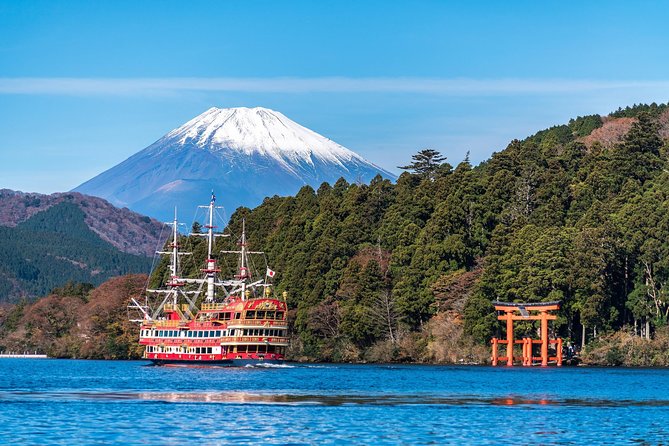
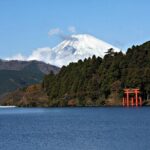
The Lake Ashi cruise takes about 30 minutes across Hakone’s famous caldera lake. It is a pleasant change after the bus and mountain roads, with open water, wooded slopes, and the chance of seeing Fuji when the weather cooperates.
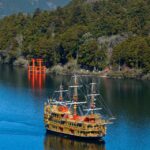
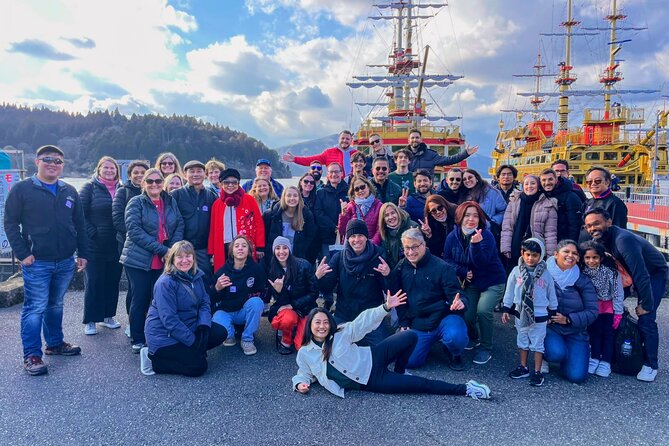
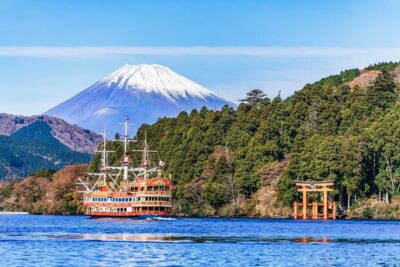
The exact vessel can vary. The promotional images may show a pirate-style ship, but another boat may operate on your day. I would enjoy the cruise for the lake ride itself rather than book this tour expecting one particular ship or a guaranteed Fuji backdrop.
The boat is also weather sensitive. High winds can cancel the cruise, sometimes along with the Ropeway. That is frustrating because these two activities are the heart of the Hakone portion. If your day loses both, much of the experience becomes road travel and substitute stops.
The boat finishes near the transport connection for Odawara. Keep your belongings close and listen carefully as the guide explains the next step. The group portion ends at Odawara Station, and the return is less hand-held from there.
A few more Tokyo tours and experiences worth a look

Returning to Tokyo by Shinkansen
At Odawara Station, you receive the bullet train ticket and travel to Tokyo Station. This is a clever finish. After a full day on the road, the Shinkansen is quick, smooth, and far more comfortable than another coach ride through evening traffic.
The tour does not provide hotel drop-off. You finish at Tokyo Station, not at your accommodation, so plan your onward route before departure. The guide may help with general directions, but you should be ready to manage your own connection once you leave the group.
Large luggage needs attention. A bag exceeding a total height, width, and length of 160 centimeters cannot be taken onto non-reserved Shinkansen cars. If you are carrying a large suitcase, check the size before booking or arrange appropriate storage.
If you already have a JR Pass, this product is not the best choice because the bullet train ticket is included. The bus-return version is the more sensible option for pass holders.
Guides who make the long day easier
The strongest human feature is the guide. Sora has been praised for sharing stories and photographs, speaking with people row by row, and making the bus feel friendly. Hiro is often described as informative, funny, and clear with instructions. Momo brings cultural background and energy, while Levin has been praised for excellent English and a good sense of humor.
Yui has also been singled out for clear speech, kindness, and helpful explanations about Japanese culture. Yuta and Yato have been noted for keeping the mood light and sharing useful information. Guide quality can vary by departure, of course, but the pattern is clear: a good guide matters greatly on a day with many moving parts.
The audio system helps if you prefer information in another language. Still, if your English is limited, the live commentary may not always be equally easy to follow, so multilingual audio guidance is worth using.
What the $163.26 price buys you
At $163.26 per person, this is not the cheapest way to see Fuji and Hakone. You are paying for transport coordination, an English-speaking guide, the air-conditioned coach, Ropeway fee, Lake Ashi cruise fee, and the Shinkansen ticket back to Tokyo. Lunch is included only if you choose that option.
The value is strongest if you want convenience and maximum coverage in one day. Booking each train, bus, gondola, and boat separately would take planning, and you would need to coordinate connections in a region where weather can disrupt service.
The value is weaker if you want long visits, quiet roads, or total control over the schedule. The short stops give you a taste of each place, not a full visit. You may spend more time sitting on the coach than you expected, particularly in traffic.
I would compare the price with your priorities. For a first visit to Tokyo and a limited schedule, the transport bundle is sensible. For a second visit or a Fuji-focused trip, a slower plan with more time at one location may suit you better.
Weather, closures, and the honest downside
You should book this knowing that the advertised sequence can change. Mt. Fuji roads may close because of snow. The 5th Station may be replaced by Oshino Hakkai or another Fuji-area stop. Wind can suspend both the Ropeway and the cruise.
The operator may offer an alternative place or a gift, but individual activity changes do not normally bring a partial refund. The experience requires good weather, and if the whole tour is canceled because of poor weather, you can choose another date or receive a full refund.
That policy matters because the tour’s best moments depend on outdoor conditions. On a clear day, you can see Fuji from the mountain, lunch area, Ropeway, and lake. On a stormy day, you may spend much of the time in the bus and visit substitute sites that were not your first choice.
I would check the forecast the evening before, pack for cold and wind, and keep expectations flexible. If conditions look dangerous, contact the operator before departure rather than assuming every activity will run.
Who should book this Fuji and Hakone day trip?
You should consider it if you have only one free day from Tokyo and want to combine major sights without handling regional transport yourself. It works well for first-time Japan visitors, solo travelers who prefer a guide, and families who value a planned route.
It is also a good choice if the bullet train sounds appealing. The return ride gives the day a satisfying finish and avoids a long bus ride back into Tokyo.
You may want another plan if you use a wheelchair or have limited mobility. Some stops have uneven or unpaved surfaces, and the tour is not recommended for wheelchair users. If you join despite that, you should travel with a companion who can assist you.
I would also avoid booking this as a relaxed nature day. The group size, short stops, early departure, and long duration demand energy. Bring snacks, comfortable shoes, layers, and a phone with your mobile ticket ready.
Should you book it?
Book this tour if your goal is to see as much of Mt. Fuji and Hakone as possible in one organized day, with the bonus of returning by Shinkansen. The mix of coach, mountain stop, buffet, gondola, boat, and train is genuinely varied, and a strong guide can turn the long ride into useful insight about Japan.
Skip it if you need guaranteed Fuji views, a fixed boat, a full Ropeway ride, or generous time at each stop. Weather can remove the tour’s headline activities, and the schedule leaves little room to linger.
My practical verdict: this is a high-value sampler for a short Tokyo stay, provided you accept the risks of mountain weather and a brisk pace. Choose lunch and dietary options carefully, arrive early, and treat a clear day as good fortune rather than a promise.
More 1-Day Tours in Tokyo


More Hakone Day Trips in Tokyo
More Mt Fuji Day Trips in Tokyo
More tours in Tokyo we've reviewed





Mt Fuji Day Trips, compared.
 ★ 4.0Mt Fuji & Hakone Cruise, Drum Show Bullet Train 1 Day from TokyoFrom $149
 ★ 4.4Tokyo Mt Fuji 5th St & Hakone Cruise Bus Tour w/Bullet TrainFrom $15410 hours
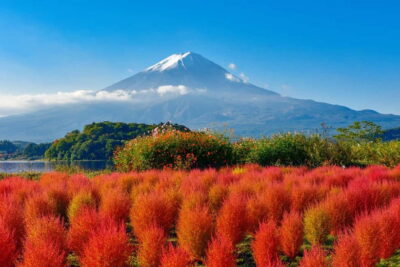 ★ 4.5From Tokyo: Mount Fuji Full-Day Sightseeing TripFrom $6810 hours
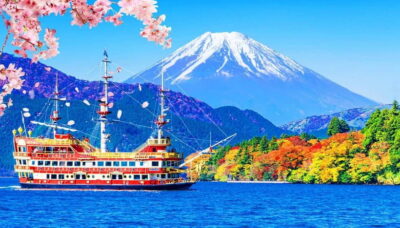 ★ 4.7Tokyo: Mt. Fuji Tour, Hakone Ropeway, Owakudani, Lake AshiFrom $5410 hours
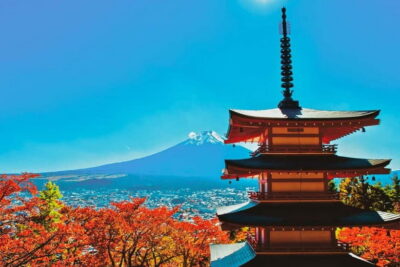 ★ 4.4Tokyo:Mt.Fuji,Kawaguchiko Oishi Park,Arakurayama Sengen ParkFrom $5410 hours
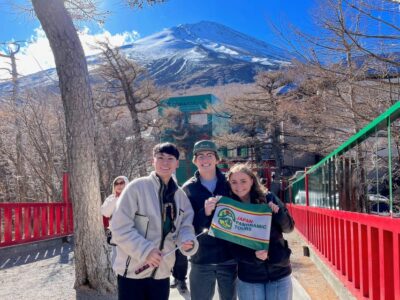 ★ 4.2Tokyo: Mt. Fuji 5th Station & Hakone Cruise 1-Day Bus TourFrom $12911 hours