
Reviewed · MT FUJI DAY TRIPS
Mt Fuji Hakone/Enoshima Tour:Optional Ropeway/Lake Ashi Boat
Lake Ashi gives this day trip its best moment: a red torii gate rising from the water, with Mt. Fuji possibly appearing behind it. Add a pirate-ship cruise, steaming Owakudani, and the old shrine streets of Enoshima, and you get a lot of Japan in one long day.
I like the mix of big natural sights and local traditions, and I like that the bus connects places that are awkward to combine by public transport in a single day. The main catch is simple: Mt. Fuji visibility depends on weather, and traffic can eat into your time at the stops.
In This Review
- Key points
- A long day joining Hakone and Enoshima
- Lake Ashi and the red torii at Hakone Shrine
- Sailing Lake Ashi on the pirate ship
- The Ropeway above Hakone’s volcanic terrain
- Owakudani, sulfur steam, and the black eggs
- Enoshima’s shrine road and island atmosphere
- Enoshima Shrine and Hetsunomiya
- What the guide service is really like
- The coach ride, traffic, and time pressure
- Who should book this $53 day trip?
- Should you book it?
- FAQ
- How long does the Mt. Fuji Hakone and Enoshima tour last?
- Where does the tour start and finish?
- Which languages does the guide speak?
- Is Mt. Fuji guaranteed to be visible?
- Are the boat cruise and Ropeway included?
- Is food included in the price?
- What should I bring?
- Can wheelchair users or pregnant women join?
- What happens if I arrive late?
Key points
- Lake Ashi’s floating torii gate: Stop near Hakone Shrine for one of the area’s most recognizable views.
- Fantasy-style boat ride: Cruise Lake Ashi for about 30 minutes aboard the Hakone sightseeing pirate ship.
- Volcanic Owakudani: See sulfur vents, steaming ground, and the famous black eggs.
- Optional Ropeway views: Ride above rugged volcanic terrain between the Hakone area and Owakudani.
- Two hours on Enoshima: Walk Benzaiten Nakamise Street and visit Enoshima Shrine.
- Multilingual support: English, Japanese, and Chinese commentary is available, though the amount of explanation may vary by guide and group size.
A long day joining Hakone and Enoshima
This is a 10 to 11 hour outing from Tokyo, with roughly two and a half hours on the way out and about two hours on the return. That makes the tour a practical choice if you want to see Hakone and Enoshima without planning several train connections, but it is not a relaxed day.
The basic appeal is variety. You move from a mountain lake to a volcanic valley, then finish on a coastal island with shrines, snack shops, and traditional streets. You will spend much of the day in a shared air-conditioned coach, so comfortable clothes, water, and good walking shoes matter.
The price is $53 per person. For that amount, you receive transport, fuel, parking, taxes, a driver, and a guide. Food, drinks, cable car or boat charges when listed as optional, and personal purchases are extra. The value is strongest if you want convenience and several major stops in one day. It is less compelling if you prefer slow walks, long meals, or detailed guided visits at every site.
The group may include people from several countries, and the guide can speak English, Japanese, and Chinese. If fewer than 13 people join, the guide may also drive. In that case, expect simple commentary rather than a guide walking into each attraction with you.
A few more Fujikawaguchiko tours and experiences worth a look
Lake Ashi and the red torii at Hakone Shrine
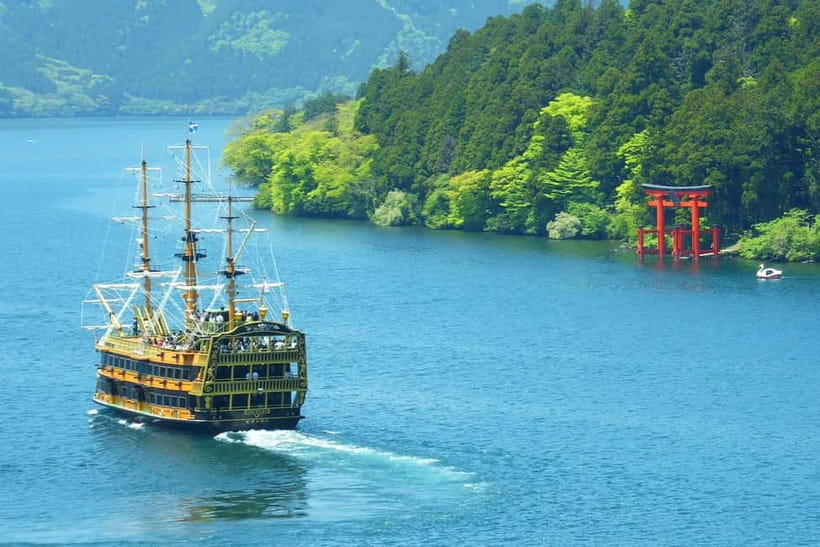
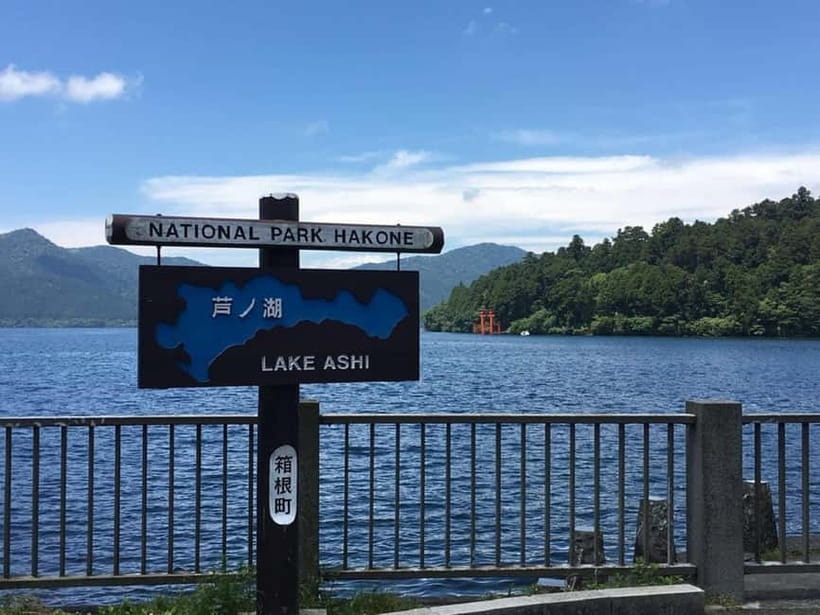
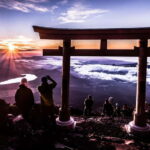
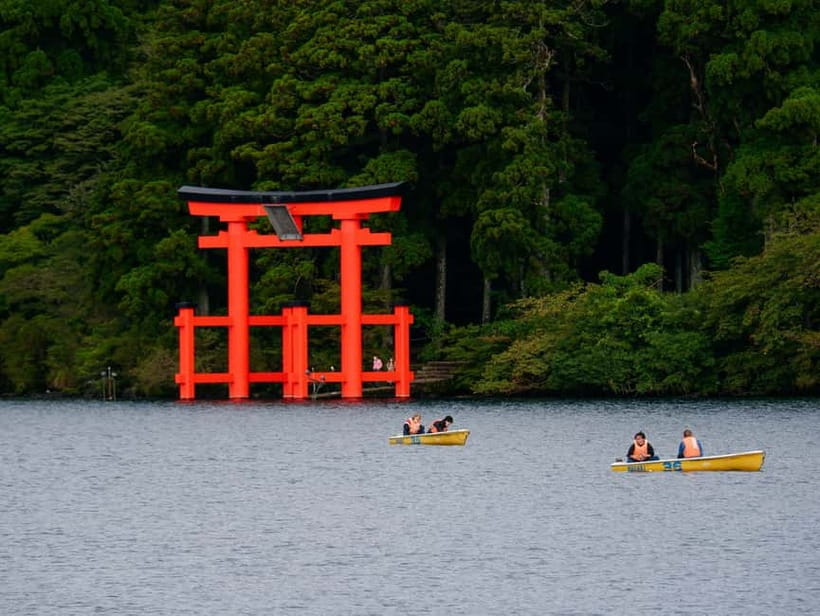
The first major stop is Hakone Shrine, set beside Lake Ashi. You receive about 20 minutes for a photo stop and a look around. The star view is the shrine’s vermilion torii gate, positioned in the lake so that it appears to float just offshore.
Lake Ashi was formed by volcanic activity thousands of years ago. Its calm water, forested slopes, and mountain setting create the quietest part of the day. If the air is clear, Mt. Fuji adds the final piece to the picture. If clouds cover the mountain, the lake and shrine gate still make a worthwhile stop, but you should not expect the classic postcard view every time.
Twenty minutes is enough for photos, but not enough for a thorough shrine visit. I would treat this as an orientation stop rather than a full cultural tour. Keep your shoes comfortable and your camera ready, since the group will need to move on promptly.
Sailing Lake Ashi on the pirate ship
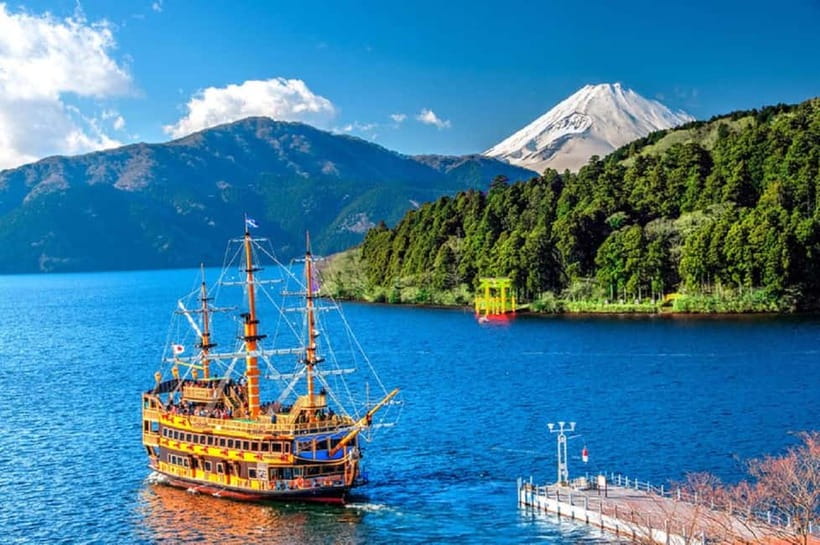
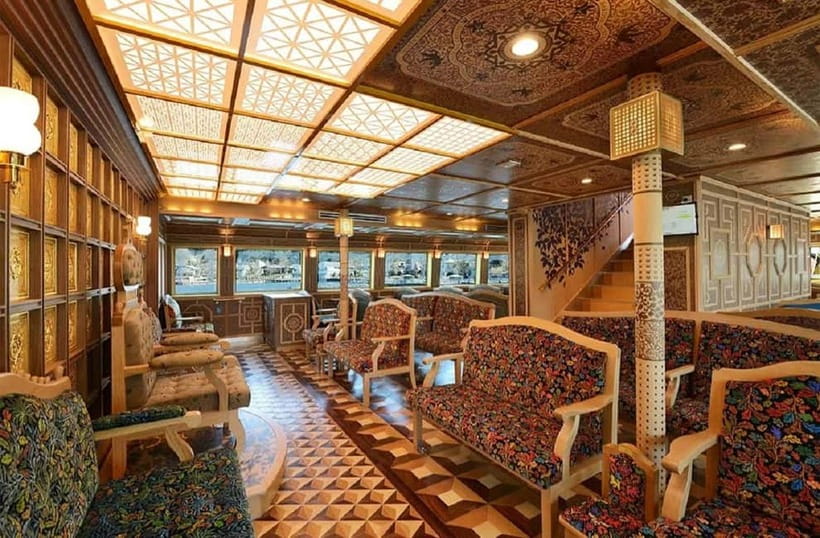
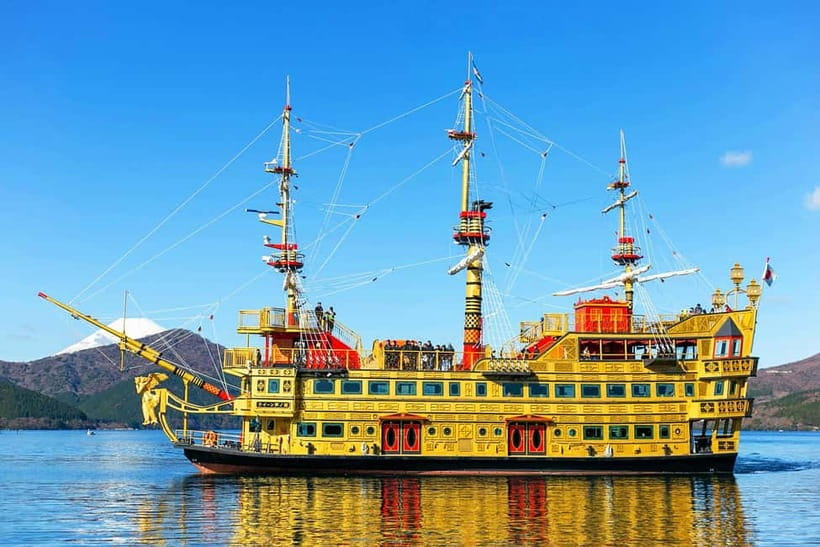
Next comes a roughly 30-minute Hakone sightseeing cruise. The vessel is designed like a grand pirate ship, which gives the ride a playful, storybook feel. It is not a quiet ferry crossing, but the theme adds fun, especially if you are traveling with children or simply enjoy a little theatrical scenery.
The best views come from outside on deck, where you can look across the lake toward the mountains and watch the shoreline slide past. Bring an extra layer if you are visiting on a cool day. The breeze on the water can feel sharper than it does in Tokyo.
The cruise works well because it gives you a new angle on the area. At the shrine, you look across the water toward the gate. From the boat, the shoreline, mountains, and red torii can become part of a wider view. The ride is short, so think of it as a scenic connection with a strong photo opportunity rather than a full sightseeing cruise.
Since the boat is described as optional in the experience title, check the exact booking option and inclusions before paying. The same applies to the Ropeway. These details can affect the final cost and the day’s flow.
The Ropeway above Hakone’s volcanic terrain
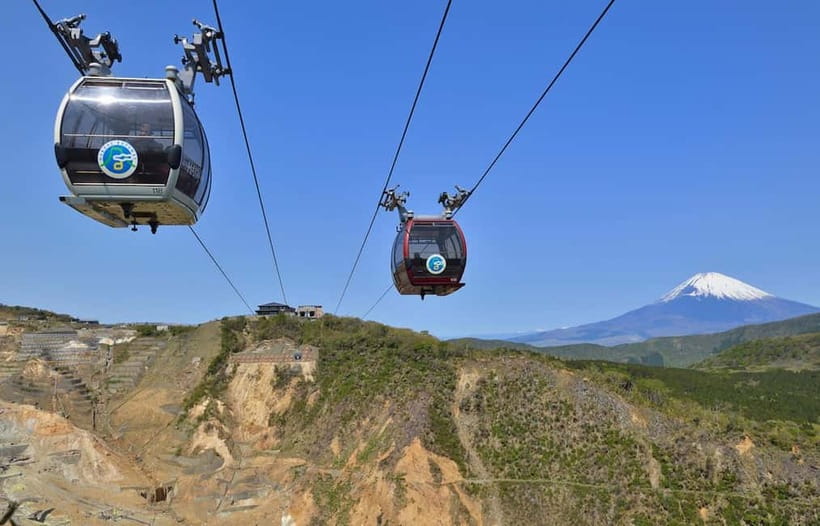
The Hakone Ropeway is one of the tour’s most appealing additions. The cable car lifts you above steep volcanic ground and offers broad views toward Lake Ashi and, when weather cooperates, Mt. Fuji. The ride takes about 30 minutes.
The section around Owakudani is the most dramatic. Steam vents rise from the earth, and the terrain looks raw and active. From the cabin, you can see the scale of the volcanic area without walking across every uneven path. I like this part because it changes the pace after the boat ride and gives you a view that is hard to get from ground level.
Do not count on clear mountain views. Fuji can disappear behind cloud even when the rest of Hakone is perfectly visible. You will still see the lake and volcanic ground, but the famous mountain silhouette is a bonus rather than a promise.
The Ropeway may not suit everyone. The experience is not recommended for pregnant women or wheelchair users, and you should be comfortable with heights and with walking between transport points. The supplied information does not describe every boarding detail, so ask the guide if you need specific assistance.
Owakudani, sulfur steam, and the black eggs
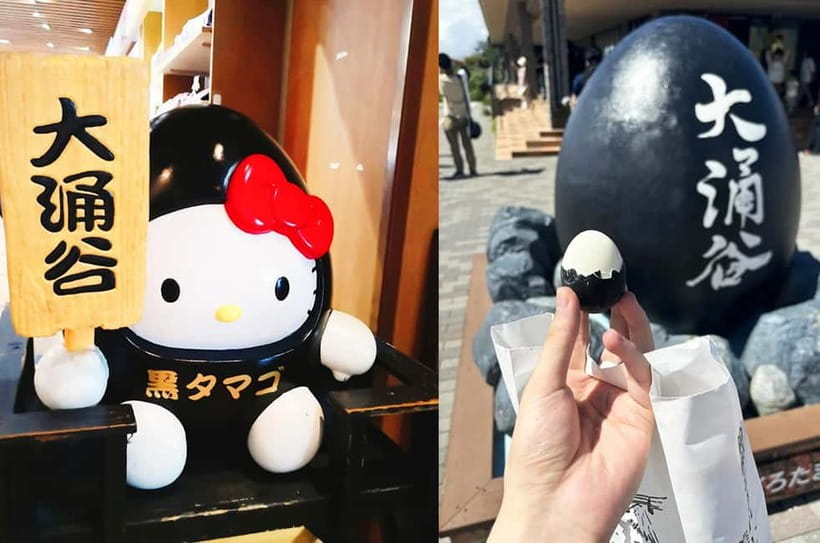
Owakudani is the most unusual stop. This volcanic valley is marked by sulfur vents, hot springs, mineral smells, and steam rising from the ground. It feels very different from the polished shrine and lake scenery earlier in the day.
The famous local snack is the black egg. These eggs are boiled in hot spring water, which darkens the shells. Local belief says that eating one adds seven years to your life. You can treat that as folklore, but the eggs are still a memorable taste of Hakone and a fun reason to stop at the food stalls.
You have around 40 minutes here for photos and sightseeing. That is enough to see the main volcanic sights and buy a snack, but it is not a long walking visit. Bring cash, since some locations may not accept credit cards. Food and drinks are not included, so plan to buy anything you want during the stop.
The sulfur smell can be strong. That is part of the appeal, but it may bother you if you are sensitive to mineral odors. Weather, volcanic conditions, traffic, and local operating rules can also affect access or the exact order of the day.
A few more Fujikawaguchiko tours and experiences worth a look
Enoshima’s shrine road and island atmosphere
The second half of the outing takes you to Enoshima Island for about two hours. This is a sharp change from Hakone. Instead of mountain scenery and volcanic vents, you get a compact island setting with shrine buildings, food stalls, souvenir shops, and old local streets.
The approach runs through Benzaiten Nakamise Street. This lively lane leads toward Enoshima Shrine and is lined with seafood stalls, sweets, traditional souvenirs, and small shops. It is a good place to use your free time for a snack or a quick look at local goods.
The street can be crowded, and two hours passes quickly. You will need to choose between eating, shopping, shrine visits, and exploring farther along the island. I would decide early what matters most to you rather than trying to do everything.
Seafood is a major part of the food culture here, with grilled shellfish among the items described along the street. If you buy food, keep the timing in mind. You need to return to the meeting point when instructed, and the coach cannot wait for late arrivals.
Enoshima Shrine and Hetsunomiya
Enoshima Shrine is the island’s main cultural focus. The shrine is dedicated to three sister goddesses associated with fortune, love, success, and prosperity. Hetsunomiya is one of the shrine areas you visit during the island stop.
Red shrine halls, lanterns, and long-standing legends give this part of Enoshima a different feel from the shopping street. It is a good place to slow down for a few minutes, even if the overall schedule is tight.
The shrine complex extends through the island, and the route can include steps and uphill walking. The tour information does not promise a complete visit to every shrine building, so use your free time wisely and follow the guide’s instructions about where to regroup.
The island stop is especially useful for anyone who wants more than views. Hakone supplies scenery and geology. Enoshima adds religion, food, and everyday local life in a single compact area.
What the guide service is really like
The tour offers live commentary in English, Japanese, and Chinese. That is helpful for a mixed group, but multilingual guiding can mean that explanations are shorter in each language. If you want a detailed lecture at every stop, this may feel light.
Guide Wanting is specifically praised for helping people communicate across different nationalities and for taking extra care when a passenger missed the bus. Laila is also named as a warm and attentive guide. Those names suggest the personal service can be excellent on some departures, but the actual guide depends on the date and group.
There is one important practical point: if the group is under 13 people, the guide may drive as well as guide. You may then receive basic information while traveling, but the guide might not enter attractions with you. This is a small-group advantage for transport, but not always for guided sightseeing.
The meeting point is in the Shinjuku area, with starting and ending options listed at STAND T and Tokyo Mode Gakuen. The exact point can depend on the option you book. Arrive at least 15 minutes early. The meeting area may contain many tour groups, so look carefully for the correct guide and flag rather than assuming any nearby group is yours.
A previous departure had confusion because several groups used yellow flags. That is a useful warning, not a minor detail. Read the evening-before email closely, save the guide and driver contact information, and arrive early enough to sort out the right group.
The coach ride, traffic, and time pressure
The coach is air-conditioned, and taxes, fuel, parking, and the driver are included. That removes much of the stress of arranging Hakone transport yourself. It also gives you a place to sit between stops, which matters after walking around the shrine and island.
The tradeoff is road traffic. Hakone and Enoshima are popular destinations, and holidays can slow the return to Tokyo. Bad weather, congestion, or other delays may lead to a later arrival, shorter visits, itinerary changes, or cancellations.
Leave your evening open. Do not schedule a tight dinner reservation, airport transfer, or theater ticket immediately after the planned return. The stated duration is 10 to 11 hours, but road conditions can push the day beyond that range.
Smoking and eating are not allowed in the vehicle. Bring water, but plan to keep snacks for the stops. A small bag, phone charger, camera, and light jacket will make the long coach day easier.
Who should book this $53 day trip?
I would choose this tour if you have limited time in Tokyo and want to combine several well-known sights without handling the connections yourself. It suits first-time visitors, families who like varied scenery, and anyone who values a fixed route over independent flexibility.
It is also a good fit if you want both Hakone and Enoshima. Seeing them separately would give you more time at each place, but this single outing lets you sample lakeside scenery, a boat ride, volcanic terrain, a shrine, and island food culture for $53 plus any optional admissions and purchases.
I would hesitate if Mt. Fuji is your main reason for booking. The mountain may be hidden by cloud, and the tour cannot control visibility. Check the forecast before you reserve, and book only if Lake Ashi, Owakudani, and Enoshima still sound worthwhile without a clear Fuji view.
I would also hesitate if you dislike early starts, long coach rides, or fixed meeting times. The day is packed, and late arrivals receive no refund. The experience is not suitable for pregnant women or wheelchair users.
Free cancellation up to 24 hours before departure and the reserve-now, pay-later option make it easier to wait for a favorable forecast. Still, check the exact start time, meeting point, and whether the boat and Ropeway are included in your chosen option.
Should you book it?
Book this tour if you want a broad, convenient introduction to Hakone and Enoshima, and you are happy to trade depth for variety. The strongest parts are the Lake Ashi cruise, Owakudani’s volcanic scenery, and the chance to reach Enoshima without planning another transport route.
Skip it if you want a slow shrine visit, a guaranteed Mt. Fuji photograph, or a fully guided experience at every stop. For the right kind of day, $53 is a solid price for the transport and range of sights. Just arrive early, keep your evening free, and treat Fuji as a lucky extra.
FAQ
How long does the Mt. Fuji Hakone and Enoshima tour last?
The tour lasts approximately 10 to 11 hours, including the coach journeys between Tokyo, Hakone, Enoshima, and Tokyo.
Where does the tour start and finish?
The listed start and end options are STAND T and Tokyo Mode Gakuen in Tokyo. The exact meeting point may vary according to the option you book.
Which languages does the guide speak?
Live guiding is available in English, Japanese, and Chinese.
Is Mt. Fuji guaranteed to be visible?
No. Mt. Fuji visibility depends entirely on the weather and cannot be guaranteed. Check the forecast before departure.
Are the boat cruise and Ropeway included?
The title identifies the Ropeway and Lake Ashi boat as optional. Check the exact option details before booking to confirm what is included.
Is food included in the price?
No. Food and drinks are not included. You should bring cash because some places may not accept credit cards.
What should I bring?
Bring comfortable shoes, water, a camera, and comfortable clothing.
Can wheelchair users or pregnant women join?
The activity is not suitable for wheelchair users or pregnant women.
What happens if I arrive late?
You should arrive at least 15 minutes before departure. No refund is provided for latecomers, so allow extra time to find the correct group at the meeting point.
More Hakone Day Trips in Fujikawaguchiko
More Mt Fuji Day Trips in Fujikawaguchiko
More tours in Fujikawaguchiko we've reviewed
Mt Fuji Day Trips, compared.
 ★ 5.0Mt Fuji and Hakone 1-Day Bus Tour Return by Bullet TrainFrom $163
 ★ 4.0Mt Fuji & Hakone Cruise, Drum Show Bullet Train 1 Day from TokyoFrom $149
 ★ 4.4Tokyo Mt Fuji 5th St & Hakone Cruise Bus Tour w/Bullet TrainFrom $15410 hours
 ★ 4.5From Tokyo: Mount Fuji Full-Day Sightseeing TripFrom $6810 hours
 ★ 4.7Tokyo: Mt. Fuji Tour, Hakone Ropeway, Owakudani, Lake AshiFrom $5410 hours
 ★ 4.4Tokyo:Mt.Fuji,Kawaguchiko Oishi Park,Arakurayama Sengen ParkFrom $5410 hours