
Reviewed · COOKING CLASSES
Tokyo: Japanese Cooking Class – Bring the flavors of Japan to France
Tokyo’s best food lessons do not always involve sushi knives or restaurant kitchens. This 150-minute class in a Japanese home focuses on the food people actually cook and eat: karaage, miso soup, rice or onigiri, and simple side dishes.
I like the tiny group, limited to three people, and the practical recipes designed for kitchens in France. I also like the mother-daughter team: Yumiko teaches the cooking, while her daughter Yuri helps in French and adds cultural context. The main consideration is that this is a home visit with cats in the house, so it is not a good fit for people with animal allergies or food allergies.
In This Review
- Key points at a glance
- Why this class feels different from a standard Tokyo food tour
- Meeting Yumiko and Yuri near Futako-Tamagawa
- The cooking begins with simple Japanese techniques
- Karaage, miso soup, and the home-style menu
- A French-language class with room for questions
- Sitting down to eat what you prepared
- What the $89 price includes
- Important practical points before booking
- Who will get the most from this Tokyo cooking class
- Should you book this small-group cooking lesson?
- FAQ
- Where does the cooking class meet?
- How long does the experience last?
- What language is used during the class?
- What dishes will I prepare?
- Can vegetarians join?
- Are ingredients and cooking equipment provided?
Key points at a glance
- Cook with Yumiko and Yuri: Yumiko leads the class, and Yuri provides French-language help throughout.
- Make everyday Japanese food: The sample menu includes karaage, tonjiru-style miso soup, teriyaki salmon, sesame vegetables, rice, or onigiri.
- Very small group: With no more than three participants, you can ask questions and take part in each stage.
- Recipes for your French kitchen: The ingredients are chosen so you can recreate the dishes at home.
- A meal in a Japanese apartment: Your food is plated in Japanese ceramics and eaten together in a warm home setting.
- Vegetarian cooking is possible: Contact the host before booking so the menu can be changed.
Why this class feels different from a standard Tokyo food tour
Many first-time visitors connect Japanese food with sushi, ramen, or conveyor-belt restaurants. Those dishes matter, but they only cover a small part of daily cooking. This lesson turns your attention to the more familiar home table, where fried chicken, soup, rice, fish, and vegetables share the plate.
That makes the class especially useful if you want to bring something home besides photos. You learn dishes that do not require rare seafood, specialist knives, or a pantry stocked with obscure Japanese products. The recipes are intended to work with ingredients available in France, which also makes them practical for cooks elsewhere in Europe.
The class is conducted in French. Yuri, Yumiko’s daughter, has lived in France and helps with communication during the session. The information provided for the experience also notes that the hosts speak English and Japanese, but French is the main language to expect when you book.
Other cooking classes in Tokyo
Meeting Yumiko and Yuri near Futako-Tamagawa
You meet in front of the McDonald’s just outside the East exit of Futako-Tamagawa Station. The station is served by the Den-en-toshi and Ōimachi lines, so check your route carefully before setting out. The meeting point is public and easy to identify, but you still need to arrive at the correct station exit.
From there, the hosts welcome you and take you to the home where the class takes place. This is not a restaurant demonstration with a large audience. It is a personal visit, and the small scale shapes the whole afternoon.
Yumiko handles the cooking instruction, while Yuri stays involved to translate and explain. That pairing matters. You can ask a question as soon as it comes up, and you are less likely to miss a technique because of a language gap.
The home setting also gives the class a cultural angle without adding a separate lecture. You see how the dishes fit together, how they are served, and how a Japanese family presents a meal at home. The host uses Japanese ceramics for plating, so the final meal has a clear sense of place.
The cooking begins with simple Japanese techniques
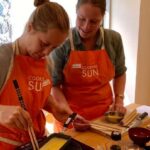
The class is suitable for beginners, so you do not need prior cooking experience. You receive the ingredients, utensils, an apron, towels, and slippers. A welcome tea starts the session, and the teaching is hands-on rather than something you simply watch from a chair.
The exact order of preparation can vary, but the sample menu gives you a good idea of the work involved:
- Karaage, Japanese fried chicken
- Teriyaki salmon
- Sesame vegetables and another side dish
- Miso soup with pork and vegetables, similar to tonjiru
- Rice or onigiri
Karaage is the headline dish, and for good reason. It is widely loved in Japan and familiar enough to French diners that it provides an easy bridge between the two food cultures. You learn how the chicken is prepared and fried, along with the small choices that help create the crisp coating and savory flavor.
The lesson is not presented as a contest. Yumiko shares techniques and kitchen tips as you work, and you get to taste the food along the way. That is a useful format for beginners because you can understand how the dish should look and taste before serving it.
Karaage, miso soup, and the home-style menu
Karaage gives the meal its satisfying center, but the supporting dishes show why Japanese home cooking is more than one famous recipe. Miso soup with pork and vegetables adds depth and warmth. One particularly praised version of the soup was noted for its umami, the savory flavor that gives many Japanese dishes their lasting taste.
Teriyaki salmon brings a different texture and a sweeter, glossy flavor. Sesame vegetables add contrast and keep the meal from becoming a plate of fried and rich foods. Rice provides the familiar base, while onigiri offers a more hands-on option if that is included in your session.
The menu is varied enough to feel like a complete meal, not just a single cooking exercise. You prepare several parts at once, so you also gain a sense of timing. That is one of the best reasons to choose a class over a recipe card. You see how soup, protein, vegetables, and rice can arrive at the table together.
The ingredient list is another practical strength. You are not being taught a recipe that depends on products you can only buy in Tokyo. The class aims to show you how to make these dishes with ingredients that can be found in France, making the experience useful after your holiday ends.
A French-language class with room for questions
Language can make or break a cooking class. Here, Yuri is present throughout to facilitate communication in French, and the class is specifically designed for French speakers. That lets you focus on the food instead of trying to decode every instruction.
The small group size is important. At a maximum of three participants, you have more direct contact with Yumiko than you would in a large workshop. You can ask why a step matters, request clarification, or get help with a technique before moving on.
This format should suit both a complete beginner and someone who already cooks. Beginners get close guidance and simple recipes. More experienced cooks can pay attention to the details behind seasoning, texture, umami, and presentation.
The teaching also extends beyond measurements. Yuri explains parts of everyday Japanese culture, while Yumiko shares family cooking habits and tips. You come away with more than a list of ingredients. You get a better idea of how these foods belong together on a Japanese table.
Other cooking classes in Tokyo
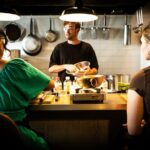

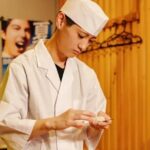
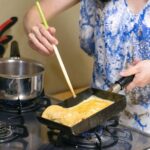

Sitting down to eat what you prepared
After the cooking, you eat the meal together in the home. The dishes are served on Japanese ceramics selected by the host, which adds a thoughtful visual touch without turning the meal into a formal restaurant service.
I like this part because the cooking has a clear payoff. You do not pack up your food and leave. You sit down, taste the results, and have time to talk with Yumiko and Yuri. The atmosphere is intended to be warm and relaxed, and the small group makes conversation natural.
A seasonal tea is served at the end, along with the included free tea drink. It is a modest detail, but it gives the experience a proper finish. You have time to reflect on the meal, ask last questions, and think about which recipes you will try at home.
The food is described as homemade, healthy, and delicious, but you should keep your expectations sensible. Karaage is fried chicken, and this is a family cooking lesson rather than a professional chef demonstration. Its value comes from participation, cultural exchange, and recipes you can use, not from luxury ingredients or polished restaurant theatrics.
What the $89 price includes
At $89 per person, the price covers a full meal, every ingredient, utensils, a recipe, apron loan, welcome tea, and the final tea drink. You are also paying for a two-and-a-half-hour lesson with a very small group and French-language support.
That is a fair value if you want active instruction rather than a quick tasting. A meal alone in Tokyo might cost less, but it would not give you the recipes, technique guidance, cultural explanation, or chance to prepare the dishes yourself.
The strongest value comes after the class. Since the ingredients are intended to be easy to find in France, you can repeat the meal at home instead of treating it as a one-time holiday event. If you cook even two or three of the recipes later, the class has a longer life than a standard restaurant meal.
The price may feel high if you mainly want to eat karaage and miso soup without cooking. In that case, a casual restaurant will be faster and cheaper. Choose this experience because you want personal teaching and a look at everyday food in a Japanese home.
Important practical points before booking
The class lasts 150 minutes, so plan for a solid half day once you include getting to Futako-Tamagawa and continuing with your day afterward. You should wear comfortable clothes suitable for cooking, although aprons, towels, and slippers are provided.
Smoking is not allowed, including indoors. There are cats in the house, but they are kept away during the cooking session. Even so, people with animal allergies are advised to avoid the experience.
Food allergies are also listed as a reason this class may not be suitable. Contact the host before booking if you have an allergy or another food concern. Do not wait until you arrive, since the menu and ingredients need to be considered in advance.
Vegetarians are welcome, but you must send a message before booking so the menu can be adapted. The sample menu includes pork in the miso soup and salmon, so a vegetarian version should be arranged ahead of time rather than assumed.
Children under six are not suitable for this activity. The class is best for adults and older children who can take part safely in a small home kitchen.
You can cancel up to 24 hours before the activity for a full refund, and a reserve-now, pay-later option is available. Those policies help if your Tokyo schedule is still changing, but you should still confirm the available starting time before you finalize your plans.
Who will get the most from this Tokyo cooking class
I would recommend this class to French-speaking visitors who want a personal, useful food experience. It is also a strong choice for solo visitors, since the hosts make a point of guiding each person through the activity and the small group avoids the awkwardness of joining a large tour alone.
It works well for couples and friends who enjoy cooking together. The menu gives everyone several tasks, and the meal at the end creates time for conversation. It may also make a thoughtful gift, especially for someone visiting Japan alone for the first time.
Food-focused visitors who have already tried sushi and ramen will appreciate the change of pace. So will anyone who wants to understand Japanese food at home rather than only through restaurants.
I would not choose it if you dislike shared home settings, have a serious allergy, or want a high-energy sightseeing activity. The class is centered on cooking, conversation, and eating. There are no major Tokyo landmarks built into the experience, and the home environment requires you to be comfortable entering a private space.
Should you book this small-group cooking lesson?
Book it if you want everyday Japanese cooking, clear French-language help, and recipes you can repeat in France. Yumiko’s instruction and Yuri’s translation create a useful mother-daughter team, while the three-person limit gives you plenty of chances to participate.
Skip it if your main goal is a cheap meal, a restaurant-style performance, or a class in a professional kitchen. For the right person, the $89 cost buys more than lunch: it gives you practical skills, a personal meeting near Futako-Tamagawa, and a warm look at Japanese food culture at home.
FAQ
Where does the cooking class meet?
Meet in front of the McDonald’s just outside the East exit of Futako-Tamagawa Station. The station is served by the Den-en-toshi and Ōimachi lines.
How long does the experience last?
The cooking class lasts 150 minutes.
What language is used during the class?
The class is conducted in French. Yuri, Yumiko’s daughter, is present to help with communication in French throughout the experience.
What dishes will I prepare?
The sample menu includes karaage, teriyaki salmon, sesame vegetables, another side dish, miso soup with pork and vegetables, and rice or onigiri. The precise menu may vary.
Can vegetarians join?
Yes. Vegetarians are welcome, but you need to contact the host before booking so the menu can be adapted.
Are ingredients and cooking equipment provided?
Yes. The price includes all ingredients, utensils, an apron loan, towels, slippers, the meal, a recipe, welcome tea, and a free tea drink.
More Workshops & Classes in Tokyo


More Cooking Classes in Tokyo
More Cooking Classes in Tokyo
More tours in Tokyo we've reviewed






Cooking Classes, compared.
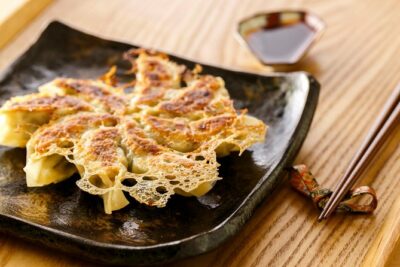 ★ 5.0Ramen & Gyoza Cooking Class in Tokyo with Local Supermarket VisitFrom $122
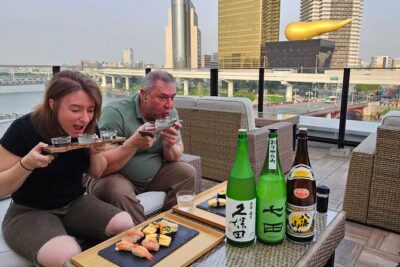 ★ 5.0Ramen and Sushi Cooking Class with Sake Pairing Set in TokyoFrom $79
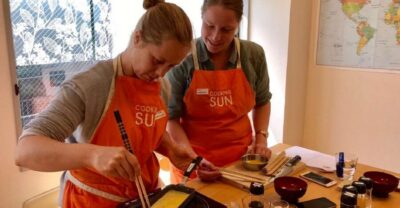 ★ 4.9Tokyo: Wagyu and 7 Japanese Dishes Cooking ClassFrom $673 hours
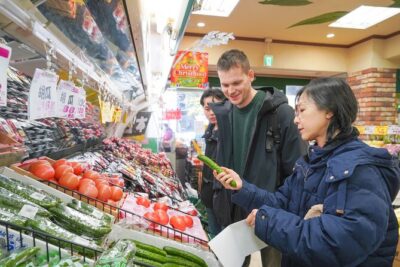 ★ 5.0Tokyo Washoku 4-hour Cooking Class: From Market to TableFrom $79
 ★ 5.0Professional Ramen & Gyoza with Ramen Chef in a restaurant!From $159
 ★ 5.0Small-Group Wagyu Beef and 7 Japanese Dishes Tokyo Cooking ClassFrom $72