
Reviewed · E-BIKES
Tokyo: 3-Hour E-Bike Tour of the City’s Riverside Areas
Tokyo’s best bike tours are not about covering the most ground. They are about slipping through places a bus cannot reach. This three-hour e-bike ride links Ginza, Tsukiji, and Tokyo’s eastern riverside neighborhoods, mixing famous sights with quieter streets, shrines, and old-town corners.
I like the small group of eight, which keeps the ride personal, and I like that Kiyosumi Gardens admission and bike insurance are included. The main caution is traffic around Ginza. One visitor found that section a little tough, though the rest of the route uses calmer roads. You also need to be comfortable on a bicycle and reasonably fit for three hours in the saddle.
In This Review
- Key points at a glance
- Why this bike route shows you a different Tokyo
- Ginza and Kabuki-za: a lively start
- Tsukiji Hongan-ji and the Outer Market
- Tsukishima Monja Street and Sumiyoshi Jinja
- Kiyosumi Gardens: the tour’s calm center
- Fukagawa Fudō-dō and the eastern finish
- What the $78 price really covers
- Who should book this ride
- Practical tips for a smoother ride
- Should you book the Tokyo riverside e-bike tour?
- FAQ
- Where does the e-bike tour begin?
- Where does the tour finish?
- How long is the bike tour?
- Are electric bikes and helmets included?
- Is food included?
- Who should not take this tour?
Key points at a glance
- A useful route from central Tokyo: Start beside the Hibiya Park kiosk and finish at Fukagawa Fudō-dō, crossing from polished downtown streets toward older riverside districts.
- Tsukiji without a bus crowd: The ride includes Tsukiji Hongan-ji and the Outer Market, where you can stop for food at your own expense.
- A real e-bike advantage: Electric assistance makes the three-hour route more manageable for casual riders, though you still need normal bike control and road awareness.
- A small group capped at eight: Guides can offer more direct help and keep the ride together better than a large cycling group.
- A good balance of temples and daily life: Expect Kabuki-za, shrines, a Japanese garden, a market, Monja Street, and old neighborhoods rather than only postcard sights.
- A flexible finish: Fukagawa Fudō-dō admission costs ¥1,000 in cash and is optional, so you can decide at the end.
Why this bike route shows you a different Tokyo
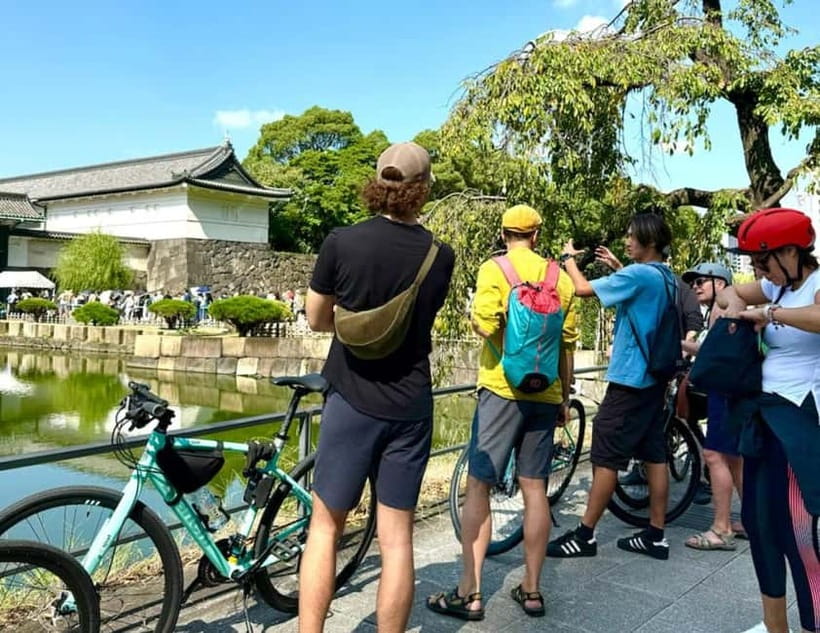
Tokyo can feel hard to read from a train window. Stations are huge, roads are busy, and the city’s older neighborhoods often sit just beyond the usual sightseeing circuit. A bicycle gives you a slower view. You notice the change from Ginza’s department stores to Tsukiji’s market lanes, then onward to the waterways and temples of eastern Tokyo.
The route begins in Hibiya Park, at 1-3 Hibiyakōen, with the meeting point to the right of the park kiosk. Arrive 10 minutes early. That matters here because the guide needs to get everyone set up before the group moves into city traffic.
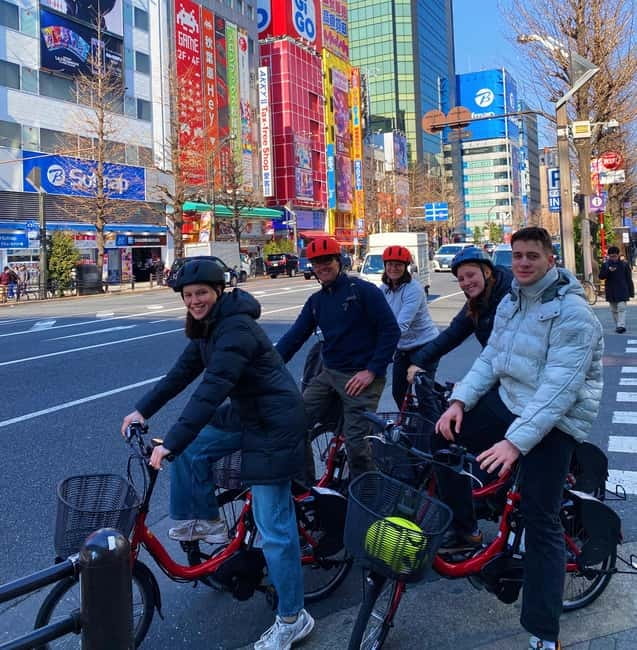
You ride electric bikes with baskets for small bags. The electric assist is useful, but it does not turn the outing into a motorized sightseeing trip. You still pedal, steer, stop, and share roads with cars, pedestrians, and other cyclists. Comfortable clothes, closed-toe shoes, water, sunscreen, and sunglasses are sensible choices.
The tour is offered in English or Japanese. Guides named in past outings include Nooki, Casey, Naoki, and Show, though the person leading your ride can vary. The most repeated praise goes to the guides’ friendly manner, clear local stories, and ability to point out places that are awkward to reach by public transport.
Other cycling tours in Tokyo
Ginza and Kabuki-za: a lively start
The first major stop is Ginza, Tokyo’s famous shopping district. This is where you get your early taste of city cycling. Ginza offers grand storefronts, wide avenues, and plenty of visual interest, but it is also the most demanding part of the route from a traffic point of view.
The planned stop is about 10 minutes, enough for photographs and a short explanation from the guide. Do not expect a long shopping break. The value here is orientation. You see how Tokyo’s modern commercial center fits into a route that soon shifts toward markets, shrines, and older neighborhoods.
Kabuki-za follows, also with about 10 minutes for a visit and photo stop. Its traditional theater facade provides a striking contrast to Ginza’s modern retail streets. The stop is brief, so treat it as an outside look and a cultural introduction rather than a full theater visit.
If you are uneasy cycling in city traffic, tell yourself that Ginza is the part to take seriously. Stay close to the guide, follow instructions, and do not try to ride at your own sightseeing pace. The route becomes calmer later, according to the practical experience of one participant who found only the Ginza section somewhat difficult.
Tsukiji Hongan-ji and the Outer Market
From Ginza, the ride reaches Tsukiji, once associated around the world with Tokyo’s wholesale fish trade. The wholesale market moved to Toyosu, but Tsukiji Outer Market remains a lively place for food shops, cooking goods, and small eateries.
Tsukiji Hongan-ji gets about 15 minutes. The temple’s appearance is notably different from the wooden Buddhist temples many people picture in Japan, which makes it a useful stop even if you have already visited several shrines and temples. Your guide can add context and help you notice details you might pass while walking alone.
The Outer Market receives around 20 minutes, the longest stop before the garden. That is enough time to look around and pick up a snack, but it is not a full market food tour. Food and drinks are not included, so bring money if you want to sample something.
This is one of the tour’s strongest practical features. The bike gets you to Tsukiji without committing half a day to a larger organized food excursion. You can also return later on your own if one short visit leaves you wanting more.
Keep your bag secured in the bike basket and watch your footing around market areas. The tour’s focus is sightseeing by bicycle, not a sit-down meal, so eat beforehand if you need a substantial lunch.
Tsukishima Monja Street and Sumiyoshi Jinja
The ride then turns toward Tsukishima Monja Street. Monjayaki is a local Tokyo specialty, a savory griddle dish with a softer texture than the better-known okonomiyaki. The street is associated with restaurants serving it, but this tour lists a photo stop and guided visit rather than a meal.
That distinction matters. You will learn what makes the area notable and see the setting, but food is an extra purchase and the three-hour schedule does not promise time for a full restaurant meal. If you have a strong interest in monjayaki, ask the guide for suggestions, then consider returning another day.
Sumiyoshi Jinja is another short stop, with about 10 minutes for a visit and explanation. A neighborhood shrine such as this gives the route a more local scale. You are no longer simply checking off Tokyo icons. You are seeing how religious sites sit alongside ordinary streets and waterways.
I especially like this middle section because it breaks up the famous sights. Ginza, Kabuki-za, and Tsukiji are familiar names. Tsukishima and the shrine help you see the city as a collection of districts, each with its own pace and habits.
Kiyosumi Gardens: the tour’s calm center
Kiyosumi Gardens is the longest stop, at roughly 25 minutes, and admission is included in the $78 price. That inclusion improves the value of the tour because you are not paying extra at every major stop.
A Japanese garden is best appreciated slowly. Even with only 25 minutes, you get a pause from traffic and a chance to look at the ponds, paths, planting, and carefully framed views. The garden provides a welcome change after the market and downtown streets.
Do not expect an hour-long garden visit. If Kiyosumi Gardens is one of your top Tokyo priorities, you may want to return independently for more time. On the bike tour, the short visit works as part of a broader day: you see several kinds of Tokyo rather than spending the whole outing in one place.
This is also a point where the e-bike feels useful. The route has already taken you through several districts, and the garden stop gives you a chance to rest before the final temple visit.
Other city tours we've reviewed in Tokyo




Fukagawa Fudō-dō and the eastern finish
The last listed stop is Naritasan Fukagawa Fudō-dō, also called Fukagawa Fudō-dō, the Tokyo branch of Naritasan. The guided visit lasts about 20 minutes, and the tour ends here.
Entrance is optional and costs ¥1,000 per person, payable in cash. You do not need to enter to complete the tour. This is a fair arrangement because some people will want to see the temple interior while others may be ready to stop cycling after three hours.
A past outing also included seeing a Buddhist gathering in this part of Tokyo. That kind of moment cannot be guaranteed, but it shows why a small, locally guided ride can offer more than a fixed list of photo stops. You may catch a glimpse of ordinary religious life, not just a building prepared for sightseeing.
Because the tour ends here rather than returning to Hibiya, plan your next move before you set off. The information provided does not specify a return transfer or a final drop-off. You should be ready to continue from Fukagawa on your own.
What the $78 price really covers
At $78 per person, this is not the cheapest way to see Tokyo. You are paying for three hours of equipment, a guide, route planning, bike insurance, and entry to Kiyosumi Gardens. The small group size also matters. A maximum of eight people is a much better fit for city cycling than a large pack that blocks sidewalks and stretches through intersections.
The price makes the most sense if you value access and local explanation. You can reach old sections of Tokyo that are less convenient by sightseeing bus, and you do not have to work out the safest route between them yourself. The bike also saves time between districts while keeping you close to street life.
The value is weaker if you mainly want food. Market snacks are extra, Monja Street is not presented as a meal stop, and the tour does not include drinks. It is also not the right purchase if you want long visits at each temple or garden.
Bike insurance is included, but that should not be mistaken for a promise that cycling feels risk-free. You need to obey the guide, stay aware of traffic, and ride within your ability.
Who should book this ride
I would recommend it to an active first-time visitor who wants a broad introduction to Tokyo beyond the major station areas. It also suits repeat visitors. One person took the ride after five days in Tokyo and still found new places, which is a good sign for anyone who feels they have already seen the standard sights.
The tour fits casual cyclists because the bikes are electric, and the feedback points to comfortable riding. Still, casual rider does not mean non-rider. You must be able to ride a bike confidently, manage city streets, and remain in the saddle for a three-hour outing with stops.
It is not suitable for children under 12, pregnant women, people with back problems, or anyone who cannot ride a bicycle. The activity also bans smoking, alcohol, drugs, and littering.
Families with older children may find the format appealing, but the age restriction is firm. Friends and couples can also benefit from the small group, especially if you prefer a guide who can explain local details without the feel of a large bus tour.
Practical tips for a smoother ride
Wear shoes you can pedal in and clothes that allow easy movement. Tokyo weather can make a three-hour outdoor activity feel much longer, so water and sunscreen are important. Sunglasses help with glare and wind.
Bring only what you need. The bike has a basket, but it is intended for a small bag rather than bulky luggage. Food and drinks are not included, so carry enough money for market snacks and remember that the ¥1,000 temple entry fee requires cash.
Arrive 10 minutes before the start at the right of the kiosk in Hibiya Park. Check the starting time when you book, since the activity has different possible departure times depending on availability.
The tour allows free cancellation up to 24 hours before departure, and you can reserve now and pay later. Those terms are useful if your Tokyo plans are still shifting, but they do not remove the need to check the forecast. Rain, heat, or strong sun can change the feel of a bike tour quickly.
Should you book the Tokyo riverside e-bike tour?
Book it if you want a moving overview of Tokyo’s old and modern sides, you can ride comfortably, and you like having a guide connect the dots. The combination of Tsukiji, Tsukishima, Kiyosumi Gardens, shrines, and Fukagawa is more varied than a standard downtown loop.
Skip it if you want a dedicated food tour, a slow garden visit, or a completely traffic-free ride. Ginza requires care, the schedule keeps each stop fairly short, and the final temple entry costs extra.
For most active visitors, $78 is a reasonable price for the route, electric bike, small group, guide, insurance, and garden admission. I would choose it early in a Tokyo stay to get your bearings, or late in a longer visit when the usual sightseeing list is already done.
FAQ
Where does the e-bike tour begin?
The meeting point is to the right of the kiosk in Hibiya Park, at 1-3 Hibiyakōen in Tokyo.
Where does the tour finish?
The tour ends at Fukagawa Fudō-dō, also known as Naritasan Fukagawa Fudō-dō, the Tokyo branch temple.
How long is the bike tour?
The activity lasts three hours. Starting times vary, so check availability when booking.
Are electric bikes and helmets included?
Electric bikes with baskets for bags are included. The provided information confirms bike insurance, but it does not specify helmet arrangements.
Is food included?
No. Food and drinks are not included. You can buy snacks during the Tsukiji Outer Market stop if you wish.
Who should not take this tour?
The tour is not suitable for children under 12, pregnant women, people with back problems, or people who cannot ride a bike.
More E-Bikes in Tokyo
More City Tours in Tokyo
More Cycling Tours in Tokyo
More tours in Tokyo we've reviewed











E-Bikes, compared.
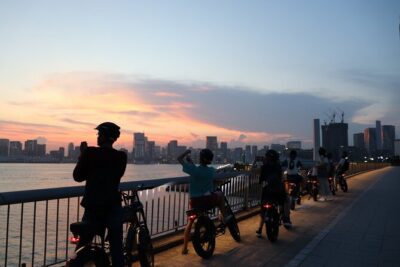 ★ 5.0Tokyo Top Highlights 3h Guided E-bike TourFrom $63
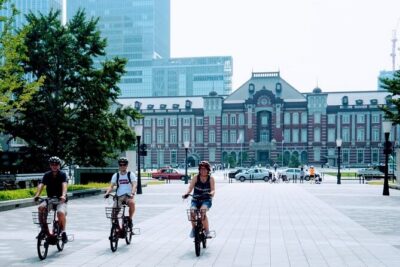 ★ 5.03h Tokyo E-Bike Tour: Hidden Gems, and Local Life with guideFrom $63
 ★ 4.8Tokyo: 3-Hour Bike or E-Bike City Highlights TourFrom $453 hours
 ★ 4.8Tokyo: 3-hour Guided E-Bike Tour of the City’s Hidden GemsFrom $65
 ★ 5.0Tokyo: 3-Hour Bike/E-Bike Tour of the City’s HighlightsFrom $63
 ★ 5.03-Hour Tokyo Private E-Bike Tour Starting from Your HotelFrom $145