
Reviewed · E-BIKES
Tokyo: 3-Hour Bike or E-Bike Tour of City’s Hidden Gems
Tokyo reveals itself differently from a bicycle seat. In three hours, you move from the temple grounds of Zojo-ji to the Imperial Palace, Akasaka, Aoyama, and Shibuya Crossing, with quieter streets and small stops between the big sights. I like the route’s range and the chance to cover ground that would take much longer on foot.
I also like the quality Bianchi and Fuji bikes, plus the e-bike choice for riders who do not cycle often. Guides including Shin, Casey, Naoki, Marika, and Nouchi have been praised for clear explanations and careful riding. The main consideration is that this is a real cycling outing, not a sightseeing bus with a few pedals. You will ride for extended stretches, and helmets cost an extra ¥1,000 in cash.
In This Review
- Key things to know before you ride
- Why a bicycle works so well in central Tokyo
- Meeting near Commodore Perry’s statue
- Zojo-ji Temple and the first taste of old Tokyo
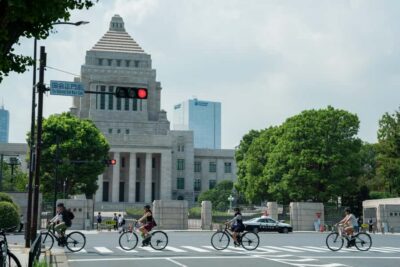
- The Imperial Palace, Ote-mon Gate, and Tokyo’s formal center
- Akasaka Palace and the National Stadium
- The quieter stops between the famous sights
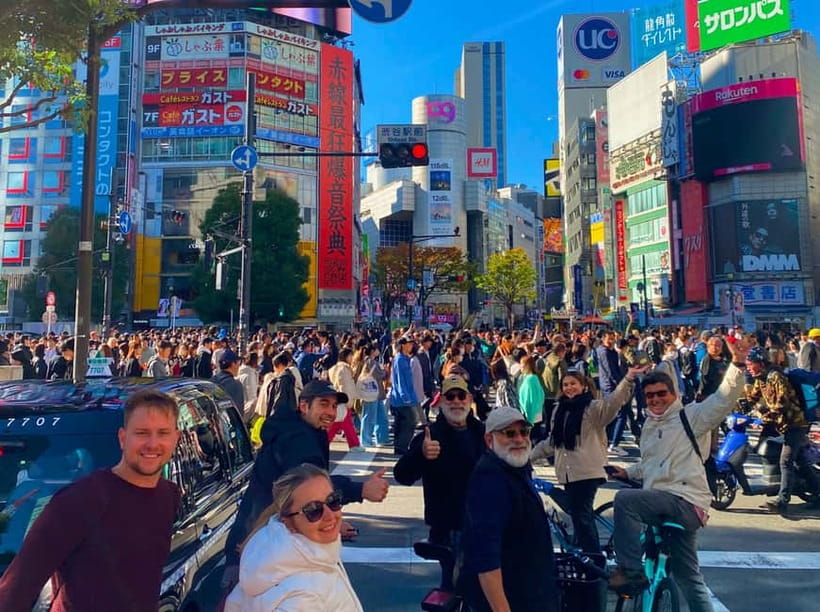
- Cat Street, Miyashita Park, and Shibuya Crossing
- What the guides add to the ride
- Bikes, e-bikes, and the physical effort
- Is $60 a fair price?
- Who should book this ride?
- Should you book the Tokyo bike tour?
- FAQ
- How long is the Tokyo bike tour?
- Where does the tour start?
- Where does the tour finish?
- Are helmets included?
- Can I use an e-bike?
- Is the tour suitable for children?
Key things to know before you ride
- A broad Tokyo route: Link Zojo-ji, the Imperial Palace area, Akasaka Palace, the National Stadium, Aoyama, Cat Street, Miyashita Park, and Shibuya in one morning or afternoon.
- Good bikes matter here: You can ride a Bianchi or Fuji cross bike, with an e-bike available for riders who want help on longer stretches.
- English support is a strength: The guides speak English and Japanese, and several guides are praised for adjusting explanations and routes to suit the group.
- This is sightseeing on the move: Most stops are photo stops or short walks, not long interior visits.
- Bring cash for a helmet: Helmets are available on site for ¥1,000 each, and a child seat costs ¥3,000 if needed.
- Small groups make the route easier: Private and small-group formats are available, useful in Tokyo traffic and at busy crossings.
Why a bicycle works so well in central Tokyo
Tokyo is huge, but many of its most interesting central districts sit within a rideable chain. A train can get you from one station to another quickly, yet it leaves you underground, then puts you back into the crowd. On a bicycle, you can see the change from temple district to office quarter to fashion street in one continuous trip.
That contrast is the real point of the tour. You are not simply collecting famous addresses. You are watching Tokyo shift in character as you pedal. The route begins near Tokyo Tower and historic temple grounds, reaches the formal center around the Imperial Palace, then moves through Akasaka and Aoyama before finishing near Shibuya.
I would not choose this outing if you want long visits inside every major sight. The listed stops are mostly brief, with guided explanations, photographs, and short walks. I would choose it if you have limited time and want a useful first look at several central districts without spending the whole day changing trains.
The three-hour length is well judged for a city ride. It gives you enough time to cover a broad area, but it does not turn into a full-day physical challenge. Still, the route includes extended cycling, so an e-bike is a sensible choice if you do not ride regularly or are unsure about your stamina.
Other cycling tours in Tokyo
Meeting near Commodore Perry’s statue
The meeting point is the statue of Commodore Perry, about a three-minute walk from Daimon Station’s A6 exit. This is close to the Tokyo Tower and Zojo-ji area, which makes it a convenient starting point if you are already sightseeing nearby.
Allow a few extra minutes to find the exact statue and your guide. One rider found the meeting place hard to locate, so do not arrive at Daimon Station and assume the tour begins at the station entrance. Look for the guide around the statue itself.
The operator provides a small pouch attached to the bike for a phone, wallet, or keys. That is a modest but useful touch. You do not need to keep small valuables in a trouser pocket while riding, and you can keep your hands free for the handlebars.
Wear comfortable clothing and shoes, and bring water. Tokyo’s heat can be serious in summer, and one ride took place during record-breaking heat. The guide stopped for refreshments, but you should still begin with water of your own.
Zojo-ji Temple and the first taste of old Tokyo
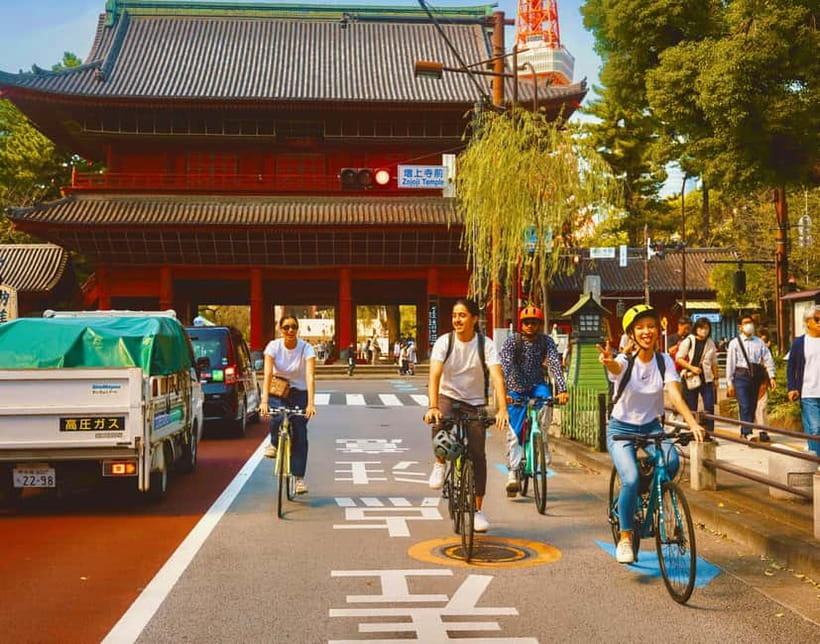
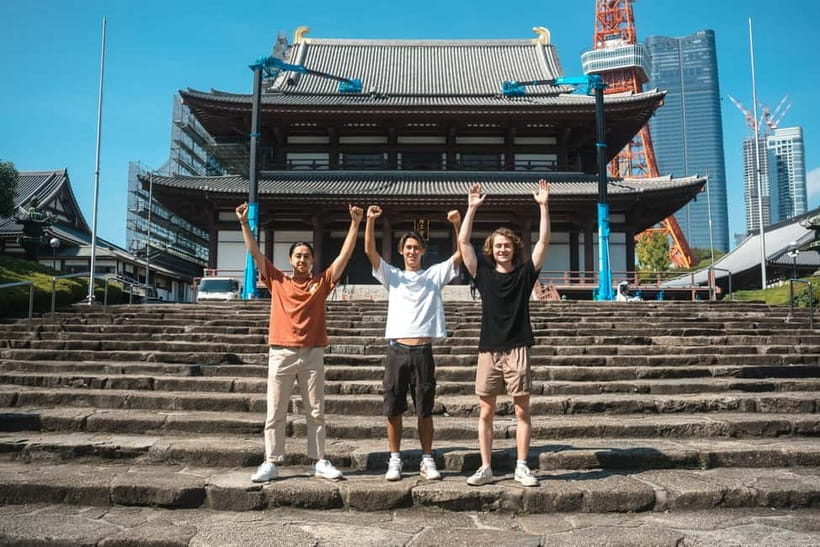
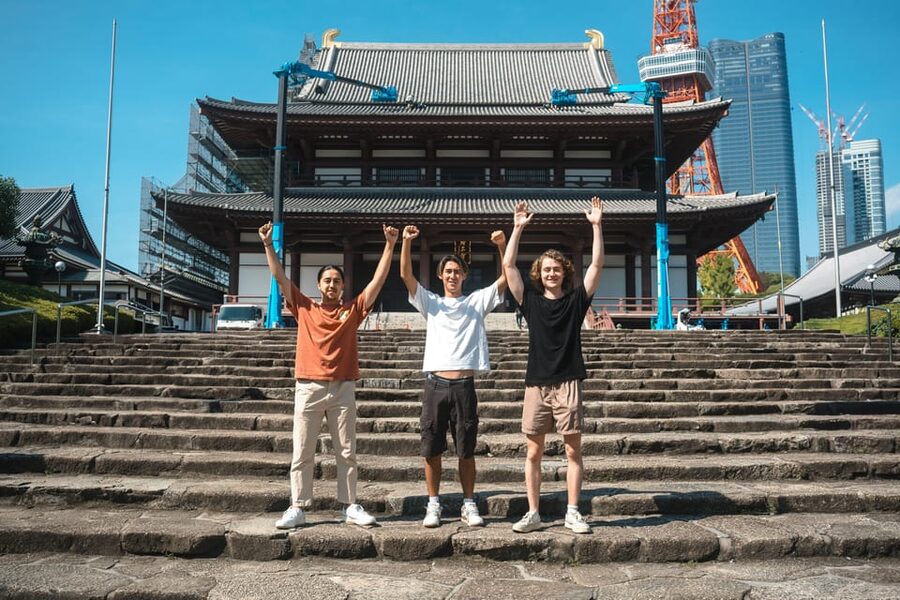
Zojo-ji is the first major stop, with about 15 minutes for a guided visit and photographs. The temple’s setting near Tokyo Tower gives you one of the route’s clearest views of old and new Tokyo together: traditional Buddhist architecture in the foreground, a modern tower rising behind it.
This stop gives the tour a strong opening because you begin with context rather than traffic. The guide can explain the temple and help you understand the difference between Japanese temples and shrines, a distinction several riders found especially useful.
Fifteen minutes is enough for an introduction and photographs, but not for a slow, detailed visit to every part of the grounds. If Zojo-ji is high on your personal list, plan to return independently. The tour’s purpose is to give you a well-placed overview before moving on.
The Imperial Palace, Ote-mon Gate, and Tokyo’s formal center
The ride continues toward the Imperial Palace for a roughly 10-minute guided photo stop, followed by Ote-mon Gate for another five minutes. This portion shows Tokyo in its official and ceremonial mode, with broad spaces and carefully maintained surroundings.
Ote-mon, one of the historic entrances to the palace grounds, adds a more specific point of interest than simply stopping outside the palace. You get a sense of the scale and defensive character of the old entrance while the guide supplies the background.
Again, these are outside visits rather than extended palace tours. The schedule does not promise entry into the Imperial Palace, so book this experience for the views, setting, and explanation. You can then return on your own if you want more time in the palace area.
The palace section also helps break up the ride. You are not expected to remain in the saddle for three straight hours. You stop, listen, take photographs, and walk briefly before getting back on the bike.
Akasaka Palace and the National Stadium
State Guest House Akasaka Palace comes next, with about 10 minutes for photographs. Its formal architecture gives the route another change of mood. After the temple and palace grounds, this stop introduces a grander, more modern diplomatic face of Tokyo.
The New National Stadium follows with another 10-minute photo stop. It is an appealing stop for anyone interested in contemporary architecture, sports, or the way Tokyo continues to update its central districts.
The value here is the sequence. You see religious architecture, imperial grounds, a state guest house, and a major stadium within one compact outing. A walking tour would struggle to connect these places in the available time, while the bicycle makes the route practical.
Do not expect a stadium tour or an inside visit at either stop. The schedule gives you time to see, photograph, and hear the story, not to explore each building at length.
Other city tours we've reviewed in Tokyo



The quieter stops between the famous sights
After the major landmarks, the route includes a place described simply as a hidden stop, followed by a short visit in Minamiaoyama. These are the parts I find most useful for getting beyond a checklist of famous sights.
The exact character of the unnamed stop can depend on the guide and the day. That flexibility is part of the appeal, but it also means you should not book expecting a fixed attraction with a published name. The Minamiaoyama stop is brief, only about five minutes, yet it places you in one of central Tokyo’s more polished residential and creative areas.
A guide such as Shin may adjust the route to match your interests and experience. That matters in a small group. If you are especially interested in design, everyday Japanese life, temples, or modern culture, tell the guide early. The available feedback shows that guides have adapted their explanations and routes for different groups.
These short stops also let you rest without losing the flow of the ride. You get glimpses of Tokyo that are easy to miss from a train window, then continue before the trip becomes slow or over-planned.
Cat Street, Miyashita Park, and Shibuya Crossing
Cat Street is a short five-minute visit, followed by Miyashita Park for about three minutes. These stops move the experience firmly into present-day Tokyo, with youth culture, shopping streets, and redesigned public space.
The timing is brief, so think of Cat Street as a quick orientation rather than a shopping break. If you want to browse, eat, or take your time, note the area and return later. The tour gives you enough to understand where you are and what makes the district different from the palace and temple areas.
Miyashita Park is even shorter. Its role is to show another side of central Tokyo’s public life before the final approach to Shibuya. The stop may feel rushed if you want to explore the park fully, but it works as a quick pause and photo opportunity.
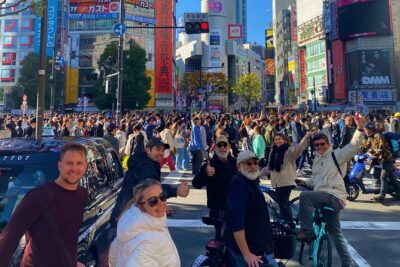
The route ends at Shibuya Crossing and finishes at the Bell of Peace. You get about five minutes to visit and photograph the crossing area. That is enough to experience the famous intersection, but not enough for a long stop during the busiest periods.
The end point is useful because Shibuya deserves more time than the tour can provide. Afterward, you can stay in the district for food, shopping, or more photographs. I would treat the crossing as the final chapter of the ride, not as your complete Shibuya visit.
What the guides add to the ride
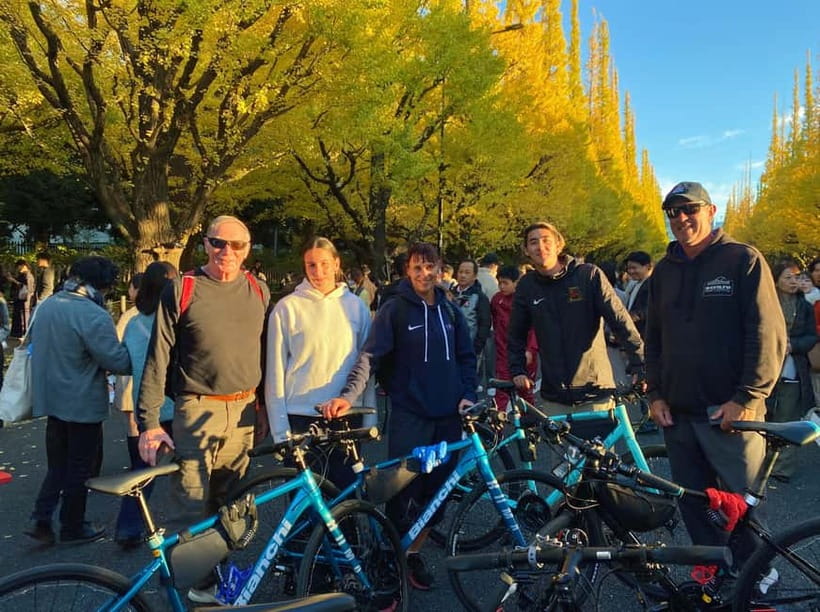
The best part of a city bike tour is not simply the bicycle. It is the person who turns a sequence of buildings into a readable story.
Guides named in the feedback include Shin, Casey, Naoki, Marika, Miguel, KG, Nouchi, Georgie, and Rinto. Their individual styles may differ, but the pattern is clear: the guide is expected to explain the places, manage the group, stop for photographs, and help you ride safely through busy streets.
Casey was praised for giving the right amount of information while keeping the ride moving. Shin was described as flexible and able to tailor the route for a well-traveled pair. Naoki and Marika were noted as friendly hosts, while Miguel and KG brought humor and explanations about Japanese history, culture, and people.
That personal element is especially useful at Zojo-ji and the Imperial Palace area. Without context, a temple gate or palace wall can become just another photograph. A good guide helps you notice what you are looking at and explains why the place matters.
The guide may also take pictures of you at key stops. Do not assume every guide will create a full photo record, but the service has been part of the experience for some riders. Ask if you want a photograph before leaving a landmark.
Bikes, e-bikes, and the physical effort
The standard bikes are high-quality cross bikes from Bianchi and Fuji. These are a strong match for a city route because they are designed for practical road riding rather than racing. One rider specifically found the Bianchi cross bike easy to handle around Tokyo.
An e-bike option is available, and I recommend it for anyone who rarely cycles, feels uncertain about three hours of riding, or does not have much stamina. Choosing an e-bike is not admitting defeat. It lets you pay attention to the city instead of worrying about how much energy remains.
The tour is described as suitable for experienced and casual riders, but the reviews also make clear that you should prepare for a workout. You will cycle between stops, and one rider called out the extended riding involved. Tokyo’s summer heat can add another layer of effort.
Bike insurance is included. Helmets are not included in the price, however, and are available for ¥1,000 per unit in cash. I would budget for one, especially if you are unfamiliar with riding in city traffic. A child seat costs ¥3,000, though children under 12 are not suitable for this activity, so check the arrangement carefully before booking for a family.
The tour is not suitable for people who cannot ride a bike, pregnant women, people with back problems, or children under 12. These limits make sense given the duration and road riding involved.
Is $60 a fair price?
At $60 per person, the tour offers reasonable value if you want transport, a guide, bike rental, and a broad introduction to central Tokyo in one package. You are not paying only for access to a bicycle. You are also paying for the route planning, local explanations, insurance, and the ability to connect districts that are spread across the city.
The value is strongest for a first visit or a short stay. You can see temples, imperial sites, formal public buildings, contemporary neighborhoods, and Shibuya without arranging separate train trips. The guide also handles the route, which removes much of the guesswork.
The value is weaker if you already know central Tokyo well or prefer to spend 30 minutes inside each attraction. The stop lengths are intentionally short, and several places are photo stops. You may want a separate visit to Zojo-ji, the Imperial Palace area, Cat Street, or Shibuya after the ride.
Check the booking choice carefully if you want an e-bike. One rider found it unclear whether the booking included a standard bike or an e-bike. Select the e-bike option directly rather than assuming it will be assigned on the day.
Free cancellation is available up to 24 hours in advance, and you can reserve now and pay later. That is useful when Tokyo weather or your schedule is still shifting, though the practical details of your chosen departure time should be confirmed when you book.
Who should book this ride?
I would recommend it to you if you want to get your bearings quickly, enjoy active sightseeing, and like seeing how different Tokyo districts connect. It is also a smart choice for a return visit when you want a fresh route through central neighborhoods rather than another train-based day.
It suits couples, friends, and small groups who are comfortable riding together. Private and small-group formats are available, which can make a difference when you want more questions answered or hope to adjust the emphasis of the route.
I would be cautious if you dislike city cycling, have back problems, or want a slow cultural tour. The route is social and active, with short stops and regular movement. It is not designed for children under 12 or anyone who cannot ride independently.
Bring comfortable shoes, light clothing, and water. Arrive early enough to find the Commodore Perry statue, carry ¥1,000 cash for a helmet, and choose the e-bike if your cycling fitness is uncertain.
Should you book the Tokyo bike tour?
Book it if you want a lively three-hour introduction to Tokyo that joins traditional sites with modern districts. The strongest reasons are the well-regarded Bianchi and Fuji bikes, the useful e-bike option, the broad route, and guides who can explain the city while keeping the ride organized.
Skip it if you want lengthy interior visits or a completely relaxed pace. For most visitors with limited time, though, this is an efficient and enjoyable way to see a large slice of Tokyo. You will work a little, stop often, and finish with a better sense of how the city fits together.
FAQ
How long is the Tokyo bike tour?
The tour lasts three hours. Starting times vary, so you should check availability for the date you want.
Where does the tour start?
Meet your guide around the Statue of Commodore Perry, about a three-minute walk from Daimon Station’s A6 exit.
Where does the tour finish?
The ride finishes at the Bell of Peace, after the Shibuya Crossing stop.
Are helmets included?
No. Helmets are available on site for ¥1,000 per unit, payable in cash.
Can I use an e-bike?
Yes. An e-bike option is available. Select it when booking if you are not comfortable riding longer distances or do not cycle often.
Is the tour suitable for children?
Children under 12 are not permitted. The experience is also not suitable for pregnant women, people with back problems, or anyone who cannot ride a bicycle.
More E-Bikes in Tokyo
More City Tours in Tokyo
More Cycling Tours in Tokyo
More tours in Tokyo we've reviewed


E-Bikes, compared.
 ★ 5.0Tokyo Top Highlights 3h Guided E-bike TourFrom $63
 ★ 5.03h Tokyo E-Bike Tour: Hidden Gems, and Local Life with guideFrom $63
 ★ 4.8Tokyo: 3-Hour Bike or E-Bike City Highlights TourFrom $453 hours
 ★ 4.8Tokyo: 3-hour Guided E-Bike Tour of the City’s Hidden GemsFrom $65
 ★ 5.0Tokyo: 3-Hour Bike/E-Bike Tour of the City’s HighlightsFrom $63
 ★ 5.03-Hour Tokyo Private E-Bike Tour Starting from Your HotelFrom $145